2,422 videos 1,389,747,653 views US Joined Aug 30, 2018
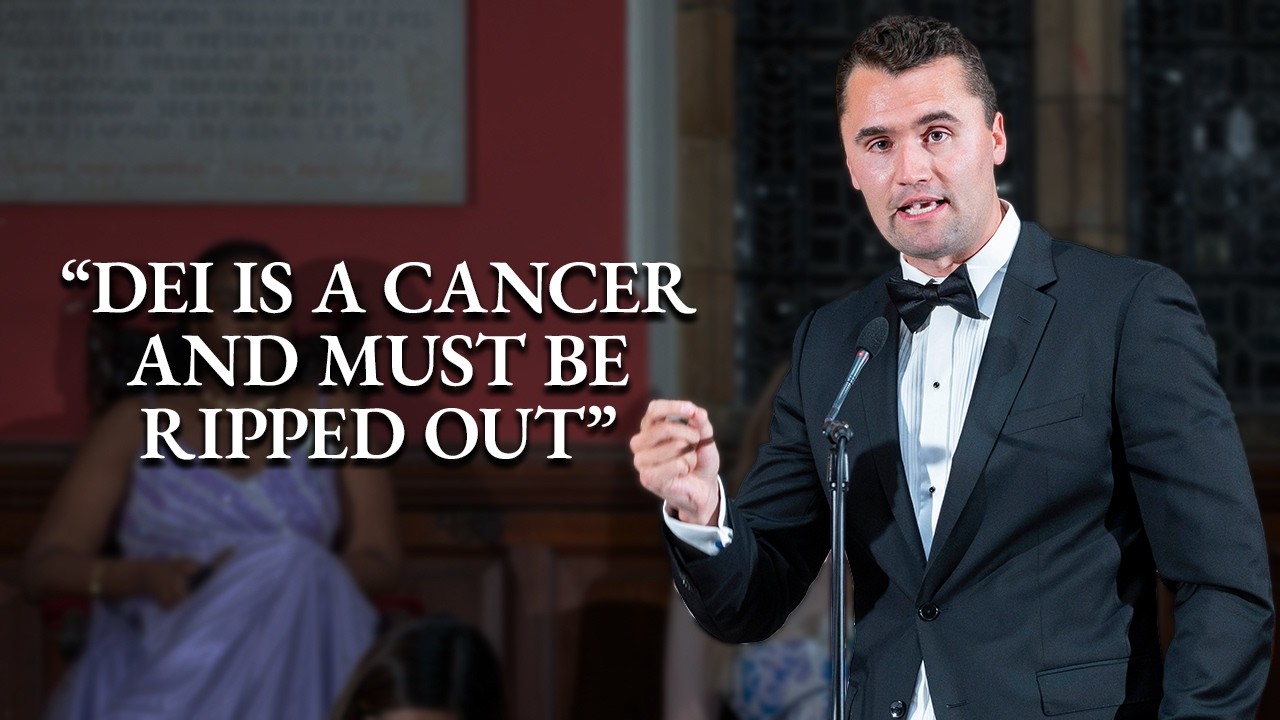
Charlie Kirk is the Founder and President of Turning Point USA, the largest and fastest growing conservative youth activist organization in the country with over 250,000 student members, over 150 full-time staff, and a presence on over 2,000 high school and college campuses nationwide. Charlie is also the Chairman of Students for Trump, which aims to activate one million new college voters on campuses in battleground states in the lead up to the 2020 presidential election. His social media reaches over 100 million people per month and according to Axios, he is one of the "top 10 most engaged" Twitter handles in the world. He is also the host of “The Charlie Kirk Show,” which regularly ranks among the top news shows on Apple podcast charts.
Charlie Kirk Debates Anonymous Student on Civil Rights Act, Affirmative Action, and Merit-Based Society
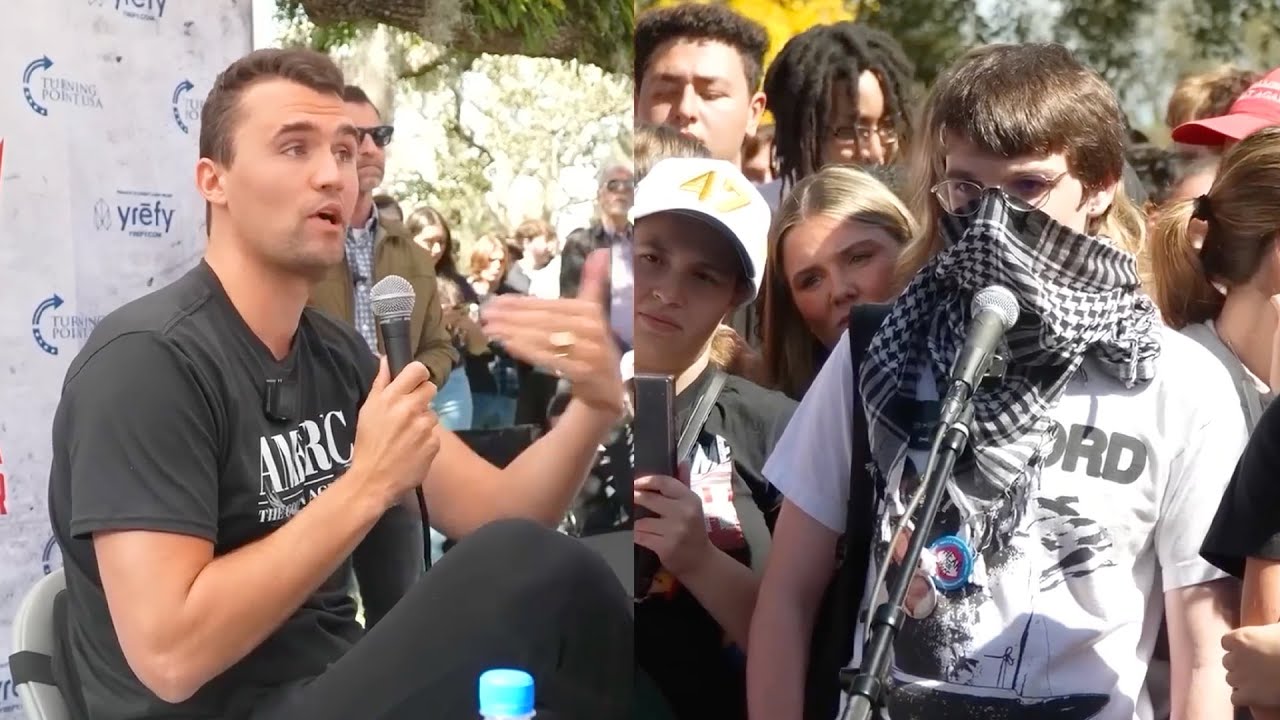
Charlie Kirk engages in a heated campus debate with an anonymous student who challenges his stance on the Civil Rights Act and affirmative action. The conversation quickly escalates into a fundamental disagreement about equity versus merit, systemic racism, and whether policies designed to help marginalized communities actually achieve their goals. Kirk argues that affirmative action creates a "civil rights Leviathan" that discriminates against white people and undermines excellence, while the student defends equity-based approaches as necessary to address historical disadvantages. The exchange reveals deep philosophical divisions about race, opportunity, and the role of government in addressing inequality.
An anonymous student approaches Charlie Kirk at what appears to be a campus event, opening with backhanded compliments before pivoting to his main criticism: Kirk's position on the Civil Rights Act. The student claims Kirk believes the Civil Rights Act was bad and shouldn't exist. Kirk clarifies his actual position, stating that parts of the Civil Rights Act "went way too far, way too wide."
Kirk explains that the Act created what he calls a "civil rights Leviathan" that gave rise to affirmative action policies. He argues this system allows the Department of Justice to discriminate against white people, preventing them from getting jobs and college admissions based solely on skin color. According to Kirk, white applicants face significantly higher barriers to college admission, requiring higher test scores and competing in a much more difficult applicant pool, largely due to precedents set by the Civil Rights Act.
The Equity Argument
The student introduces the concept of equity, arguing that people from different circumstances require different standards. He presents a hypothetical scenario of someone born in an impoverished area with poorly rated schools and low average test scores. In such an environment, the student argues, individuals face "the whole system" working against them, including what he terms "systemic racism."
The student's position is that when someone faces such disadvantages, it's fair to lower admission standards because, given their circumstances, they've demonstrated the appropriate amount of merit relative to what was available to them. This, he argues, is the principle behind equity-based policies.
The GPA Redistribution Analogy
Kirk responds with a direct analogy. After confirming the student is a good student with a high GPA, Kirk proposes taking the student's GPA by force and giving it to a woman of color. The student initially agrees, saying he could "work back up," but Kirk counters that there would be no opportunity to work back up, that Kirk would keep taking from him because "that's equity."
Kirk explains that equity in practice requires taking from some to give to others. He uses university admissions to illustrate his point: with a fixed number of positions available, lowering test standards for one group necessarily means raising the bar for another group. This, Kirk argues, is definitionally a redistribution, comparable to taking one person's grades and giving them to someone else.
The Results of Affirmative Action
When the student suggests that without such policies, black people won't be able to uplift themselves or achieve economic equality, Kirk asks a pointed question: How has affirmative action worked over the last 40 years? Has robust affirmative action and special hiring practices actually made Black America more successful?
The student attempts to argue that "massive resistance" following the Civil Rights Act prevented its full implementation, referencing post-Brown v. Board of Education resistance in Virginia and the Little Rock Nine incident. He suggests that even after legal changes, white supremacist resistance prevented the policies from working as intended.
Defining Racism
Kirk presses the student to define racism. After the student calls it a "very complicated question," Kirk insists on a simple answer. The student eventually provides the definition: discrimination based on the color of someone's skin.
Kirk then uses this definition to argue that affirmative action itself is racist because it penalizes white people in college admissions and job hiring based on skin color. The conversation takes a dramatic turn when Kirk asks whether someone can be racist against white people. The student responds with a definitive "no," even jokingly referring to himself using a racial slur, which draws reactions from the crowd.
Merit Versus Identity
Kirk argues that the student's worldview is "indistinguishable from the KKK" because both organize the world based on skin color. In contrast, Kirk presents the conservative vision: organizing society based on merit and character, on how hard people work and what they contribute, rather than immutable characteristics.
Kirk contends that organizing people's futures based on skin color is "tribalistic," "divisive," and harmful to national excellence. When asked how to help struggling communities without such policies, Kirk's answer is simple: "Stop pandering to them and start treating them like individuals made in the image of God," not organizing them for political purposes.
The Trump Economy Argument
The student asks whether Kirk believes racism is now gone and whether struggling black neighborhoods will become revitalized under Trump's presidency. Kirk responds affirmatively, arguing that black Americans saw their greatest economic progress since the 1950s during Trump's first term, with the highest wage increases, lowest unemployment, and significant community investment through opportunity zones.
The student counters that affirmative action still existed during that period, suggesting the two might be related. Kirk dismisses this connection, noting that affirmative action has now been largely eliminated. The student then attributes the economic gains to delayed effects of Obama-era policies rather than Trump policies.
Black-Only Spaces and Segregation
Kirk introduces the topic of black-only dormitories and graduation ceremonies at hundreds of American schools, including the University of Michigan and Harvard, where white people are not allowed. The student initially questions whether this is real, calling it "fake," but says he'll give Kirk the benefit of the doubt.
When Kirk asks if white-only dormitories would be acceptable, the student says no, explaining the difference by referencing historical segregation where white facilities were superior. Kirk rejects any form of segregation as "wrong and evil" and argues that America was heading back toward segregation until Trump's presidency.
Economic Policy and Government Efficiency
In the closing moments of the debate, the conversation shifts to economic predictions and Elon Musk's role in government efficiency. The student predicts economic problems, which Kirk disputes, saying "in a year from now, we're going to have the greatest economy ever" and critics will credit Biden.
When asked about concerns regarding Musk's government efficiency efforts, the student criticizes Musk for "just firing everybody" like he did with Twitter, which the student claims went from "a pretty accepting place" to "a Nazi haven" where "the average blue check mark is saying 'Heil Hitler.'" The student even claims Musk himself "did the Nazi salute," which Kirk denies.
The Closing Exchange
Kirk ends the conversation by thanking the student, explaining that he serves as "a perfect reminder why we won in November." The exchange encapsulates the fundamental divide between two worldviews: one that sees equity-based interventions as necessary to address historical and systemic disadvantages, and another that views such policies as themselves discriminatory and harmful to a merit-based society.