2,422 videos 1,389,747,653 views US Joined Aug 30, 2018
Charlie Kirk is the Founder and President of Turning Point USA, the largest and fastest growing conservative youth activist organization in the country with over 250,000 student members, over 150 full-time staff, and a presence on over 2,000 high school and college campuses nationwide. Charlie is also the Chairman of Students for Trump, which aims to activate one million new college voters on campuses in battleground states in the lead up to the 2020 presidential election. His social media reaches over 100 million people per month and according to Axios, he is one of the "top 10 most engaged" Twitter handles in the world. He is also the host of “The Charlie Kirk Show,” which regularly ranks among the top news shows on Apple podcast charts.
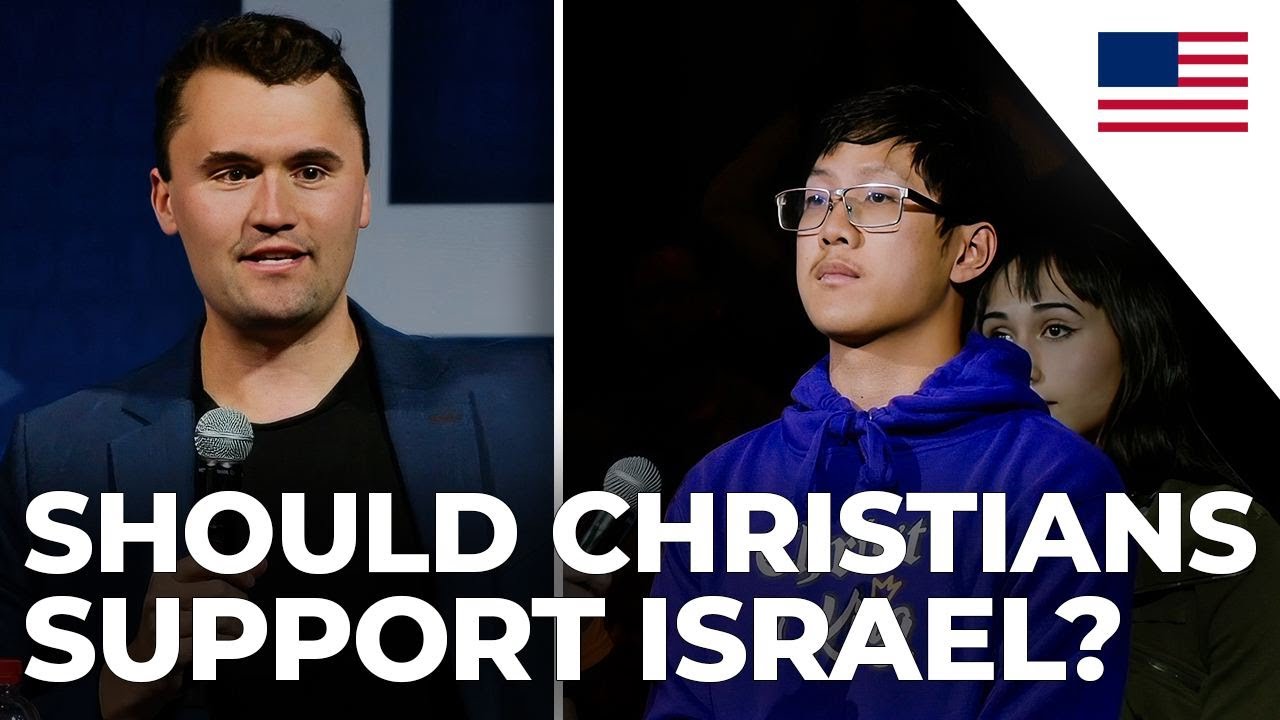
Charlie Kirk Debates Buddhist Student on Christianity, Morality, and Abortion Rights at Campus Event
Charlie Kirk engages in a heated campus debate with a Buddhist student who challenges using Christianity as a moral basis for law. The conversation quickly shifts from religious authority and historical atrocities to the core issue of abortion rights. When the student shares her mother's medical emergency involving vasa previa, Kirk navigates the exception while pressing on the central question: should over 1.4 million abortions occur annually for non-medical reasons? The exchange exposes fundamental disagreements about moral frameworks, women's rights, and whether society can legislate morality without a shared ethical foundation.
A Buddhist student approached Charlie Kirk with a direct challenge: Christianity cannot serve as a moral foundation for law because of its historical atrocities. She cited the Crusades and the destruction of ancient texts, along with abuses at Canadian residential schools run by Catholic institutions. Her fundamental question was how Christianity could claim moral authority given this troubled history.
Kirk immediately turned the question around, asking what moral code she lived by. When she identified as Buddhist, Kirk began probing the implications of Buddhist philosophy, focusing on its emphasis on personal enlightenment and reaching Nirvana. He characterized Buddhism as fundamentally inward-looking, focused on individual spiritual ascension and viewing the outside world as contaminated.
The student pushed back, arguing that Kirk was misrepresenting her understanding of Buddhism and that different Buddhist sects hold varying beliefs, much like Christianity. Kirk pressed further: if not Christianity, then what moral framework should govern society?
From Philosophy to Abortion
The student argued that societal needs, rather than religious morality, should guide lawmaking. She specifically raised abortion as an example where medical and societal needs should trump religious objections. Kirk countered that there is no medical reason to kill babies.
The student then shared a deeply personal story about her mother's experience with vasa previa, a dangerous pregnancy condition where the placenta splits into veins covering the birth canal. Her mother had been offered an abortion because going into labor could have killed both her and the baby. As the family's primary breadwinner with two children already, the abortion option could have saved her life. Though both mother and baby ultimately survived, the student argued this demonstrated why abortion access shouldn't be restricted.
The Brother Question
Kirk seized on a critical point: the student's brother survived. He asked directly if she was glad her brother wasn't aborted. When she acknowledged being glad he survived, Kirk argued this proved the pro-life position—wanting babies like her brother to live rather than be aborted.
The student countered by asking what would have happened if her mother had died. Kirk dismissed this as not being a good argument since her mother didn't die, noting that such extreme medical cases occur only dozens or perhaps a couple hundred times per year, while there are 1.5 million abortions annually. He argued that babies in such situations could be delivered by C-section.
The student maintained that removing abortion rights from everyone means that in medical emergencies, women would have to prove the emergency need exists rather than having an automatic right to the procedure. Kirk responded that there is no right to murder another human being.
The Core Moral Question
Kirk posed the question directly: was the student's brother a human being when he was in the womb? The student admitted that according to her personal moral compass, yes, he was. But she insisted her moral compass shouldn't dictate the medical needs and moral choices of others.
Kirk pressed on the central issue: if not her moral compass, then whose? Which moral framework should guide lawmaking? The student struggled to identify a single standard, suggesting that everyone's moral compass differs and laws should support what benefits women most, particularly regarding healthcare access.
Kirk kept pushing: by what standard does she determine that supporting women is good? What book or moral authority was she referencing? The student eventually appealed to the Constitution and equal rights for women, including healthcare rights. Kirk countered that life is the first constitutional right, and no one has a right to murder another person.
Buddhism, Hunting, and Moral Consistency
The student attempted to illustrate the complexity by noting that her Buddhist moral code opposes killing animals, yet many Christians hunt and kill animals for a living. She didn't think her beliefs should ban those practices. Kirk agreed that personal beliefs differ but emphasized that society must still make collective decisions about laws.
The student argued that modern society shouldn't base moral standards on books written thousands of years ago. Kirk pointed out that Buddhism is also ancient, but the student acknowledged this inconsistency, reiterating that she doesn't think Buddhist principles should become law either.
Kirk returned to the fundamental problem: at some point, society must decide what laws to make based on something. The student suggested laws should benefit people already existing in society. This led Kirk back to the question of whether people in the womb exist.
The Personal Question
Kirk asked the student if she was glad she wasn't aborted. Her response was striking: if aborting her would have benefited her mother more than having her, she wouldn't necessarily be angry about it. Kirk countered that he was glad her mother didn't abort her because he believes life is beautiful and wants to give that gift to as many people as possible.
The student argued that by restricting abortion, Kirk was taking the gift of life away from women, especially those with medical needs whose lives are in danger. Kirk offered a concession: abortion could be legal for medical circumstances. But what about the remaining 1.4 million abortions performed for non-medical reasons—not for rape, incest, or life of the mother?
Birth Control or Human Life?
Kirk made a provocative claim: abortion has become the number one form of birth control in the country, with over 1.4 million abortions annually. The student found this characterization absurd, questioning whether women really choose a $50 abortion over condoms or other methods.
Kirk clarified that he was including Plan B, abortifacients, at-home abortions, chemical abortions, and surgical abortions in this category. The student pointed out that by this definition, anything could be considered birth control, even abstinence. Kirk agreed that more people should practice abstinence, but the student questioned whether the government could police what happens in people's bedrooms.
Kirk clarified he wasn't advocating for policing bedrooms, but rather arguing that if someone decides to have sex and gets pregnant, they shouldn't kill the resulting baby. It's a simple matter of taking responsibility for the decision made. The student insisted there's more nuance to the issue.
The Final Moral Clarity
Kirk cut through the complexity with a stark comparison: a human life exists in the womb just as human life exists in a crowd. We can't murder someone in a crowd because murder is wrong. By the same logic, we can't murder someone in a womb because murder is wrong. The moral principle is consistent.
The debate ended with applause from the crowd, leaving the fundamental questions hanging: Can a pluralistic society function without a shared moral foundation? If Christianity's historical record disqualifies it from providing moral guidance, what alternative framework can command broad agreement? And at what point does the complexity of individual circumstances give way to the simple moral claim that innocent human life deserves protection?