2,422 videos 1,389,747,653 views US Joined Aug 30, 2018
Charlie Kirk is the Founder and President of Turning Point USA, the largest and fastest growing conservative youth activist organization in the country with over 250,000 student members, over 150 full-time staff, and a presence on over 2,000 high school and college campuses nationwide. Charlie is also the Chairman of Students for Trump, which aims to activate one million new college voters on campuses in battleground states in the lead up to the 2020 presidential election. His social media reaches over 100 million people per month and according to Axios, he is one of the "top 10 most engaged" Twitter handles in the world. He is also the host of “The Charlie Kirk Show,” which regularly ranks among the top news shows on Apple podcast charts.
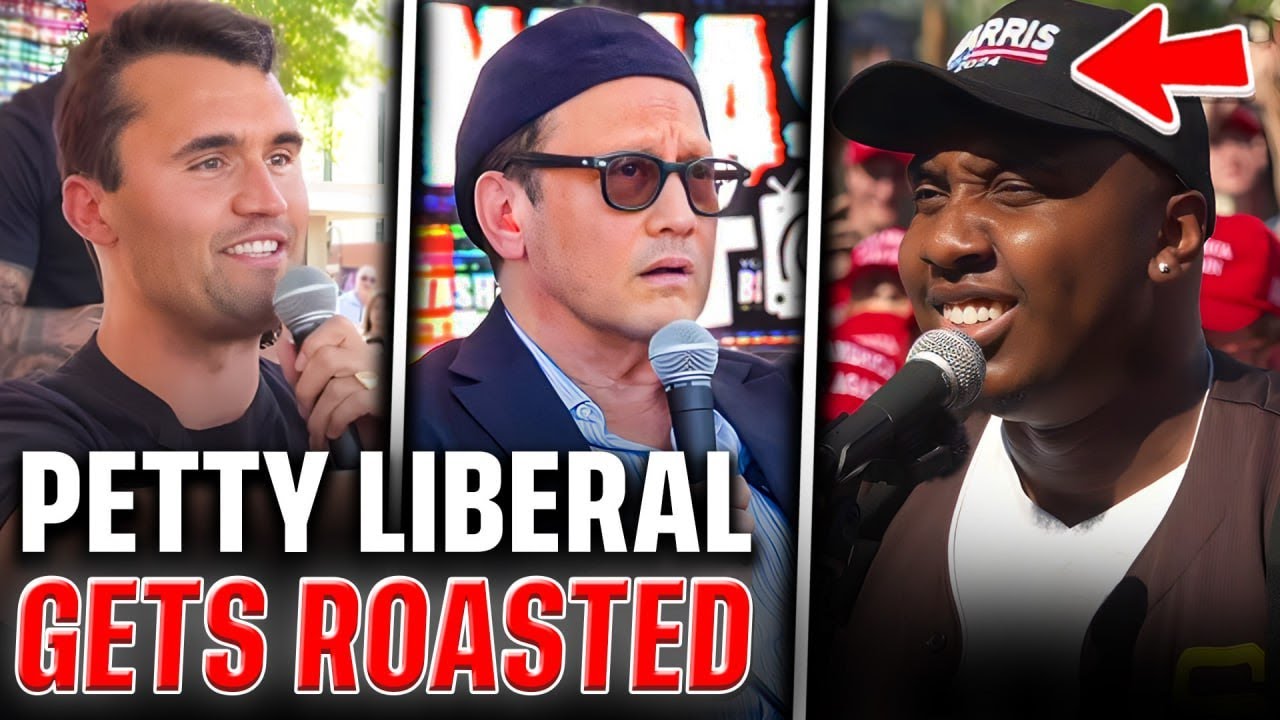
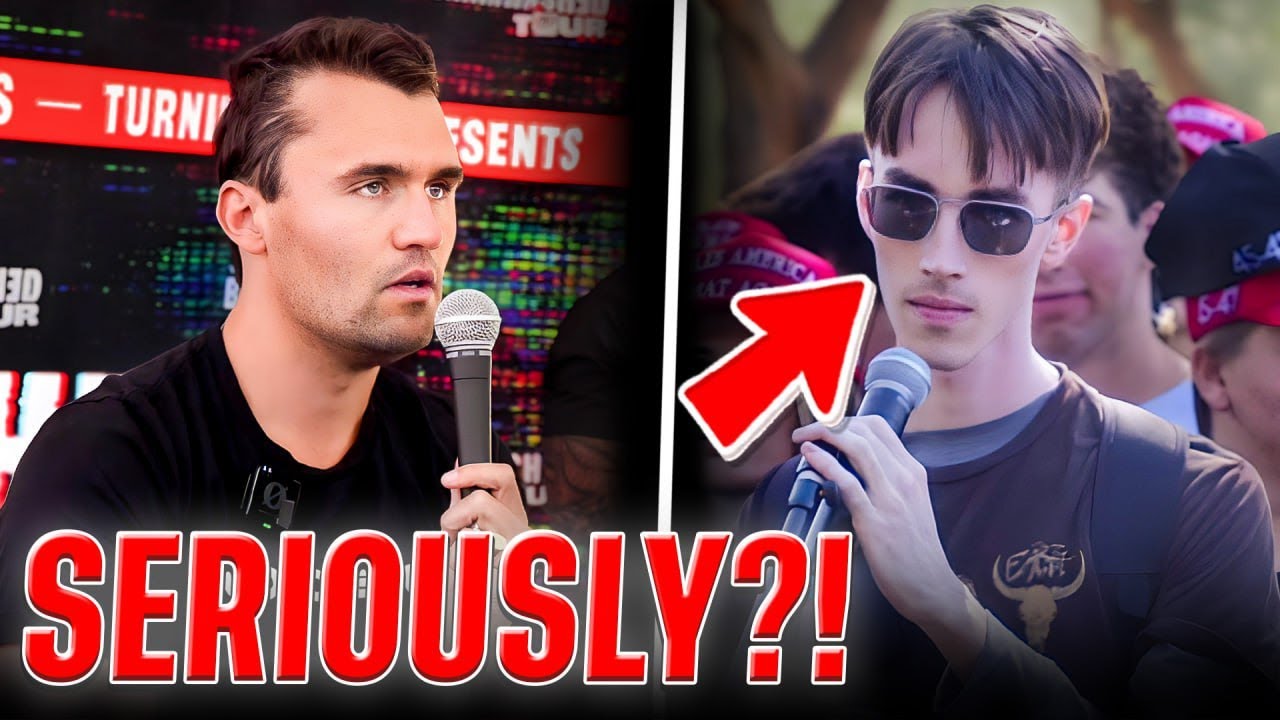
Charlie Kirk Debates Economics, Inflation, and Trump's Fiscal Policy with College Student at Campus Event
Charlie Kirk engages in an economics debate with a college student at a campus event, discussing inflation, national debt, and the Federal Reserve. The conversation covers whether the U.S. is experiencing immaculate disinflation, the morality of deficit spending, and why inflation disproportionately hurts younger generations trying to enter the housing market. Kirk defends his support for President Trump while acknowledging disagreements on fiscal policy, and argues that 2008 bank executives should have faced prison time. The exchange reveals fundamental disagreements about monetary policy, the role of the Federal Reserve, and whether Trump will address America's debt crisis in a potential second term.
The discussion began with a student questioning Charlie Kirk about the current state of the economy and the theory of "immaculate disinflation." Kirk immediately challenged the premise, arguing that Americans are not living through any kind of disinflation. When the student defined disinflation as the inflation rate decreasing over time and pointed to specific products like televisions and iPhones as evidence, Kirk countered with everyday examples.
"If you just go to a grocery store, eggs are far more expensive than they were two years ago. You don't have to overthink it," Kirk stated. He pointed to the cost of education at the university itself, noting that out-of-state tuition stands at $30,000 compared to what he estimated was $18,000 a decade ago. The student attempted to explain that Cal State tuition increases had been planned before recent inflation spikes, but Kirk maintained his position that the country is experiencing a sustained inflationary period.
Why Inflation Is a Moral Issue for Young Americans
Kirk made a passionate case for why inflation represents a moral crisis, particularly for younger generations. He argued that massive deficit spending, which has tripled from approximately $800 billion per year during the Trump administration to $2.5 trillion currently, is "morally reprehensible."
"Every single person here is going to have to pay off that debt and that dollar that you think is going to have value is decreasing by the day," Kirk explained. He emphasized that inflation makes it harder than ever for young people to own homes, as they enter a housing market where everything costs three times as much as it did a decade ago.
"You will not be able to afford a down payment, let alone even be able to build the capital necessary for other goods and services that you might want to build wealth," Kirk warned. He noted that the primary beneficiaries of this system are older generations who already own assets, while younger Americans face an increasingly difficult path to building wealth.
Is Inflation Built Into the Economic System?
The student challenged Kirk's position by suggesting that inflation is inherent to capitalist economic systems. Kirk pushed back, stating that inflation is a choice rather than something built into the human experience. When pressed about whether he wanted zero percent inflation, Kirk clarified his position.
"I wouldn't want zero," Kirk acknowledged. "Moderate inflation is good for money velocity and for growth, but you need to manage that versus the growth rate." He referenced Milton Friedman's monetarism, which prompted visible reaction from the student. When Kirk asked what was funny about Friedman and described him as "the greatest economist of the 20th century," the student expressed disagreement, leading to a discussion about economic theory.
Kirk argued that while the United States doesn't need to have a central bank, the existing Federal Reserve has been overly politicized across multiple administrations to prevent natural economic cycles from occurring. "Bush, Obama, Trump, Biden have leaned on the central bank to use cheap money," Kirk explained.
Housing Crisis: Private Equity or Monetary Policy?
When the conversation turned to housing affordability and mortgage rates, the student attributed rising home prices primarily to private equity firms buying up properties. Kirk agreed this was a factor but argued it was symptomatic of a larger monetary policy problem.
"Why is private equity doing that? Because they have so much cheap money that we've put into the system they don't know what to do with it," Kirk explained. He expressed support for laws preventing firms like BlackRock from buying single-family homes and renting them back to Americans.
"You should not be a society of renters. It's bad for society," Kirk stated, adding that both conservatives and progressives should be able to agree on this point. "It's bad for the human experience, for generational flourishing." He maintained that opening up "the guzzle of cheap money," especially post-COVID, has led to a weaker currency that Americans are experiencing in real time.
COVID Response and Economic Consequences
Kirk offered a contrarian view on pandemic economic policy, arguing that lockdowns were unnecessary and harmful. "We never should have locked down the country, so we never should have borrowed the $6 trillion, we never should have done the stimulus stuff," Kirk stated firmly.
"The lockdowns will go down as one of the greatest frauds in Western life or in the entire planet," he continued. "It hurt every single one of you. It increased suicide rates, depression, anxiety, fiscal problems, economic problems, political problems." The student indicated some agreement with this assessment.
Let the Banks Fail: A Bipartisan Critique of 2008
Kirk expressed a contrarian position on the 2008 financial crisis, stating that he believed the major banks should have been allowed to fail rather than being bailed out. "I think we should have let the banks fail and I think we actually should have allowed the market to solve it, not to have socialism for the rich and brutal capitalism for the working class," Kirk argued.
The student agreed with this assessment. Kirk continued: "I think that Wells Fargo, Goldman, Lehman, and the big banks that failed should have had to actually climb themselves out or you destroyed a moral hazard." He noted his agreement with Elizabeth Warren on the fact that zero executives went to prison for their roles in the financial crisis.
Kirk drew a sharp political contrast: "Grandmas that went into the Capitol on January 6th and took selfie videos are in federal prison. You ask me who's a bigger threat to democracy? Wall Street executives that bankrupted our economy in 2008 are a bigger threat to our country than people that walked into the Capitol building and took a selfie."
Trump's Personnel and Policy: Acknowledging Imperfections
The student challenged Kirk on why President Trump appointed people like Steven Mnuchin, who had worked at Goldman Sachs, to his administration. Kirk acknowledged having "a lot of personnel disagreements" with Trump's first term.
"I love Trump, but..." Kirk began, prompting the student to question why anyone would love a politician. Kirk disclosed his bias: "I don't say this lightly, I do have a friendship with him. I've gotten to know him over a couple years, so disclosing bias, 100% biased."
Kirk identified three areas where he believes Trump could have done better: fiscal deficit spending, COVID response, and certain personnel choices. "Those are the three things, and I could list 100 accomplishments," Kirk noted. When the student suggested Kirk wasn't open-minded about Trump, Kirk clarified: "You're not going to convince me on negative Trump stuff. You could try, but you're not going to."
The Coming Debt Crisis and America's Credit Rating
Regarding Trump's potential second term, Kirk expressed hope that fiscal responsibility would improve out of necessity. "We're going to have a debt crisis the likes of which the country's never seen and he's going to have to address it," Kirk predicted. "We need to have severe cuts in the federal budget."
When discussing America's credit rating downgrade, Kirk attributed it to both the national debt itself and the inability to handle it maturely, but emphasized the debt as the primary factor. "We now owe more than we're worth as a country," Kirk stated.
The student pointed out that the United States controls its own currency, suggesting this provides flexibility. Kirk acknowledged this but noted concerning trends: "It's the number one reserve currency, but it's decreasing. It used to be 75% of the world's reserve currency status 20 years ago, now it's 55%."
The BRICS Threat: Real or Paper Tiger?
The conversation concluded with a discussion of BRICS nations potentially creating an alternative reserve currency. Kirk expressed skepticism about this threat, calling it "a paper tiger." He stated he doesn't believe India, China, South Africa, and Russia could work together to create a unified currency, though he acknowledged the concern and said he hopes his assessment is correct rather than being "too prideful" about America's position.