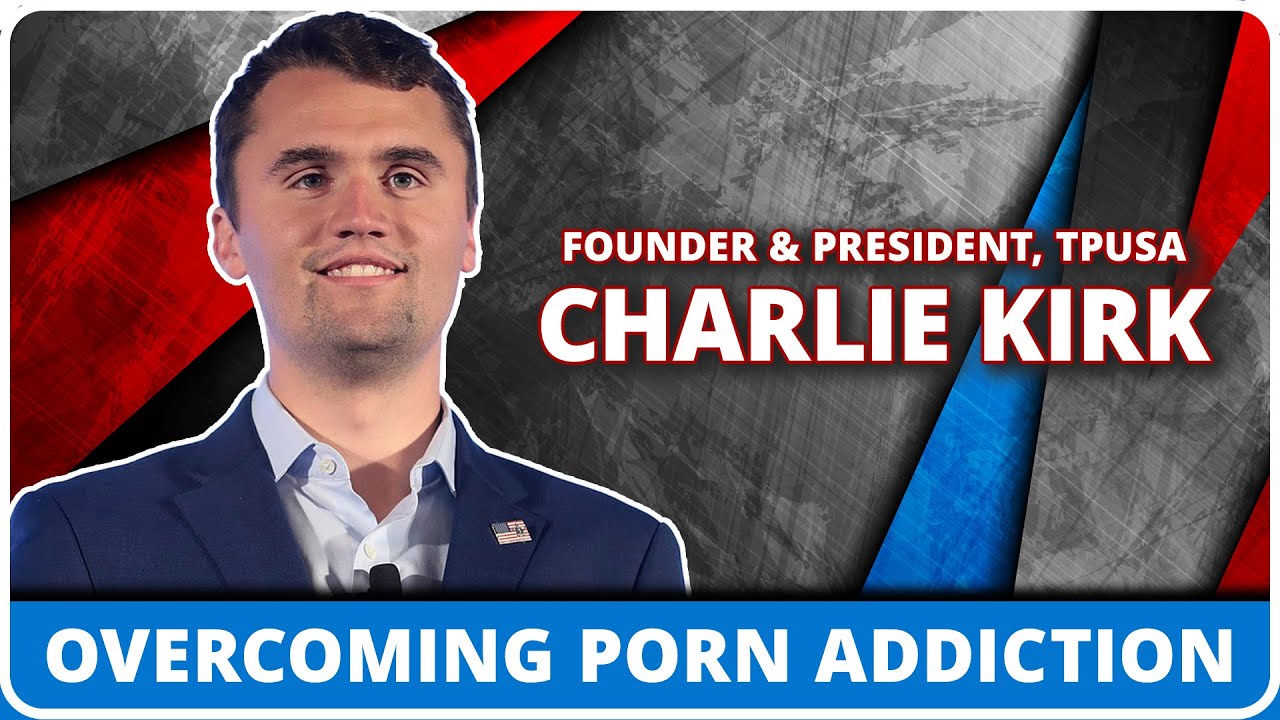
Charlie Kirk Debates Pornstars on Feminism, Patriarchy, and Modern Gender Politics
Enjoying this? Share it with someone who needs to see it.
Up Next
Charlie Kirk and Candace Owens Challenge Gender Ideology, Big Pharma, and Modern Feminism at Wisconsin Campus Event
1:25:29
Charlie Kirk and a Guest Wrestle With Defining Love, From Self-Love to Greek Agape
0:52
Charlie Kirk Explains Why the American Church Must Rise Up Against Tyranny and Technocracy Before It's Too Late
2:09:55
Charlie Kirk Debates Pornstars on Feminism, Patriarchy, and Modern Gender Politics
Charlie Kirk engages pornstars in a discussion about feminism, asking them point-by-point whether they identify as feminists. The conversation reveals confusion about feminist history and modern talking points, including a debated claim about women needing male permission for hospital care. Kirk breaks down first, second, and third-wave feminism, challenging the ladies on concepts like the patriarchy and whether men run America. The exchange exposes how contemporary feminist ideology has shifted from equal rights to what Kirk characterizes as anti-male sentiment, with the ladies struggling to articulate coherent positions on gender equality.
Charlie Kirk poses a direct question to a group of women: do they consider themselves feminists? The question, simple on its surface, quickly unravels into a revealing discussion about how modern feminism has been "misconstrued," as one women puts it.
The first women attempts to defend feminism by citing its positive impacts, including giving rights to men who have experienced sexual assault and enabling them to speak up about it. She also claims that feminism has advanced patient privacy, arguing that women at one point weren't able to visit the hospital without their husbands.
A Questionable Historical Claim
Kirk immediately challenges this assertion. "Women were not allowed to get health care from a hospital without a man?" he asks skeptically. The women clarifies that she's not talking about emergency situations—if a woman had a limb chopped off during farming days, she could get emergency care—but rather routine checkups and patient privacy.
Kirk identifies this as a new feminist talking point he's been hearing, expressing doubt about the claim that women were historically barred from receiving medical treatment from doctors in hospitals without male accompaniment. The women insists she researched it before coming to the event.
Despite her defense of certain feminist achievements, the women ultimately admits she doesn't believe in many modern feminist ideals. She doesn't think men are worse than women or that women are better than men. When pressed directly on whether she considers herself a feminist, her answer is clear: "I honestly at this point in time no."
Neutral Ground and Non-Answers
The next women offers an easier response: "Yes." The third women attempts to stake out neutral territory on the topic, prompting Kirk to push back: "You kind of didn't want to react to the clip there. You're neutral, okay."
To help clarify positions, Kirk poses a follow-up question: "Do you believe in a patriarchy? That there is a patriarchy?" The response: "I don't know." Kirk asks if the women took any feminist studies or sociology classes in university. The answer is no.
Kirk continues: "Do you think men run America?" Again, "No." But when asked if there are more men in positions of power, the women concedes, "There's more like men in positions, I guess." Kirk then asks whether this is a problem and whether there should be a movement toward equalizing it. The women responds affirmatively, suggesting it could go both ways—if a woman wants to step up, then sure.
Kirk characterizes this as "a bit of a non-answer" and presses further: should there be a movement towards egalitarianism and equality in all realms? And from a feminist standpoint, if there is a patriarchy, should we dismantle it? The women offers another vague response: "I mean I think in the end like it could be equal but I don't know."
Defining the Waves of Feminism
The fourth women asks Kirk to define what he means by feminist, noting that her understanding was that feminism meant women should have equal access to rights and the pursuit of happiness, though she acknowledges she could be wrong. Kirk welcomes the opportunity to clarify, explaining there are different waves—first, second, and third-wave feminism.
Kirk breaks down the history:
First-wave feminism: Centered on universal suffrage and women's right to vote, along with initiatives like the Equal Rights Amendment
Second-wave feminism: Associated with figures like Gloria Steinem, who wrote "The Feminine Mystique." Kirk describes Steinem as "rather nasty in her writing," claiming she characterized women as being in "a prison cell called the home" and "barefoot and pregnant." This wave led to increased numbers of women in the workforce and career advancement opportunities
Third-wave feminism: Holds that any inequity between men and women is inherently wrong. Kirk offers an example: if women earn more than men in modeling, third-wave feminism would demand equalization. He characterizes this wave as "rooted in a hatred of men more than the advancement of women"
The women thanks Kirk for the historical context, admitting she didn't know the history well enough to answer initially.
The Final Verdict
With the definitions established, the women offers her perspective. Hating men is "wrong and stupid," she states plainly. "We need them." She expresses her belief in a world where people can do what they want, calling it a shame that anybody has been told that being a stay-at-home mother or having children is lesser than career pursuits. "It's not. It's just different and it's not lesser than," she emphasizes.
Based on these principles—rejecting male hatred and defending the value of traditional motherhood and family—she concludes she would not identify as a feminist. Kirk acknowledges her reasoning with a simple "yeah."
The exchange illustrates a broader generational confusion about feminism's meaning and goals, with the women caught between vague notions of equality, debunked or questionable historical claims, and discomfort with the more radical elements of contemporary feminist ideology.