
Up Next
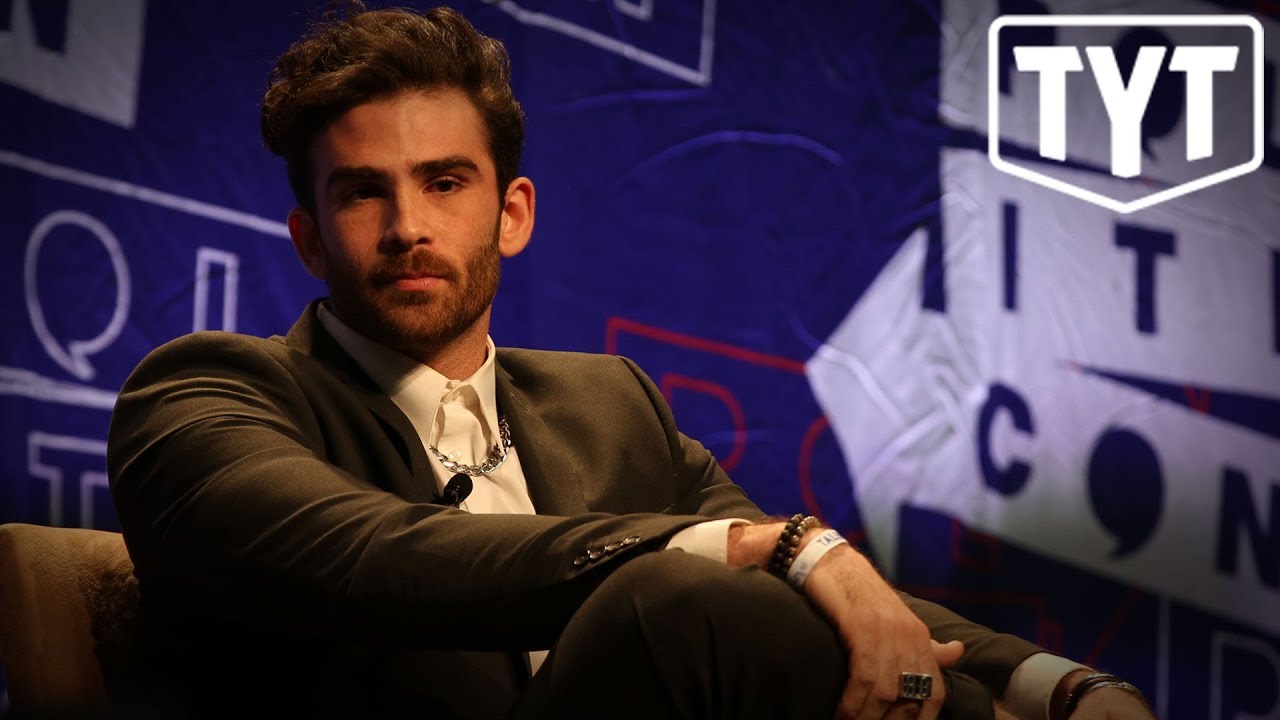
Charlie Kirk Takes on Hasan Piker from The Young Turks at Politicon Round Two
56:49

Charlie Kirk Rallies Young Conservatives at Historic Turning Point USA Student Action Summit in Tampa
20:51

Why Every Human Being Has the Right to Life: Defending the Unborn Against Convenience
1:30
Charlie Kirk Debates Sam Seder on Trump's Tax Cuts and the Middle Class at Politicon 2018
Charlie Kirk squares off against Sam Seder at Politicon 2018 in a debate over whether Trump's policies have helped or hurt the middle class. Kirk defends the Trump tax cuts, deregulation agenda, and historic unemployment rates, arguing that reducing government burden creates prosperity for working Americans. Seder counters that 65% of tax cuts went to the top 20%, wealth inequality is pricing the middle class out of major cities, and programs like Medicare and Social Security face cuts to pay for corporate giveaways. The debate covers everything from the 2008 financial crisis and Glass-Steagall to healthcare reform, tariffs on China, and whether capitalism or government intervention best serves middle-class Americans.
The Debate Over Trump's Tax Cuts and Middle-Class Impact
At Politicon 2018, Charlie Kirk and Sam Seder engaged in a substantive debate on whether President Trump's policies have benefited or harmed the middle class. The discussion, moderated by Steven Olikara of the Millennial Action Project, centered largely on the Trump tax cuts passed the previous year.
Kirk opened by defining the middle class as Americans with the comfort to send their children to relatively good schools, a reasonable expectation their children's lives will be better than their own, median income allowing for one to two vacations yearly, and manageable debt levels. He noted that while 70 to 90 percent of Americans consider themselves middle class, only about 50 percent actually are by economic measures.
Defending Trump's record, Kirk highlighted that 3.5 million jobs have been created since the administration began, wages have increased approximately 3.8 percent in the past year, Hispanic incomes reached historic highs at $50,000 annually, and 3.9 million people left food stamps to enter the workforce. Kirk argued that conservatives measure success not by how many people receive government assistance but by how many achieve independence from it.
Kirk emphasized what he called the best economy in a generation, citing 4.2 percent GDP growth and 3.7 percent unemployment. He referenced The New York Times stating the economy was so strong they were running out of ways to critique it. The average American family received a $2,700 tax cut under the Trump plan, Kirk noted, which he argued was beneficial for consumer spending power and savings while coupling demand-side and supply-side economics.
Seder's Critique: Tax Cuts Favored the Wealthy
Seder countered that Trump has not been particularly helpful to the middle class, arguing that conditions are worse now and will deteriorate further due to administration policies. He pointed out that 65 percent of the tax cuts went to the top 20 percent of the country. While acknowledging it was nominally the biggest middle-class tax cut in recent memory, Seder used an analogy: if Kirk's microphone volume went from five to eight but his own went from five to twelve, the dynamic illustrates how the wealthy benefited disproportionately.
Seder emphasized that with increased wealth inequality, the middle class gets priced out of housing markets in the top ten metropolitan areas. He disputed Kirk's wage growth claims, noting that in the first 18 months of the Trump administration versus the last 18 months of Obama's term, wages increased only 1.7 percent while inflation rose 3.8 percent. He added that higher education costs have increased 110 percent since 1994, meaning nominal income gains matter little if the cost of middle-class life rises faster.
According to Seder, if the middle class actually liked the tax cuts, they wouldn't disfavor them more than they disfavored Obamacare at its lowest point. He argued that 84 percent of stocks are owned by the top 10 percent of Americans, and when money was repatriated from overseas, 60 percent went into stock buybacks benefiting those wealthy shareholders rather than creating jobs.
The Kansas Experiment and Trickle-Down Economics
Seder brought up Kansas under Governor Sam Brownback as a cautionary tale. In 2012, Brownback brought in economist Arthur Laffer and implemented massive tax cuts on the wealthy with the promise that prosperity would trickle down, revenue would increase, and the economy would explode. Instead, Kansas experienced disaster—the state's educational system suffered, economic growth lagged, employment lagged, and the Republican-controlled state house raised taxes four years later.
Kirk did not defend the Kansas model directly but instead pivoted to contrasting successful red states like Texas and Florida with struggling blue states like California and Illinois. He argued that states like Illinois and California are losing citizens, job creators, and entrepreneurs due to high taxes and reckless politicians. Texas and Florida, by contrast, have no state income tax and deregulated economies. Texas comprised one out of three jobs created across the country during the Great Recession of 2008-2010.
Kirk pointed to Illinois, where despite Chicago being an exceptional city, the state has 1.8 percent GDP growth compared to 3 percent growth in other Midwest states. California, he argued, should be the most prosperous state but instead has the most homeless people, the most people living in poverty, and crumbling schools. He noted that eight or nine out of ten of the most pro-business states in America have Republican governors and legislatures.
The Zero-Sum Game Debate
A fundamental philosophical divide emerged over whether wealth creation is zero-sum. Kirk adamantly rejected the notion that when someone gets rich, someone else gets poor. He argued that when wealthy people increase their net worth, they take risks, employ people, buy buildings, develop good ideas, and create products people buy repeatedly. This creates higher standards of living for everyone as prices typically decrease and competition increases.
Kirk did acknowledge one exception: the eight out of ten wealthiest counties in America surrounding Washington DC, where people get wealthy through geographic proximity to the $4.4 trillion federal budget rather than creating value for the middle class. These include lobbyists, trial lawyers, and corporate representatives lobbying on behalf of special interests rather than middle America.
Seder responded that Kirk's argument ignored buying power. If someone receives $10 and school costs $10, they can afford school. But if school rises to $20 without corresponding income growth, buying power diminishes. Wealth inequality drives up prices, particularly in housing across ten major metropolitan areas where the middle class can no longer afford to live. In states like Illinois, excessive property taxes compound the problem, pricing middle-class families out of homeownership.
Stock Buybacks and Repatriation
The debate touched on what happened when corporations repatriated money from overseas following the Trump tax cuts. Seder argued that 84 percent of stocks are owned by the top 10 percent of Americans, and 60 percent of repatriated tax dollars went into stock buybacks enriching those shareholders. He saw no job growth resulting from repatriation, contrary to promises of trickle-down prosperity.
Kirk countered that the 84 percent figure is misleading because it includes money managers like Goldman Sachs controlling pension funds for teachers, firefighters, and police officers. When Goldman Sachs controls the California state pension fund, statistics classify those stock purchases as Goldman Sachs rather than the pension fund, despite the fact that middle-class workers benefit when the stock market rises through increased 401k and pension values.
Kirk cited Foxconn creating 4,000 jobs in Wisconsin as evidence that repatriation created jobs. The company directly attributed moving manufacturing from China to Wisconsin to the pro-business, pro-American mindset fostered by the Trump tax cut and Republican state leadership.
The 2008 Financial Crisis: Competing Narratives
Seder argued that repealing Glass-Steagall under President Clinton allowed commercial banks and investment banks to merge, creating institutions too big to fail. When the crisis hit, it nearly destroyed the entire financial system, leading to massive government bailouts and the debt increase during the Obama years. He called for a 21st century Glass-Steagall Act to separate these banking functions and diminish the power of Goldman Sachs, Citibank, and Wells Fargo.
Kirk acknowledged some merit to the Glass-Steagall argument but insisted it was neither the primary nor secondary factor in the 2008 crisis. He placed blame first and foremost on Fannie Mae and Freddie Mac, government-sponsored institutions that gave triple-A bond ratings to subprime mortgages for people with poor credit scores and incomes around $35,000 yearly. These institutions never showed their books to taxpayers and colluded with rating agencies to misrepresent the quality of mortgage-backed securities.
Kirk also blamed the Community Reinvestment Act for incentivizing banks to give loans to low-income communities through quotas, coupled with Alan Greenspan artificially lowering interest rates after 9/11, creating cheap money flowing throughout the system. Banks traded based on false confidence from Fannie and Freddie's ratings without examining the underlying mortgages.
Kirk argued that Wells Fargo executives who lied should be in prison but maintained that the crisis represented the biggest government failure of the modern era. The SEC, with its $30 billion annual budget, never walked into rating agencies to verify FICO scores or examine mortgages. He rejected the narrative blaming capitalism when government regulators failed their oversight responsibilities.
Regulation, Dodd-Frank, and Community Banks
On regulation, Kirk argued that Dodd-Frank destroyed community banks through hundreds of millions of dollars in compliance costs. Since the financial crisis, there has been a sharp decline in community banks, which traditionally lent to small businesses and local communities. Ironically, Goldman Sachs lobbied against repealing Dodd-Frank because the regulation acts as a hedge against competition from smaller banks, protecting giants like Wells Fargo, JPMorgan Chase, and Goldman Sachs.
Kirk noted that Goldman Sachs has inside access to the Treasury Department across administrations—Bush, Obama, and Trump—calling this a problem both sides should address. He suggested getting rid of the carried interest deduction as one area of potential agreement.
Seder defended Dodd-Frank and the Consumer Financial Protection Bureau, noting that the CFPB saved consumers $90 million in bank fees in the last year alone under Obama. Since Trump took office, there has not been a single enforcement action by the CFPB. Seder argued that Kirk's claim about community bank decline ignores 30 years of mergers and acquisitions that preceded Dodd-Frank.
Deregulation: Specific Examples
When Seder challenged Kirk to name three regulations rolled back that helped the middle class, Kirk cited rolling back Obama's restrictions on coal, which he said created hundreds of thousands of jobs throughout Appalachia and brought down utility costs in thirty states. He also mentioned EPA regulations that classified lakes and tributaries in farmers' backyards as oil spills under an abuse of the Clean Water Act of 1976, saving farmers hundreds of thousands in legal costs. Third, he cited rolling back thousands of consumer regulations under the Consumer Financial Protection Bureau that made it easier to obtain small business loans.
Seder responded that rolling back coal-fired power plant regulations will cause 3,600 deaths, 90,000 asthma cases, and 1,700 heart attacks annually, with expenses in the hundreds of millions of dollars. Mercury and air toxin rollbacks will cause 11,000 deaths annually, and asbestos rollbacks could cause up to 40,000 annual deaths. He contrasted this with regulations like energy-efficient light bulbs, which conservatives opposed as government overreach but which have saved consumers tens of millions of dollars in replacement costs.
Trade, Tariffs, and China
On trade policy, Kirk took a nuanced position. He strongly supported Trump's approach to China, calling China the great existential threat to the West and America. China remains categorized as a developing nation in the World Trade Organization, giving them access to subsidies, and they build a coal-fired power plant every month. China steals intellectual property by requiring companies to form partnerships with the government, then copying goods and services and selling them back into competitive markets.
Seder argued that Trump tariffs on China are effectively a tax on the U.S. middle class. Ford will lay off close to 12 percent of its workforce due to steel tariffs. Smaller companies making pipe fittings have been denied waivers because of big donors who are major U.S. steel manufacturers. Iowa farmers have absorbed about $620 million in costs. While acknowledging some benefit in the new NAFTA for auto workers, Seder criticized it for codifying pharmaceutical company monopolies by forcing these protections on Canada.
Healthcare: Market Solutions Versus Single-Payer
Turning to healthcare, Kirk argued that the Trump tax cut's repeal of the individual mandate removed the largest tax on the millennial generation. He characterized it as forcing young people to buy insurance completely out of their income bracket. Kirk advocated for market-based healthcare solutions, including allowing health insurance to be purchased across state lines. He blamed an oligopoly of health insurance companies in bed with pharmaceutical companies and FDA regulators for skyrocketing prices.
Seder countered that there is no federal law preventing insurance companies from selling across state lines—each state has its own regulators. Companies have tried selling across states with waivers but don't do it because risk pools differ by market and they lose money. He warned that 20 Republican states are suing the federal government over the individual mandate, a lawsuit the Trump Justice Department refuses to defend. If successful at the Republican-controlled Supreme Court, Americans could lose protections for pre-existing conditions, be denied coverage or charged exorbitant rates, lose the ability to stay on parents' insurance until age 26, face lifetime caps, and lose essential benefits like free mammograms and colonoscopies.
Kirk insisted nothing is free—taxpayers pay for these services. He questioned why markets work for food, housing, and technology but supposedly fail in healthcare. He pointed to the American Medical Association's national doctor quota limiting the supply of physicians, which restricts competition and keeps prices high. He cited a study scoring Bernie Sanders' single-payer healthcare plan at $32 trillion over ten years versus $35 trillion for the current system, arguing he doesn't want to live in a country with a 55 to 60 percent tax rate paying for something he'll never benefit from.
Seder noted that every other Western industrialized nation provides healthcare to citizens at lower cost with better outcomes. These countries have effective tax rates that, while higher than the U.S., deliver universal coverage. He referenced that during the Eisenhower administration, the marginal tax rate went up to 90 percent on every dollar after $400,000 (equivalent to about $2 million today), contributing to a period of tremendous economic growth.
Fundamental Differences on Government's Role
The debate revealed fundamental disagreements about government's role in the economy. Kirk consistently argued that reducing government burden through tax cuts and deregulation creates prosperity, jobs, and opportunity. He celebrated Trump's record on unemployment rates for African Americans, Asian Americans, Hispanics, and veterans, along with the strong GDP growth and the fact that Obama now tries to take credit for the economy.
Seder maintained that concentrating wealth among the top tier through tax cuts gives them political power that perpetuates inequality. He argued that flattening the tax code and not giving additional cuts to corporations and the wealthy prevents them from using cash for stock buybacks that enrich board directors and CEOs rather than workers. The solution, he suggested, is spreading wealth more equitably so the middle class can afford housing, education, and healthcare.
Kirk insisted that when businesses thrive, they employ people, and the 3.5 million jobs created under Trump are mostly middle-class positions. He rejected the zero-sum mentality, arguing that wealth creation through innovation, risk-taking, and providing products people want to buy benefits everyone through higher living standards and lower prices.
Both agreed that something is fundamentally wrong when working at Goldman Sachs seems to be a prerequisite for running the Treasury Department, and that cronyism—not capitalism—explains why counties around Washington DC are among the wealthiest in America. However, they differed sharply on solutions, with Kirk favoring deregulation and competition while Seder advocated for stronger regulation and wealth redistribution through progressive taxation.
Video Transcript
here's the young turks at politican 2018 if you want to catch us every day become a member to you whitey calm slice join welcome to the debate between charlotte kirk and sam seder so for those who don't know me my name is Steven Olli Cara I'm the founder of a non partisan organization called the Millennial Action project I'm honored to be back at politican for the fourth year and we've got a great debate for all of you discussing the middle class and whether Trump has been helpful or hurtful to the middle class and will debate all of that here my one request of the panelists is that we want to have an exchange of ideas and so we want to focus on the substance avoid personal attacks and my requests on behalf of the audience here is that we don't yell over each other because then they won't be able to understand what you're saying so are we on board with that yes yes we do all right very good are you all ready to get started okay so again we're here talking about the middle class and I think perhaps the most consequential piece of legislation that president Trump passed related to this was the tax bill last year so I'm gonna start with Sam what was your take on the tax bill and more broadly do you think Trump has been helpful to the middle class well let me answer your second question first no I don't think he's been particularly helpful for the middle class I don't think that across the board I'm sure there are some measures perhaps but across the board net things are not better for the middle class now and certainly down the road they're gonna be a lot worse because of policies that we've seen at least in the first two years of this administration 65% of the tax cuts went to the top 20% of the country this was you know in nominal terms the biggest tax cut for the middle class in history or at least a you know recent memory but at the end of the day if I turn Charlie's microphone up from a five to an eight and mine from a five to a 12 or a 10 that is the dynamic that we have going here with the incredible wealth inequality middle class losing out in terms of wages versus inflation certainly at least in the first 18 months of the Trump administration versus the last 18 months of the Obama administration where it was basically flipped and with increased wealth inequality you get things like middle class being priced out of the housing market in the top ten metropolitan areas across the country you see it in in in other areas as well so broadly speaking at least in terms of the tax cuts it provides some very inefficient stimulus to the economy but no this was for the very wealthy Charlie your response I first want to say Sam I think you always come about your ideas very thoughtfully so I look forward to this discussion sincerely so be - thank you and so the first thing I would I would come from the argument that Trump has helped the middle class and let me build it out in a couple ways first of all you you did say it was the largest middle-class tax cut in recent memory now that's not saying a lot because there hasn't been done a lot for the middle class but let's define what exactly we mean by the middle class the middle class in some ways is a uniquely American concept the way that most people would label the middle class and you could have your own definition is you have the comfort to send your child to a relatively good school and your child's life has a greater than likelihood chance that will be better than your life that you have a median income that allows you to live comfortable that you could take maybe one to two vacations a year and that you don't have it to have an insurmountable amount of debt now that being said when the Americans are polled anywhere between 70 to 90 percent of Americans think they're middle class which of course only 50% of Americans are middle class that's it it's really amazing to see the the the separation of date of how many people think their middle class versus how many people actually are middle-class the reason that I would say that is for that is that we have an elevated standard living in this country that goes beyond just income and goes actually that people that are earning thirty to forty thousand dollars a year have access to higher quality goods that in other countries they wouldn't let's talk about the Trump tax cut in particular first of all there's a lot of demonization against corporations and against businesses when businesses thrive they have to employ people and so 3.5 million jobs have been created since the start of the Trump administration most of those are middle class jobs wages have gone up about three point eight percent in the last year they were flatlining under the Obama presidency my favorite number I'm sorry well that's not true excuse me do what you just did excuse me well I'm not gonna sit here Sam and have lies about facts everybody has a phone Google Google middle-class wages so see if there's stagnant versus inflation oh three point three point eight percent wage increase over the last year for the median worker Hispanic incomes at its highest level in American history at fifty thousand dollars a year my favorite number of the Trump administration is that three point nine million people have gone off food stamps and into the labor force three point nine million people now now why is that my favorite number for us conservatives we do not judge success by how many people go on government programs but instead of how many people go off into independence now I will not say that our economy is at its optimal level I think it's the best economy in a generation we would look at a four point two percent GDP growth three point seven percent unemployment rate and so if you judge the middle class by two major things which is standard of living increase of which you're seeing that happen dramatically and the second of which is education we have a lot of work to do on the education side I think you and I would both agree on that we could have a extended conversation about that on policy but the economic metrics are so good that the New York Times says quote this economy is so good we're running out of ways to critique it and so again it's not a perfect economy but for middle-class Americans that care about rising wages creating jobs and tax cuts the average American family had a 2700 tax cut under this Trump tax cut that's good for that's good for some consumer consumer spending power that's good for savings and it's good for of course what you would say is more demand side economics coupled with supply-side economics that created jobs and repatriated trillions of dollars of wealth back to the America so everyone here has a phone and they can Google the first 18 months of the Trump administration versus the last 18 months of the Obama administration wages have gone up 1.7 percent under the deal at the first 18 months of the Trump administration they had inflation is up 3.8 percent that is simply a fact now if you if you narrow if you narrow the time horizon you can come up with numbers you're talking about and this is why people have to be careful about statistics because I can come up here and manipulate anything yes Latino wages are up in fact the middle class is making more money today than in $61,000 than in the past however like I say inflation is up the cost of higher education has gone up a hundred and ten percent since 1994 so it doesn't matter if the middle class is making sixty one thousand dollars if to lead the middle class life that you were talking about is that much more expensive if the middle class like the tax cuts they wouldn't disfavor them far greater than they do even Obama care at this point right I mean so the bottom line is we can throw out statistics but if they're not contextualized it doesn't matter okay so everyone knows the tax cuts went to the wealthy am i demonizing them no the point is that they have an inward an amount of wealth and income in this country and it turns into political power and I know you have a problem with that and the way to solve that is to flatten the tax it's to not give them tax cuts and more power and give corporations more power in cash to pay off their they're shareholders which tend to be the Board of Directors and the CEOs but rather to spread the wealth so okay there are some things I agreed with however to contextualize it further it doesn't make the economic growth economic success any less exceptional or any less historic because following the same trajectory but the Obama administration's like this okay so forth he hasn't screwed it up Sam saml III I routinely restrain myself during your comments to Allah thank you for that charlie and that's a big deal for me if you watched yesterday feel free to interrupt me when you when you think I've said something wrong if that you heard it everyone heard it okay so what let's I want to walk through a couple points there the first of all the big misconception that I have with your original analysis is that just because someone gets rich someone got poor that is categorically false if a wealthy person increases their net worth they did not exploit someone to get wealthier they had to take a risk employ a bunch of people buy a building have a really good idea and people had to continue to buy that those products over and over again and and and you and I will have a philosophical and economic difference in this I come from a perspective that does not believe in the zero-sum game and does not believe in a fixed pie fallacy instead I believe that when someone gets richer they must employ an extraordinary amount of people they take a huge risk they - higher than likelihood chance not to succeed they probably borrowed money and then they had to create something that all of us had to buy over and over and over again that inherently allows the standard of living to increase for all people prices to usually go down and then you in enter competition it's very very difficult to do that time and time again and you see in market-based economies you have to have really really good ideas for a long period of time to accumulate that kind of wealth let that being said those that get wealthy because of access to power such as 8 out of 10 wealthiest counties in America around Washington DC they're not actually creating anything that I would consider to be a value to the middle class because they're they're being rewarded to their geographic proximity to a four point four trillion dollar federal budget that is extracting money away from middle-class Americans those are the lobbyists those are the trial lawyers those are the people working for the corporations that are lobbying not on behalf of middle America but on behalf of people around Washington DC so in that you and I will agree well okay the people who live in that the the the counties you're talking about are overwhelmingly arms sales and military-industrial complex people I'm not the from administration raised the budget by military I don't agree by seven hundred billion dollars over the next ten years if it's and that money is flowing into those right or wrong I don't agree with that though so I will okay that's it that is Donald Trump is the one who is leading but your action so first of all but let me finish did you say I can interrupt the effusive if I said something wrong yes so it's only seven hundred billion dollars of our budget every single years - but what's the rest it's to entitlements it is to bureaucracies how about the government contracts for housing Urban Development the government contracts for Health and Human Services you were talking what about the government contracts yeah so those counties that get the government contracts outside of the defense contracts are also what I owe my critique a minuscule the three point two trillion dollars is not ministration the the not to made-up number let's talk Kansas for a moment shall we because okay can talk about what a small business does for employment I'm a small businessman and I understand what small business does in Kansas if I have been living in Kansas I would have gotten a huge huge tax break because huge I'm an S corp huge under Sam Brownback back in 2012 he brought in Arthur Laffer who I'm sure you're familiar with is the god for folks like you in many respects the idea being if we cut taxes on the wealthy they will spread this wealth it will trickle down on all of us it will will shower down on us right it will rain upon us and we will all be sprinkled with this this golden shower and and the economy will explode and people will have jobs and everything will work out in fact revenue will go up that's what Mitch McConnell told us after this tax cut - and what happened in Kansas was a disaster it was such an unmitigated disaster not only did it destroy Kansas's educational system the republican-controlled state House rose taxes four years later because their economic growth lagged their employment lagged and then Sam Brownback was literally made ambassador to like ether right he's like the ambassador to religion now he has been jettisoned into the atmosphere in some way because that is the perfect example of the Republican conservative philosophy and it failed and we know that it's opening now a national laughs and I trip in here because Mitch McConnell made the same promise about the deficit in fact Larry Kudlow the chief economic advisor of the president made the same promise in July and we now have a deficit that is twice the size it was when Obama left office and now Mitch McConnell wants to cut Medicare and Social Security let me cuz of those taxes you're not you're not gonna hear me you're not gonna hear me defend federal deficits or are exploding national debt quick fact Barack Obama added more debt than into the present US history you know offend do you defend these tax cuts that have doubled the deficit so the tax cuts should have been coupled with spending cuts however we have explosive economic growth we have more people in the labor force than ever that's revenue coming in you have trillions of dollars repatriating back to America let me finish I allowed you to have your Kansas example now that we're talking about states let's talk about the juxtaposition of the failed state of California with the successful state of Texas [Applause] and and I think I I want I want I want a country that's gonna look a lot more like Florida and Texas and a lot less like Illinois in California now what up states like Illinois and California done well they're losing citizens number one they're losing job creators they're losing entrepreneurs because they have raised taxes they have reckless politicians in both states like Illinois in California what if Texas and Florida done they've kept their taxes low both have no state income tax they have deregulated their economies you and Sam would even agree with that Texas during the Great Depression 2008 2009 2010 comprise one out of three of all jobs created across the country and and if you couple that with if you if you juxtapose that if you will with Illinois that in the Midwest the Midwest is booming except Illinois every state in the Midwest has a 3% GDP growth Illinois has a 1.8 percent GDP growth despite Chicago being an exceptional city that's being screwed up by corrupt politicians in one political party and you look at California that should be the most prosperous that should be the richest state in the country and yes you'll say you'll say it is the richest country it also is the most populous country with the most amount of homeless people with the most amount of people living in poverty with crumbling schools let me finish Sam I I know you got plenty of differences but as long as you want it if you want to talk about States allow me to address the Kansas example wet Kansas if you if you if you look at Kansas versus a state like Connecticut Kansas had higher economic growth and was creating more jobs versus similar size similar population blue states during the Brownback tax cuts there are a lot of other contributing factors to why Kansas was not exactly a pristine example of how to run a state such as government corruption such as miss allocation of resources and other diminishing businesses that went to states like Texas that had a zero zero state income tax and so if you want to talk about the contrast to states it's the red states that are eight nine out of 10 of the most pro-business states in America have Republican governors and Republican legislators the the most proud road oka states in America run by Republicans I'm glad you mentioned it though the reason why I bring up Kansas is because the dynamic is identical to the one that Donald Trump talking about Donald Trump and the Republicans did on a national level now here's how the game works and this is why it is zero-sum because you give these massive tax cuts to the wealthy and you repatriate money from overseas that ends up going into shareholder buybacks to stock buybacks we know that 84% 84 percent of stocks in this country are owned by the top 10% this is a great point and great and 60 percent of those tax dollars that were repatriated went into the hands of those people we saw no job growth as a function of that repatriation we saw no note none of the trickled down that we're supposed to see we see these tax cuts and then Mitch McConnell brings down the hammer we're gonna cut Social Security we're gonna cut Medicare these are the most popular the most successful programs in the country and the only way the Republicans can cut them is to create an economic crisis and that is by giving money to wealthy people ok so let's talk about the stock the stock buyback so let's talk about the stock buyback so you say 84% what that doesn't contextualize to use your word is money managers that are controlling money for pension funds so it doesn't Sam it does it does not look at Sachs controls money look at the holla for new state pension fund its categorizes Goldman Sachs controlling that money not as the pension fund so when the stock market goes up the teachers the firefighters the police officers their 401ks go up their pensions go up and their net worth goes up so when the stock market explodes the network's am I allowed you to finish your lying okay so what for it for example when when when GCT our partners from Chicago Sam answer the question when goldman sachs controls the california state pension fund is it classified as the california state pension fund buying the securities or goldman sachs behind the securities goldman sachs so when you use that you know that's true eighty-four percent i will tell you what the numbers okay google again so four percent your number in stock rights however to add context to it sam is that the money manager is in the 1% but the money they're managing is pension fund money that are people in the middle class your class so what you're saying is not incorrect but it's only half true because it is the middle class people's money that they're managing with that being said so again when let's use an example zero zero evidence that repatriation create any jobs I'll use a microcosm example how about Foxconn that created four thousand jobs in Wisconsin because they repatriated the money away from Chinese manufacturing jobs to American manufacturing jobs four thousand new jobs were created in Wisconsin because the Trump tax cut that they directly attributed to a pro-business pro-american mindset that's four thousand jobs in Wisconsin that otherwise that not exists exist under Republican governor Republican state legislature and a president now that's a microcosm example you said there's your evidence that's a piece of evidence well look people can look at the last time a Republican president repatriated that money it was the American Jobs Creation Act 2005 George Bush promoted this he has come out and subsequently sent he got rolled because all those companies that wanted that to supposedly add jobs cut jobs we know the these money went to buybacks we know why buybacks are legal now because of the Republican Party changed that regulation in the 80s when it used to be called stock manipulation and we know that it benefits the CEOs and the shareholders and that 84% and it does not it includes the California pensions it includes every municipal and state pension and 401k in the country thank you so but here's another thing I do want to talk about because you talked about can you can you explain to me when someone gets richer who exactly gets poorer can you explain how that process works like when like for example when you'll explain to you so who get folks you understand the idea of buying power right if I give you ma'am $10 and school costs $10 you buy a school but if school goes up to $20 and you don't have the same buying power what drives the price of let's say housing for instance it is wealth inequality and you see this in ten cities across the country the biggest metropolitan areas in the country the middle class cannot afford to live there anymore because we have real estate going through the roof you're right and so you have you have in states such as Illinois and Connecticut in California because of excessive property taxes people don't want to purchase some of those houses so you have one of two you have one or two problems that happen is that the middle class gets priced out so the wealthy if you will the people that you are demonizing will go up a bracket and they'll say well if I'm gonna pay thirty five thousand dollars a year in property taxes I might as well buy this XYZ house therefore the middle class person who's trying to sell their house with an excessive property tax burden has to all has to property taxes are one of the main I know what taxes are they're not nearly as much as if the price goes up again so in states like Illinois this property taxes can be anywhere between six and a half to nine percent for a state that doesn't work for schools that schools are completely and totally broken so but like let's you the foreign investment things so I'm still trying to get back let me go back to the zero-sum game when an entrepreneur renders a service and employs a bunch of people and you buy that service who is getting poorer in that transaction because you said zero-sum game I I'm trying to understand a market goods no you're right so tax cut we're an average middle-class family had a $2,700 tax cut where you have the corporate rate that went from 35 percent effective I understand a lot of corporations that not pay that they use loopholes of which I disagree with completely went down to 20 20 percent effective in January and they use that money to invest in capital infrastructure or they repatriate backs so see using the money not by not excuse so let's talk buybacks how about companies where the actual employees on the stock and they're in their own net worth goes up aren't they part of the middle class I am sure there are some members of the middle class who benefited from the start of the tax cut that's what I'm saying Sam the overwhelming thrust of the tax cuts goes in to the wealthiest pockets via either stock buybacks or through capital gains or through having an S Corp and getting and paying less in taxes so look we could cherry-pick things you can say Illinois I could say the the worst 16 the the the lowest 15 states in the country in terms of education are all run by Republican governors except for Louisiana which had Bobby Jindal for eight years up until 2016 but cherry-picking doesn't work you wouldn't a lot of things to cherry-pick that's why I was trying to get to the philosophical difference because I don't believe when someone gets rich someone in here but we don't need to but that have data okay but the date right so the day fight Sam if you want to talk data and Charlie I'm gonna give you the last word on yeah but I mean so again I was thinking maybe because again you were just talking about cherry-picking and then you were cherry-picking and I was trying to talk about philosophy which is I don't believe in a zero-sum game I believe in a market economy when you trade eat both parties equally get richer when you trade and standard of living goes up prices go down and you have abundance you've an abundance problem not a scarcity problem in the West but just I'm trying to maybe maybe I'm failing to understand how because the left seems so adamantly opposed to the policies that have delivered us a 4.2 percent GDP rate the lowest ever black unemployment rate the lowest ever asian-american unemployment rate the lowest Hispanic unemployment rate the lowest veterans unemployment since 2001 a $2,700 average middle-class tax cut and and the economy is so good Obama's trying to take credit for it and so but Sam I can you give some credence to the idea that when you have when you when you lessen government burden you couple that with a massive deregulation the largest deregulation agenda in a hundred years is there says there are you willing to give an inch to say that maybe something Trump has done has benefited the well-being of people in the middle class all right well you keep repeating the same thing and I keep explaining it doesn't make it less true Sam well it makes it I'm explaining to you why it's irrelevant because yes there has been a trajectory where we have seen all the unemployment gains that you've talked about we have seen stagnant wages that is a fact the buying power of the middle class is dropped you talk about rolling back regulations let's talk about that that's good let's talk about that I'm glad I want you to name three regulations that that have been rolled back that have helped the middle class and I'll name three that have hurt the middle class how about rolling back Obama's war on coal okay that has created hundreds of thousands of jobs throughout Appalachia and brought down utility costs over thirty states yes so so this is laughing in the front why I I I smile and I and I'm happy when the people West Virginia actually have jobs unlike what Hillary Clinton said we're gonna destroy all your jobs so we're gonna find another way to give you meaning that's one and also if you go to the EPA agenda there is a specific regulation under the Obama era that categorized lakes and tributaries in the backyards of certain farmers as oil spills that's number two and numbers I we walk us through this by saying yukia's jump yes Sam Sam being condescending about a fact does not make it any less true so under the Obama era well wait a second I'm just asking you walk us through this so how the in having farmers dump pesticides in tributaries okay that's not what I said they classified lakes and tributaries in the backyards of certain farms as oil spills which is a complete miss categorization and abuse of the Clean Water Act of 1976 so that was a that was a abuse of power under what I like to call the employment prevention age and how many jobs do you Environmental Protection Agency that were created by that well it definitely saved all these farmers hundreds of thousands of dollars in legal costs and the fact that they could still be operating would you like more regulation Sam how about one more how about the thousands of consumer regulations that were finally rolled back under the consumer finance and Financial Protection Bureau so that we do not have to go through excessive amount of regulation to get small business loans happy to defend that any single day I'm happy to defend the deregulatory agenda of Oh Bob Trump against the excessive regulatory agenda of Obama so there there's three first off for first off all right so first off let's just start with this Donald Trump has not rolled back that many regulations that's the reality the rate in which our regulations have grown has definitely been slowed he's done about half of new regulations that Obama and Bush did up to this point that is true but let's talk first about the regulation that you mentioned in terms of the coal-fired power plants this will cause 3,600 deaths 90,000 cases of asthma 1,700 heart attacks the expenses associated with this are in the hundreds of millions of dollars the mercury and air toxins rollback will cause 11,000 deaths annually the asbestos rollbacks will cost for up to 40,000 annual deaths the EPA the Trump EPA says that for every one regulation $1 worth of regulation that costs an industry or what not $14 of economic growth are are generated what's an example of that lightbulbs for years conservatives were angry about light bulbs I don't know if people here old enough to remember this but the idea that the US government would require more efficient light bulbs was the the loss of Liberty in a to a scope that we can't even imagine what has happened as consumers have saved tens of millions of dollars because they don't have to replace these incandescent light bulbs we've seen in terms of in terms of the Consumer Financial Protection Bureau the Consumer Financial Protection Bureau saved consumers 90 million dollars worth of bank fees in the last year the Obama administration alone okay so one there has not been one enforcement action since the Trump administration has taken over so what's the CFPB budget what is the budget it is completely funded by fees that they get from the bank No okay so so forcibly take money away from the people that are depositor and then say that they're saving ninety million dollars of fees on the back that's not the way it works no except when you deposit your money so so the banks make money by people putting money in it and then they borrow it out so those are depositors so you're taxing the depositors to then put on the back end of a government agency that is run in a to see TV sure Kim could be completely abolished it's an unconstitutional agency and it's used as a weapon bankers do not loan out their depositors money exclusively that's why you have capital controls they loan it exclusively that is one form and function of a bank but it goes back to you well obviously goes back to you know most of the money in your banks actually not in there Sam you know that right okay that that's the way a bank works so you have the you have the FDIC that insurance it up to a certain amount but that money is probably somewhere else in the economy on loan or on lien to somewhere else to try to make the bank money so when you're taxing the bank to try to fund the CFPB you're actually taxing the depositors you're yes you are you're taxing the money within the bank the bank is comprised of the people that put the money in the bank know you're taxing the profits they make off of their land they make so so let's talk about banking so first of all they make money off okay with regular consent they make they make money they make money off of most of the money that banks used to make until dodd-frank was off lending to small businesses and local communities but dodd-frank completely obliterated the idea of the local community bank we have seen a sharp decline in community banks we have not seen a sharp degree happen to community banks unless you look over the past 30 years where we have seen a precipitous decline in those banks because of mergers and acquisitions right so we said we've saw it I will repeat myself because it's correct since 2000 since the financial crisis dodd-frank was a weapon used against small community banks that has hundreds of millions of dollars of regulation that put on small and local community banks you know who loves dodd-frank you know who's lobbying against the repeal of dodd-frank something that you and I can agree with government Sachs I mean Goldman Sachs which completely owned the the Treasury Department in both administration's by the way whether it be the Bush administration the Obama administration or the Trump administration government Sachs has an inside-out access to our to the Treasury Department they are lobbying against a repeal of dodd-frank now why would that possibly be because dodd-frank is used as a hedge against small and community banks to protect the Wells Fargo's of the world the JPMorgan Chase's and the goldman sachs and so they use regular you as a joined aback in calling for a 21st century glass-steagall Act we can deal with government we can deal with government III would I would actually iris I think we should get rid of the carried interest deduction I think you and I could agree in that that's completely different from what I've just well it's it's actually it's a component of what no any people on your safe no I will not join you in a 21st century glass-steagall Act no why alright hold on guys I want if you want to cut down on the power of the big banks why wouldn't you well okay so even if you're sincere well I would walk me through one honey that would actually cut in to the size and the power of those banks because it wouldn't do that because every single time you try to penalize the power of Wall Street every single time you try to use government to go after the people to have the power the exact opposite happens you have an oligarchic class that is created around Washington DC and the biggest companies get more powerful and it and it totally pushes out company mentioned the financial crisis the financial crisis let's talk about product of the rollback of glass-steagall okay that covering the Clinton incorrect I'll let you take you do your case of why you think 2008 happened and I'll tell you what really happened well it was not the cause of 2008 of the initial crisis it was the cause of the severity of the crisis because we allowed commercial banks and investor banks to commend commingle and they were too big to fail and it almost pulled our entire financial system under and so you return to a day which existed 396 where these banks cannot commingle if one of them fails it's a problem but it's not one that is going to throw our entire economy into jeopardy that is why the debt increased during Obama years because the economy fell off a cliff and so if you want to diminish the power of Goldman Sachs and of Citibank and Wells Fargo and we can agree on this let's call for a 21st century glass-steagall Act we can do something bipartisan this will be great and we can actually diminish the power of these banks so III will say there you'd actually find more you find more acceptance that argument me than most people because I think there was there is some merit to the argument that the repeal of glass-steagall did open up the reckless behavior of banks however I would say it played in talking about 2008 it did not it was not the primary factor nor the secondary factor of why that financial crisis was created it was first and foremost Fannie and Freddie which is a government-sponsored institution that has yet to be held accountable that has never showed their books to the taxpayers triple-a bond rating crap triple-a bond rating mortgages where people had FICO credit scores that were beyond death that had meeting income around $35,000 a year never actually visiting the houses that were they were giving the mortgages to it was B & B minus loans that they were looping together a triple-a bond rating and they were in bed with the rating agencies so I think Sam and I would agree that there is there is widespread collusion fannie and freddie is not Wall Street it is a government institution that that that Congress sanctioned had yet to be wholly accountable they are aunt Fannie they are go right I mean it sits in your government it's a quasi government function but it's enough but Fannie and Freddie entered into that subprime market four years after all the major banks though rightly right but Sam you were in high school at Sam I can finish III I paid attention to this now I finished the point well are you the continued argument I already gave bad loans we need more regulation so they uphold their fiduciary okay so let's I want I'm gonna finish the point on the financial crisis you couple that I don't I get to trade and okay after that the Community Reinvestment Act which incentivizes these banks to give loans to low-income communities the Community Reinvestment Act you can read the actual language of the bill had quotas for banks over a certain level to give these loans out you cut you you triple that with Alan Greenspan artificially lowing interest rates after 9/11 so you had cheap money flowing all around and all of a sudden people said oh you can't question the housing market it's as stable as can be when you looked at the mortgages that Fannie and Freddie were triple-a rating a government agency the banks were trading did the banks rate exam the ratings were by three exam that were not government agency Sam moodini and Freddie the banks were trading off the confidence that Fannie and Freddie gave them because they because they said Oh with Fannie and Freddie is trading it oh my goodness we could trade it so then goldman sachs never actually looked through the mortgages because they were first the first they were incentivized to do it there the cheap money from the government and finally they had the confidence in the conviction which was all false by a government agency to trade on these loans to destabilize our economy now the bankers that live less Wells Fargo's executives that lied they should be in prison you and I agree on that if there was a if there was a scroll underneath here it would be really embarrassing for you because everyone who knows anything about banking knows that there were three rating agencies their names were not Fannie Mae and not Freddie Mac I never said a rating agency they were trading them as triple-a bond rating and they were they were sending rated them they were rated by the three rating agencies right are those agencies government agencies or what if Fannie and Freddie issue a surname JP Morgan esterday they are not government entities Ryan they're independently governed hold on who is supposed to regulate them Sam hold on a second who is supposed to regulate them did the SDC do their job in regulating them no part of Dodd I thought the SEC us safe you're trying it's the biggest government failure of the modern era the SEC that has a thirty billion dollar budget every single year did not even walk into these rating agency and say show me these mortgages show me the FICO scores show me how their 18-month linked with dodd-frank if you're arguing that regulators were not on the ball you and I agree there should be stricter right I'm arguing that's what happens when you continue to add these layers and layers of regulation so and then you blame capitalism for it you're like oh you have all these regulators that are that used to work at Goldman they used to work at Credit Suisse they used to work at Wells Fargo they'd go work for Fannie and Freddie they'd go work for the regulators they say oh you know it's just a failure of capitalism despite government replayed Bob I understand you the failure of regulation to regulate the capitalist who who gambled with with money that was putting our entire economy in jeopardy the failure of those regulators to do their job the answer to that is to have no regulation and just let it be completely wireless so I know first of all dodd-frank does the exact opposite of it number one number two the dodd-frank tried to write before so you know what this outrages am I'm so I'm so glad you guys do I know what the solution is the solution is we should have let the banks fail and make them pay a price for gambling with our money that's the solution because they won't do it again Sam if you bail them out and you give the Wall Street executives huge bonuses and they in the one the Wells Fargo executives should be in prison you and I agree with that they gambled with our money but you don't have your horse you don't have punishments they're going to do it again I agree there's if you don't punish them they'll do it again or if you let them have the regulatory space to do it again they'll do it again no so that's where you and I disagree it wasn't the regulatory space it was Fannie and Freddie that paved the way they were the ones that were they were the number one district distributor falsely labeled triple-a bonds they never actually saw the mortgages they were trading you Baney and Freddie to this day have never opened their books okay we fund them and they have never opened their please do not listen the bottom line is the reason why we had such a severe crisis was because of the relationship between the commercial banks and the investment banks Fannie and Freddie bought those mortgages from those banks four years after the run started I agree with you that you have some of the elements correct you don't understand the role of Fannie and Freddie in that crisis but it's largely irrelevant to the point I'm making which is the crisis was as severe as it was because we rescinded glass Seigle under a Democratic president and a Republican Congress we could go back and we could today we could Institute it and save the banks a guy likes the producer side everything there's some merit be in jail okay stop I'm pretty hard to say personally but I think we're we could agree that we're Sam and I agrees there's something fundamentally wrong that somehow a per requisites around the Treasury Department is working at goldman sachs there's something wrong with that and that is cronyism not capitalism out saml so that's what happens when you allow capitalism I would completely untold when you have corporations gain so much money and okay they're too big and we need to make them small I had four seconds of an agreement moment so I want you all to remember how does the market for that how does the market make these entities that have too much power smaller competition because because you know why who's keeping someone from competing with Amazon who's keeping someone from competing with Google okay so I'm glad you asked think someone nobody but you know who's keeping them from you know who's trying to compete for it preventing them from keeping to the prevent against Goldman Sachs and JP Morgan the dodd-frank bill because it has so much regulation and so and such cumbersome rules it disallows the local community bank from ever competing against the local community bank is going to compete against Goldman so wait hold on I'm so glad that's a great question where do these banks start from them Sam where did Wells Fargo's start it started as a local Community Bank that eventually did a very good job of running their balance sheets and then they became one of the Wall Street banks it's not it's not unheard of that there was no job Frank exactly right it was before dodd-frank Sam and they were not allowed to have to merge until that ninety six no again I think there is some merit to your glass-steagall argument I do not think that is the primary factor why 2008 happen nor would I say that reinstating glass-steagall will have competition back on Wall Street we will get competition back on Wall Street when we decentralize the SEC when we decentralize the FDIC we make it easier for people to give out loans and have an and have FDIC Deposit Insurance backing that is so hard to do right now because the goldman sachs doesn't want that competition it's very simple when you have someone from goldman sachs running the treasury department that will probably work for goldman sachs after and they work for them before they're gonna try to protect goldman sachs interest what does that look like create rules and regulation that make it very hard for other banks to compete with goldman sachs you and i agree with that we agree that the middle class is suffering for trump's continuing to allow goldman sachs in there maybe we should both vote for Bernie Sanders well so is the myth Warren and and again it's important to remember it's it's not just a Republican or Democrat thing both parties allow Goldman Sachs to run the Treasury Department but let me say this Elizabeth Warren and Bernie Sanders definitively what she might one one thousand twenty fourth allow it to be run but do one 1024 the Treasury Department might be run by someone from Philly so well we still have a little bit of time I want to make sure we talk about trade and tariffs I suspect there might be some agreement some disagreement here I'll start with Charlie give us your take on Trump's trade policy his tariffs have had a big impact particularly in the Midwest do you agree with it disagree you tell us your take I haven't I've been more nuanced opinion on it I think what he's doing with China is terrific I think China has been has been an unfair actor on the on the world on the world stage for far too long they still are categorized as a developing nation in the World Trade Organization which allows them access to subsidies they're allowed there they build a coal-fired power plant every single month which as soon as they exit as a developing nation under that certification it would be much more difficult to do that Sam and I might actually agree on that and look china steals our IP so the way it works in China is if you want to trade with them you have to essentially form a partnership with the government they'll copy your good or service and then they'll sell it back into the market that you're competing and probably quicker than it will take for you to manufacture back in that country generally I'm a free trade guy and if the goal is to get too low tariffs with some of these countries I'm all for it but with China I consider them to be the great existential threat of the west and of America and I quote totally completely support what Trump is doing with China the Trump tariffs on China and there are issues to some extent with China the Trump tariffs on China are a tax on the US middle class Ford is going to be laying off close to 12% of their workforce as a function of these steel tariffs you have a lot of smaller companies that are looking for exclusions to these steel tariffs that make pipe fittings or whatnot the Trump administration because they have big donors who are major u.s. steel manufacturers have denied every single one of those waivers you see it with Iowa farmers who are paying stand up to about six hundred and twenty million dollars worth of cost to Iowa farmers so from a middle-class perspective I think the tariffs are are damaging them there's some benefit in the new NAFTA to some to some Auto Workers but it codifies the monopolies by big pharma by forcing these monopolies on Canada as well and really look the number one issue that the middle class is facing is health care and that's why we see every election across the country we see Democrats running on health care and Republicans pretending that they're not signed on to the lawsuit that will destroy some of the most popular elements of the Affordable Care Act slash patient protection bill so maybe we could turn to that where it'll be a little bit I mean trade I think we can agree on part of it and disagree but let's talk about health care first of all the Trump tax cut also included a repeal of the individual mandate which was the largest tax on our generation and if you don't believe it's a tax just read John Roberts opinion that upheld Obamacare it is a tax on people that do not need to necessarily buy health insurance by force and we're being forced to buy something that was completely out of their income bracket but but in health care in particular there have been bill after bill that would have lowered premiums that would have allowed health insurance to be brought across state lines that have been opposed bitterly by Democrats and some Republicans because they're bought by the health insurance companies and I would be much more on the on the side of that we need to actually have a market in health care we have anything but a market we have an ole agape an oligopoly controlled by a consortium of health insurance companies that are in bed with the pharmaceutical companies I agree is Sam that are also in bed that the regulator's from the FDA and so you could kind of see a constant theme on in health care in higher education in particular which are two things I talk about a lot the reason why prices continue to skyrocket in my opinion which Sam will totally disagree is an inside-out relationship between the the entities that are raising the prices and entities that are controlling those markets and the government regulators and government stitute and government politicians where you actually allow a market to happen and you you deregulate and you allow competition entrepreneurs to cut prices that will that will end up that that will change quickly there have been probably a dozen waivers for in various states across where insurance companies can sell across states they don't do it because their risk pools they're much more comfortable in dealing with markets they know when they go into other states they lose money and that's why they don't do it the idea that there's any inhibition for insurance companies to sell across states right there is no federal law that says that they can't do it each state has their own insurance regulators that is not a federal law whatsoever so they am trying it time and time again the risk pools are different they cannot make money that's why insurance companies don't do it what is going on now as twenty Republican states are suing the federal government because of that small tax that was the individual mandate which incidentally has risen the cost of premiums by almost 15 percent since Donald Trump estate so it proves that young people were subsidizing this backwards health care system it proves that our generation was being taxed that's right okay so it's that's right so our generation has to pay more for something we're not gonna get well you don't know that you won't get it right now if the Republicans have their way you will lose your pre-existing conditions if you had is not correct sense that is 100% correct the bill that was that was not towed it down I'm talking the lawsuit by 20 Republican states that is not being defended by the Trump administration DOJ if that lawsuit which is not being defended by the federal government that has the law is successful at the republican-controlled Supreme Court if you have pre-existing conditions you can be denied your health insurance or you can be charged through the roof if you're 26 or younger you cannot be on your parents thing you will have lifetime caps you will have the early caps you will not get essential benefits you will not get your free colonoscopy you will not get your free man nothing is free Sam stop saying that's nothing I mean it's not someone someone doubt some taxpayers someone is paying for it Sachs supported mammograms or your colonoscopies and we will end up paying even more because nothing is free we pay a nation to set free calling us well yeah Charlie a taxpayer-funded colonoscopy would be a better way to put it are you paying for the microphone no well you're they're paying me to be here so we're yeah okay look the bottom line is yes when government provides you services it collects tax and that's the way pay for is it pay for way it's paid for it is far more efficient to have a single payer for health insurance then then the private insurance industry in part for the reasons you mentioned in part because there's no profit off the top but for those reasons we should probably have a single-payer health insurance program in this country so but um I hear this argument a lot and I'm hearing you imply it that somehow somehow a market stops working as soon as it goes into health care is is that something I mean it works in food it works in housing it works in technology well it doesn't work down how old he goes up it doesn't work in housing it doesn't work in housing no we have general said yourself we have we have how many homeless do we have in this yeah because California has excessive environmental irregular houses is there in Texas yes it Texas they're far more deregulated than India do they have homeless people of course but far less than in the state of California I'm sorry do they have section 8 housing in Texas yes but again okay homeless of course so in housing we see the failure of the private market we see it sir okay so homeless or homelessness is not a failure type of market untrue here's the thing so the idea is that somehow if you eliminate profit from health that helped profit should not be involved in healthcare that's that's right okay not not only is that so you would say food is essential to health to living what why not have government subsidized grocery stores we do oh how sugar corn wheat we hae farmers not to grow it's the opposite of literally activity we subsidize not dyes all of these products to tell that we subsidize farmers not to produce 1972 of which by the way truly impose subsidies here's the point comes a market no matter where a market is allowed to be an active whether be in health care any sort of sector you you you will always see prices go down quality go up and more people have access to it I know you know the principles in the market but it don't stop working because you implement we don't have a choice if you need health care LASIK eye surgery is elective weight so solve someone who can't sees might be blind that gets LASIK that's somehow elective because lasix LASIK eye surgery is dealing with one of your vital organs it takes someone with a high high special at specialization degree again well sight sight might be elective to you you're wearing glasses but I wouldn't say that's necessarily elective but but so but it but it requires a special specialized technician surgeon doctor and so it's not any less important here's the thing there's two depending there's health care and there's health insurance two totally different things we have very very had the best health care for those who can afford it correct how do you how do you expand access to something and get the price down a market it works in everything Sam it has failed and we don't have a market in health care we do not we limit the amount of doctors that go into health care personally we have a national doctor quota that the American Medical Association obviously I know you never heard of it you should you should google it because it's what we have in this country we have a national quota of doctors at the American Medical Association the American Medical Association many allow a certain amount of doctor we have per doctors and how many doctors per patients do we have in this country enlighten me we have what one to a thousand is it I'm asking you enlightenment I think it's close to one to one so when you have more doctors doing something therefore you're gonna have more competition in that pool which would bring down prices and by the way it slicing smaller ratio far far a larger ratio in the other Western industrialized nations and in fact they spend far less on health care and they pay in taxes note Sam here's the thing so you Connor Mercado Tracy you you're familiar with the mikata study yes no tell me what it is ricotta is for Cadis I'm sorry the Makeda study for like the Makeda stuff which scored Bernie Sanders twenty five trillion dollar thirty two trailer T two trillion right it's scored Bernie Sanders single-payer health care program at thirty two trillion dollars over the course of ten years it's scored what we would pay as a nation for health care if we didn't do single-payer as being thirty five trillion dollars right so so your your your solution would then be to take that in taxes and to appropriate it for a single-payer that's Gerudo i don't want to live in a country that has a fifty-five to sixty percent tax rate to pay for something that I'm never gonna benefit here's the problem you have here's here's the problem don't tell me what to do with my money I'll take away sixty percent of my earnings charlie pay for something that I'm not going to benefit if Charlie doesn't want to live in a country that appropriates his money to pay for health care for other people he's got nowhere else to go except for maybe a third world country because every that is only that there's an West Charlie this rise country I'm gonna give you the last we're doing that for their citizens and they are saving money and providing better health care outcomes with 56 left highest tax rate the highest tax rate in a country that Sam likes to talk about a lot Norway a seventy eight percent that's not a country that I want to live in and maybe it is maybe this country have per say 90% highest tax rate for 30 years during the best marginal versus effective Sam you know there's a difference do not demagogue it margin explain to the audience marginal versus effective you just demagogue something what's marginal versus effective marginal tax rate means that for every dollar okay so it was it the effective that's the difference it's a active tax rate in Norway is it different the effective tax rate was probably about eighty percent it was it was it was 38 percent then it went up to 44 percent you just say so the tax rate the tax rate is under and I'll point the tax rate under 20 Eisenhower went all the way up to 90 percent on the on the effectiveness every dollar after $400,000 was taxed at a 90 percent rate that would be at about two million dollars a year now and so the marginal tax rate you can work it out we have such incredible wealth inequality than when you're talking about some of the billionaire funders that we might know or the tax rate we're not getting an effective tax rate is gonna be quite high maybe 85% okay yes I love bill that created millions of jobs and wealth for all Americans I think we should applaud them okay alright so we're out of time we're we're we're out of time here but I actually thought that was a very constructive debate
Related Books
Browse Conservative Books





