2,422 videos 1,389,747,653 views US Joined Aug 30, 2018
Charlie Kirk is the Founder and President of Turning Point USA, the largest and fastest growing conservative youth activist organization in the country with over 250,000 student members, over 150 full-time staff, and a presence on over 2,000 high school and college campuses nationwide. Charlie is also the Chairman of Students for Trump, which aims to activate one million new college voters on campuses in battleground states in the lead up to the 2020 presidential election. His social media reaches over 100 million people per month and according to Axios, he is one of the "top 10 most engaged" Twitter handles in the world. He is also the host of “The Charlie Kirk Show,” which regularly ranks among the top news shows on Apple podcast charts.
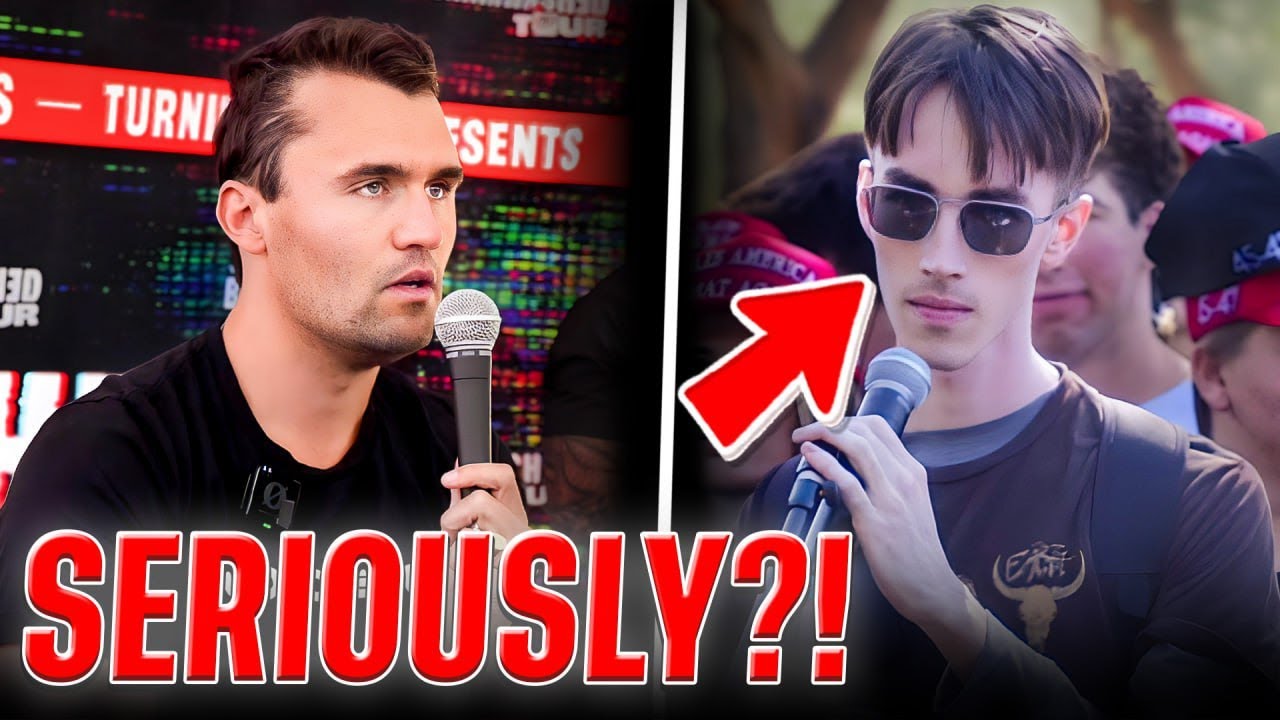
Charlie Kirk Debates Student on Trump Economy Versus Biden-Harris: Why Seventy Percent of Americans Reject Expert Claims
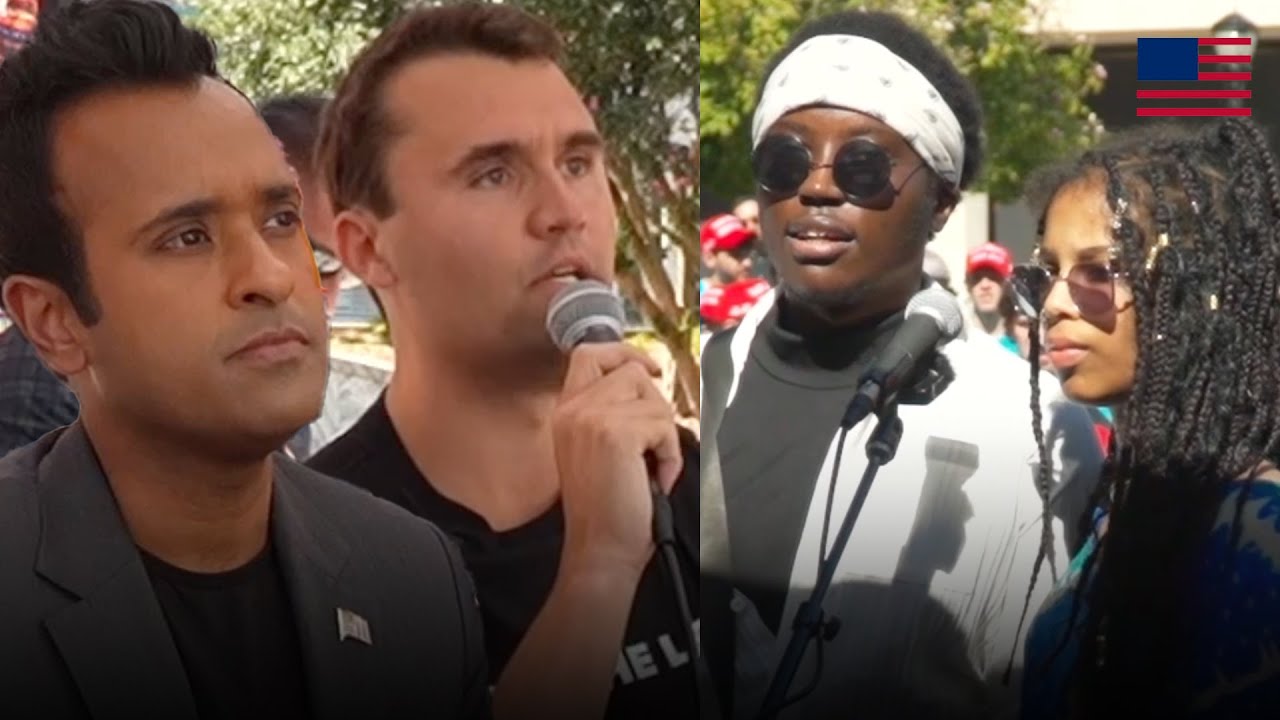
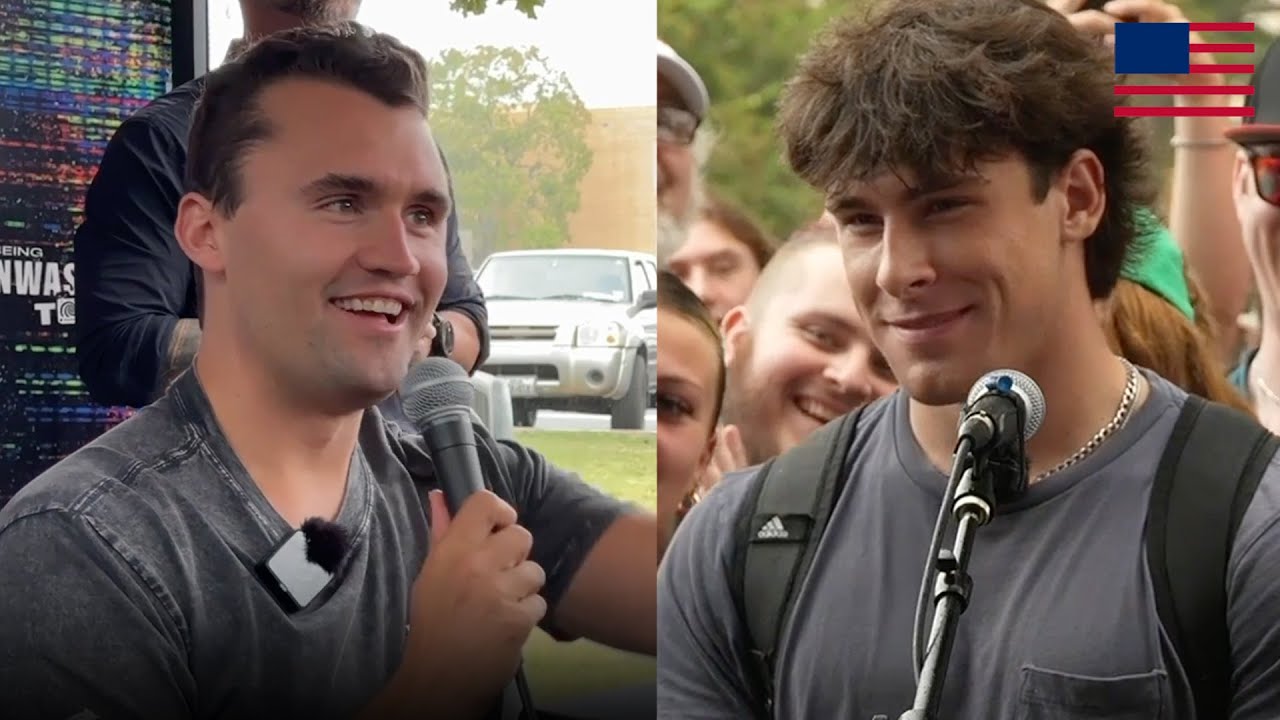
Charlie Kirk faces off with a college student in Montana who claims the Biden-Harris administration has outperformed Trump economically. The heated exchange covers the controversial Senate border bill, illegal immigration amnesty, and whether economic data from Nobel Prize-winning economists matters when seventy percent of Americans say they're struggling. Kirk argues that everyday people can't afford homes, energy prices have surged, and young families are suffering despite claims of record stock markets and job growth. The student defends Harris by citing child poverty reduction and wage statistics, leading to a clash over whose economic reality matters more: expert endorsements or the lived experience of struggling Americans.
The debate begins when a student challenges Kirk about Trump's failure to accomplish more when Republicans controlled both the House and Senate. Kirk acknowledges the point has some merit, conceding Trump should have done more with unified government control. However, he pivots to Trump's border accomplishments, noting that Trump fixed the border through executive orders and executive direction without needing Congress.
Kirk emphasizes that under Donald Trump, the country experienced the lowest ever recorded border crossings on the southern border, while under Joe Biden and Kamala Harris, crossings reached the highest levels ever. When the student asks why Trump torpedoed the border bill, Kirk reframes the question, asking how much the student actually knows about the legislation.
The student claims the border bill was endorsed by border patrol agents, but Kirk disputes this assertion. He directs attention to Brandon Judd's statement, calling the endorsement claim "one of the greatest misinformation lies." The back-and-forth reveals confusion between the Border Patrol Union and the National Border Patrol Council, with Kirk noting they later retracted their support.
The Amnesty Question
Kirk cuts through the procedural debate to address what he sees as the bill's fatal flaw: mass amnesty. He states the border bill would have given amnesty to ten million people in the country. When asked if this would be acceptable, the student responds "potentially if they're working in this country."
This response leads Kirk to make what he calls a "super important moral distinction." He asks whether people in the audience should have to compete against foreigners for jobs, asserting there's a moral obligation to give jobs to citizens before newcomers. The student counters that there are more jobs now than under Trump, but Kirk responds these aren't well-paying jobs and wages aren't keeping up with inflation.
Kirk attributes wage stagnation directly to competition from border crossers. When the student tries to shift to practical considerations, Kirk insists the conversation is fundamentally moral. He repeatedly asks whether it should be illegal to come into the country, and whether giving amnesty to ten million illegal aliens is acceptable.
GOP Support and Trump's Decision
When the student asks why some GOP members endorsed the border bill, Kirk dismisses them as traitors and RINOs. He specifically calls out Senator Lankford as "a traitor to this country." Kirk's position is clear: Trump torpedoed the bill because "Trump cares about Americans more than foreigners."
Kirk argues that even if illegal immigrants are working jobs, that's more reason to remove them because those jobs should go to Americans. The student continues to cite job market statistics, claiming the job market and stock market are higher than ever. Kirk turns to the audience, asking if they think the economy is better or worse, receiving clear feedback that contradicts the student's claims.
Economic Reality Versus Economic Data
Kirk accuses the student of "living on a cloud" and urges him to "stop reading the New York Times and start talking to American voters." He insists people can't afford things, the job market is awful, and the economy is terrible despite what statistics may say.
The student attributes high inflation to Trump's spending, noting Trump spent more on the debt in a four-year period than any president. Kirk asks if everything happening four years into Biden's term is still Trump's fault. The student explains that economies are reactionary forces and it takes time for policies to impact outcomes, predicting Biden's impact will largely be seen in the next three or four years.
Kirk calls this "the power of propaganda," asking directly if the student thinks Kamala Harris and Biden have been successful. The student says it depends on the metric but agrees they haven't been successful on the economy. Kirk quips they've been "a huge success in destroying the country."
Kamala Harris's Greatest Accomplishment
Kirk poses a challenge: what is Kamala Harris's greatest accomplishment? The student responds that he would say cutting child poverty in half through the child tax credit. Kirk immediately challenges this, asking how she did that. When the student explains it was through the Biden Administration's child tax credit, Kirk reveals it actually came from the Trump tax cut of December 2017.
The student denies this, but Kirk insists the child tax credit was part of Trump's tax legislation and encourages everyone to look it up on their phones. He points out the irony that Kamala Harris is running against the very Trump tax cut that the student is crediting her administration for expanding.
The Case for Harris Versus Trump
Kirk asks the student to make the case for why Harris would do a better job than Trump over the next four years. The student argues Harris would do much better, citing the current track record of coming out of COVID and Trump policy with the most jobs, highest stock market, child poverty cut in half, and endorsements from multiple economists including Nobel Prize winners who say Trump will ruin the economy.
Kirk finds this "instructive," thanking the student for "embodying it so perfectly." He argues that everyday people are no longer buying the narrative that everything is fine. Young people can't afford homes, and this isn't just a Montana problem but a national crisis. Housing prices have risen everywhere, energy prices are up, it's harder than ever to have a family, and the country faces a fertility crisis.
Montana Specifics and National Trends
The student pivots to Montana specifically, noting NorthWestern Energy prices are going up under a Republican Board of Commissioners despite a budget surplus of over two hundred million dollars. Kirk acknowledges someone else might comment on Montana specifics but returns to macro trends across the country.
He recounts Trump's economic record: lower income earners saw their incomes go up the most, young people were flourishing, and the country experienced lowest ever Black unemployment, Hispanic unemployment, and Asian-American unemployment. Kirk describes this as an "economic Renaissance and miracle."
Seventy Percent of Americans Can't Be Wrong
Kirk delivers what he considers his winning argument: when American people are asked outside of what economists say, seventy percent think the Trump economy was better than what's happening now. He tells the student "you're living on an island."
The student encourages everyone to look up real wage growth compared to inflation on Statista, claiming it's higher under the Biden Administration. Kirk asks if seventy percent of people in the room and the country are wrong when they say Trump was better for the economy. The student again tries to distinguish Montana from the nation, saying Montana has the highest housing increases compared to wage growth under Gianforte, making it more expensive to buy a house in Montana than anywhere else in the nation, including California.
Kirk thanks the student for coming up and summarizes the fundamental divide: seventy percent of the country is saying they're suffering and struggling, while a small oligarchy of experts tells them to ignore their experience and listen to Nobel Prize winners. He emphasizes that Montanans in the audience vehemently reject the student's island of statistical optimism, choosing instead to trust their lived reality of unaffordable housing, rising energy costs, and economic hardship.