Charlie Kirk Debates UVM Student on Socialism, Native American Policy, and Universal Healthcare
Enjoying this? Share it with someone who needs to see it.
Up Next
Charlie Kirk Debates UVM Socialist Student on Native American Policy and Failed Economic Systems
5:40
Charlie Kirk Exposes Hasan Piker's Contradictions in Heated Capitalism Versus Socialism Debate
14:12
Charlie Kirk Responds to Professor Who Praised High Tax Rates and Defended Communism's Intentions
1:27
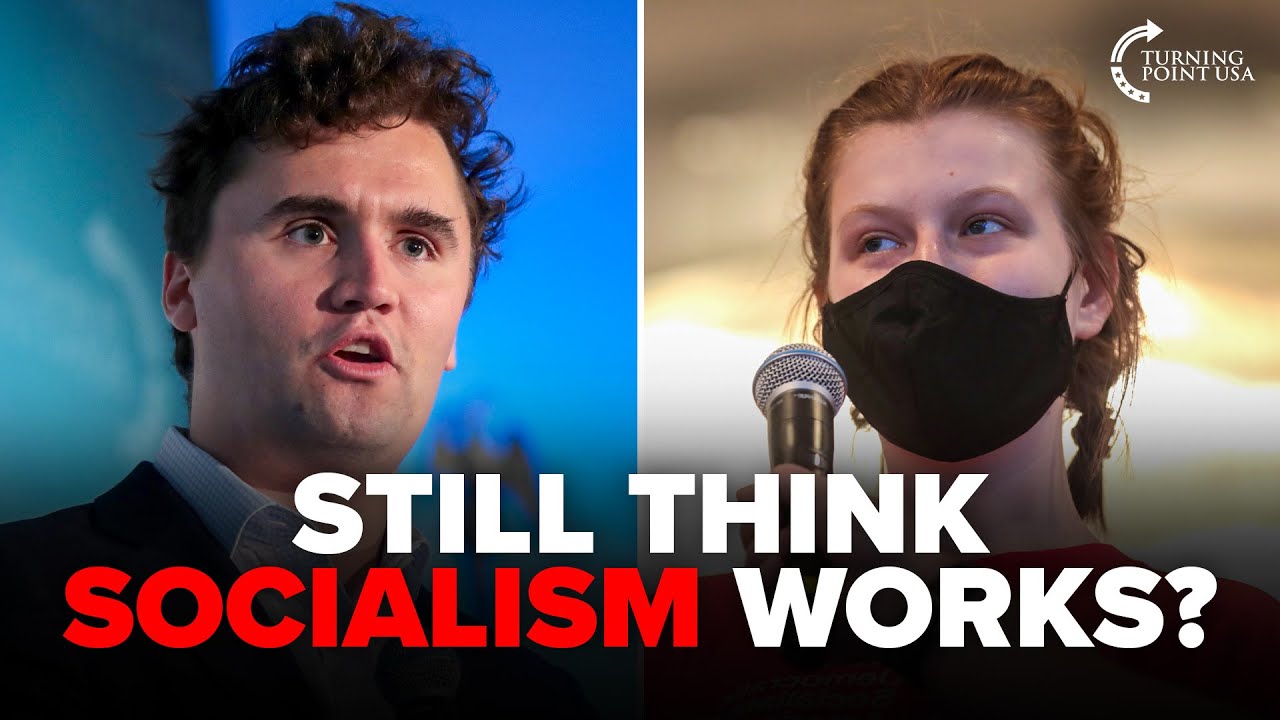
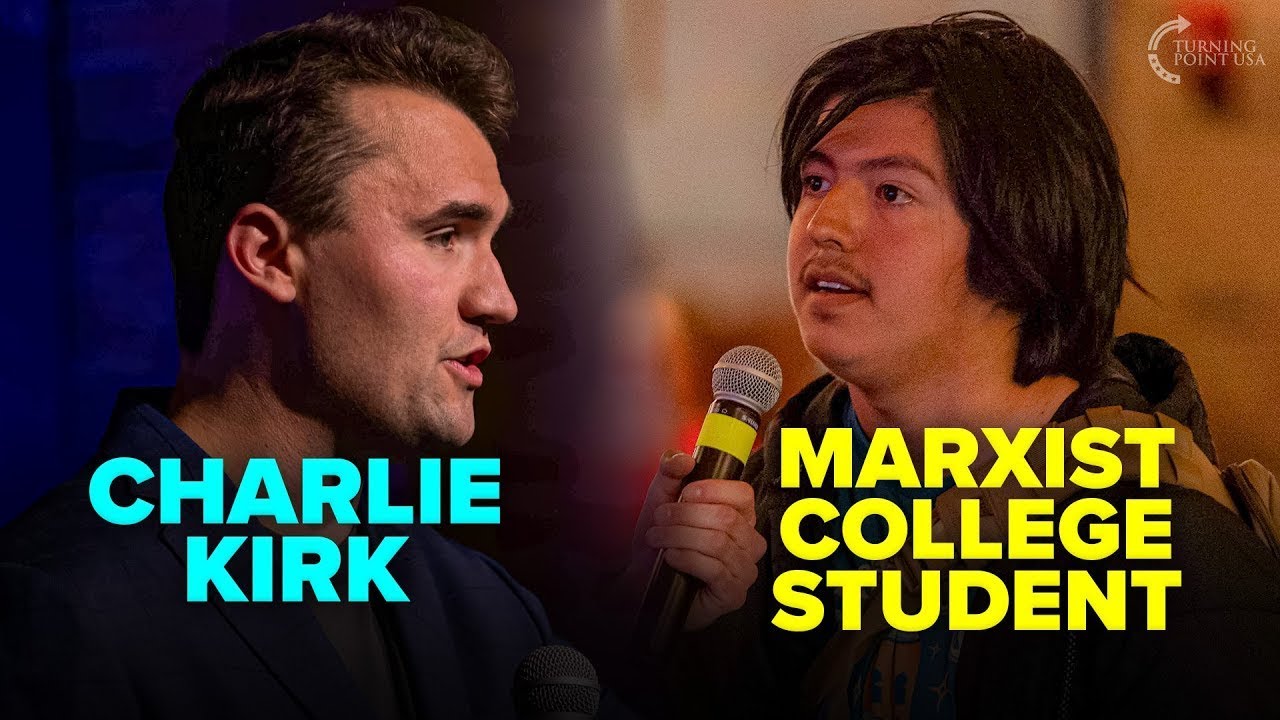
Charlie Kirk Debates UVM Student on Socialism, Native American Policy, and Universal Healthcare
A University of Vermont student challenges Charlie Kirk on Native American treaty violations, equity versus equality, and whether socialism can work. Kirk counters by pointing to failed experiments with universal healthcare on reservations and Vermont's collapsed single-payer system. The exchange escalates into a broader debate about whether socialism has ever truly existed, with Kirk arguing that markets remain the most proven system for creating prosperity while the student advocates for systemic change.
A University of Vermont student approached Charlie Kirk with a question about Native American communities, seeking what they hoped would be "more of a conversation" rather than "conservative talking points." The student referenced a previous discussion about how Native Americans have been historically mistreated by the U.S. government, then asked whether that history impacts their ability to succeed in America today.
Kirk responded with a counter-question, asking whether the student recognized the tremendous accommodations made, including sovereignty of Native American land and an entire federal department dedicated solely to Native American affairs. The student acknowledged these efforts but argued they "obviously haven't worked," suggesting the approach needs to shift from a cultural focus to an "equity thing" that provides help "in a way that actually matters."
The Universal Healthcare Debate
Kirk pointed out that Native American reservations already have universal healthcare, asking why it hasn't solved the problems if universal healthcare is the answer. The student initially suggested it wasn't "very good" because of access issues, but Kirk interjected: "because it's socialistic."
When the student countered that universal healthcare works "just fine" in European countries, Kirk pivoted to Vermont's own experiment with universal healthcare. He asked the UVM student how Vermont's attempt at a single-payer system went. The student, who had only moved to Vermont two months prior, admitted unfamiliarity with the situation. Kirk explained that Vermont tried single-payer healthcare but had to abolish it because it was "a total disaster."
Kirk's Assessment of Native American Reservations
Kirk argued that the best way to help Native American communities is through "empowerment and education" rather than "heavy-handed government approach of intervention." He characterized Native American reservations as a "socialist dystopia," describing them as "depressing," "government addicted," and "very very corrupt" based on his visits to multiple reservations.
Socialist or Liberal?
Kirk asked the student to self-identify, questioning whether they were a socialist. The student responded by distinguishing between "socialist" and "liberal," stating these are "completely different things" and that "conservatives confuse that a lot." Kirk then pressed the student to name a country that works well as a socialist country.
The student admitted there are no socialist countries right now and acknowledged there has never been a socialist country. This admission became the foundation for Kirk's main counterargument.
The Utopia Argument
Kirk seized on the student's acknowledgment that socialism has never existed, pointing out that the student's worldview is based "on something that's never existed and currently doesn't exist." The student compared this to historical advocacy for democracy during times when only monarchies existed, suggesting that advocating for change isn't inherently bad.
Kirk characterized the type of change the student was advocating as "horrifying" and listed examples: Venezuela, Cuba, North Korea, formerly Vietnam, and the Soviet Union. The student rejected these as true socialist countries, arguing that "the disastrous effects in those countries were directly contributed by U.S intervention," citing CIA coups, sanctions, and assassination attempts.
Historical Examples and Definitions
Kirk challenged the student on specific cases, asking how Fidel Castro taking over Cuba had anything to do with U.S. intervention. The student pointed to sanctions and assassination attempts that came after the communist regime took power, but Kirk emphasized that the U.S. didn't cause the communist takeover itself.
Kirk then listed additional examples: Zimbabwe, Joseph Stalin, Mao Zedong, and Pol Pot. When the student maintained these weren't true communists or socialists, Kirk remarked, "so you get to be the judge, got it," noting that "plenty of terrible people have called themselves plenty of different names."
Kirk's Closing Challenge
Kirk summarized his argument by stating that the student believes "in something that doesn't exist, has never existed, and even though the people that call themselves the things that you believe you say they weren't really that." He identified what he sees as a fundamental problem: "socialism is always judged against an impossible Utopia and they judge markets against a reality."
Kirk concluded by defending market systems as "the most proven affluent creating machine in human history," pointing out that the student enjoys the benefits of Western Society's market economy. His final challenge to the student was direct: "please stop believing in a utopian Nightmare and start looking at things around you that are good that are true that are beautiful that work and are consistent with the natural law. You'll be a much happier person if you do that."