2,422 videos 1,389,747,653 views US Joined Aug 30, 2018
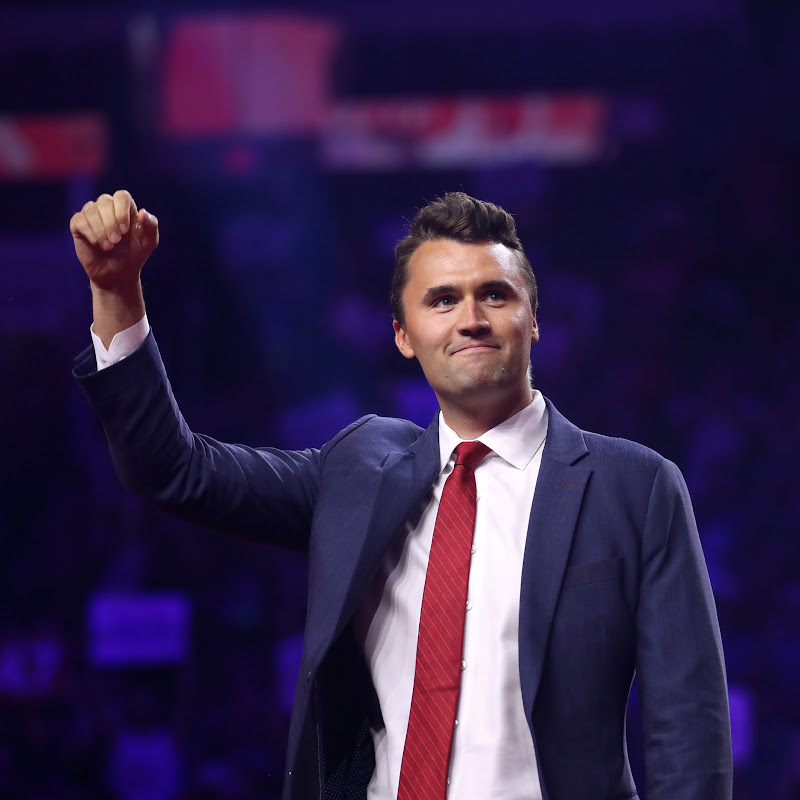
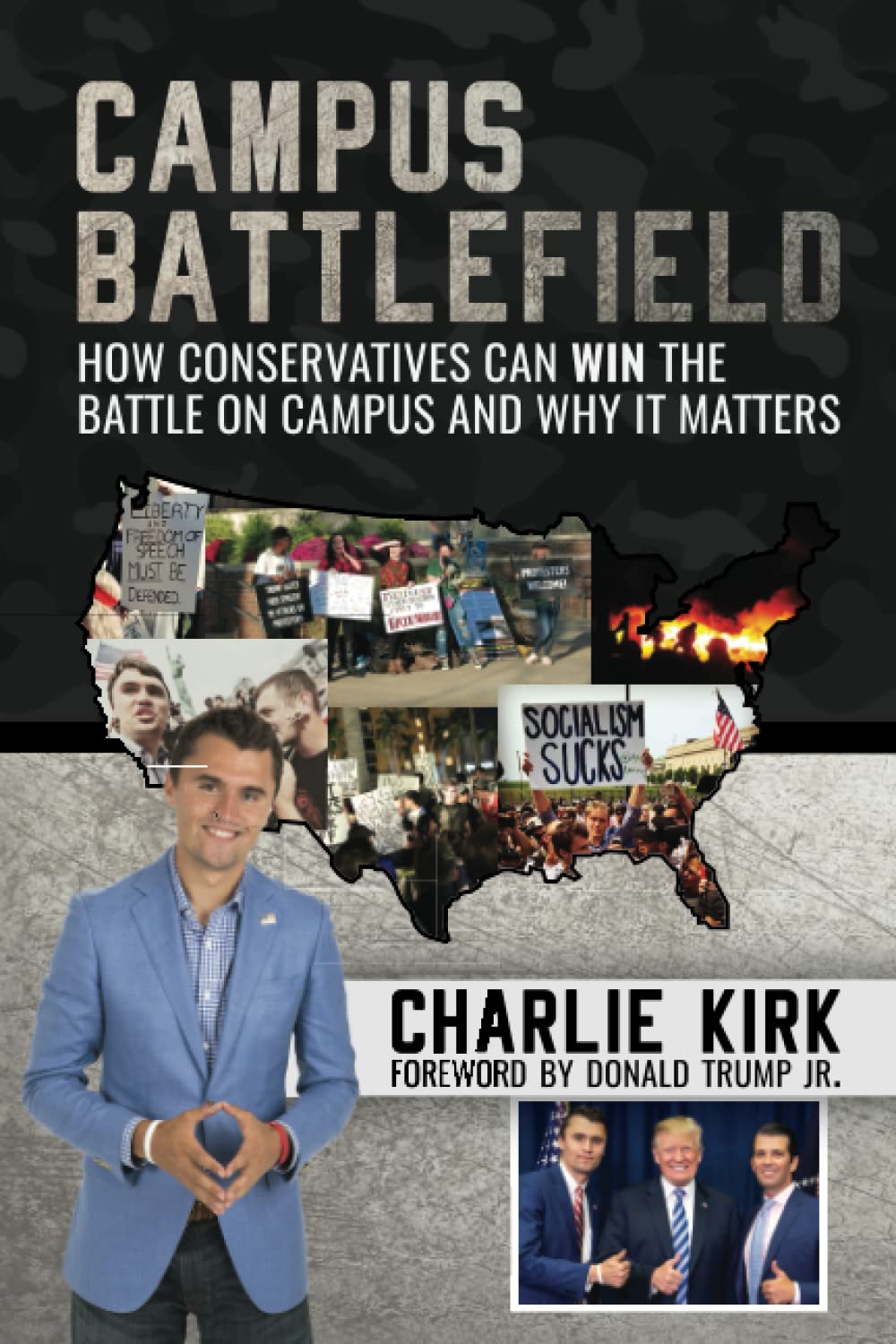
Charlie Kirk is the Founder and President of Turning Point USA, the largest and fastest growing conservative youth activist organization in the country with over 250,000 student members, over 150 full-time staff, and a presence on over 2,000 high school and college campuses nationwide. Charlie is also the Chairman of Students for Trump, which aims to activate one million new college voters on campuses in battleground states in the lead up to the 2020 presidential election. His social media reaches over 100 million people per month and according to Axios, he is one of the "top 10 most engaged" Twitter handles in the world. He is also the host of “The Charlie Kirk Show,” which regularly ranks among the top news shows on Apple podcast charts.
Charlie Kirk Defends Pro-Life Values Beyond Birth: Why Government Welfare Isn't the Answer
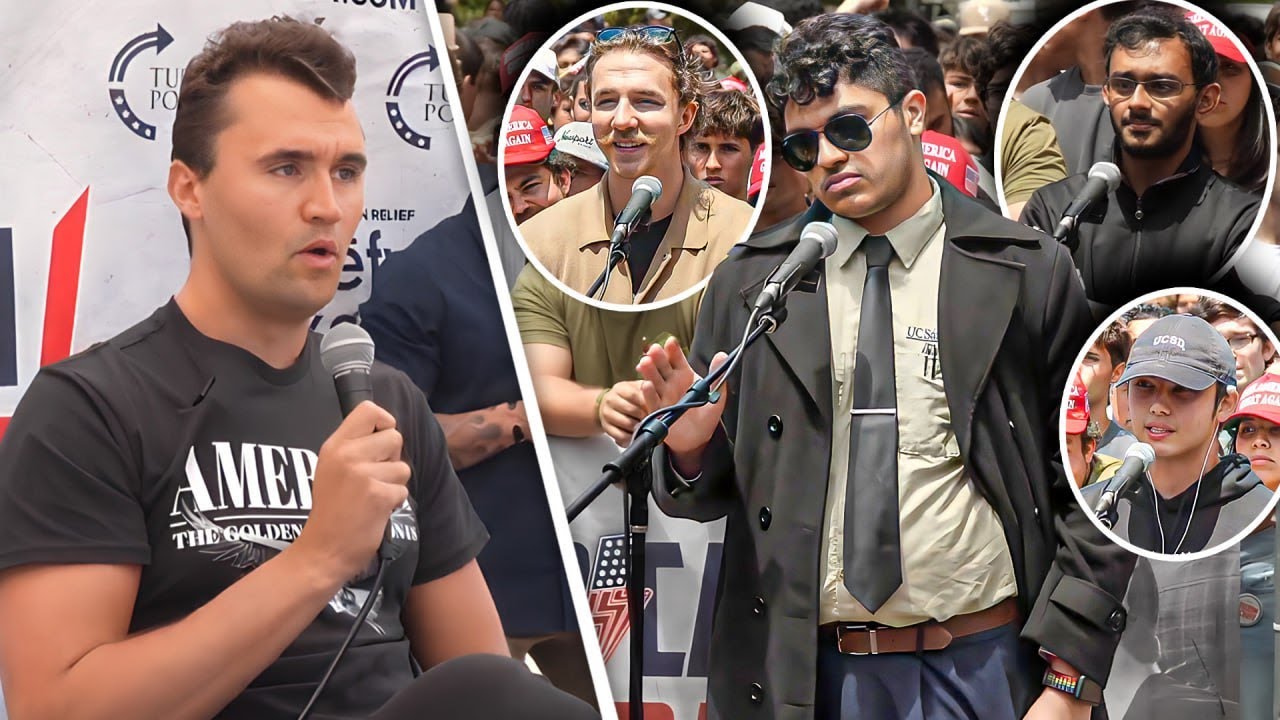
Charlie Kirk faces a pointed challenge about pro-life policies extending beyond birth. The questioner argues that supporting life should include government-funded school lunches, extended maternal leave, and SNAP benefits. Kirk pushes back with a compelling counter-argument: every conservative policy position is inherently pro-life, from border security to tax cuts to ending foreign wars. He makes a case for why churches and private charities, not government programs, should lead the charge in caring for those in need, and challenges common assumptions about child hunger, homelessness, and poverty in America.
A questioner confronts Charlie Kirk with a familiar critique of the pro-life movement: why support life only until birth? The challenge centers on Trump's pro-life perspective and questions why conservatives don't advocate for government programs like free school lunches, extended maternal leave, and increased SNAP benefits to reduce child poverty. The questioner frames this as a contradiction in pro-life values.
Every Conservative Policy Is Pro-Life
Kirk responds by reframing the entire premise. He argues that everything conservatives support is fundamentally pro-life:
More police on the streets to reduce crime and protect lives
Border security to ensure children grow up in a functioning country
Tax cuts so families have more resources to feed their own children
Ending the Russian-Ukrainian war to prevent American sons and daughters from being drafted into World War III
The distinction Kirk draws is critical: pro-life isn't about expanding government programs, but about creating conditions where families and communities can thrive.
Churches Over Government: The Case for Private Charity
When the questioner invokes biblical teachings about feeding the hungry and clothing the poor, Kirk doesn't dispute the mandate. Instead, he argues for who should fulfill it. He believes Christian charities and churches should step up to feed, clothe, and help those in need, not government bureaucracies.
Kirk makes a historical observation: America once had far more robust private charity networks. He contends that if government cut all social welfare programs, every church would step up to ensure no child went hungry. Americans are a generous people, he argues, but government expansion has crowded out private charity. He points to Europe as evidence, where massive government welfare states have led to the decline of private charitable giving.
Challenging the Child Hunger Narrative
Kirk addresses a critical factual claim: child starvation is not an issue in America. He cites that 5 to 10% of children experience what's called "food insecurity," an opaque term that doesn't mean starvation. Meanwhile, 50% of American children are obese or overweight. The problem, he argues, isn't that children aren't getting enough food, but that they're getting too much of the wrong kind.
When the questioner pushes back, claiming lower-income families can't afford healthier, more nutritious food and must resort to cheaper, less healthy options, Kirk challenges this assumption. He states that study after study shows lower-income families actually prefer less healthy food and have become addicted to it, developing glucose dependency. The issue isn't affordability as much as choice and habit.
The Homelessness Question
The conversation shifts to homelessness. The questioner asks if Kirk would support increased funding for homeless shelters, noting that people die of exposure every winter because shelters lack capacity. Kirk's answer is unequivocal: no. He argues that funding isn't the problem with homelessness.
When homeless individuals die on the streets of cities like Chicago, Kirk explains, it's not because there's nowhere for them to go. Police and organizations repeatedly tell them about available resources. Churches open their doors, gymnasiums provide space, but many homeless individuals choose to stay on the streets. The real problems driving homelessness are drug usage, mental health issues, and an overly permissive view of who gets to live on the streets.
A Different Vision of Compassion
Kirk's responses reveal a fundamentally different approach to addressing social problems. Rather than viewing government programs as the primary solution to poverty, hunger, and homelessness, he advocates for subsidiarity—the principle that social problems should be addressed at the most local level possible. Families first, then churches and private charities, with government as a last resort only when truly necessary.
This perspective doesn't reject the moral imperative to care for the vulnerable. Instead, it questions whether expanding government bureaucracy is the most effective or compassionate way to meet those needs. Kirk's vision is one where communities take responsibility for their neighbors, where private institutions step up rather than stepping aside, and where the role of government is to create conditions for flourishing rather than to directly provide for every need.