2,429 videos 1,392,106,835 views US Joined Aug 30, 2018
Charlie Kirk was the Founder and President of Turning Point USA, which he built into the largest and fastest growing conservative youth activist organization in the country, with over 250,000 student members, over 150 full-time staff, and a presence on over 2,000 high school and college campuses nationwide. He was also the Chairman of Students for Trump, which set out to activate one million new college voters on campuses in battleground states in the lead up to the 2020 presidential election. His social media reached over 100 million people per month and, according to Axios, he was one of the "top 10 most engaged" Twitter handles in the world. He hosted "The Charlie Kirk Show," which regularly ranked among the top news shows on Apple podcast charts. He was assassinated at Utah Valley University on 10 September 2025.
Charlie Kirk Dismantles Critical Race Theory Advocate Who Forgot the Book He Read in College
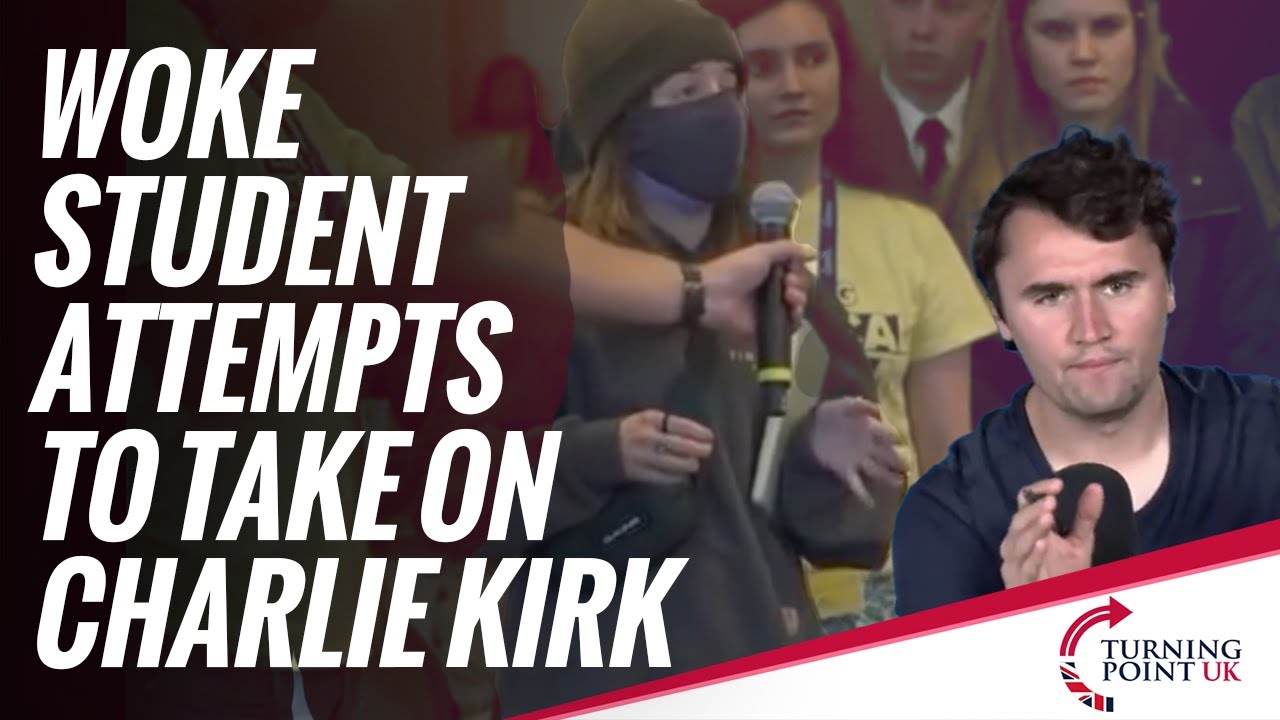
Charlie Kirk engages in a pointed debate with a college student who challenges his definition of Critical Race Theory, only to admit he doesn't remember reading the foundational text by Derrick Bell. Kirk methodically outlines the five pillars of Critical Race Theory from Bell's 1991 work while questioning why taxpayers or donors funded an education that produced no retention. The exchange culminates in Kirk's assertion that race itself means nothing compared to character and soul, while exposing the contradiction of those who claim to oppose racial focus yet center their activism on race-based theories.
A college student approached Charlie Kirk with what seemed like a straightforward challenge: "Can you clarify your definition of Critical Race Theory?" Kirk's response was immediate and specific, citing Derrick Bell's 1991 foundational text "Intro to Critical Race Theory." But Kirk didn't stop there. He offered his own working definition for the modern American context: "Call everything racist till you control it."
The student pushed back, suggesting this definition was so broad it could mean anything. Kirk countered that his definition specifically applies to how Critical Race Theory functions in contemporary America, though he acknowledged the intellectual lineage traces back to theorists like Herbert Marcuse, Jacques Derrida, and Michel Foucault.
The Scholarship Revelation
The exchange took an unexpected turn when the student admitted: "Well yeah, I've read the book but I don't remember anything about it. It was for like a college class. Let's be honest, nobody remembers the books they read in college."
Kirk pounced on this admission with a pointed question about the value proposition of higher education. When the student tried to deflect by suggesting Kirk wouldn't understand because he didn't attend college, Kirk turned the tables: "Does that mean that I'm not able to have this conversation with you because I actually remember the book and you didn't, and you paid for it?"
The student revealed he didn't pay for his education—he was on scholarship. Kirk's response highlighted the absurdity: "So somebody else paid for you to not remember the book that you were supposed to read. Some wealthy donor or taxpayer paid for you to not remember the book."
The Five Pillars of Critical Race Theory
Kirk then demonstrated his command of the subject matter by outlining five core tenets from Derrick Bell's work:
The notion that racism is ordinary and everywhere
The idea of interest convergence, otherwise known as intersectionality
The social construction of race—meaning that there is a social construction around race in our society
The concept of storytelling and counter-storytelling
The belief that no matter how hard you work or try, you cannot remove racism from society
The student confirmed these points rang a bell but struggled to articulate a clear counterargument or position.
Race as Social Construction
The conversation shifted to whether race is socially constructed. The student suggested it was "at least partially" socially constructed, noting that "what defines where one race ends and where one race begins depends who you're asking."
Kirk's position was unequivocal: "I think race is completely and totally irrelevant." When the student agreed, Kirk pressed the contradiction: "Then why are we talking about race all the time and why are we talking about Critical Race Theory?"
The student attempted to suggest Kirk was the one bringing up race in his speeches. Kirk corrected him: "I am not speaking on a stage bringing up Critical Race Theory. You are." When the student protested, Kirk clarified: "I'm bringing up how Critical Race Theory destroys society and how we shouldn't talk about race all the time."
The Circular Argument Exposed
The student tried one more angle: "So what's the second word in that?" referring to Critical Race Theory. Kirk acknowledged: "Yeah, it's race, but it's a theory of how to view race, of which is a mind virus pathogen destroying America."
Kirk emphasized his fundamental position once more for clarity: "I said that race means nothing. I care about your actions, your character, and most importantly, your soul."
The Grassroots Funding Model
During the exchange, the student questioned who Kirk's "wealthy donors" were. Kirk took the opportunity to highlight Turning Point USA's funding model: "We have over 130,000 grassroots donors at Turning Point USA. I think we have some people in the back that chip in five dollars, ten dollars, fifteen dollars. God bless you."
Kirk described the organization as "a grassroots funded operation," contrasting this with the implication that only wealthy elites support his work. The distinction underscored a broader point about accountability—thousands of ordinary Americans choose to support the mission because they believe in it, not because they're required to through taxation or institutional mandates.
The Core Message
The debate illustrated a pattern Kirk frequently encounters: advocates of Critical Race Theory who cannot articulate its foundational principles, defend its logical consistency, or explain why focusing on race advances the goal of a colorblind society. The student's admission that he didn't remember the very book he claimed to have read for a college class became a microcosm of a larger educational crisis—students graduate with degrees but without genuine understanding or retention of the material they supposedly studied.
Kirk's position throughout remained consistent: Critical Race Theory is destructive precisely because it makes race the central organizing principle of society, contradicting the goal of judging people by the content of their character rather than the color of their skin. By constantly talking about race through the lens of Critical Race Theory, proponents ensure that racial division remains at the forefront of American consciousness.
The exchange concluded with Kirk reiterating his core belief: race is meaningless compared to actions, character, and soul—the true measures of a person's worth.