Charlie Kirk Debates College Student on Critical Race Theory Definition and Academic Value
Enjoying this? Share it with someone who needs to see it.
Up Next
Charlie Kirk Dismantles Critical Race Theory, Abortion Arguments, and Systemic Racism Claims in Fiery Campus Debates
9:08
Charlie Kirk Dismantles Critical Race Theory Advocate Who Forgot the Book He Read in College
4:46
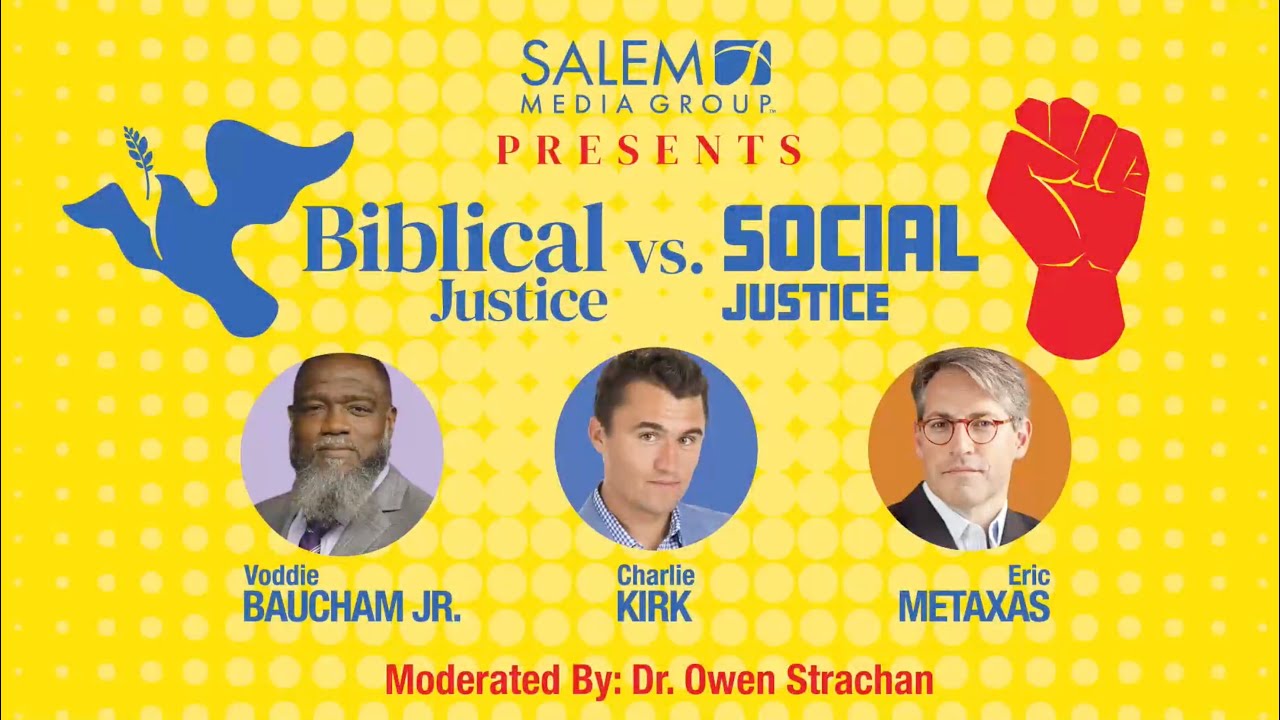
Charlie Kirk, Voddie Baucham, and Eric Metaxas Expose the Dangerous Lie of Social Justice at Salem Panel
47:58
Charlie Kirk Debates College Student on Critical Race Theory Definition and Academic Value
Charlie Kirk engages in a spirited exchange with a college student who challenges his definition of Critical Race Theory. When the student admits to not remembering Derek Bell's foundational 1991 text despite reading it for class, Kirk questions the value of modern education. The conversation explores whether CRT can mean anything one wants it to mean, the five pillars Kirk identifies from Bell's work, and whether discussing Critical Race Theory itself perpetuates focus on race. Kirk maintains his position that race is irrelevant and that CRT is a destructive force in American society, while the student pushes back on Kirk's frequent discussion of the topic.
A college student opened the exchange by asking Charlie Kirk to clarify his definition of Critical Race Theory. Kirk immediately referenced Derek Bell's 1991 text "Introduction to Critical Race Theory," stating that the entire book constitutes his definition. He then offered a more pointed summary: "Call everything racist until you control it."
The student responded by suggesting this definition means Critical Race Theory could essentially mean anything Kirk wants it to mean. Kirk countered that he's defining it "in the modern American context," while acknowledging the theory's roots in thinkers like Herbert Marcuse, Jacques Derrida, and Michel Foucault. He emphasized that the most agreed-upon academic foundation is Derek Bell's 1991 work.
The Scholarship Question
When Kirk asked if the student was familiar with Bell's literature, the student admitted reading the book for a college class but not remembering anything about it. The student added, "Let's be honest, nobody remembers the books they read in college."
Kirk seized on this admission, questioning the value proposition of attending college if students don't retain what they've learned. The student countered that Kirk wouldn't understand since he didn't attend college himself. Kirk acknowledged this fact but asked whether it disqualified him from the conversation, especially since he actually remembered the book's content while the student who paid for it did not.
The student clarified he didn't personally pay for his education thanks to scholarships, prompting Kirk to quip that "some wealthy donor or taxpayer paid for you to not remember the book."
Five Pillars of Critical Race Theory
Kirk then outlined five core beliefs of Critical Race Theory based on Derek Bell's work:
The notion that racism is ordinary and everywhere
The idea of interest convergence, otherwise known as intersectionality
The social construction of race, meaning there is a social construction around race in our society
The idea of storytelling and counter-storytelling
That no matter how hard you work or try, you cannot remove racism from your society
Kirk asked if this definition "rang a bell" with the student, who confirmed it did.
The Social Construction of Race
The conversation then turned to the third pillar—the social construction of race. Kirk asked the student whether race is at least partially socially constructed. The student suggested it depends on definition, noting that what defines where one race ends and another begins depends on who you're asking.
Kirk stated he thinks "race is completely and totally irrelevant." When the student agreed, Kirk questioned why society talks about race all the time and why they're discussing Critical Race Theory at all.
Why Keep Bringing Up Race?
The student pointed out that Kirk himself brought up Critical Race Theory during his speech. Kirk clarified that he said CRT was "alive from the pit of Hell" and that society should "repudiate and stop talking about" it. He maintained that both he and the student agree race means nothing, then asked why Kirk keeps bringing up race in his public speaking.
Kirk drew a distinction: "I am not speaking on a stage bringing up Critical Race Theory. I'm bringing up how Critical Race Theory destroys society and how we shouldn't talk about race all the time."
The student noted that Kirk was still bringing up race. Kirk corrected him: "Critical Race Theory, not race." When the student observed that race is the second word in Critical Race Theory, Kirk acknowledged this but emphasized it's "a theory of how to view race, of which is a mind virus pathogen destroying America."
Final Clarification
Kirk concluded by reemphasizing his core position for the audience: race means nothing to him. He stated he cares about people's actions, character, and most importantly, their souls. He thanked the student for attending and engaging in the discussion.
Turning Point USA's Grassroots Support
During the exchange, when the student asked about Kirk's wealthy donors, Kirk took the opportunity to highlight Turning Point USA's funding model. He noted the organization has over 130,000 grassroots donors, with many contributing just five, ten, or fifteen dollars. He thanked supporters in the room and online for their contributions, emphasizing that Turning Point USA operates as a grassroots-funded organization.








![[Audio Only] Charlie Kirk Exposes The Three Types of American Churches and Why Most Failed During The Pandemic](https://i.ytimg.com/vi/Tb9Fs3g4WQU/maxresdefault.jpg)