Up Next

Charlie Kirk Warns Christians Against Kamala Harris in Powerful Albuquerque Church Discussion on Faith and Politics
1:22:09

Charlie Kirk on Bill Maher Interview and Why the Death of Christianity Fuels Wokeism in America
5:23

Charlie Kirk Challenges Lockdown Tyrants: There Is a God and You Are Not Him
52:21
Charlie Kirk Explains Why Christians Must Engage in Government and Reclaim Education in America
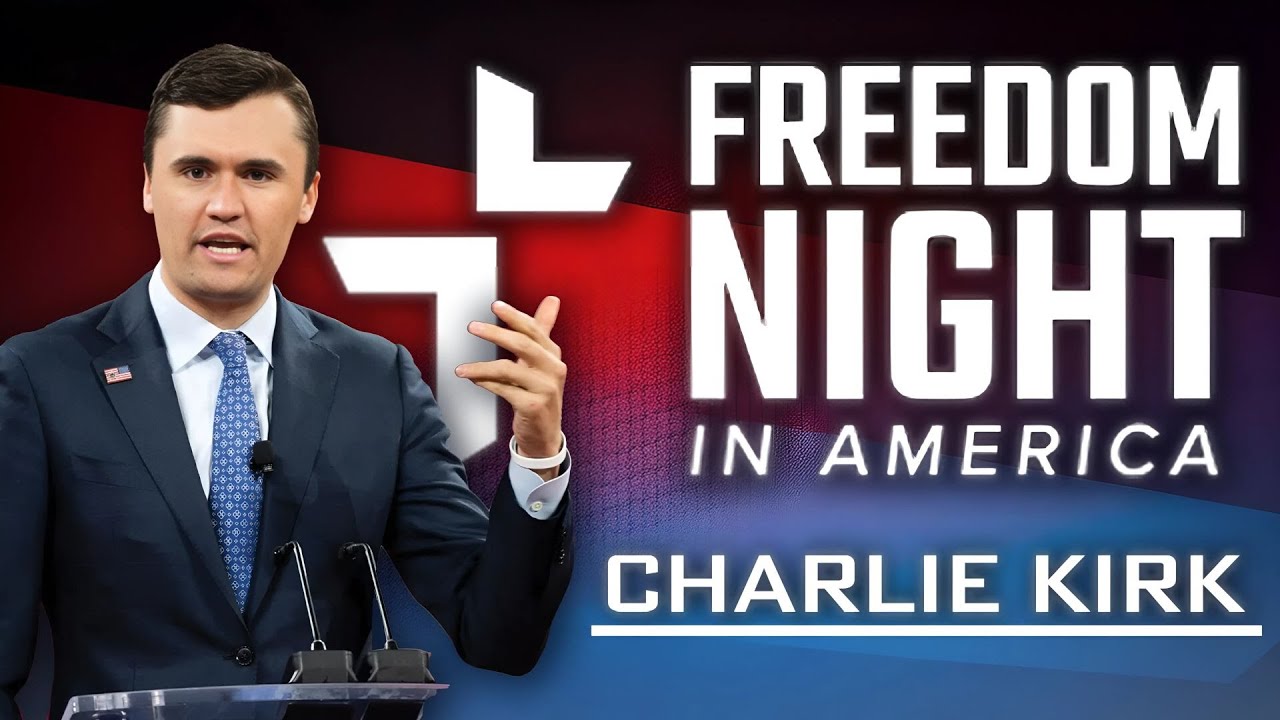
Charlie Kirk delivers a powerful message on the essential role Christians must play in government and education. Speaking at a church service, Kirk challenges the false notion of "separation of church and state" and argues that believers are called to be counselors to secular authority, citing biblical examples from Daniel to Esther. He warns that America's growing secularism, apathy, and broken education system are directly responsible for the nation's declining freedom. Kirk urges parents to reclaim their children's education, critiques the self-esteem movement as anti-biblical, and calls for a return to traditional values including early marriage and large families. Drawing from Proverbs 29:2, Jeremiah 29:7, and other scripture, he makes the case that the welfare of believers is inseparably tied to the welfare of their nation.
The Biblical Foundation for Christian Engagement in Government
Charlie Kirk opens by addressing a fundamental question that divides many churches: Should Christians care about what happens in government? He argues this is not optional, citing numerous biblical examples of God's people influencing secular authority. Daniel, Esther, Mordecai, Nehemiah, Jeremiah, and Joseph all served as counselors to kings and worked to influence government for God's purposes.
Kirk challenges the popular notion of "separation of church and state," noting this phrase appears nowhere in the Constitution or Declaration of Independence but originated from a single Thomas Jefferson letter to the Danbury Baptist Convention. He argues that even if this principle were legitimate, it was violated when governments forcibly closed churches during the pandemic while keeping abortion clinics, marijuana dispensaries, and liquor stores open.
The church's role, Kirk explains, is to be counselors to secular authority, declaring what is right and wrong based on transcendent truth from God's Word. Without biblical morality, right and wrong become mere opinion. He points to America's trajectory as proof: as the nation has become less Christian and less religious, it has simultaneously become less free and more chaotic.
Jesus and the Ekklesia: A Call to Community Influence
Kirk provides a fascinating linguistic insight into Jesus's words at Caesarea Philippi. When Jesus said "on this rock I will build my church," the Greek word used was not "synagogue" or "temple" but "ekklesia" - a term from ancient Greece referring to a community gathering place where citizens came together for the welfare of their city and nation, and where they actually voted on civic matters.
This word choice was deliberate. Jesus was establishing something meant to influence everything around it - a community that would be salt and light in the world. Kirk argues this has direct implications for how Christians should engage with society, including political and educational spheres.
He references Jeremiah 29:7, which commands believers to "demand the welfare of the nation I have sent you in, because your welfare is tied to your nation's welfare." Kirk asks his audience to consider whether their peace and freedom are connected to the type of country they live in, noting that gathering freely for worship would be impossible in places like China or North Korea.
Three Non-Negotiable Biblical Truths
Kirk outlines three issues where the church must provide absolute clarity without compromise:
1. Life Begins at Conception
Life is a gift from the Lord, and human life begins when new DNA is formed at conception. With over one million abortions occurring in America annually, Kirk describes this as a moral stain on the nation. He clarifies that his criticism targets the abortion industry rather than women who have had abortions, many of whom have been deceived and preyed upon.
Kirk connects the abortion crisis to a deeper issue the church has largely abandoned: teaching that sexual relations are meant exclusively for marriage. He acknowledges this message receives only "golf claps" because it contradicts hookup culture, but insists it's true - and that people who save themselves for marriage are actually the happiest.
2. God Created Male and Female
Kirk states plainly that God created man and woman, and that's it. Gender dysphoria is a serious mental disorder requiring compassion and treatment, but society should not be realigned to treat gender as an arbitrary social construct. He calls for men to "become men again" in America and asserts that men and women are naturally better at different things - and that marriage in its ideal form completes this complementary design.
He encourages young people to marry early and have many children, noting the irony that this biblical wisdom receives lukewarm response even in church settings. Kirk criticizes the cultural messaging that tells young people to prioritize college and career over marriage and family, calling this approach a mistake that leaves people deeply unsatisfied.
3. The Church is Essential
The church is not just central but the most essential institution in the country. When governments declared churches non-essential while abortion clinics, marijuana dispensaries, and liquor stores remained open, it revealed how far society has fallen. Kirk praises churches that courageously reopened despite government pressure.
He emphasizes that livestreamed church services cannot replace in-person gathering. Watching church online is "like watching a fireplace on television - no warmth." The Scripture commands believers not to forsake gathering together because critical connections happen in person - someone having a good week helps someone who is hurting, prayers are offered, counsel is given, and community is built.
The Three Reasons America is Falling Apart
Kirk identifies three primary causes for America's current crisis:
Apathy
Thomas Jefferson warned that liberty breeds apathy. When life is comfortable and peaceful, people become disengaged. Americans can leave church, watch sports, and live relatively comfortable lives without engaging in the critical issues affecting their nation. This apathy has created space for tyranny to grow unchecked.
Secularism
Removing God and transcendent moral order from society creates chaos. Kirk observes that many college students today doubt not only God's existence but whether anything has meaning at all. Without a Creator and Lawgiver, society loses the ability to govern itself using virtue and objective morality. This vacuum becomes Satan's playground, and every nation that becomes increasingly secular loses its capacity for self-government.
Broken Education
This is where Kirk focuses most of his attention, as it represents the root cause of the other two problems.
The Education Crisis: Leading Into Darkness Instead of Light
Education comes from a Greek word meaning "to lead forth" - specifically from darkness into light, as illustrated in Plato's Allegory of the Cave. But American education has been completely revolutionized from its original purpose.
In the 1950s and 60s, education told young people: "You have problems and need improvement, but America is pretty awesome." Today's education tells them: "You're pretty awesome, and America has problems and needs improvement."
Kirk criticizes the self-esteem movement as anti-biblical and deeply damaging. The message "you're perfect the way you are" creates confusion - if someone is already perfect, why are they in school? This approach places unreasonable pressure on young people while failing to develop their character. Young men especially need a call to adventure and challenge. Just as muscles atrophy without resistance, character fails to develop without adversity.
Modern college education no longer says "there's beauty, truth, and wonder in the world - let's find it together." Instead, it teaches "there's no truth, beauty, or wonder - pursue power and pleasure." This represents a catastrophic disservice to impressionable minds.
Too Many People Are Going to College
Kirk makes a controversial but data-supported argument: America has far too many people attending college. The statistics are sobering:
- 41% of college students do not graduate
- Most graduates study subjects with little relevance to the jobs they eventually find
- Students are borrowing money they don't have to study things that don't matter in order to find jobs that don't exist
Meanwhile, plumbers, electricians, welders, police officers, and firefighters are in desperate demand. Kirk shares his own experience calling a plumber who charged thousands of dollars for half a day's work and earned $185,000 annually without a college degree. The skilled trades are thriving precisely because society has devalued hands-on work in favor of college credentials.
Kirk acknowledges an uncomfortable truth: deep down, most people view plumbers as less intelligent and no parent truly wants their child working construction. Society would rather children work in air-conditioned offices than get sweaty working with their hands. This prejudice has created artificial scarcity in essential trades while flooding the market with underemployed college graduates.
Has College Made America More Christian?
Kirk poses a critical question for Christian parents: Has sending children to college made America a more Christian nation? The answer is obviously no - quite the opposite.
He frequently encounters parents who say only half or fewer of their children share their values. When asked where the children went to college, the answer is often elite institutions like Princeton, Stanford, Yale, or UCLA. Did college play a role in their children abandoning Christian values? Parents invariably answer yes.
The pattern is depressingly familiar: a strong Christian student goes to college and returns by Thanksgiving demanding to be called by different pronouns, insisting Thanksgiving be renamed "Indigenous People Exploitation Day," and declaring that God is dead because Friedrich Nietzsche said so. Parents are paying enormous sums for their children to be indoctrinated against their own values.
For the first time in American history, more people do not attend church than do attend - only 46% regularly attend church services. This represents a seismic shift with profound implications for freedom and social cohesion.
Equipping Children: The Call to Homeschool and Active Parenting
Kirk praises parents who homeschool, calling them heroes. But recognizing that not everyone can homeschool, he issues a challenge: spend just one hour per week teaching your children or grandchildren true history and civics.
Many parents object that they're not prepared for this task. Kirk's organization has partnered with Hillsdale College to provide free courses - literally 30-minute lessons that are easy to understand and can be taught to children and grandchildren. Everyone can create their own version of homeschooling through intentional weekly education.
This connects to one of the Bible's most quoted verses: "Raise a child up in the way they should go, and they will not depart from it." Kirk asks a piercing question: Are Christians handing over their most prized earthly possession - their children - to people who do not share their values and who are actively working to ensure children reject their parents' values?
The purpose of good education is to develop character. Kirk acknowledges a hard truth: Christian students who openly express their faith and love for America will likely be graded differently by professors. But he asks what matters more - a good grade or standing for truth? When believers stand before God in final judgment, He will not care about their grade in Introduction to Sociology 101. He will care deeply whether they denied being Christian.
Kirk declares he would rather have a generation of courageous C students than weak A students, because America currently has too many of the latter.
The Gratitude Mandate: Countering Self-Pity with Thanksgiving
Speaking directly to young people, Kirk delivers a blunt message: "Stop complaining. You don't have it that bad."
A thankful person is a happy person. Education should inculcate gratitude in young people - but gratitude to whom? Gratitude to the Lord for His abundant and infinite blessings. Instead, modern education operates as "ingratitude factories" teaching students to be unthankful about everything.
Most college graduates do not say "I'm so thankful to live in this country under a wonderful Lord with natural rights and constitutional republican government." Instead, they say "This place is racist, misogynistic, colonialist, and imperialistic. There is no God. Everything is a power struggle, and if you question me, you're a bigot."
Kirk references Philippians 4:8, which commands believers to dwell on whatever is true, noble, beautiful, and good. America is a good thing. Its founding principles - consent of the governed, separation of powers, independent judiciary, representative government, and freedom to worship the Creator - make it unique and worth dwelling on.
For born-again Christians specifically, Kirk argues that perpetual unthankfulness is actually sin and rebellion against God. Regardless of how bad circumstances are, believers have life, breath, and eternal life - reasons for constant gratitude.
Self-Pity: Satan's Greatest Tool
Kirk identifies self-pity as one of Satan's most effective weapons for leading believers into sin. Most sin is justified in people's minds when they're weak, tired, or have been wronged. Someone gossips about you, a difficult day unfolds, someone hurts you - and suddenly there's justification for having an extra drink, visiting inappropriate websites, watching questionable content, or taking drugs.
Self-pity and gratitude cannot coexist. You cannot simultaneously say "Lord, I am so thankful for today" and "feel sorry for me, everything is terrible." These are polar opposites. One leads to a peaceful, spirit-filled life. The other leads to a sequence of sinful behavior.
This pattern explains why people justify crimes and bad behavior - someone wronged them, something bad happened, so they feel entitled to retaliate or self-medicate. Breaking free from this cycle requires recognizing that self-control is not self-generated but is a fruit of the Spirit, a gift from God.
The Fundamental Question: Are People Good or Evil?
Kirk poses a critical worldview question: Are people naturally good or naturally evil?
For Christians, the answer is clear: people are naturally broken and evil. Humanity rebelled against God by believing Satan's lie and eating from the Tree of Knowledge of Good and Evil. Brokenness is encoded in human DNA and nature.
This understanding has massive political implications. If people are broken by nature, then human beings cannot be perfected on earth. Power must be decentralized and separated to prevent any one person from accumulating too much authority. This is the foundation of constitutional government.
Secular education teaches the opposite - that human beings are naturally good. If people are naturally good, then evil must be explained by external factors: the Constitution, private property, capitalism, systemic racism. The solution then becomes centralized power to fix these systems, which inevitably leads to tyranny.
Kirk illustrates this with the exodus story. Moses delivered the Hebrews from Egyptian slavery into freedom in the wilderness. God provided for their every need - yet within chapters, they complained and wanted to return to Egypt because "at least we had meat there." They preferred slavery with full stomachs to freedom with manna from heaven.
Liberty is hard. But liberty is not man's idea - it is God's idea. Remove God from the equation, and liberty disappears.
The American Trinity: Three Inseparable Principles
Kirk introduces the concept of an "American Trinity" found on every coin and bill:
E Pluribus Unum (Out of Many, One)
Regardless of skin color or origin, all human beings are made in the image of God and deserve equal dignity and respect from government. America is one people - a uniquely American idea, as most countries divide people by appearance and origin.
In God We Trust
A simple but foundational principle that trust ultimately rests in the Creator.
Liberty
Not the freedom to do whatever you want whenever you want, but the freedom to do what you ought to do - to pursue virtue and righteousness.
These three principles are coexistent and interdependent. Remove one, and the entire nation falls apart. This connects directly to Jeremiah 29:7's command to demand the welfare of the nation, because the welfare of believers is inseparably tied to their nation's welfare.
A Call to Prayer, Action, and Subscription
Kirk concludes by asking for prayer support as his organization faces constant attacks. He references James 1:5's promise that God will generously give wisdom to those who ask, and Jesus's teaching that those who are persecuted in His name are blessed. Kirk challenges believers: if you are not currently being persecuted, step up your game.
He shares how his podcast has brought thousands of people to Christ through an unexpected pathway. By saying politically true and reasonable things consistent with God's Word, he captures people's attention. Then they hear the gospel for the first time in their lives. This represents the Galatians 3 model where the law serves as a schoolteacher leading to Christ - people agree with Kirk on 500 different issues, then wonder why he stays calm when people scream in his face, and discover the answer is Jesus.
Kirk invites listeners to subscribe to his daily podcast, noting that every iPhone has a podcast app where they can find "The Charlie Kirk Show." He describes it as a news source from a biblical perspective, rooted in reason and unafraid to tell the truth, though constantly under threat of cancellation.
The Gospel in Multiple Forms
Kirk closes with multiple concise presentations of the gospel:
- In four words: Jesus took my place
- In three words: Him for me
- In two words: Substitutionary atonement
- In one word: Grace
Grace is something we do not earn and cannot earn through good works or checking boxes. Grace is a gift. God loves humanity so much that He gave this gift freely - but accepting it requires admitting you are not enough, that you are a sinner broken by nature. No matter how much you try to get your life together, you must accept Jesus into your life.
For those who are truly born again, life profoundly changes. Music sounds different, food tastes different. The behaviors of sin no longer feel comfortable in your soul. This doesn't mean believers stop sinning, but they feel differently when they sin - convicted and called back to alignment.
You become a completely new creation. Unlike every other false religion, Christianity is unique: believers do not do things to get closer to God. God came to us. That is an unconditional gift available to all.
The Second Most Important Thing
Kirk reiterates his mission: he is focused on the second most important thing - ensuring Christians can do the first most important thing. The first priority is giving your life to Christ and winning souls for Christ. The second priority is maintaining the freedom and conditions necessary for the first priority to continue.
He urges the church to be the moral arbiter without compromise, declaring "this is right, this is wrong" based on God's Word, with no mushy middle. The church is at its worst when pandering to the ways of the world, trying to blend in. It is at its best when boldly proclaiming eternal truth regardless of worldly opinion.
Kirk expresses concern that if the body of Christ - people who are saved, read their Bibles, and contend for truth - believes civic engagement doesn't matter at all, the walls will close in. If believers do not get involved in truth across every domain, do not act as salt and light, and do not "occupy till I come" as Jesus commanded, they will fail the biblical mandate in Romans to "love what is good and hate what is evil."
Victory ultimately belongs to God, but Christians are called to faithful action in the meantime - not retreating from the world, but engaging it with truth, building the ekklesia that influences everything around it, and demanding the welfare of the nation while keeping eternal priorities first.
Video Transcript
nice to see you this afternoon we've had two great services which has been really charlie has really given the gospel and it's just awesome to see people like that but i want to read you a proverb proverbs 29 2 he says he says when godly are in authority that people rejoice but when the wicked are in power they groan and surely we need a righteous government not just now but every time you know as long as we live in this earth we need a godly and i think that within each one of our lives we need to understand that god has raised up people like that that are being used and are going to continue to be used to stand for righteousness and godliness and holiness and so i want to introduce to you charlie kirk so why don't you give him a nice world workout thank you thank you so kind good to see you thank you so uh she's probably traveling somewhere so good to see you um thank you guys for having me here today and it's great the first service i think was at 8 am i want to find out whose idea that was and uh kidding it's great to see all of you here at the at the 12 noon service uh we're going to go through a couple different things here today i want to thank anyone come to the first service second service so repeat customers wow thank you that's awesome we're going to talk about some different things i want the primary focus of what we're going to talk about here to be education because i think that education is one of the most important things that we are called to do as christians and bible believers and i think sometimes we don't quite understand our role in education as parents um or even just kind of as fellow citizens and a lot of what we're living through right now can be attributed to negatively attributed to our lack of actually caring about education but let me uh properly introduce myself and our organization uh turning point usa um i visit college campuses so you don't have to and i bring the ideas of freedom and liberty and the gospel and truth to places where it's not always heard and we're on a campus tour right now thank you very much and we're on a tour right now where you're just in minnesota and michigan we're heading to university of vermont in a couple days so pray for me when we go there and then we go to university of oregon after that so definitely pray for me when we go there and so we're barnstorming the country and i get a very let's say very unique insight into what our children and what students are being taught and what they are not being taught and a lot of the issues i think can be stemmed back to our broken education system and how many students we have going to college we'll talk about that in a second uh we also do a podcasting radio every single day if you guys get the i think you're part of the inland empire close to it we're on every single day here on radio for three hours a day and then also uh two podcasts and then 330 speeches a year we are giving and so i try to make them all unique so i'm honored that we did three here today you know we're all so great he's like yeah we can come and speak and all that and i thought we'd kind of have like a back and forth and a discussion so but i've been doing okay and we've been kind of giving unique messages for all this and so it's uh it's really terrific so i i want to focus on this first question i didn't get a chance to do this i think properly in the first two services which is the christian's role in government um i touched on this lightly but i didn't get into it as deeply as i think i should have which is the question is and not every church is in agreement with this so we should go to the bible always should christians care about what's happening in your government that's a very simple question right should we care about what's happening on the school board level the city council level the state level and the federal level and it's easy to say no it's tempting to say no in fact i wish the answer was no at times i wish that we could just focus on the word of god focus on the gospel and focus on what we want to deal with now many of us have heard the expression separation of church and state now let me be very clear that's nowhere in the founding documents that's nowhere in the constitution or the declaration of independence um that is that was written in a singular letter that thomas jefferson wrote to the danbury baptist convention but let's pretend it was let's pretend it's real then why don't we try to keep the state out of the church why don't we say that the government can never shut down the church again why don't we say that the government is not allowed to come in and go after fellow believers and say that you must abide by some sort of arbitrary rules meanwhile abortion clinics remain open and marijuana dispensaries remain open but the church has to be closed so even under that kind of false paradigm that was violated this last year uh in the last year and a half and so this is a question that some churches stray away from i just want to thank this one this is a wonderful church by the way and you guys are being led so amazingly it's been phenomenal honestly and i have to say that your pastor here is so special and has so much trust and faith um i could say this now after the third service i speak at a lot of churches and some churches they will sit down with me for like jake's here he does a wonderful job on our team and he travels the country sometimes they'll sit down and they'll talk for like an hour with me now charlie you can say this you can't say that my kind of pre-meeting was like charlie you could say whatever you want i trust you and that's really special i have to tell you and i take that very seriously obviously actually puts more pressure on me than the people that i was like you think you could tightly script me like okay yeah um but no and so you have a one you're being really well led here and so this church is obviously not the type of church i'm about to describe but some churches are afraid they're afraid to have speakers like me come up and say some very basic things about the word of god says and what we should how we should interact with the world and governmentally and civically and all these different things because i believe that there is this temptation or an inclination for the body of christ the bride of christ or the church to want to stay away from things that might be too controversial now when you're dealing with the matters of eternity let me be very clear if you read what jesus says about how such few people will go to heaven and people will go to damnation that's much more controversial than anything political i will say in the next 30 or 40 minutes the church by definition is dealing in things that are controversial by definition the church says some people are going to heaven and some people are going to hell that's a very controversial thing to say and so if the church inherently is going to say that well we want to stay away from things that might divide jesus said in luke 15 i came here not to unite the world but to divide the world to turn father against son and brother against like whoa that's a pretty amazing thing to think about now it's not my spirit to try to divide people i think we should say things that are true and i think the truth does unite better than anything else with that being said i think that there is a trend for some churches to try to say this is not for us we're not going to comment on these issues we're not going to talk about them so what does the word of god say about this that's the most important thing is there ever a instance in the bible where god's chosen people are trying to influence secular government for his purposes and the answer is of course daniel esther mordecai nehemiah jeremiah joseph just to name a few and so any church that says there's nowhere in the bible they got to get a pair of scissors and take them out because the the word of god is filled with examples of god's people saying hey this is right and this is wrong and so this begs the question what is the proper role of the church with government we are called to be counselors to the king we are called to say this is right and this is wrong why it's because we understand a transcendent order we understand because of the word of god right from wrong you understand you get rid of the word of god you get rid of the bible you get rid of a belief in god right and wrong is merely an opinion it's that simple if you get into a secular atheist society someone will say well i believe it's okay to steal people's stuff now i believe that it's okay to lie but all of a sudden if you have the word of the lord say that then all of a sudden that is objective and true morality and now a lot of us take this for granted because you've been re you've been raised in a country where this was tradition where this was built into our systems and built into our framework and let me just be as blunt as i can as america has become less religious and less christian we have become less free it's become a more chaotic country the less religious and less christian our country has become and it makes a lot of sense if you do not believe that the rules are given to you by god if you do not believe in ultimate existence then why not cut the corners why not try to corrupt the system that's not to say so people blur what i say they say well charlie you're trying to say there's no good atheist or no of course not that's not what i'm saying this is two different things i'm of course someone who doesn't know god can be a quote-unquote good person the question is how do you know it's good that's the question you know it's good because you know god and you know what god wants for your life now the founding fathers knew this is by saying the laws of nature and nature's god right they said that there is a framework to how our world is built and it goes everything from the laws of physics to also how a human being should act in this world for example it is right for a man to marry and have children it's right for a woman to marry and have children that is a good thing that we as the church should become the ambassadors for in an increasingly childless and also the crisis of marriage that we're seeing in our country right now which is very profound and very real and so it kind of begs this question of as we see the landscape of it is the the scriptures also say in jeremiah 29 7. god is speaking very clearly and he says in jeremiah 29 7 demand badras which is the hebrew word for demand insist urge the welfare the shalom of the nation i have sent you in because your welfare is tied to your nation's welfare so let's put that to the test is your welfare is your peace tied to the type of country you live in is that true of course it is go and try to have this form of a church gathering in wuhan china right now it's not going to happen how about pyongyang north korea how about many of the other countries around the world where if your country is not embracing first principles the freedom to worship freedom to gather then just a very basic thing is gathering today very well might be put in jeopardy and you could kind of go from there of other examples that are obviously put in jeopardy so the other point that some people make is they say charlie jesus himself never cared about these sorts of things he never cared about government he never cared about this this is not true and one of the most one of the most popular verses ever quoted is when jesus goes to the mouth of the jordan river at caesarea of philippi where jesus asked his disciples who do men say that i am and they go through some say elijah some say that you're a prophet and eventually jesus says one of the most famous quotes in the history of the scriptures where he says on this rock build my church right that's what we all say but that's not actually the word in the ancient greek in greek it was on this rock build my ekklesia now ecclesia was a real thing that existed before what we know as the church an ecclesia is something in ancient greece where people used to come for community gathering for the welfare of the city and the nation around them and they used to actually vote in the midst of an ecclesia now very interesting jesus did not say on this rock build my synagogue on this rock build my temple instead he said on this rock build my community gathering point on this rock build the place that is going to influence everything around it so we are called to be salt and light right we're called to be salt and light as we have marriage ministries and we should and we have drug rehabilitation ministries and we should and prison ministries and we should we have ministries for so many different things all that i my contribution to the conversation of which this church does very well is to say we should also help the body of christ have clarity to a very confusing world many times people in churches have very good questions hey pastor i'm seeing that in my local child's high school they now are saying there's no difference between men and women what does the bible say about that some pastors say we don't get into that because that's political that's a mistake some people say hey pastor um there's this thing called critical race theory coming into our local schools what does the church say about that we don't get into that because that's political that's a mistake now i'm not going to tell you who to vote for that's not what i'm doing here today if you want to find out you can listen to me you'll figure it out pretty quick instead i am going to say what the church should make clarity on certain issues certain things that are very simple so i will give you three examples that i believe that the church will be able to say hey these are three things that the word of god says unquestionably and that we can unite behind number one when does life begin it's a very simple question life is a gift from the lord life begins at conception when new deoxyribonucleic acid is formed a human being is in the womb it is hard for some people thank you it's hard for some people to talk about but there are over 1 million abortions in our country every single year 1 million that is a moral stain on our nation now let me be very clear i do not think that we should moralize against young women that have had abortions i think many of them have been preyed on and lied to and in fact my criticism is mostly towards that industry now some people might know very holy what they're doing while they're doing it i'll let somebody else sort that out but i want to say that some people say that i'm trying to attack people that have had abortion that's not true at all instead i am mourning that there's over a million every single year and that the church should be very clear about the crisis of abortion also this is where i win like no favors at all whatsoever where i get like golf claps from people the church should also say that sexual relations are meant to be within the confines of marriage see golf collapse told you not popular to say that this this used to be a very simple thing the church used to talk about all the time which just like blows my mind how we've gotten away from this we have a crisis of abortion a lot of times because we have a crisis of premarital sex and no one wants to say it out loud because we live in hookup culture and convenience culture what's true is also making people deeply unhappy actually the happiest people in the world are people that save themselves for marriage no one wants to talk about it no one wants to say it out loud but it's true god loves you so much he wants to save you for that one human being that will make you whole and so a lot of this also comes from a broken and fallen culture of not teaching what the word of god says and those types of relations and so i think very clearly that we also have to understand kind of how the bible talks about all these things the second thing very simple that i think the church can proclaim and doesn't win you any favor especially here in california god created man god created woman that's it it's very simple and you don't need to overly complicate this that there is a very serious mental disorder that seems to be gaining traction called gender dysphoria of people that think they're another gender based on what god made them they should be given compassion and treatment you should not have to realign society and act as if gender is some sort of construct that is arbitrarily created okay uh and i'll just kind of go on a side note here it's my last service so ralph can kick me out cause i'm done after this one um don't really care which is enough of the feminine men okay enough of that men need to become men again in our country okay hey i got even a woo that's good and i believe that men are better at some things than women and women are better at some things than men i believe and it's in its ideal form marriage completes that and we should become ambassadors of that we talk about how beautiful that is and i could tell you i just got married back in may it's wonderful and for all young people out there i'm i'm going to kind of tailor this to a lot of young people get married early and have lots of children seriously and see again golf claps and laps it's very telling the chur this is it's really interesting it's got not against you it's just an embos this should be enthusiastic standing ovation stuff right um but it's not because deep down we all tell our kids to go go to college and get a career and wait before you have kids like why would we do that that was such a mistake um instead we say save yourself for marriage go find somebody go get married have as many children as you possibly can like the career is not going to go give you that kind of satisfaction can i get accused of being a traditionalist i say of course i am i think tradition is beautiful and modernity is kind of awfully depressing at times honestly when i see what's happening around us um so anyway i um that that's the second one happy to go into that one then the third one is so simple which is that the church is not just the central it's the most essential institution in the country that if you're gonna lock stuff down the last thing to be locked down should be the church is that the church is the bride of christ and that when the church was shut down and this church courageously reopened and deserves credit for that and was a beautiful thing it really was and that when you start to make moral judgments well the church is not essential but abortion clinics are essential or that department stores are essential or marijuana clinics are essential or liquor stores are essential we've fallen a long long way that giving people ultimate meaning being able to connect with a transcendent order is something that you cannot replace just through a youtube live stream and if anyone's watching on the live stream i'm glad that you are but nothing really replaces being here in person does it watching a live stream of church is like watching a fireplace on television no warmth but you see it it says in the scriptures do not forsake the gathering of believers because here's what happens after i'm done speaking here there's someone here that had a really good week and wants to help somebody and there's someone here that is hurting and they're going to make a connection today that's what church is all about someone here needs to see somebody else and be prayed for today someone needs to be counseled someone needs to be hey hang in there i'll see you at the next service that doesn't happen when you shut down the church the text messages zoom call stuff that pales in comparison we all know let's stop fooling ourselves then getting in the same room and being around fellow believers and the fact that the church was locked down forcibly especially in this state i believe it is directly attributed to the rise of mental health issues suicide alcoholism drug usage that we have seen where more young people in this state have died from suicide than from the fouchy virus i want you to think about that oh yeah that's right sorry um again last service so you're gonna get the unfiltered version um not sorry actually at all um so jesus said build the ecclesia the community gathering jeremiah 29 7 and demand the peace the welfare of the nation that i have sent you in we should demand the welfare of the of the place that we are in now let me be very clear this is not the most important thing for the church to do it is not it is not the most important thing for you to do most important thing for you to do is give your life to christ win souls for christ that's number one but number two is what my life is focused on and i i fully admit it my life's work is focused on the second most important thing to make sure you could do the first thing to make sure the church can remain open that you do not have to be forced to do something against your deeply held religious beliefs to make sure that we can have some form of a civil society both need each other and i'm not trying to make a hierarchy i'm saying this should be a component and an element of what the church actually is supposed to and what christians should do and so let me kind of give you four things that when our government does something good which is very rare nowadays we should praise our government it says that in first peter 2 17. and also loving your country and understanding your country is a good thing that we should be thankful for the nation that we are in that we should be thankful of the type of country we are in now should that be a greater thanks or praise for having jesus of course not i'm not saying anything even close to that but a people that do not understand the land of which they are in and the unique significance of it i think that is a terrible terrible mistake in fact it says before one of the most famous scriptures of all time one of the most famous scriptures of all time is philippians 4 13 you could all say it with me i could do all things through christ who strengthens me right now what does philippians 4 8 say then it kind of gets crickets whatever is true whatever is noble does beautiful as good ponder and dwell on those things america is a good thing it says philippians 4 8 whatever is good what whatsoever is noble we should understand those things we should dwell on those things what makes it good why is this unique well it's unique because we have consent to the governed separation of powers independent judiciary that we have a system that allows representation worship of the creator these are things that we shouldn't forsake as believers and so one of the things i should i just want to re-emphasize we as believers should not say okay we have all the answers jesus is coming soon the house is on fire let's just get the kids out it's like how do you put out the fire like like also a knife just put out the fire and make the place around you maybe a little bit better and maybe that won't happen maybe things are falling into place and all of this is for naught but jesus said occupy till i come do you not do the moral thing just because you believe jesus is coming soon absolutely not you do not get a hall pass to retreat from things around you just because you are saved new and in fact it's the opposite in fact you should be leaning in at the times where you think things are getting more intense more difficult and so there are three reasons why i think things are falling apart in our country right now happy to explain it if you think things are going fine i probably won't convince you the remainder of this but things are falling apart okay three things apathy secularism and then educational end with education because that's the one i really want to emphasize the most number one is apathy and thomas jefferson said it best and let me just take a side note on our founding fathers our founding fathers were wonderful people worthy of study bible believers 55 of 56 of the signers of the declaration of independence were bible believing christians the bible was the most cited document of any document in the creation of the constitution of the declaration of independence and let me let me just say that thomas jefferson articulated that liberty breeds apathy the fact that a lot of you get to go home after this and thank you for actually coming to church that's a very significant thing because church rates are going down in a very dramatic way we have more people that don't go to church in america than go to church in america for the first time it's 46 of people that regularly attend church that's the first time in american history and then you want to know why we're so unfree right why are things falling apart well it's because you remove a transcendent order people are going to replace it with their own religion that's what's going to happen that there's a god-sized hole in your heart and they're gonna find some way to try to fill it so apathy liberty breeds apathy when things are really good and you can actually walk out of church today you can go watch the chargers game i think the rams played a couple days ago so they're not gonna be on today whatever you can go watch some sort of sports game and your life is kind of nice you live in a wealthy generally peaceful increasingly not so society where you are able to be apathetic and that is one of the reasons we're in the mess that we're in is that because things are not the stakes are not as high as they used to be or i think they're even higher but it's just kind you have the ability to not engage and apathy breeds this form of tyranny that we're living through the second is secularism and i am a i'm a critic of secularism i believe that when you believe when you remove an absolute transcendent order when you remove a law giver and a creator then you will have chaos fill that void and i i have a lot of students on college campuses that ask me questions a lot and not only do they doubt if there's a god they doubt if anything has any meaning at all whatsoever that's where we're at on a lot of college campuses which is is there even any purpose to continuing and this is where really bad ideas start to fester and this is this is satan's playground by the way when satan is allowed to fill that void and so we see in every single instance when a country becomes increasingly secular then all of a sudden it loses the ability to govern itself using virtue and independent and objective morality and then the final thing is education this is where i want to kind of spend the most amount of time because we didn't spend any time on education in the first two services so education comes from a greek word which means to lead forth any if anyone knows socrates allegory of the cave that's literally where the word education comes from out of darkness into light that is what education means it means that we're going to try to bring people that are blind and try to give them sight let me tell you how education used to work education used to work in the 1950s and 60s before it got totally revolutionized we used to tell young people hey you got a lot of problems and you need some improvement but america's pretty awesome now we tell young people hey you're pretty awesome and america has a lot of problems and needs improvement and i'm going to say something against last service i don't care the self-esteem movement is anti-biblical and does incredible damage to young people the self-esteem movement i'll prove it to you i grew up in the self-esteem movement and there was more mental health issues than ever before and so you have these ridiculous stickers with this like yellow smiley face emoji where it says self-esteem you're perfect the way you are and so i remember telling asking my teacher if i'm perfect the way i am why am i in school why am i studying if i'm a finished product instead you know what it does it puts an unneeded amount of pressure on young people like well if i'm perfect i don't feel perfect i don't feel that way instead young men in particular i can't comment as much on young women but young men in particular they need a call to adventure they need to be challenged that greatness rejoices in the challenge strength comes out of a challenge you know this through weightlifting that if you are not constantly challenging your body you atrophy the same goes for character and we have not put young people in so many different situations at least where i grew up in where they were able to go through the process of experiencing adversity and experiencing what it means to actually develop one's character so as you try to actually ask yourself we're going to lead forth we're trying to lead a student towards truth and so proper education when done correctly will have a young person go into an intro 101 course in college and they'll say hey there's a lot of beauty and a lot of truth and a lot of wonder in the world let's go on a journey together to try to find it let's try to get closer to these sorts of things instead what happens when most students go to colleges they say there's no truth there's no beauty there's no wonder let me try to tell you what you can do which is to pursue power and pleasure and that is an incredible disservice to do to an impressionable mind and so let me be as blunt as possible we have way too many people going to college in our country way too many people and we need more police officers firefighters electricians and welders and people that work with their hands 41 of people that go to college do not graduate 41 i'm sure all of you know someone that dropped out of college a lot of you did and in fact the vast majority of people that graduate from college they study something has almost no relevancy or application to finding the job they're trying to find when they graduate and we we essentially have a generation of students that are borrowing money they do not have to study things that don't exist to go find jobs study things that don't matter to find jobs that don't exist and we ask ourselves the question why is the system not working well in a lot of different ways there's this false expectation that college is going to be the certificate to a middle class lifestyle or an upper middle class lifestyle you want to know who's doing amazing right now plumbers electricians and welders i just call the plumber in scottsdale to come out by the way i'm very poor plumber let me be very very clear they are the most insulted people because and seriously and i'm going to test you this to you you think of plumber you think of a dumb person you just do you don't you don't want to admit it but you think of someone who's a little rough around the edges drinks beer after work and deep down seriously deep down no parent wants their kid working construction deep down you would rather have your kid go to college and be a paperworker than actually getting sweaty all day long that's the american dream isn't it like go to work and not have to work with your hands meanwhile i call the plumber at one of our you know one of our offices in scottsdale i mean they should be arrested for how much they're charging it's like extortion no seriously you need to do johnson rod okay yeah i guess sure you need a new like like thousands of dollars for like a half day of work and i you know i got to talking to him he said yeah you know i never went to college earning 185 000 a year and no it's true because since we've decided to send our most prized possession to go learn things that are complete garbage there's a lack of people that actually decided to go work with their hands and that's why you try to build a house slightly good luck trying to find the labor to do that and so there's this whole idea of i think this over indulgence of sending students to college let's talk about it from biblical mindset has sending kids to college made america a more christian nation of course not it's the opposite i the thing that really pains me the most is when um parents come up to me and they they say yeah i have three or four kids and so the question i ask them the most is do they share your values and the answer is usually half or some very rarely do all their kids share their values and if you are one of those parents that have kids that share all your values good job and thank god seriously be very because it's very very rare and so now my next question is well where'd they go to college and they say oh you know princeton stanford yale ucla you know and i say do you think that had the answer is always yes of course it did you know they were this strong christian in high school and they shared my values they go off to college they come back by thanksgiving and they're demanding i call them by different pronouns and they think that thanksgiving should be renamed you know indigenous people exploitation day and i try to give grace to thank god they say there is no god and god is dead because frederick nietzsche said that like what i'm paying for this yes you are and so that's a really interesting question for the church to ask is number one are we properly equipping people to go to college if they should go to college and has this made our nation or are the place we care about a more christian country isn't that the thing we should care about like let's forget all the political stuff that's easy it's very simple the more people we send to college are people growing closer to the lord i'm not diminishing that there's campus ministries and all that but even some christian schools are you know questionable at times but generally when you send people through a four-year process of unraveling and deconstruction it's going to have a very very profound impact so let me just kind of rise up and be encouraging to one group of people that i really appreciate and support which is parents that are homeschooling i think that parents that are homeschooling are phenomenal and are heroes now a lot of you are not in a position to be able to homeschool i understand that so i want to challenge you to do something that is not homeschooling which is to spend one hour a week with your child or your grandchild to try and teach them things that are true in history or civics you might say charlie i'm not prepared to do that well we've partnered with hillsdale college it's charlie4hillsdale.com you could take these courses they're literally 30 minutes each they're so easy to understand and you can walk your kids and grandkids through them and so everyone can become their own version of homeschooling and so the question is what does the bible have to say about this well one of the most quoted scriptures in the bible is raise a child up in the ways of which you will know they will go right and it's very it depends on the translation that's the essence of the verse which is are we as christians handing over our children the most prized earthly possession that we have to a people that do not share our values that actually are trying their best to make them not share your values and that's a really important question isn't it so my i am urging and encouraging you get more involved in the education of your children get intimately involved in it it's so important everybody and the the purpose of a good education is to develop character and so i get asked this question all the time where they say charlie if i come out as a christian and i come out as someone who loves america and as a constitutionalist or whatever i will be graded differently by my professors and by my teachers and the answer is you absolutely will that's 100 true the question is what matters more a good grade or standing for truth when someone asks you what you believe what you believe i guarantee you this when you go in front of god for ultimate judgment he's not going to care about your grade at the intro to 101 sociology it's completely and totally irrelevant he will care about whether or not you said to anyone i i'm not a christian that's a big deal and so i i want to just encourage a lot of people out there and a lot of you out here that when you're in when you're educating students or when you are a student yourself which is to stand for truth regardless of what the price might be i would much rather have a generation of courageous c students than week a students because we have a lot of those right now trust me and so let me i'll do a pastor's close which is kind of like five different closes in one let me first say this let me just kind of close the young people in the student party i'm just going to talk straight to young people you guys can find this clip online and send it to them stop complaining you don't have it that bad um and that's as blunt as i could probably make it right and so be thankful every single day a thankful person is a happy person a thankful person is a happy person be filled with gratitude everybody i i said this in a debate with somebody once i said the goal of education should be trying to inculcate gratitude in young people you would have thought i said that you know we should try to have people have three heads we need people to be thankful for what they have but thankful to whom thankful to the lord for his abundant and infinite blessings and the problem with education is they are in gratitude factories they teach you to be unthankful about everything most college graduates do not say i have my diploma i'm so thankful to live in this country under this wonderful lord with the natural rights principle of constitutional republican government no instead they're like no this place is racist it's misogynistic it's colonialist imperialistic there is no god nothing more than a power struggle and if you dare question me you're a bigot wow that happened quickly we have so much to be thankful for now are there problems of course there's problems obviously it goes without saying i could do a whole speech on that i decided not to but instead we as christians are commanded to be thankful especially if you are born again i believe being perpetually you can have a state of displeasure but being unhappy or being unthankful for more than a moment which might just be kind of a small backdrop i believe is a sin and rebellion to god if you're a born again christian i really believe this regardless of how bad things are around you and trust me i do shows i do hours of things of how bad things are around me that is not an excuse to say wow that's a real problem that say i have life i have breath i have life eternal and i believe self-pity kind of saying man look at all these things that i've done all these things that are wrong and is satan's greatest tool to get us to sin most sin is justified in your own mind when you think about it it's true for me it's true for you when you're weak you're tired maybe someone did something wrong to you you were gossiped about someone said something behind your back it was a difficult day in a lot of different ways that is an excuse for some people to say hey maybe i should have an extra drink tonight maybe i can go to this website maybe i can watch this movie maybe i should take this drug maybe i could do these sorts of different things and that when all of a sudden you start to justify yourself in a position of self-pity which is what self-pity is the opposite of gratitude it is the opposite of being thankful being thankful by definition cannot coexist with self-pity you cannot say lord i am so thankful for today great day to be alive and also say feel sorry for me everything is going terribly this can't happen they are on polar opposites and extremes one leads to a peaceful and i believe spirit-filled life the other leads to a period and a sequence of sin we all see this happen with our friends why do some people justify the crimes they do well it's because someone wronged me or something was wrong i'm not saying those things didn't happen but that kind of a pattern of behavior we see it manifest right so for the students out there break yourself out of that i encourage you and also especially for i don't know if there's any college kids out here i'm sure there is which is the the quick the sooner you realize that if you become thanks to god giving you the spirit of self-control i talk a lot about self-control i want to be very clear though that's a fruit of the spirit that's a gift from god self-control is not anything you are going you're not going to control yourself only god can give you the gift to be able to control yourself right it's a very important thing people say well yes i'm a master of my own domain there's a great there's a song about that i'm not going to get into it it's from a seinfeld episode but um it's i'm i'm i'm in control of my own abilities and no you're not you are broken by your nature which goes to a very interesting question which is do you think people are naturally good or naturally evil it's a very simple question for christians people are naturally broken and evil our type our being rebelled against god by believing the lie of the deceiver satan by eating from the apple to give them an awareness of good and evil and from that in our dna in who we are we are broken by nature it's a very important thing though because if you think people are broken by nature then we do not think that human beings can be perfected here on earth instead we realize how bad things can go if we do not decentralize power separate power from one person getting too much power this is a very important lesson and unfortunately most of the things that they'll teach at school is like no actually human beings are naturally good therefore if human beings are naturally good they have to explain everything that is evil and what do they do they say well it's the constitution's fault or it's private property's fault or capitalism's fault or all these sorts of different things and so it should be rather liberating though for those of us that we want to kind of ask ourselves the question is do people want to be free and we talked a little bit about this in the prior service which is no they don't our natural instinct is not to be free and it says this in the scriptures very clearly when moses was in egypt and he goes up to pharaoh and says hey this has got to change we got to get out of here he says basically okay we're going to double the brick output you're like who's this moses guy he's terrible and so moses delivers them from egypt goes into the desert and literally a couple chapters after the people god's chosen people the hebrews needed for nothing and wanted for nothing they were in the wilderness what did they start doing they said why are we here who's this moses guy let's go back to egypt because at least we had meat they wanted to be slaves who ate well instead of people that had quail blown off course and manna from heaven which is an okay meal i understand but live in a state of freedom liberty is hard everybody it's very hard but liberty is not man's idea it is god's idea and you remove god from the equation liberty starts to disappear so i'll close with this my friend dennis prager talks about this there is a christian trinity we know this god the father god the son god the holy spirit if anyone is ever questioning the trinity the best example of the trinity that no one can go over get over is matthew 3 god the son baptized the spirit came upon him and god the father said this is my son of whom i am pleased three separate beings coexisting at one po and one moment it's a very important lesson and i believe we as human beings made in the image of god mind body soul right just as god is holy spirit son and god but also there is a american trinity there's an american equivalent it's on every single one of your currencies on your on your dollar bill or on your quarter which is the latin phrase e pluribus unum in god we trust and liberty these three things are coexistent and without one the whole nation falls apart let's start with e pluribus unum e pluribus unum is a latin phrase out of many one doesn't matter your skin color it doesn't matter where you come from we are all human beings made in the image of god equally needing dignity and respect from our government and we are all one people that is a uniquely american idea everybody most countries will divide you and splice you based on where you come from and what you look like the second is in god we trust pretty simple right pretty simple idea that in our creator we trust all things and then finally liberty which this idea of liberty is not being able to do whatever you want to do whenever you want to do it but it's doing what you ought to do it is doing the right thing pursuing virtue so those three things being the american trinity are incredibly important to understand that if we lose one of those things all of a sudden we start we lose the nation and the welfare of the nation that we are in as it says in jeremiah 29 7. let me say one or two final things a lot of people ask they say charlie how can i help you know what you're doing or so just a little more background we're on thousands of high school and college campuses across the country um really spreading this message in a very significant way i'm as i mentioned 330 speeches a year i'm giving you know church speeches all over the country and we're doing a lot there prayer is a very real thing so please keep us in your prayers by name that would bless us significantly um we're under attack always don't feel sorry for me though in fact we're under attack because i know we're doing something significant enough where satan tries to attack us truly it's a blessing and also it says in the scriptures in in the book of james one of my favorite verses i think it's james 1 5 pray for wisdom and he'll give it to you generously it also says in james 1 that blessed are you that are persecuted in my name jesus said the exact same thing in the book of matthew in the book of mark that if you are not being persecuted right now my challenge to you is step up your game step up because this is the time that we that we as christians if you are not right over the bull's-eye maybe that you're a little bit of distance from there one other way that you guys can stay in touch um is we do two podcasts a day every single phone has a podcast app uh if if you are looking for a new news source from a biblical perspective rooted in reason as everything i've just said is that is unafraid to tell you the truth as it is uh we'd be really blessed if you guys would consider subscribing to our podcast again every iphone has a podcast app you type in charlie kirk's show it blesses us significantly because we're under constant threat of cancellation and people coming after us again two podcasts today we're doing subject matter experts everything you could believe we're always bringing people back to ultimate purpose of christ we're always bringing people back to that purpose and i just want to say something on this which is we and our show have brought thousands of people to christ in a way that i never would have expected where i actually captured people was saying things that are true politically and they're like hey i like this charlie guy what else does he believe then all of a sudden they heard the gospel for the first time in their life and by actually capturing them by saying things that are rationable irrational and reasonable that are yes consistent the word of god in a political sense we are seeing thousands of people use the galatians 3 model to get to christ which is the law is a school teacher to christ that and it's a backwards way of doing it some people say oh charlie that turns people away from the gospel you'd be surprised you'd be surprised that how many millions of people would agree with that i have to say politically but they have not yet given their lives to christ and yet so through what we are doing is kind of a back door in some ways by giving a rational and reasonable way of governing oneself and making these moral decisions and then eventually they realize wow this charlie guy's really fired up about jesus i respect him on all these 500 different issues why is it that he's able to keep himself not from blowing up with all these people that are screaming in his face i say well oh i'm telling you it's not me my nature that would end a lot differently if you've ever seen some of my videos they can get rather heated um because of jesus you're born new you're a new person obviously and once you allow him into your life you are born and you are a new creation and so we'd be really blessed if you guys would consider subscribing to that if you don't know how to subscribe to a podcast i saw a seven-year-old around here somewhere that can help you and take out your phone charlie kirk show and hit subscribe we'd be really blessed let me close by saying this i'm gonna continue to do the second most important thing and i want more people to think about sometimes trying to assist and do that second most important thing because i'm afraid that if we as the body of christ as people that are saved people that read our bibles and contend for truth if we think this stuff doesn't matter at all all of a sudden we're going to see the walls close in if we do not get involved in truth in every domain be salt and light occupy till i come i'm afraid that we will not do what it tells us to do in romans to love what is good and hate what is evil that is what we are commanded to do and the church must always be the moral arbiter this is right this is wrong no mushy middle this is what the word of god says and god will sort out the rest as we we are at our worst in the body of christ i believe when we try to pander to the ways of the world well i kind of believe this and i don't believe that we are at our best and we are most effective we're saying this is what the word of god says it makes sense it is true and it is always true this is what is eternal not worrying about what is worldly if you have not given your life to christ i want you to think about and pray about doing it today the gospel in four words jesus took my place the gospel in three words him for me the gospel in two words substitutionary atonement the gospel in one word one word grace grace is something we do not earn we don't check boxes for we don't good don't do good works to try to get there grace is a gift god loves you so much that he gave you this gift that you will not be able to earn all you have to do is accept it but it takes an admission that you are not enough it takes an admission that you are a sinner broken by your nature no matter how much you try to get your life together you have to accept jesus into your life and i will tell you this your life will profoundly change music will sound different food will taste different i could you not if you when you are born new truly boring new the behaviors of sin do not feel comfortable in your soul once you are born new that doesn't mean you stop sinning it means you feel differently when you continue to sin it means that jesus says wait a second we're boring new what are you doing stop doing that let's get you back in alignment stop acting that way stop getting so angry you become a completely new creation where unlike every other religion false religion that's ever existed outside of cr which was once judaism and then christianity which is this we do not do things to get closer to god god came to us and that's an unconditional gift that he gave for all of us and so i want to thank you guys for so warmly welcoming me today i'm going to continue to bring this message to audiences who need it i hope you pray on thinking about what you can do to impact the nation the city and the place around you for liberty which again is god's idea not man's idea and if we do this victory is god's and praise god for that thank you so much everybody awesome huh let's all stand father we thank you so much father for the work that you have done lord in each one of our hearts lord father it's your word and the truth lord lord you don't like you never lie lord and so lord i pray for the body here that you would continue to give us ears to hear what the holy spirit is saying look what you're not saying just blow it away lord i thank you so much for this beautiful country lord you're the one that i fought for lord and many others have fought for this country lord and our lord they're trying to destroy it lord we need you more than ever to stand father in our presence and to help us take back the country you gave to us lord through prayer to the reading of the word of god and commitment lord the lord to live holy lives for you are holy lord i pray for anyone's problems here situations or facing lord that you would get all the glory and all the honor lord and that you heal these people lord by faith so we pray for this k for this nation lord god for this country and we pray for all the churches around the world lord that you protect and that you watch and that you provide for them lord in jesus name we pray and everyone said amen may the lord bless you me keep you may watch over you guys god bless you we'll see you next sunday or wednesday night
Related Books
Browse Conservative Books