Up Next
Charlie Kirk Reveals How Democrats Lost 2.1 Million Voters While Republicans Gained 2.4 Million Between 2020 and 2024
9:22
The Disturbing Truth About Charlie Kirk's Views: A Compilation of His Own Words
17:28
Charlie Kirk's Personnel Argument for Trump Gets Unexpected Agreement from the Left on Cabinet Influence
10:59
The Boycott Proposal
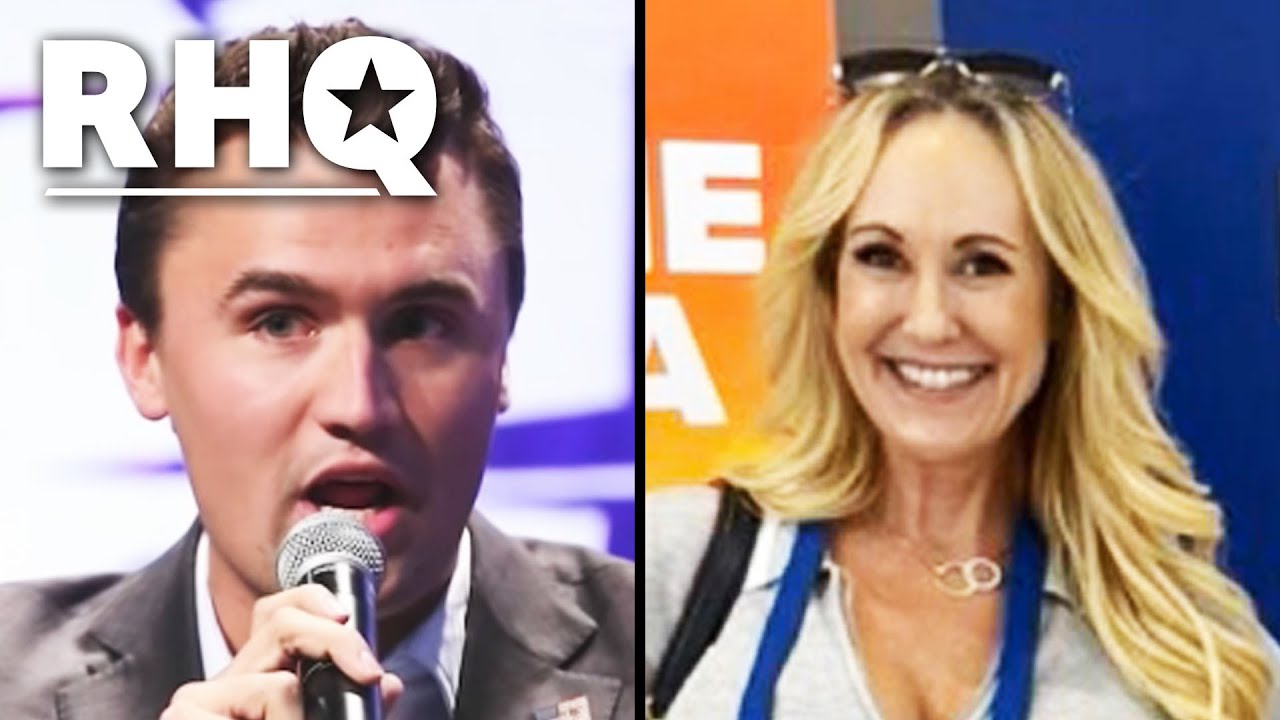
At a Turning Point USA conference in Chicago, Illinois, Charlie Kirk faced an unexpected challenge from an attendee who had taken election denial rhetoric to its logical conclusion. The nervous supporter began by praising Kirk for standing up against the "woke Democrat mafia" and affirming the claim that the 2020 election was rigged and stolen. After briefly confusing 2016 with 2020—a slip Kirk quickly corrected, noting that Trump actually won in 2016—the attendee explained their strategy for the 2022 midterm elections.
"There's only one way to stop this woke Democrat mafia and that is to boycott these elections because they're never going to hear us if we don't really stop from participating in their lie," the attendee declared. "It's a farce. It's a farce and why should we participate? You said it yourself. Why should we participate?"
The question perfectly encapsulated the fundamental dilemma facing Trump and election denial advocates: if you convince your supporters that elections are rigged, how do you then motivate them to vote?
Kirk's Response
Kirk attempted to navigate this contradiction by acknowledging the flattery while disagreeing with the conclusion. "It is not rational to stop engaging in the civic process that decides who is in charge," he argued. "Even if it is rigged, going through a tradition of voting at least opens an opportunity, a chance, a micron that you actually might still be able to have representative government. What you are doing respectfully is a guarantee that you'll never have a voice."
The response attempted to thread an impossible needle—maintain the election denial narrative while simultaneously encouraging participation in what has been characterized as a fundamentally corrupt system.
The Magical Thinking Problem
Commentary on the exchange highlighted the absurdity of boycotting elections as a strategy. "Deep down I think like is this guy just a plant? But I don't think he is," one observer noted. "The amazing thing that when I hear this is just sort of like I mean I want people to just sit with how insane that sounds as a strategy."
The "we'll teach them a lesson" approach reflects a fundamental misconception about how political power works. The commentary drew parallels to similar magical thinking that appeared during the 2016 election, when some progressive voters argued that allowing Clinton to lose would force the Democratic Party to move left. "Their plan worked," the analysis noted. "Now I'm not saying that they did it but the outcome they wanted happened. Of course there were no lessons learned other than we need to tack more towards like someone who is like more amenable to people in the center. In this case it was Joe Biden."
Historical patterns following the Reagan, George W. Bush, and Trump eras show that electoral losses don't typically produce the ideological corrections that boycott advocates imagine. Following Nixon or Ford, voters got Jimmy Carter. The pattern doesn't support the theory that electoral defeats teach partisan lessons.
Why This Strategy Particularly Hurts Republicans
The commentary emphasized why voter suppression through apathy particularly damages Republicans at the national level. "Both corporate cores of each party would love it if less people were engaged in politics. But for them it's even more dire because less people are engaged with the Republican party. By numbers alone they are a minoritarian party."
On the national level, more people vote Democratic or trend Democratic. This demographic reality means that Republican success depends on maximizing turnout among their base. Convincing supporters to stay home as a protest strategy directly undermines this electoral necessity. "This kind of along the margins actually really does affect them," the analysis concluded.
The Trump Nominee Dilemma
The discussion turned to how election denial rhetoric might affect the general election depending on whether Trump becomes the Republican nominee. If Trump is the nominee, he's expected to generate high turnout—both for his supporters and against him from opponents motivated by opposition. But the scenario where Trump is not the nominee presents unique challenges.
"Where do these election rigging claims fall in terms of voter turnout for a general election for a non-Trump nominee?" the commentary questioned. The assessment suggested that Biden and Democrats are "fairly well positioned" heading into a presidential race because of this dynamic.
If Trump is not the nominee, there's a near certainty he would keep his supporters away from the polls—either through active discouragement or by running as a third-party candidate. Either scenario would split Republican votes and suppress turnout among the very voters who believe the system is rigged.
The Impossible Contradiction
The exchange in Chicago crystallized an inherent contradiction in election denial messaging. Kirk's explanation that even rigged systems deserve participation "is not something that you can sell to a base when you've said that the entire electoral system is rigged against you," the commentary observed.
The response won't change minds because it doesn't address the fundamental problem: why would rational actors participate in a process they believe is fraudulent? "That's not what like they don't care," the analysis continued. "If voter participation is 5%, they love it. Then all they need to do is go out and convince you know 2.6% of the people."
The Chicago exchange revealed that election denial rhetoric has created a strategic trap for its proponents—one where maintaining the narrative undermines the very participation necessary for electoral success, while abandoning the narrative risks losing the base that believes it.
Video Transcript
[00:00] Speaking of like the conspiracy
[00:01] theorists, the interesting thing about
[00:03] the idea of like how much does this
[00:06] conspiracy theory sort of mode and and
[00:09] like the big lie like I don't even know
[00:11] how Trump is going to deal with this so
[00:12] much
[00:14] from a
[00:16] a position of like not being in power if
[00:19] he's run you know running as president.
[00:21] If you're going to make the argument
[00:23] that the election was rigged in 2020 or
[00:26] in 20 yeah in 2020.
[00:27] Mhm.
[00:28] How do you How do you convince people to
[00:31] even bother to vote? Like what do you
[00:33] say? Like I couldn't I couldn't protect
[00:36] your vote in 2020.
[00:38] But now cuz I'm working in the private
[00:41] sector I can protect your vote. Look
[00:44] they wouldn't do it twice. They wouldn't
[00:45] do it yeah. I mean
[00:48] Why would they do it twice?
[00:50] That is the dilemma that Charlie Kirk
[00:53] faced and let's see how he handled this
[00:56] at
[00:56] I'm sure really well. TPUSA conference
[01:00] in uh Chicago, Illinois.
[01:03] Listen to your show all the time and I
[01:05] want to thank you for standing up
[01:06] against against the woke Democrat mafia
[01:09] here in Chicago. It's so important and
[01:10] for saying the truth that the 2016
[01:12] election was rigged, it was stolen and
[01:15] that is why that is why what
[01:16] 2020. You said 16.
[01:19] What's that? 2016, right?
[01:21] No 2020.
[01:21] Oh 2020. I'm sorry. No we
[01:23] I'm so nervous Charlie. I'm so excited
[01:24] to speak to you. I'm so sorry.
[01:26] Incidentally, we should say that Donald
[01:28] Trump won in 2016. That's why Charlie
[01:30] Kirk is like no it it was a new thing.
[01:34] The election was rigged when Donald
[01:36] Trump was president not when he was not
[01:39] president.
[01:41] I like 2020. Yes the 2020 election was
[01:44] rigged. It was stolen. It was yes no.
[01:47] It was stolen, right? And I want to
[01:49] thank you for standing up for that and
[01:50] that's why when when when the 2020 22
[01:52] elections came around I told all of my
[01:53] friends and family I said there's only
[01:55] one way to stop this woke Democrat mafia
[01:58] and that is to boycott these elections
[02:00] because they're never going to hear us
[02:01] if we don't really STOP FROM
[02:03] PARTICIPATING IN THEIR LIE. It's a
[02:05] farce. It's a farce and WHY SHOULD WE
[02:07] PARTICIPATE? YOU SAID IT YOURSELF. WHY
[02:09] SHOULD we participate? Okay let
[02:11] pause it FOR ONE SECOND.
[02:13] I like it.
[02:14] Deep down I think like is this guy just
[02:17] a plant
[02:17] a plant? But I don't I don't think he
[02:21] is.
[02:22] I I don't think he is. But the amazing
[02:25] thing that when I hear this is just sort
[02:26] of like
[02:27] I mean I want people to just sit with
[02:29] how insane that sounds as a as a tool
[02:33] strategy
[02:33] as as a strategy.
[02:36] I'm not going to participate and we've
[02:37] shown them
[02:40] Yeah cuz there is a
[02:42] sort of a reform
[02:43] There is a parallel
[02:45] to this
[02:46] magical thinking
[02:48] that exists on our side.
[02:51] That somehow if like enough we will
[02:54] teach them a lesson. In fact that we
[02:55] heard
[02:56] We'll shame them with
[02:57] we heard people
[02:58] earn our vote. Yeah, right?
[03:00] and and look they do need to earn the
[03:02] vote.
[03:03] I know.
[03:03] But if you're but but if you're savvy
[03:05] enough to go to a TPUSA thing and you're
[03:09] out there advocating for all your
[03:10] friends to not vote
[03:12] because that's going to show them
[03:15] show up the woke Democrats
[03:18] cuz they'll care.
[03:19] you don't understand how things work.
[03:22] Yeah. You have a fundamental
[03:24] misconception on how things work.
[03:27] How many people did we hear from in 2016
[03:31] who were like
[03:32] how do we teach the Democrats a lesson?
[03:35] There's only one way and that is if
[03:38] Clinton loses. Yeah.
[03:39] We don't come out and vote. Like if
[03:41] you're not going to come out and vote
[03:43] right? What is that supposed to do?
[03:45] That's supposed to make your the
[03:47] candidate that's being foisted on you
[03:50] lose so that you teach them a lesson.
[03:53] Right.
[03:54] Well, their plan worked.
[03:57] Now I'm not saying that they did it but
[03:59] the outcome they wanted happened.
[04:02] Of course there were no lessons learned
[04:04] other than we need to tack more towards
[04:06] like someone who is like more amenable
[04:08] to people in the center.
[04:10] Yeah.
[04:11] In this case it was Joe Biden.
[04:13] Let's go with the safest option
[04:14] possible.
[04:15] Safest option possible.
[04:16] And of course all those people who said
[04:18] this is our plan
[04:20] said well it wasn't because of what we
[04:22] did. Well to be clear Jimmy Dore said it
[04:25] would lead to us electing Elizabeth
[04:27] Warren and as the primary.
[04:29] Yes. But but but he wasn't the only one.
[04:31] There was a lot of people who said like
[04:33] this is going to bring about a
[04:34] revolution is going to move things to
[04:35] the left. It's just not the way it
[04:37] works.
[04:39] At least it's not the way it's worked
[04:41] following Reagan's era following George
[04:45] W. Bush's era That'd be and following
[04:48] Donald Trump's era. Nixon or Ford Right
[04:50] and and and and and Nixon Ford era,
[04:53] right? You got Jimmy Carter.
[04:54] Yeah.
[04:54] I mean it's just not the way that it
[04:56] works.
[04:58] I wish it was but it's not. Anyways,
[05:00] let's hear this.
[05:02] if we don't really STOP FROM
[05:04] PARTICIPATING IN THEIR LIE. It's a
[05:06] farce. It's a farce and why should we
[05:09] participate? You said it yourself. Why
[05:10] should we participate?
[05:11] Okay let let me let me tell you why. So
[05:14] I love the energy. You buttered me up
[05:16] perfectly, right? But I got to disagree.
[05:18] Um
[05:19] it is not rational to stop engaging in
[05:23] the civic process that decides who is in
[05:25] charge. Hold on. Even if it is Hold on.
[05:27] Let's let's one second. Even if it is
[05:29] rigged, okay? Even if it is rigged,
[05:32] going through a tradition of voting at
[05:36] least opens an opportunity a chance a
[05:38] micron that you actually might still be
[05:41] able to have representative government.
[05:42] What you are doing respectfully is a
[05:45] guarantee that you'll never have a
[05:46] voice.
[05:48] That's not a that's not that's true but
[05:50] that's not something that you can sell
[05:52] to a base when you've said that the
[05:53] entire electoral system is rigged
[05:55] against you. I don't I don't think his
[05:57] explanation A I don't think it's going
[05:59] to be effective you know to the extent
[06:01] he's going to change any minds. But I
[06:03] also think that it's like it's just it
[06:05] doesn't work that way.
[06:06] That's not what like they don't care
[06:10] Right. if voter participation is 5%.
[06:13] love it.
[06:14] Then all they need to do is go out and
[06:16] convince you know 2.6%
[06:18] of the people.
[06:19] Both corporate
[06:21] cores of each party would love it if
[06:23] less people were engaged in politics.
[06:25] But for them it's even more dire because
[06:28] less people are engaged with the
[06:29] Republican party. By numbers alone they
[06:32] are a minoritarian party. On the
[06:34] national level there are more people
[06:35] that vote Democratic, more trend more
[06:37] Democratic. So this kind of along
[06:40] the margins actually really does affect
[06:42] them and how this is
[06:44] I'm I'm I really don't know the answer
[06:46] but I'm wondering how this affects the
[06:49] general election if Trump's the nominee
[06:51] or if he's not the nominee. Like are
[06:53] these election deniers way more likely
[06:56] to sit If it's ugly they're way
[06:58] it's a problem for the Republican Like I
[07:01] mean honestly right now I'm
[07:04] I don't know what Biden's going to do
[07:05] but the Democrats on a demo on a
[07:07] presidential race level are
[07:10] fairly well positioned because if Trump
[07:11] is the nominee he's going to bring out a
[07:13] lot of people to vote against him. If
[07:15] he's not the nominee where do these
[07:17] election rigging claims fall in terms of
[07:21] voter turnout for a general election for
[07:23] a non-Trump nominee? I would say that
[07:27] there is a 100% chance that if Trump is
[07:30] not the nominee that
[07:32] uh
[07:33] he's going to keep people his people
[07:35] away from the polls.
[07:36] Unless he runs as
[07:37] As a third party which either way though
[07:39] Yeah. Um let's talk about this. I don't
[07:42] know if we have any
[07:43] audio associated but we we should talk
[07:45] about this Willow project.
Comments
Be the first to comment on this video.