2,422 videos 1,389,747,653 views US Joined Aug 30, 2018
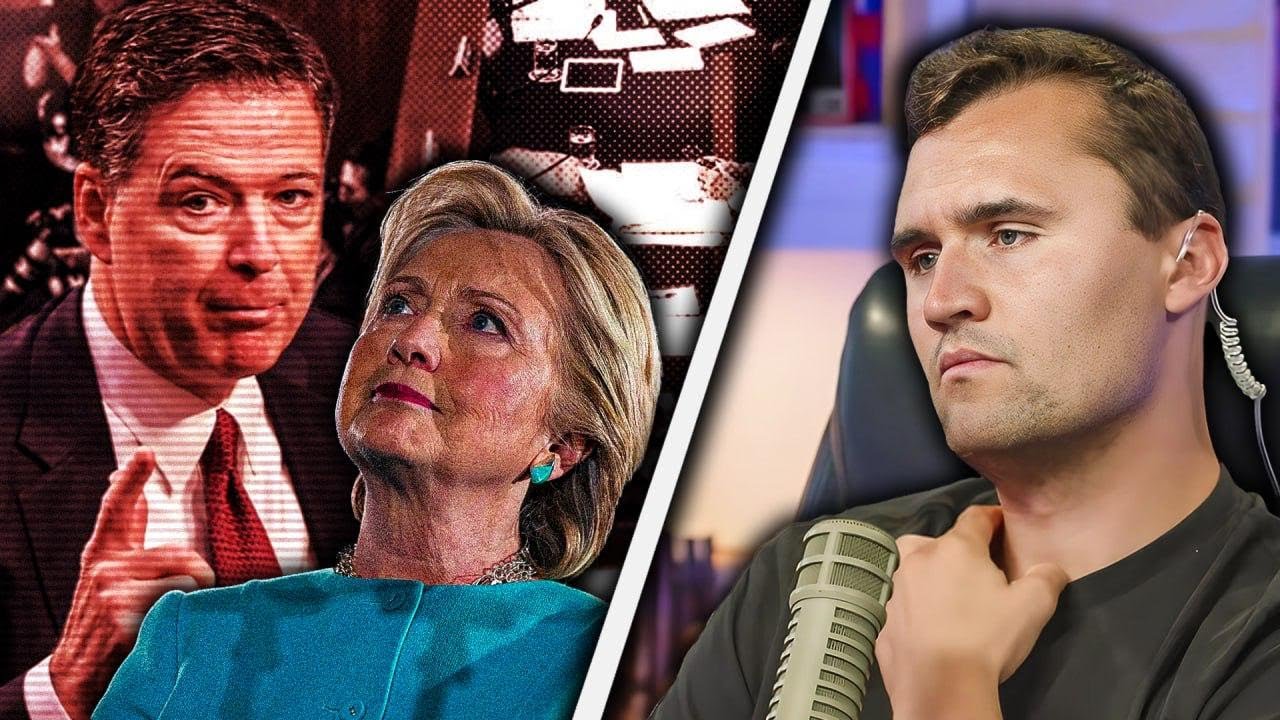
Charlie Kirk is the Founder and President of Turning Point USA, the largest and fastest growing conservative youth activist organization in the country with over 250,000 student members, over 150 full-time staff, and a presence on over 2,000 high school and college campuses nationwide. Charlie is also the Chairman of Students for Trump, which aims to activate one million new college voters on campuses in battleground states in the lead up to the 2020 presidential election. His social media reaches over 100 million people per month and according to Axios, he is one of the "top 10 most engaged" Twitter handles in the world. He is also the host of “The Charlie Kirk Show,” which regularly ranks among the top news shows on Apple podcast charts.
Charlie Kirk on Justin Trudeau's Resignation and the Western Revolt Against Open Border Liberalism
Charlie Kirk examines Justin Trudeau's resignation as Canada's Prime Minister, arguing it represents part of a broader Western shift away from what he calls beta male open border liberalism. Kirk interviews Canadian journalist Ezra Levant about the circumstances surrounding Trudeau's departure, the Canadian trucker convoy movement of 2022, and the rise of conservative leader Pierre Poilievre. The conversation explores how this political realignment mirrors trends across Western democracies, from Trump's return in the United States to conservative movements in other nations. Kirk and Levant discuss the potential for renewed cooperation between a future conservative Canadian government and the Trump administration, touching on border security, energy independence, and the possibility of Canada joining the United States.
Charlie Kirk opens with a bold declaration about what he sees unfolding across Western democracies. He identifies a widespread revolt against open border policies, inflation, and diminished national sovereignty. The resignation of Justin Trudeau as Prime Minister of Canada serves as the latest example of this political realignment, joining similar movements toward conservative leadership in countries around the world.
To discuss this breaking development, Kirk welcomes Ezra Levant, a Canadian journalist from Rebel News who has been covering and criticizing Trudeau's government for years. The conversation provides both immediate analysis of Trudeau's resignation and broader context about Canada's political trajectory.
The Mechanics of Trudeau's Resignation
Levant explains that Trudeau's resignation announcement is less straightforward than it appears. While Trudeau has announced his intention to step down, he is delaying his actual departure until March 24th. This timing, Levant notes, is strategic.
Trudeau announced his resignation just days before a scheduled Caucus meeting where his own Liberal Members of Parliament were prepared to demand his resignation. By announcing first, he preempted their revolt. However, Levant describes a more concerning maneuver.
In Canada's parliamentary system, ordinary Members of Parliament can vote no confidence in the government, triggering an election. To prevent this, Trudeau asked the Governor General to prorogue Parliament, effectively dissolving it. This means no House of Commons business can occur, no bills can pass, no question period where government faces scrutiny, and most significantly, no MPs can hold a vote of no confidence.
Levant characterizes this as Trudeau suspending democracy to preserve three more months of power and perks. He offers qualified support for the resignation, giving it one cheer rather than three.
Why Trudeau Fell
Kirk asks whether the Western trend rejecting leaders like Trudeau, Kamala Harris, and Joe Biden while embracing leaders like Javier Milei, Nayib Bukele, and Donald Trump influenced Trudeau's decision to step down.
Levant agrees this is part of the picture. He describes Canada's Conservative leader Pierre Poilievre as excellent on economics, fiscal policy, and monetary policy. While noting that right-wing politics in Canada differs from American conservatism, Levant praises Poilievre's firmer stance on immigration, his promise to replace woke culture in the military with warrior culture, and particularly his Trump-like approach to partisan media.
Poilievre calls out reporters in real time and has promised to defund Canada's state broadcaster, the CBC. Levant finds this encouraging and believes Poilievre's strength represents a shift toward what some might call alpha male leadership.
Beyond this cultural shift, Levant emphasizes that Trudeau has been plagued by scandals, corruption, and poor behavior. Recent polling showed Trudeau at just 16 percent approval, and Liberal MPs feared being wiped out in the next election. They were preparing to vote to remove Trudeau on Wednesday, making his resignation an attempt to leave on his own terms rather than being fired.
The Canadian Trucker Convoy: Canada's Defining Moment
Kirk pivots to what he considers a parallel to America's January 6th: the Canadian trucker convoy from February 2022. He describes it as the moment Canada appeared to turn toward Soviet-style totalitarianism, and asks Levant to recount how those events unfolded.
Levant calls it the most important civil liberties moment in a generation in Canada. All federal political parties supported lockdowns and forced vaccine mandates. Canada implemented a no-fly list for the unvaccinated. In the second largest country in the world, citizens who refused the vaccine could not fly or board ships. This authoritarian approach faced no opposition from professors, media, or political parties.
The resistance came from independent truckers who organized a convoy to Ottawa to protest a vaccine mandate imposed on their profession. Levant notes the irony: truckers are among the most solitary workers, yet were required to get vaccinated to continue working.
The convoy grew to 100 kilometers long. People came out simply to witness it with their own eyes. After a year of propaganda and isolation, Levant explains, Canadians saw the convoy as the first real thing. Because it was leaderless, self-funded, and organic, it resonated as authentic.
The convoy began to embarrass Trudeau. He attempted to use the playbook from America's January 6th, calling the truckers violent insurrectionists and domestic extremists. This narrative failed because the truckers remained completely peaceful, setting up bouncy castles and hot tubs rather than storming buildings. Their Canadian niceness, Levant says, shamed Trudeau.
Martial Law in Canada
As Trudeau began losing face, he invoked the Emergencies Act, bringing Canada under a form of martial law. This was the first time the law had ever been used—Canada didn't even invoke it on September 11, 2001.
Under this emergency declaration, Trudeau and his Deputy began seizing and freezing private bank accounts of anyone connected to the protest, without any legal process. Hundreds of families suddenly found their credit cards and bank accounts frozen when they tried to buy groceries. Levant describes this as an outrageous violation of civil liberties.
This moment, Levant argues, forced Canadians to look into the abyss and question what had happened to the true north strong and free. All Canadian media agreed with Trudeau's martial law declaration and the demonization of ordinary truckers. Like Democrats with January 6th, they wrote the same script.
Yet ordinary people—what Levant calls the proletariat, the grassroots unfancy people—stared down Trudeau. Trudeau blinked. Canada became freer because of it, and this was the moment when Trudeau's polling numbers began their sustained decline.
The Truckers Transformed Canadian Politics
Levant reveals another consequence of the trucker convoy. At the time, Canada had a conservative-in-name-only leader who instructed his MPs not to meet with the truckers. His MPs revolted, removed him as leader, and went to hang out with the truckers instead.
The Conservative Party of Canada then chose the real conservative Pierre Poilievre. Polls suggest Poilievre is set to achieve the biggest election win in Canadian history. He became party leader because of the truckers. The movement saved Canada from Trudeau and rejuvenated the Conservative Party.
The Future of Canada-US Relations
Kirk asks whether this could mark the beginning of a more robust conservative common sense realignment. Levant enthusiastically agrees, expressing excitement about Pierre Poilievre and Donald Trump working together constructively.
He acknowledges that Trump and Trudeau hate each other, which has been bad for both countries, especially Canada as the smaller partner. A thoughtful Canada First, freedom-loving conservative working with Trump, Levant argues, would accomplish significant progress on trade, border control, national defense, and foreign policy. While Trudeau has been pro-Hamas, Poilievre is not. The two countries could become best friends again.
Could Canada Join the United States?
Kirk raises the increasingly discussed possibility of Canada joining the United States. Levant doesn't dismiss it as crazy, noting that both countries used to be part of the British Empire together as British North America, giving them shared history.
However, Levant identifies important differences. A quarter of Canada's population is French-speaking Quebecers, and the country has official bilingualism. He suspects most Canadians would likely be Democrats if they became Americans, though Alberta and Saskatchewan would probably go Republican. He jokes about swapping California.
Ultimately, Levant sees this as fun to discuss but unrealistic. Canada and the United States share the world's longest undefended border and are culturally very similar with tight trade relationships. They have all the pluses of being one country while maintaining independence. Canada can become great again and serve as Robin to America's Batman.
Alberta's Leadership and Energy Security
Kirk asks about Alberta, suggesting it represents good right-wing territory in Calgary and Edmonton, where all the oil is located. Levant confirms this, noting Alberta contains 173 billion barrels of oil.
He argues that Canadian oil should not be hit with tariffs because it would harm American interests. Canada sells almost all its oil exports to America, displacing conflict oil from OPEC regimes. Canadian oil plays a crucial role in American energy security.
Alberta Premier Danielle Smith understands this. While Trudeau has been AWOL on the cross-border tariff issue and appears to want a fight with Trump, Smith is attending Trump's inauguration in Washington. She represents Canada's most conservative oil province and has worked to keep the two countries friendly.
Smith has taken Trump's border security concerns seriously, setting up what Levant describes as a provincial National Guard with drones and law enforcement. She wants Canada and the United States to remain best friends, and Levant believes most Canadians share this view. They don't want to join America, but they love visiting and want cooperation for freedom.
Important Dates Ahead
Kirk asks about key dates in Canadian politics. Levant identifies March 24th, when Trudeau will turn over the Prime Ministership to another Liberal who will likely be defeated in the next election. He notes they are watching January 20th for Trump's inauguration to see what actions he takes regarding Trudeau and potential tariffs.
On April Fool's Day, Trudeau plans to increase the carbon tax, making Canada less competitive compared to the United States, which has no carbon tax. Canadians are watching their clocks and calendars, waiting for Trudeau to leave so they can move forward with a freedom-oriented government under Pierre Poilievre.
Canada's Role as Laboratory and Inspiration
Levant concludes by noting that Canada has served as a laboratory for bad ideas like national health care and wokeism, but can also inspire with good ideas. He hopes Canada returns to that positive track.
Kirk adds that Canada has produced the greatest comedians of a generation, suggesting it would be good to return to that as well. Both agree this is true, with Levant joking that Canada's greatest exports are lumber, oil, and comedians.