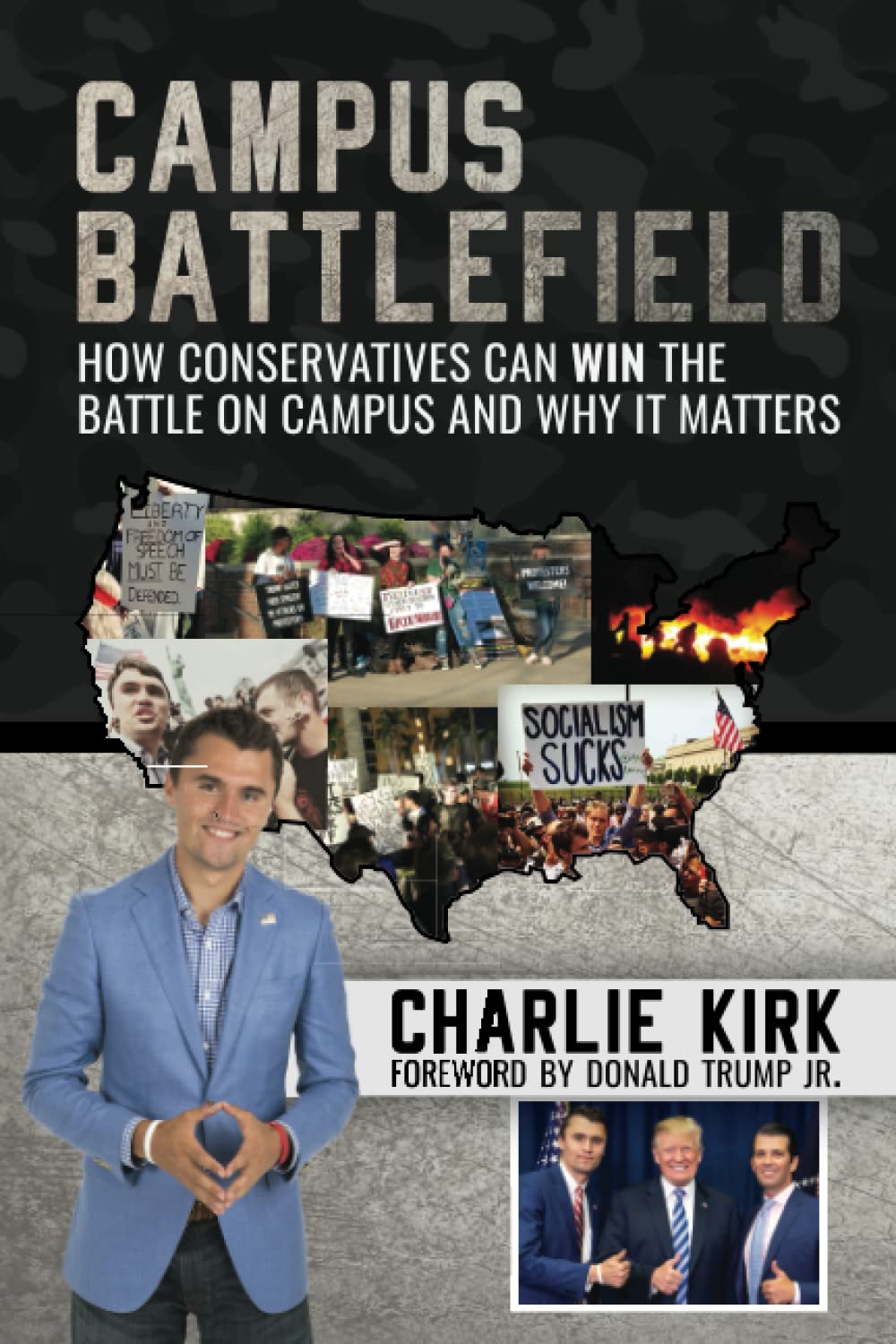
Charlie Kirk on Why Christians Must Contest for Liberty and Reshape American Culture Through Biblical Truth
Enjoying this? Share it with someone who needs to see it.
Up Next
Why America's Christian Founding Is an Undeniable Historical Fact Despite Modern Revisionism
5:35
Charlie Kirk Exposes Five False Religions Replacing Christianity and Fighting For America's Future
1:50:19
Charlie Kirk Debates Young Turks Contributor Ben Carollo on Marxism in America and Communism's Historical Record
52:52
Charlie Kirk on Why Christians Must Contest for Liberty and Reshape American Culture Through Biblical Truth
Charlie Kirk joins Pastor Keith Craft to discuss the critical role believers must play in American culture and politics. Speaking at a church gathering in Frisco, Texas, Kirk explains why the ecclesia, the gathering place Jesus called the church to be, must address every aspect of human life, including government, education, and cultural issues. He challenges the notion that churches shouldn't discuss politics, arguing that liberty itself is a biblical concept rooted in God's design. Kirk traces America's founding back to biblical principles, revealing how the Founding Fathers created a constitutional republic based on Scripture, and why Christians today must adopt a warrior posture to protect freedom. This conversation explores the intersection of faith, freedom, and the responsibility believers have to speak truth into every sphere of influence.
Charlie Kirk opens by defining his life's purpose: spreading liberty and proclaiming it throughout the land, as stated in Leviticus. He emphasizes that liberty is not a human invention but God's idea. Jesus Christ came to set captives free—not just from sin, but from all forms of bondage. Kirk argues that the type of government people live under matters deeply to their ability to live out their faith freely.
Kirk states clearly that winning souls for Christ is the most important mission, but his calling is to ensure that Christians can actually do that work without persecution or government interference. He points out that in places like the Soviet Union or present-day Kabul, Afghanistan, the gospel cannot spread freely because the government suppresses spirituality and persecutes believers.
Why the Church Must Engage Politics and Culture
Addressing the common objection that churches shouldn't discuss politics, Kirk provides both biblical and historical evidence for why this position is wrong. He points to multiple biblical examples of God's people influencing secular government for divine purposes: Daniel, Esther, Mordecai, Nehemiah, Jeremiah, and Joseph all served as counselors to kings.
Kirk also references Jeremiah 29:7, where God commands His people to demand the welfare and peace of the city or nation where He has sent them, because their peace is tied to the nation's peace. He argues that Christians in America have been given the gift of apathy—they're allowed not to care—but that luxury is rapidly disappearing as tyranny advances both governmentally and culturally.
The only organization capable of stopping this spiritual and cultural decline, according to Kirk, is the church and Christians rising up against it. He challenges pastors who refuse to take stances on moral issues, arguing that if the church won't distinguish between right and wrong, it fails in its fundamental duty to the flock.
Reclaiming the Meaning of Ecclesia
Kirk provides fascinating historical context about the word "church" itself. He explains that William Tyndale, the Bible translator in the 1500s, discovered that the original Greek word Jesus used was not "church" but "ecclesia"—meaning a community gathering point or public square.
In ancient Greece, the ecclesia was where citizens gathered to discuss and achieve eleutheria (freedom) and isonomia (equality). Kirk argues that Jesus called His followers to build something that touches every aspect of human life, not just a religious building where people gather once a week.
This reframing is crucial: if the church is truly the ecclesia, then it must speak to business, education, entertainment, politics, and every other sphere of influence. Pastor Keith Craft reinforces this, stating that his church will always speak to everything that touches culture with a biblical worldview.
The Warrior Posture Christians Must Adopt
Kirk and Pastor Craft discuss the need for a "warrior posture" among American Christians. This doesn't mean violence or lack of discipline—real warriors like Navy SEALs exemplify the opposite. A warrior posture means protecting the vulnerable, standing against evil, and being alert and active rather than passive.
Pastor Craft shares how God gave him a vision 21 years ago for raising up believers with a "Levitical spirit"—referring to the tribe of Levi who stood with Moses against idolatry and spiritual wickedness. This warrior spirit is about taking action, not just praying and hoping things improve.
Kirk adds that wearing the full armor of God, as described in Ephesians, is difficult to do while sitting down. Christians are meant to be in a posture of activity, alert and aware. He warns that the season of peace and prosperity Americans have enjoyed for 30 years has probably ended, and believers now face a season of confusion and conflict.
America as a Constitutional Republic, Not a Democracy
Kirk explains the crucial difference between a democracy and a constitutional republic. While America has democratic means of electing officials, it is fundamentally a republic that recognizes God-granted rights that cannot be taken away simply because a majority votes to do so.
A constitutional republic makes moral claims and understands that urban populations can be "prone to madness with a spice of insanity," as James Madison wrote. The Founders deliberately created tension between states, demographics, rural and urban populations, farmers and city dwellers to prevent any one group from gaining tyrannical control.
Kirk emphasizes that America is a miracle—a 5,000-year leap in human governance that happened in a relatively short time. Christians should have profound gratitude for this system of government, which the Bible commands in Philippians 4:8 when it instructs believers to ponder whatever is good, true, and beautiful.
The Christian Faith of America's Founding Fathers
Kirk provides compelling evidence of the Founders' Christian faith. Fifty-five out of 56 signers of the Declaration of Independence were Bible-believing, regular church-attending Christians. A secular professor from Harvard or Yale conducted a study of the Founders' private writings and found that the Bible was quoted more than any other source of inspiration—by a tenfold margin—for the form of government they created.
Addressing the issue of slavery, Kirk makes three key points. First, every Founding Father entered a world where slavery was the norm—a world they did not create. Second, not one Founding Father wrote in defense of slavery. In fact, the Constitution included a moratorium disallowing the importation of slaves 20 years after ratification. The first anti-slavery convention ever held in world history was in Philadelphia in 1775, chaired by Benjamin Franklin.
Third, by the time of ratification in 1787, nine out of 13 states had independently abolished slavery. Vermont abolished it in 1777. The Founders left the world in a state where slavery was on its way out—an amazing contribution to humanity in a short time.
How to View History Through a Biblical Lens
Kirk references Genesis 6, which describes Noah not simply as a righteous man, but as a righteous man "among the other people in his generation." This distinction is significant. The Bible instructs us to view historical figures in the context of their peers and contemporaries, not by comparing them to people from different eras.
If people 100 years from now judged Americans in 2021, they might condemn this generation for allowing men into women's bathrooms, failing to stop abortion, or being passively entertained while injustice occurred. Kirk urges Christians to be careful, prudent, and slow in judging history, following the biblical model.
The True Meaning of Love in Christian Context
Responding to Keila Craft's question about the church's role, Kirk addresses a critical misunderstanding about love. He notes that the Greeks had multiple words for love—storge, phileo, eros, and agape—while English has only one. This creates confusion about what Jesus meant when He commanded us to love one another.
Kirk shares a personal story about having all four wisdom teeth removed. His dentist told him difficult truths he didn't want to hear, but she did so because she genuinely cared about his well-being. This is true love—telling people the truth they need to hear, not what makes them comfortable in the moment.
Jesus embodied truth. He didn't just speak true things; He was truth incarnate. The best way to love people is to tell them the truth with grace and mercy, even when that truth is uncomfortable. This applies to confronting alcoholics, adulterers, and anyone living in defiance of God's design.
Kirk argues that the church has lost its understanding of what it means to truly love people. Wrapping people in bubble wrap and making them comfortable with their sin is not love—it's enabling destruction. The greatest life changes come when someone has the courage to say, "You're out of line here," and point toward truth and restoration.
Parenting, Discipline, and True Freedom
Kirk challenges modern parenting culture, urging parents to stop being their children's friends and start being their parents. The freest people he's ever met are the most disciplined people, he observes. Freedom isn't doing whatever you want; it's pursuing virtue and doing what you ought to do.
The Founding Fathers understood that liberty means pursuing virtue within wise restraints. These restraints don't limit freedom—they protect it. Kirk credits his own parents with being more disciplined than any other parent group in his area, which taught him these wise restraints early in life.
Pastor Craft connects this to what's happening in American culture, arguing that permissive parenting has contributed to the breakdown of society. Just as loving parents don't let their children eat junk food for every meal, a healthy society maintains standards and rules alongside love and grace.
The Constitution as the Greatest Political Document
Kirk calls the U.S. Constitution the greatest political document ever written in world history. The First Amendment recognizes that human beings are "speaking beings," as Aristotle described. Genesis 1 and John 1 both describe God speaking creation into existence. As beings made in God's image, our capacity to speak, reason, and worship defines our humanity.
If people cannot have dialogue, discourse, and debate, their very souls are crushed by external forces. This is why free speech is the First Amendment—not just to write newspaper articles, but to worship, reason, and come closer to our Creator without tyranny interfering.
The Constitution begins with "We the People," not "We the bureaucrats" or "We the experts." This empowers every single citizen—if you see something you don't like, you can get into the arena and do something about it. The Constitution recognizes that the people are sovereign, and it secures "the blessings of Liberty" with a capital L, acknowledging a transcendent order and the laws of nature and nature's God.
Why the Constitution Remains Relevant Today
Some argue the Constitution is outdated, but Kirk dismisses this argument using a biblical parallel. The Word of God, though 2,000 years old, is more applicable today than at any other time in human history. Why? Because human nature hasn't changed.
The Founding Fathers wrote the Constitution not for their times but to stand the test of time. Despite having TikTok, Twitter, and transcontinental airlines, we are the same raw material as people in the 1770s and the time of Jesus Christ: broken human beings prone to lust, greed, selfishness, deceit, and treachery—all in need of Jesus Christ as Lord and Savior.
The Constitution has lasted longer than any other document of self-government in world history because it includes multiple ways to check and balance those in power who get out of line. The Founders realized that one person should not rule the many, and they turned the ancient system on its head: in America, there are more sovereigns than subjects, more owners than slaves.
Responding When Leaders Overstep Their Authority
When asked about a president saying his "patience is growing thin" with citizens who don't comply with his directives, Kirk responds firmly. Such statements violate the core compact of the American system. The president works for the people; the people don't work for the president.
The states created the federal government, not the other way around. States have the ability to form government as they see fit. When any elected official tells the people "our patience is running out with you," they have inverted the proper relationship. It should be the people saying they're running out of patience with their leaders.
Taking Action in Your Sphere of Influence
Keila Craft challenges believers to ask themselves, "What's in your hand?" referencing Moses's conversation with God. Everyone has influence somewhere—a voice, actions they can take, spheres where they can make a difference.
She notes that many Christians have embraced fear as something to feed and lean into, when studies now show that 28% of deaths attributed to COVID-19 are actually happening because of anxiety and fear. She urges believers not to hold onto fear or accept as truth what they see on news or social media, but to embrace God's truth, which alone sets people free.
The lie many have accepted is that they can trust God without taking action themselves. But God placed believers in America at this specific time to be His hands and feet—to bring Kingdom thinking and Kingdom life to earth. An immigrant father's observation captures the problem perfectly: Americans have so much freedom that they're making up their own problems.
The Charlie Kirk Show as a Biblical News Source
Kirk travels 330 days a year, giving over 310 speeches annually at college campuses, churches, and other venues. He hosts two podcasts and three hours of radio daily, providing news analysis from a pro-American biblical standpoint.
He encourages people to subscribe to the Charlie Kirk Show podcast on Apple Podcasts, Google Podcasts, or Spotify. Building a large subscriber base helps insulate his platform from big tech companies that cancel voices they disagree with. Kirk promises to always tell the truth because he loves his audience too much to lie to them.
Video Transcript
so glad you're here hey put your hand on your heart let's make some declarations today and i'm very excited because we have a very special guest and uh you're going to be you're going to be impacted and empowered today as believers so so glad you're here say this with me say i declare that i'm created in the image of god i can do all things through christ who is my strength i declare with god all things are possible today i open up my mind to think like god to be like god and to do life the way god intended come holy spirit help me elevate my thinking so i can elevate my life in jesus name amen amen so glad you're here thank you for joining us online it's such a pleasure to have you and today i'm so excited because i want to introduce somebody to you that i knew him before he knew me i spotted a warrior and i said i'm supposed to be aligned with that guy and so is our family of choice this house would you please welcome to the stage charlie kirk [Applause] so great to have you and did we get him with mike okay good i want to make sure i go he is michaelis i need him to have a mic for sure so great to have you charlie and again so great for me to be able to have the privilege to introduce you to our family of choice and uh thank you for taking time out of your incredibly busy schedule uh to be here uh in our family gathering so let me just ask a question how many of you have never heard of charlie kirk let me see your hand okay that's pretty pretty amazing because uh you're everywhere and um you know when i said when i spotted you it was like that guy is a warrior man i need to i need to get to know him like i i reached out to him i direct message him i said hey somehow we're supposed to be connected i'm not sure what that's going to look like in the future but but man i so respect you i so respect the work that you're doing and the fact that you're only and i don't say this in any way disparagingly because paul said timothy let no one despise your youth 27 years of age and god's using him all over the world so anyway i'm i'm excited that you're here thank you for being here and i asked keila to join us on stage because she's my mini me and uh she we think uh quite the same on things and she is a warriorist she is a princess warrior herself and uh anyway so i i wanted you on stage with us too keyless and thank you for being on stage give kela a hand are we joking thanks right thanks cole that was perfect cole that's what i did i married him that's what i do and then one other very special guest we have and i'll give you the honor to introduce your new bride erica stand up thank you erica and i just have to say the great the wisest man that ever lived solomon said uh two are better than one and uh he goes on to say for all the reasons they they fight together they lie down together they keep each other warm they back they're back to back but then a three-stranded cord is not easily broken because it's it's it's charlie it's erica and it's god and that stranded three-stranded cord cannot easily be broken so i'm so happy for both of you that you have each other jesus said it this way if big if any two of you agree is touching anything on earth my father in heaven will do it so all things are possible all things are possible so i'm excited for you all right well so glad you're here is that yours or mine that's mine okay cause i thought i'm seeing something on my phone i've never seen before so i didn't know if it was mine or not but i want to jump right into this uh with charlie and um man we could talk about so much i encourage you to go back and listen to the first service i wish we could talk for just hours but you're a believer and that was one of my uh you know things that i was very much attracted to i'm both in the ministry world and in the secular world i'm in the kingdom business and so i run businesses and i'm also a pastor and a lot of times people are trying to just put me in a pasture box because sometimes i don't talk like a pastor and sometimes i don't act like a pastor and uh because everybody thinks you know pastor should be this way well i'm not all that because i didn't decide to be a pastor until i was 40 because i thought maybe we could establish a leadership culture that could impact culture and but but i was very attracted to you because of not only you being brilliant which you are uh not only you being young which you are not only you having influence which you do but i was very much attracted to you because you are a believer in everything you do is with a biblical worldview and i so respect that especially in the space that you're in so just just kind of let's let's just do that as a starting point but as as a believer with a biblical worldview and we're in our possible life series what does a possible life look like for you yeah it's great to be here everybody and you have a great pastor here by the way um thank you yeah born and raised in chicago illinois gave my life to christ when i was in fifth grade and changes your life as you well know and every year as i get older it means more and more to me and i start to understand really what kind of my life purpose is and that is to try to spread liberty and to proclaim liberty throughout the land that we're in as it says in leviticus we joked around in the first service this is how i knew the founding fathers were awesome because they put a verse from leviticus on the liberty belt not proverbs not john but leviticus everybody you know those of you that have read through the bible in one year you know that's a that's a difficult book um but that is really the story and what is that what is that for those that don't know what is that scripture on the lyr on our liberty bell yeah i don't know the i think it's leviticus six or leviticus three but it's to proclaim liberty throughout the land that you are in and that's what we are called to do uh jesus christ came to set the captives free from sin from our broken nature and so liberty is not man's idea it is god's idea and so my my purpose uh as god has put us in this situation is to try and contest for liberty in every way possible and that includes winning souls for christ but also the type of government we have matters the type of leaders that we have matter the type of life that we live matters and so i don't like seeing people um live in a state of serfdom or live in a state of bondage we as that should bother us as christians and that could that goes for people that we know in our life that are dealing with alcohol issues or drug issues it also is people that live or born into circumstances where the government around them does not protect natural rights does not recognize consent to the governed does not have separation of powers does not have checks and balances so liberty is really what i believe we as christians need to focus on and once people start drinking from the streams of liberty they're going to want to find its source and its source is god jesus christ and the holy spirit and we know that thanks to the word of god yeah so there's a lot that we're going to to strive to get to today um but i want to i want to tie a couple of thoughts in here just with this question but there's many people many many people who believe that the church is not the place to talk politics what would you say about that both from a historical and biblical perspective that's the first thing but i want to tag that with my personal view is that it's exactly the place where we should talk about everything as it relates to culture and the world because our job is to bring kingdom culture into the world's culture and so you can call it politics you can call it whatever but how would you respond to that first of all and then the second thing after you talk about that is i want you to go all the way back to our founding fathers sure so let's just start with what the scriptures say are there any examples of god's people trying to influence secular government for god's purpose of course so any pastor who says this they're going to have to explain daniel esther mordecai nehemiah jeremiah joseph who were all counselors to the king for god's purpose right and the founding fathers knew this i'll connect it with the founders in a second but also in jeremiah 29 7 the lord is speaking and he says very clearly demand it's the hebrew word badras the welfare or the shalom the peace of the city or nation i have sent you in because your peace is tied to the nation's peace your peace is tied to your peace your welfare your well-being your prosperity all these are interchangeable english synonyms but we know this to be true we know that we are able to go to church today and enjoy the rest of our sunday and watch football with our families because we have decided or our ancestors ancestors decided to set up a government that allows natural rights to be protected we know that in the soviet union not only was the gospel not spreading not only were churches being persecuted not only were pastors being put in prison in solitary confinement but people also their soul was being suppressed their spirituality was being suppressed and we have it so good here in america that it's easy to be apathetic in fact we've been given the gift of apathy we're allowed not to care i encourage you know anyone to think about this do you think that the church like this is existing in kabul right now of course not the type of government you have really matters now it's not everything i would say the most important thing is winning souls for christ that's the most important thing my life mission is to do the second most important thing which is to make sure you can do the first thing to make sure that when you open the church that people don't come through and try to shut you down to make sure that you could speak your mind that you can live a virtuous life the form of government you have really matters and i think people wrongly consider this to be controversial the gospel is controversial go read luke 15. jesus was pretty clear about i came here not to unite but to divide i came here to turn father against son and sister against brother that's a harsh teaching jesus says that the path to heaven is narrow it is not wide now it's open for anyone to accept right but he says the truth will set you free and so this idea that we should not say things that are true that someone might deem controversial i deem to be a politically correct gospel and i'm not trying to offend people no one should have the heart of the intent to offend i believe that's wrong but if you say something that is true and someone takes offense to that then that's their problem not your problem is the community yeah absolutely just briefly before we talk about the founders the founding fathers talk about the ecclesia yeah this is a really important um point so tyndale who was the original translator of the bible in the 1500s not the original translator but the tren of the bible that we know um he went on a kind of let's say rebellious mission against the then catholic church uh to translate the bible and right back into its originally konye greek and what he discovered in one of the most cited scriptures which is in matthew where jesus takes his disciples up to the mouth of the jordan river at caesarea of philippi and he asks his disciples who do men say that i am and the dialogue continues by one of the most common phrases and verses that we say which is upon this rock build my we say church well the original word was not church that is a filler english word that was conveniently put in to try to let's say strengthen the political power of the then catholic church and by the way i am not anti-catholic by any means um my grandmother was a very devout catholic i'm obviously not catholic so when i say this i'm not trying to you know have blows against catholics i just i just i get emails all the time from people why are you so anti-catholic this is the truth that tyndale was killed by the catholic church because he discovered something that was wrong and what he discovered that the catholic church inaccurately in my opinion and the opinion of every protestant out there uh that word church was not the word it was the word ecclesia jesus used a word that said on this rock build my community gathering point on this rock build my public square gathering and ecclesia was something that existed in ancient greece where the citizens of a local police that's where we get the word politics from by the way which literally just means business of the city just so we're clear it doesn't mean controversial things it doesn't mean divisiveness where jesus said on this rock build my place where you go and gather and care about what well in ancient greece when they used to meet they used to have two words that they used to meet about they tried to achieve eleutheria and isonomia which meant freedom and equality in ancient greece two words that thankfully the american republic was founded upon and i think this is a really important thing because i believe that jesus called the church to be involved in every single place of human life yeah and and what and the consequence and the significance of not doing that is the following and there's plenty of great pastors out there in the dfw area or across the country that embrace this belief that i believe is wrong and misguided which is like hey we don't do that here in this church we don't take stances on morality when you think about it well if you're not going to take stances on objective truth then what is the church good for because here's what ends up happening is you'll have a mother that approaches the pastor and say hey my 12 year old on tick tock saw that there is no difference between man and woman and you're able to change your gender at will what does our church think of that and a lot of pastors are saying yeah we don't get into that well then you are basically telling your flock as the shepherd we don't decipher between right and wrong here at this church we don't take stances on things that matter yeah and i believe that's wrong i believe that does a disservice to the flock so so again it's it's i just can't even tell you though like even here in texas even here in wonderful frisco texas a lot of pushback we shouldn't talk about politics don't make it political and not understanding that jesus said upon this rock of revelation i will build my church i will build my ecclesia the church hadn't been birthed yet that's right and so the idea of the english word church came from what we know know as as the catholic church what what he was saying in the greek was you got to build something that touches everything go build something that is influencing all parts of life hear that guys you've got to build something that touches everything so here's what i want to say as not only the pastor of this house but as the founder and as the spiritual father of this house for 21 years we will speak to things that touch everything with a biblical worldview always always and and let me just build on that and i'm not saying the church should be only political of course i'm not saying that but it has to be an element of what the church comments on especially on things that are so clear now there are some issues that it would take me probably an hour to explain if we if we want to go into private property or markets but it's not that hard to explain that god created man and god created woman this is not we would have to overly complicate this one yeah especially in today's time but let me mention this which is this is why i'm so inspired by this church and your pastor and what you're doing is that churches have prison ministries they have singles ministries marriage ministries you know financial counseling ministries a lot of people are wondering from their pastor like hey can you help make sense of the news cycle for me because every time i turn on the radio or turn on the tv i'm wondering what's a christian supposed to think about this what is the bible supposed to say about this and the church is there and pastors are there to pray over and study over the scriptures understanding wisdom and communicate to you say hey everybody it's not a good thing that there's a million abortions a year it's not let me tell you why and i believe it's a pastor's moral obligation to tell someone like hey it's not good to cheat on your wife it's not good to go into debt it's also not good the society's allowing men to go into women's locker rooms the church is there to call right from wrong to be the moral arbiter and communicator to the people of the nation well that's so powerful and again there's so many things that we can talk about but it's all you know the way i say it's i call it a leadership ology is the thing is never about the thing but everything is about one everything so it's understanding that that every every part of society uh in terms of business uh it doesn't matter business uh entertainment politics it doesn't matter what it is the church not only should have a voice but the church should be a guidepost with a biblical worldview to bring culture back to what god says not what a president says not what a country says not what somebody else says but we are not just human beings having a spiritual experience we are spiritual beings having a human experience and our job as believers in jesus christ in the earth is to proclaim his truth in our community and that truth is to set the captives free to set the captives free from addiction from cycles of debt from acting as if you should you know i don't want to get a job i'm just going to sit at home and get a check from the government god doesn't want you to live that way it says in proverbs that a man does not work he does not eat god wants you to own property he wants you to get married he wants you to have children god does not want you to be a slave to sin right and part of that when it comes to my life calling again everyone has a different life calling we have to remember this you know because a lot of people will throw bombs and accusations at me where they say christianity and what you do are inconsistent now i completely disagree with that but let's just kind of broaden this a little bit which is i want people to live full spiritual lives and i don't believe that people can live full spiritual lives as if it's happening in kabul right now where christians are having their heads cut off and tongues cut out now some people say charlie that will never happen here you have it so good i'm glad you're able to believe that because a lot of the rest of the world doesn't have it that that peaceable that quiet and it says in first timothy paul says directly pray for your leaders by name so you might live quiet and peaceable lives the goal is to live in quiet and peaceable life and because of the sacrifices because of the wisdom because of the prudence and the courage of the greatest generation and generations prior we're able to be apathetic we're able to walk out of here and go watch the dallas cowboys later and guess what i'm glad you have that right but that window of luxury and apathy unfortunately is closing tyranny is coming not just a tyranny of governmentally but tyranny culturally it's a spiritual advance that is happening in this country and the only organization that can stop it is the church and christians rising up against it that's it that's it [Applause] that's it so what what i've discovered is just like you said every individual calling is different i say it this way i wrote a book called your divine fingerprint and the premise of the book was you have a fingerprint that nobody else has to leave an imprint that nobody else can leave and i believe every church has a distinctive fingerprint that god wants to use them to leave his divine imprint into the world and here it's to raise up great leaders people with a biblical worldview that will lead in all walks of life with that biblical worldview but then also to raise up warriors for people to understand exodus 15 3 the lord is a warrior the lord is his name and what god put on my heart 21 years ago makes me emotional talking about it but maybe there could be a part of the body of christ that would take on a type of levitical spirit that's a tribe of levi when moses came down from the mountain and the people were worshiping false gods and they were they were dancing naked in all types of spiritual uh wickedness that that moses said who is with me and the tribe of levi stood up and that day they became warrior priests to exact justice when there was injustice and i just think this dream maybe god could use a family like ours to have a warrior-type spirit that on our watch we're going to keep our land great we're going to keep america great we're going to pray we're going to fast but we're also going to take action and so that's what i first saw in you i thought man that was a warrior we got to we got to do some live together you know but anyway and i just wanna encourage all of you uh which is the kind of warrior posture um is very rare in american christianity right now um and we must understand there's there's a misconception about what it means to be a warrior people think of violence or they think of a lack of discipline for those of you that know real warriors like navy seals it's the exact opposite of that it is actually trying to save the innocent and protect the vulnerable it's to stand up against evil and i i hate to say this but there is evil out there everybody not every american church likes to talk about it but it is very clear jesus christ not only came to set the captives free but he came straight against demon possessed people up against spirits and he said no no i'm pulling you out and he went to war against spirits here on earth and it's very and if you look at jude 1 9 for example when the archangel michael was talked about in jude 1 9. he came down with a sword and he said lord rebuke you against the spirits of satan and we all understand the spiritual dynamic here and we it's commonly quoted and i'm sure you guys quote it here correctly the full armor of god yeah right well when you talk about the full armor of god it's really hard to wear all that armor when you're sitting down yeah when you're just kind of just watching things from a side you are meant to be in a posture of activity and a posture where you are alert and aware and i'm telling you right now it says in ecclesiastes there's a season for everything the last 30 years if you lived in america you were blessed to be able to live in a season of peace and prosperity where there were more people that believed what you believed than not and texas was so nice and everything was great well guess what that season has probably already come to an end you are now in a season of confusion and dare i say at times conflict and the question is will those of us that have light thanks to jesus christ be willing to contest for his purpose against what i consider to be very evil forces that have propped themselves up in our country absolutely so with that said let's go back to the founders for a minute and i want you as you talk about that just whatever's on your heart i want you to explain because i'm just telling you i think most people do not understand that america is not a democracy they just think well america is a democracy and we've all kind of been taught that and we we um we learned this in civics and yet what is america what is the what so just just kind of tie that into yeah well first america is a miracle and that's a really important thing it's a miracle i love it it's a miracle that we're able to a miracle that's what we are a miracle uh it's a it's a 5 000 year leap that happened in a relatively short period of time we are a constitutional republic which is completely different than a democracy now we have democratic means of electing officials we have consent to the governed we do have representative government but a democracy as known in the french sense or the spanish sense would be that you could take an up or down vote and rights can go away a constitutional republic recognizes god granted rights and just because more people than not want to take them away does not mean they disappear a constitutional republic is deliberate it is intentional and it also a constitutional republic makes moral claims a constitutional republic understands that for example urban populations can be prone to madness with a spice of insanity as james madison said what beautiful writers these men were right prone to madness with a spice of insanity go read your madison everybody it will make your life better a good christian man too and they understood that there must be this tension between states between demographics uh the farmers and the the rural and the farmers and the city and the urban but i think you mentioned something about the founders that you know we're here in a church and some of you say charlie what do the founding fathers have to do with me why should i care about this number one the bible tells you to be thankful and have gratitude for things that are good and beautiful and true it says in philippians 4 8 before the verse that you know we said that through christ all things you know i i can do all things i can do all things through christ who strengthens me philippians 4 8 which is a less commonly quoted verse which i'm paraphrasing here says whatever is good whatever is true whatever is beautiful whatever is good ponder and dwell on those things america is those things everybody america we should have gratitude for for a couple different reasons number one 55 out of 56 of the signers of the declaration of independence were bible-believing regular church-attending christians there was only one odd man out that we have not been able to get evidence of a secular professor from i think harvard or yale did a study of all the private writings of the founding fathers and he found that more than any other piece of literature by a tenfold margin the bible was quoted more than any other piece of inspiration for why this form of government was formed and how and why we are able to push back against the british now some people are they say charlie the founding fathers they were such terrible people they did not understand human rights like i do now look that is partially true i think the founders were actually a lot more heroic than we give them credit for on the issue of slavery for example i'll give you three points on this number one what does it mean to have human equality well one thing we all have in common is we were all born into a world we did not create that's really humbling when you think about it we all entered into a world not of our own making every single founding father entered into a world where slavery was the norm the despicable evil practice of slavery now as a side note before we get on our kind of moral high horse there's more slaves today in the world than there were back then in africa the southern border in the central america disgustingly and evil but we have not eradicated it we have in this country but we've not eradicated it worldwide which is one of the things that makes america the greatest country in the world and it was not founded just on slavery and a thought process of let's let's in other words if you listen to today's narrative you would think america is all about slavery go ahead so and it was it was actually the opposite of it not one founding father wrote in defense of slavery in fact in the constitution there was a moratorium disallowing the importation of slaves into america 20 years after ratification after after the first ever anti-slavery convention ever held in the history of the world was in philadelphia in 1775 chaired by benjamin franklin after the declaration of independence was signed and it was put and kind of put to king george vermont independently abolished slavery in 1777. nine out of 13 states by the time that ratification came in 1787 had already independently abolished slavery slavery was on the way out in fact george washington wrestled in his private journals it was not a question of if they were going to get rid of slavery it was how are we going to get rid of this remember human equality we all entered a world we did not create and the mark they left on the world was that slavery was on the way out by the time that they were on the way out of this earth that's an amazing contribution to humanity in a very short amount of time and now some of us must say that's not enough for me in fact i recently had a debate with somebody who said i will judge the founders because i'm a better person than them because i'm more enlightened what does the bible have to say about that this is the second point in genesis it goes through the story of noah now every word in the bible matters we all agree with that but especially every word in the first 11 books of genesis really matter we know the first 11 books of genesis to be as the creation story the creation of man and in jewish culture many many jews hundreds of years ago were required to memorize not just the entire torah but especially the first 11 chapters of genesis so what am i getting at we get to the story of noah now you could all look this up in your bibles and it says not that noah was a righteous man it says that noah was a righteous man amongst the other people in his generation now that's a really interesting thing to say maybe because if you compared noah to elijah noah was actually not that great of a guy the bible is telling us in genesis 6 the way you view history is amongst peers and contemporaries maybe people 100 years from now are going to say you know those people back in 2021 my goodness they they allowed men to go into women's bathrooms and they didn't do anything about abortion and they just watched football all day long let's be very careful and prudent and slow and see what the bible says about viewing history we view noah as someone that was a righteous man because we compared him amongst the peers of his generation that's what we must that's how we must view the founding fathers who entered into a world that had these unspeakable sins and they started the process of unraveling them in fact they did unravel them in certain states in certain areas and the third thing is this which is the movement to eradicate slavery which was happened in two countries almost simultaneously blackstone started it not blackstone william wilberforce started it in um england and the movement here in america is something that had a profound impact across the world and it was done by who churches and christians what we now know and i'm not trying to get overly political this is a fact what we now know is the republican party started as a one-issue party to eradicate slavery in america and it started in ripon wisconsin so this idea of human equality is so profound and it's so within our system of government here in america we should look back we say wow that right there is standing up against evil and contesting for good and that's what we as christians are called to do that's awesome awesome so kela anything i want to i want to include you in the conversation because i've got a lot as you know i could dominate the conversation yes you know it's all really good i'm loving it um i think just growing up in church and seeing what's even been happening in the world the past couple years i feel like everything's really accelerated and because of social media but how easily we have access to information and disinformation but i think one of the things that i've seen in the church and and like charlie said earlier if something is confronting to you then that's between you and god but what i'm saying isn't meant to be confronting it's just a fact of what i've seen in the church i think so often in the church we can think well we're meant to love people so i'm not going to say anything about that i'm not going to get involved in that argument i'm not going to get involved in my school board or i'm not going to like comment on this or i'm not even going to vote because god's got it you know like god knows what he's doing with the world but i just look at people in the bible like esther and i want to remind you that for such a time as this in 2021 you are in america on this earth for a purpose and even if you don't know what to do i want to remind you with moses what god said he said i'm not sure basically in paraphrasing i'm not sure how i'm going to do this i don't know how i'm going to do what you've called me to do god i don't have anything and he said what's in your hand i want to ask you that question today what is in your hand because all of us have influence somewhere all of us have a voice all of us have actions that we can take and so many of us in these last couple years we have taken on fear like it's something that we should love like it's something we're feeding it's something that we're leaning into and right now there's so many studies being done on 28 of deaths from covet are happening because of anxiety and fear like that's crazy they're literally coming out with studies saying that so i want to encourage you not to hold on to fear not to hold on to what you think is happening that's true because charlie already said it the truth will set you free but only god's truth will set you free not the truth of the news not the truth on your social media post not the truth that you feel is right and i'll just say if you if you feel like and you know that god has told us that we're supposed to love people well that doesn't mean that you forsake the truth because if you love someone enough you will stand up for the truth if you love someone enough or they're driving off a cliff you will grab that steering wheel and right now in america there is some of us that we're sitting back going we can trust god with this we can trust god but you can trust him because he has placed you here to be his asset in the earth to bring the kingdom thought process and the kingdom life here so one of the things that i love so much about charlie and i'd love if you would comment on this but he's living his life in a different lane of ministry to enable us to do what we're supposed to do to help fight for that and most of us we i heard a conversation and i'm sure you've heard this before i heard a conversation between like an uh an immigrant girl she had she had come and i'm saying that sounds weird but like she had come to college here and she was talking to her dad she was telling him what was happening in america and he was like wow you guys have so much freedom you're making up all your own problems i love that i love that think about your own life you've got so much freedom that you're making up your own problems i mean there's so much good in your marriage you're making up your own problems there's so much good in your life you're making up your own problems so great well i think there's there are some real issues right now and we have a part to play in it and so from what you've seen because you see a different world than a lot of us see you're you can see things that a lot of us aren't going to be like involved in the depths of so if there was something that you could say to everybody just about like their role or just even how you see that like that would be awesome yeah and so i want to zero in on one thing you said which i i i'm not a huge fan of the english language i prefer greek and latin um because this idea of love it's so ener i'm sure you've done many sermons on this the greeks had many words for love storge fellaio eros and agape are the four most common ones and so they say we must love one another what kind of love was jesus talking about well first of all jesus was truth right he didn't say true things he was the embodiment of truth in the beginning was the word and the word became flesh and so we must ask ourselves the question is how do you best love somebody else now this doesn't mean you have to be a jerk of course not you should take a posture of grace and mercy but i know this when i go see the doctor and i have something really wrong with me i want to know exactly if there's a tumor and what the treatment is and how to get it out i just had a jaw infection i had all four wisdom teeth removed like two weeks ago amazing dentist in scottsdale no opioids no swelling or anything pretty amazing i was doing radio like three days after and i did not want to hear what she had to tell me i did but as soon as i got over the fact that i had to be out of commission for a couple days go under surgery which i can't stand and have to spend more than five minutes in the dentist office which is five minutes too long for me all of a sudden i realize she's saying that because deep down she doesn't romantically she doesn't erotically but she does love me enough in a brotherly sense to tell me the truth i didn't want to hear that i did i want deep down i wish you would have lied but that would have been a really bad thing for me the best thing we can do is what jesus did to us tell our neighbors and tell the society the truth everybody and people might not like it in that moment and she didn't do it and she didn't do it in a confrontational way but oh my goodness did i try to wiggle out of it i said you know come on why can't i just take antibiotics she said yeah i could go to your brain and kill you you think i wanted to hear that you think that i want it and the same way like some people say well we have to love other people you're right you got to tell alcoholics to get their act together you better believe it you got to tell adulterers that they're in defiance to the lord and that they are not only disobeying themselves they're they're not they're dishonoring themselves but they're dishonoring their spouse this idea of like we have to wrap people in bubble wrap and make them like at least in the moment be comfortable with their sin and their lifestyle and people say charlie that's legalism i don't think it is quite honestly i mean i don't even know what that means anymore i think that's an overly used accusation but i know for my life the greatest life adjustments that have resulted in me growing close to the lord is some man that usually comes up to me and say you're out of line here now you think i want to hear that of course not and i might get like five minutes of kind of getting upset and then that changes my life for the better and so i think the best way and i've just kind of used this idea of loving people i think the church has lost what it means to love people i think that the church has lost this idea the best way to love people is to of course be there for them and to of course tell them there is forgiveness and mercy and to understand their shortcomings and not make them feel bad about what they're doing but show them the truth everybody yeah because again that truth will set them through well that and again that's that's what paul was saying to the church of ephesus which was the largest church the most influential church in the new testament and that is he said speak the truth dot dot in love speak the truth in love josh's favorite food josh what's your favorite food cheese for us i i don't know but everybody knows i'm joking about that because if you were in the elephant in the room series you know he loves cheese fries now watch this when he was growing up because we loved him i did not let him eat cheese fries every day what's happening in our country charlie in my opinion too is a reflection of what's happened with parenting very permissive very well you know they'll figure it out no they won't they won't figure it out there's got to be standards there has to be rules and there has to be love and it all there has to be great love and there has to be great rules so you cannot advance in society or personally without great standards that is the bottom line and so you want to say something yeah and there's a um there's a great quote at the harvard law school that they will definitely take down once they realize how wise it is someone actually starts reading what's happening around there way too wise to be at harvard's campus which it says the law are the wise restraints that keep you free and you know growing up in this kind of very broken secular culture going to public school i realized that laced within every single life promotional promise was this idea that the lack of obedience is what freedom is now this is a really important thing is the founding fathers understood what liberty actually is now the church needs to lead the way on this everybody because if i went to kind of a local republican secular gathering and i asked him what is liberty they might get it 50 50 right but they'd say someone would inevitably say doing whatever you want to do however you want to do it as long as it doesn't harm somebody else wrong answer liberty is pursuing virtue liberty is doing what you ought to do the founding fathers wrote about the tension between liberty and my favorite word to use licentiousness which the founding fathers talked a lot about how you as a human being as sold person which you are mind body and soul remember reflect that we're made in god's image god is a three-part being mind body soul the same way that we are made how does a soul get suppressed a soul gets suppressed when you enter into a cycle of disobedience you want to live a free life the freest people i've ever met are the people that are the most disciplined people yeah and so what does that mean for parents well if i may you know be i don't know i don't mean to offend anybody stop being your child's friend please you're not there to be your friend yeah and they're not you're there to be their parent now you can be loving it's not there to be you know and i mean that in a way that you're not there to hang out with your kids that comes later once your child is an adult and has kind of taken that place of you know responsibility instead you know i could tell you with my parents the best things that they ever did for me was to be more disciplined than any to me towards any other parent group in the area now that was hard for me but it taught me kind of those wise restraints that ended up keeping me free and so you obviously you know talk a lot about parenting here but i just want to empower all the parents here um that'll make or break your child's future that's awesome y'all stand up with me okay uh charlie actually has to catch to catch a a plane and so we've got to be sensitive with time but if do we have five minutes yes we did okay so so just stay with me here for a second be i'll stay standing um constitution just say something about it constitution amendments i want to pitch that ball to you just for a second it's the it's the greatest political document ever written uh in the history of the world it's a gift i believe to all of us um the first amendment i'll just focus on that uh aristotle said we are the speaking beings in genesis 1 and in john 1. be seated for a second yeah i'm sorry for a second i want you to hear this be seated no in genesis 1 and in john 1 it says god spoke into existence we're made in the image of god our speech is our ability to reason god gave us what is known as the common noun miracle for example you take a child and you teach that child what a chair is or what a cow is you never have to re-teach them what we teach them what that form or what that shape is this is easy and light work for humans and only human beings can do that it's our ability to make sense of the natural world and our capacity to speak is who we are as humans the founding fathers knew that that's why if they understood if you're not able to have dialogue or discourse or debate your humanity itself your soul actually gets crushed by external forces that's why it's the first amendment to the constitution not just free expression to be able to write some newspaper article but also the most important form of expression because we as human beings being mind body and soul we are reasoning thinking and worshiping beings and if we do not have the ability to worship to come closer to our creator to be able to sing songs and get to go into church like this against tyranny and despotism that actually gets in the way of how god wants us to live as a human being the constitution understands this the constitution recognizes that you are the sovereign the first three words of our government start with we the people not we the tony fauci or we the unelected bureaucrat but instead we the people now the significance of that is that it empowers every single one of you that if you see something you don't like then you can get into the arena it empowers you to be able to do something about the evil the injustice or the how discontent you might be for what's happening around you the united states constitution goes on to say to secure the blessings of liberty capital b you guys can check it yourself in the original draft of the constitution they understood a transcendent order they understood the laws of nature and nature's god no matter how hard you try no matter how many votes we have guess what force equals mass times acceleration an object at rest will stay at rest and there's an equal and opposite reaction and also a man should tell the truth a man should get married a woman should be uh proverbs 31 is that right a proverbs 31 woman these are the laws of nature and nature's god regardless what happens around you and i'll close with this when we talk about the constitution some people say it's outdated and it's wrong and it's antiquated and we as christians should dismiss this argument because the word of god despite it being 2000 years old when it was written is more applicable today than any other time in human history because this is what's so important what's so important is the founding fathers wrote the constitution not for the times but to stand the test of time despite having tick tock twitter and you know transcontinental airlines we are the same sort of raw material raw matter that was being dealt with in the 1770s as the 1700s and the time of jesus christ guess what that is broken human beings that are going to be lustful greedy greedy selfish deceitful and treacherous that are all in need of jesus christ as our lord and savior the founding fathers understood that human beings are meant to live in a certain type of government to pursue ultimate purpose to be able to understand the eternal over the temporary to value wisdom over the practical and that is why i believe the us constitution should be celebrated revered and we should be filled with gratitude for it is that amazing amazing one last thing i have to say this when the president of the united states says we are growing our patience is growing thin and it relates to vaccines or whatever when the president or any elected official tells the people our patience is growing thin with you it's running out what's your response to that i think my my patience has definitely been wearing thin um that's a whole different thing who's the sovereign it's us and most importantly the states have the ability to form the government as they see fit the states created the federal government the federal government to not create the states and we must understand that him saying the patience runs out with americans i think really violates a core compact of him trying trying to be a president of all americans regardless of whether or not they voted for him or whether or not they make the medical choices that he agrees with but this is the most important thing and this is why i believe the constitution has stood the test of time it's the longest it's the longest lasting document of self-government in world history because there are so many ways that we can check and balance people in power that get out of way this is a very important thing remember what does satan try to do for us on earth he is the liar the deceiver he also is the tormentor and he tries to keep you in a place of bondage well if all of a sudden you see something in the earthly domain do that then we have an ability to check and balance that and that's what the founding fathers gave us they realized that one person is not meant to rule the many and what you realized before the american system is there was always something in common is that there were more serfs than there were masters there were more slaves than there were owners the american system turned that on on its head completely where all of a sudden you actually have the power you have the ability over the people that think and act as if they're in charge of you that is something that is so unique it is so exceptional so to answer your question directly because i don't actually do the political thing and try to not answer the question when a president says that they're out of line because i believe it's the other way around it's the people that should be saying we're running out of patience with you come on y'all that's it right there okay so so yeah yeah so yeah so so one last thing say saying them i'll bless you out charlie has a great podcast and the reason his podcast is so important is because i don't know if you know this right now but if you say something that big tech doesn't agree with they'll just cancel you and so go ahead talk about that for a minute yeah it's just one way that you guys could bless us and what we're doing i'm traveling 330 days a year giving over 310 speeches a year um college campuses churches you name it we're doing two podcasts today three hours of radio a day every single person here has a smartphone and in it is a podcast app and one way that helps us actually stay insulated and stay safe from big tech companies canceling us is when rooms like this just pull out their phone and subscribe to our podcast it's free of charge it could be on google podcast apple podcast or spotify and maybe we could become one of your go-to news sources we're talking about the news every day from a pro-american biblical standpoint to empower you to be able to know what's happening and what you could do about it so it would really bless us you take out the phone you type in charlie kirk show hit subscribe uh we always will tell you the truth because i love you guys too much to lie to you that's awesome stretch your head shorts charlie stretch your heads towards him father i just thank you for this man i thank you for this warrior i thank you that you've raised him up for such a time as this father i pray that you would strengthen his influence strengthen his voice god continue to empower him and give him divine energy from heaven adding your super to his natural god open doors for him that no man can shut and god is the spiritual father of this house i speak a blessing over him and erica i speak a blessing over their marriage over their family and god i just thank you i thank you that we are not alone we stand as one for the glory of god in the earth and god we are commanded by you to be blessed be fruitful multiply fill the earth subdue it and have dominion and that's what we're going to do and everybody said come on amen amen god bless you charlie raise both hands in the air come on i'ma bless you out i want to just make some make something mention something to you this is my mastermind week i have an online mastermind on tuesday if you'd like to be a part of that or like to find out more about mastermind please stop in the lobby kela will be in the lobby keela you're dismissed to go there and uh let me help you that's one of the best and highest uses of mine at 61 years 61 and a half now 61.5 years to help you in your personal professional life grow and develop if you want more information on that stop in the lobby all right the lord bless you and the lord keep you the lord make his face to shine upon you may you know that if god is for you who can be against you if god is on your side whom shall you fear may you be like a tree that's planted by rivers of living water that your leaf will not wither and whatsoever you do come on say it it shall prosper let's go