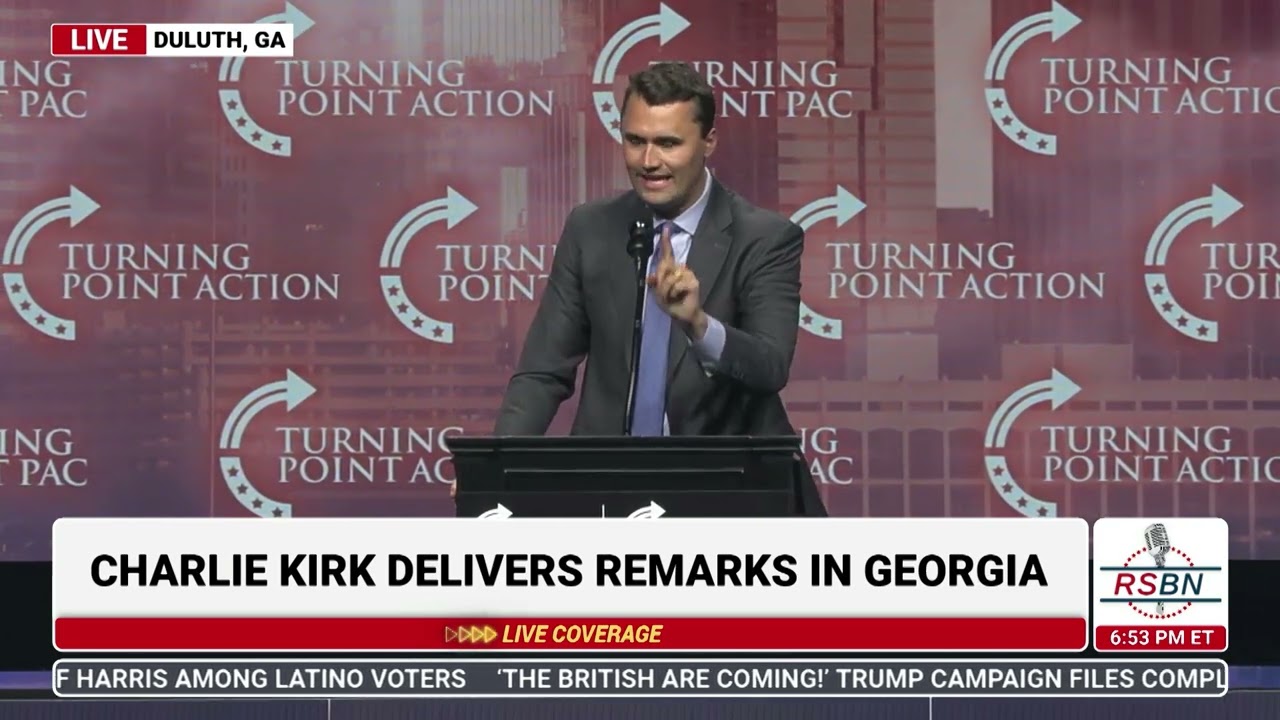
Charlie Kirk Reveals How Youth Voters and Alternative Media Delivered Trump's 2024 Victory
Enjoying this? Share it with someone who needs to see it.
Up Next
Charlie Kirk on the Greatest Political Comeback in American History and What Comes Next
24:40
Donald Trump Jr. on the Most Amazing Political Comeback in American History and Why Exile Made Them Stronger
22:56
Charlie Kirk on Georgia's Historic Political Realignment and the Battle for America's Future
15:03
Charlie Kirk Reveals How Youth Voters and Alternative Media Delivered Trump's 2024 Victory
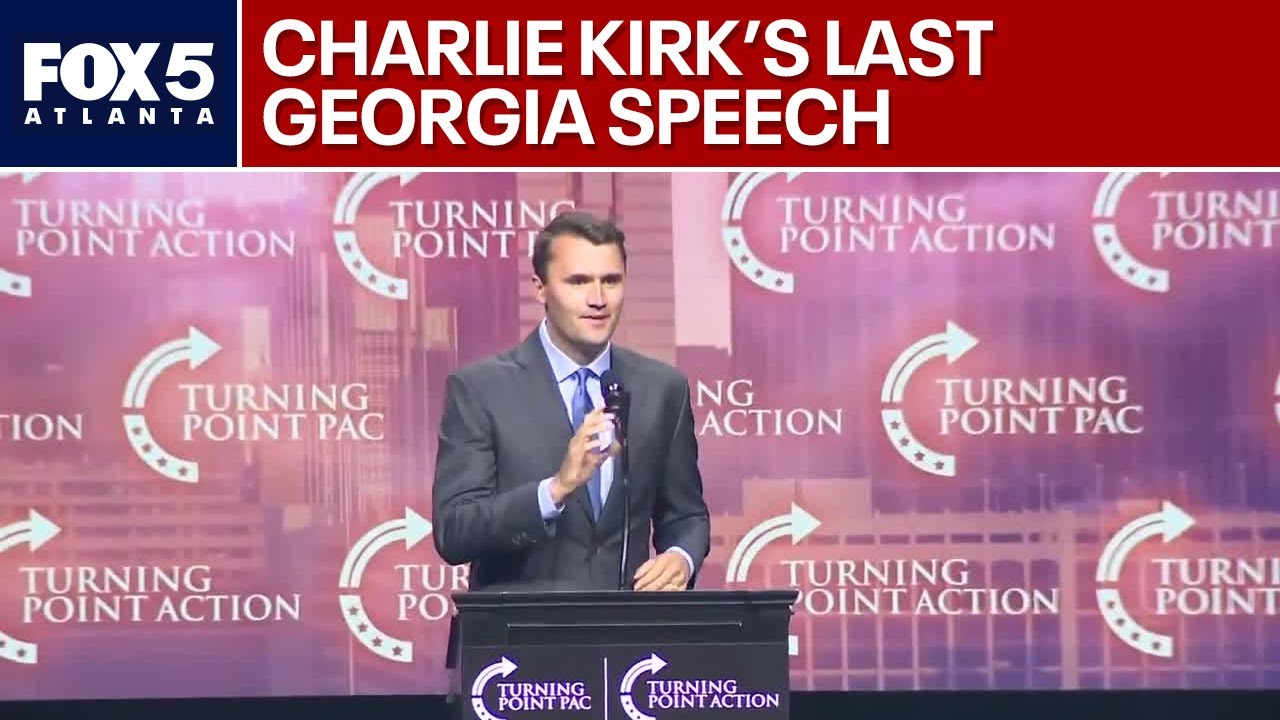
Charlie Kirk breaks down the coalition that delivered Donald Trump's 2024 victory with Megyn Kelly, highlighting the shift in youth voters and the power of alternative media. Kirk visited 25 college campuses this semester, creating viral content that reached billions of views and registered thousands of first-time voters. He explains how Trump won by less than a point in key Rust Belt states, with the youth vote movement potentially making the difference. Kirk credits Elon Musk's Pennsylvania ground game, the Unity ticket with Robert F. Kennedy Jr. and Tulsi Gabbard, and podcasters like Joe Rogan for crushing the major networks. This wasn't 2016's lightning in a bottle—it was a calculated effort by 30 to 40 people who went all in.
In a conversation with Megyn Kelly, Charlie Kirk unpacked the elements that delivered Donald Trump's 2024 presidential victory, emphasizing that this win was fundamentally different from 2016. While 2016 caught everyone by surprise, 2024 represented a coordinated effort by 30 to 40 key figures who built what Kirk calls a "once in a lifetime Unity ticket."
Kirk praised Kelly's role in the victory, noting that her podcast "held the line with sane women in this country" and helped them understand what was at stake. But he was quick to acknowledge the broader coalition that made victory possible, from Robert F. Kennedy Jr. to Tulsi Gabbard, and especially Elon Musk, who lived in Pennsylvania for the final 45 days of the election, personally hosting town halls and giving away a million dollars a day to encourage citizen participation.
Alternative Media Crushes Legacy Networks
One of the most significant factors in Trump's victory was the rise of alternative media platforms that the establishment couldn't censor or control. Kirk contrasted this election with four years ago during COVID, when alternative media was largely censored. This time, podcasts and shows like Kelly's, Joe Rogan's, Kirk's own show, and the All-In podcast dominated the conversation while legacy media lost influence.
"The left couldn't keep up with it," Kirk explained, noting that Trump's campaign strategy of embracing these platforms proved decisive in reaching voters who had tuned out traditional news sources.
The Campus Revolution: 25 Colleges, Billions of Views
Kirk's most direct contribution to the campaign came through his unprecedented college campus tour. He visited 25 campuses this semester—the most he's ever done—with a new approach designed to maximize viral impact and voter registration.
Rather than traditional evening events, Kirk set up dialogue tables where anyone could challenge him on camera with no rules, no scripts, and no limitations. Professors, professional debaters, or students with notes could all participate. The unscripted nature of these exchanges created compelling content that resonated with audiences hungry for authenticity.
The results exceeded all expectations. The first event at the University of Wisconsin-Madison drew 2,000 people—a staggering number compared to the typical 100 attendees Kirk had been getting in his 12 years of campus work. At the University of Georgia, they drew 5,000 people. These weren't just spectacles; Kirk's team was registering thousands of first-time voters at each stop.
Viral Content That Moved Votes
The campus conversations produced viral content that reached audiences at an unprecedented scale. One exchange, where Kirk dismantled a student's claim that Trump is racist by simply asking her to define racism and provide specific examples, received over 60 million views on TikTok alone. When tallied across all platforms, Kirk's content reached billions of views, meaning target young voters were seeing his message six, seven, eight, nine, or ten times.
"What you think he's a racist because the media has told you he's a racist, because you can't give me an example off the top of your head," Kirk told one student who struggled to support her claim. "Maybe the media is lying to you."
The Youth Vote Surprise
While political establishment figures and left-leaning commentators mocked Kirk's efforts on social media and insisted polls showed young voters would support Kamala Harris in record numbers, Kirk saw something different on the ground. The massive turnouts, the engaged conversations, and the voter registration numbers told a different story.
Even Mark McKinnon, a political analyst who worked for George W. Bush and isn't a Trump supporter, noticed something unusual. After seeing Kirk's content on social media, McKinnon attended the University of Georgia event with 5,000 people and admitted he was second-guessing his prediction that Harris would win.
The exit polls validated Kirk's observations. Republicans won the youth vote in Michigan and nearly won it in Wisconsin and Pennsylvania. At Penn State, where Kirk did five events during the cycle, they came within one point of flipping Centre County, which typically goes Democrat by 20 points.
The Margin That Mattered
Kirk cautioned against overconfidence despite the electoral college landslide, pointing out that Trump won Wisconsin by less than a point (about 28,000 votes), Michigan by 0.1 to 0.2 points, and Pennsylvania by one point. These razor-thin margins in the critical Rust Belt states meant that the youth vote movement Kirk cultivated could very well have been the difference between victory and defeat.
"It is conceivable that without this record movement of youth vote, he doesn't win," Kirk explained. "We're talking about a point and a half across three states. The Sun Belt states were more generous and more decisive, but everyone was saying if you can't win a Rust Belt State, Kamala is President."
A Testament to Coalition Building
Kirk concluded by emphasizing that the victory belonged to many people who played their parts. From Elon Musk's Pennsylvania operation to the alternative media ecosystem to the Unity ticket that brought together figures from across the political spectrum, the 2024 victory represented something fundamentally different from 2016's surprise win.
"This was really 30 or 40 different people that went all in, that we just called the bluff of the Democrats, and we beat the most powerful thing ever to exist in the history of the world," Kirk said. "The kids are all right, and the kids put Donald Trump back in the White House."