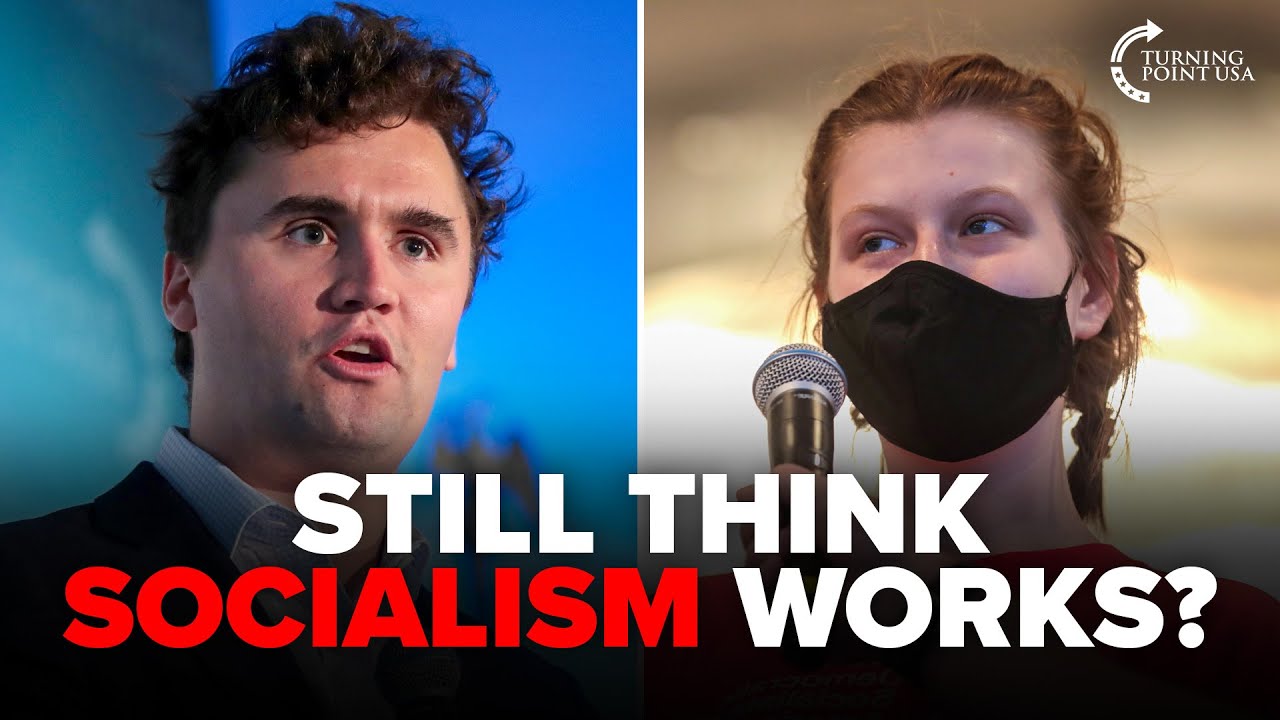
Charlie Kirk Reveals Why the Richest ZIP Codes in America Surround Washington DC
Enjoying this? Share it with someone who needs to see it.
Up Next
Charlie Kirk Shares Life Advice for Young Americans: Building Character, Courage, and Success Without College
17:38
Charlie Kirk Dismantles CRT, Marxism, and Modern Leftist Ideology in Fiery Campus Debate
58:06
Tucker Carlson on Usury, Credit Card Debt, Russia, and Why He Openly Supports Donald Trump
33:52
Charlie Kirk Reveals Why the Richest ZIP Codes in America Surround Washington DC
Charlie Kirk exposes a troubling economic shift in America: the wealthiest ZIP codes now cluster around Washington DC, a city that produces laws and lobbyists rather than tangible goods. Kirk contrasts this with former manufacturing powerhouses like Chicago, Detroit, and Philadelphia, which once held the richest ZIP codes but declined after questionable trade deals. He criticizes how DC prospered while the middle class stagnated, noting that the 2008 recession barely touched Washington's elite. Kirk argues for free markets but questions trade agreements that enriched China at America's expense, highlighting how the nation's wealth has concentrated around those who create liabilities rather than value.
The richest ZIP codes in America are now concentrated around Washington DC. This represents a fundamental shift from America's past, when cities like Chicago, Detroit, and Philadelphia held the distinction of housing the nation's wealthiest areas. These former industrial powerhouses created tangible goods and drove American prosperity through manufacturing and production.
Washington DC, by contrast, creates something entirely different: laws, liabilities, lobbyists, and coups against sitting presidents of the United States. The nation's capital does not produce goods of inherent value but has somehow become the epicenter of American wealth accumulation.
The Impact of Trade Deals on American Manufacturing
The decline of America's manufacturing centers coincides with trade deals that fundamentally altered the economic landscape. While advocating for free markets, there's a critical distinction between supporting market principles and endorsing unilateral transnational trade deals that disproportionately benefit America's greatest adversary: China.
These trade agreements allowed China to accumulate enormous wealth while the American middle class remained economically stagnant or worse over the past 20 to 30 years. The financial condition of average Americans has become increasingly unstable, yet this reality hasn't touched the insulated world of Washington DC.
Washington DC's Immunity to Economic Downturns
The 2008 recession serves as a stark illustration of Washington's disconnect from the rest of America. While the nation suffered devastating economic consequences, Washington DC experienced virtually no recession. Housing prices dipped slightly, but median income actually rose. The wealth of DC's elite continued to grow even as millions of Americans lost their homes, jobs, and savings.
This immunity to economic hardship reveals a troubling truth: the people making decisions in Washington DC are insulated from the consequences of those decisions. They operate in an economic bubble where everything remains fine regardless of the policies they implement or the deals they approve.
The Value Creation Problem
The concentration of wealth around Washington DC raises fundamental questions about value creation in America. The richest parts of the country are no longer where things are made, invented, or built. Instead, wealth clusters around those who regulate, legislate, and lobby—activities that don't create tangible value for the American people.
This represents an inversion of what made America prosperous: the creation of real goods and services that improved lives and built wealth through productive enterprise rather than through the manipulation of rules and regulations.