Confronting the Women's March: Asking What 'We Won't Go Back' Really Means
Enjoying this? Share it with someone who needs to see it.
Up Next
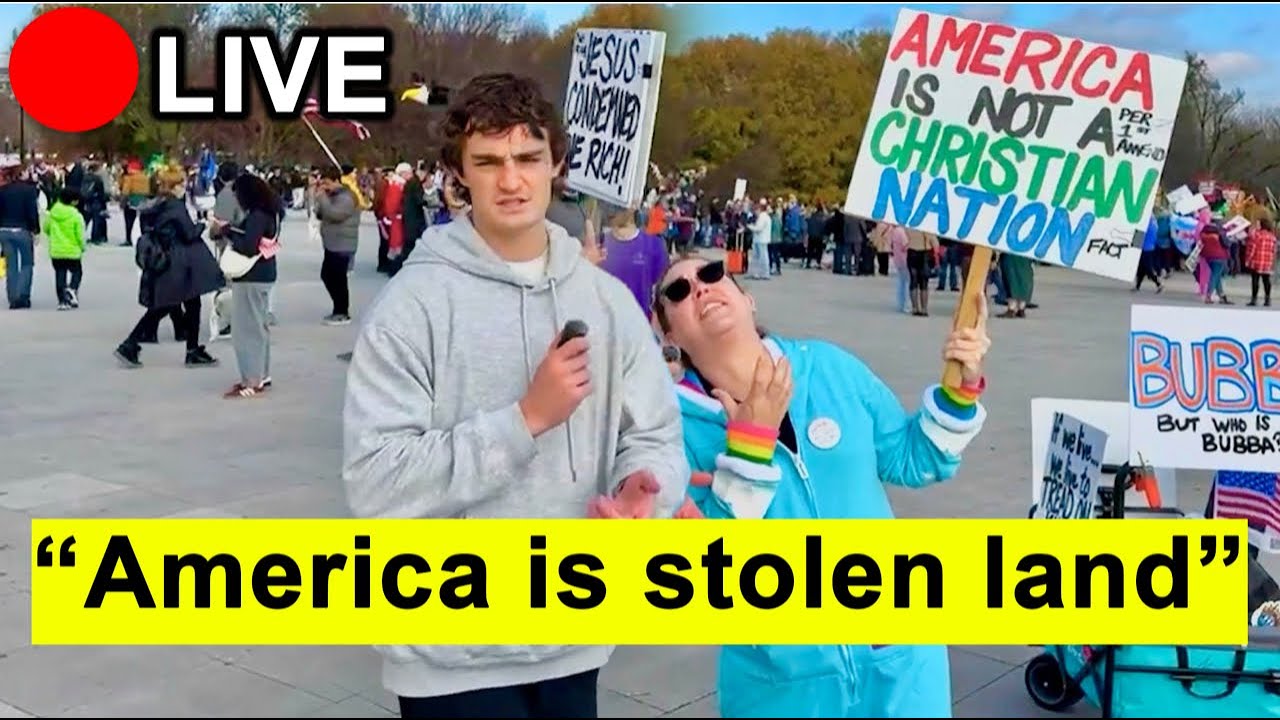
Nick Shirley Confronts Protesters at New York City No Kings Rally Against Trump
1:06:50
Charlie Kirk Debates College Students on Fascism, Democracy, Gender, and American Values at Campus Event
7:06
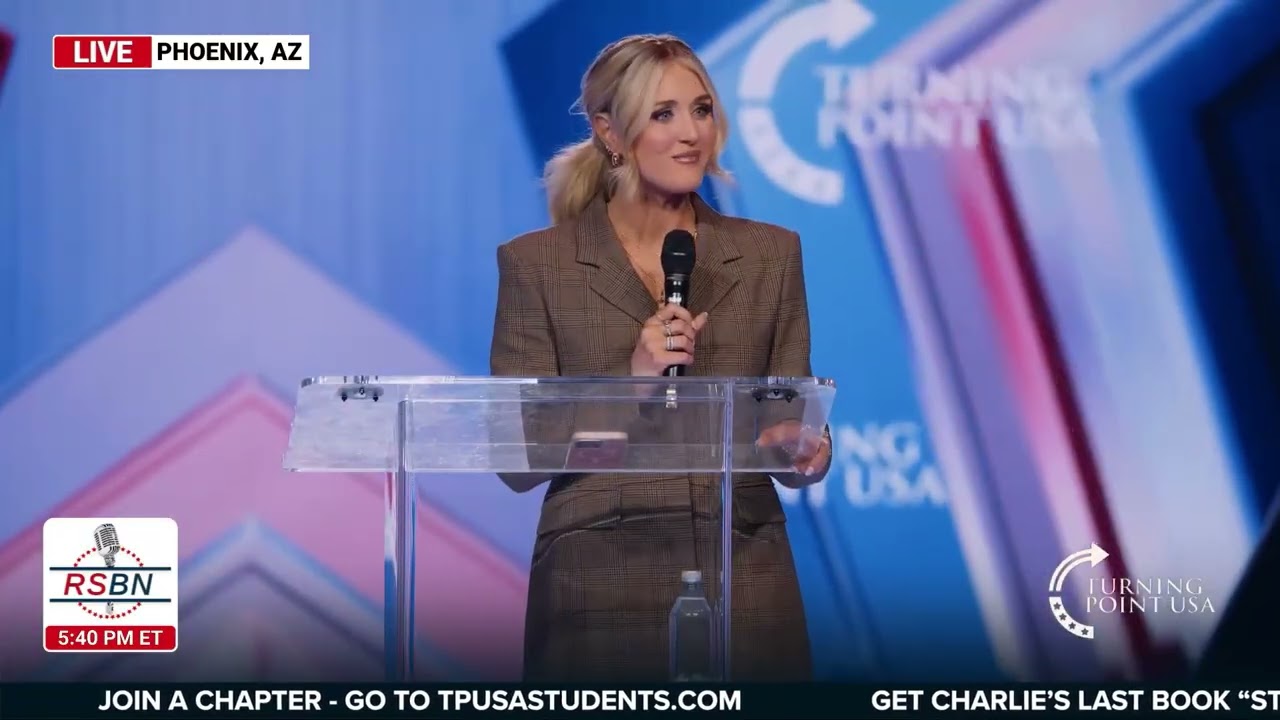
Riley Gaines Reflects on Charlie Kirk's Legacy, Gender Ideology, and the Pro-Life Movement at Amfest
18:32
Confronting the Women's March: Asking What 'We Won't Go Back' Really Means
At the Women's March, activists chanted 'we won't go back' as their rallying cry. But when pressed on what exactly they're refusing to return to, the answers revealed a striking lack of clarity. From vague references to the 1950s to inability to define basic terms like 'what is a woman,' this street-level investigation exposes the contradictions at the heart of modern progressive activism. The responses ranged from abortion access to 'nonsense' to 'whatever she wants to be,' painting a picture of a movement long on slogans but short on substantive answers.
The theme of this year's Women's March centered on a powerful rallying cry: 'we won't go back.' The phrase echoed through crowds, printed on signs, and chanted by thousands. But what does it actually mean? When confronted with this simple question on the streets, march participants struggled to articulate what they're supposedly refusing to return to.
The 1950s—But Why?
When asked what we're not going back to, multiple participants pointed to the 1950s. The decade has become shorthand in progressive circles for an era of oppression, yet when pressed for specifics, the answers remained frustratingly vague. One marcher simply repeated 'the 1950s' without elaborating on what specific policies, laws, or cultural norms from that era they opposed. The slogan served as a stand-in for deeper thinking, a bumper sticker covering over the absence of substantive argument.
Abortion as the Central Answer
At least one participant offered a concrete answer: 'We're not going back to not having abortions.' In the post-Roe landscape, abortion access has become the defining issue for many progressive women. This response, while clear, reveals the narrow focus of a movement that claims to represent all women's interests. The reduction of women's concerns to a single issue—abortion—stands in stark contrast to the breadth of challenges facing American women today.
The Nonsense Response
Perhaps most telling was the participant who claimed we're not going back to 'the nonsense.' When pressed to define what nonsense meant, no clarification followed. This response encapsulates the circular logic often found in activist spaces: the enemy is whatever we've labeled as bad, and it's bad because we've labeled it the enemy. There's no need to define terms or make arguments when the rightness of the cause is assumed.
The Question That Stumps: What Is a Woman?
The conversation took a revealing turn when participants were asked a fundamental question: What is a woman? The answers exposed the ideological contradictions within modern feminism. One marcher responded that a woman is 'everything,' then clarified 'whatever she wants to be.' Another claimed a woman is 'a lot more than a man,' a response that defines women only in relation to men while simultaneously avoiding any actual definition.
These non-answers reveal a movement caught in its own contradictions. A march ostensibly organized around women's rights cannot or will not define what a woman is. This isn't a trivial semantic game—it strikes at the heart of identity politics and the progressive project. If women are whatever anyone wants them to be, then what does women's liberation even mean?
A Movement Without Mooring
What this street-level investigation reveals is a movement that has become unmoored from coherent principles. The Women's March has become an exercise in performative activism, where showing up and chanting slogans substitutes for critical thinking. Participants have been handed a script—'we won't go back'—without being given the substance to support it.
This isn't to say that all the concerns raised by march participants are invalid. Many women do have legitimate fears about abortion access, economic opportunity, and safety. But when a movement cannot articulate its own positions, cannot define its own terms, and cannot explain what it stands for beyond vague gestures to a decade seven decades in the past, it has ceased to be a serious political force.
The Danger of Slogan-Based Politics
The 'we won't go back' slogan represents everything wrong with contemporary political discourse. It's emotionally evocative, requires no defense, and positions anyone who questions it as advocating for some undefined oppression. It's politics as performance, activism as aesthetic. And when ordinary participants at a march organized around this theme cannot explain what it means, we see the emptiness at the center of so much modern progressive activism.
Real political movements are built on clear principles, defensible positions, and the ability to persuade those who disagree. What was on display at this Women's March was something else entirely: a gathering of people who know they're supposed to be opposed to something, but cannot quite say what that something is.