Gary Melton Interviews Henry Dells, Eyewitness to Charlie Kirk Assassination at Utah Valley University
Enjoying this? Share it with someone who needs to see it.
Up Next
Brian Harpole's Shawn Ryan Interview: Integrity Security Reveals What Happened During Charlie Kirk's Final Moments
32:39
The Assassination of Charlie Kirk: Investigation Updates, Evidence Analysis, and America's Divided Response to Political Murder
2:48:19
Gray Hughes and Gary Melton Discuss On-Site Investigation of Tyler Robinson's Attack on Charlie Kirk
3:17:22
Gary Melton Interviews Henry Dells, Eyewitness to Charlie Kirk Assassination at Utah Valley University
Gary Melton sits down with Henry Dells, one of the last people to speak with Charlie Kirk before the tragic assassination at Utah Valley University. Henry, a construction company owner who had recently moved to Utah, was the first person to ask Charlie a question during the event, debating him on religion. Minutes later, positioned just 15-20 feet away, Henry witnessed the shooting that took Charlie's life. In this compelling interview, Henry shares his firsthand account of what he saw, heard, and experienced that day, addresses conspiracy theories surrounding the event, and discusses the security failures that allowed the tragedy to occur. He also reveals his mission to continue Charlie's legacy of open discourse and finding common ground across ideological divides.
Gary Melton was at Utah Valley University when he encountered Henry Dells, a construction abatement company owner who had moved to Utah just six months before the Charlie Kirk assassination. What started as a casual conversation turned into a detailed firsthand account of one of the most tragic events in recent American political history. Henry wasn't just at the event—he was one of the last two people to have a full debate with Charlie Kirk before his life was taken.
Henry had attended the event specifically to debate Charlie on religion. As someone who frequently debates on social media and admired Charlie's debate tactics, Henry saw this as an opportunity to engage with someone whose style he had studied and mirrored. He arrived early, spoke with Charlie's team, and was placed at the front of the line. His debate with Charlie on Mormonism versus Protestantism would be one of Charlie's last full debates.
The Moments Before Tragedy
Henry described the atmosphere at UVU as tense even before Charlie arrived. George Zinn and his group were stirring up contention among college students, talking about how bad Charlie was. Despite the large crowd and the presence of a prominent political figure, Henry noticed what seemed like minimal security. This observation troubled him, especially given what had happened at Butler. He even considered asking Alex, one of Charlie's security detail and a former UFC fighter, whether anyone was securing the rooftops or using drones for surveillance.
After his debate with Charlie, Henry couldn't leave due to the crowded venue. He positioned himself just a couple of feet to the left of where a PVC pipe structure was hanging—placing him approximately 15 to 20 feet from Charlie Kirk when the fatal shot rang out.
The Shot That Changed Everything
When asked about the sound of the gunshot, Henry was clear and specific. It sounded like it came from behind him—from the direction of the Lossy building where the shooter Tyler was later identified to have been positioned. Henry, who was raised in East Texas and has hunting experience, noted that it didn't sound like a traditional hunting rifle. Instead of the boom associated with a hunting rifle, he heard a crack—something more consistent with a tactical rifle like an AR.
Henry addressed the various conspiracy theories that emerged about the shooting, particularly claims that the shot came from the crowd or from Charlie's right side. He attributed these conflicting accounts to the acoustic challenges of the venue, the sound being transmitted through the speakers, and people's inability to accurately retain information during traumatic events. He was frustrated by these conspiracy theories because from his position, the direction of the shot was clear.
The Immediate Aftermath
When the shot was fired, Henry didn't immediately take cover. It took him about 30 seconds to get down as he tried to process what was happening. He moved to the concrete and crouched, trying to assess the situation. The crowd erupted in chaos—people were crying, ducking down, and trying to flee, though few could actually get out due to the congestion.
One element that contributed to confusion was a man in the crowd who started yelling, "It was me. Shoot me. Shoot me." Henry believes this is why some people thought the shot came from the crowd. To avoid the pushing and shoving of people trying to escape, Henry jumped into the nearby fountain and crouched there until people cleared out.
From his vantage point, Henry saw Charlie's carotid artery had been severed. Having friends who are doctors and knowledge of such injuries, he knew immediately that Charlie's chances were virtually nil. Even if a doctor had been present, they likely couldn't have saved him. Henry believes Charlie was dead before he hit the ground, despite initial reports of a pulse—which he suspects was only due to medical equipment being used.
Security Failures and Institutional Responsibility
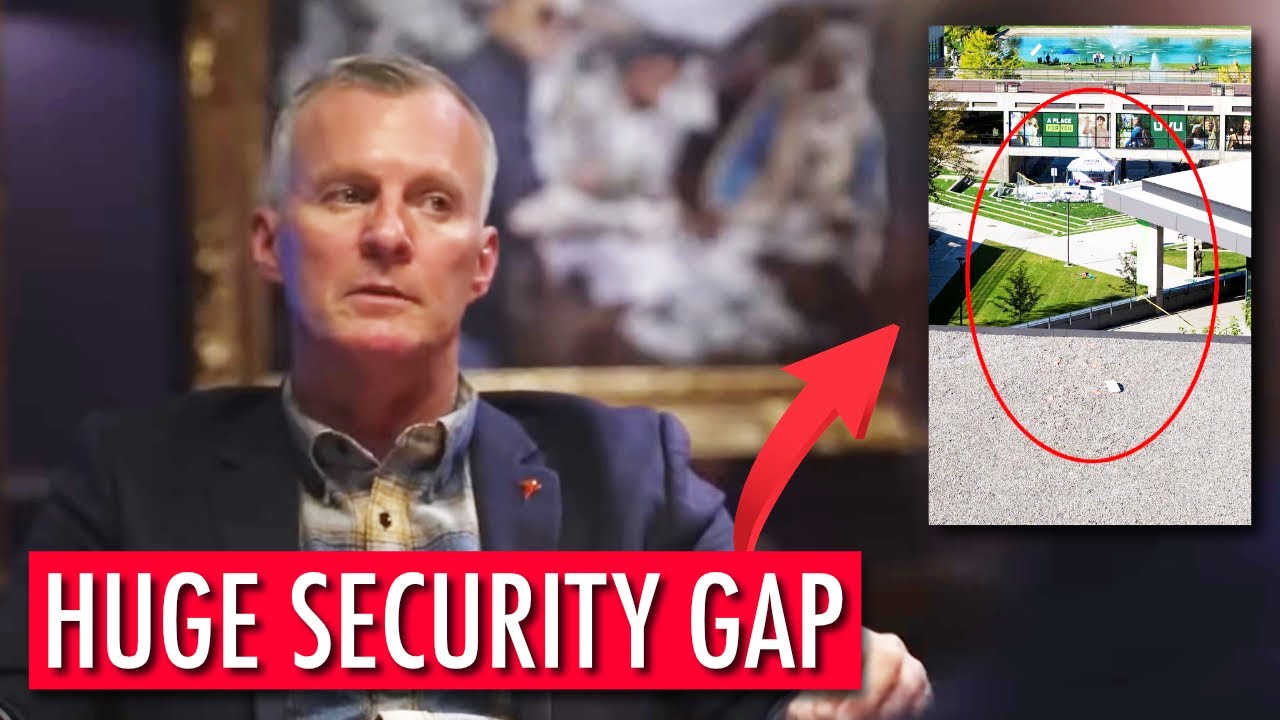
The interview revealed critical information about security failures that day. Henry had been scanning the rooftops for about 15 minutes before the shooting, looking for security personnel. He saw no one—no officers, no security detail scanning the area. This was approximately 15 minutes before the shooter was allegedly on the roof.
According to a video released by Turning Point USA, Charlie's security team had requested permission to use drones and secure the rooftops. UVU campus police rejected these requests, stating they would handle those responsibilities themselves. The security detail stood down, expecting campus police to do their job. The question Henry and many others are asking is: did campus police fulfill that responsibility? The tragic answer appears to be no.
Gary noted that on the day of their interview, they couldn't walk 20 feet on campus without encountering an ORM police officer—suggesting more security was present during their visit than during Charlie's event.
Defending Charlie's Team Against Criticism
Henry addressed criticism directed at Charlie's security detail, particularly regarding Alex, a team member who removed an SD card from a camera at the scene. Some, including Candace Owens, questioned why he was tampering with evidence at a crime scene. Henry explained that people were immediately looting the table after the shooting. Of course the security team would protect evidence—and that evidence was turned over to the FBI.
Henry spent two days talking with the FBI, providing his perspective, explaining where he was positioned, and describing what he saw. He defended other actions that were criticized, such as people throwing out hats and the person yelling "USA" after the shooting, explaining that in the chaos and emotion of the moment, people's actions shouldn't be judged too harshly.
Regarding allegations that Charlie's security team was somehow involved, Henry was unequivocal: he saw nothing that implicated them in any way. Many of them had been with Charlie for years and were close friends. The criticism, in his view, was misplaced.
The Political Fallout and Division on the Right
Both Gary and Henry expressed concern about how the assassination has fractured the conservative movement. Gary noted that the event has divided the right in ways he never imagined, and both agreed this is not what Charlie would have wanted. There's repair work that needs to be done within the conservative movement, and allowing this division to continue would be a real shame and a disservice to Charlie's legacy.
Henry was particularly frustrated that the tragedy hasn't resonated with some on the left in the way he hoped it would. He and his friends who are part of TPUSA's campus chapter are trying to continue what Charlie did—promoting open discourse and the ability to disagree respectfully while finding common ground.
Carrying Forward Charlie's Legacy
Henry revealed that one of the first things he said when approaching Charlie for their debate was that he agreed with Charlie on about 90% of everything. He had to really dig to find something they disagreed on because he wanted to demonstrate how to disagree or agree to disagree. This was especially important after Butler, when there was a growing notion that people couldn't find common ground across political divides. Henry is a strong advocate against that notion, believing you can always find common ground.
While Henry is in contact with TPUSA photographer Andrew and may visit their Arizona headquarters, he wants to maintain some autonomy in his activism. He doesn't want to fully represent TPUSA because he has some perspectives that differ, but he does want to represent the freedom of public discourse that Charlie championed.
Henry runs two social media platforms: HMV Official 2025 on Instagram for political content and campus conversations, and Lost in Transmission for religious debates with other Christians and discussions about the history of religion and the Bible. He plans to continue engaging in both political and religious discourse, particularly in ideologically diverse areas like Salt Lake City, carrying forward the spirit of respectful debate that Charlie embodied.
A Call for Truth and Unity
The interview with Henry Dells provides crucial firsthand testimony about the Charlie Kirk assassination at Utah Valley University. His account clarifies the direction of the shot, addresses conspiracy theories, reveals security failures by campus police, defends Charlie's team against unfair criticism, and most importantly, demonstrates a commitment to continuing Charlie's mission of open dialogue and finding common ground. As Gary and Henry concluded, the conservative movement needs to heal its divisions and honor Charlie's memory by staying true to the principles he fought for until his final moments.