Up Next
Multi-Angle L-R Delay Analysis of Six Phone Recordings Reveals Two Spatially Separated Acoustic Sources
0:46
Dr. Chris Martinson Exposes Major Problems with the Official Charlie Kirk Murder Investigation and Tyler Robinson Narrative
54:10
Charlie Kirk's Head of Security Brian Harpole Breaks Silence and Debunks Conspiracy Theories Surrounding the Assassination
37:29
Jon Aaron Bray Reveals The Most Compelling Evidence in His Charlie Kirk Theory
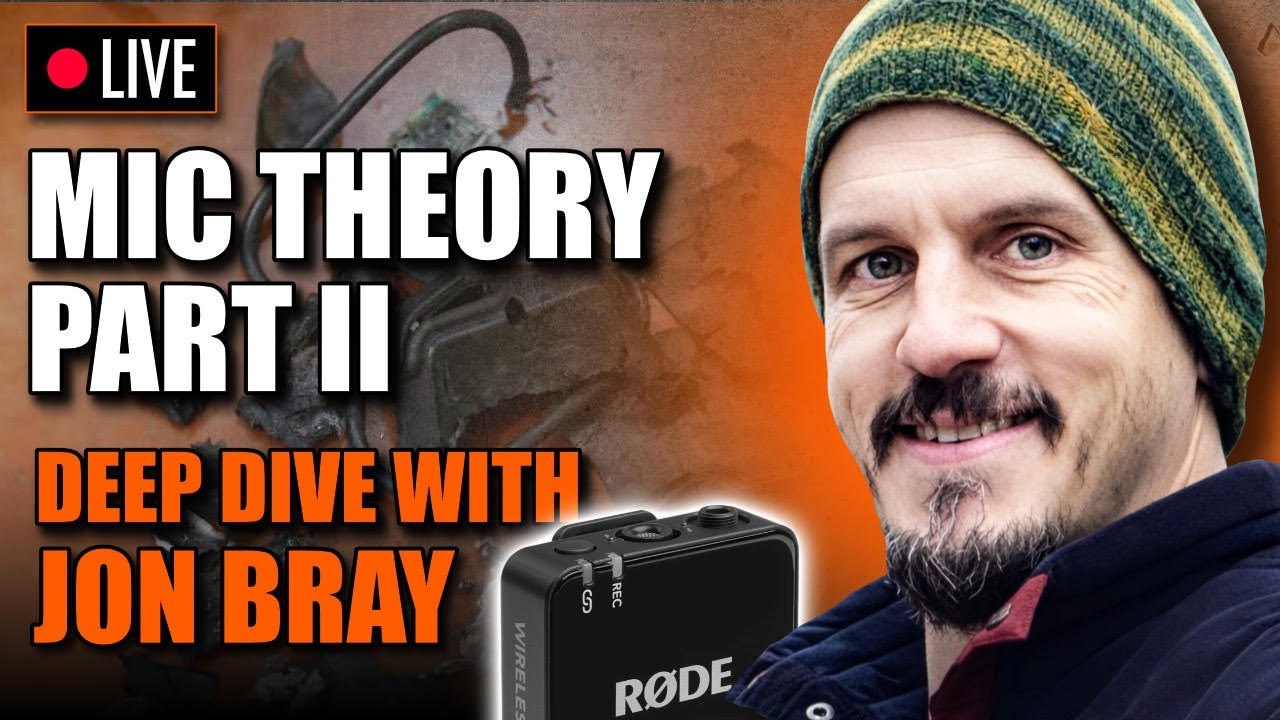
Jon Bray presents his detailed analysis of the Charlie Kirk incident, focusing on audio evidence from the UVU camera and the Rode microphone transmitter pack. He addresses critical questions about the audio patterns, the transmitter pack's behavior, and alternative theories including the staged death hypothesis. Bray explains how chemically strengthened glass from the microphone face became trapped in Kirk's jersey knit shirt and later appeared in the SUV, while defending his theory against numerous challenges from skeptics.
The Key Audio Evidence
According to Jon Bray, the UVU audio recordings represent the most compelling evidence supporting his theory about what happened to Charlie Kirk. While the footage might not appear significant to a layperson, understanding the physics involved reveals critical information that other camera angles lack. The UVU camera, equipped with a Canon shotgun mic, captured three distinct audio tracks from onboard microphones that were neither compressed nor clipping throughout the event.
These uncompressed audio channels clearly show three separate acoustic energy waves: the Mach cone passing by, sound originating from the tent area, and finally the muzzle blast. The clarity of these recordings allowed Bray to apply band pass filters to footage from cameras closer to the event, filtering out all frequencies except those picked up by the Canon camera. This filtering process revealed that low-frequency sounds originated specifically from the tent area, with timing that falls within the processing capabilities of the ARM processor in the microphone system.
Addressing The Transmitter Pack Question
One of the most significant challenges to Bray's theory involves the Rode mic transmitter pack, which appears to remain clipped in place throughout available footage. Early in his investigation, Bray believed the magnetic clasp had come loose and caused the neck wound visible on Kirk. However, higher quality footage from the UVU camera revealed that the magnetic clasp actually stayed attached, with the shirt folding over itself and covering the clasp.
This discovery led Bray to purchase the exact microphone model Kirk wore. Upon opening the case, he made two critical observations. First, the circuit board featured a distinctive blue solder mask that matched a bluish-gray object briefly visible near Kirk's collar. Second, the circuit board was connected to a battery nearly identical in size to the magnetic clasp. Bray concluded that the circuit board caused the shirt collar to raise up, while the battery—not the magnetic clasp—created the rectangular impact visible on Kirk's neck.
What Remained Attached To The Shirt
Bray's analysis indicates that only the back plate and clip portion of the microphone remained attached to Kirk's shirt after the incident. The microphone case measured 18mm thick when mounted on its side, yet the shirt folded over itself almost flat with barely a noticeable crease. This would be impossible if the full case remained attached. Black plastic fragments visible in footage flying in a similar trajectory to the circuit board represent pieces of the outer case that ruptured during the energy release.
The face of the microphone was constructed from micro-tempered glass or chemically strengthened glass, similar to Gorilla Glass used in cell phones. When this type of glass breaks, it spider-webs out rather than shattering into large pieces, creating jagged, barbed edges. The beveled edge of this glass has unique light-refracting properties that appear in flash photography, which Bray identified in fragments photographed on the SUV floorboard.
The Glass Trail To The SUV
The jersey knit shirt Kirk wore functioned as an effective trap for the shattered glass fragments. When the glass dispersed beneath the stretched fabric, it penetrated deep into the voids between the knit fibers. As the shirt relaxed, it collapsed around the glass fragments, with the barbed edges making removal extremely difficult. When security personnel bunched up Kirk's shirt to carry him to the SUV, the glass remained largely trapped within the fabric.
Once inside the SUV, as personnel cut the shirt off or manipulated it during reported CPR efforts, the glass fragments began working loose and falling out. The majority of fragments appeared between the captain's chairs where Kirk's body was positioned. While larger ABS plastic pieces were more likely to fall out earlier due to their lack of jagged edges, most fragments visible in the SUV appear to be the distinctive chemically strengthened glass from the microphone face.
Evidence Left Behind
Bray believes some ABS plastic fragments fell on the ground while Kirk was being carried to the SUV, and that security footage showing personnel walking around and kicking at the grass under the tent represents a search for this fragmentation. The complete removal of grass from the area likely stemmed from the impossibility of recovering all fragments and the recognition that a single tested piece could unravel the entire operation. The unique characteristics of the glass—including black surface dying, beveled edges, and colored text areas from LED indicator lights and the Omega logo—make fragments identifiable.
Assessment Of The Staged Theory
Bray finds the theory that Kirk's death was staged highly unlikely for several reasons. Kirk's character and reputation for honesty make the level of deception required seem inconsistent with his public persona. Additionally, staging such an event would require considerable cowardice, as it would potentially allow an innocent person to face serious legal consequences while Kirk avoided whatever danger supposedly motivated the staging.
From a technical standpoint, Bray argues that Hollywood special effects convincing enough to fool observers only work from controlled camera angles in controlled settings. The Kirk incident involved approximately 180 degrees of camera coverage from roughly 3,000 attendees, capturing high-resolution, high-frame-rate footage from multiple angles. No wires or obvious equipment connected to Kirk, and he interacted naturally with the environment, tossing hats and posing for photos before the incident.
The risk-to-reward ratio makes staging implausible. If the deception were discovered, it would represent a career-ending event comparable to the Milli Vanilli scandal, destroying Kirk's credibility and reputation. Bray questions why anyone would choose such a complex, high-risk method when simpler alternatives existed, such as reporting a car accident. The likelihood of failure in front of thousands of witnesses with recording devices made the staged theory practically impossible in Bray's assessment.
The Missing Audio Question
If Bray could ask one direct question to those responsible for the microphone and security setup, he would ask them to produce the full audio from Kirk's microphone. While some have suggested that audio recorded to a camera might be identical to audio from the Rode mic, Bray specifically wants audio from after the Mach cone event through the time Kirk was dragged to the SUV. If the microphone remained functional as the narrative suggests, it should have captured the sound of the necklace snapping, a thud hitting the ground, security guard chatter, and ambient noise until Kirk moved out of transmission range. The absence or alteration of this continuous audio record would raise significant questions about what actually happened to the microphone during the incident.
Video Transcript
It definitely weighs on my heart, but
not saying something would weigh
heavier. I would rather be dead than
[music] cowardly, so it's a pretty easy
choice.
>> John, in under 1 minute, what is the
single most compelling piece of visual
or audio evidence supporting this
theory? And what is the single biggest
unanswered question that still needs
resolution?
>> I would say that uh the UVU
audio is the most compelling. When you
when you
to a layman looking at it, not knowing
anything, it probably wouldn't be that
significant, but if you understand kind
of the
the physics of what we're dealing with,
it it gives all the the information that
the other angles are lacking. So, that
you know, the audio from those three
audio
um channels that were on the camera,
they're the key. They're the key to
prove that the a shot was taken from the
general distance that they say it was,
and that there was a a third audio event
that originated from the tent, and I
think that's the key to kind of unwind
the whole the whole op.
>> So, what I've done, and John knows this
ahead of time,
he's not seen all the questions, but he
has he he he knows the general idea, I
went out and I pulled questions from
everywhere I could find.
This includes, you know, people like
Jordan Hinshaw, who was openly outspoken
against this theory. It includes people
like Gary Melton,
who has done an entire set of
livestreams that are against this
theory.
This includes many of you on X. You had
questions that you put into the post
that I did. So, in no way is this
one-sided. So, this is giving everyone
an opportunity to challenge John's
theory. Now, audio recordings show a
distinct sharp initial sound followed by
a delayed louder report with timing that
lines up with something originating from
a significant distance away. How does
the internal mechanism theory account
for that specific audio pattern and
timing?
>> So, it's difficult when you look at the
cameras that are close to the tent
because there's so much overlap and
these are all cell phone cameras and so
they they have compression and then they
they're also clipping from the mock cone
cuz the mock cone's, you know, way
louder than their the the microphone's
limits. And so it it's really difficult
to get good clarity on that. Where the
key audio analysis comes from is the UVU
camera, the the Canon.
It had a shotgun mic, which is the audio
that everyone's heard, which is the
gain's turned up way too much on it and
so it's clipping pretty much the whole
event. There's not much useful data from
it. But there's three other audio tracks
that come from the microphones that are
on board on the camera and they're
uh
they're not compressed. Um
the gain is is reasonable and you can
clearly hear the definition of three
audio events because it has the uh
the delta between the tent and the
camera is large enough
that the mock cone passes by and the
it's
its sound is dissipated by the time that
the sound that originates from the tent
arrives at the camera. And then the
muzzle blast arrives after that. So,
it's a very clear defined three uh kind
of acoustic uh energetic event waves
that can be detected.
And when you take that kind of uh
clarity that you get from the Canon and
you go back and look at the frequencies
that the Canon picks up and filter out
uh all but those frequencies from the
cameras that are close to the event,
then you can get better clarity on um
kind of the trajectory the triangulation
of where the audio comes from and it's
all the every camera around it once you
can use that band pass filter to really
hone in on just the frequencies that
came from the tent, then you can really
clearly get a map that the uh those
frequencies originated from the tent
area. They're low frequency. Um they're
within the range that you would expect
from a energetic event like we
described, and they all time pretty
perfectly where the Mach cone arrives in
the and within the software limits or
the hardware limits of the microphone
for it to process the the audio, the
Mach cone, and send a trigger. It's
right in within the parameters of what
that arm processor could do. So, it it
all matches with the thesis. There's
nothing that's kind of out of line with
it, but it was very difficult to find
until we got the UVU audio.
>> The transmitter pack appears to remain
clipped in place, and transmitter pack
in this case we mean Rode mic.
>> Yep.
>> So, you and I spoke about this. This is
something that initially earlier on your
theory, um a lot of people say that you
are so sure of your theory and that you
just stuck to it no matter what, but I
know for a fact that I brought something
up to you earlier on, and you looked
into it, found out that it was something
that you should like dig a little bit
deeper into, and you found out that it
wasn't actually the magnet that went up,
it was something else. So, along those
lines, the transmitter pack or the Rode
mic appears to remain clipped in place
throughout the footage with no visible
signs of violent rupture or outward
effects. How do you reconcile that with
observations with a significant internal
energy release that occurred at that
spot? So, in other words, why did the
clip and the mic magnet stay there even
though the shirt was going all over the
place, and then we see obviously the
event that happened?
>> Yeah, and and that's solid point. Um
when we first had the few first uh few
uh videos available, the magnetic clasp
seems to disappear.
As the neck wound appears, you no longer
see the magnetic clasp, and it was
taking a general trajectory that matched
with where the neck wound appeared at.
And so, that left me with the assumption
that the magnetic clasp came loose and
caused the actual neck wound. But uh
kind of like with the audio with the
UVU, uh the video from the UVU shows
that the magnetic clasp stayed attached
and the shirt folded over itself
and covered up the magnetic clasp.
And then that in itself showed that it
couldn't have been the magnetic clasp
that came loose and struck his neck. But
um when I actually purchased the the
microphone that Charlie wore
uh there's two revel- revelations. The
first revelation was that the circuit
board had a blue solder mask on it. And
so you can see how you know the um
the color there clearly like a a strange
blue which is not something I'm used to.
And I I initially thought that the cross
pin that was responsible for raising the
shirt collar up on his neck uh because
it had like a bluish grayish color that
you could see peek out from the the side
of the collar where it almost kind of
came out of the collar for one frame
before it falls back down. But as soon
as I opened the case up and I saw the
pattern of the circuits and the color of
the circuit board, I knew that it was
the circuit board that caused his shirt
collar to raise up. And then that left
me with the second revelation as I
pulled the circuit board out it was
attached to the battery which is almost
the exact same size as the magnetic
clasp.
So then I had a uh uh
a clear line of trajectory
for the circuit board which passed right
by where the neck wound was, had enough
energy to raise his shirt collar up, and
I knew that if the circuit board came
out of the case, the battery would had
to come out of the case also because the
battery's connected to the circuit
board.
So then that left me with the revelation
that
the rectangular object that struck his
neck wasn't the magnetic clasp, it was
the actual battery that was connected to
the circuit board that came out of the
case.
>> So what do you think is actually still
attached to his shirt then?
>> Is the back plate, the clip.
So the the the side of the of the
microphone
it failed and that's why we see the
black projectiles coming out right when
the shirt collar raises up, we see black
plastic flying in a similar trajectory.
And that black plastic is on the outside
face of this. So, the only thing that
was left connected to his shirt was the
clip portion and the magnetic clasp and
a little bit of the back plate. So, you
know, the energy displaced outward and
it it basically ruptured the face off
and ruptured the sides of the case off.
So, that all that was left was the the
flat black portion and the clip. And if
you look at dimensionally when the
pre-event you can see um you know, it's
18 mm thick the microphone. So, and it
was mounted kind of on its side like
that. So, you can see how thick that is.
There's no way that it folds over on
itself without leaving a huge hump,
right? But, what we see is it folding
over on itself almost flat where you
barely even notice that there's a
there's a there's just a flat crease.
And so, the the fact that it stays
attached
is evidence that the case wasn't there
anymore. We're not seeing the bulk of
the case left on the shirt. As soon as
the necklace breaks, we we no longer see
the width or the thickness of the case.
All we're seeing is the width and the
thickness of the clip portion. And so,
that's why it moves so easily and hides
itself so easily.
Um especially the back view when you see
where he's kind of like falling over,
you can see clearly that it's just this
area that's left. It the the bulk of the
case is gone. Um and that's uh either
like a micro-tempered glass or
chemically strength strengthened glass.
Sort of like what they use on a
like Gorilla Glass. There's a few
different brands of it, but what they
use on cell phones. If you ever cracked
a cell phone, you see it holds its it
like spreads the energy out, but it
it'll hold its general, you know, it
won't just shatter off in big pieces. It
like spiders spider webs out and a
majority of it does stay kind of in
place until it starts to come loose and
then it all comes loose and it's very
jagged and barbed.
And so, you know,
>> And sticky, right?
>> And and sticky, right? It's like fish
hooks. So, especially when it gets by
loop pile or knit, it tends to to really
stick in it and it's very difficult to
get it to come loose. So, that explains
how it made its way to the SUV and then
the general characteristics of it are
really unique in that it has like a
a black
um kind of like dying in the black
surface and then it has certain areas
that are dyed different colors. And the
beveled edge is probably the most unique
thing about it. The whole edge has a
bevel to it. And so, the you can see
portions of that glass where when you
take pictures of it with that beveled
edge, it captures the flash and kind of
like makes a line. You can see it on
that piece there. It it refracts that
light back at you. So, when you hit have
a edge piece of it that breaks, it has a
very unique kind of reaction when it's
taken
has a flash photography taken of it. And
we can see that in a lot of the pieces
on the floorboard. And you can see a lot
of the text colors. There's a a text
color for two of the buttons that are on
the front like LED indicator lights.
And then the obviously they um
the actual Omega O is in gray and you
can see a lot of those features in it.
But the general characteristics of the
glass is a unique enough to to really
pinpoint that it more more than likely
the source of all that glass is from
that face of that microphone. And the
reason that it made it to the car is
because
the the chemically strengthened glass,
when it breaks, it's very it has barbed
ends. And the jersey knit shirt that he
was wearing basically captured it like a
fish net. And so, when they bunched his
shirt up and carried him to the car, it
was basically holding all that in. And
when they cut the shirt off or did
whatever they did in the SUV, it started
to come loose. And that's why we see the
majority of it in between the captain
chairs, because that's where they they
basically had his body stretched out
over. So, as they're they're
manipulating the shirt, cutting the
shirt off, or doing CPR, depending on
which story you believe what happened in
the SUV, that glass is going to start to
come loose and fall out as the shirt
gets stretched and manipulated around,
those barbs break loose, and then they
fall to the ground.
>> Yeah, that's that's the the jersey knit
shirt because basically, when that when
that shattered glass was dispersed
underneath the shirt, the shirt was
stretched out. So, you're opening up the
the voids in that knit. And then, as
that glass impacts it, it gets deep into
the void, and then the shirt relaxes and
collapses around it. So, it was like a
perfect glass trap to ensure that, you
know, whatever fragments got trapped in
the jersey net, they would have a really
difficult time getting out. And then,
the way they carried him to the SUV, the
shirt was kind of pulled up and bunched.
And so, it wouldn't have a lot of
opportunity to fall out. Um The larger
pieces would be more likely the ABS
plastic would be more likely to fall
loose cuz it doesn't have those jagged
ends, but the majority of the
fragmentation that we see from the SUV
appears to be the glass fragmentation.
There are some pieces of ABS plastic
there, too. But the ABS plastic I see on
the table, and like you mentioned, I
believe a piece or two fell on the way
to carry Charlie out. And I believe that
was majority of the fragmentation that
we're looking for when they were kicking
the grass around underneath the tent,
kind of like the whole security tape was
walking around looking at the grass
kicking around. Um I believe that was
kind of what they were searching for. In
In the end of the day, that was probably
the motivation to have the grass pulled
up because there's no way you would ever
ever be able to get all the
fragmentation.
And a single piece of that being found
and tested could unravel the whole
operation.
>> So, there's several alternative theories
about what happened to Charlie,
including the idea that
his unaliving was staged.
What is your assessment of the staged
theory? And what evidence do you find
most compelling or unconvincing about
it?
>> Well, I think Charlie's character would
probably be the hardest thing to get
past. He He's It doesn't strike me as a
very deceitful person.
And he seems pretty brave. And uh you
would need to be pretty cowardly and
deceitful to do something like that and
allow innocent person to possibly face
the death penalty.
So, you could, you know, be saved from
whatever danger that you may be facing
that you thought you needed to fake your
death. And then the other biggest thing
that goes against it is his physical
reaction. Like
while, you know, Hollywood effects, you
can say, you know, that they faked a lot
of things that look really convincing,
but you have to understand that's a
controlled setting. You're You're
controlling the point of view most
importantly.
So, while the fakes from Hollywood look
very convincing, they're convincing from
one camera angle. And they'll do a whole
'nother shoot in a whole 'nother setup
for it to look convincing from another
camera angle. And we basically had 180°
of camera angle on Charlie that day with
the audio on him. And you know, uh
high frame rates, high resolution. So,
you know, for you to be able to go and
say that you're going to bring someone
out live, have them toss hats around,
you know, be seen and you know, from all
angles, have photos taken of them, then
sit down and with no wires or anything
connected to him and and and pull off
like a Hollywood special effects thing.
I think you're just overlooking a lot of
the complexity that would be required to
do that. And most importantly, it it
it's the the likelihood of failure is
really high and then that's a career
destroying event, you know, if if you if
it's like a Milli Milli Vanilli event
for Charlie Kirk. If he goes out there,
you know, and it's it it becomes
apparent that he tried to fake his
death. It makes him look like a coward.
Um, and then it makes him look
deceitful. So, he would never recover
from that. So, it's all risk, no reward.
Uh, I just don't see it being very
possible.
>> Well, and then one of the things I
thought about it as well is why would
you do it there? He could just they
could just say, "Oh, you know, Charlie
Kirk was in a terrible car accident. Uh,
you know, he he didn't make it." Why
would they have to go and like you said,
this insanely difficult to pull off
situation with, you know, thousands of
cameras on him. There's 3,000 people in
the crowd. One mistake and, you know,
everyone knows. Right? And if you could
ask one direct question to the people
who are responsible for the microphone
and security set up that day, assuming
that your theory does be proven to be
correct, what would you ask them?
>> Uh, where the mic is. Just produce
produce the mic or the the full audio
for the mic. Like, that would that would
solve a lot of issues.
>> Now, there's two things that I push back
on that. The audio from the mic, if it
was internal, it's 32-bit float, right?
So, it would have to be a 32-bit float
file, but that's also assuming 32-bit
float is turned on, right? So, that's a
problem. If it's not, then you could
have the audio different recorded to a
camera and that would be the same as
audio that was in the road mic. So, to
me, the audio is not really like a, you
know, that that doesn't count.
>> the audio after the event the audio from
like the necklace snap on. Like, we
should hear a thud hit the ground. We
should hear the chatter of the security
guards if the microphone that was on his
shirt was still functional.
We should be able to capture audio from
the point of the mock cone past to the
point where they're dragging him to the
car. Like, you know, until he's out of
transmission range with the receiver. We
should have all that audio. There if the
official narrative is true and nothing
happened to the microphone, then it
should have been functional that whole
time.
Comments
Be the first to comment on this video.