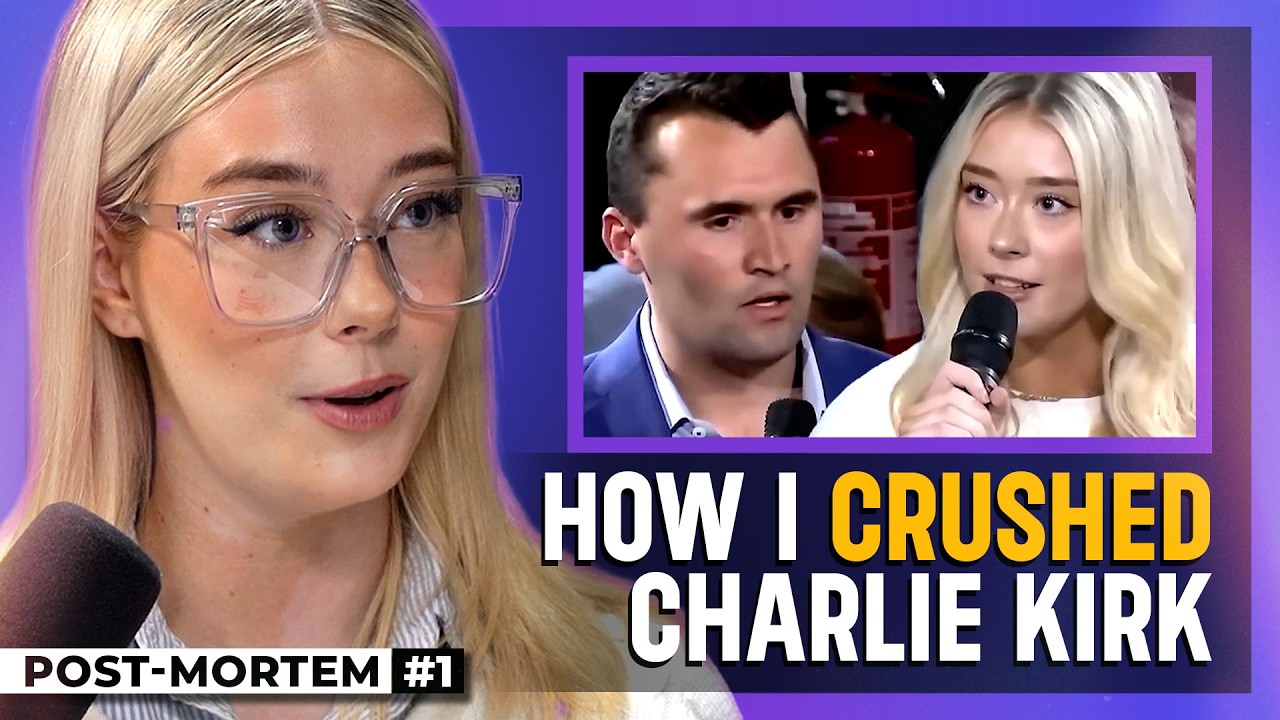
Up Next

Charlie Kirk Defends Pro-Life Stance with Split-Ticket Voter in Powerful Campus Exchange
10:17
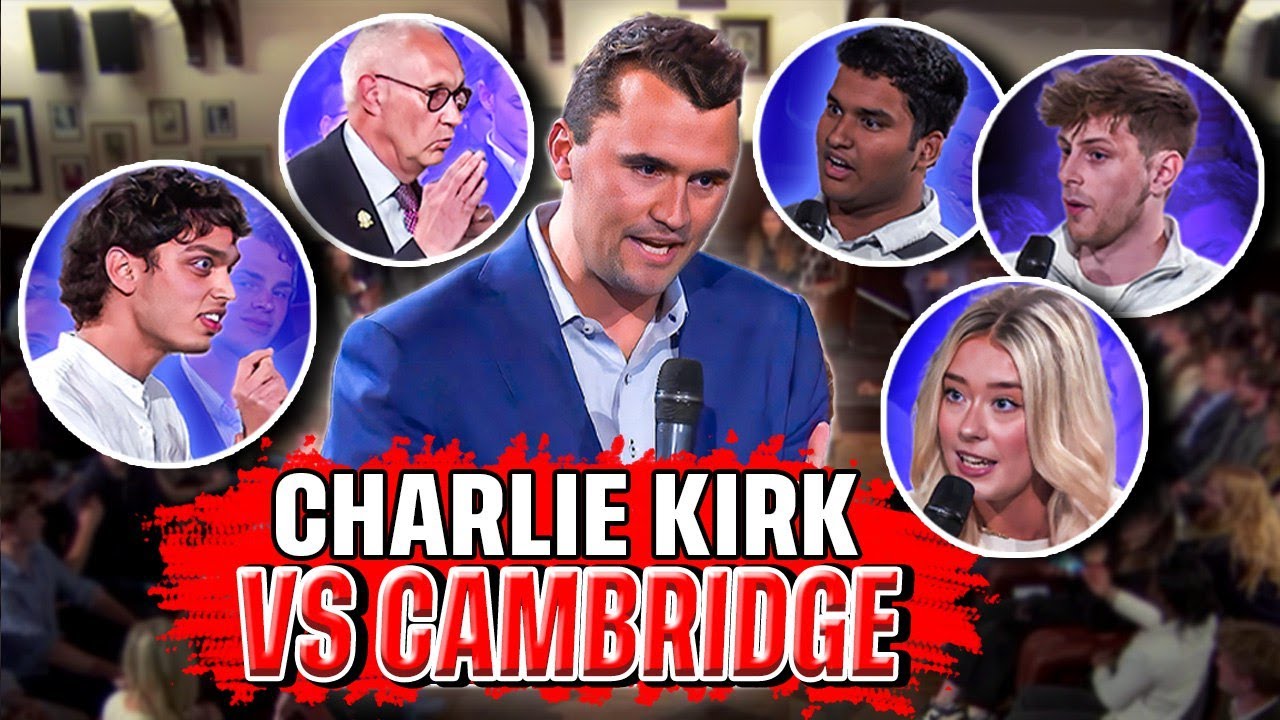
Charlie Kirk Defends Trump, Debates Abortion and Feminism at Cambridge Union in Heated Exchange
1:06:27
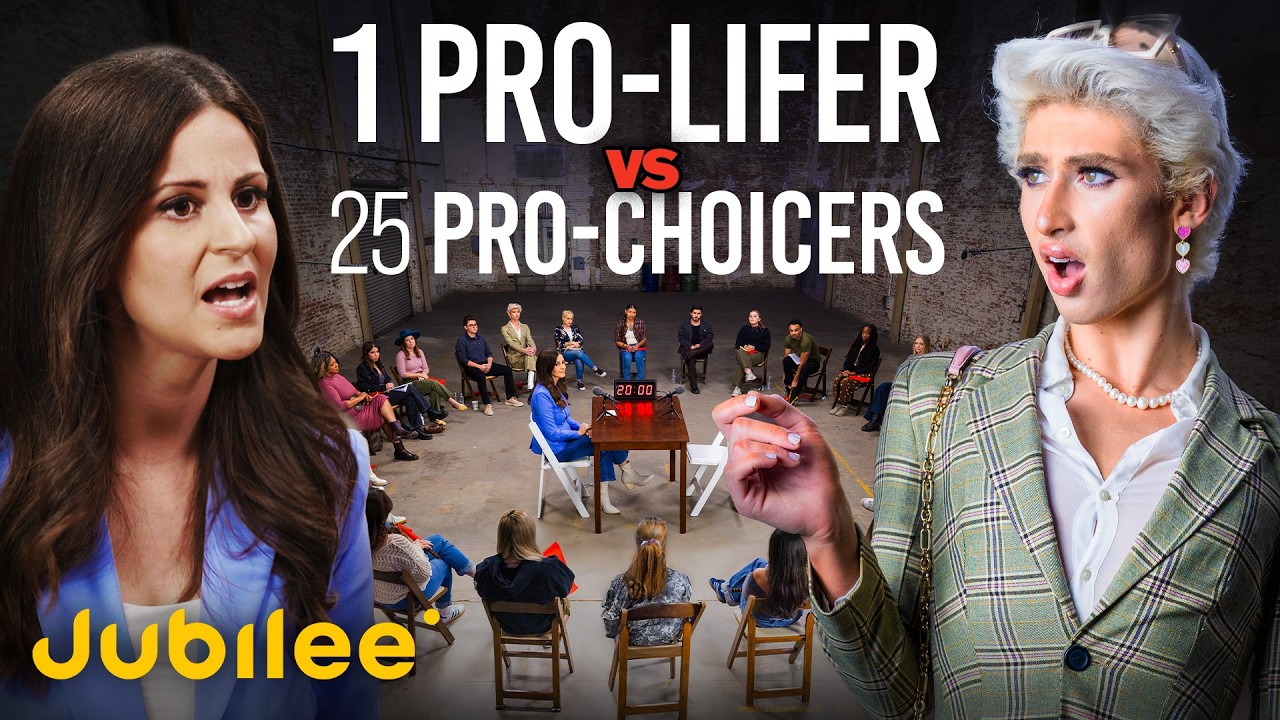
Lila Rose Debates 25 Pro-Choice Activists on Abortion Rights, Bodily Autonomy, and the Right to Life
1:41:10
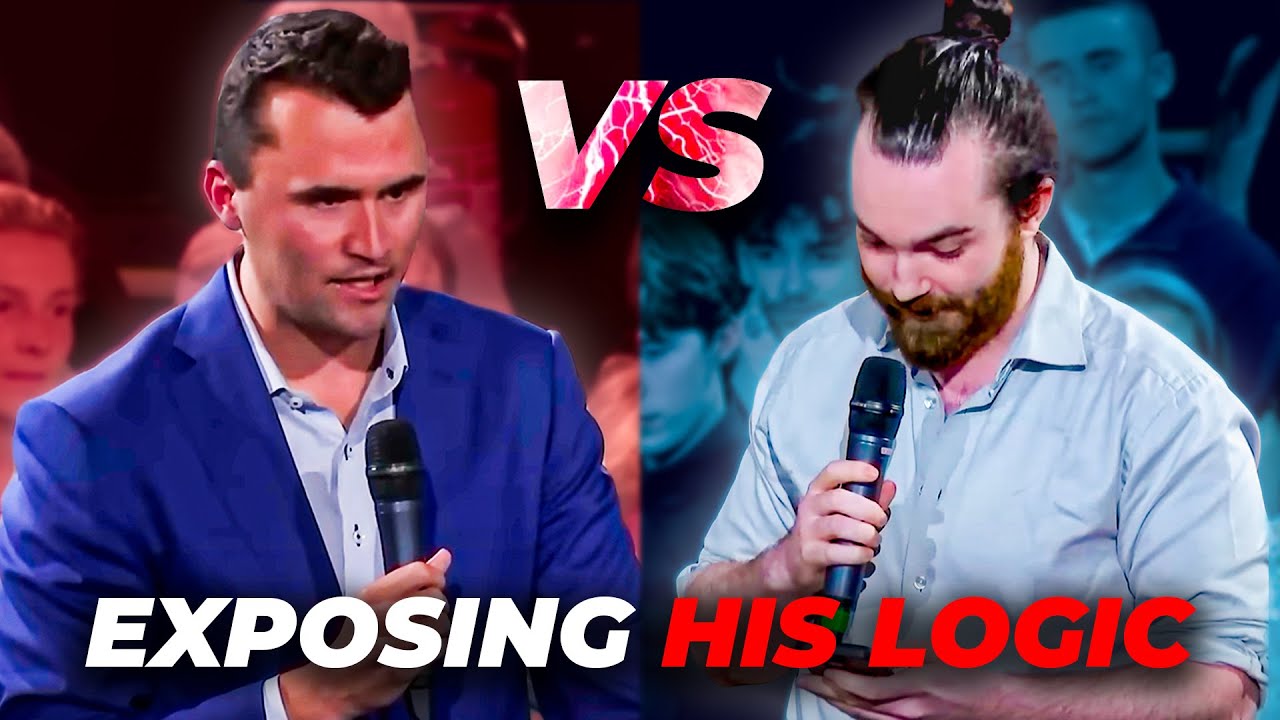
Kai Bevan Dismantles Charlie Kirk's Pro-Life Arguments Using Medical Facts and Utilitarian Ethics
Kai Bevan, a Cambridge medical student, gained attention for his calm, fact-based challenge to Charlie Kirk's abortion rhetoric during Kirk's UK visit. In this extended conversation, Bevan unpacks the biological realities of conception, critiques the 'life begins at conception' argument, and explains why suffering, not religious dogma, should ground our moral framework. He exposes the intellectual weaknesses in Kirk's tactics and offers a utilitarian perspective that sidesteps the tired pro-life versus pro-choice binary.
The Debate That Went Viral
Kai Bevan's interaction with Charlie Kirk at Cambridge University became a defining moment in the abortion debate. Kirk, known for traveling US college campuses to film himself 'owning the libs,' arrived in the UK expecting the same results. Instead, he encountered students like Bevan—medically trained, philosophically grounded, and unshakeable in their composure.
The exchange exposed Kirk's reliance on rhetorical tricks rather than substantive argumentation. When Kirk declared that 'something magical happens at conception,' Bevan's immediate response—'It's not magical, Charlie. We know about this'—became the viral moment that crystallized the debate's core problem: one side grounded in biology and ethics, the other in religious assertion dressed as reasoning.
The Biological Reality of Conception
Bevan explains that conception is not a discrete moment but a process. The sperm meets the egg, proteins interact, DNA enters the egg cell, nuclear membranes break down, DNA merges, a new nuclear membrane forms, and cell division begins. This process takes time—it's not the instantaneous 'miracle' that pro-life rhetoric suggests.
More importantly, Bevan challenges the moral weight placed on this biological process. A sperm cell and egg cell are already alive before conception. They move, use nutrients, and respond to their environment—all characteristics of living cells. If we're going to assign moral value to the moment of conception, we must explain why these already-living cells suddenly gain significance when they combine.
The 'life begins at conception' argument, Bevan argues, is either circular reasoning (defining life as conception to prove conception is significant) or arbitrary (choosing one point in a continuous biological process without justification). Neither approach provides a coherent ethical foundation.
The Problem with 'Life Begins at Conception'
Bevan identifies two fundamental flaws in the 'life begins at conception' claim. First, it confuses biological facts with moral conclusions. Even if we accept that conception creates a unique DNA combination, this tells us nothing about moral value. As philosopher David Hume famously argued, you cannot derive an 'ought' from an 'is'—descriptive facts don't automatically generate prescriptive values.
Second, the claim creates absurd implications when examined closely. Consider identical twins, who develop when a single embryo splits. Does the soul also split? Or does a second soul materialize? What about chimeras, where two embryos fuse into one individual with two distinct genetic profiles? Do the souls merge? These questions reveal that the 'life begins at conception' position hasn't seriously grappled with basic biological realities.
The burning building thought experiment further exposes this weakness: if you could save either a petri dish containing ten fertilized eggs or one conscious baby, which would you choose? If all lives are truly equal from conception, the logical answer is the petri dish. But virtually everyone, including those who claim to believe life begins at conception, would save the baby. This reveals that we don't actually treat fertilized eggs as morally equivalent to conscious human beings.
Kirk's Rhetorical Tactics Exposed
Throughout their exchange, Kirk employed standard debate tactics designed to shift the burden of proof and avoid defending his own position. When asked why abortion is wrong, Kirk immediately deflected: 'Well, you agree murder is wrong.' This move attempts to smuggle in the conclusion (abortion is murder) as an unexamined premise.
Bevan recognized this immediately. Murder is wrong by definition—it means 'unjustified killing.' Asking 'why is murder wrong?' is like asking 'why are bachelors unmarried?'—the answer is contained in the definition. The real question is whether abortion constitutes murder, which requires examining when and why killing is unjustified.
Kirk also attempted to trap Bevan on objective morality, seizing on his statement that 'suffering is objectively bad' to suggest this required religious grounding. Bevan clarified that we can make objective statements about subjective experiences—the fact that all conscious beings experience suffering as negative is an objective fact about consciousness, not a metaphysical claim requiring divine foundations.
Suffering as the Moral Foundation
Bevan grounds his ethical framework in suffering and consciousness. A being that can suffer has moral status; one that cannot does not. This approach sidesteps the arbitrary line-drawing of conception-based arguments and focuses on what actually matters: the capacity for conscious experience.
This framework generates clear and consistent answers. A fertilized egg cannot suffer because it has no nervous system, no capacity for consciousness. A fetus develops this capacity gradually, with current scientific understanding suggesting consciousness requires the connection between the thalamus and cortex, which occurs around 24 weeks gestation.
Critically, this framework doesn't depend on religious axioms or species membership. It applies equally to human and non-human animals. A pig or cow can suffer, which gives them moral status. A human in a permanent vegetative state with no capacity for consciousness does not suffer, which changes our moral calculus—though we must still consider the suffering their death might cause to family members and society.
Beyond Pro-Life and Pro-Choice
Bevan rejects the binary framing of 'pro-life versus pro-choice,' arguing it obscures rather than clarifies the actual ethical questions. The real debate isn't about whether life or choice matters—both sides care about both. The debate is about when and why a developing fetus gains moral status, and what moral weight that status should carry against other considerations.
Someone operating from Bevan's framework might conclude that abortion should be permitted until the fetus can suffer (around 24 weeks) but restricted afterward except in cases where the mother's wellbeing is at stake. Another person with the same framework might draw different lines based on how they weigh competing interests. The framework provides tools for reasoning, not predetermined conclusions.
This approach also exposes uncomfortable implications for positions on both extremes. The same logic that permits early abortion based on inability to suffer also challenges how we treat animals capable of suffering. Meanwhile, the 'life begins at conception' position commits its adherents to opposing IVF (which discards fertilized eggs) and certain forms of contraception (which prevent implantation of fertilized eggs).
The Dementia Patient Reductio
Kirk attempted a reductio ad absurdum by asking whether dementia patients could be executed since they're 'confused about their wellbeing.' This revealed either ignorance or dishonesty—dementia patients can absolutely feel pain and suffer.
But even setting aside this factual error, Bevan's framework handles the question easily. A utilitarian approach considers not just the immediate suffering of the patient but the effects on society. Permitting the killing of dementia patients would cause enormous suffering to families, to patients themselves before they lose capacity, and to anyone worried they might develop dementia. The policy would maximize suffering, not minimize it.
Bevan acknowledges edge cases where someone is genuinely incapable of any conscious experience and never will be again. Even here, the calculation isn't simple—we must consider the suffering of loved ones, the effects on social trust, and whether we can be certain about the prognosis. The framework doesn't provide easy answers, but it provides the right questions.
The Potentiality Argument Fails
Pro-life advocates frequently argue that a fetus's potential to become a conscious, suffering being grants it moral status. Bevan finds this unconvincing. There's no coherent reason why potential consciousness should matter morally—what matters is actual consciousness and actual capacity for suffering.
If potential counted, we'd have to assign moral weight to sperm and egg cells, which have the potential to become fetuses that have the potential to become humans. The 'potential' reasoning doesn't identify a principled stopping point; it's arbitrary to draw the line at conception rather than before.
Moreover, the potentiality argument proves too much. Many cognitively impaired individuals will never develop typical human cognitive abilities, even with the best medical care. If potential for consciousness or cognition grounds moral status, these individuals would lack moral status—an implication most people reject.
The Ethics of Engaging Bad Faith Actors
Should people debate figures like Kirk who operate in bad faith? Bevan argues yes, with caveats. Kirk already has a following whether he's debated or not. Engaging him provides an opportunity to reach his audience with alternative perspectives they might not otherwise encounter.
The key is approach. Bevan deliberately opened friendly and respectful, refusing to fulfill the stereotype of the emotional, irrational liberal student. This credibility allowed his substantive arguments to land with neutral observers, even if they didn't persuade Kirk himself.
However, Bevan acknowledges that not every fringe position deserves a platform. The Cambridge Union's commitment to free speech doesn't require giving everyone an audience—it means the government won't prosecute speech, not that every speaker gets a prestigious venue. Organizations can and should make judgments about which debates serve the public interest.
Lessons from the Exchange
Reflecting on his interaction with Kirk, Bevan identifies two practices he now brings to every conversation: (1) What is the strongest argument against my position? (2) What would it take to change my mind? These questions keep him intellectually honest and open to being wrong.
He also learned the importance of friendliness without weakness. Being respectful doesn't mean being passive. At several points, Bevan firmly interrupted Kirk—'Charlie, you have to let me speak'—but maintained composure and courtesy throughout. This approach maximizes the chance of being heard while maintaining credibility with observers.
Finally, Bevan emphasizes that these debates aren't primarily about changing the opponent's mind. They're about reaching the audience—particularly those who are genuinely uncertain and open to reasoning through difficult questions. Even planting a seed of doubt, or simply exposing the weakness of confident-but-wrong arguments, counts as success.
The Broader Implications
Bevan's framework extends beyond abortion to all ethical questions involving wellbeing and suffering. This has implications for animal ethics—if suffering is what matters, and animals can suffer, then their suffering must be considered in our moral calculus. It challenges common justifications for factory farming and animal testing based solely on species membership.
The framework also navigates difficult edge cases in medical ethics. Consider a person who is temporarily unconscious but will wake up—do we assign moral weight to their future suffering? What about someone in a permanent vegetative state? The utilitarian approach considers not just the individual but the broader effects on families, social trust, and institutional incentives.
Bevan acknowledges puzzles remain, like the fat man on the bridge variation of the trolley problem, where the intention to kill matters ethically even though the outcome is better. He's honest that his framework doesn't resolve every question perfectly—but he argues it provides better tools for reasoning than religious assertions or arbitrary line-drawing at conception.
Video Transcript
The only thing that happens at conception is these two cells fuse. >> No DNA is created. A zygote is not created. >> A DNA. No, that's not true. The the DNA the DNA coding at the Hold on. Time out. >> Ky Beavenon, welcome to the Postmortm podcast. Really appreciate you coming down. >> Thank you. >> So, let's begin with an acknowledgement of the tragic news. Charlie Kirk was recently assassinated. He was murdered. And it should go without saying, but we don't endorse that kind of action at all. We don't endorse violence at all. Mhm. >> It's a little bit strange that we need to make such a statement at the beginning, but there's this narrative that's been going around that anything other than adoration for the guy is tantamount to celebrating his death. So for anyone watching, we are going to be criticizing Charlie Kirk and his rhetoric and what he represents, but it does not mean in the slightest that we endorse what happened. Now Charlie was a MAGA activist and he he ran on this facade of owning the lips. What that consisted of was in most cases traveling the United States, visiting different college campuses where he would have the crew, he'd have the camera set up, he would have marketed it so that his fans would turn up and then he would use rhetorical tricks. He would deliberately provoke liberal students and then he would film their humiliation and he would post it out to his channel and it would go viral and it would give his base what they've been deeply craving for a long time which is an intellectual satisfaction that they're the intelligent ones or liberals you know and they're professors they're all fools. He took this method he came to the United Kingdom and he came to Cambridge and it did not work. It went abysmally bad for him. But suddenly there's there's a >> correct something magical happens at that. >> It's not magical, Charlie. We know about this. >> Hold on. Hold on. >> Charlie. Charlie. Time out. Hold on. >> The reason it didn't go so well is, let's say, Cambridge has a different caliber of student such as yourself. And your interaction with him was one of the many that left him humiliated, left him in a position of his tactics didn't work. And I knew immediately that I needed to cover your approach, which is what I did. We've published the video. It's had 600,000 views. Lots of people appreciating the way that you interacted with Charlie. So I knew needed to get you on on the podcast because you have something that you can teach us. And my first question to you, my friend, is what is the biggest lesson that you learned from the interaction? >> That's a good question. Um I suppose it's just about really the importance of being open to other people's views you know for after that interaction obviously it was a bit uh iffy we can say but uh I think after after reflecting on it and reflecting on how I think Charlie approached a conversation and how I approached a conversation I've come out of it with uh where now I take two main approaches to any conversation I have or any any view I hold I two main approaches to it which are what is the best argument in opposition to what I believe and what would it take for me to change my uh opinion on whatever it is I believe and those are two things that I think for any view anyone really has they should consider those two things and I hadn't really thought about uh considering those until after my debate with Charlie Kirk and I thought that's probably a good approach to take for any uh view that you hold to engage with a in a debate in a good faith kind of way. >> Is it because he said something that surprised you or >> um No, it was just thinking about the debate afterwards, just thinking about um you know how I how I spoke, what I could have done differently, that kind of thing. >> Pundits like Charlie Kirk, Ben Shapiro, Candace Owens, they're known for their aggressive confrontational style. Uh-huh. >> One of the things that struck me is that you opened with your debate with Charlie, you opened very calmly, very friendly, and I'm wondering if you could walk us through what was going on there, whether it was deliberate, for instance. >> I think um you're always going to be taken a bit more seriously if you come across as a sensible person. If if you go into it all guns blazing, people are, you know, there's a risk of it be of you being dismissed. I think you know you maybe even the person you're speaking to might not necessarily be open to listening to you but their audience will and so if you want any shot at being heard you're going to maximize your chances I think if you come across as uh polite as you know respectful that kind of thing I think >> what what I'm hearing here is and I don't know if I'm putting words in your mouth but there is this narrative there is this concept that liberal students especially get emotional whereas if you go in being a friendly and you go in just like I'm just having a discussion, you actually nullify that that take from the get-go. Is that what is that what you're getting at or is that >> I mean I I I don't know if I'd say I'm a liberal. >> Yes. >> But maybe that stereotype exists and maybe there's a stereotype that, you know, you have these people coming up to Charlie Kirk who are perceived as, you know, as I said, all guns blazing. And yeah, I definitely didn't want to be put into that camp at all. >> What do you think about being friendly against someone who is there to humiliate you, to destroy you? Um, again, I think you're helping them achieve their goal. If you're going in being, you know, rude, being frustrated, whatever, I think if you want to sit down and have a serious conversation, then you should be open to that. And if the other person isn't, then, you know, more for them. They'll the rest of the room will know that. I mean, you kind of leave it up to the audience. I wasn't going to, you know, there's there's a degree of trying to not stoop down to someone else's level. I mean, I wouldn't say Charlie Kirk was super, you know, like in the conversation I have with him, he was relatively respectful, but you know, I even if he wasn't, I wouldn't go into it um with any kind of other mindset. I was just like, I'm here to have a conversation. If you are willing to engage in that, then let's speak. Otherwise, like what's the point really? >> Cuz like one thing I've learned from the the debates that I've had is apologists are very very confidently wrong. Yeah, they will they will state facts about like how Hebrew is meant to be interpreted that everyone that understands Hebrew would look at it and go, "What are you on about?" But it's very powerful rhetorically. Whereas they may be up against a professor or someone who is hedging and couching, and that seems to have a lot of impact on the way that the audience perceive it. They see one person that's confident, one person that's not. Not to necessarily equate friendliness with not being confident, but I guess that's where my question is coming coming from. Um, I think you can still attempt to take control of the conversation while still being friendly and respectful. I mean, there were times in that debate where I was like, "Charlie, you have to let me speak." >> Does a zygote have a unique marker? >> Let me speak. >> You know, that that's by no means unfriendly. Like, um, but I think it does come across as confident to people and I think it does come still come across as respectful. So, I think you can definitely have the best of both worlds. Speaking of narratives, an absolutely incredible, as in not credible, story recently grabbed my attention. Child with stage 4 cancer deported by ICE despite being a US citizen. I came across this thanks to Ground News's blind spot feature, a brilliant tool on their homepage that reveals stories being dramatically under reportported by either the left or the right. This allows me to investigate my blind spot so I can see the complete picture of what's happening in the real world. The coverage breakdown is stunning. 46 news outlets total, but only one from the right. I mean, bro, an American citizen, a child with cancer gets deported, and virtually the entire right-wing media ecosystem remains silent. So much for Save the Children, huh? You can follow along at ground.news/rationality. The way different outlets frame this tragedy is equally revealing. NBC Chicago, a centrist source with very high factuality, presents it straightforwardly, emphasizing the child's US citizenship and stage four cancer diagnosis at the heart of the disturbing story. But the Christian Post, that lone right-wing outlet covering it, takes, well, an incredible angle. Their headline reads, "ICE unlawfully deported child with stage 4 kidney cancer." with unlawful placed in skeptical quotation marks, subtly questioning whether any actual wrongdoing occurred. Same tragic event, completely different narrative. This is precisely why Ground News has become so indispensable. Their blind spot feature ensures that I'm not just seeing what my usual sources want me to see. I'm discovering the stories entire segments of the media choose to ignore. In today's polarized media landscape, these tools are essential for understanding the complete picture. Get 40% off their Vantage plan at ground.news/rationality or scan this QR code. Your subscription not only gives you balanced coverage, but also supports this channel. For anyone serious about escaping their echo chamber, ground news delivers the full story, including the parts others don't want you to see. Thanks. There is an ongoing debate about whether or not one should interact with someone who is bad faith and/or controversial. On the one side, people say that interacting with them amplifies their message. It moves the Overton window. It gives them a platform and this is bad. The other side say, "Look, public confrontation is essential in a democracy. And if you don't do it, these views are going to metastasize. They're still there and then you're going to be sweeped off your feet when it turns out that people vote differently to what you were suspecting." How do you personally handle this? What What's your view on debating figures like Charlie? I think when people are spreading what we call bad ideas, and I I mean bad as in that their ideas cause harm to people, they might cause people to act violently, they cause hatred, whatever. Ultimately, they have a net negative in terms of overall human well-being. I think if they already have a following, that following is going to be there whether you platform them or not. Like Charlie Kirk would have the same following whether the Cambridge Union chose to invite him in or not. The difference is rather than him having a following of just people who agree with him, by coming to the union, he was exposed to a whole another audience of people who might disagree with him or might be a little less confident in their views and be more open to hearing both sides and those people will see the debates and maybe they'll agree with him, but at least they're they're made open to those discussions. Some people in the audience can see sensible views and, you know, make their own decision. I think the second thing is that you can access people in Charlie Kirk's own audience or whoever it is, Ben Shapiro, whoever. You can um speak to people in their audience and you're probably not going to change uh Charlie Kirk's mind and I didn't expect to going into it. But at least there are people who will hear what you have to say and they might think about it and they might go home and they might think, "Oh, I hadn't thought about that before." And just that just the fact that someone's considering something they haven't thought about before, I think is already a success in itself. So, it's like you have a a way to get access to their audience that you otherwise wouldn't. >> Yeah. And there are some ideas where maybe, you know, they probably don't have enough of a following and they're they are just, you know, bad ideas and it's up to the the union really whether they choose to platform those or not. I mean, it's um the union pride themselves on free speech. That doesn't mean you everyone gets a go at speaking in front of an audience. It just means that the union uh you know, they're able to choose who they want. Free speech is is not everyone accepting your views or everyone having to listen to your views. Free speech is the government choosing not to uh prosecute you for whatever it is you say. So it can be totally compatible with free speech for the union to say, you know what, we're not going to platform Charlie Kirk because he's a spreader of bad ideas. I think in most circumstances it's um it's probably healthier to engage in debate with these uh topics rather than silence people for them but I don't think it's antithetical to free speech not to >> so the abortion debate very regularly it gets caught up in say moral and political framing but beneath that there is a biological reality to what's going on >> and I want to know from your medical standing what is that biological reality? Well, it's it's it's a debate whether biology or science can give you an understanding of what's right and wrong. Uh I'm sure we'll come on to that. I think in terms of what what's actually going on like statements like life begins at conception are either true or false. And I think you know scientific reasoning can help us understand whether that's true or not. You know other other statements like you know what might be the most appropriate time where we say abortion can be considered wrong. you know, uh, scientific reasoning can help us inform our decisions when we're making them. Um, yeah, that's it really. >> Yeah. So, suppose I knew nothing about biology. I knew nothing about how actually conception works. >> Yeah. >> What is the me mechanics, right? So, if you could talk us through, you know, the sperm, the egg, like what's going on? >> Which part is magic? >> Uh, well, yeah, that's a different question. I mean um a sperm cell are you know they're generated all the time in a in the testes of a man and the egg cells they're generated in a limited number when the mother is developing as a fetus you know 30 odd years before she's going to actually give birth. So >> yeah of course um obviously you know uh two people come together blah blah blah and the sperm and egg meet each other. There's a process of conception. It's a process, not a point in time. You know, you have first of all a sperm cell meeting the egg cell. Then, you know, there's all sorts of protein interactions. Then you have the DNA entering the egg cell. Then the DNA like the nuclear membranes break down. Then the DNA merges. Then you have a new nuclear membrane being formed. Then the cell starts to divide. So it's a it's a long process. It's not uh long by the grand scheme of things as in it doesn't take as far as I know several days or anything, but it's it's uh it's definitely not just one single uh discrete point in time. So, I think that's something that's important to be understood. >> My followup to this is what is the thing that people most get wrong? And I'm curious, is it what you were mentioning there or >> I I think what people get wrong partly is uh the assumption that it's a single point in time, but even separate from that, even if it were a single point in time, I think people get what people get wrong is the moral um like the moral uh what is it? The moral baggage that conception has with it. I mean, you know, from from the perspective of looking at literally what is going on, it's it's no more uh incredible to us than another, you know, another cell being generated, another process of cell division. It's it it is intuitively, you know, magical. I mean, it's it is a it is the process that gives us new human beings. I mean, of course, that has some kind of uh marvel to it in a metaphorical sense, but there's no, you know, this is what I was trying to say. there's no kind of supernatural aspect to it. It's kind of like a god of the gaps kind of situation where we know about it. Um, and the more you know about it, the more you realize you can account for all these things that we initially might put down to magic as just different biological processes that we now understand. And I think part of the the magic about it in a met metaphorical sense is is being able to understand this and actually know what's happening to to create this new human being. I mean I again I say create in a metaphorical sense not literally create but I think you get what I mean. >> Absolutely. I I wonder if we was to apply this to astronomy when you look at say the celestial spheres and they're going around us without knowledge of what's going on it's magic. >> Yeah. Yeah, it's still not analogous of what's going on with our development of understanding how conception works. >> Yeah, I think that's definitely a good way of putting it. I was thinking of um a sunset as a similar example where you know you can admire a sunset think this is a ma this is magical this is insane you know like I mean I I think most people who would be listening I know I've had that where you know sometimes you're at beach or whatever and you're watching the sunset and you're like this is just incredible >> but it's just it still remains to be the fact that it really is just the earth spinning around on its axis and you know you're you're able to witness that and perceive it as something that's that gives you some kind of mi mystery or whatever, but you know that it can feel that way and that intuition can still stay the same, but that doesn't change the fact that it is just the earth spinning around. And once you know about it, it becomes >> it can still retain that kind of um amazing essence without being um actual magic. During the debate, Charlie described the fusing of cells as something magical. And you immediately push back by saying, "It's not magical, Charlie. We know about this." >> Correct. Something magical happens at that. >> It's not magical, Charlie. We know about this. Hold on. Hold on. >> That became the defining moment of your exchange with him. Did you know that it would land that hard, or was you surprised? No, I was um I'd spent I think the last minute or two speaking to him about biology and trying to get him to understand what it was I was trying to talk about. I don't remember exactly what it was off the top of my head. He retorted with its magic and and it was just it was just like an exclamation of frustration or whatever you want to call it. It was like a like I was just trying to like can you not understand that it was just um it's a it's a scientific phenomenon and it was it just an explanation of that. I didn't think it would resonate so heavily. I think it did for people because it kind of highlighted the absurdity and the irrationality of his view um in comparison to mine. I guess really even I was shocked. I was like you've really said magic. >> You did it. you said the quite loud >> and it was like um >> yeah it was just an exclamation of of shock at that and I think everyone felt that really. >> Yeah. I often find with religiously motivated positions in current day public discourse they can't just say what their view is which tends to be from you know it's magic like it's something divine. They have to cash it out in terms of what uh someone who's secular might buy. And so to have them just admit straight up that's what the position is >> to me as someone watching. It was very much looking at it was the humiliation aspect. It was incredible to think that he's debating this topic and doesn't know this most basic thing about his opposition about the situation itself. It reminded me of when he was debating feminism and he didn't understand that feminists fight for men as well. >> You're a feminist that actually isn't just fighting for women, you're also fighting for men. a very peculiar thing and actually indicative of not being, you know, knowing what he's doing, but rather actually being an authentic person who genuinely does not know the first thing about the things that he argues against. Was there an element of shock based on that at all? Like, I can't believe you'd say it just in terms of ignorance. >> Yeah, I mean, it was a it was a display of just uh you have I mean, you have to give it to him that it he was totally honest about it. I mean whether he knew about it or not, he wasn't he didn't consider those facts to be relevant to whatever it is he believed. So it kind of highlighted that. I mean he did that there were two moments for me that happened. The first one was when he said it's because there's a soul and then he went to magic like I don't know a minute later. >> Um and it was those two things for me that I thought he'd never really uh openly admit in a in of all the places the union the union chambers. I mean like but um yeah it was just a interesting moment I think. >> I know you get asked about it a lot but I want to hear from you what your opinion is on abortion. >> Life begins at conception. >> Like most conservatives at least of the religious ilk, Charlie launched with life begins at conception. What makes that framing so powerful and yet problematic? I think there's it's very clear like it's a very I suppose well defined in the sense that it resonates with people. Um you know it's is similar to abortion is murder which I'm sure we'll talk about but um there are two things about the life begins at conception statement that I have a problem with. The first is that what uh about the meaning of what does it mean for life to begin and secondly why that means that you start considering any kind of moral question. So life beginning I think I mean it depends what you mean by life. If you define life as what like as he does as the joining of two DNA molecules then okay yes but also that's kind of using the conclusion to fit your like it's it's sort of like um a circular circular argument. >> Sure. >> Also there's a thing of a sperm cell and an egg cell being alive and you know you have to consider that. I mean like as I was saying like they've been in the case of the mother the XL's been around since she was a fetus. Um so you you have to consider that and do you consider that the start of life? I mean sperm and egg cells they move they uh use nutrients they um they're sensitive to their environments all these things that other other living cells show. So are we going to consider those to be alive? And if not then why? because what makes them different in terms of any kind of functionality from another cell. Um so that's the first thing about the life begins at conception argument. The second thing is about why we add any kind of moral value to that. I mean >> you know like when David Hume talks about you can't get an ought from an is and it's like just because it is living as we define it. How do you how do you say now we are going to now ascribe moral value to this to this being? And I think that's a that's a tough uh gap to jump unless you know you can conveniently sort of fill it in with the foundations of religion. >> If someone asks you what is your view on abortion and then they answer life starts at conception. It's not actually answering it at all. Is that what it is? Because there's no moral consideration there. You're just talking about what arbitrary level you put in for that's life right there. >> Yeah. I mean I mean literally his his response when I said what's your opinion on abortion? He responded, "Life begins at conception." And it's like that that does nothing. That's it's intellectually shallow. I mean, >> yeah, it is. >> It's um until you maybe, you know, maybe you can go into it and say, "Life begins at conception." And I think life entails some kind of moral value because I don't know, maybe because all all humans are created in the image of God and at least then you have a you know, you have a argument that is somewhat valid. And then you can kind of attack the premises and you say, "I don't believe life begins at conception for this reason. I don't believe that humans have value because of God for this reason. And then at least you have a a debate to be had. But that on its own does absolutely nothing for a conversation about abortion. It's totally irrelevant. I think if you're going to talk about life beginning at conception, there's all sorts of other implications of that. Like um you know, identical twins, uh how do you how do you account for that? You know, does if you if you take a religious standpoint and you say, well, it's because a soul emerges. Then what happens when the embryo splits and gives you two identical twins? Does the soul double or does it have or what's going on there? When you have um chimeas where two different fertilized eggs are like joined together and um you have a individual with essentially two different genetic makeups like what do do the souls fuse then or does one soul disappear and if so which one? Like what happens there? You have to consider um you know I I heard someone talking about somewhere um if you have a building with a petri dish with 10 fertilized eggs and one baby >> and the building's burning, what do you save? And you know, if you're going to be consistent and say life begins at conception and all lives are created equal in the in the eyes of God, then you have to say that you uh save the petri dish. But really, like you save a petri dish over a baby that it's seems like a absurd claim to make. It's such a wonderful thought experiment that I think it's reduction. You're taking, you know, all right, okay, according to your view, life starts at conception. That's it. That's where all the moral value comes from. >> So, do you save the petri dish or do you save the baby? >> Yeah. >> Intuitively, I wonder how many people that are pro-choice and might at least tacically affirm Charlie's position would actually have a problem with that and look at it and go, "No, you're right. There's something wrong there. Obviously, saving the baby is the right move, not the dish." Yeah. >> You asked what he thinks wrong with abortion. >> And he didn't answer. He flipped it. He said to you, "Well, you agree that murder is wrong." >> Why do you think abortion is wrong specifically? >> Well, you agree murder is wrong. >> It's a classic move. It's reframing the question as to shift the burden of proof to someone else. Something that Charlie did all the time. It was it was very much part of what he did. >> What was going on in your head when he was doing this with your questions? >> Well, I mean, I knew I I've seen videos of him. He talks about murder and he equates abortion to murder. Uses that as a premise to then justify his argument that abortion is wrong because murder is wrong. Um, so yeah, he asked me straight away, well, you agree murder is wrong? Of course I agree murder is wrong. I think most sensible people do. But then he takes that and says therefore he he sneaks in a premise which is abortion is murder. Yeah. >> And then he concludes from that therefore abortion is wrong. >> And that's totally flawed because murder is by definition wrong. That's like it's a it's it's question begging. It's like saying oh well you agree that unbach that bachelors are unmarried. And it's like well of course that's the definition. And then if you're going to take oh well he's a bachelor therefore he's unmarried so I've caught you out there. It's [laughter] uh it's it's not really like again it's just intellectually shallow. I think um that's why I I responded to him saying yeah but why is murder wrong? It's not that I'm challenging that view but it's I'm trying to understand why he says that because of course I agree that murder is wrong but that's because it's circular argument because murder is a wrongful killing. >> What is it about murder you say is wrong? Like why is murder wrong? To really understand that question, you have to understand what it means for something to be wrong. And then you just say, well, uh, you know, why why is killing wrong? And then you you have to consider different scenarios. You know, is it as is it okay to kill one person to say five or to say 500 or say 5,000? And you know, there's all all these different things to consider that um you can't just completely phase out by just saying, "Oh, yeah, murder's wrong." Because that doesn't get you anywhere. that implicit premise that you're emphasizing is is genuinely fascinating because it's essentially he's declaring that you already have his view because I'm trying to see if there's an analogy that could work. It it would be like debating someone who say is a Christian or Muslim, it doesn't really matter, right? Say they're a Christian and then you say to them, um, how do you know that Christianity is true? And then they say back to you, well, you agree that Jesus died for your sins? No, I don't. That's the whole debate. Like, no, I don't. Like if I if I granted you that, I would be on board. Likewise, if I was to agree were to agree that abortion is murdered, then of course I'll be on your side. I'm not on your side. It's it's a very >> peculiar tactic, a very peculiar thing. >> Mhm. >> And talking tactics, I'm wondering whether or not you feel like he was trying to trap you by always having you answering questions rather than him giving you answers. >> I think that's just something he does. Um, in general, he tries to flip the script. Mhm. >> Um I don't think he's he's particularly good at defending his own positions, but he's very good at attacking other people's positions. Um and that's what he's trying to do. >> It's a bit of a glass cannon >> sort of. >> When he put pressure on you asking what is it by your light that makes murder wrong, >> you grounded your position in suffering. >> I believe that if if an individual is capable of suffering, then it's wrong. The question is, is suffering alone enough or does consciousness have to be part of the equation? >> I think consciousness entails suffering and vice versa. I think you can have suffering if and only if you have consciousness because um like at the at the most primitive scale of what conscious awareness is is it's either an experience of uh pleasure or pain and at the most, you know, at the most simple scale. And then from there, you know, you can get uh more complex conscious experiences. But when you define conscious as just the most primitive form of awareness, I think that's what it is. And like you know, you have I think people like Yuvono Harrari who define consciousness as the capacity to suffer. You know, for all purposes of the debate, even if that's not the case, you can just say then we're going to define as all sentient beings that can suffer or all beings that can suffer. >> So would it be fair to say that suffering is a a subset of consciousness? You you can say that and then you can just make the debate, well, I believe all beings who can suffer are worth considering. But I would I would say that they're equal to each other and you just say all sentient beings and that's interchangeable with all beings that can suffer. >> Okay. Well, in the same vein, you said that suffering is objectively bad >> because suffering is a bad thing. We all know suffering is a bad thing. That's an objective fact, right? >> Well, okay. So, you do believe in objective morality. >> Yeah. And that's an interesting one because depending on how those words are defined, it can mean a very different claim. And I'm wondering, did you mean that as a descriptive fact about the world, so suffering is bad in and of itself, or is it more of a normative axiom? So that is, you know, a moral standing point that everyone happens to agree on, but that's it. There's nothing else to it. >> So I think um saying suffering is objectively bad was a little bit of a of a I slightly misspoke. I think um uh we can make objective facts about subjective experiences. So >> uh for example uh I can make a fact that you are you know uh you are experiencing some kind of perception of hearing my voice right now and that's an objective fact about your subjective experience. In the same way if you were in pain I can make an objective statement that you are suffering um even though it's it's a statement about your subjective experience. In the same way I think we can make we can derive objective facts about uh subjective experiences. So when I say suffering is objectively bad what I mean is that um I mean Henry Sig talks about from the perspective of the universe which I take to mean uh the experience of all conscious beings in the universe because that is what the perspective of the universe is. And from if we are to measure the state of the universe as the perspective of all conscious beings in the universe and all conscious beings agree that suffering is bad, that their own suffering is bad, then a universe where um where conscious beings are suffering is worse than a universe where conscious beings aren't suffering. And so from there we can we can if we can ground that as a as a truth and that is a truth because all conscious beings will accept that suffering is bad and and even though that seems like it might be um circular I think that's a >> that's an axiom that is kind of fundamental that you can build things off of and it's not just that it's convenient but it's that we all know suffering is bad just from the fact that we all experience suffering. You know, if you if you put your hand on a hot stove, like I think Sam Harris gives this example, like you put your hand on a hot stove and it's just bad. And you can't you can't explain it more than that. It's just bad. And it's like it's like a it's this lens of negativity over all your conscious experience. That's just I don't like this or I don't want this or whatever it is. I want to avoid this. And maybe we can't explain what that means or maybe we'll explain it when if we when or if we understand what consciousness is and all that. But at the very least, I think that's a that's a strong enough assumption or like a it's a it's an assumption that we can make and we can afford to make in order to go from there to say, you know, uh given that the suffering of conscious beings is bad, we should try to avoid that. And then, you know, there's the difficulty of well, I know my suffering is bad. Why should I care about your suffering? But if we're going to do what improves the state of the universe, then um overall we should try and work to avoid the suffering of other sentient beings. >> Yeah. >> And that's ultimately so when we talk about abortion uh you you again you need to consider is is the fetus or embryo capable of suffering? And I mean if you if you refuse to take this kind of approach then you are either accepting that there are scenarios where an outcome of more suffering is desirable or you're accepting that you're going to judge people for things that don't affect the well-being of other conscious creatures in which case I mean I mean where where does that land you? >> Mhm. That's a fascinating answer. I I've always found for instance right now you and I are having a conversation but we didn't have to lay out epistemology beforehand even though both of us like everyone will struggle to be able to ground you know what we know and how we know it. >> So we know that we're on the same page so we don't need to go behind. We don't have to flick back onto the other pages. We're on the same page. We can move forward. >> What I've [snorts] always found fascinating on the suffering element is that everyone is on the same page. Now can you justify it? >> My opinion is probably not. Yeah. >> Rather what's happening is in from my point of view it is just an axiom that you take because evolution has imbued it into you. But you don't need to justify it. If you and I agree on that premise, okay, now we can have a conversation about what is and isn't objectively suffering and you can move on from there. Whereas I find when it comes to the religious mindset, they're looking for something that's anchored in a more ontological framework, something that is very much out there kind of thing, but it just it's just not there. So, it's very hard to be able to have that that discourse. How do you work with people that have that very definitive view? >> U well, the first thing I want to say is that I think you can have an ontological framework without religion. And I think you know there if I if I am going to do something like any action I do that will affect the wellbeing of others it will either improve their well-being or it won't in that sense there's an there's a fact to be known about what I'm going to do and whether that's a good act to do or not >> whether we know about that like um is a different question I mean you can have scenarios where you're like oh I don't know if it's going to cause a net positive or a net negative but but in the but we should strive to achieve what we believe is going to give us a net positive and net negative So I think there's a distinction between the ontology and the epistemology in that sense. So in terms of a religious person I mean I mean there there's the whole thing about the youth e youtho dilemma of are things good because God tells you they're good or does God tell you they're good because they're good. >> Yes. >> And that to me kind of sums up the the religious moral uh moral kind of moral sphere. And you know, you if God were tomorrow to say, "Well, actually, you know, killing children is okay." Are we going to go around and say, "Okay, well, God said it, like, we're going to go around killing children now." Like, like, that's a question to be had. And I mean, you can't really justify that. If you say no, then there must be something outside of God that is good. And if you say yes, then I mean that leads to a universe that is object I well I'm hesitant to say objectively but it's it leads to a universe that is worse in the sense that the experience of all conscious creatures is worse. >> Yes. And of course we have our answer from Moses. It is perfectly legitimate to kill children as long as God commands. Continuing with morality Charlie pressed you on meta ethics. You know where do your moral standards come from? >> By again by what moral standard is that just your opinion? Where did you get that moral standard from? >> Rather than explaining his own foundation, what he did is pushed you to define yours was forcing the conversation into this abstract difficult terrain that is nearly impossible to pass out in such a such a situation that you were in. Right. There was only so much time. What do you think he was trying to achieve by going down that route? >> I think I made the mistake of saying I think suffering is objectively bad. And he jumped on that cuz he's like, if you've watched the video, he's like, oh, so you believe in objective morality. >> We all know suffering is a bad thing. That's an objective fact, right? Hold on. Okay. So, you do believe in objective morality. >> I think that's a gotcha. I mean, for for the religious person in general, that's a gosh. I mean, it's a it's a classic thing. Oh, you can't have objective morality without uh religion. I don't think you can have objective morality with religion. And I think like I mean just like the etho dilemma presents you with. And I think I think you can I mean again object objective subjective it kind of doesn't really matter. It's about can you have a a morality system that works? And I think you definitely can without religion. And I think in you know in in this society at least in the UK I mean you know we talk about having the church and cultural cultural norms and all these kinds of things but I think really our um like our moral code as a society is a secular one. I mean you know if we've we've over the course of centuries taken what used to be you know biblical commandments or whatever um crossed out the ones we don't like and kept the ones we do like. Like we we keep don't kill because that benefits us as a society. But we we leave out uh no worship uh no other gods because what are we meant to do then like prosecute people for you know for their exercising a freedom of religion like it it doesn't work it leads to a worse society which is why we have these kinds of uh >> principles that we have today. So I don't think having any kind of you know oh what's objective what's subjective or oh does your morality come from religion or whatever like I don't think that's super helpful. I don't think that helps us achieve a better outcome for society which is what we should be focusing on. >> Yeah. Now one of my favorite examples of that is slavery. Slavery was perfectly fine morally fine. You know church fathers almost all of them had no problems with it. And yet today we don't. and we're told, "Oh, no. The reason we don't is because of relig religiosity." It's like, "No, it's not. That's not how it works." >> They use the Bible to abolish slavery. >> One of the key prolife arguments, it revolves around or at least centers on potentuality, right? >> Which is to say like the fetus's capacity to become a conscious being that can suffer, let's say. What this does is it shifts the dynamic from current experience to future experience. And I'm wondering how you think about that uh with with your view of abortion of morality. >> I I don't think it's about capacity to one day be conscious that that uh particularly the religious people throw around. I think they say oh it's one day going to be a human being who who's cognitively capable or can speak which is why they um which is why a lot of religious people separate humans from non-human animals by their uh by their cognitive abilities or by their ability to use language. I think I think that's the big thing. The problem with um judging moral value by cognitive ability is what do you have to say about people who are cognitively impaired? And maybe they say, "Oh, well, you know what? We we should consider uh that they had the potential to be that way." But then you say, "What about people who don't have the potential to be that way?" Um you know, what if they're permanently disabled? And they say, "Well, it could have been otherwise, but what if you have a person with a genetic abnormality?" I think there's one called tricomeme 13 that leaves people uh cognitively impaired uh because of a genetic reason and it's like they couldn't have been any other way because that's their genetic makeup and so they lack this kind of ability to have cognitive uh reasoning capacities but it's because it couldn't have been any other way and and then it's like so where do they have moral value and I think um you know that needs to be considered if you take if you take language I think um you know I don't think language is a very useful indicator of moral value either because you know you have people with language uh disorders you have people who suffer strokes and are aphasic you have you know babies come to people we give them uh moral value um there's all those considerations I don't think it's either of those two things I think talking about if they were to talk about the the potential to be conscious I mean that's that's as good a good a um metric as anything else there's nothing about the potential to be conscious that that should entail moral value. It's the fact that it is conscious if it oh it has the potential to feel something if we do to it one day like it would feel something it doesn't like I I am not convinced by that whether people listening think that that's a a sensible stance to take. I don't know but I think that doesn't really do anything for me. I think it's it's much more about the experience someone has rather than the experience they might one day have that is totally separated from what you're doing to them now >> with them trying to apply potentiality to the egg. Yeah. >> You've mentioned about how that's just an arbitrary starting point for where they see life to begin. >> Do you think that you could extrapolate that so that you apply it to the sperm as well? >> I think it I think people's intuitions on that are different because they think a sperm cell needs an egg cell to become a human whereas a fertilized egg will now grow. I mean, people say, "Oh, it'll grow on its own into a human being." It won't grow on its own. But even if you assume it does, I mean, I think you still have the same problem like wi with a with a sperm cell. I mean, it doesn't, you know. Yeah. If you if you you can either say it applies to a sperm cell or it doesn't. It doesn't make a difference that the potential for consciousness doesn't really do anything for anyone like it. Yeah. The the only thing I can see coming out of that is you say it is it's a reductive ad absurd of of of that position. >> You're taking the potential just further to work. Yeah. You argued that moral questions involve effects on wellbeing and suffering as we've established and talking about. >> Charlie attempted a reductio where he said okay according to your logic this means that dementia patients we can just execute them because they don't feel >> can we execute dementia patients cuz they're confused about their wellbeing. Do you think that this was a genuine misunderstanding from Charlie or do you think it was a deliberate act, a bit of rhetoric? >> I think it's a common at least at least on the surface level for someone who hasn't really considered utilitarian philosophy very much. I think it's a common uh retort that oh what about people who can't feel x y and zed and I think dementia patients obviously can feel pain. I don't think I don't whether he knows that or not I don't know. I assume he does. I think he was looking for an example of people um who aren't capable of any kind of conscious experience and what do we do about them? And I think you know I mean you I could have said oh well dementia patients can feel pain but I think you know I gave him benefit of the doubt that his point was that uh he wanted to consider people who aren't able of feeling any kind of suffering or whatever. And so I think when you consider those like I said in the debate I mean if if uh we have people who are brain dead where they're uncapable incapable of feeling any kind of conscious perception that we do have to establish that there is a difference in moral value. I mean if you if you confront someone with a trolley problem of do you kill a person who is brain dead or a person who is cognitively functioning and able to perceive the fact that a train running over them will be painful. I think we would go with uh killing the person who's brain dead. And that's not to say that they lack any kind of moral value, but it's to say that the fact that they're not conscious should play into our um consideration when we're deciding what's what's right or wrong. And I think that doesn't mean we just go around killing people who can't uh who aren't uh able of capable of conscious experience because you know if if like they they have families they have people uh related to them as a society. If we went around killing people like that that would have a negative effect on our society. Um people might think oh I could you know I could get I could get a disability or have an accident or something and suddenly I'll be uh cognitively impaired in that way and what the you know the doctor's going to kill me and that that would cause people distress. That's why I emphasize the same thing with dementia. You know, if people live their lives thinking, I mean, it's even more relevant with dementia because so many people get it that like if I could if I live my life thinking, well, if I get dementia, I'm going to be, you know, the doctor's going to kill me. That like that would not be conducive to a state of people with good like with good well-being. >> Imagine you grow up thinking my dad could be killed at any moment because he's going to get dementia. Imagine living your life thinking I could get dementia and suddenly I'd be killed by my state. It makes it even worse if people have a family history of dementia and not only are they seeing their parents being what killed in this scenario, but then they're worried that because of the genetic likelihood the same is going to happen to them. Like what do you do about that? So I don't think it's interesting on a surface level, but only for about 30 seconds. [laughter] So do you find that uh there is an element of potentiality there though because you the potential to get dementia is a thing that's being invoked at least partially in order to justify you know a law of not killing people that have dementia. >> Um is there a potential element there or is it actually more to do with the feelings and the emotions and the wellbeing and the suffering in that moment? >> Oh I think it's that um it's that we need to consider that people will like the effect it has on people's wellbeing. I mean, you know, anyone has the potential to get dementia, but that doesn't change the fact that if we say we're going to kill dementia patients, that has a negative effect effect on people's wellbeing. >> Yeah. Right there in the moment as well. >> Yeah. >> And of course, there's the obvious, which is dementia patients do feel pain. >> Yeah. >> So, that's the thing that surprised me. It's one of those things where how does Charlie not know that? Why is he saying that so confidently? What's going on? Is it is it a deliberate pivot? Like does he know that people know that that's not true? I don't know. Was it a clumsy mess up? It's very difficult to be able. >> Yeah, it's hard to know. >> Charlie's dementia example escalated the emotional tone. >> He did this throughout the debate several times. For instance, you're slaughtering millions of babies. >> Imagine a world where you slaughter a million babies every year in America. >> That language is designed to provoke outrage. Something that has a lot of currency with his audience. How do you respond to language that is designed to provoke outrage? I think like any emotional argument, you you have to consider what what really is is rational and what you know what is true and what is false. And I think uh the same applies here. You know, you can use the word slaughter all you want in the same way I could say what we're going to, you know, constrain women to their homes and not allow them. We're going to force them to go through pregnancies. You can use all that language. It doesn't it doesn't change whether it's right or wrong or not. It it's I think it's totally useless. And if someone else is going to use that, they can use it. But, you know, if if you if you really want to be um persuasive in terms of what you're you're doing, you should you should stick to what are what are uh facts, what is true and what is false, and just go from there. And, you know, maybe that doesn't resonate as well with certain people. And that that might be a problem, but at least then you're you're committed to the truth rather than just to emotional uh attempts at getting a response. you know >> when they employ it. Do you call it out or do you ignore it or a combination of the two? What is the best way? >> I mean you can you can say I mean I didn't say this in the debate but you can say like uh well that that's an emotional argument and you know you can highlight the absurdity of it. Um or you can just say well no this is false for this reason and that works just as well. I would say >> the pro-life stance tends to be more simple, especially from the religious point of view because there's just one one view. Life starts at conception, right? If we can call it a view. >> The pro-choice side, it's not like that. You have some people that run on bodily autonomy, some that go with developmental stages, others that go for capacity for suffering or consciousness. There's many nuanced and differing views. How do we on the pro-choice side, how is it that we can get our message across effectively when we don't agree on the basics? Really, >> first of all, I'm hesitant to say pro-choice. I think saying, "Oh, it's pro-life versus pro-choice kind of, you know, they're politically charged terms." They I think it's it's a bit, you know, as you as you say, it's more nuanced than that. It's not, you know, it's not always about the arguments aren't always just about choice. I mean my arguments were ethical arguments and arguments from what are you know scientific facts. It's nothing to do with um at least my arguments were nothing to do with uh choice. Now obviously that's that's a different um debate to be had. But it's just saying you're pro-life versus pro-choice and putting them in these two tribes who are now uh attacking each other isn't really helpful. So that's the first thing I think uh because you know the the reasonable pro-choice person will agree with the pro-life person that a 9-month abortion is also wrong. >> So it's a bit more nuanced than that and I think really where people differ is at what point along development does a fetus or an embryo or whatever it is qualify for moral status and I think for the religious person it comes at the point where sperm and egg cells join. a person could come out and say, "No, actually, I think it's when a sperm cell uh is created." That might be an absurd position, but it it's still a a position that's, you know, that makes it makes as much sense. And then, you know, and then you can have another group of people who say, well, I think it's around uh I don't know, 24 weeks because that's when, you know, thalamus and cortex connect and the baby's capable of consciousness. So, there's a wide range of positions someone can take on it. I think the important thing is that there is a conversation about it and an understanding of what it is we're actually trying to you know trying to decide like ultimately this is a ethical question or a question about what ethical framework is the best disguised as an abortion question because you know I mean even my conversation with Charlie was uh about whose ethical framework was makes the most sense and he had his you know uh religious Christian framework and I had my utilitarian framework and we were discussing that and then and then you take the principles of those and you say under this framework which is a good framework abortion is um right or wrong and at this point at this point at this point and that's really what the question's about. I think I love that because it's a rejection of of the two. I didn't even realize. But yeah, of course, like that's a dichotomy. That's not true. Because if you're going to say that you you want to do it on sentience, if you're going to want to do it on suffering, capability, you know, conscious experience, that isn't a pro-choice. It's got nothing to do with choice. It's actually the primary factor there is to do with the sentience. And it's not pro-life because it's not just about life because where do you draw that line? It's arbitrary. It is distinctly a different a different view. But what this means is that compatibility might be harder between the two because it is a third position. >> Yeah. >> And maybe that needs to be cashed out a bit more and admitted. So when someone says to you, "Are you pro-life, pro-choice?" You can go, "I'm neither on." >> I think they're not necessarily incompatible for each with each other. So for example, I mean pro-life is a they're both rhetorical statements, right? Like I'm pro-choice, I'm pro-life. Like pro-life is to paint it out as if you care about the >> the embryo. Of course, most reasonable people on both sides of of that coin, whatever, care about the well-being of an embryo as well. I mean, that's that's the whole point. But I think I think also if you take, you know, I mean, my my own stance is that up until the point of suffering, um, like the capacity to suffer, it's not really a moral question. But after that, then it becomes a moral question. Then you might think, oh, am I pro-choice? Do I think the woman's right to choose whether she gets an abortion or not should trump the well-being of a fetus or an embryo? And and that's um so they're not necessarily incompatible with each other, but it's just a it's a different stance to take that I to me is much more intuitive and sensible than just saying the woman matters more or just saying it's murder. >> Would this mean that most people that run on suffering, they actually are pro-choice because they're going to evaluate that with the with the woman's choice to be able to have you know, bodily autonomy, but there's going to be different degrees to where they go. >> Yeah. I mean, I think you can have a a person who's utilitarian who says, "No, the woman's choice leads to worse outcomes in terms of well-being than allowing the fetus to be born." Uh, so you can, you know, you can be a utilitarian, have the same views as me and in terms of what I've said about this debate and still say, "No, I wouldn't get an abortion after abortion should be banned after 24 weeks." And that's totally compatible. >> The Cambridge debate format, it's very fast-paced. There's limited time. There's rapid exchange. So, inevitably, there's lots of things that are going to be unexplored, underdeveloped. I'm wondering what's the one abortion argument you wish you had had more time to unpack? >> I wish we'd spoken more about different things like um like I mentioned about twins, >> like I mentioned about saving a petri dish from a burning building. I mean, IVF is a good example because you fertilize a bunch of eggs, uh, discard the ones you don't need, put in the ones you do in a hope that at least one of them will implant. I think also, uh, you need to consider, uh, contraception because part of how contraception works, like the pill, is that they stop a fertilized egg from implanting. Um, Charlie Kirk has said that he's, you know, all for contraception being legal, but that doesn't seem compatible with the pro-life stance. There's all these things to consider. I mean it's a it's a it's a difficult thing to navigate really. >> Could you expand on some of those? They sound like fascinating avenues with interesting implications. Uh maybe pick one or two of them and and and spell it out for us. >> Yeah. So, okay. So, for example, with the the building that was burning that I was describing earlier. So, you have a petri dish of, you know, 10 fertilized eggs and a baby and you're deciding which one to save. I think you know if you if you're religious and you truly believe as we said that you see all lives equal in the eyes of God blah blah blah you save the petri dish if you want to be consistent. The problem is that goes against what we think is what we at least feel is right and I think it is it is it can be said that it would be right to save the baby because the baby has a capacity to suffer whereas um the you know eggs in a petri dish as far as we know don't. Yeah, >> all of this is built on the premise that we fertilized suffering unless we figure out what consciousness is and all that kind of thing. But I think it's safe to assume that it can't. But then um you know but then then you kind of get confronted with different questions like uh that there was a question I think of I think my brother put this to me of if you have a person who is unconscious and a rock's going to fall on them, do you stick your foot out to stop the rock from falling on them at the expense of breaking your toe? Um and the person would otherwise be killed by the rock. And it's it's a question of that person won't suffer because they're unconscious if the rock falls on them and they'll die. But the alternative is you stick your foot out, you break your toe, which isn't a great deal of suffering, but it is some suffering, and you save the person. And it's like, well, if you're really only concerned about uh reducing suffering in that scenario, it would actually make sense to let the person die. And that's a that's a difficult question that I I have um to deal with. Uh, I've been thinking about it and it's hard to know what the right thing would to do would be in that scenario. >> I wonder if ironically the potential for them to wake up cuz you said that they're unconscious, not necessarily, you know, brain dead. The potential for them to wake up and then experience X amount of years. Is there a set time where you're like, breaking my toe for? >> Perhaps there is. Or perhaps like um but then you you consider what if you know they're never going to wake up or you you know they'll they'll um >> they'll only wake up if you put your foot out or something. Another example I think is if you take the trolley problem and you take rather than having one track killing one person and another track killing five people. Instead you have a a bridge with a uh you know a man who's fat and you can push him off and the train will go over him and kill five people. That's different because first of all the the fact that he's fat is relevant because um some people could say well why don't you just jump off? So you have to assume that the person is is sufficiently bigger than you that he'll stop the train and you won't. So that's relevant to the U condition. So if you say that you can push him off and kill and save the five people, that's different than having one versus five because uh in the one versus five people, you don't have the intention of killing the one person. Uh because if that track were empty, you'd still prefer that and you'd let the train go down there. The problem is in the scenario where you push the guy off the bridge, it is relevant and you have the intention of killing him because if you don't kill him, then the five people are going to die. >> Yeah. So to some people in terms of you know what is right and wrong under utilitarianism they'd say uh even though the outcome is better because you kill one over five the intention to kill the person uh trumps that and then you you also have the problem of well it feels wrong like I feel okay push pulling a lever but I I it feels wrong letting the train run over these people and it and it um it's difficult because I think sometimes one of the flaws of this framework is that what feels wrong and what is wrong can be two different things >> in terms of wrong being what leads to a worse outcome in terms of more suffering. They can be two different things and that I think is a drawback. Another drawback I think is there's a there's a whole free will argument and personally I I'm convinced that free will doesn't exist. I mean per perhaps that that uh that view will change in the future but at the moment that's my view and if you if you don't believe in free will but you believe that you know like Emanuel K said that or implies can and that means that if someone ought to behave in some way that means that they should be able to choose whether or not they behave in that way. If you don't believe in free will, then you don't believe that they had the capacity to choose to behave that way or not and they couldn't have acted differently. And then it becomes a question of well, how do you judge them if they weren't free to behave? But then you realize that by not judging them that informs their decision-m process even though it's not under their conscious control that leads them to behave in a certain way. And so it's actually beneficial to hold people morally accountable as for our society even if it doesn't make sense in that they couldn't have acted any other way. and it all becomes a bit a bit difficult to deal with. But >> and to be able to have that kind of exchange with a Charlie Kirk figure is quite the miracle. >> Yeah, that's all that's all kind of um you know getting going down a rabbit hole I think. But it all would have been interesting things to talk about with you know if if someone was open to talking about ethics in that way. Final question from me then is when we're talking about consequentialist framework, when we're speaking about suffering, we're not really in the realm of human specific well-being. We're actually in the realm of just straight up wellbeing. >> I'm wondering how your views on abortion, your views on suffering apply to non-human animals. >> I think um as far as we know, there are a large variety of non-human animals that are capable of suffering. I think I think scientists say that I mean I say scientists say I've I've read from different uh scientists that uh all mammals are capable of suffering as as far as we know. So you know even even mice or whatever and we know this uh for three reasons. So firstly they they react the same way we do to pain in terms of their behavior. So like they'll they'll whimper, they'll uh you know whine, they'll try and move away from it that kind of thing. They show the same physiological responses. So raised heart rate, their pupils will dilate, their blood pressure will go up and those responses are reduced by analesics. So you know you give them a painkiller and they they stop responding that way. So it it's that suggests to us that animals at least like mammals are probably capable of suffering. And so to me it's it's the case that if you have a if
Related Books
Browse Conservative Books