Up Next

Charlie Kirk Security Chief Fails: Brian Harpole Admits Critical Mistakes Before Assassination
11:52
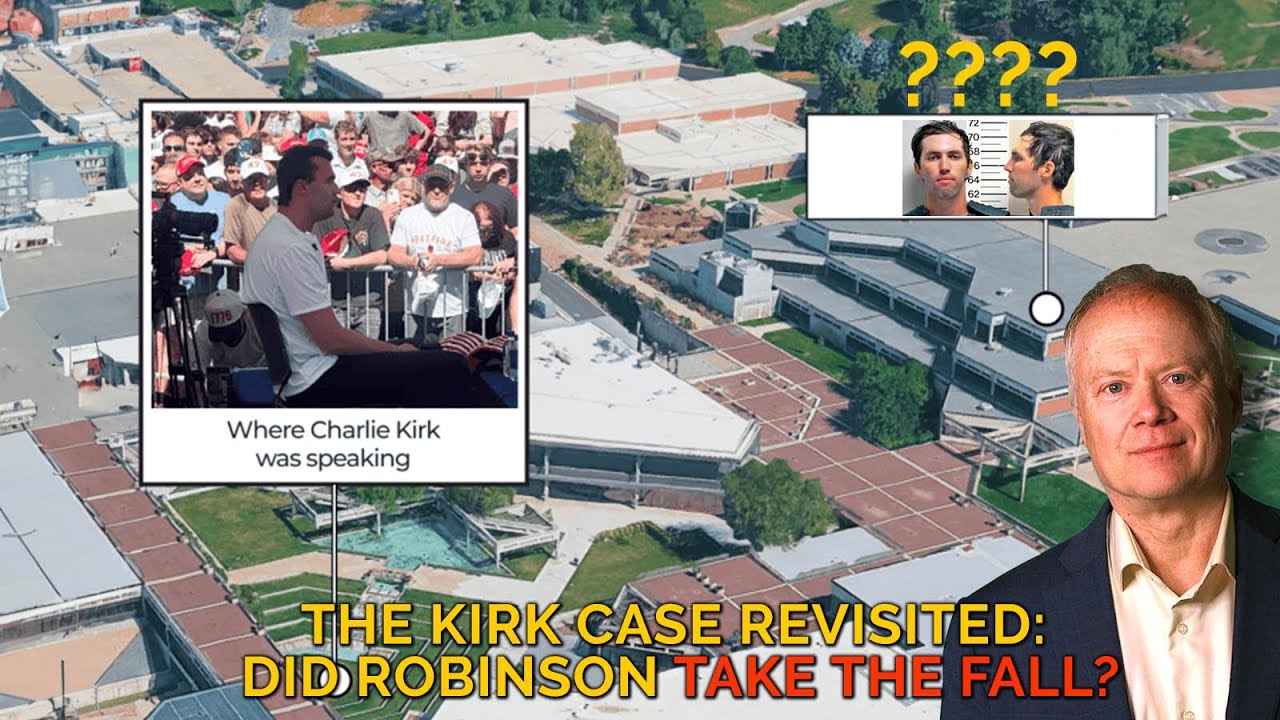
Dr. Chris Martinson Reveals Why Tyler Robinson Could Not Have Fired the Fatal Shot That Killed Charlie Kirk
1:09:53
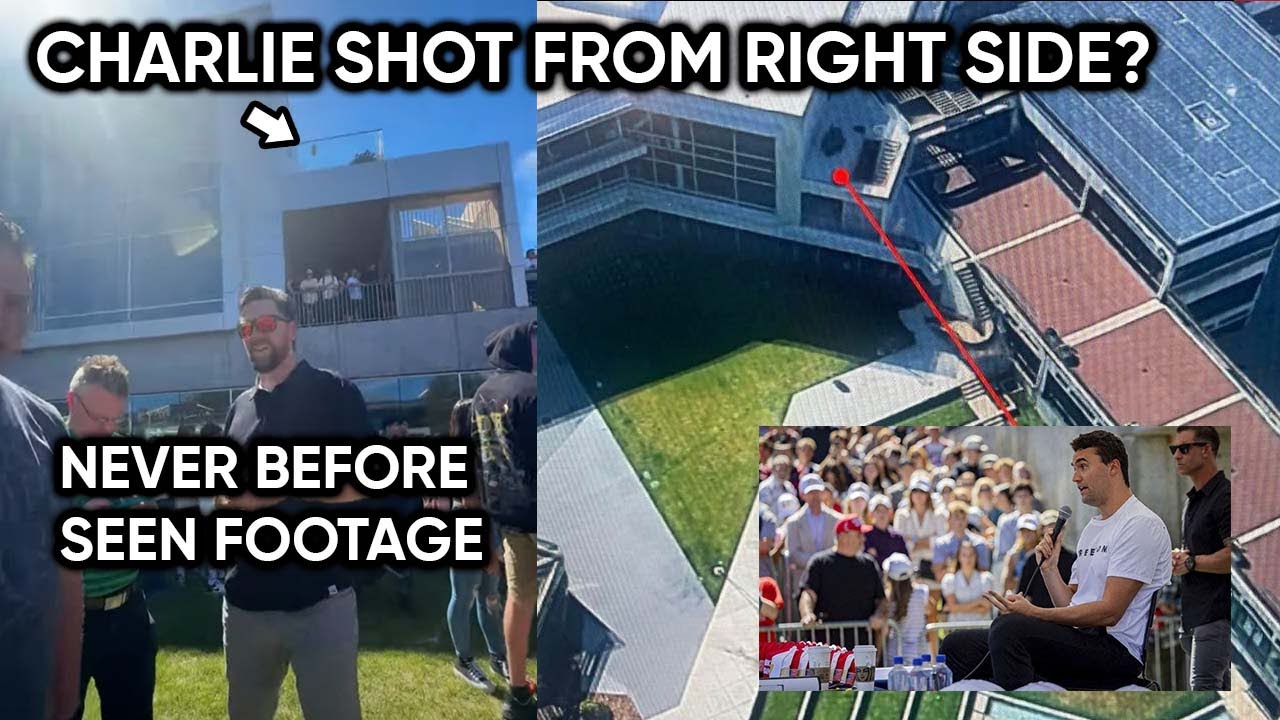
Camron Vance Investigates New Video Evidence in Charlie Kirk Assassination Attempt Case
6:53
Matt from TriggerSmart Proves Tyler Robinson Could Not Have Shot Charlie Kirk from Losee Center Using Audio Forensics
Matt from TriggerSmart presents comprehensive audio forensics analysis that challenges the official FBI narrative regarding Tyler Robinson's alleged shooting position at the Losee Center during the Charlie Kirk incident. Using multiple audio recordings from different microphone positions, reflection patterns, and the speed of sound calculations, Matt demonstrates numerous failures in the acoustic evidence that would be expected if the shot originated from the Losee Center. His analysis reveals that sound reflections from four different recording positions fail to match what would be physically possible from Tyler Robinson's alleged location, suggesting the shot could not have come from where authorities claim. While some alternative positions show promising acoustic matches, Matt emphasizes this is ongoing forensic work that requires continued refinement and peer review.
Introduction to the Audio Forensics Investigation
Matt from TriggerSmart joined a live stream to present his detailed audio forensics analysis of the Charlie Kirk shooting incident. As a self-described "humble audio engineer" with a background in audio engineering, music production, and acoustics, Matt has spent weeks analyzing multiple audio recordings from the incident to determine whether the official narrative about the shooter's position is acoustically possible.
Matt explained his methodology differs from the commonly used "crack to bang" ballistics analysis because that approach requires too many assumptions about bullet type, barrel length, and force. Instead, he focuses purely on audio reflections, which he describes as having "no guesses" - just the speed of sound, distance traveled, and reflection patterns that either work or don't work based on physics.
Understanding Audio Reflections and Methodology
Before diving into his findings, Matt explained the crucial concept of different types of reflections that occur when a gunshot is fired in an enclosed or semi-enclosed space like the courtyard where Charlie Kirk was speaking. He categorized reflections into three types:
- Early reflections: These occur as sound travels from the source to the microphone, bouncing off surfaces along the way
- Late reflections: These happen after the initial sound reaches the microphone, typically from surfaces behind the listener
- Primary reflections (R1 and R2): These are the main reverberations that occur from the microphone's position outward, rather than from the source to the microphone
Matt emphasized that the speed of sound is fixed regardless of frequency. While people might think lower frequencies travel slower because microphones register them later, this is actually due to the physical size of the sound waves. A 40 Hz wave, for example, is approximately 8.5 meters by 4.3 meters and requires more atmosphere movement to be registered, but it travels at the same speed as higher frequencies.
Testing the Losee Center Position
The official FBI narrative states that Tyler Robinson fired from the Losee Center, hitting Charlie Kirk from that position. Matt's analysis tested whether the audio recordings from multiple microphone positions support this location as the source of the gunshot.
Using four different audio recordings from various positions in the courtyard, Matt mapped out the expected reflection patterns if the shot had originated from Tyler Robinson's alleged position at the Losee Center. He measured the direct sound path (shown in purple on his diagrams) and then calculated where reflections should appear based on the courtyard's architecture.
For the first microphone position (labeled "Front Right 12 meters" - positioned 12 meters to Charlie Kirk's front right), Matt found immediate problems. While one early reflection passed (shown in green), another failed (shown in red). The failed reflection would have required the sound to travel seven meters, bounce off a corner, and then reach the microphone - but by that time, the direct sound would have already traveled an additional seven meters, making the reflection arrive at 15 meters instead of the measured seven meters.
Multiple Failures Across Different Microphone Positions
Matt's analysis revealed consistent failures across all four microphone positions he examined:
Front Right 12 Meter Position: One early reflection passed, one failed. Both late reflections failed completely. The primary reflections (R1 and R2) showed a critical failure - they would have required the sound to travel six meters to the back wall and six meters back, creating a distinctive echo that should appear in the audio at approximately 28-35 milliseconds, but this echo is completely absent from the recordings.
Second Microphone Position: Early and late reflections both passed, but again, the R1 and R2 primary reflections failed. Matt noted there was a "little double up" in the audio, but it appeared in the wrong order - the weaker reflection came before the stronger one, which violates the physics of sound reflection where the initial reflection should always be stronger than subsequent ones.
Third Microphone Position: This position showed an early reflection that was marked as "inconclusive" (shown in blue). While the distance mathematically worked, Matt explained that the sound would have had to bounce from one surface, turn a corner, bounce again, turn another corner, and bounce a third time - which doesn't align with reflection physics. According to the law of reflection, once sound bounces and reflects, it continues in that new direction rather than following a zigzag pattern around corners.
Front Right 45 Meter Position: This microphone position presented what Matt called "massive problems." He could only make one reflection work by placing it on a distant edge, but doing so would require ignoring the fundamental law of reflection (equal angle of incidence to equal angle of reflection) and would force the sound to travel through an actual wall. Matt emphasized this is "physically impossible."
The Missing Wall Reflection
One of the most damning pieces of evidence against the Losee Center position is what Matt calls the "most predominant echo" that should exist but doesn't. If the shot came from Tyler Robinson's alleged position, the sound would absolutely have to bounce off the large back wall behind the microphones and return to them.
Matt explained: "This is one of the most predominant echoes you're going to see in this whole thing. If the shot came from over here, it would bounce off that back wall there 100%. You can't escape it. And it would come back to the microphone. Because the microphone's so close to the wall, it doesn't matter where you're standing, you're going to hear that echo."
This reflection is completely absent from all the audio recordings, which Matt considers "an instant fail straight away." The microphones are positioned close enough to the wall that they should have picked up this strong reflection within 30 milliseconds or so, yet it doesn't appear in any of the recordings.
Why Some Reflections Do Work
Matt addressed why some reflections from the Losee Center position do pass his analysis while others fail. He explained this is simply due to the geometry of the courtyard, which is "almost being a square with a corner cut off." Because of this shape, some reflections will mathematically work out regardless of where exactly in the courtyard the sound originates.
However, Matt emphasized that even a single failure is enough to invalidate a position: "The moment we get this many failures, then it's an instant no, you know, it's just not viable." He noted that some of his calculated reflection points "come to here where my mouse is and it's like they can't get any further either way but they don't fit anywhere in the map, so it's like at that point it's just a big failure."
The Supersonic Crack Question
When asked whether he detected a supersonic crack in the audio, Matt gave a nuanced answer. He confirmed he "definitely measured something that was supersonic," but raised an important counter-question: "How long was it supersonic for?"
Matt explained that something could be supersonic for just six inches and still create a supersonic crack and thump. This is where his skepticism of the "crack to bang" method becomes most apparent. He questioned: "Where are you sticking the ruler on that trajectory to measure how far the microphone is to see how far the crack and the thump should be? Because the further you move out from that trajectory, the further the crack and thump gets away from each other."
He also raised a critical point about including the impact in timing calculations: "If you include the impact and the time that the impact happened to the crack and the bang, then it's missing a load of time that should be in the middle. There should be a gap of like I think it's 235 or 20 whatever milliseconds in the middle and there just isn't one. You're seeing the impact and you're hearing the gun, you know, all within a few milliseconds of each other. Then you're hearing a boom, which everybody's calling the thump."
Alternative Position Shows Promise
While Matt's analysis definitively rules out the Losee Center as the source based on audio evidence, he did show one alternative position that appears to work acoustically. This position, located on the roof of a building on the opposite side from the Losee Center, shows reflections that all pass his analysis with no failures.
Matt was careful to emphasize: "This is just that it works. That's all. You know, again, it's not concrete proof. Again, it needs double checking. It needs obviously running through all the maths and everything like that, but the distances work here and the surfaces work here."
The challenge with this position, as discussed during the stream, is the line of sight issue. When examined in a 3D model of the location, this position would require shooting through the tent that covered the speaking area, meaning the shooter would only be able to see Charlie Kirk from approximately the waist down. This would require extraordinary faith in shooting skills to make such a shot.
PA System and Loudspeaker Theory Addressed
Matt addressed the theory that the gunshot sound could have been played through the loudspeakers at the event. He definitively ruled this out by examining the specifications of the speakers that were actually used at the venue.
The speakers used can represent frequencies down to about 45 Hz pretty well, but one of the audio recordings Matt analyzed contains frequencies that go down to 19 Hz and lower. These extremely low frequencies (below what humans can typically hear) would not be reproduced by the event's PA system. Additionally, the speakers are directional, designed to throw sound in a specific direction, which would create a completely different reflection pattern than what appears in the recordings.
Matt concluded: "The original sound is going to be much more in-depth and much more detailed than the speaker. And the speaker itself is directional. So you'd measure that directionality because it will be pointing at a surface and that will create a reflection in itself."
The Mach Cone and Supersonic Travel
Matt raised interesting questions about the supersonic "mach cone" that some analysts have discussed. He pointed out a logical problem: if the bullet stopped at Charlie Kirk (meaning it didn't exit his body), then the mach cone would also stop there. This creates a problem for recordings from positions beyond Charlie Kirk's location.
Using the example of Doug Bartholomew's recording position (approximately 40 meters back and to the left), Matt questioned: "If the bullet hits him and didn't come out the other side, the mach cone stopped at Charlie Kirk, then everybody like say back left 40 here, Mr. Bartholomew, he wouldn't have got the crack. How could he have if it stopped?"
The only way Bartholomew's microphone could have picked up a crack is if it was a reflection of the crack from a building surface, which brings Matt back to his core methodology of analyzing reflections rather than direct supersonic signatures.
Disagreement with Trunk Theory
Matt respectfully disagreed with the "trunk theory" proposed by another analyst, though he emphasized the analyst was "on the right path" and is "a smart guy." The trunk theory suggests the shot may have come from a vehicle.
Matt's primary objection relates to the mach cone analysis used in that theory: "When he pulled the mach cone down the courtyard, he had to pull it all the way out here into the field for [the back microphone position] to get the mach cone. You know, if the mach cone stopped at Charlie Kirk and it's not coming out here, he shouldn't get the crack at all."
Additionally, if the shot came from inside a trunk or tunnel-like space, Matt explained "you're going to hear the sound change" due to the acoustics of that enclosed space, which doesn't match what appears in the audio recordings.
Future Analysis Plans and Fine-Tuning
Matt outlined his three-phase approach to this investigation:
- Phase One (Complete): Mapping the sound to ensure it fits the physical map and that all recordings agree with each other
- Phase Two (Current): Breaking down early and late reflections and testing them against alleged shooter positions
- Phase Three (Upcoming): Fine-tuning through multiple methods including:
- Measuring amplitude differences between echoes to determine first-order, second-order reflections, etc.
- Analyzing frequency content of different reflections
- Using phase correlation - a digital technique that cancels out audio and leaves just the transients, providing "dead accurate measurement" of timing between reflections
Matt plans to test additional positions including one suggested by Dr. Martinson from Peak Prosperity, positions within the crowd, and a location behind the tunnel area. He emphasized that once he completes analysis of all positions, he will share his entire folder of data so others can verify, challenge, or build upon his work.
Addressing Audio Source Authenticity
When asked whether any of the audio he analyzed had been modified before being posted online, Matt confirmed that modifications are generally detectable. Techniques like time stretching and pitch bending leave signatures that can be identified, especially with modern AI tools that can analyze whether audio has been altered.
Matt sources his audio from the same places as other researchers - videos posted on social media platform X (formerly Twitter) and other public sources. He received one particularly high-quality original recording directly from Jason Goodman. He noted that as part of his verification process, he will eventually test all of his findings by "chang[ing] all the audio sources and test[ing] the audio sources" to ensure consistency across different recordings.
Technical Challenges and Transparency
Throughout the presentation, Matt experienced technical difficulties with his camera cutting in and out, though his audio remained stable. He apologized for these issues and for not being "a very good explainer," noting that public presentation and streaming are completely new to him - he's only been creating content for about six weeks since starting on September 27th.
Despite being new to public analysis and content creation, Matt emphasized his commitment to transparency and peer review: "I'm doing this online and with everybody watching and obviously sharing everything because somebody might see something that I'm missing. I'm human, too. So, you know, I can miss stuff and I can be wrong."
He's using relatively inexpensive equipment ("cheap webcam," "cheap microphones") and wasn't originally set up to do this kind of public presentation. He credited his friend "Oshene" for encouraging him to share his work publicly.
The Question of Gun Type and Sound Signature
Several viewers asked whether someone with firearms expertise could identify the specific weapon used based on the sound. Matt acknowledged this is possible for people familiar with different firearms, comparing it to how he can distinguish between different drum machines by their unique tonal characteristics even though they serve the same function.
Regarding the incident in question, multiple firearms experts who have listened to the recordings have stated it sounds like a 5.56mm or .223 caliber weapon, typically associated with AR-15 style rifles. There was speculation that a .300 caliber weapon would have produced a significantly louder sound.
Matt noted that the profile of the bullet (pointed versus rounded) and the bullet size would both affect the sound signature and the supersonic shock wave characteristics, adding to his concerns about the assumptions built into "crack to bang" analysis methods.
The Physics of Sound Reflection
Matt provided clear explanations of fundamental acoustic principles throughout his presentation. He emphasized that sound travels at a fixed speed regardless of frequency (approximately 1,125 feet per second at the temperature recorded that day), even though different frequencies are perceived differently by microphones due to the physical size of the sound waves and the amount of atmosphere they need to move.
He explained the law of reflection - that sound reflects at an equal angle to its angle of incidence - and why this makes it impossible for sound to turn corners without additional surfaces to reflect from. This principle is crucial to understanding why so many of the expected reflections from the Losee Center position fail to appear in the actual audio recordings.
Regarding amplitude and energy loss, Matt explained that each reflection reduces the sound's amplitude by approximately six decibels. This allows him to identify whether a reflection is first-order (bounced once), second-order (bounced twice), and so on, which will be part of his Phase Three fine-tuning analysis.
Conclusion and Ongoing Investigation
While Matt was careful not to make definitive claims about what did happen, his analysis provides strong evidence about what did not happen - at least according to the audio forensics. His conclusion on the Losee Center position was unambiguous: "I cannot get the reflections to fit these four mics no matter what I've tried. And I have been massaging it backwards and forwards, secondguessing myself, doublechecking, re-measuring, doing the maths again, you know, changing the equation, doing it, you know, I've really tried to get it in, but for love nor money, I cannot get the audio to fit that location with the reflection pattern that we see in the audio."
When asked about the probability of finding something that would make the Losee Center position work after all his attempts, Matt's response was frank: "Zero. Like I don't want to say zero but there's a very slim possibility at this stage because there's so many failures I can't make them fit."
Matt emphasized that his work is "not concrete proof" but rather "a pretty strong indicator" based on physics that cannot be faked. The sound reflections either match the geometry and timing required by the physical space, or they don't. His analysis suggests they definitively do not match if the source was the Losee Center where Tyler Robinson allegedly fired from.
As Matt continues his investigation and shares his methodology and data publicly, he invites scrutiny and peer review, hoping that the collective effort of multiple researchers will eventually reveal the truth about what happened that day. His process-of-elimination approach, combined with increasingly sophisticated analysis techniques, may ultimately provide answers that ballistics analysis alone cannot deliver.
Video Transcript
Hello everyone. We are just getting last minute technical things worked out. Give people a few minutes to join and we will get started. Let's see what comments we had here already. Hey Garrett 262, thanks for becoming a member. Autumn as well. Thanks for being a channel member. Let's see here. Yeah, I would definitely want to answer this one sometime during the stream. Seems to be a recurring question. Hello everyone. Hello psychology. Shauna Semonson. Hey Skinny, if you're still there. And just so everyone knows, Matt from Audio Freak is having some technical issues to where his camera's coming on and off. His audio seems to be pretty stable, but if you see him flickering in and out, then uh that's just how it's going to be today, apparently. >> All right, Matt, did you want to go ahead and introduce yourself for the people that don't know you already? >> Hi there. My name is Matt. Um I, uh started a channel, I don't know, a couple of months ago. um started exploring the uh audio of uh the incident of Charlie Kirk and um I've just been carrying on since and managed to get on see Matt here at Chasmart. Um done a couple of other shows somewhere else and I'm literally just using the audio um and seeing what it says. Um so it's not really my opinion as such. It's just what the measurements show. Um, if that's enough, >> looks like someone they like your haircut. Is that [laughter] >> Yeah, I have my ears lowered. Yeah. >> Welcome, Mrs. Wildwolf. Thanks for becoming a member. Yeah, you went short. Aren't you getting cold out there now? >> Yeah, it is a bit cold over here now. I do feel it on my head. Yes. Um, but it was a time that it came off. It was getting a little bit long and a little bit scraggly. >> All right. All right. So, I think what we'll do here, um, we have a couple hundred people in, but let's go and start with the questions. Um, hey, Mrs. Weldwolf. Yeah. So, what we'll do is we'll start with these questions. Now, these questions came from the subscribers specifically for Matt coming back on. So, we'll cover those first and then we'll get into what he found about the Losi Center. All right. So, first question, Matt, why does everyone else use crack to bang but you don't? Are they wrong or are you wrong? >> Nobody's wrong. um crack to bang um in this instance for me had uh uh too many assumptions. Uh we don't know what bullet, what barrel length, we don't know the force behind the bullet. Um so it was too many there's too many variables um and too many assumptions made for me to be able to measure. And I'm not really a ballistics guy. I'm an audio guy. So I didn't really worry about crack of thump and I already knew there was a better way to measure using the reflections because it doesn't require any guesses which made it a really interesting point because um everybody seems to be quite like happy to accept these these these guesses um and assumptions made with crack the fun. But when I came out with actual measurements based on the audio and the map and the actual length and distance, um I seem to have got a little bit of a push back on that and uh it's a little bit interesting, a little bit funny cuz nothing that I've measured is a guess, you know, it's just the speed of sound and the distance it takes to travel, you know. >> All right, we have a question here from Mrs. Wild Wolf. What's your opinion on bull sound production for the gunshot? Or do you mean bold sound production? >> Yeah. What is the um I'm curious too. Are you talking about >> You mean standing in the amp your theater part itself and the bowl sort of Yeah. This is something that said a lot of people there was a guy I swear it was on the news over in America somewhere or or a program over there. It got sent to me and he was saying it sounded like the sound come from underneath me. And that's exactly why is because uh the amplified is designed to reflect the sound and it's the the reflection layers on the original sound. Say the sound the stage is in the middle of the amphitheater down the bottom where the tent was that as the sound reflects backwards and forwards in that it actually layers up and amplifies the voice of the speaker on the stage. Hence the name the amphitheater. Um but yeah, like it does play a part, but not as significantly as as most people think. I think um in fact, the fact that it's in in an ampute has done us a massive favor with the echoes because it's kept it very simplified and very easy to read. Whereas, as you can imagine, a lot of echoes and reverbs and stuff, they can actually get very, you know, convoluted. Oh, there goes me camera again. They can actually get very, very convoluted. So, got it back again. >> Okay. The other question, can you say definitively if there was or was not a supersonic crack? >> Well, I definitely measure something that was supersonic, but how long was it supersonic for? That is my counter question because you could have something that was supersonic for 6 in, it would make a supersonic crack and the thumb, you know. So, it's just a case of how how how long and this is again comes back down to my problem with crack the thump is where are you sticking the ruler on that trajectory to measure how far the microphone is to see how far the crack and the thump should be because the further you move out from that trajectory the further the crack and thump gets away from each other you know so it's it's it's a geometric thing. It sort of happens in sort of like in the cone next to the cone. It if the bullet passes you um then you're going to get the Doppler shift effect obviously so you can measure how far in the cone you are. But ultimately there's there's too many variables. But yeah, that is my counter question is how have they tested it? How how do they know that it's not a short a short h supersonic event uh and a reflection of that coming off of another wall or a long supersonic event and you're hearing a direct crack? How are people testing that and are they guessing again? I don't know. >> All right. And the next question, did any of the audio you've looked at from various sources? At one point you said you may have you have like dozens. Yeah, I've got quite a few recordings. Like there is there is one that was questionable that um but I'm not sure. It's it's it it could be like say they're holding the phone like that and they're copying one mic and then when they they might have changed hands so it opened up the microphone. So it's either that or somebody's twisted it in the in the in in the audio file itself. And there was another one that somebody sent me was asking me questions about words being said and I have the original footage and it just sounded like somebody had rammed it through a distortion panel for some reason. >> So do you take those and include that or do you automatically Okay, so those aren't included in your >> there's any anomaly in it. I mean, I've got enough record. I mean, four recordings is plenty enough to do this on, but I mean, if you're hitting it with 20 recordings that all back each each other up, then you're going to obviously have a much more concrete answer. >> All right, last one. If theoretically the gunshot was played through the loudspeakers, >> now you've heard this question many times. Could that could that be the reason for some of the failed reflections? >> Um, no. Um, the reason being, let me turn the camera back on. There we go. The reason being is I actually got I'll show you in a sec. I might be able to show you now actually um if I still have it open. Yeah, I do. Um entire screen share screen down here to this one. These are the speakers. Can you see that? There we go. Yep. >> Yeah. My camera's playing about, but these are the speakers that they were using. And if we come down to the actual specs, you can see that they go down and they represent 45 htz pretty well, but they don't represent 19 hertz at all. Um, and one of the recordings I've got actually goes all the way down to 19, you know, lower than that. So, the original sound is going to be much more indepth and much more detailed than the speaker. And the speaker itself is directional. So um the you know if it's facing that way it's designed to throw the speak the sound out that way. So you you'd measure that um directionality because it will be pointing at a surface and that will create a reflection in itself. >> Cool. And for anyone who is not familiar with those frequencies 45 hertz is pretty low. that's getting down into your like your your subwoofers and your super low bass and anything below that like 19 hertz that he's talking about is something that uh humans can hear what like 20 to 20 like 20 hertz up to 20,000. >> You're not really going to hear it when it gets down there. So, I mean you can see the the microphones and stuff can obviously pick it up um and record it, but um it's the speaker cone itself is not big enough to recreate it and that's the problem. All right, so let's go ahead and get into the reason why people are here, >> the Losi Center. [laughter] >> So the official FBI narrative was that the shooter, alleged shooter, Tyler Robinson, shot from the Losi Center and he hit Charlie Kirk from there. And a lot of the audio and stuff that people are looking at says that theoretically it looks like it could be possible, but then like Matt and a few other people have found that the audio may or may not fit that. So, he's actually going to show us what work he did to figure that out. And it's actually pretty fascinating, especially considering he doesn't do this full-time. >> No, I'm just a humble audio engineer. I'm just a bit of a bit of an audio nerd, I'm afraid. Um, and I'm not a physicist or, you know, claiming to be any kind of wizard. Um, at the end of the day, it's just audio. Um, can you see my screen, Matt? Is that >> Yep. You are good to go, sir. >> We're good to go. Okay. So, what we've got here is what and what I'm doing is, um, I'm testing the location of Tyler Robinson and how the sound is interacting in this courtyard area. Um the idea is is we know the speed of sound. Um we know the temperature of the day. We know how fast the sound would travel um throughout the courtyard and throughout the area. Um and the idea is is just to measure can the reflections be made um using uh Tyler Robinson's position. Um can can it be made? Um, and like as I said in my video, it's it's quite important to understand the different types of reflections. You've got early late early and late reflections and then you've got standard reflections. Um, that your main main reflections one and two. So, um, if we take for example for a second, what I'll do is I'll just do the same thing I did on my video there to show it. Um, if we put a circle here and we follow any one of these paths, you can see. So, what what I'm demonstrating here is the sound. The yellow circle is the sound after it's been fired. It's going to travel to the microphone, any one of them. Um, and it's going to travel down that path. And at the same time, it's going to be traveling out in all directions. Um, and as you can see, we can we can naturally assume that as soon as it hits this point, we're going to get a reflection coming back this way. Um, as it moves down this point further. Oh, if it'll allow me to. Um, you can see you're going to get a reflection off of this side. Even further, you'll get one off of here. Um, and then once we hit the microphones, we just use this one for the second. uh once we hit the microphone right everything that arrives at that point um first of all it's going to be the initial sound um but every every echo that arrives between this time and that time is considered an early reflection it happens along the way and then what will happen is because the sound's not going to stop it's going to carry on it's going to hit the back wall and come back that would be considered a late reflection and then Anything that happens after that point say um let's put in oh how do you clear that whatever um anything that happens after that point you um is um R1 and R2 reflection one and reflection two these are your main reflections and they happen from the mic's position um outwards rather than from Mr. Robinson's position to the mic. We have a few people asking if you can turn your mic up at all. >> I wish I could. I can't, I'm afraid. Um >> I guess uh we can turn me down and then you can turn up your volume for both of us. >> I can have a look. Um [snorts] move this out the way. >> Yeah, we'll just give you a minute here. See if you can if you can't turn up, I can turn me down and then they can just bring the overall. >> I'm up full. I'm up full. Um unfortunately, I've only got a couple of microphones here. I'm not a recording artist. Not anymore. >> No. Um, is that better? Um. Oh crap. So, are we good to go or? >> Yeah, we just uh go ahead and keep going. I'll mess with it while you're doing that. >> Yeah. Okay. Okay. So, now we just we determined the difference between the early uh late reflections and the reverb one and reverb two or reflection one and reflection two. turn off a couple of these. Um, we'll start with this mic here. Um, this is 12 mters from Charlie's position. Um, just to his right, front right 12 m, hence the name. Um, and the the direct sound's going to travel down this uh purple line and it's going to pick up the early reflections as it goes. Now what you can see here is there is the green line which was a pass and the red circle which was a fail. I couldn't make that fit. You might think that let me zoom in there a little bit. You might think that this corner here would be good enough um because it is at 7 m location. But the problem we have with that is the sound is already seven meters in front by the time it hits that corner. And then by the time that reaches the 7 m mark, this has already traveled another 7 m. So it's going to be um 15 m rather than 7 m, which is why I failed it. You can't make it it would have to be half that distance to make that reflection work at that distance. So, just so we're clear for anyone that's listening, anything that you've marked in red or any of the red reflections are failed reflections. Correct. >> Yes. >> Which means that that shot could not theoretically happen. >> Yeah. >> Based on the audio. Yeah. >> One one failure is enough to fail the whole lot >> in in in you know and there is a tolerance. So, you know, you could be in and out you know a couple of meters but realistically the speed of sound is fixed. You're not going to change it. I mean the even if the sound loses energy, it's not going to be p it's not going to slow down. It's just going to be perceived as less volume, you know, the sound just sound field, it's an energy field. It's just going to keep doing what it does. Um so yeah, you're completely right. If it's marked in green, then it's it's a pass. And if it's marked in red, then it's a failure. And these are just the sounds um you know the sounds these are just the reflections uh that carried along with the sound traveling to the mic. So these are just the early reflections. We've got one pass and one failure straight away. Um we bring in the late reflections. Um and you can see that they don't work at all. Um, if I turn one off and we just look at the other one, there's no clean placement um, at 165 m. And that's how long the audio. So, let me just uh show you that's how long the audio has taken to travel when it's front beat 12. So I what I've done is I've like showed you this last time that um I I basically pulled out the milliseconds of each frequency band that I broke down and um I've created an average um and then I've given it uh an average distance um to place on top of the direct path. Um direct path is the purple. The extra path is the difference between the purple and the green line, shall we say? >> And then we've got a total path distance, which is the whole of the green line. Oh, it cut out again. Let my mouse catch up. >> And for those just joining, um, this is Matt from Audio Freak, and he's walking us through the audio forensics evidence for the Losi Center of whether it could or could not have been theoretically the alleged location of the shooter based on the audio alone. It looks like we might have lost Matt for a little bit. We'll give him a second here. >> Can you hear me? >> Yep, you are back, sir. >> Technical issues. Sorry, guys. I don't know what's up with my computer today. Um, so yeah, I've broken it down into milliseconds. I've broken it down into frequency bands, and I've created an average. Um, the idea isn't to match to to map the whole of the architecture. It's just to to see see how the sound waves responded in the space. Um >> I have a question for you. >> Okay. >> So speed of sound. >> Yeah. >> Does that change based on the frequency of the sound? >> No. >> Okay. >> So >> So whether it's 40 Hz or 40,000 hertz, it's going to be the same speed. >> You if you if you looked at it on a microphone, you might think that, but that's not what's actually happening. All the sound is hitting the microphone at the same time. It's just some waves are bigger than others. >> So if if you have a 40 Hz wave, I think it's 8 and a half meters by 4.3 meters. Um, so you could imagine that's actually moving quite a lot of atmosphere. That's not that's not a small, you know, wave. And the microphone's going to obviously not be able to pick that up until it's actually made a full revolution and and and moved that much atmosphere to create the tone. So, um, it's hitting it at the same time. It's just reacting differently. >> Makes sense. >> Does that make Yeah. >> It's just moving the cone differently. >> Yeah, exactly. It's just it's it's just got further to move before it actually gets registered as as as a sound, you know. Um, so if you stood um next to the source for example and it was a 40 Hz source um it might you might think 8 and a half meters in front of that you've got one revolution of the waveform but it's going to take one and a half to two revolutions before you'll hear it because it's the the the atmosphere is just warming up to make the tone. Whereas all the smaller like higher frequencies, they they will be picked up pretty instantaneously because you know they're a lot more energetic in in that respect. >> So we have a quick question here. Could there have been two shots fired at the exact same time, one shot covering a lower sound signal than the other. >> Yeah, you could you could argue that point, but then you would you would end up obviously creating two sets of reflections from two different places. Um, and I'm not measuring that in in the audio um, so far anyway. Um, >> you're not measuring it or you're not seeing it? >> Not seeing it. So, it's not I can't measure it. So, I'm the all the all the audio that I'm measuring is obviously there and I'm being I'm able to line it up to a specific position. The moment that you have extra echoes, you're thinking, well, how did they get there? that means there's another source or another reflection surface and you'll instantly go looking for that surface and you'll either [snorts] find it or you won't. Um, and it will highlight whether there's a second shot fired at exactly the same time or not. Um, for me at the moment I haven't measured it and it's definitely something that I'm keeping my ear out for because you know you're not the first person to ask that. So yeah, um we just can't place these um you know uh anywhere because you you might think why is it not bouncing left to right, left to right, left to right, but every time it bounces it's going to create another reflection and you're going to you're going to register that on the microphone. So >> okay, so question the reflection will be weaker though, right? >> Yes. Yes. Yes. Yes. So we like um this is something it's actually a really good point actually that one because this is something how this is how I'm going to test it later down the line. So once I've put all of these in, I'll go into the waveform. I will measure the difference in amplitude between the uh echoes. Um as they obviously the the main instance you can imagine it being zero dibels. Um we work backwards in audio. It's minus six and it the first reflection will take off six dibels of audio. The second reflection another six you know uh it will just keep minimizing itself as it as it echoes out. So we can say that's a first order reflection, that's a second order reflection that come from this wall and it bounced off of that wall, you know. So at the moment it's not concrete. I mean like while these these are all failing and it's very strong indicator that the sound source didn't come from the Losi center. Um we can tie that down with a bit with a bit more definitive uh we can be a bit more definitive about it. Um just by um obviously uh looking at the amplitude of the um echoes and then timing it and seeing whether they fit in the same geometry um as we've plotted um and it will basically sanity check everything that we do at the end. >> So we have a good question here. Where is he getting the audio from? So, what are your sources? >> Uh, oh, same as everybody else's. Um, probably got a folder here somewhere full of different sources. What have we got? Charlie Kirk stuff. Is that all the videos in there? Got a load of videos in there. I've got loads more online as well. So, yeah, it's just the same sources as everybody else has. >> So, you're getting them from like videos on X and um there was that famous one that was supposed to be the best recording so far. I can't remember the gentleman's name, but um >> yeah, the Oh, yeah. Yeah. Was that the one that was up the back here somewhere? >> Behind him? Yep. >> Yeah. Yeah. Yeah. I've got that recording actually, the original. I think that was actually Jason Goodman's um I think it was actually. Yeah. He he sent that to me. So, that is another thing that I'm going to do at the end of all this is change all the audio sources and test the audio sources. >> Yes. So it's it's just another way to, you know, keep it honest and keep it sane. >> Yeah, it was Bartholomew, I believe. >> Yeah. >> Yep. Um Okay. So So basically [clears throat] what you did is you took the location and and you're doing this on multiple areas, just so we're clear. So you've been working on the actual courtyard itself. You worked on some of that previously. And then and this one is specifically for that shot location where they say Tyler Robinson did the shot. >> Yes. Yes. That's exactly right. So, you know, the the the the theory is if the shot start if the sound source started where Tyler Robinson was, all of the echoes will match up. This is is pretty simple. I mean, they'll they'll either be able to get to the microphone in that time or they won't. Um, and if they can't, then it stands to reason there's a pretty strong indicator that the sound source wasn't on the Loi. So, we have another question. Are you able to tell if any of the audio has been modified? Yes. >> Before it was put online. >> Yeah, I mean, yes and no. There is obviously things you can do like time stretching and obviously pitch bending and all this, but most of these things you can detect. So, there's not much you can do to an audio file and not detect it. Especially with the use of AI these days, you could probably just put the audio file into there and say, "Has this been altered?" And it will probably give you an answer. All right, cool. So, let's go ahead and continue on with that location. >> Yeah. So, the R the R1 and R2. So, I've put in the thump. Okay. So, if it's a thump. Yeah. And, you know, I'm not saying it isn't. I'm just saying for this test, I'm treating it like a reflection. So, if it's a thump, then it will fail the reflection test because there's nothing for it to do. And this one does exactly that. It literally fails the the reflection test. And then we come on to the R1 and R2. Now you notice that these are coming out from the mic outwards. Uh well, they're not from the mic. They're actually coming from the back wall. And there's a good reason for that is because there is nothing on that microphone to reflect the audio. So it would have to come back to the wall to reflect out. And in doing so, what would happen is you'd get another what another echo going, you know, you'll get the bang, then it would go bang. It would hit the wall, come back, and you'd hear it again, and it would be a strong reflection, and it would only take 30 milliseconds or so from there, I think. Maybe maybe a little bit more. >> And you're not seeing that, correct? >> You're just not seeing it in the audio. So, that's an instant fail straight away. That is one of the most predominant echoes you're going to see in this whole thing. If the shot came from over here, it would bounce off that back wall there 100%. You can't escape it. And it would come back to the microphone. Um, and because the microphone's so close to the wall, it doesn't matter where you're standing, you're going to hear that echo, you know. So, it's it's for for this mic here, it's absolutely failed. We've got one pass, you know, and if I put in what you would expect, let me turn the rest of them off. You might actually >> And you said technically one failure is a total fail, correct? >> Yeah. Yeah, technically. Well, I mean, what we have in the recordings is recorded. is there, you know. So, if one of them fails, then that's not the location, you know. It can't be unless there's a measurement problem, which is hence why I'm doing this online and with everybody watching and obviously sharing everything because somebody might see something that I'm missing. I'm human, too. So, you know, I can miss stuff and I can be wrong. So, you know, it's not 100% gospel, but it's a pretty good indicator. And if we're not getting any reflections coming off of this side here, you this side we can exclude because the mic's slightly to the left of that. But we're not getting anything coming off here or there. We got a big problem. I mean, we can get rid of this red one maybe because we do have one, I believe, that was coming off of the other side there. I can't remember where it went. >> We have a question here. Does the audio evidence 100% prove the shot was from the 12:00 position at all? Like somewhere from the front of him basically? >> What do you mean? So like rather than this exact location, you mean say down here or back here or over here or something? >> Um just just anything in front of him like did it come from the front basically? Uh, well, at the moment, the way I measure the audio, the sound's going this way across the courtyard, you know, starting from this building going that way. >> Now, >> that's just one singular measurement. So, it's not concrete proof, but I at the moment I'm not measuring the audio coming down to that back wall. And that is important, you know, it's it's it's just not hitting that back wall. like that orange one there. >> So, so more to come on that. >> Yeah. Yeah. >> Yeah. >> As I say, it will tighten up over time. Once we get all of this bit done, we can use the amplitude of the the the reflections to to test it and give it sanity check and obviously fine-tune it even further and ultimately that it will just get tighter as it goes on. You can't fake these echoes, you know, whereas >> So, based on what you're seeing right now, >> the Losi Center from the location that they said Tyler Robinson allegedly shot from, you're saying that that does not work audio-wise. >> It's not working. No, not I can't get it to work. And I', you know, I've spent weeks trying. Um, to be honest, you know, I'm trying to be as thorough as possible. I'm just trying to obviously, you know, follow to see where it goes. I'm not trying to start this with, you know, oh, I think this. Let's see if I can make it fit. I'm just thinking, all right, well, we'll just see what the echo say cuz you can't fake them. >> Um, or you even if you do fake them, you're going to you're going to know that you've been faked. And in that case, it it it ruins the whole case anyway. So, I don't see it going. >> Now, you said that's based on four different cameras. >> Yeah, I've got four of them here. Let me just turn this one off. Um, so this next one, we got a pass there. So, you see where I said it would absolutely would bounce off of here. That's totally fine. >> Uh, oh, missed it. Uh, the purple one there, that is actually where he drops the microphone. Um, that's actually in the audio there. What are we? 15. So, this orange band here, that's 163 milliseconds. That's actually where the microphone hit the floor. Um, >> okay. So, you even accounted for that? Interesting. >> Yeah. Yeah. Well, that's why I broke it down into frequencies because that's because you can totally eliminate uh certain parts of the sound and you can say, "Well, this is an echo. This is part of the crowd. This is the microphone dropping." And you can just select it by frequency. You can hear it a little bit better, you know. So, uh both early and late reflections there both got a pass. Thump got a pass, though it shouldn't if it's a thump. Um, R1 and R2 got a failure. >> Again, much the same with the last mic. They would have to travel 6 m to the wall and 6 m back. And that's 28 milliseconds, I believe, per meter. So, you know, whatever is going to be 30 35 milliseconds for that to hit the wall and back. And we're not measuring that in the audio. There is a little double up there. actually if I'm being truthful, but it's the wrong way round. Oh, cut out. Oh, can you still hear me? >> Yep, you're still good. >> Yep. Yep. Okay. So, yeah, there is a little bit of a double up there. And but it's the wrong milliseconds. I haven't got it open, obviously. But it's the wrong milliseconds. And you'd think it would be the other way round. You'd get the stronger one first, then the weaker one second, but it goes weaker one then stronger one. So, it doesn't make any sense for that to be um viable. So again for both R1 and two these have both failed. They I can make the distance but I can't recreate that boom boom that would happen there. Um and again we got expected path. >> So just real quick for uh Rebecca's question here. Can someone explain the overall findings and what they are so far? Not sure I'm following. So basically what he's doing is in all these locations um so far he's done some of the courtyard and this one was specifically for the Tyler Robinson position. and they set on the Losi center. But basically what we've done so far and all his work he's working on, he's he's testing the reflections from the different cameras to see which audio actually works for the shot from that position. And so far, at least from this one, specifically for Losi, it does not work. So he's showing multiple different cameras and their audio and the reflections. And if any of those parts of the reflections fail, it is a fail. And he's seeing lots of failures on the Losi center. >> So that's Sorry. Oh, go ahead. >> I was going to say I'll show you at the end. I I'll I'll open up all the failures at the end and you can see it for yourself, you know. But again, expected path where where's the one that come off of here? If the microphone was there, you would absolutely expect a sound to hit this wall and then travel down and hit that microphone, but it's not there, you know. Uh the same here, you know. Um move that uh red one up and down this wall all you like. you're not getting it. Um, you've got one down here which is just in on this s little bit here which I'd consider that as a separate surface to this one because it's a different angle. It's going, you know, reflecting off a different way. But >> so green so green's a pass, red's a fail. What is the yellow? >> Yellow is the these are the in the expected path, right? So the yellow is the late reflections and the reds are the early reflections that should be present um that are just not, >> you know. So there again, it's just another failure from there, you know. Um we go to the next one. Oh no, you don't want all of that, do you? Um so early reflections again. Okay, so we got a blue one. That is an inconclusive. I make it up because the distance is there, but we've already got a reflection happening here. You're not going to get uh the sound bounce from here, turn the corner, bounce again, turn the corner, bounce again. It just doesn't work like that. Once it's bounced, it's reflected. It's gone. You know, um you may get a little bit come off of there, but reflection law, equally in, equal out. So again, it could be could have made it, but this is why I called it this is why I made it blue and called it inconclusive because I can make it, but I could argue it at the same time. >> Now, that brings up a good question. Brian Burton said, "What if the so basically like we said it was what 20 2700 ft per second or 24? I can't remember what they said, but um so what if it was actually a different velocity? Would the position change for the reflections?" >> Well, a different velocity on the bullet, you mean? Yes. >> Yeah. That's not going to change the sound. The sound's the sound. It's going to change. You know, it's different ballistics. One side is thermodynamics, isn't it? And then you've got the audio, which is obviously the audio, which is just standard physics. >> So, the biggest change would just be if it was supersonic or not. Supersonic's going to have a a sonic crack >> and supersonic's not or subsonic is not. >> Yeah. Yeah. My my issue with with that and it brings up another important point with the crack to bang is is if you include the impact and the time that the impact happened to the crack and the bang then it's missing a load of time that should be in the middle. There should be a gap of like I think it's 235 or 20 whatever milliseconds in the middle and there just isn't one. you know, you're seeing the impact and you're hearing the gun at, you know, all within a few milliseconds of each other. Then you're hearing a boom, which everybody's calling the thump, you know. Um, and now for me, I'm just using it as a reflection here. But um there should if that was the case then there should be a 200x whatever amount of uh milliseconds between the the the the shot the impact and the the boom that you know as soon as you bring in the impact then the whole crack to bang thing collapses. So well on this instance anyway you know it works for other things. It's just depends on what you know about the the shot and the the gun and the bullets and all of that. It's a little again, it's a little bit inconclusive. So, we have a question here. Do different rounds have different crack bangs? >> Uh, well, the different size of the bullet would create a different pop, I suppose. You know, the the profile of the bullet would create a different sound slightly as well. So, that's whether it's a ball or a point. You know, we got 5.56. I don't know if you can see me. Uh, can you >> We can't see your camera, but we can see what you're sharing. >> Okay. >> And for anyone that's in here, he's having some technical issues with his camera, so he should be right back. Possibly. Give him a second here. Yeah, I think with this one, PA system doesn't have the power to create that amplitude of sound. I would agree in general. I mean, you would have to have a hell of a system to have a PA system that could do that. >> Can you see me? >> Um, we can't see you, but we can hear you. Uh, >> I'll turn the camera back on. Um, do I need to stop the share? >> Is that Is that better? >> There we go. We can see you again. >> So, the profile of the bullet, right, this is a 5.56. It's a dud. It's empty. Don't worry. I'm not going to blow your head off. The profile of the bullet, is it a point or is it rounded? Yeah, I got the point in there anyway. >> Yeah. [laughter] >> Yeah. Yeah. Really sorry about I don't even know why it's doing it. But is it a point or is it rounded? That's going to change the sound as well. It's going to change how the the the shock wave sort of works, etc., etc. Bloody computer. >> Um, Split Hair is asking, is this all based on only cell phone mics? >> Yes. Uh, yep. This is all all of the microphones that were there at the time. Seems to work better when I'm not actually looking at the thing. So, can you still hear me? >> Yep. You're good. >> Super duper. Yeah. So, the profile of the bullet obviously as well. Um, you know, and obviously the size of the bullet as well. I've got a World War II tank shell here that I was going to show you as well, but I can't cuz the screen, you know, keeps cutting out. But the camera keeps cutting out. But yeah, like profile of the bullet, size of the bullet, all of that stuff absolutely matters. And this is what I mean when we come to measure crack to bang. There's too many variables. How do you know? You know, um, and if you was to shoot from Mr. Robinson's position, you'd actually have to fire pretty much the speed of sound. And you can't do that because sound is a force. sound will push the sound field itself will push on the bullet and make it spin y and tumble. You know, you you you might find yourself firing five or six shots from that location just to hit your mark if you're firing at that rate. This is why marksman rifles usually fire, you know, twice the speed and sound or more, you know, or wherever, you know, it's just to keep them in that zone. So, you still see my screen. Yeah. >> Yep. Let me just roll through these. Um, so there's more failures on the thumb there. Um, >> oh, that's a this is a really good question. So Sean A. MacArthur says, "Can you can you find out where it stopped?" >> What? The bullet. >> The sound. Can you tell where the sound Well, no. That'd be because the bullet and the sound are traveling separate from each other. Yeah, I was going to say it's like that, you know, the sound stops like, you know, depends on how loud it is. The the more amplitude you put into the sound, the further it's going to travel. Think about thunder and lightning, you know. Um, so it it's all about energy, you know. The more energy you put in, the further it's going to go. But where the cone stops is where the bullet moves or transcends back past mark one. So if it if it goes below the speed of sound, um that's when you'll lose the cone. So if you imagine Mr. Kirk sitting there on that yellow pin, if the bullet hits him and didn't come out the other side, the mat cone stopped to Charlie Kirk, then everybody like say back left 40 here, Mr. Bartholomew, he wouldn't have got the crack. >> How could he have if he stopped? Exactly. And same with the back right 7 meter Mike. He's literally sitting on the corner there. That little tiny L. >> He's literally sitting on that bit right next to the path right on the corner and the tent. I think Mr. Kirk was a little bit further forward than that. I think it was about there. >> So how how how would he get the crack if the if the bullet stopped there? He would get he could get a reflection of the crack. Say if the crack went down that you know down here, then it it created this the supersonic shock wave. It hit this building and then traveled this way. And this is why I keep saying that why I'm saying that it could be a reflection because I've got the bass frequency coming from this side and the treble frequency coming from this side. So it's like how do you separate the bass and the treble? Now I kind of already like earlier on when I spoke about the 8.5 meter bass wave you know it's going to take time to to to propagate and time to obviously you know uh be audiable shall we say and move that amount of atmosphere to create the tone. Um, so maybe if you measured out, I don't know, was 8 1/2 times 2 17 m. You know, it might take 17 m before it's audable, but that's, you know, it's way way, you know, each one of these red squares here, they are about 10 mters. So that's, you know, if you've got, if just, for example, you know, you know, for giggles. So we put the guy up on the roof and he fired at Charlie Kirk there. And then it's got to travel 1 2 3 40 m 45 m say 50 m whatever 44 to 50 m to get there. So the bass is going to be heard on these steps, you know, uh well people will hear it, you know, um people's ears a lot more sensitive than a microphone diaphragm, that's for sure. So um obviously what you hear and what gets recorded are similar but not the same. you know. So, yeah, for this one anyway, we've just got a ton more failures basically. And there's some there's some in there that are obviously, you know, that do work out. And because of the nature of the courtyard almost being a square with a corner cut off, isn't it? You know that they are going to work out like that. You know, you're going to see some that work and some that don't. the moment we get this many failures then it's it's an instant no you know it's just not not viable. Um and again the front right 45 mic here we can just quickly look through. So this one was interesting because I couldn't make it up anywhere. The only place I could make it up was over here on this edge here. But in order it for it to work, you'd have to ignore reflection law, which is equal angle in the angle of incidence to an equal angle out, which would then make it hit this sort of back wall here. Oh, you know, it would it would hit there and then hit there and then come back this way. But the problem we've got is what we're going to see with the next reflection. >> Well, you also don't have line of sight from there either. >> No, this is my point. Yeah. So, this is this is the problem with it. Look, it it has to go through an actual wall when over the top of the building. Sound don't turn corners like that, you know. You have to move it. It's not going to move itself, you know. So, it's going to hit it's going to hit here and it's going to come back up this tree line most likely. You know, maybe down here into the car park. You know, the first one is probably going to zip off this way. So, this is instant failure. I mean, you would think this mic here being halfway between Mr. Kirk and Mr. Robinson. You'd think that this mic here would be one prime for the crack and it isn't. It's not the It's not the most distinguished crack in the whole lot and you'll be surprised at which one is. I'm keeping that for myself though, M I'm afraid. [laughter] Um, we will be getting to that though, don't worry. Like pretty soon. Um, so there's massive problems with this mic. You know, it it should the crack should be most predominant here because the bullet has time to travel past and the cone has time to intersect. You know, it literally has time time to propagate out and get wider. So, it you know, it it doesn't make any sense to me. I can't I can't explain it yet, but I'm going to do my best using the audio that we've got. Again, the thumb there was nowhere for it to go, so it just went over here to get it out the way. And this was [snorts] the the R1, you know, the the main reverb comes from the microphone out and back. This is the only place that I could find at 129 m. I think it was 129. Yeah. Um and it just doesn't work. Um how do you get the sound to travel down here, turn the corner, and then come back? It just it's not going to work. You know, it's physically impossible for that to happen. Just real quick, uh, John Clark, can't someone who knows guns hear and be like, "That's a so- and so gun." Yes. Many people that heard this who are gun professionals said that it sounded like a 5.56 or a 223 sound like an AR-15 style. So, the 300 6, many people thought that it would been significantly louder. So, I'm not sure if that answers your question. Yeah. I mean, yeah. I I I I mean, I I can play Battlefield 4, I think. I think Battlefield 4, and I could recognize a few guns from their sounds from that, but I have no I've never even fired one, you know. So, I I I have no idea when it comes to ballistics and guns. I just come at it from an audio perspective. But yeah, I would assume if you if you knew your guns well enough, then why not? you should be able to hear the difference in, you know, say one rifle to the next if you're familiar with it. Much like I can hear the difference between that drum machine and that one, you know, they're both they both do the same thing. They just have a very different tombra, you know. So, um, >> so we have a lot of people that are they were interested in the trunk theory from algeist. So, so the question would be not necessarily if you agree with it or not, but they're asking if you can analyze that to prove that wrong or right. >> Yeah, sorry. I he seems like a lovely guy and he has reached out in emails and I haven't got back to him yet because I've been super busy, but um I will do. But I disagree with his conclusion based on the fact he even demonstrated it in your video there when he pulled the matt cone down the courtyard. He had to pull it all the way out here into the field for old barfy mu there to get the or to to get the mat cone. You know, if the mat cone stopped at Charlie Kirk and it's not coming out here, he shouldn't get the shouldn't get it at all. So, and if if it's in the tunnel as well, that's another thing. If it's going into the tunnel as well, you're going to hear the sound change, >> you know. >> Okay. So, just so I understand what you said. So in his example, he was having the bullet basically travel way past Charlie. >> Yeah. I mean, he said uh he it's Matt was the other way around, I believe, but he was putting on triangular mark cones. You know, he's definitely on the on the right thing. He's a smart guy. So, I'm not definitely not, you know, trying to discredit him. He's on the right path. He's just he's he's he's focused on crack to bank was I'm not focused on that myself, you know. I haven't looked at it yet. Um, I'm not going to really do the whole ballistics crack of bang thing because it's nothing to do with me. I'm just the audio nerd. So, but if you dragged I can't I haven't got a picture of one, but if you dragged a triangle up here, by the time bar volume gets the actual crack, the the bullet has to be out here for the triangle for it for him to hear it. But if it stopped in the trunk, then how can you hear it? You know, it would have stopped here. it wouldn't be able to get all the way out there. So, yeah, I do disagree with his conclusion, but he's on the right path. >> In fact, it's acceptable to say stuff like that. >> Yeah, it's just your, you know, based on what you're seeing and the data you have to work with and >> just based on what I'm measuring. That's all. It's, you know, and he'll understand that as well as a science guy. It's just, you know, it's like, oh, this works, this works, this works. Oh, and somebody comes in the room, they're like, "Oh, hang about you thought about this." And he's like, "Ah, damn. It all doesn't work again. Let me start again." And that's just science and how it works. So, I'm sure you'd be okay with that. Um, and again, these are the expected paths. Where are they? So, we've got four mics all failing this location, and I don't think I need to test any more after that. I mean, I just need to fine-tune these and just, you know, the more people that test it, um, and obviously share their results, the the the more robust it will be. And when I'm done with all four of these locations, I will share the whole folder. So, everybody can, you know, actually just use what I've done rather than having to go through the rigomearroll of having to obviously rebuild it themselves. They'll just be able to click on and click off and see, you know, move them about to see where they fit. And if any fit that I'm not really seeing, you know, maybe there, you know, I could I can already see there's one that I'm missing, which is a floor bounce. Do you think he's up the top there? The sound's going to bounce off the floor down here somewhere. So, one of them might be able to be explained with that. And this is what I mean by fine-tuning. You know, the first part of my project was just mapping the sound to see whether it actually fitted the map. you know, it make sure it wasn't glitches and it was all it could be used and they all agreed with each other and they did. The second part now is breaking down the late and early reflections and doing a test on it. Third part will be fine-tuning that. So as I said the amplitude between the different echoes um and tracking that path and you know all of that that comes into it. frequency comes into it, you know, and then uh using phase correlation is probably going to be the next advanced trick that I do, which is essentially cancel using digital technology to cancel out the audio. And then as I shift one of the waveforms away from the other, it will leave just the transients behind which will give us an accurate dead accurate measurement of how far them transients are from each other. Um, and at that point, I don't think anybody, even a court, could argue with that one. Um, it's just I'm not presenting it as a court case. >> So, we have people here saying, "Can you find the possible sound source location?" So, that's basically what he's he's finding the source based on eliminating sources that won't work. >> That's it. Process of elimination. Exactly that, you know. So, I I I'll just keep testing. I'm going to do alleged shoot of three. That's why that pin's there. That's the next one. I think Dr. Martinson. Put that one out there as a theory. So, we'll test it. We'll see, you know, the audio from that from there to the mic. From there to the mic, from there to mic, and then we'll just do exactly the same thing. We'll draw the lines in. If I can make it work, we'll leave it in. And if I can't, it'll be colored red and called a failure. Um, and it's just a theory, so it's worth testing. It's worth having a look at, you know. So, yeah. But yeah, as I say, all of these basically failed. So, um there was a few passes in there. Um we'll turn on the uh expected paths as well. Um you can see the red starts to really really line up, doesn't it? There, you know, you get a couple of green ones. Oh, well, I'll ruin the whole project now. Um, turn on the loy center. But yeah, you can see with all of this red there. I'm not even going to bother turning the other one on. With all of this red one there, you can just see that it it's just looks a bit chaotic and a bit messy, but it's just one big failure, you know. Um, I cannot get the reflections to fit these four mics no matter what I've tried. And it did. I mean, I have been massaging it backwards and forwards, secondguessing myself, doublechecking, reme-measuring, doing the maths again, you know, um, changing the equation, doing it, you know, I've really tried to get it in, but I for love nor money, I cannot get the the audio to fit that location with the reflection pattern that we see in the audio. >> So, for the ones that work, what why do they work? I guess >> it's just because it's a square really, isn't it? You know, um whether you stand here, there, or there, you're kind of still the equal amount of distance from one location or the other. >> Could face cancellations affect once you get inside of the actual arena like the the middle area. >> You do you will get face cancellation and stuff happening. Definitely, you know, that's just natural part of sound, you know. um what one one wave bouncing off this left wall and another one bouncing off the right wall. They meet in the middle, you get a bit of cancellation happening. >> Can you explain to people what a face cancellation is that don't that don't know what that is? >> So, if you think about uh uh a wave, you've got a positive and a negative side. You know, as you see it, you've got a line in the middle, you've got a bump on the top, and then a dip and then it starts again and it does it again. Yeah. So, um, phase cancellation is where you copy that wave, invert it, and then play it alongside the other wave. And what happens is the up and the down trigger at the same time, and it cancels it out. Yeah. 1 + minus one is zero. You know, minus one + one is zero. So, you you're going to you just end up with silence. And then what I'll do is I will just minimally shift one of the waveforms by a millisecond or a few samples and then it will just let parts of the sound come through and the first thing that will come through is the transients because that is the most solid peak. So um that is phase cancellation and it just helps me it will help me measure later down the line. >> Yes, that's correct what you do. All right. So, if the LOI doesn't work and you've tried it multiple different ways, you said, and you've worked on this for a while now. >> Still working on it. >> Still working on it. >> Very much so. Yeah, I've done I mean, I've turn these off. I did start the back corner as I showed last time. Um, >> so so Okay. So, say with all the work you've done so far, what's the chance that you would find something that would work at this point after all the failures you've seen? >> What? From the Losi center? >> Yes. zero [laughter] like I don't want to say zero but u you know there's a very slim possibility um at this stage um because there's so many failures I can't make them fit there's there's there's ones in there that literally come to here where my mouse is and it's like they can't get any further either way but they don't fit anywhere in the map so it's like at that point it's just a big failure you just can't you can't make make it fit, then it can't work. So, if we did the one we looked at last time was this one. If we took it from this corner and the mic's there. Let me turn that back on. So, the mic's on this corner. >> Yeah. Just real quick at Sean A. MacArthur. I thought silencers weren't completely silent. They aren't. So, think of it like this. Most guns, most rifles anyway, can easily get over 140 dB. So, a silencer, a suppressor might bring that down to hearing safe, which is just below 140. So, you might get down to maybe 120 or 130, but it's still loud. It's still louder than a mower. So, >> yeah, I also had to look online um at really quiet guns, air guns, all sorts of stuff like that. They're still hitting 90, 120 dibels, anywhere there in between, you know, they're still pretty loud. But a bow and arrow I do believe is about 80 85 dibels. If you just pulled the like a compound bow and you pulled the string and let it go like that slap, that would be about 80 85 dibels. You know, still pretty loud considering, you know, um if you you see them loud people on stage that shout, you know, they have that stage shout, you know, that that's still about 80 dibels. That's still pretty loud. You know, if that was done directly into your ear, you'd feel it, wouldn't you? You know, but yeah, this one here, all of these ones work out. I mean, so far anyway, I haven't double checked them, so don't take it as concrete proof or nothing, but this is what I showed you last time. All of these ones that there's no failure. So, it's a possibility that this is >> and and that is from which position? >> The the guy on the roof alleged shooter. That's the >> peak prosperity Dr. Martinson. >> No, that's the other side. So, it would probably be a bit easier if I turn that one off, wouldn't it? From over here. Can you see? >> Yep. >> So, that alleged shooter. >> Oh, that was the range day bro location or close to it. >> Yeah. So, this this this is just that it works. That's all. You know, again, it's not concrete proof. Again, it needs double checking. It needs obviously running through all the maths and everything like that, but the distances work here and the surfaces work here. All right, hold. Let me let me show something here really quick. >> Yeah, >> let's see. Give me one second. All right. So, put this on the stage. Okay. So, this was a model that was owned by another gentleman, uh, Q&F on YouTube. And basically what he's doing is he mapped all the different people. So for example like here, sorry moves around quite funky, but um this right here, this guy is Tyler Robinson. And you can see that line of sight going down to Charlie in the tent. So the location that Matt is talking about right now is from over here or somewhere near this area. And there actually is in theory a line of sight, but the problem with it that we found is if I zoom down here and show it again, they would have to have shot through the tent. So you can see I'm trying to get closer, but it's moving pretty slow here. Um, but long story short, it would have to be through the tent shot. So, whoever took that shot would have to have faith in their shooting skills, hoping they hit him based on just seeing what we can basically see here, like his waist down. And then there was one more location. Let me back out of here really quick. There's one more location. This was the range day bro shot, the one that got like, I don't know, 8 million views or something, 6 million views. So, they're saying he was back here shooting in this location. But as you can see here, you can see that red line. Let me zoom in some more. They would have had to have shot through the concrete of the building. Now, there is a gap here. It's about a one foot gap that's in that wall. And if we come on this side and move around, you can kind of see. So, the guy would be standing up here and he'd be shooting through that gap. >> But if you But if you line that up, >> bring it down here. If you line that up with that gap, right now this is not lined up on the gap, but if you line it up on the gap, that shot is back here near the back of the tent. So for that shot to come through and actually hit Charlie, it wouldn't work. >> So that one's I mean I think Paramount Tactical came to the same conclusion. >> Yeah. Yeah. So that location is that that's why it's interesting to me because you're saying based on what you're seeing so far somewhere in this area. I'm not saying that that I'm just saying at the moment them ones work. I'm not saying that's what you know is happening. >> Yeah. Yeah. And and you're not you're not even done with what you're doing, but I just thought that was an interesting thing considering that like this one theoretically wouldn't have a line of sight and in this one he's shooting through the tent. So yeah. All right, we can jump back over to uh >> jump back over to your stuff over here. >> Oh, you hear me? You're back up. >> So, that that guy on the top left of that building, what would happen if you moved him to the back right of that building, would he have the line of sight then? Because, >> you know, if you if you move that shooter to the back, the the other side of the No, no, no. the like the same edge he's on but to the other side of the building like behind Yeah. where the actual red line is. >> Let's see. You see what I mean? If he was if he was like right up there on the corner somewhere or even halfway up, whatever, it will change the angle of what's available because the the the building slopes away. So, it will increase the angle exponentially as further the further that way you move. It looks like we're running into the same issue though. >> Yeah, you're probably right. I mean, I'm not >> shooting through the tent. >> Yeah, you're probably right, you know. >> But yeah, food for thought at least. I mean, I'm only testing the audio here. So, if I if if the reflections work out at one location, that's great because you can't fake it. But we'd have to explain how it was done afterwards. And that's that's the problem that we've got, you know. um uh you know that's why that's where [laughter] I'd hope that um uh that the internet will jump on and uh be able to answer that question, but >> okay. So now I've had this question a few different times now about thermal. So [clears throat] yes, there there's there's more advanced weapons that everyday civilians don't have access to, right? So, we don't truly know the full capabilities of the FBI and CIA and the militaries and stuff, but based on everything that I've seen, and I do have friends that are Marines and Navy Seals and that kind of stuff, there's no thermal that sees through like the tent for example, like that vinyl on the tent. What it does is it sees the surface. So, it's going to give you the surface temperature of that tent. You're not going to see through it. And it's the same the the the reason you can kind of prove that is if you look at glass if you're trying to see someone through a window like crystal clear window and you put thermal on them you're not going to see them. You're going to see reflection of yourself because that's the way thermal works. So um thermal would actually not work. >> That is interesting. I didn't know that. You know I I considered that myself. Could somebody have used like a flur site or something? But you know again I don't know. I don't have the experience, but that does answer that question for me. So, appreciate that. >> I may um just for fun or something and then like have my kids go and try and see my throw through it just to like record it and show it to everyone so they can kind of see an example of what I'm talking about. >> Yeah, that would be good. I'd love to see that. I mean, again, I've only got Battlefield 4 experience from years ago, so [laughter] >> let's see. Um, just looking at questions here. >> That's okay. >> Yeah. Yeah. Rain actually will make thermal fail as well. Let's see. >> That'll also make sound travel a bit different as well if it's raining. >> Now, if you have any specific questions for Matt, um, feel free to put them down. We'll start going through them. >> Yes. So, hopefully that explains what I'm up to anyway. Um, well enough. Sorry, I'm not a very good explainer. >> [laughter] >> don't do these live things very often. So, >> no, I think you're doing great. And a lot of people who might not know, you're very new at this. This is uh >> YouTube being in the public eye this kind of way and presenting and all this. This is all new. >> Everything's new. Yeah. I've probably been doing about six weeks, you know. I think that's when I started putting the first videos 27th of September, I think. >> But everyone did get you monetized, which is awesome. >> Well, I'm nearly there. I'm nearly there. I've got I think 400 hours left to >> Oh, you need wash hours. >> Yeah. Well, I had 3,000 after the last one that we did and then obviously it took me a few weeks to measure. So, it just slowly took a nose dive from where it was. Then I released that last video which is an hour long. Well, you know, it just is what it is, but it was an hour long. So, yeah, 460 people have watched it all the way through at least. So basically, if you have some time, go to one of his videos, his latest one, and just hit play and watch it if you can. But if you even if you can't watch it, just start play. Just let it play through and help him get his watch hours in. >> My my my videos are terrible. I warn you. Now, [laughter] this is very new. I've got a cheap webcam. I've got cheap microphones. I wasn't really set up to do this. And it was all my friend Oshene's fault. Yeah, everyone's saying thanks for volunteering your time and expertise. >> Great work. Keep going. Um, congrats on getting monetiz well >> nearly >> getting subscribers. >> Very close. You know, [clears throat] you have a day or two. You know, if I especially if I do another video within a day or two, I think I would be monetized or have the offer to be. >> And then we have another request. Try the trajectory from the top right of the cam behind Charlie also. So basically, >> well, the the the one that was hanging inside the tent. >> Yeah. Yeah, that's on my list. There's I've been given a few. Uh Z Boyin, he gave us one as well. Um I put a thing out. Uh there's a few people that suggested several places. You know, there's one with a big red brick building over the back like uh what behind everything, which I didn't even consider, but could be a possibility. So, there's a few. There's obviously the ones in the crowd as well, obviously traveling the other way from the tent and from the tent outwards, you know, and obviously behind the tunnel for Mr. Goodman um to test that for him. >> So, we have a question from Mrs. Wild Wolf. Matt, how long have you done audio analysis? What piqued your interest in audio analysis? >> Oh, so I started making music and, you know, trying to make music anyway when I was like 15, 16. Um, so I've always had an interest. So I got piano behind me. I could play the piano a little bit as well, you know, and um I basically uh my son moved in with me full-time. So I I I had to leave my job um and I basically spent the last 10 years looking after him. But um in the meantime, I went to university and did a a course uh degree in audio engineering and music production and business and education. Um, and basically it's just a little nerdy path that all of that took me down. I started mixing, learning a bit about acoustics and then finding a little bit of interest there and um, essentially just started going down a rabbit hole. Um, and I think it's one of them things, the more the more you do it, the mo