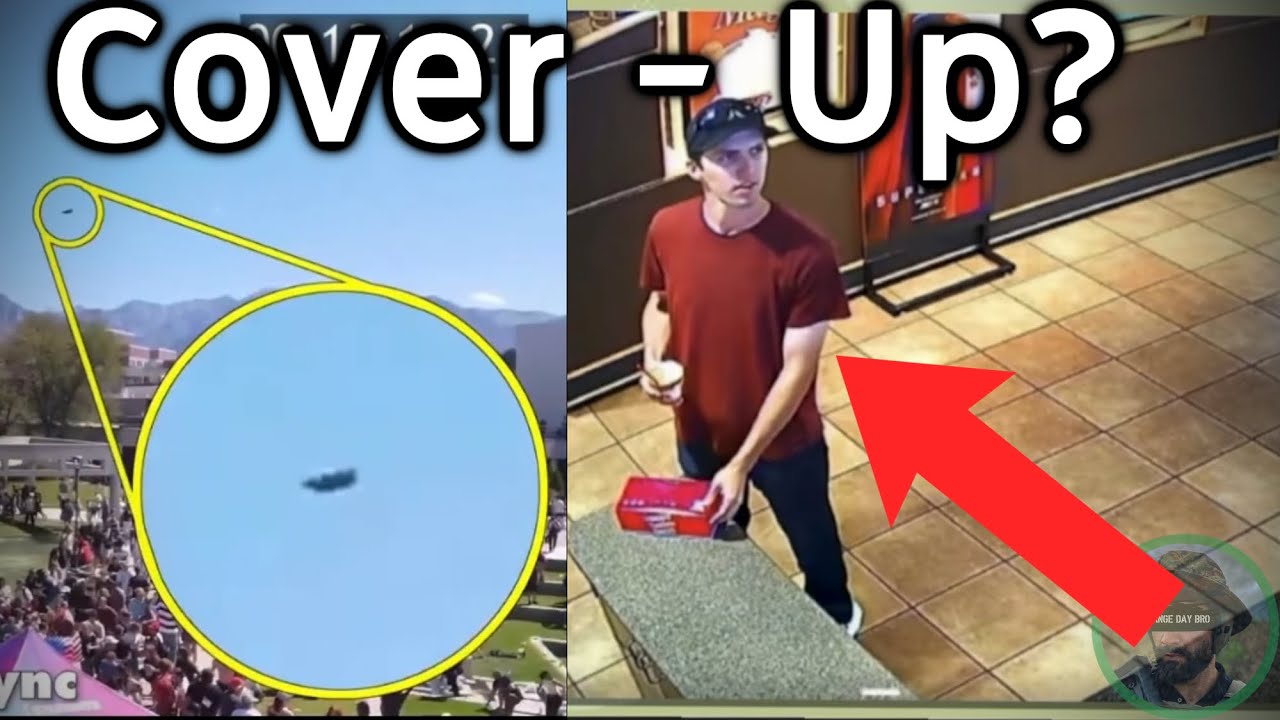
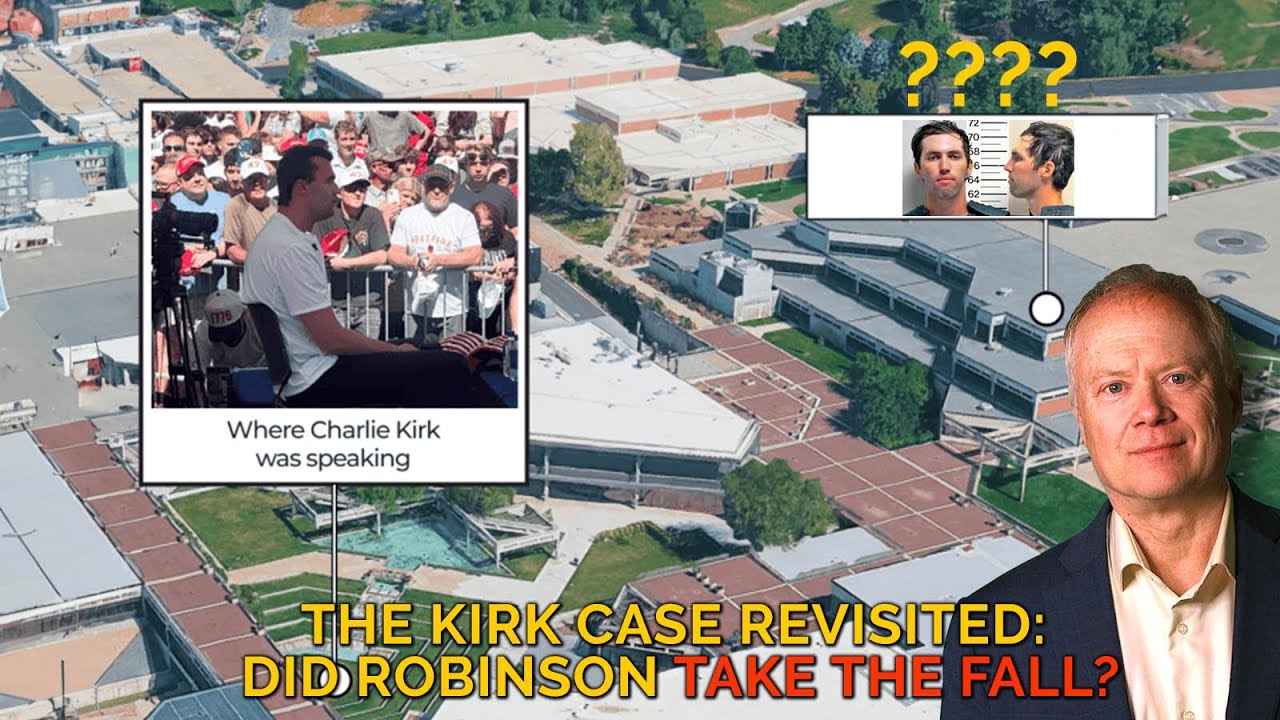
Ladies and gentlemen, welcome back to the channel for another Real Talk episode. Today we're going to continue the conversation about the Charlie Kirk assassination. We have some new information coming out from Steven Gardner as well as Candace Owens regarding the medical examiner's report. They kind of contradict each other, but we're going to go through that. We're also going to talk about an alternate theory. There was a car under the underpass that had the trunk open. I have a long email from one of you guys that we're going to go through briefly, as well as a new person of interest who's been caught on camera doing some shady things before Charlie even arrived. So, we're going to talk about all that as well as a potential sighting of the shooter. Let's get into it. All right, guys. Thank you so much for stopping by the channel. If you guys do want to support the channel and all the work that I'm doing here, please head to rangebro.com, check out our discounts page, our loadouts page, find some merch you might like. All of that stuff really helps me out. Also, a big goal of mine has been to try to recreate the backright shot that I'm alleging happened to Charlie Kirk with a ballistic dummy from Ballistic Dummy Labs. So, if you guys are even interested in seeing something like that, please consider leaving a super thanks down here on YouTube or joining the Patreon. All of that money will go directly towards me acquiring that ballistic dummy and also any other equipment that I might need to perform that test. But if you guys want to support that, you can leave a super thanks or join the Patreon and that would be much appreciated. All right, guys. So, we're going to start off with a medical examiner report and there's some contradicting evidence coming in from Candace Owens versus what Steven Gardner is saying. So, let's take a listen to what Steven Gardner is discussing with Lauren the Mortician here on his channel. >> Um, my we don't have the autopsy report. As I said, there there's new court documents out today. It even says the the medical examiner report is pending. Now, they're probably holding that information back from the public on purpose. Uh we don't necessarily know why, but um my understanding from speaking with a couple of people high up at Turning Point USA, they let me know that the the injury took place right below the jaw in the C2. The bullet crashed through C2 all the way through C7. And then they found the bullet lodged in that meaty area around T1, the thoracic first vertebrae. What what would what would the uh autopsy look like? Would they be trying to follow the path of the bullet? Would they be doing X-rays to find the bullet or a metal detector? What what does that look like in the event of a gunshot wound? So, uh, when they when they bring the body back, they do an external exam. They take pictures. They they do all the documenting that they can before they do the internal exam. And what that is involves, there's no metal detectors, but they do X-rays of the body that will reveal bullets, fragments, and trajectory before they do the dissection. >> Um, metal detectors are just too crude compared to imaging. We really want the imaging, especially in a murder investigation. Um, and um, >> would X-ray have been the main imaging? Because I like I would assume they avoid MRI because of metal, but is X-ray the number one? >> Yes. Yep. And it when you X-ray the body, it can also be helpful to them before they do any sort of dissection to know what they're looking for and where it where about the location of the wound and the fragments might be. Okay, so you heard it directly from his mouth. He is told by people high up at TPUSA specifically, very specifically mentions the C2 through the T1. Okay, so that's very important to keep in mind. Let's just move forward to Candace Owens now who has been absolutely crushing this investigation. Uh unlike our paid and elected or the appointed bureaucrats that are appointed by our elected officials, uh let's hear what Candace Owens has to say. because they did not recover a bullet from a 30 odd six. Hunters and military men rejoice. The place that we should start on today's show is with um well, I first and foremost have to tell you right at the top. I can't tell you exactly who the information came from or which parties were involved in giving me this information cuz I don't want to get anybody in trouble. But I can say that I have positively verified something about the injury that Charlie sustained to his neck that I think is going to go a very long way in terms of helping those of us who have been soothing, those of us who want answers, those of us who are dedicating our time to this because what we are being told by the authorities beggars belief. As John and Nina Mappin said, it just simply beggars belief. Um, we also want to make sure that we are presenting evidence and debunking one another where we can so that all of us can collectively zero in and build upon whatever facts we have in this uh decentralized investigation. This is about the injury. Okay. So, Andrew Kovette was I can tell you telling the truth in part when he wrote that very long tweet in which he tried to explain why there was no exit wound. Do you recall this? Uh, long story short, he said, I'm going to read it. I want to address some of the things that the lack of an exit wound uh, about the lack of an exit wound with Charlie. I'm usually not interested in delving into most of this kind of online chatter, and I apologize that this is somewhat graphic, but in this case, the fact that there wasn't an exit wound is probably another miracle, and I want people to know. I just spoke with the surgeon who worked on Charlie in the hospital. He said the bullet absolutely should have gone through, which is very normal for a high-powered, high velocity round. I've seen wounds from this caliber many times, and they always just go through everything. This would have taken a moose or two down an elk, etc., but it didn't go through. Charlie's body stopped it. I mentioned to his doctor that there were dozens of staff, students, and special guests standing directly behind Charlie on the other side of the tent, and he replied, "It was an absolute miracle that someone else didn't get killed. His bone was so healthy and the density was so so impressive that he's like the man of steel. It should have just gone through and through. It likely would have killed those standing behind him, too. In the end, the coroner did find the bullet just beneath the skin. Even in death, Charlie managed to save the lives of those around him. Remarkable. Miraculous. Now, keep that up for just >> I'm going to talk about this real quick. There's a couple issues. I've never actually dissected that tweet, but I just want to talk about a few things real quick. So, number one, it it is a miracle nobody else died. I'll say that. And I don't think it's really a miracle on God's part. I think it was a professional hit and they knew that they didn't want any other collateral damage like a oopsie with the Trump assassination. So, yeah, I think that wasn't a miracle. I think that was just by design. You have professionals carrying out a hit. Allegedly. Allegedly. But the other thing that he mentioned which was uh yeah it would normally go through a moose or two. That is very true. 30 odd 6 will go through everything as we've showed here on the channel before but hollow VFT shot through actual steel plates/4 in 3/4 in and/in steel plates and it punched through every single one every single time. So >> miraculous. Now keep that up for just a second because it's really around here. His bone was so healthy and the density was so so impressive that he's like the man of steel that we just went something's not right. Something not right. A lot of stuff is not right, but I just don't know why a surgeon would be saying something that actually only the medical examiner uh somebody that specializes in forensics could really contribute. Uh yes, a surgeon uh can tell you or actually any person with common sense can tell you that your bone density is better when you're younger, but this seemed a little bit too performative. Now, I can tell you, speaking of performative, we're going to talk about this new person of interest later that's very performative. >> Part that he is telling the truth about is that Charlie's neck indeed did stop the bullet without question. Okay? And this is going to dispel a lot of theories that are out there. And I'm telling you this 100%. Charlie Kirk was shot from the front and the bullet did not exit. Uh, and at least a fragment of the bullet was recovered from his neck. And I'm going, >> I love Candace Owens, but I learned a thing or two about not speaking absolutes from my last video, my my big video. So, speaking in absolutes right now for her is just making me feel a little uneasy for her because again, 100% that's a that's an absolute >> to tell you exactly where it was recovered from. I have fact checked this information from multiple sources. Now, I've actually been sitting on this uh for a little bit over a week, >> which we could really appreciate fact-checking from multiple sources. And Candace Owens of all people uh regarding this investigation has probably the most sources on the inside than anybody. But again, I just if she's questioning everything and questioning everybody up to Charlie's wife, how can you 100% fact check this from multiple people, unless you were there and you put the hand in the wound and you saw what you know with your own eyes and even then they can deceive you based off of how many people how many hands have touched the body or been around the body that these things happen to happen quickly. If it's this highprofile assassination, these things can happen very quickly. Even if you're there on the ground looking at it, unless it just happened and you just saw it, I mean, I would be questioning what my eyes are showing me. Especially after it's been to the hospital and after it's he's been to the mortician, he's been to gone through an autopsy. I mean, I would be questioning everything >> right around here. So, think about almost in line with your shoulder blade right in the center. Now, why is that helpful? Because it gives us a bullet trajectory. Okay? went in here where you saw that and it was stopped and a fragment was pulled from think right if you're just touching your spine in line um with your shoulder blade. >> Now it's important to note she did mention fragment a fragment was pulled. If there was no exit wound and they only recovered a fragment that means the rest of the bullet fragments are in Charlie's body somewhere. So why did they not retrieve all the fragments and put that bullet together? Weigh the bullet. Figure out the grain weight of the bullet. figure out what weapon the bullet could have potentially come from cuz it certainly didn't come from that 30 odd 6. And Candace goes on to say that, but she mentions the trajectory, but she's guaranteeing that the bullet came from a different trajectory, most likely from the front row, it sounds like entering here and exit and and not exiting, stopping just here behind Charlie. It's even almost an upward angle almost. So, this is what Candace is now alleging. She says she knows 100%. She's verified it multiple times through multiple sources. Now, let's go over to the Vajala VFT video where he dispels and he debunks the Steven Gardner claims that that TPUSA told him about the C2 through the T1. And then we'll discuss Candace's claims. So, you could see Vajal has already lined out the line here for the for the 10° of elevation. Now, the offset doesn't matter, but you can imagine that line is slightly offset to Charlie's left coming in from this angle. But, as you can see, the C2 is the second vertebrae down from the base of your skull. to the base of your skull, the C1, the atlas, and the C2, the axis. And that is directly in line with the jaw. So if Charlie would have been struck in the C2, as TP USA is alleging, that means the bullet would have had gone through his face instead of into his neck where we saw it enter. Okay? Again, I don't believe that's an entry wound, but let's just humor this story for a while, right? The only story that's been debunked is the FBI story. So, according to the FBI, if it would have gone in here, but according to TP USA, hit a C2, that bullet would have had to do some crazy things. Or you're going to say if the bullet directly struck the C2 and not not that cavitation that we saw caused the damage to the C2, that's the only way I could explain damage to the C2 without the bullet directly impacting it from the front shot narrative. Okay. If they found the bullet down here in his in his low back right here by the T1 and the bullet entered right here around the the C6 or C5 even maybe between C4, the only way the bullet touches that is if it came from the his back right or if it came uh you know at a different trajectory than what the FBI is alleging otherwise it would have gone through his face. So there's just no way that happened. Obviously his spine's not stopping at 30 odd 6. Again, shout out to Vajala VFT for dispelling this theory right here. Two of these things cannot be true at the same time. He either got shot from somewhere else or he got shot in his C2 first. Okay, now getting into Candace's claim. Candace mentions nothing about the C2 through C7. Okay, she says nothing about that. She says that the shot came in where we saw it come in, which is right around this area around the C5C6, I would guess. And it was trapped right here around the T1. Okay, so that is a slightly downward trajectory now that I'm looking at it. probably cuz again it's hard to tell on a skeleton where where Charlie was struck, but Charlie was struck relatively close to his collarbone. It was it was on the lower side of his neck in the front here. So I would imagine that's around the C6C7. So the bullet trajectory on that would be closer to like this coming in. Boom. And then slightly deflecting down and getting trapped back here in this media area of the back according to Candace. So that is a that is a I guess a downward trajectory as well. She admits that it wasn't from a 300 odd 6, but without actually collecting all the fragments or having a slug, there's really no way to know. I mean, we know it's not a 30 odd six because it would have blown out Charlie's back. It just would have. There's no denying that. But we don't know what caliber it could have been because they aren't being forthcoming about the fragment they received. Like, let's see that fragment. And they should have pulled all the fragments. If there's no exit wound, all the fragments are still in his body. And they should have every single one of them should have been pulled and put on a scale and been reconstructed into a bullet like as it was when it was fired. So you can determine rifling patterns, grain weight of the bullet and all the things that go on with ballistic forensics that these people specialize in. So the FBI is not new to any of this. They have the the leading foremost ballistic forensics lab. All the ballistic gel is based off of their formula for for making gelatin that simulates the human flesh as closely as possible. Like they have been doing this for decades. So they know how to get a bullet, how to get fragments, and how to figure out and trace what weapon it came from, what the caliber is. That's that's very simple work, especially when there's no exit wound, and you're not having to excavate the ground like you're in ancient Egypt to find bullet fragments, allegedly. Uh, but they already paved over the ground, so don't even talk about that. Okay, we talked about Candace's theory. We talked about Steven Gardens theory. Now, there's a new theory out that I want to brush upon really quickly that came from one of you guys, and it is here in my email. This is from this guy right here. here. I I'm not even going to try to pronounce that email. Um, but when it's coming from a faceless, nameless individual, it's very hard to determine what is actually real information, what is somebody who's actually looking for the truth versus what is deliberate disinformation. Now, am I accusing this guy of that? No, I have no reason to. Uh, this is a extremely detailed breakdown. We're not going to go through all this, but I know there's other guys who've already done videos on this guy's email because he sent it to multiple people. And I'm going to just go through and talk about what I think is just abhorently untrue. uh because there's a lot of there's one thing about this theory that is that I think is has legs and is worth looking into and that is the vehicle parked under the underpass here. So here's the images of the vehicle someone was running through the tunnel and captured he screenshotted a few frames from this video where you can see that there's something silhouetting itself looks like a front of a rifle here in the backseat of this vehicle. So as you guys can see right here he screenshotted this video where the trunk is open here at 28 seconds and at 23 seconds it's closed. So this So the trunk opens right before the shot and then it is closed after the shot when everybody's running by. It is very suspicious. It would match up with a more likely I'll say this, a more likely bullet trajectory. He has it bouncing off the bottom of the skull here. And again, I think this is for him to try to explain Steven Gardner's claims from TPUSA of it striking the C2 through the C7. But then again, this is making the assumption that the back of the human skull is strong enough to deflect a high power rifle caliber round that is traveling upwards of 23 to 2500 feet per second potentially in a 5.56 gun and to stop it on a dime and turn it 80° downward uh into his spine. That is a big assumption. Is it possible the bullet deflected from a hard bone? Absolutely. But I don't think it would look quite like this. I think it would look more along the lines of this trajectory here and still exiting out from the front where we saw the exit wound. In my opinion, I don't think you need to explain this C2 through C7. That's unverifiable. What is verifiable is what we saw, which in my opinion is very clearly an exit wound. And that is still a more likely trajectory for this bullet to be deflected off the back of his skull and out the front of his neck. Now, the same argument happens here for why we didn't see why Candace didn't see any blood in the video that she saw from the camera from behind. First of all, Candace was watching that on FaceTime. So, through a phone onto another screen, that is not good quality. Okay? Unless you unless there was an extreme amount of hemorrhaging from the back, you wouldn't be able to see that. And that is not consistent with entry wounds. Okay? Entry wound in a hairline, if you shoot a deer, you're going to have to look for the entry wound. Okay? Even with a 30 odd 6 or a 308, every time I'm shot a deer with a 308 or a 300 Blackout or any 30 cal bullet, I have to go and move the fur aside to find the entry wound. Okay? It's not glaring. It's not bleeding, spewing blood. That's not how entry wounds react. So, if he got shot in the directly in the back of the head as this guy is showing or if he got shot in his back right as I am alleging, either way, you would not see the entry wound, especially from a 5.56. The bullet is so small. It's a 22 diameter. It's a 22 caliber bullet. That's the diameter of the bullet. was 22 caliber the same as a regular 22 that you shoot squirrels with. So I think a much more likely trajectory is it if it did come in this way bouncing off the skull riding out and punching out the front here. This guy has a ton of explanations for this puff in the back of Charlie's shirt and and the shot coming from directly behind being the reason for that. I do think that there's legs and there's and there is a reason to look into the vehicle that was parked under the underpass because there is a very strange silhouette in the vehicle. So am I 100% on board with this? No. I still think it is way too close for comfort. If I'm the shooter, if I'm a professional shooter, I think that's a little too close. Personally, I'd like to be a lot more disconnected from the action once it happens. So, one last thing I want to debunk, I guess you can say, uh, is that he's trying to explain the official narrative, uh, based off of of the bullet still being retained in the back by the T1 and it striking the C2 through the C7 is my assumption cuz I don't know why how else you would come up with this theory cuz he's alleging that the chain that Charlie was wearing in the crucifix actually swung up and that the chain, the crucifix itself is what punctured Charlie's neck, going into his neck and then being yanked out is what caused the horrible blood loss that we saw. You don't have to be a ballistics expert to think about how silly that is, but it is super silly to think that a chain swinging upwards has enough pressure and velocity to enter somebody's neck and then come out and cause the bleeding that we saw. So once that chain started moving in the upwards direction from that temporary wound cavity, it started swinging up this way. It snapped when it was already in motion. It snaps here because it keeps the chest keeps expanding. The chain snaps. This side goes escape velocity and flies off the back which we saw. this side continues going up because that that cross has more mass than the rest of the chain. So, it continues going up and it lingers by Charlie's face. You can see it lingering up by the front of his face and and at no point in time did I see that thing enter his neck and come back out. Uh, in fact, it's the opposite of what I saw. What I saw was something poking through his neck, either a bone fragment or a bullet itself, uh, poking through his skin and then piercing his skin and and flying out onto the ground that was then renovated a day or two later. So, before I talk about what I still believe to be the most likely angle of the shot and a potential sighting of the shooter, I do just want to take a moment to shout out Jesse on fire in this video here where he's talking about Hunter Kak where he's a part of Destiny's liberal college tour mimicking Charlie Kirk. It's called the UNF America Tour and this guy is one of like the founding members listed on the website for this organization. And mind you, this is the last guy to speak to Charlie Kirk. And as he's talking to Charlie Kirk about gun violence is when the shot rings out. So, this whole time I've been pretty convinced that this was a deep state or professional type hit. But the motivation may be somewhere else. I'm not trying to point any fingers here, but it is very strange. Take a look at this guy here. >> We're to look at a second. All right, here we go. >> Explain to me why this young man that was standing in front of Charlie Kirk is practicing being outraged at seeing Charlie Kirk get shot or assassinated or whatever before he even arrives. So, this guy is caught on camera before Charlie Kirk even arrives to the campus practicing, performing his reaction to what he's about to see. So, does he have foreign knowledge? I mean, nothing's happening around him that would warrant him to react in this way. No, nobody's getting punched in the face or, you know, there's no nothing being thrown at him that we can see. So, he's just he's just performing and he's practicing just like, you know, football players run through their pregame. This dude's running through his pregame right here. >> Event do you know how many mass shooters there have been? >> Don't worry, we don't show anything. graphic >> in America over the last 10 years counting or not counting dang violence. >> This young man's name is Hunter Kak and for some reason he was seen practicing being horrified by something and then next thing you know something horrifying happened 15 minutes later. So I want to ask you, do you think this was a coincidence? And if not, why would somebody be in the crowd practicing being horrified and then out of nowhere something horrifying happened? So that's before Charlie arrived on campus >> like he knew it was about to happen. >> So obviously that would be circumstantial evidence that indicates that Hunter Kak probably or maybe knew that something was going to happen. He was rehearsing his reaction in advance. That's what the indication is, right? >> Very suspicious to say the least. And then he goes on to show um let's go ahead and let's just skip ahead and show you guys what he shows because he does a really good job showing all of this. We're going to back up to where he shows that Hunter Kak is a part of this UNF America organization that is uh founded by Destiny I believe. So >> video just in case you see anything that would potentially be interesting to the FBI and just in case there's any ambiguity about why Destiny is relevant to this. Destiny is the top bill of the Unfuck America tour which we have been reading the website from. And Hunter Kak is also right there from the Unfuck America tour. He's the last one who asked the question. Like we just established, he's the one that did the shady interview. Okay. >> Very sketchy to say the least. He goes on to talk about how this guy's dad actually works for Jimmy Kimmel. Jesse on fire brings all the receipts. So go ahead and check his video out. Very strange to say the least. Now let's go back to this angle because I want to show you guys where I believe the most likely shot came from. It came from right here is my humble opinion. And when you look at the trajectory of the bullet that I'm alleging, this spot right here keeps you out of sight from the cameras that are on this wall right here and from the vast majority of people filming because whether or not he shot through this crack right here, which again is very it looks very small on on on Google Maps right now, but it's actually like a foot and a half to two feet wide. Uh people who are there in person let me know that's actually much wider than it looks. And so if I'm a shooter and I want to stay out of the sight of everybody, I might be up against this wall here with a tripod or I might just be prone out on the top of this and shooting over the top. But either way, this matches the bullet trajectory uh that is most likely for the exit wound where we saw in the front of Charlie's neck. Again, an entry wound would not be able to be seen very easily uh through any kind of blurry imaging or even a high resolution camera is it's going to be very hard in a shaded area with with dark hair to pick up a bullet wound, entry wound. in in a hairy area. It's just the the hair is going to cover it up. And again, this is something I want to recreate. So, if you guys want to support that, please uh consider joining the Patreon and leaving a super thanks because I want to prove this to myself. I would like to let this go. I'd like to believe the official narrative if it was at all even remotely believable. But I still believe that this is the most likely area of the shooter. And we're going to hop over to X real quick and take a look at Adam Barthol Mule's video because at the time when I saw this, I didn't think anything of it. I thought this has to be either an undercover cop or one of Charlie Kirk's security detail. But what I want to show you guys real quick is right after the shots taken about 8 seconds later, you see the feet emerge of somebody who's sprinting across the hollow flags rooftop here uh through the restricted area and hops through the caution tape like it's nobody's business, like he's done it before. Again, you don't have to be a fed or professional assassin to know how to hop through caution tape in this manner, but it is it is a little peculiar. I'll say that because when I saw him go through it, I'm like, it looks like he's done that before. I wouldn't have thought to do that motion. Um, but then again, it might be it might just be nothing. But it is very peculiar. This guy could have easily dropped down uh through the opening over there by where the shooting took place. So, we see the shot took place just now. Everyone starts to scatter. He brings his camera up. He sets it down again. Over here is where I'm alleging the shot took place from. And then right here, you start to see this guy's feet emerge. So, if I go back frame by frame, I don't know how easily I can do that on X, but you see him right there. He emerges pretty far back. It's about 8 seconds after the shots taken that he emerges. And watch how he hops through that. Boom. Like an absolute professional, dude. Guy's not out of shape. He's a He's a hosp, but he's not out of shape. He's uh pretty thick, but he's getting after it. And he hops right through that caution tape like it's nobody's business, dude. I mean, can I slow this down on X? Yeah, we can. Let's do 25%. So, here we go. Shots's gone off that around 19 minutes and 12 seconds. 19 minutes and 11 seconds. Around there. So, let's go ahead and see how this plays out. So, we're 19:15. So, approximately 4 seconds later. This dude's like, "What? What just happened? which is again a reason I believe it was probably a suppressed 5.56 rifle with supersonic ammunition is what it sounded like to me. Now we're at 18 seconds and let's see where we can start to see the feet of this guy emerge. We don't see him yet. Maybe we do. Is that him right there? No, that's him right there. Okay, so you see him right there sprinting. So he emerges like 8 to 10 seconds later. You probably seen him a little earlier if you want to really break it down frame by frame, but I thought at first this has to be one of his security detail, but somebody brought up a really good point. There's a staircase right here. I guess it is pretty crowded, but if you're going down to rush and help your security team, that's where you're probably going down. You're probably pushing through these people and getting down here. You're not sprinting across the place that's wide open where there's nobody else, which is the again a reason I thought this couldn't be the assassin. There's no way this person is that dumb. If you were hidden back here from everybody, why would you drop down and run across an open open rooftop? It kind of defies all logic in my opinion of of being hidden and being in the setback. Uh, but look at him just absolutely I mean like I again I maybe I'm slow but I wouldn't have thought to run through it like that. That was a pretty slick move on his part. I just want to know who that guy is and why is he sprinting across the rooftop when everybody else is just ducking. Uh, everybody else is taking cover. Like how where is he running from? Did he hear something behind him? If he was standing over here, did he did he think the shooter was up here? Like, why is he sprinting this direction is just my biggest question. He looks like a man on a mission. I will say that. Who he works for, I have no clue. So, in summary, I think the most likely situation is still the one I originally presented. Uh, the fact that that wasn't blood splatter doesn't change anything for me. That was just the smoking gun. It it proved everything else that I had already been seeing. Also, Charlie's hair stood up in the back, which is just think about a pressure wave. When you slap uh your thigh or you slap a water bed or something, you see a pressure wave go out and you see it raise up and go down just like when you flip a hose or a rope. That's exactly what's happening with his hair cuz he's struck in the back of the head. So, his hair feels his whole skull has that pressure wave performed. And that's when you see his hair flip up and that's when you see the cavitation causes that massive poofing of his shirt. But again, I think if he struck from the back right here, just behind his his ear and his hairline somewhere, uh, the bullet's going to travel down, damage all these vertebrae that they say were damaged, and then kick out of his neck down here, as we saw. And I think it's very possible a fragment of the bullet is is placed around here. For those of you guys who aren't ballistics guy who don't shoot, who aren't familiar with different bullet types is most likely a kind kind of varmint round is my guess what was used because those expand extremely quickly and varmint rounds do fragment to cause as much damage and as and as little tissue as possible. So, it's very possible that a pedal or leaf or a fragment of the bullet broke off when it entered and ended up down here in this area. to confirm what Candace is saying and also to confirm what Steven Gardner is saying from TPUSA. The only thing that they're not being forthcoming about, whether it's the coroner or whoever you think is involved is the entry wound being in the back of the skull. I still believe if we could go back and and see Charlie's body before it was messed with and tampered with and examined and flown from here to there and inbalmed that we would see an entry wound there. But unfortunately, I don't know if we'll ever get the truth. And uh that is just the sad reality that we live in today, especially with AI and all of the misinformation and deliberate muddying of the waters, guys. So, I just want to say thank you guys for every single one of you supporting me in this endeavor. I love every single one of you guys. If you guys want to support the channel, please go to rangejro.com, check out our discounts page, our loadouts page, sign up for our email list, join the Patreon if you guys are interested in supporting me and getting those Ballistics Gel Dummies. Also, if we have any leftover money after the ballistics gel dummies are purchased, I'm going to take that money and buy a ballistic high-speed camera. That's going to allow me to capture extreme slow motion footage and actually catch the bullet, which is going to give us a lot more information about what the bullet is doing once it enters the ballistic gel. Uh, that is a large goal of mine and I would really appreciate any single one of you guys who could help me get there. So, with that being said, I love every single one of you guys. Just remember, Christ is king. It is not right versus left. Love your neighbor, okay? Drink a lot of water. Go outside. Hang out with your family. Don't get sucked into this as I've been kind of sucked into this recently and it's kind of dominated my my mental space and all of my my brain power and it does start to affect you and the people around you. So, make sure that you're focusing on your family and focusing on yourself and your own mental health, guys, because that's very very important. I love every single one of you guys. Crisis King. Drink a lot of water. Stay safe. Stay dangerous. Range day bro out.