The Top Five Myths About America's Founding Fathers That Your Teacher Got Wrong
Enjoying this? Share it with someone who needs to see it.
Up Next
Dennis Prager Explains Why Judging America's Founders by Modern Standards Reveals Left's Moral Arrogance
3:01
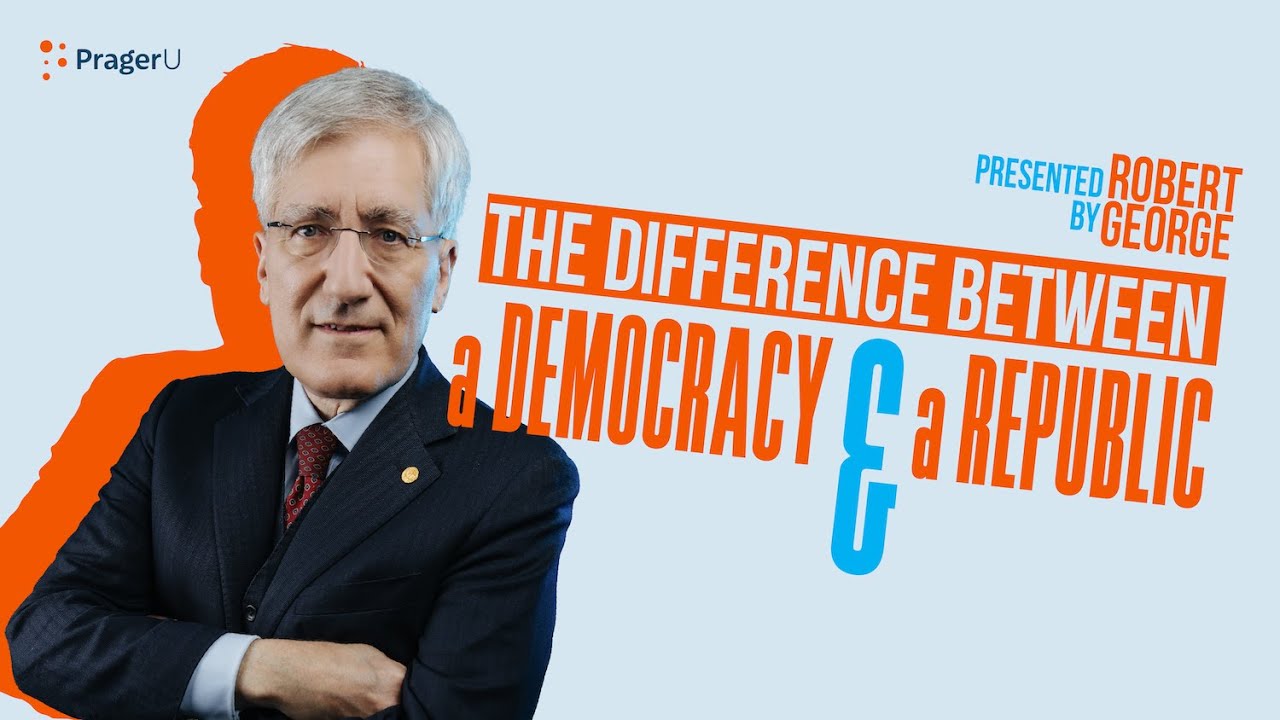
Robert George Explains Why Benjamin Franklin Called America a Republic Not a Democracy
5:55
Glenn Beck Draws the Line Between Cancel Culture and Accountability After Charlie Kirk Assassination
9:46
The Top Five Myths About America's Founding Fathers That Your Teacher Got Wrong
America's Founding Fathers have been systematically misrepresented in modern education and media. From claims that they were merely deists to assertions that they modeled democracy after Native American tribes, these narratives ignore documented historical evidence. The Continental Congress cited the Bible more than any other source, proclaimed national days of prayer in Jesus Christ's name, and designed a constitutional republic specifically for a moral people. This examination of primary sources, congressional records, and the Founders' own writings reveals a deliberate pattern of historical revisionism that contradicts the clear intentions and beliefs of the men who created the American system of government.
The claim that America's Founding Fathers were deists rather than Christians represents one of the most persistent myths in modern education. However, a comprehensive joint study by professors from Indiana University and the University of Houston analyzed 15,000 writings by 55 framers of the Constitution and found that the Bible constituted approximately 34% of all attributable quotes in the Founding Fathers' writings—more than any other source by a significant margin.
The Continental Congress's official proclamations were explicitly Christian. In 1774, the first prayer of the Continental Congress concluded: "All this we ask in the name and through the merits of Jesus Christ, thy son and our savior." Benjamin Franklin, often cited as a prime example of a deist Founder, recommended in 1787 that the Constitutional Convention open with prayer, stating: "I have lived, sir, a long time and the more I live, the more convincing proofs I see of this truth that God governs in the affairs of men. And if a sparrow cannot fall to the ground without his notice, is it probable that an empire can rise without his aid?"
Throughout the Revolutionary War, Congress proclaimed days of fasting and Thanksgiving annually. The 1776 proclamation asked citizens to "confess and bewail our manifold sins and transgressions and by a sincere repentance and amendment of life appease his God's righteous displeasure and through the merits and mediation of Jesus Christ obtain his pardon and forgiveness." The 1777 Thanksgiving proclamation similarly referenced "the merits of Jesus Christ" in asking God to "mercifully forgive and blot them out of remembrance."
The Founders' Views on Slavery
The second major myth suggests that the Founding Fathers wholeheartedly supported and endorsed slavery. While slavery was practiced during their time, the historical record shows the Founders recognized the institution needed to be reconciled with their Christian principles.
George Washington wrote in 1786: "There is not a man living who wishes more sincerely than I do to see a plan adopted for this abolition of slavery." Benjamin Franklin called slavery "an atrocious debasement of human nature" in 1789. John Adams stated in 1819 that "every measure of prudence ought to be assumed for the eventual total extirpation of slavery from the United States."
The Founders understood slavery contradicted their Christian beliefs and the principles they were establishing. In many instances, legal restrictions prevented slave owners from freeing enslaved people until their death. The suggestion that modern commentators have somehow discovered moral truths that escaped these men ignores their documented writings and the legal constraints of their era.
The Truth About Separation of Church and State
Perhaps the most misunderstood concept regarding the Founding Fathers involves the phrase "separation of church and state," which does not appear in the Constitution. The myth claims the Founders intended strict separation in the modern secularist sense.
The historical reality contradicts this interpretation. The First Congress approved the First Amendment and a national day of prayer to almighty God on the same day. Between April and May 1789, the government hired and paid chaplains for daily opening prayers in both the House and Senate. On September 25, 1789, the final Bill of Rights language passed, and the following day the Senate concurred with a Thanksgiving prayer resolution that President Washington issued as a proclamation.
The same Congress that wrote the First Amendment also funded military chaplains, Indian missions, and Bible distributions. The Supreme Court addressed this historical context in Marsh v. Chambers (1983), stating: "It can hardly be thought that in the same week members of the First Congress voted to appoint and to pay a chaplain for each house, and also vote to approve the draft of the First Amendment for submission to the states, that they intended the Establishment Clause of the Amendment to forbid what they had just declared acceptable."
The phrase "separation of church and state" comes from a private letter Thomas Jefferson wrote to the Danbury Baptists. The Founders' clear intention was to prevent establishment of a national denomination, not to exclude God from public life. Their actions demonstrate they proactively incorporated Christian principles and practices into government operations while ensuring no single denomination would be enforced.
The Native American Democracy Myth
A fourth myth claims the Founders modeled their representative government after Native American democratic systems, specifically the Iroquois Confederacy. This narrative lacks historical foundation.
The Iroquois Confederacy was a defense agreement between tribes, not a democracy. Native American tribes did not practice democracy in the form recognized by the American system. Members of various tribes fought against each other on both sides of the American Revolution, which contradicts the notion of a unified democratic model.
The Founders looked to classical sources like Rome and Greece for inspiration. The Federalist Papers were written under the pseudonym "Publius," referencing one of the founders of the Roman Republic. The extensive references to classical political philosophy in the Founders' writings demonstrate where they drew their ideas about representative government.
Universal Suffrage and One Person, One Vote
The fifth myth suggests the Founding Fathers believed in universal suffrage and intended a "one person, one vote" system. Historical records show the opposite was true.
At the 1787 Constitutional Convention, universal suffrage was not under consideration. The debates centered not on whether to expand voting rights universally, but specifically on how to restrict voting to ensure a representative government that reflected those who could build, serve, and sustain the country.
John Adams articulated this position clearly: "The doctrine of universal suffrage is so manifest a courtship to the mob as to need no comment. But it never can succeed for any length of time. These good creatures never look forward for two days. The mob must ever be in the power of government, government never in the power of the mob. Property is universally and eternally irreconcilable with universal suffrage."
Adams continued: "It is dangerous to open so fruitful a source of controversy and altercation as would be opened by attempting to alter the qualifications of voters. There will be no end to it. New claims will arise. Women will demand a vote. Lads from 12 to 21 will think their rights not enough attended to, and every man who has not a farthing will demand an equal with any other in all acts of state. It tends to confound and destroy all distinctions and prostrate all ranks to one common."
Adams deliberately listed various groups—women, young men, and those without property—to illustrate his point about limiting the franchise to those with "skin in the game." His concern was that those who did not contribute to the system should not be able to vote themselves benefits from those who did contribute. This position was intentional, proactive, and repeatedly stated throughout the founding documents and debates.
The Pattern of Historical Revisionism
These five myths share a common characteristic: they directly contradict primary source documents, congressional records, and the Founders' own extensive writings. The Founding Fathers addressed these issues repeatedly and explicitly, leaving little room for misinterpretation.
The Founders were Christians who believed America could only function as a constitutional representative republic adequate for a free but moral and Christian people. They designed a government to represent those who could create, sustain, and fight for a meaningful country. They were flawed men who understood their need for God, which is precisely why they built the representative republic they did.
The misrepresentation of the Founders' beliefs and intentions is not a matter of honest misinterpretation or innocent mistakes. The historical record is too clear and too consistent for these errors to be accidental. When educators and commentators claim the Founders were deists, supported slavery without reservation, intended strict secular government, modeled democracy after Native Americans, or desired universal suffrage, they are not making interpretive errors—they are contradicting documented historical facts.