2,422 videos 1,389,747,653 views US Joined Aug 30, 2018
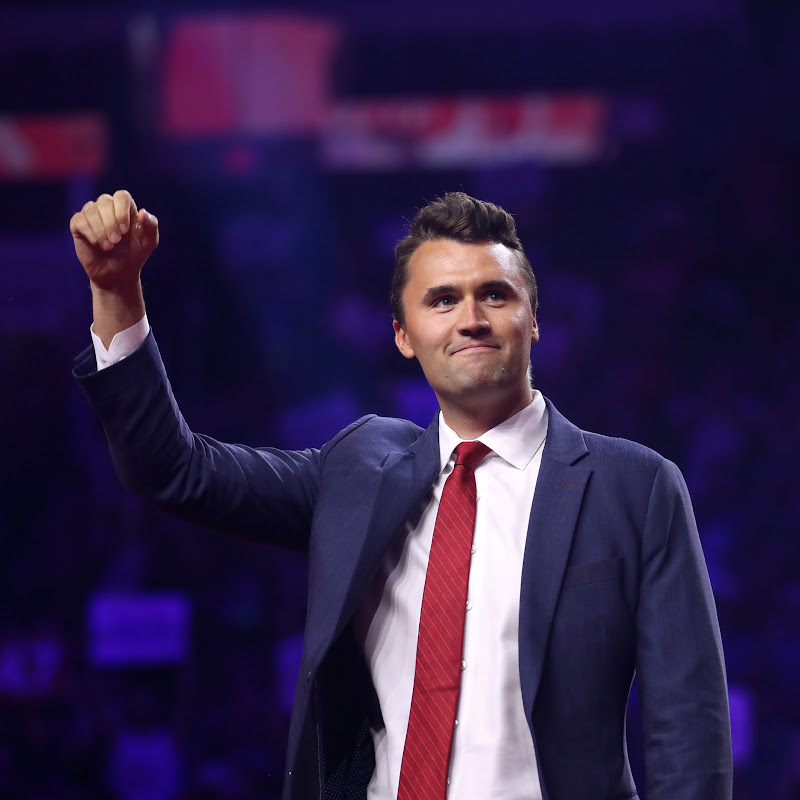
Charlie Kirk is the Founder and President of Turning Point USA, the largest and fastest growing conservative youth activist organization in the country with over 250,000 student members, over 150 full-time staff, and a presence on over 2,000 high school and college campuses nationwide. Charlie is also the Chairman of Students for Trump, which aims to activate one million new college voters on campuses in battleground states in the lead up to the 2020 presidential election. His social media reaches over 100 million people per month and according to Axios, he is one of the "top 10 most engaged" Twitter handles in the world. He is also the host of “The Charlie Kirk Show,” which regularly ranks among the top news shows on Apple podcast charts.
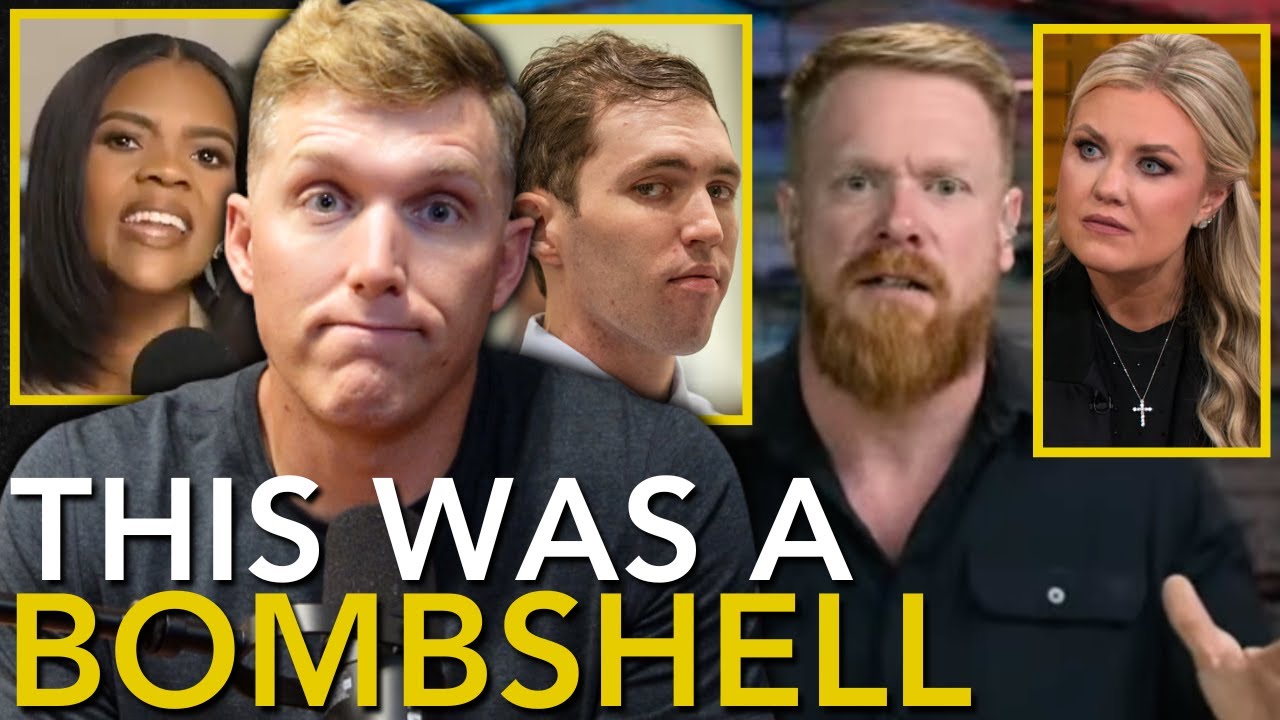
Viva Frei Reveals Why Candace Owens' Charlie Kirk Murder Conspiracy Collapsed in Andrew Wilson Debate
Viva Frei breaks down the debate between Candace Owens and Andrew Wilson over Charlie Kirk's murder, explaining why Owens failed to provide evidence for her conspiracy theories involving Israel, France, and Erika Kirk. After a year of speculation about Egyptian planes, trap doors, and foreign intelligence, Owens admitted her claims were based on opinion rather than facts. Frei argues this distraction has undermined efforts to address left-wing political violence and benefited figures like Hasan Piker, who celebrated the shift away from scrutinizing assassination culture. The discussion examines how COVID-era institutional distrust has fueled conspiratorial thinking and eroded standards for evidence-based reasoning.
The Debate That Exposed a Year of Conspiracy Theories
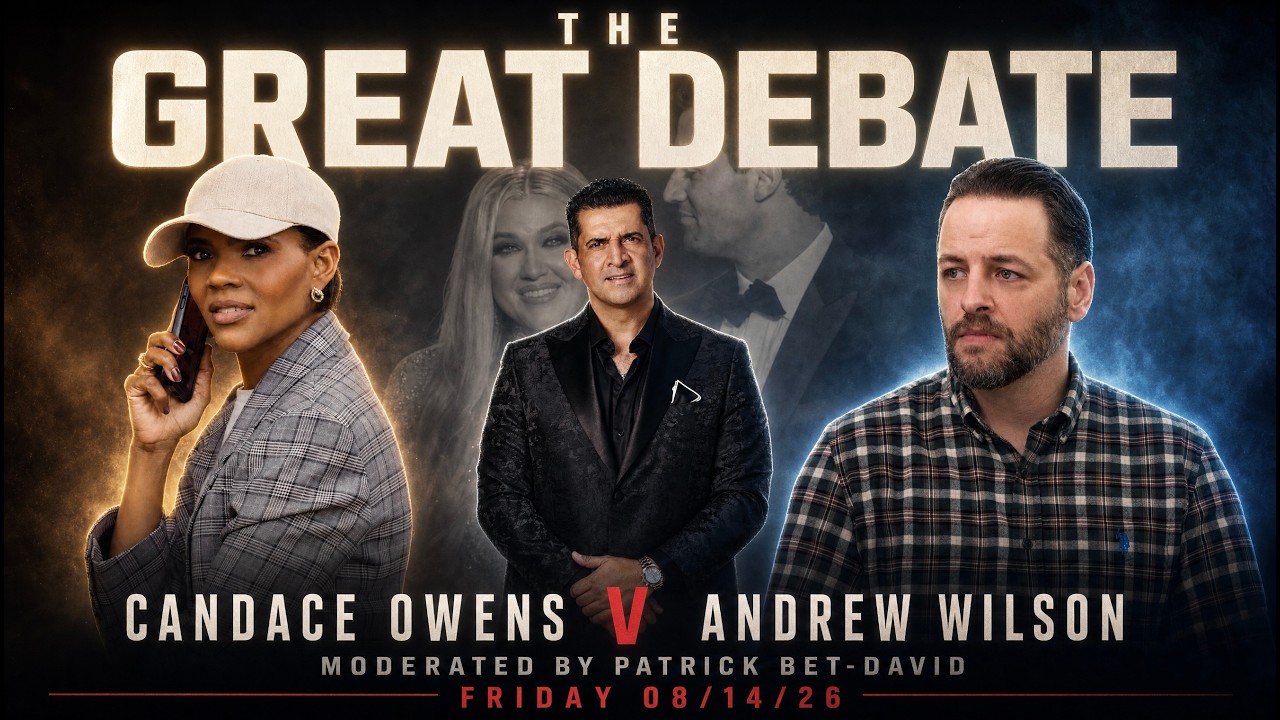
Viva Frei dissects the highly anticipated debate between Candace Owens and Andrew Wilson regarding the murder of Charlie Kirk. After spending nearly a year promoting various conspiracy theories about Kirk's death—including involvement by Israel, France, Egyptian planes, trap doors, and complicity by Erika Kirk—Owens found herself unable to substantiate her claims when directly challenged.
"What I wanted to know was what evidence Candace had to substantiate her hypothesis, her 'just asking questions' that Israel was somehow involved," Frei explains. "And her answer at the end of the day was a big fat nothing other than the call. And then she ended up with 'it's just my opinion.'"
Frei, who watched the debate closely, concluded that Andrew Wilson won despite making some "unforced errors," such as not being able to immediately name all seven charges against Tyler Robinson. The more significant issue, according to Frei, was Owens' complete inability to provide evidence for her extraordinary claims about foreign intelligence involvement in Kirk's murder.
From Confident Accusations to "Just My Opinion"
Throughout the year preceding the debate, Owens had made definitive statements suggesting Israeli involvement in Kirk's death. Video compilations show her stating "with full confidence" that she believed Israel and France were involved in the assassination. She claimed mounting evidence pointed to foreign actors and repeatedly questioned Erika Kirk's potential complicity.
However, when pressed during the debate, Owens repeatedly backed away from these claims, shifting to phrases like "I think" and "in my opinion" rather than providing substantiating evidence. At one point, she stated she has "zero confidence" that Tyler Robinson is culpable for the crime, despite the substantial evidence presented at the preliminary hearing.
"She there was a post, I forget which one, from when she says that he was betrayed by people who eulogized him," Frei notes. "The whole point is this was something of a day of reckoning for Candace catching up to her lies or call it exaggerations or theorizing."
The Panguish Steakhouse Receipt and Other Unsubstantiated Claims
One of the most glaring examples of Owens' unfounded theorizing involved a receipt from Panguish Cowboy Steakhouse. Owens had previously implied this receipt proved Tyler Robinson was at the restaurant during a crucial timeframe, which would have made it impossible for him to have sent text messages from another location at 11:00 PM.
During the debate, Owens had to concede that investigators never actually tied that receipt to Tyler Robinson—before or after her claims. Despite this, she had included it in her "official timeline" as evidence supporting Robinson's innocence.
"I don't understand how people don't get a little insulted," Frei remarks about Owens presenting this unverified information as fact. He points out that prosecutors have Cellebrite data from Robinson's phone, GPS data from his phone or car, and would not proceed with a case if they didn't have Robinson's whereabouts documented where they needed to be.
The Earpiece Controversy and Debate Tactics
Following the debate, conspiracy theories emerged claiming Andrew Wilson was wearing an earpiece and receiving coaching during the discussion. Video showing Wilson touching his ear circulated online as "proof" of cheating.
However, it was quickly clarified that Candace Owens' own production team provided earpieces to all debate participants because she insisted the debate take place in her studio. Everyone involved had an earpiece—it was standard equipment provided by her staff.
Frei dismisses the significance of such accusations: "The whole thing about debates like this is it's a game of chess in that everything is on the board and you can't really cheat in the game of chess short of taking a player's piece off the table. Everyone should be able to fact check in real time, hear what they're saying, and you flesh out the actual substance of the ideas."
How Hasan Piker Benefited From the Conspiracy Distraction
Perhaps the most damning aspect of Owens' year-long conspiracy theorizing came from an unexpected source: left-wing streamer Hasan Piker. In clips following the debate, Piker—who had blocked Owens years ago and was not previously a fan—praised her efforts.
"I am a fan now," Piker stated, explaining why: Owens had "successfully and single-handedly undermined the Republican initiative to martyrize Charlie Kirk and use that example to crack down on political descent."
Piker acknowledged that his "brain says, 'No, it's probably Tyler Robinson,'" but his "heart says, 'Go Candace, go keep cooking.'" This admission reveals how Owens' conspiracy theories served the political interests of those who oppose scrutiny of left-wing political violence.
"Can you imagine the idea that, God forbid, you should martyrize, colloquially speaking, a man who did nothing other than engage in peaceful rhetoric, a man who was nicer than 99.9% of the people out there, who engaged, who changed minds, and who was brutally murdered because of the manner in which he did it and his persuasive abilities while doing it," Frei observes. "That is literally a martyr beyond the religious sense."
Piker's celebration of Owens' work demonstrates how the conspiracy theories diverted attention from examining assassination culture, the Luigi Mangione case, and networks that might radicalize individuals toward political violence.
The Real Questions That Still Need Answers
While Frei firmly believes the evidence against Tyler Robinson presented at the preliminary hearing was compelling, he maintains there are legitimate questions that deserve investigation—questions distinct from Owens' unfounded theories about foreign intelligence.
"Has the FBI, Utah State investigators looked into, identified, and cleared each and every person who was involved in" radicalizing Robinson online, Frei asks. He believes foreign actors or domestic elements may have been "nudging" Robinson through online interactions.
"Nudging is a real thing that happens online," he explains. "These foreign actors, whether it's Russia, Iran, the CCP, they go into these chats, they nudge vulnerable young people to do radical things. It's a known proven phenomenon."
This represents the kind of evidence-based questioning that differs fundamentally from Owens' approach. Frei distinguishes between healthy skepticism about whether all radicalization elements have been identified versus wholesale rejection of substantial evidence without basis.
COVID Broke Our Collective Brains
The conversation turns to a broader cultural problem: the erosion of shared standards for evidence and truth in the post-COVID era.
"I genuinely think that COVID ruined so much because we were lied to on this mass scale and we basically haven't recovered from it," the host observes. "It was the first time the government really flexed all of its muscles to sort of shove down our throats a fake narrative. And now everything's fake to everybody even when the facts don't line up."
Frei agrees that institutional dishonesty has consequences: "People no longer know what to believe and they can therefore justify believing absolutely anything." He cites examples of institutional failures that legitimately damaged public trust—claims that the laptop was Russian disinformation, that COVID came from a wet market, that Thomas Crooks had no social media footprint, and the official narrative about Jeffrey Epstein's death.
"People have such distrust in the system they feel empowered to believe whatever the hell they want even if it's not at all remotely comparable to the things that they have a legitimate basis to be questioning the narrative," Frei explains.
Comparing Incomparable Cases
One manifestation of this broken reasoning appears in people comparing the Tyler Robinson case to the Brian Comer Jr. pipe bomber case from January 6th.
Frei points out the profound differences: "Brian Comer Jr. was arrested 5 years after the most thorough investigation in the history of America. After he was initially investigated and then not followed up on, a month after Steve Baker releases an exposé exposing who he thinks might be the January 6th pipe bomber, which is a Capitol Police officer, former and CIA employee, and that the evidence that they have against Brian Comer Jr. are household items bought over the period of 8 years."
By contrast, Tyler Robinson "turned himself in right or wrong 33 hours later after his parents allegedly identified him after his boyfriend identified him." The evidentiary foundation and investigative circumstances differ dramatically, yet conspiracy-minded individuals treat the cases as equivalent.
"People have lost their ability to think critically," Frei laments, "and they can justify it because they have zero trust in the institutions."
The Two Types of Lies
Frei offers a framework for understanding dishonesty that applies to Owens' claims: "There's two types of lies. Saying something you know to be false when you say it or positively asserting something that you have no legitimate basis to positively assert when you do it."
He places Owens firmly in the second category—not necessarily knowing her claims were false, but making definitive statements without adequate foundation. This represents a fundamental failure of intellectual responsibility, particularly for someone with a large platform discussing a murder case.
The distinction matters because it affects how audiences should evaluate information sources. A conspiracy theorist may sincerely believe their theories while still leading audiences astray through reckless assertion of unsubstantiated claims.
Burden Shifting and Absence of Evidence
A recurring problem in Owens' approach was shifting the burden of proof and treating absence of evidence as evidence itself.
"It's worse than that," Frei says about the burden-shifting. "What they have and what they've been playing with the entire time is the absence of evidence is the evidence. I make the accusation and you know, okay, it can hold up on the mens rea element, the intent. Yeah, sure. You can make an argument that Israel, Netanyahu, would want to take out Charlie if he was going to lead an entire generation of conservatives to switch their views on Israel."
But the same logic, Frei points out, would implicate the transgender activist community even more strongly: "That same argument holds not just as true, but more true for the MMIW2SLGBTQI plus community who Charlie was very critical of, and he was killed in that moment itself."
The fact that investigators haven't publicly revealed every detail about potential foreign involvement became, in Owens' narrative, evidence of cover-up rather than standard investigative practice.
The Preliminary Hearing Standard vs. Trial Standard
Frei emphasizes an important legal distinction that conspiracy theorists often miss: the difference between the preliminary hearing stage and trial.
"Tyler is innocent unless proven guilty right now," he notes. "To have a debate as to the overwhelming nature of the evidence is a misguided, premature debate because they haven't had all of the evidence nor has the evidence been tested. What you say right now is it's overwhelmingly the case, the probable cause is going to have been met."
At the preliminary hearing, the standard is whether there's probable cause to proceed to trial, not whether guilt has been proven beyond reasonable doubt. Evidence presented at this stage hasn't been subjected to full cross-examination or challenged with defense evidence.
Many of the "analysts" claiming the case is weak don't understand that the defense cannot challenge evidence at the preliminary hearing in the same way they would at trial. The defense chose not to present contradictory evidence at this stage—a strategic decision, not evidence of inability to challenge the prosecution's case.
Living in a Post-Truth Narrative
The host frames the broader cultural concern: "We are living in a post-truth online narrative and I'm genuinely worried it's going to cook people's brains even further and that this will not stay online. This will impact our electoral politics. This will impact our constitutional republic."
The Lindsay Clancy case was cited as another example—a woman who admits to killing her three children but whose defense team is attempting to excuse the murders based on Zoloft and postpartum depression. The case represents a broader phenomenon where objective facts become subordinate to preferred narratives.
Frei acknowledges the challenge: "How do you bring back a little bit of sanity? It's top down and bottom up. People have to understand that skepticism is one thing, but conspiracy psychosis is entirely another."
The Path Forward
Frei believes accountability will eventually come through the passage of time and the revelation of facts: "You're going to find out whose assessment of reality or assessment of the present proves to be more accurate over time. You may not know it in the moment, but when I was taking a lot of flack for just asking the questions about the Panguish receipt, the truth will come out at the end of the day. Sunlight is the greatest disinfectant."
He argues that people need to relearn critical thinking: "Question everything. And it doesn't mean that everything that the feds are going to tell you is going to be a lie. Candace comes out and says 0% confidence that Tyler Robinson's the right person. She's operating on a foregone conclusion that the text messages, Discord chats are all falsified."
If the evidence against Robinson does prove to be falsified—involving surveillance footage, family member identifications, DNA, fingerprints, geolocation data, and testimony from Robinson's boyfriend—it would represent a conspiracy involving 17 agencies and one of the most massive cover-ups in American history.
"I don't trust the government to park a car, let alone draft a conspiracy this sweeping and expansive and nobody even talk about it," the host notes, highlighting the implausibility of such a scenario.
Why the Debate Matters
Despite initial hesitation about covering the debate, the host concludes it was important to address: "This has become a big story. There's no denying it. And I actually think that a lot of people knew that she has a bigger following, so it was going to be like she won, she won, he lost, he lost. I happen to think that this debate will age extremely well because the things that she admitted to were just crazy."
The admissions included acknowledging she had no positive evidence for foreign involvement, couldn't substantiate the receipt timeline, was relying on sources she wouldn't reveal, and was ultimately expressing opinions rather than documenting facts. For someone who spent a year making definitive claims, these concessions were remarkable.
"What have you been talking about for 300 hours?" the host asks, summarizing the core problem. A year of content built on speculation, innuendo, and conspiracy theories collapsed when subjected to direct questioning about evidence.
Frei's analysis suggests that while Owens may have "won" in terms of social media response from her larger following, the substance of the debate revealed the hollowness of her claims—a fact that will become more apparent as the case proceeds and her predictions fail to materialize.