Up Next
Brian Entin Provides Inside Look at Tyler Robinson Hearing After Charlie Kirk Shooting at Utah Valley University
19:50
JP Sears Examines Death Penalty Charges Against Charlie Kirk's Alleged Killer Tyler James Robinson
17:14
Inside the Charlie Kirk Investigation: Exclusive Interview with Lance Twiggs Family Member and New Details from Utah Valley University
30:43
Angenette Levy Exposes Major Conflict of Interest in Charlie Kirk Murder Case Legal Battle
Angenette Levy examines a potential bombshell in the prosecution of Tyler Robinson, accused of murdering Charlie Kirk at Utah Valley University. Robinson's defense team demands the entire Utah County Attorney's Office be disqualified from the case, claiming a high-ranking prosecutor has a personal connection to a witness who was present during the shooting. Levy breaks down the conflict of interest motion, revealing harrowing witness accounts from the September 10th attack and what this legal challenge could mean for the high-profile murder case. With 3,000 witnesses and the death penalty on the table, this motion could reshape the entire prosecution.
Prosecution Team Faces Disqualification Motion
Tyler Robinson, the man accused of murdering conservative commentator Charlie Kirk, is attempting to have the entire Utah County Attorney's Office removed from his case. Robinson's defense attorneys have filed a motion claiming a serious conflict of interest exists within the prosecution team, one that could compromise their client's right to a fair trial.
The conflict centers on a high-ranking member of the prosecution team who has a personal relationship with a direct witness to the shooting. According to court documents, this prosecutor received text messages from a family member who was present on the Utah Valley University campus on September 10th when Kirk was shot and killed during his Prove Me Wrong tour.
The text exchange began at 12:25 p.m., just two minutes after Kirk was shot at 12:23 p.m. The family member texted the prosecutor's family group chat: "Someone got shot." Almost immediately after, they texted: "I'm okay. Everyone is going inside." At 12:26 p.m., they sent another message: "Charlie got shot." At 12:30 p.m., they described what witnesses were saying: "People say he was shot in the neck and his head like tilted or something."
The prosecutor responded at 12:33 p.m., asking: "Did you hear a gunshot or what sounded like a gunshot?" The family member replied at 12:38 p.m.: "I for sure heard it. Everyone started screaming and running. A few people said they saw the shot hit his neck. Not sure."
The Legal Argument for Disqualification
Robinson's attorneys argue that expecting this prosecutor to separate their natural instinct to protect family from their professional duty is unrealistic. They wrote in their motion: "Expecting the prosecution team member to separate his role as a [title redacted] with the wholly natural instinct to protect and shield his family member from past and future harm from his role in the prosecution of the individual alleged to have caused harm to many including his family member is not practical and defies common human experience."
The defense team emphasizes they are not questioning the prosecutor's integrity. Instead, they argue that the circumstances present "a significant risk that the prosecution team member's personal family interests may materially limit his ability to represent the state of Utah in these proceedings in the manner that is ethically required."
According to the motion, the prosecutor discussed his family member's presence at the event with others in the office at the time and also discussed the exchange and potential conflict issue with the entire prosecution team prior to disclosure to the defense. This sharing of information, the defense argues, has tainted the entire Utah County Attorney's Office.
The Trauma Witnessed on Campus
The 48-page motion includes vivid, handwritten statements from witnesses who were present during the shooting, painting a picture of absolute terror. These accounts demonstrate the level of trauma experienced by those on campus that day, including the prosecutor's family member.
One witness wrote: "We were in shock in the crowd because there was so much blood. I was pulled to the ground and started praying. I thought I was about to die. I was on the ground wondering when the bullet was going to hit my back. I was so terrified that they wouldn't find the shooter and he'd start aiming at us."
Another witness stated: "Right away, everyone was on the ground trying to protect themselves from the possibility of more shots. I remember thinking I could not get low enough, and I was instantly scared. I struggled to text my mom that I was safe, was shaking hands."
One particularly graphic account described the moment of the shooting: "I heard a gunshot. It definitely sounded like it came from up high and not ground level. After my eyes flicked into that direction, not even a second later, I looked back at Charlie, and that's when I saw the blood coming out like a fountain coming out of his neck. I saw him slump back in his chair and his head bobbed down to what would have been his right. That was the last look at Charlie I got as the crowd all collectively dropped to the ground."
The motion also describes people who didn't witness the shooting directly but were locked down in classrooms and experienced panic attacks because of the incident. The defense argues that approximately 3,000 people witnessed or were affected by Kirk's murder, but only one has a relationship with a member of the prosecution team.
What Happened on September 10th
Tyler Robinson faces charges including aggravated murder and the possibility of the death penalty. Prosecutors allege that Robinson took a .306 rifle his grandfather had given him to the Utah Valley University campus, climbed onto a roof, and fired a single shot that hit Kirk in the neck as he was answering a question from an audience member. Kirk was killed instantly.
The scene descended into chaos. A manhunt for the killer began immediately. Within hours, there were false alarms, with the FBI director announcing an arrest, but then the search resumed. Surveillance images of a young man in a black t-shirt were released, along with video of a person running on a rooftop and jumping from it.
More than 30 hours later, officials announced that 22-year-old Tyler Robinson was the shooter. His family reportedly recognized him from the images and convinced him to turn himself in.
Evidence of Motive
Utah County Attorney Jeff Gray revealed details about Robinson's possible motive during court proceedings. Robinson's mother told police that on September 11th, the day after the shooting, she saw photos of the shooter in the news and thought the person looked like her son. She called Robinson and asked where he was. He claimed he was at home sick and had also been home sick on September 10th.
Robinson's mother explained to police that over the last year or so, Robinson had become more political and had started to lean more to the left, becoming more pro-gay and trans rights-oriented. She stated that Robinson began dating his roommate, a biological male who was transitioning genders. This resulted in several discussions with family members, particularly between Robinson and his father, who have very different political views.
In one conversation before the shooting, Robinson mentioned that Charlie Kirk would be holding an event at UVU. Robinson's father said it was a stupid venue for the event. Robinson accused Kirk of spreading hate.
The Damning Text Messages
Text messages between Robinson and his transgender roommate amount to what prosecutors consider a confession. The exchange included:
Roommate: "How long have you been planning this?"
Robinson: "A bit over a week, I believe. I can get close to it, but there is a squad car parked right by it. I think they already swept that spot, but I don't want to chance it."
Robinson continued: "I'm wishing I had circled back and grabbed it as soon as I got to my vehicle. I'm worried what my old man would do if I didn't bring back Grandpa's rifle. IDK if it's had a serial number, but it wouldn't trace to me. I worry about Prince. I had to leave it in a bush where I changed outfits. Didn't have the ability or time to bring it with. I might have to abandon it and hope they don't find Prince. How the f will I explain losing it to my old man? Only thing I left was the rifle wrapped in a towel."
Robinson also wrote: "Remember how I was engraving bullets? The effing messages are mostly a big meme. If I see notice Bulge UW on Fox News, I might have a stroke. All right, I'm gonna have to leave it. That really effing sucks. Judging from today, I'd say Grandpa's Gun does just fine. IDK, I think that was a 2K dollar scope. Wink wink."
He then instructed his roommate: "Delete this exchange."
Later, Robinson texted: "My dad wants photos of the rifle. He says grandpa wants to know who has what. The feds released a photo of the rifle and it is very unique. He's calling me. RN, not answering. Since Trump got into office, my dad has been pretty diehard MAGA. I'm gonna turn myself in willingly. One of my neighbors here is a deputy for the sheriff. Again, you are all I worry about. Love."
Robinson also warned his roommate: "Don't talk to the media. Please don't take any interviews or make any comments. If any police ask you questions, ask for a lawyer and stay silent."
Expert Legal Analysis
Criminal defense attorney Sky Lazaro, who practices in the Salt Lake City area, provided analysis of the disqualification motion. She believes the defense team made the right call in filing this challenge.
"I think this was a good argument for the defense team to make. I think this is one that has to be made," Lazaro explained. "They were given information that someone in a supervisory role had a family member who was at the shooting and was texting them in real time. And really what they're saying is look, we're not attacking this person's integrity. What we're saying is we need to maintain the impropriety in this and essentially guarantee that Mr. Robinson gets a fair trial."
Lazaro emphasized that the concern centers on whether the prosecutor can separate personal feelings from professional duty. "The concern is, you know, their personal feelings whether or not this family member is going to be a witness for the prosecution or not. You know how does that affect their ability to serve as a prosecutor whose client is the state of Utah in this case?"
She noted that prosecutors are human beings like everyone else. "If you think about it, you know, how would we feel or anyone else feel if their son or daughter or close family member is texting them, you know, there's a shooting, you know, I'm afraid I'm going to die. I think those are those evoke very strong emotions in people, especially if it, you know, when you're talking about a child or a young adult. Your role as a parent is to protect them the best you can. I think those are really hard things to set aside."
What Disqualification Would Mean
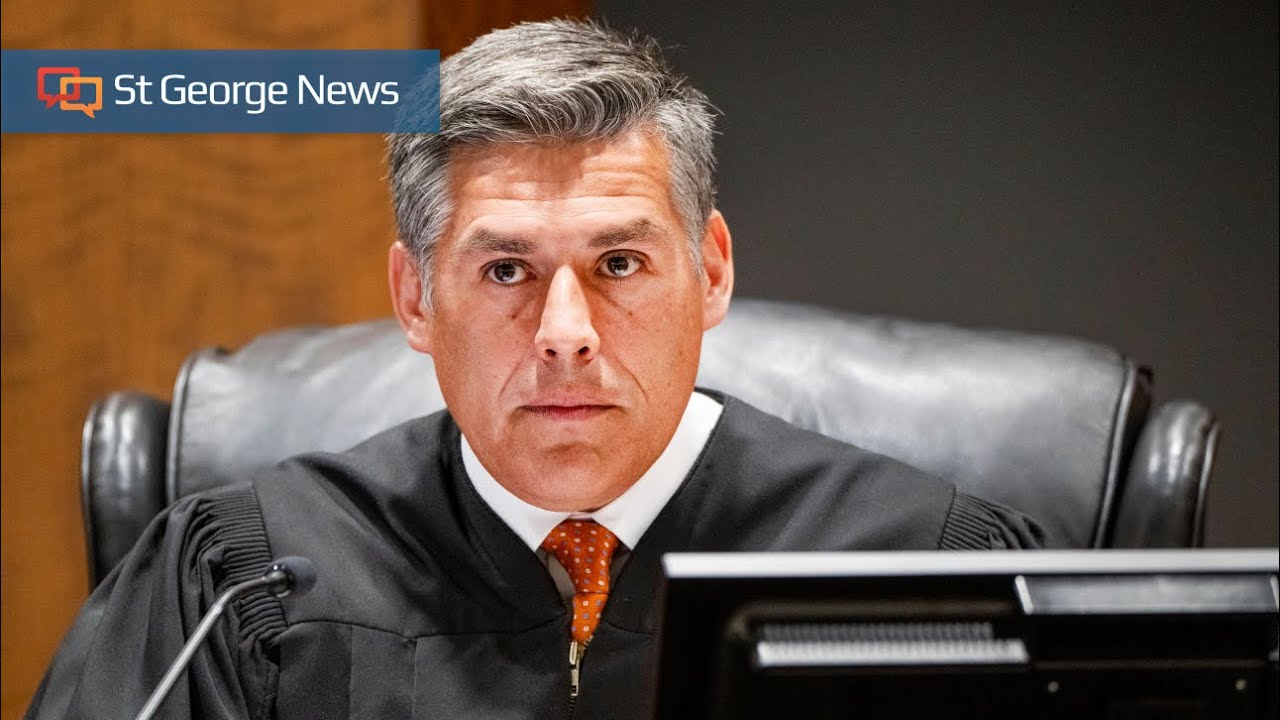
If Judge Grath grants the motion to disqualify the Utah County Attorney's Office, the case would be transferred to another county attorney's office or a special prosecution team would be appointed. The charges against Robinson would remain unchanged.
"It would just get transferred to another county attorney's office. So, it would go a county over. It'd go to Salt Lake or it'd go to Wasatch or, you know, somebody else would come in and take over the prosecution of this," Lazaro explained. "Or the alternative is they could bring in a special appointed prosecution team to do this instead."
Lazaro noted that in some circumstances, one member's conflict does not necessarily bar the prosecution by the entire office. However, in this case, the defense argues that the prosecutor shared information about the conflict with the entire prosecution team, including the county attorney, which has tainted the whole office.
Public Perception and Fair Trial Rights
Beyond the strict legal arguments, Lazaro emphasized the importance of public perception in maintaining faith in the justice system. "We want the public to be comfortable that you can get a fair trial. Like we want people to believe that and they should believe that. It's a constitutional right in the United States. And so when you have a situation like this where even just public perception can be damaged by something like this, I think you really have to take that into consideration, especially in a case like this that's going to be scrutinized over and over and over again."
She pointed out that if Robinson is convicted and sentenced to death, the case will face appeals for years to come. A conflict of interest issue could become grounds for overturning a conviction. "This is a trial if if you know Mr. Robinson is convicted and sentenced to death, we're going to see appeals on this case for a very long time. And I would think the judge is going to really take into consideration what is the perception of this."
The Death Penalty Question
Another major battle looming in the case concerns the death penalty itself. Robinson's defense team has indicated they are waiting to see what aggravating evidence the prosecution will present to justify seeking capital punishment.
Under Utah law, specific aggravating factors must be present to seek the death penalty. From what has been publicly disclosed, the primary aggravating factor appears to be that Robinson allegedly shot into a crowd, potentially endangering other individuals beyond Kirk.
Lazaro expects the defense to challenge this aggressively. "Everybody came out and called for the death penalty really really early in this case, far earlier than they needed to. They can wait until after a preliminary hearing to actually file an intent to seek the death penalty where they've been able to put out the evidence to satisfy those aggravating factors in order to establish a death penalty case. We're not even to that point."
She noted that Utah's statute provides clear guidance on what constitutes aggravating factors. "Really what I see from what they've put out is the only thing is what you mentioned that he shot into a crowd. Did that really endanger other individuals? And did he have an intent even, you know, or could another individual been harmed? Because really that's what they have to show is not just that the deceased person was the target, but that there was something else."
What Comes Next
The prosecution will file a response to the disqualification motion, likely arguing that there were 3,000 people present at the shooting, they disclosed the conflict, and they are professionals capable of handling the case appropriately.
Lazaro anticipates this response: "When they disclosed it, I'm sure that there was conversations where the defense team said, 'Look, I think you need to recuse this person or the office or find a way to wall it off.' And the response then from the filing appears to have been, 'Look, they're not a witness. We don't think it's a conflict. We're fine.'"
However, she believes the defense position remains strong even if the prosecutor's integrity is beyond question. "Giving them the entire benefit of the doubt that this is a very experienced prosecutor, they're very good at their job, they're very professional at their job. It still comes back down to one public perception about fair trials."
Tyler Robinson is scheduled to appear in court again in January, when the judge may rule on the disqualification motion. The decision could significantly impact the trajectory of this high-profile murder case.
Video Transcript
We do need to deal with the
disqualification motion just in case.
So, it doesn't seem like a good idea to
set it before we have the
disqualification hearing.
>> The man accused of murdering Charlie
Kirk wants the prosecution team kicked
off his case. Tyler Robinson's attorneys
say the entire Utah County attorney's
office has to go because of a conflict
of interest as they reveal new details
from witnesses who saw that horrific
murder that day. I go through all of it
and I look at whether there is really a
conflict or not. I'm Anette Levy and
this is Crime Fix.
[Music]
You know, there is a reason that Morgan
and Morgan is America's largest personal
injury law firm, and it's because the
firm wins a lot. It has more than a
thousand lawyers who've recovered $25
billion for more than 500,000 clients.
In the last few months alone, a client
in Florida received $12 million when the
insurance company offered only $350,000.
In Pennsylvania, another client was
awarded $26 million. That was 40 times
the insurers's offer. Morgan and Morgan
makes it really easy to fight for what
you deserve. You can even start a claim
from your phone. So, if you are ever
injured, you can start a claim at
forthepeople.com/crimefix.
Click the link below or scan that QR
code that you see right there on your
screen.
There could be a big big problem with
the prosecution team in Charlie Kirk's
murder case, and it has to do with
someone apparently pretty high up on the
food chain on the team. Important enough
that this person was with the county
attorney when evidence was being
presented to the grand jury to indict
Tyler Robinson. Robinson faces a laundry
list of charges including aggravated
murder and the possibility of the death
penalty if he's convicted in the murder
of Charlie Kirk. Robinson is accused of
taking a 306 rifle that his grandfather
gave to him to the campus of Utah Valley
University and climbing onto a roof and
firing a single shot that hit Kirk in
the neck as he was answering a question
from a member of the audience during his
Prove Me Wrong tour on September 10th.
Kirk was killed instantly. The scene was
horrific. A manhunt for the killer began
in an instant. There were false alarms
with news of an arrest being announced
by the FBI director within hours, but
then the manhunt was on again.
Surveillance images of a young man in a
black t-shirt were released along with
video of a person running on a rooftop
and jumping from it. More than 30 hours
later, officials in Utah announced that
22-year-old Tyler Robinson was the
shooter. his family reportedly
recognizing him and convincing him that
turning himself in was the right thing
to do. Hints of a motive surfaced from
County Attorney Jeff Gray.
>> Robinson's mother stated that f the
following to police. On September 11th,
2025, the day after the shooting,
Robinson's mother saw the photo of the
shooter in the news and thought the
shooter looked like her son.
Robinson's mother called her son
and asked him where he was. He said he
was at home sick and that he had also
been at home homesick on September 10th.
Robinson's mother expressed concern to
her husband that the suspect shooter
looked like Robinson. Robinson's father
agreed.
Robinson's mother explained that over
the last year or so, Robinson had become
more political
and had started to lean more to the
left, becoming more pro-gay and trans
rightsoriented.
She stated that Robinson began to date
his roommate, a biological male who was
transi trans transitioning genders.
This resulted in several discussions
with family members, but especially
between Robinson and his father who have
very different political views. In one
conversation before the shooting,
Robinson mentioned that Charlie Kirk
would be holding an event at UVU, which
Robert Robinson said was a stupid venue
for the event. Robinson accused Kirk of
spreading hate. Now, the internet has
been full of theories questioning
whether Robinson was the only person
involved or whether he was the shooter
at all. Some questioning those text
messages that he sent to his transgender
roommate that amount to a confession.
>> Roommate, how long have you been
planning this Robinson? A bit over a
week, I believe. I can get close to it,
but there is a squad car parked right by
it. I think they already swept that
spot, but I don't want to chance it.
Robinson again. I'm wishing I had
circled back and grabbed it as soon as I
got to my vehicle. I'm worried what my
old man would do if I didn't bring back
Grandpa's rifle.
Ide if it's had a serial number, but it
wouldn't trace to me. I worry about
Prince. I had to leave it in a bush
where I changed outfits. didn't have the
ability or time to bring it with. I
might have to abandon it and hope they
don't find Prince.
How the f will I explain losing it to my
old man? Only thing I left was the
rapple was the rifle wrapped in a towel.
Remember how I was engraving bullets?
The effing messages are mostly a big
meme. If I see notice Bulge UW on Fox
New, I might have a stroke. All right,
I'm gonna have to leave it. That really
effing sucks.
Judging from today, I'd say Grandpa's
Gun does just fine. IDK, I think that
was a two thou a 2K dollar scope.
Wink wink.
Um, Robinson, Robinson again, delete
this exchange
again. Robinson, my dad wants photos of
the rifle. He says grandpa wants to know
who has what. The feds released a photo
of the rifle and it is very unique. He's
calling me. RN, not answering. Robinson.
Since Trump got into office, my dad has
been pretty diehard MAGA.
Robinson. I'm gonna turn myself in
willingly. One of my neighbors here is a
deputy for the sheriff.
Again, you are all I worry about. Love.
That came from Robinson. Roommate, I'm
much more worried about you. Robinson,
don't talk to the media. Please don't
take any interviews or make any
comments. If any police ask you
questions, ask for a lawyer and stay
silent. Earlier this month, we saw Tyler
Robinson in a Utah County courtroom for
the very first time, and his team
mentioned that they saw issues with the
prosecution team and would ask to have
them removed.
>> We do need to deal with the
disqualification motion just in case.
So, it doesn't seem like a good idea to
set it before we have the
disqualification hearing. I mean, we're
only talking about a month from now. Um,
I think that should probably be resolved
before we set any any dates. Um, but I
am concerned about setting a date when
we still don't have all the discovery
material.
>> So, what's the issue here? Well, Tyler
Robinson's attorneys claim that a member
of the prosecution team has a personal
connection to a direct witness to the
crime. So, they want the entire
prosecution team disqualified from
handling the case. Robinson's attorneys
wrote, "Mr. Robinson seeks an order of
this court finding that a person whose
name is redacted representing the state
of Utah for the Utah County Attorney's
Office or UCAO in this capital
prosecution has a concurrent conflict of
interest based upon personal connections
to a direct witness/victim to the events
at issue in this case. Further, Mr.
Robinson seeks findings from this court
that one upon learning of the conflict.
The UCO did not employ any screening
protocol and number two, information
pertaining to the personal involvement
of the man whose name is redacted was
shared amongst the assigned
prosecutorial team including the county
attorney. Based upon these findings and
in the interest of protecting Mr.
Robinson's federal and state rights to
due process, Mr. Robinson requests that
this court order that the UCAO is
disqualified from representing the state
in this matter. Now, it's been noted
previously, even by the judge in this
case, that 3,000 people witnessed
Charlie Kirk's murder on the UVU campus,
but according to Robinson's attorneys,
only one has a relationship with a
member of the prosecution team.
Robinson's lawyers wrote, "In this case,
the personal relationship between the
prosecution team member's name who is
redacted and the other person's name who
is redacted as a potential witness, and
the victim raises serious concerns about
past and future prosecutorial
decision-making in this case. The
prosecution team member cannot serve two
masters and should not be permitted to
do so. The prosecution team member's
integrity is not the question, and his
opinion that there is no conflict is not
dispositive. Rather, the person he has a
relationship with's experience raises an
objective question as to whether or not
the circumstance presents a significant
risk that the prosecution team member's
personal family interests may materially
limit his ability to represent the state
of Utah in these proceedings in the
manner that is ethically required. And
apparently this person on the
prosecution team received a text message
about the shooting that day from a
family member. The prosecution team
member has described the text message
exchange as follows. Charlie Kirk was
shot at 12:23 p.m. and at 12:25 p.m.
texted my family group text group,
"Someone got shot." And almost
immediately afterward texted the same
group, "I'm okay. Everyone is going
inside." At 12:26 p.m. texted the same
group, Charlie got shot. At 12:30 p.m.,
this person texted the same group.
People say he was shot in the neck and
his head like tilted or something. At
12:33 p.m., the prosecution team member
texted his family member, "Did you hear
a gunshot or what sounded like a
gunshot?" And the person responded to me
at 12:38 p.m. I for sure heard it.
Everyone started screaming and running.
A few people said they saw the shot hit
his neck. Not sure. The prosecution team
member believes that he discussed his
family members presence at the event
with others in the office at the time.
He also discussed the exchange and the
potential conflict issue with the entire
prosecution team prior to disclosure to
the defense. Now, the defense believes
this is a huge issue. Robinson's
attorney's right. expecting the
prosecution team member to separate his
role as a title redacted with the wholly
natural instinct to protect and shield
his family member from past and future
harm from his role in the prosecution of
the individual alleged to have caused
harm to many including his family member
is not practical and defies common human
experience as described by witnesses on
campus at the time of the shooting. The
event and the aftermath were harrowing,
even for those that did not see the
shooting as it happened. The prosecution
team member and his family member are
not immune to this trauma. There must
have been fear, anxiety, anger, and a
host of other emotions as the events
unfolded that day and throughout the
investigation, culminating in the arrest
of Mr. Robinson. Now, this motion to
disqualify the entire Utah County
Attorney's Office from the case includes
accounts from witnesses that are
absolutely terrifying. One witness
wrote, "We were in shock in the crowd
because there was so much blood. I was
pulled to the ground and started
praying. I thought I was about to die. I
was on the ground wondering when the
bullet was going to hit my back. I was
so terrified that they wouldn't find the
shooter and he'd start aiming at us."
Another witness stated, "Right away,
everyone was on the ground trying to
protect themselves from the possibility
of more shots. I remember thinking I
could not get low enough, and I was
instantly scared. I struggled to text my
mom that I was safe, was shaking hands."
Now, in this motion, Tyler Robinson's
attorneys described those people on
campus that didn't see the shooting as
being traumatized. They were people who
were locked down in classrooms, and some
actually experienced panic attacks
because of this. They end the motion by
saying based upon the foregoing, this
court should find that the prosecution
team member's name who is redacted has a
conflict of interest and must be
disqualified. The disqualification
should extend to the Utah County
Attorney's Office because no effort has
been made to shield the prosecution of
this case from his conflict. So to
discuss this potential conflict of
interest that could temporarily derail
this prosecution, I want to bring in Sky
Lazaro. She is a criminal defense
attorney in Utah uh in the Salt Lake
City area and so she has been following
this case very closely from the very
beginning. So Sky um you know they're
saying basically we've got a high
ranking member of this prosecution team
who has a personal relationship with a
potential witness
in this case. somebody who was present
on the campus that day and maybe this
person shouldn't be on the team and
really it's infected the whole
prosecution team. What do you make of
that argument?
>> That's right. I think this was a a good
argument for the defense team to make. I
think this is one that has to be made.
They were given information that someone
in a supervisory role had a familiar
member who was at the shooting and was
texting them in real time. Uh and really
what they're saying is look, we're not
attacking this person's integrity. What
we're saying is we need to maintain uh
the impropriety in this and
essentially guarantee that Mr. Robinson
gets a fair trial and because this
person may have strong feelings, I think
they use the term he can't serve or they
can't serve two masters. And so the
concern is is you know their personal
feelings whether or not this familiar
member is going to be a witness for the
prosecution or not. You know how does
that affect uh their ability to serve as
a prosecutor whose client is the state
of Utah in this case?
>> They're basically arguing that you know
this person's personal relationship has
infected the whole prosecution. So, um,
let let's just say let's say Judge Graph
reads this and he's like, "Yikes, you
know, I don't like the way this looks."
And and and from what we've seen of
Judge Graph so far, which is very
limited, but he seems like a reasonable
judge. He seems like a judge that wants
to give Tyler Robinson a fair trial, and
he's just like, you know, I don't I
don't like the way this looks. Let's say
they win this motion. What does
disqualifying the county attorney's
office actually do for Tyler Robinson?
It's not like the charges are going to
be dropped. I mean, what would happen?
>> That's right. So, I think Judge Graph, I
think you're right about him. He's
really going to look at this and say,
how does this what's the perception of
this to the public? You know, we want
this is a high-profile case. It's going
to get a lot of attention. We want this
to look like and actually be, you know,
in conformity with his constitutional
rights to have a fair trial. And if it
just looks a little weird, sometimes
that's enough. I've gotten judges
disqualified in cases just by saying,
"Look, there's a relationship there."
I'm not saying that the judge did
anything wrong or there was bias, but
that alone really undermines the public
perception of giving people a fair
trial. And because they would go so far
to say it should disqualify the entire
county attorney's office in certain
circumstances, one member's uh conflict
does not necessarily bar the prosecution
by the entire office. So they say, look,
it went one more step because then he
took this information, went to the
county attorney's office, everybody
there, this is a a relatively small
community. Yes, Salt Lake is big and
Provo is a city, but these people know
each other and they know their families,
you know, and he's taken this
information back and had conversations
with them. If the judge were to grant
this motion, it would just get
transferred to another county attorney's
office. So, it would go a count county
over. It'd go to Salt Lake or it'd go to
Wasatch or, you know, somebody else
would come in and take over the
prosecution of this. Or the alternative
is is they could bring in uh a
specialapp appointed prosecution team to
do this instead. You know, if another a
another agency said, "Hey, look, we
can't take this on. It's too big. We
don't have the manpower." They could
appoint a special prosecution team only
to do the prosecution of this case. But
you're right, the charges aren't going
anywhere. you know, the the defense team
is just making the argument that, you
know, we understand that they're going
to prosecute him, but it needs to be
done by people who don't have any sort
of uh strong feelings about this on a
personal level.
>> Uh, you know, and there's a line in
here, you know, that there, and this is
a quote from case law, of course, you
know, a prosecutor is not disinterested
if he has or is under the influence of
others who have an axe to grind against
the defendant. and they're and they're
making the argument that this person
could this high-ranking member of the
prosecution team. And in my reading of
this with all the blacked out redactions
is that this is likely, you know, a main
figure in the prosecution team who's
potentially it's a group family text. So
possibly a son or a daughter was on
campus that day. This is how I'm reading
it through the redactions. and and is
texting the group chat getting all of
this information about the shooting. And
so whether you're a prosecutor who goes
to to work every day and puts on your
prosecution, you know, your prosecutor
hat and does your job, you're still
maybe in the back of your mind, even if
you can compartmentalize, you're like,
you know, this case just really makes me
angry because my kid was on campus that
day. uh or my nephew or niece, which I I
doubt that's what it was. Um but that's
what the argument they're making is that
that's going to always kind of be there
in the background and that's going to
kind of be something instead of like
objectively looking at the evidence in
the case. That's going to be there and
that's already been discussed among the
whole prosecution team and that office.
>> I mean, if you think about it,
prosecutors are human beings the same as
all of us, you know. So if you take all
the legal arguments out of it and just
think of it on a human level, you know,
how would we feel or anyone else feel if
their son or daughter or close family
member is texting them, you know,
there's a shooting, you know, I'm afraid
I'm going to die, you know, I I think
those are those evoke very strong
emotions in people, especially if it,
you know, when you're talking about a
child or a young adult,
>> you know, and really your role as a
parent is to protect him the best you
can. I think those are really hard
things to set aside and like I said, you
know, nobody's saying that this
prosecutor uh you know isn't doesn't
believe that he or she can do their job
and disassociate from it. But if you
think about it, you know, I think that's
right. I think in the back of your mind,
can you be objective when you look at
the evidence in this case? If if it's
good or if it's bad or what's
exculpatory or is this really a death
penalty case? Do we really want to
pursue this? And you have someone, this
isn't just a line prosecutor. This is
someone who is high ranking on the team
and a supervisor in the office. And and
I think that creates a a really tough
position uh for anybody to be in to be
able to compartmentalize that and and
really do your job. You know, what
happens if evidence comes out and they
say, "Hey, look, this isn't an
aggravated murder case or this isn't a
murder case at all or we got the wrong
guy or whatever it is." you know, are
they going to be able to look at that as
objectively as they would have if they
didn't have this other
emotion, you know, that relates to a
family member.
>> And this is a 40 this is a 48page
document. You know, there are exhibits
that accompany it. Um, and so we've been
going through it and they they included
these handwritten statements from
witnesses and these are vivid and and I
think they they included these to show
the judge like, "Judge, look at what
we're dealing with here. We're dealing
with people 3,000 witnesses, you've even
said it yourself, in court who witnessed
something horrific." And so, you know,
this one witness, I'm going to read just
a little bit from the statement to law
enforcement. Um, and and they talk about
hearing a gunshot. It definitely sounded
like it came from up high and not ground
level. After my eyes flicked into that
direction, not even a second later, I
looked back at Charlie, and that's when
I saw the blood coming out like a
fountain coming out of his neck. I saw
him slump back in his chair and his head
bobbed down to what would have been his
right. That was the last look at Charlie
I got as the crowd all collectively
dropped to the ground. I mean that's
like
>> truly vivid. So do they include all of
this to show the judge like this? We
have like hundreds of these. Like look
at how traumatized these witnesses were
and you've got my client here who has
all of these rights. So, this is this is
what we're contending with.
>> And and these people who were there, I
mean, even people who weren't there, you
know, are are experiencing trauma from
this event. But the people who were
there, there were some other witness
statements that describe, you know,
being weighed to be shot in the back
because they were fearful that this was
going to be a mass shooting like we've
seen in other situations. you know,
these people not only watched someone
die, uh, they were terrified that they
were also going to die. And that's not
something I don't think anybody just
gets over. I think that's something
that, you know, that's going to evoke a
lot of trauma for a long time. And I
think the reason they included that is
not to just, you know, show the context
of it, but to say, look, whether or not
this person's family member is going to
be a witness is not not the deciding
factor here. Because this person is
going to go home, if it's if it's a son
or daughter or even a close family
member, and have to relive and go
through all the trauma, you know, with
this person. And so it's not just, you
know, a a question of whether or not
they're going to testify and whether or
not that creates any sort of conflict.
You know, what they're putting before
the court is this is going to be
potentially an everyday thing in this
person's life when they go home from the
office uh for the foreseeable future.
And there's no way really, you know,
that it's fair to even ask someone to be
able to compartmentalize that and still
do the job that you're supposed to do as
a prosecutor and and not take that into
consideration. I think that's almost
impossible for an individual.
>> The prosecution is going to respond to
this and more than likely they're going
to say, "Look, there were 3,000 people
there. We disclosed this.
um you know, we're professionals,
etc. This is how what I'm thinking
they're going to say. Um what do you
anticipate in their response?
>> I would expect that. You know, when they
when they disclosed it, I I'm sure that
there was conversations where the
defense team said, "Look, I think you
need to recuse this person or the office
or find a way to wall it off." And the
response then from the filing appears to
have been, "Look, they're not a witness.
We don't think it's a conflict. We're
fine. So, I expect that to be the
response. And like I said, the defense
isn't saying that, you know, this
attacking this person's integrity as a
lawyer or the fact that they don't
believe that they're professional. I
think giving this giving them the entire
benefit of the doubt that this is a very
experienced prosecutor, they're very
good at their job, they're very
professional at their job. It still
comes back down to one public perception
about fair trials. This is this is a
trial if if you know Mr. Robinson is
convicted and sentenced to death, we're
going to see this come appeals on this
case for a very long time. And I would
think the judge is going to really take
into consideration what is the
perception of this. you know, is that is
that something we're going to have to do
this twice because of of something like
this? And I think public perception, you
know, there's a lot of law review
articles out there about uh we want we
want the public to be comfortable that
you can get a fair trial. Like we want
people to believe that and they should
believe that. It's a constitutional
right in the United States. And so when
you have a situation like this where
even just public perception
uh can be damaged by something like
this, I think you really have to take
that into consideration, especially in a
case like this. Uh that's going to be
scrutinized over and over and over
again. Uh and it you don't want that to
be the problem at the end.
Well, I'll be interested to see too um
if the death penalty, you know, this is
an aggravated murder case where they're
seeking the death penalty and the
defense has already mentioned, Sky, that
they're waiting for the evidence. You
know, what what is the aggravating
evidence here? Aside from, you know,
they're saying other people were in
danger um you know, by him shooting into
a crowd allegedly Tyler Robinson. So, it
sounds like that's going to be a big
battle here, too, is what are the aual
aggravating factors that fit under the
law.
>> I would expect that as well. I mean, you
know, that everybody came out and called
for the death penalty really really
early in this case, far earlier than
they needed to. you know, they they can
wait until after a preliminary hearing
to actually file an intent to seek the
death penalty where they've been able to
put out the evidence uh to satisfy those
aggravating factor factors uh in order
to establish a death penalty case. We're
not even to that point. And as you know,
Utah's statute gives very clear guidance
on what constitutes aggravating factors
uh when the prosecution can seek a death
penalty uh uh penalty in this case. And
so, you know, it'll be interesting to
see if there's anything more. Um really
what I see from what they've put out is
the only thing is what you mentioned
that he shot into a crowd. Did that
really endanger other individuals? And
did he have an intent even, you know, or
could another individual been harmed?
Because really that's what they have to
show is not just that the deceased
person was the target, but that there
was something else. They had he shot one
or two others or a security guard been
hurt and the mix of it or something
along those lines, I think then you
probably get there. But I expect that
the defense is going to fight this
pretty uh vehemently.
>> We will see what happens. Skylaro, thank
you so much.
>> Thank you.
>> And Tyler Robinson will be back in court
in January. And that's it for this
episode of Crime Fix. I'm Annette Levy.
Thanks so much for being with me. I'll
see you back here next time.
Comments
Be the first to comment on this video.