Brandon Tatum Exposes Ryan Clark's Political Commentary on ESPN and LSU Coaching Controversy
Enjoying this? Share it with someone who needs to see it.
Up Next
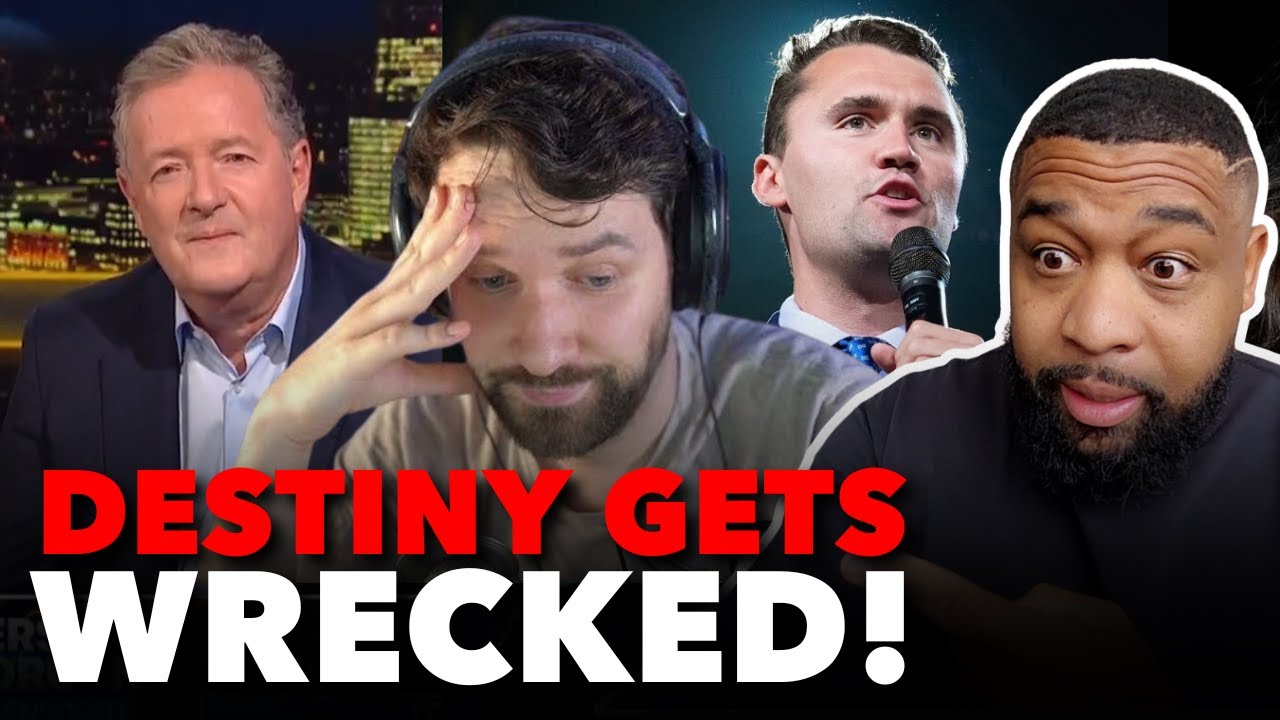
Brandon Tatum Condemns Destiny's Disrespectful Response to Charlie Kirk's Death and Erika Kirk's Grief
20:34
Officer Tatum Defends Charlie Kirk Against Racism Claims With Evidence From His Own Life
12:33
Brandon Tatum Mocks the No Kings Protests and Defends Turning Point USA From Racism Claims
20:15
Brandon Tatum Exposes Ryan Clark's Political Commentary on ESPN and LSU Coaching Controversy
Brandon Tatum challenges ESPN commentator Ryan Clark's recent statements about Louisiana Governor Jeff Landry's involvement in the LSU coaching situation. Tatum argues that Clark misunderstands both the political structure of Louisiana's university system and the widespread support for Charlie Kirk among Louisiana voters. The critique extends beyond sports commentary to question Clark's grasp of state politics, taxpayer accountability, and the governor's legitimate oversight role in contracts that bind Louisiana taxpayers to potential multimillion-dollar payouts.
Ryan Clark's Controversial Take on LSU and Governor Landry
Brandon Tatum opens his critique by questioning why ESPN continues to feature Ryan Clark as a commentator, describing him as "the silliest black man on the internet" whose "social emotional intelligence is dead." Tatum takes particular issue with Clark's recent ESPN appearance where the former NFL player criticized Louisiana Governor Jeff Landry for his involvement in the LSU coaching situation.
During the ESPN segment, Clark argued that Governor Landry's comments about LSU were "the second most ridiculous thing he said this week," with the first being his support for putting up a statue of someone who "doesn't represent the people of Louisiana, doesn't represent the players and the students at LSU, doesn't represent the executives that work there." Clark was referring to Charlie Kirk, whom Landry had praised during a campus visit.
Defending Charlie Kirk's Louisiana Presence
Tatum strongly disputes Clark's assertion that Charlie Kirk doesn't represent Louisiana. He points to the electoral map from the recent election, noting that the majority of counties voted red and supported candidates aligned with Kirk's political views. Tatum emphasizes that he has personally spoken at LSU, where Charlie Kirk draws crowds of thousands of people who "love Charlie Kirk at LSU."
Tatum argues that Governor Landry, who was elected by these same Louisiana voters, clearly represents the state's values. He recounts meeting Landry when he was attorney general, describing him as "Louisiana's finest" and someone who embodies the state's culture. The suggestion that Landry or Kirk don't represent Louisiana rings hollow, Tatum argues, when looking at the election results and Landry's position as the state's elected governor.
The Governor's Legitimate Role in University Affairs
Tatum provides crucial context that Ryan Clark apparently missed by playing a clip from the Pat McAfee show where Governor Landry explains his actual role in LSU affairs. In that interview, Landry clarified that the governor appoints the Board of Supervisors at LSU under staggered terms, and these appointees then select the university president and athletic director.
Most importantly, Landry explained why he became involved in the Brian Kelly coaching situation: "This contract that currently is between the state of Louisiana, the Louisiana State University system, and Brian Kelly leaves the taxpayers of the state on the bill." He emphasized that despite misinformation suggesting taxpayers aren't liable, the contract binds the state of Louisiana to potentially pay $53 million if Kelly is fired and no one else foots the bill.
Tatum suggests that "maybe Ryan Clark should interview the governor because it appears Ryan Clark don't know what he talking about. He act like the governor is just sticking his nose into something he has no association with." The governor's involvement stems from his fiduciary responsibility to Louisiana taxpayers, not from overreach into athletic decisions.
Scott Woodard and the Brian Kelly Hiring
Clark defended LSU Athletic Director Scott Woodard during his ESPN appearance, listing Woodard's successes including hiring baseball coach Jay Johnson, who won a championship, and supporting Kim Mulkey and women's basketball with Angel Reese and Flau'jae Johnson. Clark argued that Woodard "didn't miss because Brian Kelly wasn't capable. He missed because Brian Kelly was no longer willing. Brian Kelly was no longer tapped in."
Tatum counters that this admission actually validates concerns about the hiring. If Kelly's buy-in wasn't what it needed to be, the question becomes: what did administrators know about his commitment level when they hired him after his prime? Tatum draws parallels to other universities that hire coaches past their peak performance years, citing examples from the University of Arizona's coaching history.
Personal Reflections on Football and Politics
Tatum acknowledges that while Ryan Clark played at a higher level than he did, "I know a lot about football." He notes that being "the most winningest coach in history at Notre Dame, it does not mean that you are still capable of winning on a different team." The critique isn't just about winning records but about whether a coach can win in a specific culture and whether they still have the drive and commitment required.
Tatum shares examples from his own college football experience at the University of Arizona, discussing coaches like Rich Rodriguez and Mike Stoops. He notes that Stoops "was great at recruiting" but "didn't know how to coach us," leading to poor performance despite talented players. These examples illustrate that hiring decisions involve more than past achievements—they require assessment of current capability and cultural fit.
The Broader Issue of Political Commentary
Tatum concludes by suggesting that Ryan Clark should "stick to sports and stop trying to act like he know anything about politics" because "almost every political stance he make is wrong." The critique extends beyond this specific LSU situation to Clark's broader pattern of political commentary on ESPN.
The underlying tension involves the intersection of sports, politics, and media. Tatum questions why ESPN continues to platform political commentary from sports analysts who, in his view, lack understanding of governmental structures, constitutional roles, and taxpayer accountability. The LSU coaching controversy serves as a case study in how political commentary can miss essential context about how state government, public universities, and fiscal responsibility actually work.






Comments
Be the first to comment on this video.