2,387 videos 1,376,944,188 views US Joined Aug 30, 2018
Charlie Kirk is the Founder and President of Turning Point USA, the largest and fastest growing conservative youth activist organization in the country with over 250,000 student members, over 150 full-time staff, and a presence on over 2,000 high school and college campuses nationwide. Charlie is also the Chairman of Students for Trump, which aims to activate one million new college voters on campuses in battleground states in the lead up to the 2020 presidential election. His social media reaches over 100 million people per month and according to Axios, he is one of the "top 10 most engaged" Twitter handles in the world. He is also the host of “The Charlie Kirk Show,” which regularly ranks among the top news shows on Apple podcast charts.
Charlie Kirk and Calley Means Expose How Food Industry Poisoned American Children with Banned Petroleum-Based Dyes
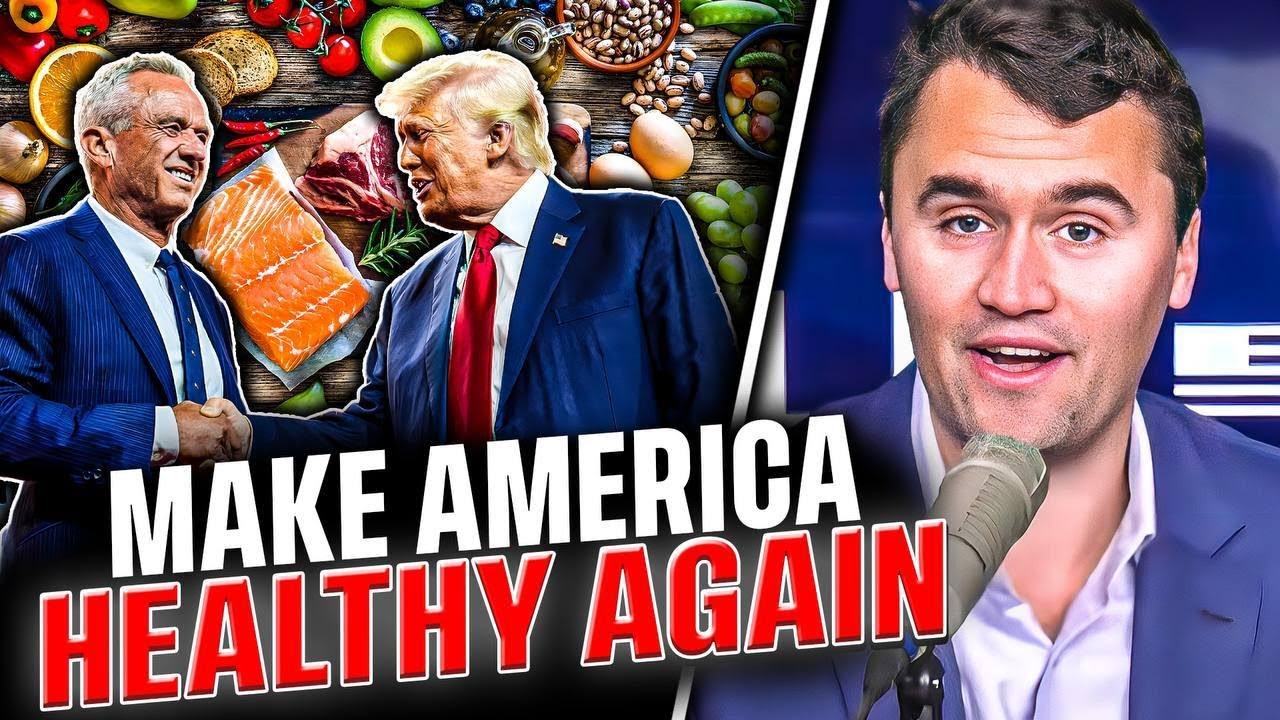
Charlie Kirk sits down with Calley Means, author of Good Energy and a leader of the MAHA Movement, to discuss the Trump administration's decision to ban petroleum-based food dyes from American products. Means reveals that 60% of food on U.S. grocery shelves contains ingredients banned throughout the rest of the world, and that American food companies already make safer versions of products like Froot Loops for export to Canada and Europe. The conversation exposes how the cigarette industry took over processed food manufacturing in the 1980s and 1990s, bought off the FDA and USDA, and added 10,000 chemicals to our food supply. Kirk and Means argue this isn't about regulation, but about correcting decades of corporate corruption that has fueled a chronic disease crisis affecting American children, with 38% of teens now pre-diabetic.
Charlie Kirk celebrates the victories emerging from the Trump administration, highlighting achievements at the border, decreasing oil prices, and lower egg costs. But he emphasizes one area that deserves special attention: the work being done by Robert F. Kennedy Jr. to address dangerous ingredients in American food that remain banned in other countries.
Kirk welcomes Calley Means, author of Good Energy and one of the leaders of the MAHA Movement, to discuss breaking news about the FDA's decision to ban red and blue petroleum-based dyes from American food products.
The Staggering Scale of the Problem
Means reveals a shocking statistic: the food industry has acknowledged that phasing out ingredients banned throughout the rest of the world would impact 60% of food on grocery shelves in the United States. While the industry presents this as an argument against reform, Means argues it demonstrates the severity of the problem.
He explains that petroleum-based food dyes, derived from coal tar, have been linked to ADHD in children. Every other country in the world has concluded these substances should be removed from the food supply. Yet until the Trump administration, the FDA acted as what Means calls "a sock puppet of big food, big pharma."
A Historic Shift at the FDA
Means describes a momentous change that occurred when Dr. Marty Makary stood alongside Secretary Kennedy to announce the new policy. As of 4:00 p.m. the previous day, the FDA had maintained these petroleum-based dyes were safe. Hours later, Makary declared them poison and announced the Trump administration would take common sense actions to remove these chemicals from American food.
The urgency is clear when considering the chronic disease crisis facing the nation. Means points out that 38% of teens in America now have pre-diabetes. He argues that history will look back on the first 100 days of the Trump administration as the moment when the HHS, FDA, and federal government finally stood on the side of children.
Zero Nutritional Value, Maximum Risk
Kirk seeks clarification about the purpose of these dyes, which Means confirms are purely cosmetic colorings with zero nutritional value. Scientists literally combined petroleum to create neon red and neon blue colors, all to make food more visually appealing. Kirk calls this approach sick, noting that companies risked children's health simply to make food less visually boring.
Means emphasizes this is actually a free market movement aimed at correcting corruption. He reveals that the cigarette industry took over the processed food industry in the late 1980s and 1990s, popularizing these colorings and buying off both the USDA and FDA to declare them safe. The tobacco companies added 10,000 chemicals to American food and owned 40% of the U.S. food supply in the 1990s.
The Double Standard: American Food vs. Exported Food
Perhaps most disturbing is Means' revelation about how American food companies operate internationally. These same corporations make products like Froot Loops using watermelon juice and carrot juice for natural coloring when shipping to Canada and Europe. They deliberately manufacture safer versions for export while selling petroleum-based products to American children.
The companies bought off regulatory organizations to keep colors slightly brighter in domestic products, knowing they were harming kids. Texas Attorney General Ken Paxton has filed a lawsuit against some food companies, seeking evidence that they knew about these dangers years ago.
Comparing American and Canadian Products
Kirk displays an image comparing U.S. Froot Loops with Canadian Froot Loops. While the American version appears mildly more colorful, Kirk notes that children shouldn't be consuming Froot Loops in the first place, as they lack proper nutritional value.
He asks Means to name the companies that have been poisoning Americans for 30 or 40 years, questioning whether the practice is more profitable and identifying major corporations like Kellogg as culprits making billions of dollars.
Industry Groups Defending Dangerous Practices
Means names the Consumer Brands Association and the American Beverage Association as groups still arguing that petroleum-based dyes are safe. He highlights another major victory from the Trump administration: the push to remove soda from food stamps.
Soda is currently the number one item purchased through food stamps, a $140 billion entitlement program meant to provide nutrition for lower-income Americans. The federal government subsidizes $10 billion annually from food stamps to soda companies. Yet the American Beverage Association claimed just last week that it was "anti-science" to suggest that subsidized soda for kids increases obesity.
Means calls out both the American Beverage Association and the Consumer Brands Association as organizations where food companies hide from accountability.
Government Dietary Guidelines Promoting Junk Food
The corruption extends to official dietary recommendations. The U.S. government currently recommends Froot Loops as part of a healthy diet. Under the Biden administration, the NIH funded a study claiming that Froot Loops and Honey Nut Cheerios were healthier than ground beef, grass-fed beef, and eggs. That study was also funded by food companies.
Secretary Kennedy plans to reform the dietary guidelines, which currently recommend added sugar as part of a 2-year-old's healthy diet and ultraprocessed food as healthy choices. The guidelines claim meat is bad and that beans are the best source of protein. President Biden stated that the top goal for nutrition guidelines during his term was "equity and inclusion" rather than scientific rigor.
Sugar is Poison
At HHS, Secretary Kennedy made a profound statement: "Sugar's poison." Means clarifies this doesn't mean banning sugar or preventing people from having a Coke, but the government should not be recommending it or subsidizing it.
The first two years of the MAHA movement will focus on correcting scientific recommendations so parents can make informed decisions, and stopping subsidies that promote unhealthy food. Currently, 90% of agriculture subsidies go to ultraprocessed food ingredients like corn, soy, and wheat. Only 4% go to fruits and vegetables.
Market Correction, Not Overregulation
Means frames this effort as correcting basic market manipulation. Secretary Kennedy, working closely with Brooke Rollins who has championed these issues, aims to restore free market principles by ending the corporate capture of regulatory agencies.
Kirk expresses complete support for the food fight, encouraging Means to keep pushing forward. He calls it a big deal and celebrates the common sense wins coming from the Trump administration's approach to health and nutrition.