Up Next

Charlie Kirk Challenges Christians to Combat Marxism and Confront Evil in America and Abroad
1:33:56

Charlie Kirk and Pastor Rob McCoy on Churches Standing Against Lockdowns and Vaccine Mandates in America
1:22:51
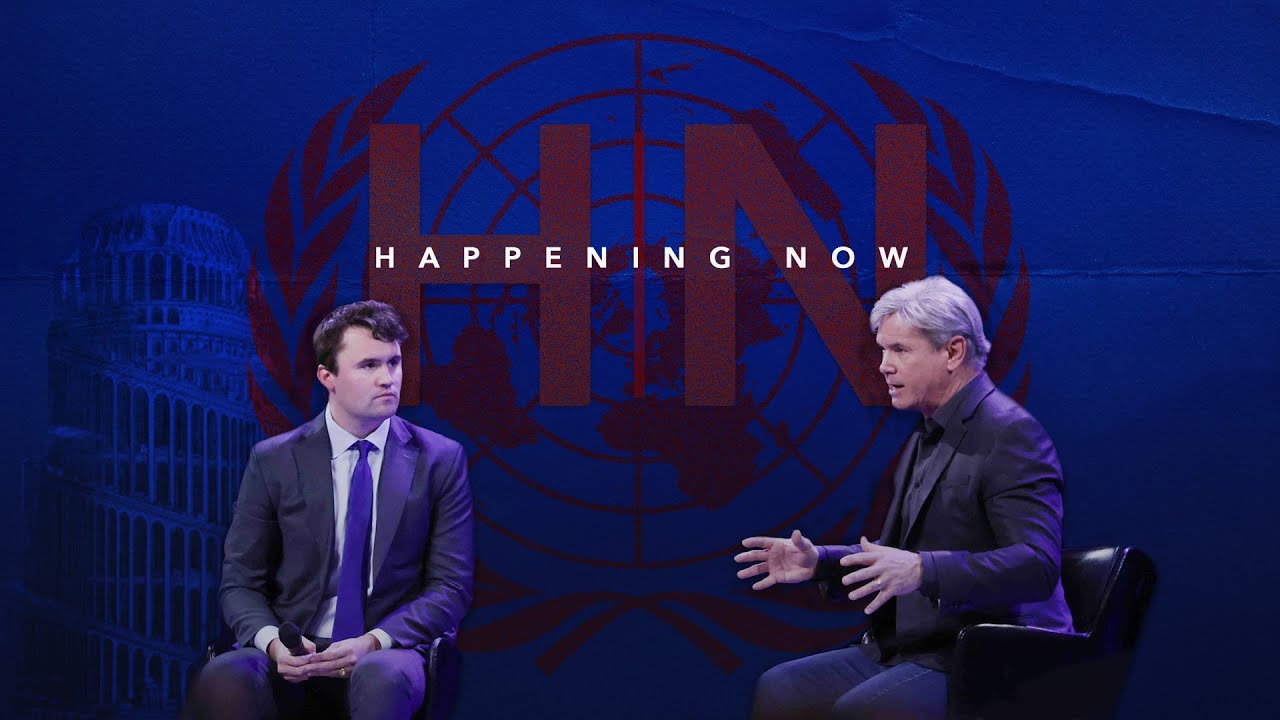
Charlie Kirk and Jack Hibbs Explore Genesis 11, The Tower of Babel, and Modern Globalism's Dark Agenda
1:34:29
Charlie Kirk and Dr. James Lindsay Expose the Theology of Marxism Infiltrating American Institutions
Charlie Kirk joins Dr. James Lindsay at a Sovereign Nations event to discuss how Marxist ideology has systematically infiltrated American institutions from corporations to churches. Kirk explains how the opposition operates with core ideological beliefs rather than mere power-seeking, detailing how concepts like ESG (Environmental, Social, Governance) scores and diversity, equity, and inclusion initiatives function as control mechanisms. Lindsay traces the theological roots of Marxism through Hegel and Rousseau, explaining how the ideology promises to transform society into an earthly paradise through dialectical destruction and reconstruction, while Kirk shares his experiences fighting critical race theory in churches and launching Turning Point Faith to equip pastors.
The Theology Behind Marxist Transformation
Charlie Kirk opens by addressing a critical misconception many conservatives hold: that their opposition lacks core beliefs and simply seeks power. Kirk warns this assumption is dangerous, explaining that the most threatening figures in America's ruling class are true ideologues who have thoroughly considered their worldview and believe they're ushering in an equivalent of heaven on earth through systematic destruction.
Dr. James Lindsay explains the theological foundation of Marxism, describing how Marx sought to overthrow traditional religion as a "mystification" and replace it with Rousseau's concept of a social contract governing society in an increasingly socialist direction. This ideology gets embedded within the Hegelian dialectic as a process to transform society into its ideal state, where man becomes his own god through understanding the nature of his suffering and participating in the long march of history toward a perfectly communistic and social society.
Kirk shares a revelatory debate experience with a legitimate communist on Tim Pool's program where the Marxist genuinely believed that chaos and disruption would inevitably lead to perfection. This pathological worldview, Kirk explains, now runs American corporations, military leadership, government agencies, and educational curriculum at both national and global levels.
The Great Reset and Hegelian Philosophy
Kirk dedicates significant attention to the Great Reset, describing it as pure Hegelianism implemented on a global scale. He questions why Germans consistently seem to lead one-world government initiatives, referencing Klaus Schwab and the World Economic Forum with suspicion about their ultimate intentions.
Lindsay elaborates on how the Great Reset operates within Marxist theology. He explains that according to this worldview, man is estranged from himself and from nature, trapped in an unsustainable capitalist model where capital produces capital in an inherently illogical system that must create increasingly bizarre justifications for itself. The system allegedly creates layers of fake needs to sustain employment and consumption, eventually destroying both the ecosystem and humanity itself by turning people into commodity forms.
Klaus Schwab's writings, particularly "COVID-19: The Great Reset" and "The Great Narrative," present the pandemic as a unique opportunity—a narrow window to shift the world toward a new state that's more inclusive, resilient, and sustainable. Lindsay points out this rhetoric directly parallels Karl Marx's Economic and Philosophic Manuscripts and Herbert Marcuse's works from the 1960s, representing a continuous ideological thread.
ESG: The Control Mechanism of Modern Corporatism
Kirk turns attention to what he considers one of the greatest current threats: Environmental, Social, and Governance (ESG) scoring systems. He expresses particular frustration with corporate CEOs who attended elite schools and knew better but allowed woke ideology to take root because of weakness, prioritizing their multi-million dollar salaries over principle.
The ESG system operates as structural financing control, where companies cannot partner or receive investment unless they maintain proper ESG scores. Kirk highlights the absurdity of Tesla—an electric car company—receiving a poor environmental score specifically because Elon Musk poses a threat to the regime by speaking freely and acting courageously.
Lindsay describes ESG as "the devil incarnate" (Elon Musk's characterization) and explains how it functions as a ring through the bull's nose on Wall Street. Larry Fink and BlackRock essentially control what constitutes environmentally sound, socially responsible, and properly governed corporate behavior, with the power to arbitrarily change these definitions to serve particular interests.
The most disturbing aspect, Lindsay explains, is that fund managers like BlackRock leverage trillions of dollars from everyday people's retirement and pension funds to force compliance. Companies that don't meet the council's definitions of proper ESG standards face the threat of having massive investment withdrawn, tanking their stock prices. This constitutes what Lindsay calls "a cartel running a racketeering scam based off of cooked books."
The Lab Leak from College Campuses
Kirk makes a provocative statement that consistently draws media criticism but which he insists on repeating: the ideological "lab leak" from American college campuses has done and will do far more damage than any lab leak from Wuhan, China. He argues that wokism, critical race theory, post-modernism, and deconstructionism represent a self-inflicted wound that's destroying America from within.
This daily frustration—that Americans are voluntarily destroying themselves rather than facing external invasion—drives people to justified anger. Kirk emphasizes this isn't a space invasion scenario but rather a slow-motion suicide, which makes the situation particularly maddening for those who recognize what's happening.
Infiltration of the American Church
Kirk shares his personal journey into church engagement, explaining how he was raised believing politics, philosophy, and culture should remain completely separate from church activities. He describes the typical modern church experience as resembling "a rock concert with a TED talk, lots of skinny jeans, give the money, park the cars, don't ask any questions."
While Kirk and others operated under this naive separation model, bad actors were infiltrating seminaries with the pathogen of wokism. The entry point was existing bad theology and deconstructionist approaches that questioned biblical inerrancy. Kirk references Andy Stanley in Atlanta who claims Christianity isn't about the Old Testament but only about Matthew, Mark, Luke, and John—a position Kirk finds absurd given how frequently Jesus quoted Deuteronomy.
Pastor Rob McCoy of Calvary Chapel Thousand Oaks challenged Kirk to bring his campus activism approach to churches. Initially hesitant because he lacked formal theological credentials, Kirk eventually spoke at over 100 churches in approximately 18 months, learning that American churches were under attack from within, often through recently-graduated youth pastors bringing bad ideology from compromised seminaries.
In August of the previous year, Kirk launched Turning Point Faith with over 32 full-time staff members to help pastors and churches better fight for liberty through broad-based coalitions. The organization plans a pastor summit with over 350 pastors from across the country.
The Romans 13 Misapplication
Kirk expresses particular frustration with how churches responded to COVID-19 lockdowns, especially given that many had previously preached about having "Daniel moments" of courage. When government restrictions came, these same churches immediately complied for extended periods based on a misunderstanding of Romans 13.
Kirk provides a simple clarification: Romans 13 instructs submission to ruling authorities because God establishes them. The critical question for America is: who holds authority? Since the American people are sovereign, mayors submit to citizens, senators submit to citizens, and presidents submit to citizens—not the reverse. If every pastor had given this sermon when COVID began, Kirk believes America would be considerably freer today.
The Central Question of Human Nature
Kirk identifies the fundamental philosophical divide underlying all these issues: Do human beings have a naturally good disposition or are they naturally predisposed toward evil? While acknowledging some mixture exists, Kirk emphasizes that Christians cannot reach any conclusion other than original sin when reading Scripture honestly.
This question matters enormously because Marxists and Rousseau-influenced thinkers believe humans are naturally good in the state of nature, with environment, country, and private property corrupting this inherent goodness. If humans are naturally good, the solution is restructuring external systems. If humans are naturally fallen, as Christians believe, society should be amazed anything decent has been accomplished at all, leading to entirely different approaches to governance and social organization.
The American church possesses the clearest answer to this most important question—what is human nature—yet has remained largely silent. Kirk's mission involves helping churches and pastors of all denominations speak boldly on this foundational issue.
Building Broad Coalitions
Kirk shares an anecdote about a recent pastor roundtable featuring Baptist, Pentecostal, Episcopalian, and Lutheran leaders who began arguing about theological particulars like pre-tribulation versus post-tribulation rapture positions. Kirk had to intervene, identifying himself as "pan-trib—it's all gonna pan out at the end" and warning that if they continued fighting over secondary issues, they'd be arguing theological differences from prison.
The urgency of the moment requires setting aside denominational and doctrinal differences on secondary matters to preserve the liberty necessary for all expressions of faith to exist. This doesn't mean abandoning confessional standards or core beliefs, but recognizing that an insurrection and outside attack are happening simultaneously in what amounts to ideological shock-and-awe in fifth-generation warfare.
Understanding What Time It Is
Kirk judges politicians based on whether they understand "what time it is"—whether they recognize that live-and-let-live tolerance is no longer the operating principle in American society. He expresses frustration with older conservatives who question why he focuses so much on transgender issues, explaining they still think America operates like it did in 1996.
Kirk traces the progression from mandatory tolerance to mandatory acceptance to mandatory celebration to mandatory participation. He cites the example of Tampa Bay Rays baseball players who weren't allowed to play unless they wore pride patches, illustrating that America has transitioned into mandatory participation rather than merely mandatory celebration.
This reality means rejecting the neo-liberal Republican approach that assumes mutual détente and live-and-let-live arrangements. That system only works when both sides agree to it. The opposition crossed that line long ago, recognizing the power of state force while Republicans and conservatives remained trapped in a paradigm from 40-50 years ago that may never have truly existed.
The Final Phase and Breaking the Spell
Kirk offers an optimistic assessment despite the challenges, arguing America has entered the final phase of this ideological battle. The key indicator: people no longer care about being called racist. This represents a massive shift, as Kirk admits he used to care deeply, choosing words differently to avoid the accusation.
The weaponized name-calling began during the Obama era when people like Dinesh D'Souza warned about Marxist infiltration. The opposition weaponized accusations of racism and secured a decade of plundering because Americans were in mass paralysis over decency standards that never actually existed. Thanks to Donald Trump, a new generation of leaders, Tucker Carlson, and Rush Limbaugh's decades of warnings, people are waking up and refusing to be controlled by these linguistic spells.
Lindsay confirms that the opposition's spell is breaking, noting they now must appeal to "experts say" rather than making direct moral arguments, because the moral argument has tipped the other direction. The decision to go "pedal to the metal" during Pride Month with drag queen events everywhere—in churches, schools, libraries, military, and even requiring children to access adult venues—is backfiring spectacularly.
The Coming Marketplace of Ideas
Lindsay expresses optimism based on his analysis that America never actually entered a true marketplace of ideas despite being told otherwise. Instead, society entered "a feudal estate aristocracy of ideas" where people must listen to experts who are now being exposed as frauds trying to explain sudden adult death syndrome and other absurdities.
The information economy creating an actual marketplace of ideas is emerging, where people can conduct their own research and verify information independently. Lindsay notes that the internet figured out most of the story about recent public health issues within two weeks, while official sources spent two years maintaining obviously false narratives. This rapid exposure of fraud is gaining momentum.
Both Kirk and Lindsay agree that the opposition recognizes their grip is slipping, which explains their increasingly desperate moves. If they don't achieve total control within the next few years, they'll lose everything as decentralized information systems continue exposing their fraudulent expert class.
The Question of Accountability
Lindsay addresses a question he receives frequently: Do the people implementing these policies really know what they're doing, or did they make honest mistakes? His answer is simple and direct: "I don't care. Fire them." Whether incompetent or evil, whether maintaining Janet Yellen at the Federal Reserve despite claiming shock about inflation, the result is the same—they need to be removed from positions of authority.
Lindsay explains that even if some began with honest mistakes, these became negligent mistakes after a certain point. Many people implementing these policies knew exactly what they were doing, which constitutes sedition and treason. Courts can adjudicate whether actions were intentional or unintentional through proper legal processes, but accountability remains absolutely necessary.
Some people became complicit through greed when they accepted grants or funding that required implementing ideological changes. When someone built a new building, hired staff, created a mortgage, and then accepted conditions attached to continued funding rather than saying no, they became complicit at that moment. Accountability means these people don't get to escape by claiming ignorance or pretending they were merely following corporate best practices with ESG—the rats are already jumping that ship.
ESG and Personal Social Credit
The discussion turns to how ESG scoring extends beyond corporations to individuals through Diversity, Equity, and Inclusion (DEI) initiatives. Lindsay explains why it's impossible to dismantle DEI departments even when university presidents know removing woke programs would create enrollment booms. Something much bigger holds them hostage: the DEI department serves 80-85% of the S score in their ESG rating, which controls their organization's pension funds, investment capital capacity, and potentially access to federal student loans.
Kirk warns that a social credit system is already emerging that will impact banking and personal ability to obtain financing, creating a reward-incentive system with inverse punishment for wrong-think or voting for the wrong candidates. The goal is establishing financial pressure against individuals based on their beliefs and behaviors.
Lindsay details how this personal ESG score could function using the example of credit card companies. If Mastercard's ESG score decreases by serving customers with wrong politics, companies will begin enforcing whether someone can be a client based on their personal ESG or social credit score. If major payment processors refuse service, individuals cannot buy things, creating a complete control mechanism.
Lindsay reminds the audience that payment processors already tested this principle years ago by refusing to process transactions for certain professionals and later de-platforming figures like Alex Jones and President Trump. Regardless of what one thinks about specific cases, the principle was established that corporations could limit anyone's transactions for behavior they dislike, especially dangerous in a movement based on blurring discernment where they alone decide what's good and bad.
Solutions and the Path Forward
Kirk emphasizes that the situation, while overwhelming, is not hopeless. The opposition is incredibly weak despite their systemic power. Corporate executives will run when confronted with real resistance, and wokies are running out of political and social capital after too many exposed scandals and failed narratives.
The solution involves building parallel institutions—schools, churches, families, and supporting existing good organizations. Kirk announces Turning Point Academy launching in partnership with Dream City Christian in the Phoenix valley, offering vetted curriculum and trained teachers focused on real history and civics for families tired of compromised education.
Victory doesn't require winning everyone over—just flipping a few key pieces on the chessboard. Kirk points to Elon Musk as an example of how impactful a single high-profile defection can be. They've "red-pilled the guy worth 220 billion dollars" who's now game for impulsive transactions to save Western civilization. Musk's transformation came largely through consuming content from sources like Babylon Bee, demonstrating how consistent messaging through daily podcasts, radio shows, and social media gradually shifts perspectives.
Kirk identifies what he calls "the great defection" happening as rational people like Bill Maher, Joe Rogan, and Elon Musk recognize how bad and dangerous these ideas actually are. The opposition's ideas are so transparently terrible that somewhat rational people are naturally rejecting them once exposed to alternatives.
The next six to eighteen months will be messy, with the opposition using force through show trials, arrests, and legal persecution as their only remaining tool since their linguistic spells no longer work. Kirk references the arrests of Peter Navarro and prosecution of Steve Bannon as examples. Breaking through this final phase of pure force will put the opposition on permanent defense, potentially creating "an extinction level event" politically.
The Long March and Daily Commitment
Kirk acknowledges the work feels monotonous—daily radio shows, podcasts, tweets, and content creation can seem like an endless grind. But this consistent effort is necessary because it's how minds change over time. Random satire sites like Babylon Bee red-pilled the world's richest man not through a single dramatic moment but through accumulated exposure to truth presented humorously and consistently.
The audience's presence at a Friday afternoon event about Marxist theology when they could be doing anything else indicates they're part of a winning movement. People are growing strong and wise while the opposition grows weak and apathetic. The realization that they're living through a major realignment—what some call the Fourth Turning—should motivate continued engagement rather than despair.
The Biological Foundation for Socialism
Lindsay concludes by going deeper into Herbert Marcuse's writings from 65 years ago, which already laid out the trajectory toward social credit systems. In "An Essay on Liberation," Marcuse explained in Chapter One why society needs to change man at the biological level to make him suitable for socialism, followed by Chapter Two on developing a new sensibility. This biological and psychological transformation of humanity was always part of the plan, not an unexpected development.
The control system extending to buying and selling, which Lindsay notes was predicted in the Book of Revelation, represents the culmination of a long-planned process of total social transformation through Marxist theology. Understanding this historical continuity helps explain why current developments seem simultaneously shocking yet somehow inevitable to those who've studied the ideological roots.
Video Transcript
would you please welcome from turning point usa charlie kirk yes well deserved thank you and uh i'm gonna wait to get a thumbs up from stewart over here we're ready to go well we just went through a conversation with dr james lindsay a few minutes ago about the theology of marxism and where do you want to kind of sum up what you had just said and then i want to transition from that into a conversation with charlie because charlie serves at the front lines of everything that's happening in many ways i've been behind the scenes for a number of years james of course is front lines but boy charlie takes most of the arrows so but dr lindsay can you just explain to us again what you just spoke about yeah so we got another two hours um it'll be easier this time no it's really simple there are two major components or three i guess marx wants to throw down religion as a mystification and in place of that he's going to take rousseau's leftism the idea of a social contract governing society in an increasingly socialist way where we use an uh we willingly give up our freedoms to achieve more freedom in the name of the greater good and then he's going to tuck that into the hegelian dialectic as a process to transform society into its ideal state and so man is the creative subject in this religion who doesn't realize that he is his own god yet but can realize that through this process by understanding the nature of his suffering rather than masking it with the opium of religion and in the long march of history can actually realize his true nature which is transcendent of private property totally communistic perfectly social and social man lives in social society with no difference between man and society any longer and thus everybody pays marx's bills and the way that we get there is that the conscious within this the woke within this religion the born again within this religion however you want to phrase it sees the means of production of man society in the world and transform it into a more human form a form or usable my man a form more suitable to man which is essentially the garden of eden remade by men for men on earth as it isn't in heaven charlie how do you see that manifesting itself right now not just within the political realm but as well with the other cultural realms that you are dealing with right now on a daily basis yeah first honor to be here love sovereign nations and i've known james for years it's funny actually two really really important years the last two years i blew both these guys off years ago because they came up to me at some event i was like i don't know what you're trying to do but sovereign what like i don't understand um that was a mistake and you learn as you get older and when i first heard james talk on my podcast i was just blown away i was like this guy's saying something really special and he's done more good work in the critical race theory debunking world and has not really received the credit he deserves for that and so i just want to let you know james you've done a great contribution to our country i mean that truly so i love the i love the title the theology of marxism the reason i like it is that sometimes we are led to believe that our opposition does not have core beliefs and that's a mistake and it's easy to come to that conclusion because we kind of summarize like oh they only want power they want motorcades they want people to go fetch their diet cokes they want to go to wine parties that's somewhat true for some of the people in the ruling class in our country but it's not true for all of them the most dangerous people that are running our entire civilization are the ideologues they have thought this through and they have an answer for the chaos and that's really disturbing in fact that should make you take pause i would rather have the super corrupt person that doesn't really think it through and they just want to be senator this or congressman that it's the person that actually thinks they're going to usher in an equivalent of heaven on earth through the destruction through the dialectic through the destruction of the american currency through the opening of borders through the elimination of gender norms they think through all of that tension of the thesis and the anti-thesis that they're actually going to get to something that will be meaningful and better and this was illuminated for me in amazing detail recently where i went on tim pool's program who's kind of a joe rogan type and i was debating a legitimate marxist a communist and we started talking about hegel and he stopped me because i said how do you believe about this stuff he said charlie you're trying to tell me you don't think things are getting better and they actually believe through the chaos through the disruption to the destruction that transition will then lead towards some sort of inevitable perfection now this is so pathologically insane for those of us that live in the real world that are christians that are raising children that are married we just kind of look at this abstract ideology in the clouds and be like yeah go back to whatever weird you know feminist studies department it came from the problem is that this is running our corporations it's running our military it's running the top levels of our government it's running our curriculum and it's now being run at not just an american level but a global level and i've kind of spent a lot of time uh the last couple months some of you probably seen the campaign we've been running the last couple weeks all around trying to get americans educated and what the great reset is uh i've spent a lot of time on this and it is pure hegelianism it is the theology of marxism where again i don't know why they always pick germans to run their one world government like like were all the french unavailable it's like it's just right out of a james bond film like just you hear him talk i inherently don't trust you i'm sorry like you could be saying that everyone should convert to christianity i'd still not trust you honestly like the way you think you must understand the great reason it's like no actually not buying it like it's really weird and creepy um and so anyway we could talk about this i don't want to monopolize the time but the type the takeaway for all of you my my message to the grassroots which is why this forum is so incredibly important is do not underestimate your opposition they actually believe in this stuff they believe in the destruction because they think it will lead to something quote unquote better they believe in the queer theory it's not just power for power's sake that is a simpleton man's argument to try to explain the chaos and television it's not true an ideologue is far more dangerous than a power hungry politician and as we just talked about in the session a couple sessions ago is that when you really look at what we would call the great reset the great reset is a transition again and so we had talked about it in regards to the french revolution of robespierre and the jacobins where they looked at it as a year one scenario you would have paul pott looking at it as a year zero scenario and so forth to reset everything and start all over again in the right patterns and dr lindsay just from what you have said in the past i know some things that you said on joe rogan's program a few months ago really resonated with a number of people in regards to kind of explaining what the intent is of really creating that reset and moving into the next phase of humanity and really it's what you were i think we're just referring to in your previous session correct yeah i mean so the model is ultimately what karl marx is talking about is that man is estranged from himself and estranged from nature so what we have to do is we have to actually reset the world out of this unsustainable capitalist model the shareholder capitalist model where capital produces capital produces capital which is inherently according to them unsustainable system that's in fact inherently a logical system that has to create weirder and weirder justifications for itself but because it's an unsustainable system as you know maybe you could read some of the mid-century uh previous century 20th century marxists would have written you know that that it produces what's what capitalism does for them why it's not a sustainable system is well sooner or later all the basic needs are met people have a pretty good standard of living and so then what happens is well people still need jobs so people create things that nobody needs it's just so that they can have more commodities to sell and to buy and so what happens is that level happens everybody's basic needs are met and then you you make a layer of fake needs and then the capitalist system fills that in and then you make a layer of fake needs above that and the capital system fills that in and this just goes on infinitely creating more and more and more and more in an infinite spiral that eventually crashes the whole system collapses the ecosystem destroys nature in other words where man is supposed to live and extract value and life from destroys humanity itself by turning him into an increasingly commodity form and so what you see whether it's karl marx or that's me paraphrasing herbert marcuzza in the essay on liberation and one-dimensional man his books from the 60s uh you see this kind of consistent theme but what you see with klaus schwab is that there's been a problem he says in his newest book called secret narrative the great narrative 2022 to follow after the great reset so you will have the great reset to reset the world which the full title of that book is covet 19 the great reset because covert 19 turns out to be a unique opportunity a narrow window of opportunity to shift the world to a new state but what's going to come on the other side is one where we're going to be more inclusive more resilient and more sustainable and what that actually works out to is that we have to take into account the natural world the environment but we also have to take into account things that um corporations often don't pay attention to you have environmental externalities like they don't care to pollute it's external to their their balance sheet so it's an externality but they also don't really care about so-called human capital and what it actually means to live and be as a human and klaus schwab actually says this in the great narrative that the goal is to make nature and humanity so that it can be sustainable flourishing future because capitalism doesn't contain the logic necessary to accomplish this but that's literally what karl marx wrote in the third manuscript of the economic and philosophic manuscripts that i was just quoting from the previous lecture and we see the continuity through herbert marcuzza for example very clearly if you read his works through the 1960s so what we're seeing is that the great reset is to usher in a new paradigm that's based off of this exact same theology this exact same idea that we can let the people who actually know how stuff's supposed to work and what the world's supposed to look like solve all of our problems for us which are getting increasingly existential increasingly out of control did you know we have synthetic biology now he tells us where you could create pandemics did you know that we have that this could be so dangerous he says things like this did you know that we're moving into a digital currency regime he says and that people could hack your currency or they could even control and turn off your currency or you could have a digital id that controls your buying and selling or any of these things did you know that these are happening he says that over and over again how dangerous the world is better let us manage it for you because they're the ones who know and the goal is to make sure that we uplift humanity and uplift the environment so we have environmental and social goals at the heart of everything we're going to accomplish in our new sustainable environment that we're going to usher in so we are no longer caught in the contradictions of capitalism that will destroy humanity and our natural world that we live in it's literally the same thing and you know the thing that charlie was just talking about a moment ago is that you know where james is talking about this from an economic structure level and in terms of the systems that we have that are coming in that same thing that charlie was just discussing earlier is that it's coming into then the rest of the pillars of our civilization it's coming into everything and i think especially in regards to the people that are here in this room it's coming into faith and that's where of course i started off 10 12 years ago trying to warn about these things and so where you see it coming to faith now charlie has become very involved in things he has an organization called turning point faith now that has become much more active and so forth that's really being able to to kind of create that opportunity for a number of different folks that are of different denominational backgrounds dirt different um if you will uh confessional backgrounds and so forth uh you know there's no one particular doctrinal standard in terms of how you what you believe about soteriology or pneumatology or anything else but what they're seeing is here's a threat that's coming for all of us but it's not just coming externally it's coming internally as well and so uh just recently he he interviewed a very good friend of mine that you know that i do a lot of things with tom askle and it's important that we elect tom askle as the president of the southern baptist convention to try to reverse some of the curse as we would call it a vampire like parasitic thing that's actually virus viruses yes that's right an ebola-like virus that has infected us but charlie what have you seen to me because you've been dealing in the political world for so long and now all of a sudden you've tipped your toe more so than your toe you've actually put two two legs in into the pool i've taken the faith and so tell us how that's really how you've seen that now in the last year or so yeah i just want to make one comment on the kind of virus analogy i've said for a while and the media hates when i say this so i make sure i say it's clearly and slowly that the lab leak that has come from our college campuses has done and will do a lot more damage in a lab leak from wuhan china which is the ideologies from our college campuses will do far more damage than covet 19 and you're seeing it all around you i'm not saying cover 19 is not a threat but we're destroying ourselves voluntarily because of wokism crt post-modernism you know deconstructionism so i just wanted to add that and i think a lot of you are here today because you have this daily frustration of like my goodness we're doing this to ourselves isn't that the great frustration right now like we are doing this to ourselves it's not like we're being space invaded right it's a it's a slow motion suicide which makes people go insane and it honestly should you should you should get angry of it over it because you're doing it to ourselves so about the church thing um so yeah look i i gave my life to the lord in fifth grade at christian heritage academy right side of outside of chicago illinois i'm sure someone knows that school founded by the great wayne grudem who actually lives here in phoenix now and i'm now in phoenix as well love it here we got to save it all together my goodness do we have our work cut out for us but um i was always told at a young age growing up in a bible believing church that kind of politics philosophy and culture are totally separate than the church you wall it off the church is for helping people spreading the gospel you know it's kind of like rock concert with a ted talk lots of skinny jeans give the money park the cars like don't ask any questions right like that's the church and how naive we were when we thought that was actually what was supposed to happen which is not theologically or biblically correct at all while the bad guys were actually infiltrating our cemeteries i mean our seminaries with this pathogen of wokism and the the the entry that they saw the way that they were able to kind of get this ideology this pathogen to attach successfully is that bad theology leads to bad politics and so they saw a great opportunity in the already beginning stages of deconstructionist theology maybe the bible's not what it says it is or that weirdo andy stanley in um atlanta who says you know christianity is not about the old testament it's about matthew mark luke and john it's like okay then why did jesus quote deuteronomy like can you answer me that i mean this idea that it's either inerrant the word of god or it's not and that is the binary you have to exist in that binary and the kind of deconstructionist ideology started to seep in so i was naive 20 20 12 13 14 15 16. we shouldn't get involved in this at all i then met my now pastor rob mccoy who's phenomenal calvary chapel thousand oaks where he just blew my mind and he challenged me he said charlie what you're doing on the campuses at turning point usa is exactly what is needed in the churches and i had never spoke at a church before i thought you know i i don't have a doctorate i haven't been you know i haven't gone on my mdiv or any of this and he's like just come speak at my church i said what are you kidding me so i went and spoke at his church went really well and this was right before kovid locked down the entire country i spoke at over a hundred churches in about a year and a half in every corner of the country from bangor maine to albuquerque to the great jack hibbs church you name it i've been there and i learned a lot and i learned that the american church was under attack from within largely from youth pastors that were attaching themselves into the congregation and bringing this bad ideology nothing against youth pastors it just so happens they're the ones that most recently graduated from these you know these seminaries or from these schools and then i realized these pastors wanted to do something many of them but they had no idea how to fight crt they didn't know how to fight on the american history they didn't know how to navigate the floyd thing they didn't understand any of it and so we launched tpusa faith back in august of last year we have over 32 full-time people on the ground we're just here to help we're here to help pastors and churches better be able to fight for liberty and broad-based type coalitions we're doing some fun things this next week together that hopefully we'll be able to tell the story afterwards we have a pastor summit coming up in august we'll have over 350 pastors there from across the country so we're just trying to help we're just trying to play a role but let me kind of go a step deeper and then we can um kind of keep going which is i was amazed at how weak the church was when it came to things that mattered i was under the assumption that when the church was going to get locked down that they were going to fight back and these are the same people that were giving these sermons like gotta have your daniel moments like you and like next thing like yeah the government told us to shut down we have to shut down for two years and wear a mask when we shower and like take nine booster shots or like whatever right the government tells us because romans 13 like really okay do you even know what romans 13 says and let me just talk about romans 13 for a second does everyone know what that is okay maybe or maybe not romans 13 submits all rules in authority because god puts them in authority it's just so simple you just ask a pastor okay who's the authority in america oh the people are the sovereign then who submits to who the mayor submits to us the senator submits to us the president submits to us we don't submit to them if every pastor gave that sermon when coveted began we would be a much freer country anyway it just drove me insane and so i'll just end with one more philosophical point on this where i think the church missed a great opportunity which is everything that james is talking and sovereign nations talks about is of is comes bound to have some very simple questions right which is do you think human beings are naturally good and predisposed towards good or naturally predisposed towards evil now you could be a mixture of both obviously but we as christians it's not even that you cannot come to a different conclusion than original sin you can't you're reading something different if it's not original sin that's really important because they the marxists the russoians believe that we're naturally good in the state of nature and that it's the environment and it's the country and it's private property that then corrupts us but if you believe that people are naturally not so good you should be thankful and amazed we've been able to do anything decent at all and it's a totally different approach and the church has the easiest answer to this and they should be the loudest on this and on the most important question what is human nature the church has remained silent so my mission is to help the church and pastors wherever we can regardless of denomination regardless you know we had a pastor's round table the other day we had a baptist a pentecostal you know we had an episcopalian don't ask me what they were doing there lutheran you know love the episcopalians but they're a little wacky on a lot of stuff yeah and they're all arguing on theology i just had to i had to okay listen they're like pre-trib post trip like i'm pantrib okay it's all gonna pan out at the end okay i said if you guys keep this up we're all gonna be arguing our theological differences from prison like cut it out let's fight for liberty to set the captives free that's right let me just uh hop on real quick here and point out that my friend charlie is a busy man and so when he just said what he just said the the really deeper point before that part that was really hilarious um he didn't hear what we said all day today you're hearing it from another he heard about the last five minutes of what i had to say from the back he didn't hear it but he said the same thing mike told you he said the same thing i told you it is actually the interpretation of what's going on our society and the philosophy that's led us here i should say the theology that's led us here right and so when you think about what happened three years ago when i got up on top of that new york city rooftop how many of you have seen that that video with me and james lindsey and peter pagosian so three years ago when we did that and basically i knew i was taking a huge gamble but i had to do it because this is really the issue so you have these two guys that come from the new atheist movement previously that had the exact same thing that deconstructed that movement happening within the southern baptist convention so we're talking about resolution nine we're talking about critical race theory and intersectionality and so they had the exact same experiences as almost as if you get this social justice for dummies box and it's every single organization you know every single corporation every single educational model everybody gets it ravelry the knitting group worldwide is doing the same thing and so when you realize that it's happening at the same time using the same techniques and strategies and really trying to completely deconstruct everything so now you know what this is we're really all in this together and so if we are there has to be response from people that are saying we understand what the fight is right now now that doesn't mean and i mean this in the francis schaefer sense this doesn't mean that you need to give up your confessions or give up the things that you believe in far be it from that we can have those arguments and we can have those arguments later but right now we really have an insurrection as well as an outside attack happening at the same time it's shock and awe ideologically in a fifth generation warfare sense so you have charlie who's involved with all these things and i do want to confess something to charlie i think some of you know this i've told you before there was about 10 12 years ago at a cpac somebody introduced me to charlie to see whether or not i would help to manage this young man so you blew me off i blew him off james knows that i blew him off and i was like yeah yeah last time was retribution apparently i'm the victim here because i just got caught in the crossfire they got this feud and here i am getting blown off there's no feud i just i was like was it an 18 19 year old kid and whatever you know i'm sure he's got a lot of potential thanks a lot um but yeah you teamed up with an atheist i said nice work you talk about the dumbest thing i've ever done in my life anyway but then the lord brought james lindsey into my life so that's good but uh so i think the thing that you realize is those of us that believe in the lord i believe that there's a lot of providence at work and the thing is is that as i said to some of these folks that are with charlie in in the back room over here is that the sands in the hourglass are few right now and we have to think about how we need to fight these things so in essence a lot of people want and i believe that this is i want to bring this up first before we jump into esg what i see and you just tell me what you think about this is that one of the greatest threats that we face right now is a lot like what's facing the republican party it's basically the same model is where you have the old aliens the young aliens young hegelians being the radical democrats old hegelians being the rhino republicans but what you have now in the last year and a half is you have a lot of guys that are now talking about critical race theory and intersectionality and it's very bad but are unwilling to look at the guys that brought this in that are now trying to make sure that they slide past everything using the modern bailey to be able to stay in leadership and continue on like a mitch mcconnell like an adam kinzinger you know you can name whatever name salazar in miami it's the same thing basically happening right now in the evangelical leadership world as well as the leaders of seminaries that brought this ideological cancer into the body of christ and allowed it to be infected like this are now trying to let it go and trying to say oh well we're all brothers now let's keep on moving nothing's happening here nothing to see you know again these are not the droids you're looking for and they're trying to move past this at a rapid pace what would you say would would be the things that we need to do to address this from your both of your perspectives so i'll go first is that okay yeah well a couple things i think you you bring up some phenomenal points let me kind of just make sure we all know what time it is so that i judge a politician based on how they tell the time not obviously that metaphorically what time is it do you really still think we live in a country where live and let live is a thing and this is what drives me nuts about some older conservatives where they say charlie why do you talk about the trans things so much i said well you still think we live in 1996. so you still think we live in a country where it's all about tolerance so here's the spectrum right first you must tolerate something mandatory tolerance okay fine sure i tolerate it then it's mandatory acceptance you must agree with it but then it's mandatory celebration like you must then no no then it's mandatory participation what time is it we are now transitioning from mandatory celebration to mandatory participation where that if you're a baseball player and you don't want to wear the patch on the sleeve in the tampa bay rays you're not allowed to play in a baseball game mandatory celebration mandatory participation so what time is it exactly and we've done a lot of podcasts on this and this is why i can't stand neoliberalism at its core in the republican party i think liberals could be very nice people but they're so weak and naive i used to be one honestly i was not a liberal as you might think but like a neo-liberal libertarian that we could all kind of live and let live and i won't interfere with your life and you won't interfere with mine what a lie are you kidding me they put guns on our head we're like oh actually i'm gonna let you do whatever you want actually they're the ones that are willing to use force against us all the time and we're supposed to believe that we're still in kind of this live and let live atmosphere look live and let live works if both sides agree to it it has to be a mutual detent they crossed that a long time ago they realized the power of the state the power of force while most republicans and conservatives live in this kind of fake kind of um let's just say paradigm that might have existed 40 or 50 years ago but i even doubt that but that let's just pretend that it used to exist so what time is it that's the question i always ask our leaders and if they think it's time to like marginally cut corporate taxes or maybe like i don't know restructure the import export import bank i'm like you're a waste of time okay instead i want to hear from our leaders very clearly that the country is slipping out of our grasp because of our own making that there is a multi-dimensional gain being played against us of the elites crushing normal working people and that we need to invigorate regular people to be aware and active against what is being done to them that's what time it is and it has to be a conservative movement or whatever you want to call it right that is willing to make sure that these dividing lines are clear and that they will be held accountable for so i'm a little i'm optimistic in one sense and i'd love james's opinion because you mentioned the political side of it which is we're in what i believe is the final phase here's the optimistic take i just did a whole podcast on this okay which is the final phase in my personal opinion is that you don't really care if you're called a racist anymore that's right that's a big deal because i used to care it used to dominate my life i used to choose my words differently because someone might call me the r world our world our word before that i say that ten times says r word r word say that time sentence before that and it kind of happened obama right where all of a sudden people started to wake up dinesh d'souza all these people were tried to warn us that there was a marxist infiltration of america as soon as we started to recognize their multi-generational game they started the weaponized name calling and it worked they got a decade of plundering because we were in a mass paralysis over decency that never actually existed so now we're entering the final phase where thanks to donald trump and thanks to a new generation of leaders and many other people that tucker carlson especially deserves a lot of credit for this yeah a lot of credit and honestly rush limbaugh tried to warn us about this for 40 years we just listened to russia in 1995 things the country would be a lot freer where it's like don't care what they say and all this but here's the the point that i want to make for it is the point where right now you don't care they're starting to recognize that you don't care so they're starting to realize their spell that they have over you is fading right so there's only one thing they have left force show trials prison literally peter navarro being arrested steve bannon being put on trial that's all they have left so we must endure this final phase expose them using pure force and you better believe we must be willing to use it twice as hard back at them and that's a hard thing for conservatives to tolerate which is like actually no you're not going to do drag queen story hour or bars for kids we're going to arrest you we're going to put you in prison publicly and perp walk you if you do drag queen stuff for children like we should be unafraid to say that like we're not going to put up with it and so but the here here we are right around the corner from victory everybody because you're here on a friday where you could be doing anything else and you want to learn about marxism post-modernism what's wrong with you like that's not normal they're not doing that they're growing weak they're growing apathetic you are growing strong and you're growing wiser you are part of a winning movement but i just wanna you know you know what time it is the time right now is they're gonna use force against us big time it's gonna get messy in the next six to eighteen months we break through that we're gonna have these people on defense and i believe we'll finally be able to push a button to politically put them into a an extinction level event the likes of which we never would have dreamed of a couple years ago james do you want to so i agree with charlie um and by the way there's more proof of my claim charlie wasn't listening in secretly to repeat things that we had said because he know if he was he would know that you're all here for the air conditioning because it's hot outside it's cool in here it's nice i even got a jacket i went outside for like one minute i'm like what's happening we know why we're actually here on a friday you can't be doing anything else it's 115 degrees out there he didn't know that we had that conversation earlier so i told you you didn't know but i actually agree i'll give you a little tiny piece of evidence i saw this morning about this claim that their their spell is broken they do cast spells they're alchemists they're magicians they've casted linguistic spells on us they've casted spells of fear and hysteria on us and they're breaking so here's one i saw this article push on you know twitter or something this morning when i got up and it says that something blah blah you mentioned the transgender stuff that we have to do this blah blah because experts say they can't just say we have to do this because it's the right thing to do anymore then i have to appeal to the experts and nobody believes they're realizing that they can't just morally brow beat us into this because the moral argument tipped the other way and for whatever reason this wonderful pride month they decided that pedal to the metal probably decided that six months ago when they also came up with ultra maga that putting that pedal to the metal would be a great idea this this month and it's backfiring on them spectacularly the drag queens everywhere there's drag queen passers there's drag queens in the military there's drag queens in churches there's drag queens and schools there's drag queens and public libraries they're dragging kids out to 21 and up bars to go to drag queen shows there's this whole thing happening now where it's adults aren't allowed to the dr i just saw this lib's a tick tock sent it to me earlier today literally when i was at lunch i saw it you're not allowed to get into the drag queen show without the adult isn't without a child they're pushing it so hard they're screwing up so i share charlie's optimism i also share charlie's optimism for the reasons that we've kind of been floating around all through the morning which wasn't exactly the question but the optimism is that where mike was talking about the reformation this morning and how that brought in a new era of knowledge and light i actually don't believe that we entered into a marketplace of ideas i believe that we think that we did or we were lied to and told that we were we actually entered into a feudal estate aristocracy of ideas where we have to listen to the experts who are trying to convince us that there's sudden adult death syndrome now and they're trying to convince us that the experts say that trans is necessary to take the kids to the drag queen shows the experts are frauds and they know they're getting exposed as frauds and we are entering into the information economy that's a marketplace of ideas where it's going to show up their fraud over and over again and in fact i think they're hastening the way they are now because they know that their grip is about to slip and if they don't get total control now within maybe the next few years they're going to lose everything because you're going to be able to do your own research i mean we all know about the public health crisis we're not allowed to mention on the youtube.com and we all know that the internet figured out most of the story within about two weeks here we are two years later and they're still trying to tell us about sudden adult adult death syndrome right we all see through it now and that's rapidly gaining in momentum so i share charlie's optimism i do think we are sorry for this lame-o thing at a turning point in history i've been waiting the whole speech for that you can uh pay me later there you go so but to answer the question what do we do i get asked something all the time james do you think that these people really know what they're doing that are implementing this stuff that are bringing it into the door do you think they just maybe made a mistake do you think that they're incompetent or do you think that they're evil i don't care fire them yep oh they're incompetent let's keep her as something in charge of the federal reserve janet yellen no oh wow we didn't know about the inflation we just got here with a bunch of shocks we had no idea shocks were coming there were shocks it tricked okay great nice job next what is the phrase you fired if you're incompetent you're gone if you're evil you're double gone right it's really simple you have to be able to comprehend this these were not honest mistakes after a point they became negligent mistakes after a point if they were mistakes at all and then many of the people that were implementing these things knew exactly what they were doing which means they were engaging in sedition and treason rights exactly those people have to be held to account that's right the people who have allowed this to happen have to be held to account courts can adjudicate whether it was intentional or unintentional via the processes that we use to make those judgments and judges can make those adjudications and give the sentences that are fitting we should preserve that but this accountability is 100 and absolutely necessary the people who were were bringing this in whether through negligence yes which maybe it started as honest mistakes but it became negligence and it became greed it became somebody gave them a check for their ministry or gave them a check for a grant for their project and then they were like wow we hired all these people we built this cool new building and now we've got this mortgage and it's like you want another check we're going to make some changes well guess what in that instant you became complicit when you didn't say no you became complicit and accountability is necessary so for these people the attempt to escape by this i get it but no accountability is the way we right the ship that's right the ship has listed because these people have pulled it so hard to the left and we have to throw them off and bring the ship back upright the accountability is necessary so they don't get to skate by this now you talk about the brought in the crt brought in this cancer brought in and they're going to just try to glide by oh man since we're going to just transition where we want to go wait until you hear about the people who weren't really responsible for implementing esg we were just doing corporate best practices we had no idea absolutely no idea esg is going to be the biggest accountability hole everybody's going to pretend they never did it the rats are jumping ship on that already so i'm telling you accountability is the key well sorry that we were talking while you were saying because here's the thing i was talking to them so i talk to you all the time remember we were talking about earlier and this is why i said through the day hey we're going to hold off talking any more about this but here's let's let's go ahead and pull up the hood over what's happening with this entire move into the fourth industrial revolution which is really more spiraling into the dialectic and when you take a look at what's really powering all of the changes that we just discussed in economics and education in corporate areas as well as within faith at the center of this and this is what i kind of blew up this week on twitter in regards to guideposts the organization coming out with the satf on the southern baptist convention was that they are esg driven the organization that they brought in to do their entire report in the southern baptist convention is driven by dei and esg yes but esg is the thing that's actually behind everything that we see moving right now environmental social and governance so we talk about esg you're talking about the religion of environmentalism when you talk about an environment enviro communist socialist fascist move that's happening right now that is a a hybrid synthesis of the worst of all ideas a gain a function of the worst ideas of mankind so when you look at esg and you see how that's driving everything i know you've spent a lot of time trying to convince folks like dr jordan peterson a long time ago about how this was happening and so forth how is esg driving nearly everything in this entire move and why is it something that we need to focus on i know it sounds obscure to some of you folks but why is that so important tonight so let me just say a couple things on this the corporate topic is something i'm really passionate about which is kind of involving in all of this the only thing i hate more than wokeness is weakness it drives me crazy it's okay fine the wokies are always going to be around there they're only powerful because of weak people okay they're only powerful because people in power that didn't have courage allowed them to take root and if there was one community of people that i think is most responsible for where we are it would be people that knew better and did nothing also known as our fortune 100 ceos i mean these people are despicable i don't say that lightly is that they all went to the best schools and they get held hostage the same way james just articulated it by their 26 million dollar year salary by their kid wanting to go to the same school they went to and they are held hostage by the wokey insurrectionists that come from the hr boardrooms and say okay here's what you're gonna do coca-cola you're going to have a whiteness is evil powerpoint presentation you're going to have rob and d'angelo come in but it's even worse than that though because esg is actually structural it's about financing it's about we're not going to partner with your company if you do not have a proper esg score and this really does kind of come from the top and i love markets you guys love markets but we should also be honest that market should serve people and we do not serve markets it's a big difference we are a country that has an economy in it we are not an economy that has a country in it this is what makes us conservatives not libertarians so when i see a company that has 10 trillion dollars in assets run by larry fink and they're going and buying single-family homes and they're going to start raiding who can rent the homes from them based on their social score as a citizen i'm like that's not i don't you could call that capitalism that's disgusting it's wrong we shouldn't put up with it and so some people in the republican party say charlie you know that's not very puritanically market driven of course it's not obviously because i don't like tyranny and you don't either and i don't like the tyranny of government and i certainly don't like the territory of blackrock and so what you have is these massive funds that by the way are heavily subsidized by cheap money policies bailouts six trillion dollar bills that never should have been passed by the federal government they got richer while you struggled they benefit from inflation make no mistake inflation is a gift to the ruling class they can move their assets quickly they can raise rates they can raise apartments rent they could do all these things inflation will crush you they'll get richer from it and then they're able to change the rules of who gets to play in the sandbox and just one example in esg and then i'll let james riff on it it shows the utter fraud what company has just recently got a bad esg score elon musk's tesla the electric car company can't get a good environmental score why it's because elon's a threat to the regime because elon would sit through this form and agree with 99 of what we were just saying and elon is willing to go buy companies start new things and be courageous so they must penalize him for that so james what's the significance of getting a bad esg score well can i go into something real quick yeah question first charlie where does blackrock and larry think where if they put about seven trillion dollars worth of their assets where they decided to go ahead and keep those assets do you know i don't i mean i know they've been doing farmland and a lot of single-family homes but you got to tell me well in terms of their their liquid assets they put a lot of them in china that's right you're right so all of a sudden this the grand majority of what they have is being put over in chinese banks well who is it that's going to absolutely ignore esg china you know so while they're building nuclear power plants we're dismantling them while we are dismantling coal and coal-fired plants and so forth they're building them so that's something so i'm sorry james riff riff on esg i mean so i mean i think elon musk is the one who said that he thinks esg is the devil incarnate on twitter a couple of months ago it's certainly a scam i've described it if you want to control the bull on wall street the way you control a bowl is put a ring through its nose and jerk it around esg is that ring it turns out that charlie left out a very important piece of why it should really irritate you because larry fink isn't screwing around with markets and gaining control over them with his esg scores which by the way if it was really like people haggling out what does sound environmental policy look like what does sound social responsibility for corporations look like what does sound corporate governance look like and they're haggling it out and they're different answers to this question and they were debating it and so on esg whether or not it serves the interests of long-term profitability which is the justification they give that's an open question that'd be worth answering but it's not larry fink gets to decide what's environmentally sound larry fink gets to this or whoever's uh working with larry fink and some kind of a i don't know what's this what was the russian word for council again soviet that's right they get to decide what's environmentally sound socially sound etc so all of a sudden they can tank tesla on their esg score because elon musk said well i mean twitter seems whack maybe i'll buy it they're like wow tesla has a terrible social score now it's terrible elon has terrible social skills he's autistic they even said that yeah that's right so it's it that's ableism by their own standards and they don't care because their standards don't apply to them hey what was the other thing that that uh elon musk actually said that probably set them off in regards to esg uh that it's a scam correct yeah the exxon mobil thing was the most interesting one where he said why is it exxon mobil has a good environmental score and tesla doesn't right and like look we we love fossil fuels but if he's right i mean obvious is because exxon mobil bends the knee exxon mobil will worship molech and tesla will not yeah so the question then the thing that charlie didn't touch on is where in the heck did larry fink get all this power well larry fink runs a index fund management which is passive investment which means your retirement your pension funds he's taking trillions of dollars of everyday people's retirements and leveraging that against the entire market so that it falls under his control and his definitions so the way that it works is that if you don't meet the definitions of blackrock vanguard whoever all is in the cabal of the was it the council the soviet of controlling that deciding what these words mean the world economic forums right in their handing glove if you don't meet the councils the soviet uh definitions of environmental social governance they're going to leverage your retirements against companies that don't play ball coca-cola doesn't want to play well maybe coca-cola isn't going to get so much investment capital anymore but you think coca-cola is huge it doesn't need investment capital just has to stop alienating customers and selling loads and loads of code because coke is great and totally american thing but that's okay because blackrock and vanguard and these companies that are in the cabal or the council the soviet owned something like 30 of coca-cola so like coca-cola play baller we sell all the shares and your stock price is going right in the toilet and if you spiral down and crash into the mountains so be it good luck because we're not giving you anything to help you this is what's called extortion or racketeering that's right this is a racketeering scam run by a cartel but if you say these words people get real scared that's how this is that you're on a riff this is a cartel running a racketeering scam based off of cooked books environmental social governance policies that can change like that you know we have this all of a sudden conflict spring up in the bread basket of eastern europe as we'll refer to it as a blue and a yellow flag you may have seen it it's the signal symbol on social media that somebody's going to say something really dumb if it's on their social media profile that's how they tell you they're going to say something completely wrong is that they have that on their their handle on the twitter okay so anyway that place has a conflict arise in it and so immediately the social score the s score in esg for weapons manufacturing for that in particular goes up so all of a sudden you know like uh yeah north up grumming and all of uh halliburton raytheon all these huge weapons manufacturers are esg compliant because they build a more socially good world because it serves the social goals of the people who have a particular invested outcome in the conflict that arose and said bread basket that's a fraud that's fake that's totally fake there are something like what was it i saw 160 billion masks floating in the ocean because of said public health crisis were not allowed to say anything about the couf 160 billion remember how we have to drink out of stupid paper straws that suck and ruin your drink because the plastic straws go and anger a turtle or something in the ocean which turns out that the science showed that they don't actually do that but it doesn't matter we still have to have paper straws in plastic wrappers because they're esg compliant all of the mask requirements that led to 160 billion masks floating in the oceans that actually do strangle sea life raised your environmental score because they dealt with a public health environmental crisis it's totally arbitrary power masquerading is doing the right thing according to the council for public safety that's headquartered in in davos it's a scam it's a cartel and what they do then is they so they go through the fund managers right so they'll go to blackrock blackstone they'll go to the big ones and they'll get them to sign an esg pledge so they'll get the hr wokies to pressure them okay sure i'll only trade with esg approved companies so then what they've done is they've created esg etfs and then they'll only be allowed to trade within the companies on the etf so the significance of tesla not being on etf they'll be fine because you guys will still buy tesla stock because it's actually a great company and he's done an amazing job but for a company that's a little bit on the edge like 3m or whatever if they don't get a good esg score then that could be the end of their company because the big funds not the not the retail people that you know buy 50 of stock the people that could park 50 billion dollars fidelity schwab goldman sachs they've all signed these esg esg pledges and by their own pledge they're not allowed to then go trade if it doesn't have a certain esg score so that's a way how they've been able to hold all of corporate america hostage it's a massive hostage-taking scenario and they all and the the ceos that have done this there you could just see the you know their excuses well we had no idea like james said we didn't we didn't know what of course you guys are so weak all you care about is your second or third house in the bahamas you don't care about the country you don't care about the nation you don't care about your children all you care about is that 26 million dollar bonus and i mean jesus was right it's the love of money not money itself that is the root of all evil and these corporate hacks man i'll tell you what they have to they the reckoning has to come against them because they knew better they were tasked to actually be guardians of our country and one final thing i'll say with this is that if you go to any sort of you know history class by the way we just launched uh turning point academy here in the valley uh which is very exciting we're partnering with dream city christian enrollments open so if you're sick of your kid's school come to our school they'll learn real history in real civics um vetted curriculum and trained teachers it's gonna be awesome so if you want more information on that happy to give it to you guys but if you go to any other history course they'll vilify carnegie rockefeller and jp morgan chase a lot of that is misconstrued some of it's true but i'll say one thing about the titans that they called in the gilded era they never would have signed an esg pledge those guys loved america rockefeller carnegie and chase they loved america so much that they bailed out the u.s government when it was necessary they never would have signed an intercontinental agreement around some arbitrary ideology they're like no no we're rich and we love the country that got us rich something happened and i think you know why from this where all of a sudden the rich people end up hating the country that made them rich now let's talk about the s in esg and really how this applies to average everyday americans now you may be thinking that well you know i'm not heavily invested in the market what do i care about esg what well unfortunately it then populates everything it's not just a question of products it's a question as well financial institutions but then in regards to you personally and what actually is articulated through dei diversity equity and inclusion does that and i already know the answer to this but please if you can how does that end up actually become our credit score and then those that are doing business with us are employing us have to start to consider what our scores are as opposed to just the corporations well i want to start by telling you you're mispronouncing the yes it's not pronounced s in esg it's pronounced like the hiss of a snake like the hiss of a snake it's really weird what it is um so i get asked a lot why it's impossible to get say a university often to get a company to get anybody to try to dismantle some of the dei apparatus you can't find a single university that every university president knows they know that they're going to have the biggest boom in enrollment that they've ever seen ever if they just kick out the woke stuff they all know this but not a single one of them will do it and that means there's something much bigger holding them hostage in what it largely is the dei department is serving the s score for their esg which is running their entire organization's uh pension funds it's in access to them it's it's running their organization's investment capital capacity it might even work out to where it's running their ability to take say federal student loans at some point or some all of these things so they're beholden to this thing so you can't get rid of the dei department in a single university because it's about 80 to 85 percent of the s score in esg it's pronounced like the snake would say it right you get the you get the reference i read the reference actually earlier um in my talk did you know i quoted genesis in my talk it's good for an agnostic you used to call yourself an atheist progress like hegel yeah right everybody progress yeah it's very progressive i mean the way you described conservative earlier i'm like a conservative all the way too so watch his jaw drop he's been waiting to hear that for like two years i have i said james i think you're more like us than my favorite quote ever from james was at a turning point usa event america fest i know a lot of you guys came to that and if not you guys got to come in december it's amazing 10 000 plus people at the phoenix convention center and james he said you know if there was a devil he would have created queer theory i was like that's that's really a big statement for you know an agnostic i was like that's i totally agree like this stuff is demonic um but i want to just mention one other thing about the social credit system we're already entering into that this is going to impact banking it's going to impact your own ability to get financing um they are trying to create a reward and incentive and inversely a punishment system if you participate in wrong think uh if you if you participate in the wrong thoughts or you vote for the wrong person they do want to be able to have a financial pressure against you so i do want to mention one thing that we have to do in the last five minutes i just kind of as a solution to this you're like wow this is so overwhelming it is but i do believe that this is the this is the importance of philosophy and ideas which i know can make people you know kind of bored at times but you're all pro you know you're all very invigorated by all this which is the more we're able to get our message out all we have to do is flip a couple of these people that's all we have to do is that we don't have to win them all we just need a couple more defectors like elon look they're going to throw everything they can at elon i live in scottsdale every third car is a tesla unless they you know take epstein that guy he's going to be a force to be reckoned with meaning that they just red pilled the guy worth 220 billion dollars and he's obviously game for impulsive transactions to try to save western civilization awesome and the point is that we don't have to win them all over that's why people like james and sovereign nations and all of you are so important is we just have to have a couple defectors and then we have to build our own stuff and then meet them in the middle we have to build schools we have to build churches support the good churches build families you don't have look it seems overwhelming but here's the thing they're so incredibly weak all these people they're not ready for a fight we are these corporate hacks will run to the hills and the wokies are running out of political and social capital there's only so many new york times front page op-eds on blm by large mansions that they could possibly do no one believes it anymore and so there there is this realignment and you're living through the realignment and you could call it the fourth turning or whatever you want to call it which is a great book that was written a long time ago that i think articulates what we're living through but their ideas are so bad they're so dangerous and i think for just even a somewhat rational person bill maher joe rogan elon musk is that you're going to see in my opinion the great defection and it's because we have to just do it every day we got to what you call it do the work right yeah yeah do the work you got to do the work and that requires daily radio shows daily podcasting daily tweets it feels as if it's just like monotonous right like how long you got to keep doing it you have to continue to push forward you got to keep on consuming the information because elon's transformation from a non-political neutral observer could largely be attributed not to cnn not to fox news not the tucker but a satire side of the name babylon b that's right that a random satire site that he started to see like this is hilarious is this stuff really is this true or not the best satire is when you can't find you can't determine if it's true when you first read it and they red pill the world's richest man and so that's part of the hope that we have is that we just have to flip a couple of pieces on the chessboard we do that this whole thing gets realigned almost overnight i'll give you some backup too because what he's talking about you know you know we we get the schools we get some schools you get the things start going here's the way that this s actually works i want to give you and then i'm going to say a word that you're not supposed to say from the stage except in a very negative light here in a second so brace yourselves but as it turns out you can imagine how this esg score goes from corporate management universe to you management universe very easily so let's say that there's some bank i don't like mastercard for example or whatever and you have a credit card with them and you have lending with them or you you credit with them et cetera and right now you think well that's money that's who cares what my beliefs are or whatever but eventually what can happen is mastercard's esg score goes down by serving you if you have the wrong politics so all of a sudden mastercard starts enforcing whether or not you can be a client of mastercard if they'll process your payments and visa could jump on american express could jump on and discover could jump on and all of a sudden you are stuck because nobody will process your payments you can't buy things if they won't process the payment for you and so they can bring this esg score to you well how do we know if mastercard should keep you or not well we'll give you a personal esg score and if your esg score aka social credit score is good the mastercard will process your payments and if it's not then it'll pause them or freeze them or it won't and so then it can bring a social credit score to you which brings a complete control mechanism now you've been warned and here comes the word everybody brace yourself gird your loins as it were that's a pun you don't know that's coming yet the porn stars told you this was coming and you didn't listen because you were not a porn star so you did not speak out they stopped processing porn stars payments a number of years ago mastercard specifically did because they didn't like what they were doing with their professional career now think what you want of pornography they deplatformed out alex jones for example oh and president trump that was political it's similar it's in fact the same i'm not defending porn or porn stars i'm saying that there's a principle here that nobody stood up for that a corporation could say we don't like the way you behave so we're going to de-platform your ability we will make your cake we will yeah exactly we won't bake your cake they i fully support not transacting porn stars i'm just saying that whatever you think of that particular issue whatever you think of that particular issue it sets the stage and the justification for them to limit anybody for something on down the line especially when you're in a movement that's based on like we've already discussed blurring out discernment you don't know they get to decide what's good and bad so you may agree let's block out porn star transactions maybe for porn specifically maybe in general i don't know but it's somewhere down the line if you put absolutely no limiting principles in there it's you voted for the orange man so therefore we're going to block out your transition so we've seen this coming they were warning about it whether you agree or not the point is not about that the point is a social credit system that controls your ability to buy and sell which maybe you should read your book or revelation is i mean i read it i did i bothered uh i made a clash rob i mean v will control your buying and selling i wasn't kidding this social credit system can be moved to the personal and the point is to control you and i want to go deep i know we're at the time but i want to go deep because this was in the marxist literature 65 years ago when herbert marcuzza was writing the essay in liberation he explained four chapters to that chapter one a biological foundation for socialism explains why we need to change man at the biological level to make him suitable to socialism chapter 2 a new sensibility c
Related Books
Browse Conservative Books