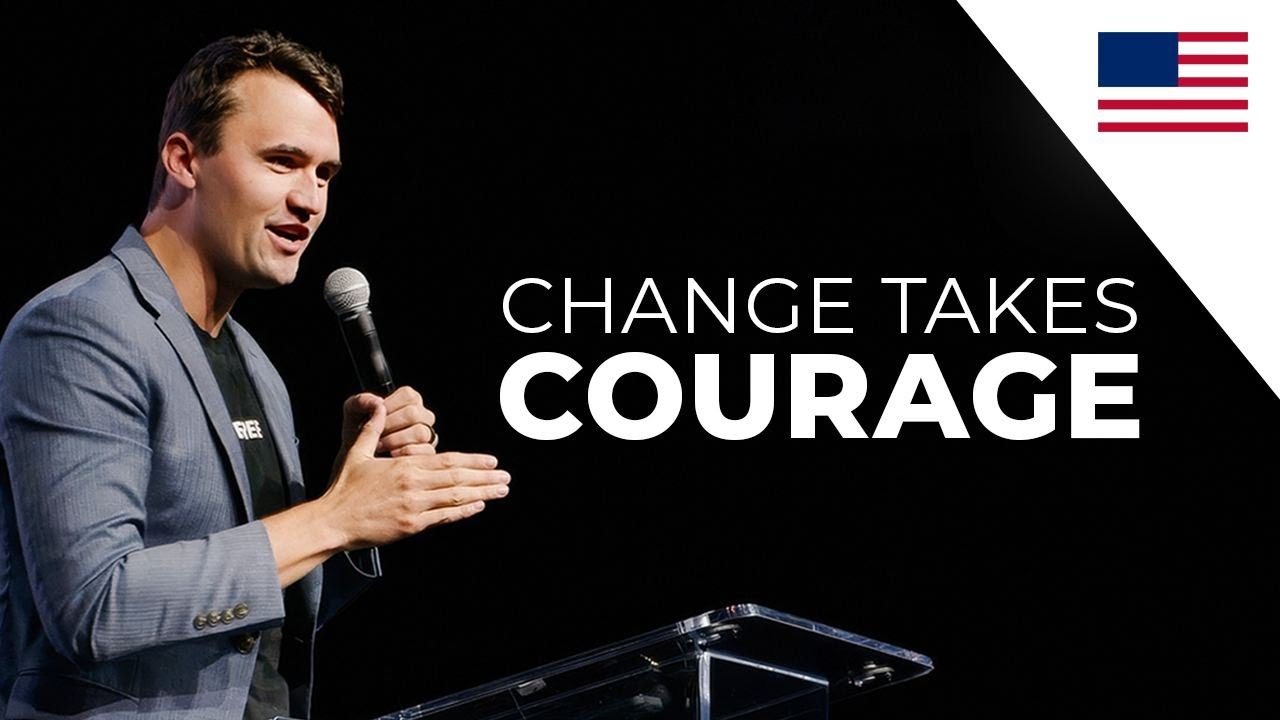
Charlie Kirk at University of Kentucky: Fighting Political Persecution, Wokism, and Standing for Truth
Enjoying this? Share it with someone who needs to see it.
Up Next
Charlie Kirk Releases Full Conversation With Gavin Newsom From California Viral Debate on Trans Athletes and Wokeism
1:22:50
Charlie Kirk Exposes the Greatest Failure of Modern Education and How Christians Can Fix It
19:52
Charlie Kirk Exposes Socialism's Threat to College Campuses and America's Future Generation
15:34
Charlie Kirk at University of Kentucky: Fighting Political Persecution, Wokism, and Standing for Truth
Charlie Kirk took questions from students at the University of Kentucky in a revealing open forum discussion. From tackling discrimination against conservative student groups to debating a self-described liberal on free speech, Kirk addressed the challenges facing young conservatives on college campuses. He discussed gender ideology, the importance of classical education, family relationships fractured by political differences, and the need for conservatives to articulate what they stand for beyond just opposing wokism. Kirk also heard from a mother who successfully sued her son's school for racial targeting, and a Korean-American refugee from California who escaped both North Korea and progressive policies. Throughout the evening, Kirk emphasized perseverance, truth-telling with compassion, and the urgency of defending American founding principles before it's too late.
Charlie Kirk opened the forum by addressing a student from Morehead State University who described how their Turning Point USA chapter had been attacked and discriminated against by student government. Kirk's advice was direct: persistence is essential. He invoked Saul Alinsky's rule of using the enemy's own rules against them, suggesting students throw the book at administrators when they violate their own constitutions and bylaws.
Kirk emphasized that endurance and perseverance are critical. He told the student that showing up and hoping for respectful treatment isn't enough—you have to demand it while maintaining integrity and kindness. The goal, he explained, is to be persistent enough that administrators eventually find it easier to say yes than to continue fighting.
A Liberal Steps Up to the Mic
In a memorable exchange, a self-described liberal approached the microphone, admitting to being nervous. She challenged Kirk's earlier statement that liberals find it easy to hold their beliefs because society agrees with them. She explained that she believes in her values deeply, just as conservatives do, and that if she wanted comfort, she would have become conservative like her husband.
Kirk probed her beliefs, asking what she stood for. She listed freedom, free speech for everyone, and freedom of expression. When Kirk asked if she supported sexually explicit drag performances in front of children, she said no. He pointed out that most liberals don't agree with her on that point, and asked if she would support removing child pornography from elementary schools—she said yes.
Kirk then referenced Ron DeSantis, who was attacked by Disney and left-wing groups for preventing propaganda and pornography from being shown to children. The woman disagreed with DeSantis, but Kirk argued she was more conservative than she realized. He pressed on the issue of graphic sexual content being taught to eight-year-olds in textbooks across the country, which liberals defend as free speech.
The conversation shifted to free speech. Kirk asked which side—left or right—is doing a better job protecting it. The woman said both sides are failing equally. Kirk challenged this, asking if a liberal speaker at University of Kentucky would give an open mic to conservatives like he just did. She admitted they wouldn't.
Kirk explained that speech is not a left-wing value, pointing to Chuck Schumer calling for censorship of a cable television program. He described how he and other conservative speakers like Ben Shapiro, Matt Walsh, and Candace Owens require armed security due to violent threats from the left. When he speaks at UC Davis, 120 police officers are needed because of these threats. There are no right-wing hecklers disrupting liberal events, he noted.
The woman attempted to argue that the First Amendment has legal restrictions beyond incitement, mentioning fighting words and hate speech. Kirk corrected her, explaining that even grotesque speech is protected—the ACLU famously protected Nazis marching in Skokie, Illinois. While no progress was made in changing minds, the exchange demonstrated where the disagreement lies.
Humans Over Nature
Kirk fielded questions about his view that humans are more important than the earth. One student asked what a human is without the earth or atmosphere. Kirk responded that humans could potentially exist outside of earth—we could colonize Mars—but obviously the earth is necessary for our immediate survival. When asked if God created humans elsewhere, Kirk affirmed that God created man on earth on the fifth or sixth day before He rested.
Thomas Sowell and Required Reading
An attendee asked Kirk about economist and author Thomas Sowell, whom the questioner had followed for over 50 years. Kirk enthusiastically endorsed Sowell, saying his work should be required reading in every college economics course. He specifically recommended "Discrimination and Disparities" and "Basic Economics" as life-changing books. Kirk explained that Sowell is a black economist raised in New York who shatters many myths that have infected our society.
Gender Dysphoria and Telling the Truth
A student asked how Kirk responds to someone who thinks they're in the wrong body, noting that this would be telling God He's wrong. Kirk said he responds with love and compassion, recognizing that such individuals are in the midst of a delusion and need to be told the truth and helped.
He explained that the American Psychiatric Association used to call this gender dysphoria but no longer does. The real question, Kirk argued, is why the new treatment—chemical castration, expensive drugs, and pediatric gender surgery—is considered better than counseling a twelve-year-old through puberty for six months or years before making irreversible changes.
Kirk described the wave of de-transitioners that is about to grow exponentially. Testosterone administration initially brings strength and mental clarity, but it plateaus after three or four years, leading people to think they need more surgery. The underlying identity problem isn't solved by surgery. Previously, cognitive behavioral therapy successfully helped people through this process.
He compared it to medical ethics: you don't give liposuction to someone with anorexia who thinks they're fat. Patients want things from doctors all the time, but that doesn't mean doctors should provide them. Kirk rejected the term "gender affirming care" in favor of "gender factual care" or better yet, using "sex" instead of "gender," since there are now supposedly 72 to 100 genders. His approach is to lovingly tell someone they're under a delusion, offer hope for help, and refuse to pretend they're something they're not.
Classical Education and Homeschooling
When asked about his plans for educating his daughter, Kirk said he and his wife are already homeschooling, joking that she'll know Madison, Jefferson, Jay, and the Federalist and Anti-Federalist Papers by age three. He plans to homeschool as long as possible, and if they find a good private school, great—but government school is not an option. He refuses to allow "predators" near his daughter.
Kirk acknowledged this might sound harsh to some, but explained he loves her too much to allow a government school system that has repeatedly shown through curriculum and practice that it doesn't care about the innocence of children or the pursuit of beauty, virtue, or goodness. Instead, schools seem more concerned about ideological agendas.
For those looking for private schools, Kirk recommended classical education—the way the American Founders were educated. This can be bibliocentric (Bible-centered) or Hellenistic-centered (Greek-focused). Classical education teaches students to think deeply about the process of exploring truth from a young age, in complete contrast to industrial education that most people experience today.
Students in classical education study Aristotle, Socrates, Plato, Augustine, and Aquinas. Kirk said the smartest, deepest kids he's ever met were classically educated, pointing to Hillsdale College as an example of what's possible through proper classical education.
Never Apologize Unless You're Wrong
A young man shared that his sister has become extremely woke on abortion issues. After a minor argument, she decided never to speak to him or their parents again. He asked whether he should stand firm with his beliefs or apologize to save the relationship.
Kirk's answer was clear: do not apologize, but do try to reconcile. You need to actively work to keep the relationship alive, but don't apologize because an apology means admitting wrongdoing. If you got heated or said something regrettable, that might warrant an apology—but never apologize for speaking the truth.
Kirk encouraged having compassion and love while actively reaching out to ensure the sibling bond remains alive. These relationships can go cold for years or decades, which is tragic. You can have differing views with family members and still be on speaking terms.
He noted that 99.9% of examples he hears involve liberals cutting off conservative family members, not the other way around. If the sister is demanding an apology, she's trying to take her brother hostage. Instead, Kirk suggested saying: "You're my sister and I love you. We see things differently. Are you going to allow that difference in certain beliefs get between our bond as siblings?" Relentless pursuit of reconciliation, he believes, will eventually lead to restoring the relationship.
Kirk also addressed the parents' perspective, emphasizing that honoring your mother and father is one of the most important things a human being can do. Even if parents were difficult, unless they were legitimately abusive, you must honor them. It's good for you, good for them, and if you cannot honor your earthly mother and father, you will not be able to honor the Divine Father.
Parents, Kirk added, would rather have their children on good terms with each other than on good terms with themselves. Nothing makes a parent angrier or sadder than when their kids won't talk to each other.
Conservative Unity Beyond Anti-Wokism
One student asked about the left's ability to unify despite differences while conservatives seem to continuously lose elections. Kirk called this one of the best questions he'd gotten in a while, admitting that the conservative movement—including himself—is largely held together by an anti-woke coalition. It's easy, unifying, fun, and actually true because wokism is a legitimate threat.
However, Kirk warned, you can't win hearts and minds long term unless you can articulate what you believe and why you believe it. This is why he's an enthusiast for the American Founding. He believes the American Founding should be the unifying call of the American right—a demand for self-government, strong and local communities, families first, rejection of the profane and licentious, and creating a project where human beings can flourish.
Kirk wants the American right to re-embrace the spirit of the American Founding, not just hatred or fear of wokism. A movement sustained only by opposition is not sustainable long term—it will lose because opponents will simply change and adapt. Movements need staying power through goals in the distance.
He praised the pro-life movement as an example. They said they wanted to repeal Roe v. Wade, and they did it. That's staying power. Conservatives need big, aspirational goals rooted in what unifies them: the promise of the American Founding.
Contrary to what's taught in schools, Kirk explained, the Founders were not liberal and did not hate religion. They were actually faith-filled people—55 of the 56 signers of the Declaration were Bible-believing, church-attending Christians. They understood biblical principles and relayed them into the most successful, longest-lasting constitutional project in world history. That vision, Kirk believes, should keep conservatives together the same way the left has been kept together.
Apathy and Cynicism Among Students
A University of Kentucky sophomore observed a lack of enthusiasm for politics, religion, and other important matters on campus. She asked why this is happening and how enthusiasm might be restored.
Kirk confirmed this isn't just a Lexington phenomenon. He's visited UC Berkeley five or six times and noticed a shift in the student body. He used to see students who were totally wrong but had energy, involvement, and spirit. In recent visits, there's a malaise of cynicism—people saying "what does it all matter, it doesn't impact me." That's disturbing.
The question being asked, Kirk noted, is the age-old philosophical question: how can I get people to care about what I care about? There's no easy answer. Events like this help. When things start to get more real, people pay attention. Personal ambassadors who care can inspire others to care. But if you allow yourself to be impacted by cynicism, those ideas and values will die.
Kirk described Gen Z as the most suicidal, alcohol-addicted, drug-addicted generation in history, incredibly cynical about politics, government, and religion. It's the least religious generation in history, which is tragic.
He expressed hope in the revival that happened at Asbury University, praising the students from Asbury who were present. That revival inspired millions of people across the country. Kirk believes if there was ever a generation ripe for a legitimate revival, it's this one.
Boycotting Liberal Companies
When asked about boycotting liberal companies, Kirk admitted he's torn but leans toward it being a good idea. He won't use Hershey's anytime soon, for example. Conservatives used to complain about boycotts, but it's probably time to use it as a tactic—refusing to voluntarily use your dollars against your value system and deeply held beliefs.
Kirk suggested a positive twist: find conservative companies that share your values. Everyone should have the Rumble app on their phone and stop using YouTube. Try to find alternatives in the parallel economy.
He expressed frustration with the modern cynical attitude, emphasizing that we need a new generation of entrepreneurs now more than ever. If you have an idea, act on it. We need entrepreneurs willing to take risks, especially ones who see the world from a conservative perspective.
Putting Human Beings First
A student from Kentucky asked about Rubbertown, an area west of Louisville where industrial plants sit next to neighborhoods, causing dramatically worse cancer rates and health issues. She asked how we can let people live in these environments if we want humanity to succeed.
Kirk said this was a point of agreement—they should always put human beings first. Where he disagrees is if someone said the squirrels are suffering; he doesn't care about squirrels, he cares about humans. Without knowing the details of the situation, Kirk said the policy position should always be what's best for human beings.
He gave an example from California where massive droughts could be solved by opening aqueducts, but officials won't do it because it might kill the Delta smelt, a fish no one's ever heard of except radical environmentalists. That's putting animals above human beings.
Kirk speculated that the reason local officials aren't addressing the Rubbertown situation is probably because powerful people control the local area. This led to an important point of agreement: human beings should come first. Industry should serve human beings, not the other way around.
As a conservative, Kirk gets pushback on this—people say "what about markets first?" But he's a human beings first guy. Markets should serve human beings, not the other way around. He's a free market capitalist but not an automatic cheerleader for every corporate interest. He pointed to East Palestine, Ohio, where environmental toxins from Norfolk Southern were completely unacceptable.
Kirk doesn't like powerful organizations, which is why he doesn't like government very much. He's learned that some transnational corporations work no better than government.
A Mother Who Fought Back
Tammy Nolan from Bellevue, Kentucky, shared that her biracial son Caleb was told to choose his race by two teachers when he was in sixth grade. She took the school to court, sued them, and won. She's now homeschooled him since then but asked what can be done about teachers who get fired and then just placed in another school district.
Kirk admitted there's not a lot that can be done about that currently, except taking back school boards and reforming them. He expressed disgust that sixth graders were being asked about race: "How about you care about telling the truth?" The teachers told Caleb not to tell his mom or there would be consequences. Of course there were consequences—his mother was in their face.
Kirk praised her for fighting back and said we need more moms like her. His advice: if your kid is in government schools, you have to hawk those schools—watch the curriculum closely and monitor the teachers.
Kirk acknowledged that not every family has the income for private school or homeschooling, so then you have to fight, exactly as Nolan was doing. He also noted that Nolan has been one of the biggest fighters against pornographic books in their county.
Street Preaching Gone Wrong
A freshman named David described someone who came to campus claiming to be a Christian and protesting homosexuality, but ended up shouting "you're going to hell" at the crowd. He asked how to face tough topics involving emotions, politics, and religion without offending people while still providing truth.
Kirk said he doesn't like that language at all for many reasons. While he believes in Hell, he doesn't believe anyone should go around with certainty about where somebody is going in their eternal destination. That's theological hubris. You can know your own salvation and destination, but be careful when shouting at people about theirs. It's cruel, ineffective, and makes it harder to win people over.
Kirk believes in natural law and the potential of all human beings to flourish as God intended. He wades into controversial, hard topics doing his best to use some form of whimsy and grace while also being blunt. His heart is to help people made in the image of the Creator live the way they're best suited to live.
Some people, Kirk fears, do more damage than good in their approach. The example given sounded like it got very emotional and personal. Kirk pointed to his own videos dealing with these discussions as examples of better approaches.
Wokism as Ancient Religion
A student asked how to prevent wokism from falling under First Amendment protections if it's grounded in an ancient esoteric religion that's antithetical to humanity. Kirk called this a really important question, noting that wokism has elements very similar to river civilization paganism—earth worship, pseudo-alchemy, and gnosticism.
Reading original books on gnosticism and hermeticism reveals the idea that you can change your being based on your own will and feeling. Twenty years ago, people would have laughed if someone said this would be the predominant view of public American life—that you could change your own existence based on your thoughts. Now it's considered normal: "of course you can just identify" as something else. That's a gnostic belief.
Kirk didn't know how to protect against it except by defeating them. He could see wokism filing itself as an official religion. The federal government has a threshold: you need a book (they have "White Fragility"), a leader (Robin DiAngelo and Ibram X. Kendi), and religious ceremonies (they have those too). They might satisfy religious requirements more easily than we give them credit for.
Keeping Freedom Alive in Kentucky
The final question came from Ethan, a second-generation Korean-American who recently moved to Kentucky from California. His grandmother was born in North Korea and escaped to the South during a one-month window thanks to NATO forces, mostly American. That 30-day window meant the difference between him being in North Korea or America.
Ethan listened to Kirk and Ben Shapiro while stuck on the 405 freeway for years. He had to leave California because it got so bad—crime skyrocketed during the Black Lives Matter riots, neighbors were assaulted, and Korean friends were attacked on the streets. Kirk acknowledged the problem of black-on-Asian crime that no one wants to talk about.
Ethan explained that what his grandmother and mother saw in California when they came over no longer exists. He asked how he as an individual can help keep that from happening in Kentucky, and how conservatives in general can keep it from happening in their states.
Kirk told Ethan that his family history will now be two chapters of fleeing tyranny—fleeing North Korea and fleeing California. Ethan replied that he'd like to avoid a third time. Kirk agreed emphatically.
His advice: Ethan needs to tell his story to as many people as possible. Americans need to wake up to how bad things can actually get. They have no idea what happens in North Korea, and they largely don't understand how wretched California has become. Personal, firsthand testimony from people like Ethan is incredibly important.
Memories are critical, Kirk explained. This is why the Chinese Communist Party has been successful—there are no generations left in China with memories of freedom. Not a single person remembers what it was like to not be under Maoist CCP rule. It's equally important to have memories of how bad things can become.
Ethan's voice is incredibly important because he can be a firsthand testament when left-wing activists say "things can't get that bad, it's fine, we need more government power."
Ethan made one final observation: if anyone can think of another place to escape to for freedom, he'd like to know, because America is it. You can't go anywhere else. You have to stand and fight at some point, and that point is now.
The audience erupted in applause as Kirk closed the evening, affirming that the time to stand is indeed now.
Video Transcript
[Applause] so I'm the president of the chapter at Morehead State University and we have had different events throughout the past semester and our student government has kind of attacked us for it and tried to discriminate against us so what is your advice to other chapters and other conservative organizations to kind of combat this political persecution from student governments yeah that's that's a good question um you have to be persistent right you have to use their own rules against them and so that's that's an olinsky rule by the way uh use the enemy's own rules against them which is if they have Clauses in the student Constitution or in the student bylaws or the university bylaws and they're discriminating against you or they're treating you differently then use then throw that book at them be like wait a second we're allowed to do this but the biggest thing I have to tell you is you have to have endurance and perseverance right it is not enough just to show up and hope you're treated well um you you have to demand um you have to demand respectful treatment right and but do it respectfully and do it with integrity and do it kindly at the same time though do not put up with um do not put up with them using their power against you because they don't see the world the way you do right and their strength in numbers and strength in community and you also want to be annoying enough where eventually just say yes and they make you go away that's actually half the battle am I right for all of our Turning Point chapter leaders right that's half the battle God bless you thank you um hello so I am a self-described liberal and I honestly did not think that I would be so nervous but I am and I wanted to kind of clear up some things you had said earlier that it's easy you to ask if it's easy to hold liberals is it easy to hold your beliefs and oh it's easy because the rest of society agrees with you yada yada however that's not why I find it easy I was liberal before it was cool um I find my beliefs easy to hold because I believe them in my soul and I feel like a lot of conservatives are the same way your your beliefs aren't subject to acceptance or disacceptance um some something else and I mean and honestly if it were about what would be easy would be if I wanted to make my life more comfortable I would change and become conservative um because my husband has been caught up in in has changed his way of thinking to be a conservative person over the past couple of years caused absolute disarray so if it were something where I could just say oh well you know if you could get somebody to change their values yeah so let's try to make some progress what do you um what do you believe and why do you believe it well I believe actually a lot of the same things you believe just maybe in a more broad sense like I believe in Freedom okay I believe in free speech I believe in free speech for everybody um I believe in freedom of expression if you were born with a penis and you want to wear a dress have at it it's not my it's not my life and I don't get to dictate to anybody else what's right or wrong um I don't believe that man is above nature because then is man unnatural if man is separate from nature is man unnatural man is made in the image of the Creator but I do want to I do want to mention zero and on one thing here which is um so you say it's you don't care what other people do just curiously do you do you think it should be okay for adults to perform drag performances in front of children how about a sexually explicit one of them okay so we agree on that and by the way most liberals don't just so we're clear right I know zero liberals that think that it's okay to expose children to sexually explicit stuff okay so you would be partners with me in removing child pornography from elementary schools yes okay so you're a big fan of Ron DeSantis then nope well he did that he was attacked by Disney and he was attacked by every major left-wing group as harsh anti-gay don't say gay he was just saying you're not allowed to put propaganda or pornography in front of kids I think you're actually more conservative than you are liberal than you give yourself credit for no no no no hold your applause I am not because where we differ is in how we Define what is profane what is pornography how about oral sex to eight-year-olds that's probably profane right excuse me yeah exactly that's in that's in textbooks across the country including in this state that Liberals are defending as free speech okay they're teaching eight-year-olds the most graphic sexual practices in public schools across the country and I get smeared slandered and so does the American right as somehow being anti-lgbt because I don't think a nine-year-old should be exposed to things that should be behind in the darkest depths of the human existence right so I guess we agree on that when I'm trying to get get at though is why you believe what you believe and we could spend all night doing this um you say you believe in Freedom and Free Speech right okay so which side do you think the American right or the American left currently is doing a better job of protecting the idea of freedom of speech uh actually they're both sucking pretty hardcore they're both being absolutely horrible at it how has the right been horrible at that I'm I'm curious they're both being horrible in the exact same way and it's who are they protecting or standing up for free speech for like free speech Four who can I ask a theoretical question do you think if a liberal came to speak at University of Kentucky they'd give an open mic like I just did to a conservative and had a discussion like this they would no they wouldn't because speech is not a left-wing value that's why Chuck Schumer went on the senate floor yesterday and called for the censorship of a cable television program that is why they have to deploy shock troops called antifa to go after everywhere I go when I go to University of California Davis next week there has to be 120 police officers because of the threats the violent threats of liberals that want me dead that want to disrupt our events there are no right-wing hecklers that come to events like this Michael Knowles Matt Walsh Ben Shapiro myself Candace Owens need 24 7 365 armed security to prevent ourselves from the violent threats from the left and so I think it's rather clear there's one side that is trying to do everything they can to shut one side up and one side that's trying to open up the marketplace of ideas and I think that's rather self-evident but I do want to thank you for coming here tonight and demonstrating totally disagree with every thing you just say I don't discount that you've received death threats or anything like that so how about this public approval polls show that a majority of liberals do not believe the first amendment is absolute what do you have to say about that it's I mean it's not absolute there are restrictions to the First Amendment such as there literally are legal restrictions to it outside of incitement what would one be okay um let's see let me think do you think the high school Civics do you think hate speech should be disallowed um fighting words is disallow fight not fighting words it's I mean it's called that though um no they're very much not disallowed actually they they are disallowed if your speech is considered by a reasonable person to and they harm you because of what you said what you mean hurt their feelings or physically I mean okay if you intentionally provoke a person with your speech that is not protected speech yes it is it actually the American civil liberties Union protected Nazis to be able to march in Skokie Illinois around Holocaust Survivors grotesque outrageous speech is absolutely protected by the thing that growth I'm saying that I can't really explain it right now but there there is a limitation on that another limit is like you can't um speech that uh like you can't yell fire you actually can but that's a separate constitutional issue that's incitement that's a separate issue but I thank you for being here tonight and I don't think we made any progress but we certainly see where we disagree so all right next question hello my name is Jeff um it's uh more of a question for me to understand your view on something um you said that you view humans are more important than the earth yes uh what is a human without the Earth or just the simple atmosphere that gives us the ability to to live on earth humans could potentially exist outside of the earth I mean we've I wouldn't disagree with them we've got to believe in that too we could colonize Mars but obviously in the immediate the Earth is necessary for our survival obviously do you believe God created us somewhere else and we have come from somewhere else or do you think he created us here he created us here on like Wednesday or something well no God created man on what the fifth or sixth day before he rested if I'm not mistaken yeah am I right yeah okay that was that was a lot I just wanted to understand okay sorry all right next question yeah sure hi Charlie my name is Dan welcome uh I followed you for some time and I've never heard you comment on what I was going to act ask you uh there's a commentator author whom I have listened to for more more than 50 years uh who I think is wonderful his name is Dr Thomas Sewell he's my man I love something I've never heard you comment on him and I just wanted to see if if you were a fan of his yeah I mean I think it should be required reading in every College economics course the best book is discrimination and disparities it'll change your life and basic economics he wrote over 50 books Thomas Sol is a black Economist who was raised in New York and shatters so many of the myths that have infected our society okay thank you very much I admired him and thank you for your time thank you by the way if you disagree you're allowed to go to the front so just keep coming no no not you sir I'm saying in the line if anybody disagrees there our our staff will help identify okay yes so you mentioned that you you're fairly in line with the Bible and I'm glad you are I am too um and you know I think as you know God created a man and woman and so how would you respond to someone who thinks that they're in the wrong body so like say they say they're male they think they're female or want to be female isn't that technically just telling God that he's wrong um this you you pretty much you're pretty much just beating them down I mean yeah how would you respond to someone sure I mean with love and compassion I mean they're in the midst of a delusion and people that are in the midst of a delusion need to be told the truth and need to be helped but if you think you're in a different biological you know being than you actually are you're suffering from something and the American Psychiatric association used to call this gender dysphoria we no longer call it that and so the real question should be why is it all of a sudden the new way of treating this which is with chemical castration and extremely expensive drugs and pediatric gender surgery better than maybe telling a 12 year old hey you're a woman you're going through puberty maybe let's have some counseling for six months or two years or three years before we I don't know make you go under with the knife and make you have irreversible damage and so all everything should be done with love and compassion I think it's cruel and harsh and medieval to have teenagers thousands of which every single year have their breasts chopped off and are having mastectomies I had an unbelievably powerful hour-long dialogue with a d transitioner by the way we are about to see one of the saddest community of people grow exponentially which are de-transitioners and like clockwork you get administered testosterone you get all of a sudden you start to feel stronger more mental Clarity but it has a plateau effect after three or four years and you always think like you need more surgery and you need more surgery because if you think that's actually going to solve the problem it probably isn't because it's a much deeper identity problem that you're having right and so the way that it was actually solved successfully by counselors across the country was through cognitive behavioral therapy and going through a process of loving on the person enough to tell them the truth that they're actually not the thing that they think that they are and here's the best example I have for this it is not loving to always give a patient what they want you do not give liposuction to somebody that has anorexia it will kill them I'm fat no you're not actually you're 95 pounds and you're under a delusion where you think you're fat patients want thing from doctors all the time gender affirming care it's nonsense it's dribble instead it should be a gender factual care this is and by the way I don't like the term gender I just I think sex is a much better term because I think gender is actually going too far so I would say that you're under a delusion I hope you get help and I'm not gonna I'm not gonna pretend that you're something you're not just because of that yeah I mean there's 72 genders now so you can't really I think it's up to 100. it could be is it all right fast one more question uh we got a long line I'm sorry thank you thanks hey Charlie we spoke at the event you had at University of Vermont oh yeah a couple of years ago so besides your organization and a few others oh yeah I remember you yeah you remember me yeah I do great so besides your organization and a few others there's no so much involvement with the younger generation coming from Republicans and the GOP you know where I'm going yes that's why I'm doing um while I personally feel that the Democrats and the left specifically are doing a fabulous job at getting the young ones involved and they are much better organized why do you think that is and why can't Republicans and the GOP do going forward to get more engaged with the younger generation it's a great great question thank you look my my job is hard because at the core of my message it's not free stuff or blaming other people for your problems my job is to have you resist the temptation of human nature to sit at home all day long and do weed and blame people for their problems and get free money my job is actually to tell you to go do hard stuff that is infinitely more rewarding than blaming people for your problems and so by definition it's harder by definition I'm going to tell you know get married and have kids and you won't sleep for 20 years okay but your life will be deeper and you'll be happier I'm here to tell you that you should care more about your duties and your obligations than your feelings and your emotions that's a hard message to sell because the modern self the way that we teach young peoples you're the most important thing your feelings your your own creation of yourself it's garbage it's rubbish and a lot of even some conservatives don't like it when I talk like this and to the earlier answer someone says well why do I care if a man pretends to be a woman I'm not here to tell you what to do of course you could do some things privately you could be mentally deluded that's not the problem and let's not let's not lie to ourselves you know the problem is they're forcing us to accommodate their own delusion that's what's going on it's not about some sort of private thing where we're going around and being like are you actually a man are you a woman no it's men who are now competing in NCAA swimming competitions and women winning them and exposing themselves to women and all of a sudden we're like well you know that is progress because even though he has a penis and he's in a female locker room he identifies as a woman your identification means nothing it means nothing and he hears it people say well Charlie got to pick my pronouns do you get to pick your adjectives do you get to pick if you're tall skinny Rich successful good grades or are we gonna throw out all objective reality because we all of a sudden want to platform somebody's own identity crisis over what is actually materially true thank you for the question good enough man thank you hey my question is about your kid or not necessarily your kid but kids in General on your opinion about homeschooling private school public school and I asked specifically about your kid because it probably shows the most about what you actually want you know yeah we're uh we're already homeschooling as I like to say right uh we're going through the Constitution ABC's I'll tell you that that kid is going to know Madison from Jefferson to Jay and the Federalists and Anti-Federalist papers by the age of three I'll tell you what that's that's uh she's gonna be a super stuck um we're gonna homeschool as long as we can and if we find a really good private school great but we're not going to go to government school it's not going to happen I'm not going to allow these predators to get near my daughter it's not going to happen and I know that some of you say Charlie oh that's too harsh I love her too much to allow a government school system that has repeatedly shown me institutionally through curriculum and practice that they do not care about the innocence of children they do not con they do not they're not concerned about the pursuit of beauty or virtue or goodness it seems as if they're much more concerned about some ideological agenda so that's what I'm doing personally what you guys decide to do I hope it works out for you and God bless you and if you are homeschooling I am a massive fan and appreciative of that we need to have more people homeschooling in America okay could I then ask what if you were to look for a private school what would your criteria be yeah and then if when would it be more beneficial to do like homeschooling if the the mother would then stay home and not be able to work sure yet it's tough so private school look for classical education I'm sure there's a classical school in the Lexington area am I right Maybe not maybe I hope not I'm sure there's one in this state somewhere I bet there's a bunch of them classical education is the way the American Founders were educated um you could do it bibliocentric or you could do it um which I prefer or you could do it Greek Centric um or I guess that would be Hellenistic Centric I guess I don't know that's the right term but um basically classical education gets students to think very deeply about the process of exploring truth from a young age it is it is completely against industrial education which came to really almost everybody here was probably educated industrially they're going to be studying Aristotle Socrates Plato Augustine Aquinas the smartest deepest kids that I've ever met were classically educated and I mean Hillsdale College is a classical education and they've done a fabulous job of showing the world what's possible through a proper classical education thank you for being here tonight appreciate it thank you first of all thanks for coming tonight I appreciate it you said earlier that we should never apologize unless we have something to apologize for my sister and I have grown up in a very conservative Christian environment and that particular sister has now become very woke extremely on the matter of abortion we have had a minor argument and she's decided never to speak to me or my parents again um if I feel that I'm in the right do I stand firm with my beliefs or do I apologize and try to save that relationship no you do not apologize but you try to reconcile you you need to be actively trying to make sure the relationship stays alive but do not apologize because an apology means that you are then admitting that you had wrongdoing now if you got heated or said something you regret I don't know maybe not no okay then you don't have then you don't have anything to apologize never apologize for you know speaking the truth but you should try to reconcile you should have compassion you should have love but you should be actively reaching out to try to make sure the bond between your sibling remains alive because those can go very cold and it can go years and then decades and that is a bad thing I I do not recommend that happens you can have differing views with family members and still be on talking terms it is a tragedy though and I'm sure it exists but 99.9 of every example that I hear to the earlier question is liberals cutting off connection with conservative family members not conservatives cutting off connection with liberally liberal family members that's just an interesting thing but no you if she's asking for an apology then she she's trying to take you hostage and that's a bad thing but instead you could say you're my sister and I love you we see things differently are you going to allow that difference in certain beliefs get between our bond as siblings and you have to keep on relentlessly going after that and I believe eventually hopefully you'll be able to have some sort of a firm relationship there but you have and from the parents standpoint this is one of the reasons I get so angry with um modern secularism honoring your mother and father is one of the most important things that a human being can do period it doesn't matter if your parents were crummy or awful if they were legitimately abusive you have you have an out 99.9 of the people in this room did not have legitimately abusive parents okay just not possible if they were mean to you and all this doesn't matter you must honor your parents it's good for you it's good for them and if you cannot honor your Earthly mother and father you will not be able to honor the Divine father okay that's a separate issue your parents have to go through and even I think harder thing but let me say this your parents are also I don't know if they've told you this or not but they would rather have you and your sister on good terms than them on good terms with their daughter nothing makes a parent angrier or more sad than when their kids don't talk it's one thing for kids to get mad at parents it breaks the heart of parents when their kids won't talk to each other you say that all throughout the Bible so do your best to heal that I hope that's helpful thank you very much [Applause] Charlie thanks for coming out tonight first of all really appreciate it uh just have a quick question for you the left seems really good at unification even under their differences they seem to you know continuously win elections even as their ideas shift some people it used to be Democrats may not believe this gender stuff but still seem to vote that direction but sometimes it sees the conservative party continuously loses even though this happens what do you propose the solution is you know being conservative what can we do as a younger generation but also just what can the conservative party do in general this is this is one of the best questions I've gotten in a while because I've been thinking about this topic the conservative movement and I'm guilty of this and I'm trying to stop being guilty of it okay the conservative movement is held together largely on an anti-woke Coalition okay it's easy it's unifying it's fun and guess what it's actually true because the woke is a legitimate threat against everything we love but you're actually not going to be able to win hearts and Minds long term unless you're able to articulate what you believe and why you believe it and this is why I am an enthusiast for the American founding I think the American founding needs to be the unifying call of the American right the American founding was a call into the abyss that we demand self-government we want strong and local we want Families First we're not going to put up with the profane or the licentious and we are going to be able to create a project for human beings can flourish I want the American right to re-embrace the spirit of the American founding and I think that can actually unify us not just our hatred of the woke or our fear of the woke that is not sustainable long term we will lose because they'll just metamorphosize they'll change they'll lie a movement can be against things for a short period of time and then it's brittle and will fall apart you want staying power have have a goal in the distance and you got to give credit by the way to the pro-life movement look at how good the pro-life movement has been and how successful they've been because they say we want to repeal Roe versus weight and they did it that's what's so amazing I mean they actually got it done and so we need to have big far out aspirational goals that are rooted in the one thing that unifies all of us as conservatives and it's not religion even though we are largely Christian it is what was the promise of the American founding and the promise of the American founding was not a liberal promise because actually that's what's taught in a lot of our schools the founders were actually liberal and they hated religion not true they actually were faith-filled people 55 and 56 of the signers of the Declaration where Bible believing Church attending Christians but they understood biblical principles and relayed them directly into the most successful longest lasting constitutional project in world history that's something I think as conservatives we should re-embrace and that could be a vision that could keep us together the same way the left has been kept together thank you thank you appreciate it hi Charlie so um I'm currently a sophomore here at the University of Kentucky and something I feel that I have picked up on in my time here is that there seems to be a lack of enthusiasm for politics religion yep um a plethora of things and uh so really my question is why do you think that that is and how might that enthusiasm be restored this is not a phenomenon that is just in Lexington um it's really interesting outside of a couple campuses you know I I have visited University California Berkeley and have spoke there six times now five or six times and every time I go I see a different type of student body and I'll be very honest I miss what I used to see what I used to see when I used to go to University of California Berkeley were students that were totally wrong but they had energy and they were involved and they had spirit and some of them were rather awful but they weren't cynical what bothers me in my recent visits to Berkeley is there is a kind of a malaise of cynicism and I'm guessing you're seeing the same thing where people are like ah what does it all matter it doesn't impact me that's disturbing and what the question you're asking is the age-old question the philosopher how can I get people to care about the stuff I care about right not an easy answer events like this help right hopefully when things start to get more real and I mean I don't know it could be more real than your salvation but that's my own personal opinion right but you have to have ambassadors like we have a turning point USA that care if you care you can get other people that care but if then you allow yourself to be impacted by the cynicism then those ideas and those values will die does that make sense but understand that this gen Z it's the I I think I said this earlier most suicidal alcohol addicted drug addicted generation in history incredibly cynical about all things politics all think government all thing religion least religious generation in history it's really sad and I hope you guys can tell me that the Revival I don't the Revival still going on here praise God to happen right down the street anyone from Asbury here anybody yeah praise God um and you guys inspired so many millions of people across the country I don't know if it's still going on in other places um I I I love that I want to see more of that I think it's important um but boy if there was ever a generation that was just ripe for a legitimate Revival would be this one um and I hope that can happen soon thank you appreciate it thank you I was wondering uh what do you think about like boycotting uh liberal companies yeah I'm not yeah I'm torn on it probably a good idea um but I mean I'm not gonna use Hershey's anytime soon right I mean that's a good example I do encourage p i the only thing is because we used to complain about boycotts all the time but it's probably time that we use it as a tactic right to just say you know what I'm not going to voluntarily use my dollars against my my value system and my deeply held beliefs right and so I would I would I would do a positive Twist on it which is try to find conservative companies that share your values everybody here should have the rumble app on your phone stop using YouTube and use Rumble as we're streaming live on YouTube by the way um use Rumble try to find Alternatives in the parallel economy and let me just say this and this is one of the things this is one of the things I can't stand about the modern cynical attitude it just drives me nuts for every young person out there we need a new generation of entrepreneurs now more than ever if you have an idea act on that idea we need entrepreneurs we need people to take risks we need them more than ever especially ones that see the world the way we do so thank you appreciate it hi Charlie my name is Holly thank you for being here so I hate to like Circle back because I know we already touched on this but when you said man is above Earth is that correct nature yeah nature Excuse me yes so I know like a big issue here in Kentucky is rubber town which is located west of Louisville so how can we allow people to live in cities like this I'm not sure if you're familiar with it when this is not very can you just give me this yeah so essentially there's industrial plants right next to neighborhoods and cancer rates and health rates are dramatically worse here because of this how can we let people live in these environments if we want man to be successful and throw and grind and grow here yeah that's actually I think we're going to agree because you're using really good facts that interest me which is human cancer rates and human flourishing so we're on the same page we should always put human beings first where I disagree is if you came here and you said well Charlie the squirrels are suffering I couldn't care less about the squirrels I care about the humans and so I think I I don't know the details of the story I don't know if it's overblown or if it's right down the middle I I I literally don't and I'm going to take you at your word that you know that it's legitimate then the policy position should always be what is best for the human being right and this is something at times where you know conservatives are afraid to articulate it in that sense but let me give you an example that prompted my you know dialogue which is in California there's massive droughts massive massive droughts okay and it could be solved in some sense if they would just open up some of the aqueducts and take some of the water actually from the Central Valley but it might kill something called the Delta smelt which is a fish that no one's ever heard of and no one really cares about except radical environmentalists and so that's an example of putting an animal or a creature above human beings because I mean if you're talking about human beings being impacted then you have my attention and my sympathy do you I'm curious to see why government or local officials aren't taking a bigger Step at acknowledging how harmful this is because I know a lot of people that live in these neighborhoods they can't afford to just pick up everything and move to know the nice part of town so why aren't we supporting them or allowing them access to you know cleaner air out of an industrial chemical plant yeah if I were to speculate without knowing all the details it's probably because of some powerful people that control the local area I'm just speculating is that probably right and I think that this is actually a very interesting point of agreement which is we put human beings first right and human beings industry should serve human beings human beings should not serve industry and as a conservative it actually um it I get pushback on that right people say well Charlie come on what about markets first I'm kind of a human being's first guy right which is markets should serve human beings human beings should not serve markets right and I'll use a separate example that I know a lot better which is what happened in East Palestine Ohio is completely and totally unacceptable right from the environmental toxins and from Norfolk Southern and so what you'll find from me is I am a free market capitalist guy but I'm not an automatic default cheerleader for every corporate interest I'm not nor do I think you should be as a conservative do I think there's sometimes more to the story do I think there's Nuance yes but if we're honest with ourselves we as conservatives don't like powerful organizations that's why I don't like the government very much and what I've learned is that some of these transnational corporations sometimes don't work any better than the government I don't know the specific sphere example but you certainly I think we're actually agreeing largely on a lot yes I think so too I just want to get your thoughts appreciate it thank you hi Charlie thank you for being here um my name is Tammy Nolan I'm from the Bellevue Kentucky area my son Caleb was in the sixth grade in the Bellevue Public School System he is biracial and he was told to choose his race um yes my two teachers there and I actually took the school to court sued them and won I've now homeschooled him since since that and but my question to you is what do we do about the teachers who they fire and then they just put them in another school district yeah there's not a lot you can do about that currently I mean taking back school boards and reforming them I am curious why do they even care about your kids race sixth grade because they knew I was a big they targeted him it's just so sick sixth graders caring about their race like how about you care about telling the truth right and I told him don't come home and tell your mom or there would be consequences so of course there was consequences because I was up there in their face yeah good for you um by the way we need more moms like you so I mean that I don't have a good answer for you on what to do with relocated teachers after they they do that except that if your kid is in government schools you have to Hawk those schools right correct Hawk the curriculum Hawk the teachers and I also want to acknowledge when I say I'm going to homeschool my kids and go to private school not every family has the income to be able to do that or the private schools that have the accessibility and so then you gotta fight which is exactly what you're doing right and I know you were talking about the books that would be the pornography books that are being important you've got one of the biggest Fighters right here has done that in our County I love it God bless you thank you hi hi Charlie my name is uh David gint I'm a freshman here at University of Kentucky and uh today we had somebody come and uh claim to be a Christian and was uh basically protesting homosexuality and things like that um but along the way what I think was uh maybe meant with good intention started becoming them saying to the crowd you're going to hell and you're going to hell and I don't like that so I no and I don't like it either I think it's a large misrepresentation of we know Christianity being based on love and things like that and so how do you how do you face tough topics like that uh without that are that do have to do with emotions politics ties in with emotions religions ties in with emotions so how do you talk to somebody who is a homosexual or something like that without offending them while still providing them with truth I mean look they're made in the image of God and I mean this and I I don't like that language at all for a lot of reasons and also it's just I do believe in Hell let me be very clear I'm not one of those Christians right but I also don't believe that anyone should go around with certainty that you know where somebody is going in their Eternal destination I think that's really wrong I think that's theological hubris I really do um I believe you can know your destination and what your salvation is and then you know be careful when you start shouting at people also I just think it's cruel and ineffective and actually makes it harder to win people over and that's not exactly the way that I would do it at all but look it's very simple I believe in a I believe in the natural law and I believe in the potential of all human beings to be able to flourish as God intended them and I weighed into the most controversial hardest topics I do my best to try to do it with some form of Whimsy and Grace also be blunt though right but my heart is to try to get people and I love people that are made in the image of the Creator to be able to live the way that I believe they're they're best suited to live um and I'm afraid some people do more damage than good in that regard based on the example that you've you've delivered there and it sounds like that got very emotional and very personal right um and so I don't know if that fully answers your question but you can also see lots and lots of videos of me dealing with those kind of discussions there right yeah that I think are really important so thank you thank you hello Charlie as we come as we become increasing increasingly aware that wokism is grounded in an ancient esoteric religion and I call this you know in a cult how do we prevent it from falling under the protections of the First Amendment as it's antithetical to humanity as some other religions may also be that's a good question the issue it's really good the issue is our judges are so screwed up I could see them probably issuing some opinion what you what you mentioned is really important which is that the elements of wokism are very similar to river civilization paganism right whether it be Earth worship or whether it be any of these different things even from the the it's almost like pseudo pseudo Alchemy and gnosticism and if you go read the original books on gnosticism and hermeticism it's about how you're able to change your being based on your own will and your own feeling now 20 years ago you guys would have laughed me off stage if I would have said that it would be the predominant view of public American life that you could they could change your own existence based on your thoughts now it's considered to be trans like oh yeah of course you could just that that's a gnostic belief is what it is um I don't know how to protect against it except we have to defeat them I I mean I could see that they'd they would have to file themselves as an official religion uh which there is a threshold thankfully the federal government has it means you have to have a book well they have white fragility you have to have a leader well they have Robin D'Angelo and even Max Kendy and all these people you'd have to have religious ceremonies well they have those too so they actually might satisfy some of the religious requirements more easily than I think we give them credit for God bless you thank you all right the last question howdy Mr Kirk my name is Ethan I'm a refugee from California I just got here um maybe October I now live in Crab Orchard I saw your ad on Facebook maybe about two hours ago oh wow I got rid of I got I fed the cows and I got in my truck and I came down here I love it I unfortunately missed the first half I'm kind of sad about that but my question is is that my I'm a second generation korean-american now I'm a proud Kentucky um my grandmother was born in North Korea and she escaped to the South because of NATO forces but mostly American in a one-month window so that 30 days could have meant that I would have been there not here moved to California my mother and that was a America was a passion of freedom and it always was to our family um I listened to you and Ben um while I'm stuck on the 405 for many years so it's pretty cool that's actually right here I can't believe it right um I had to leave California it got so bad uh the crime went through the roof especially with the black lives matter riots my neighbors were getting assaulted uh Korean friends of mine were getting attacked on the streets it's a big problem yeah it's black on Asian crime and no one wants to talk about it yeah really no one wants to talk about that yeah we're supposedly part of the minority and we completely disagree on a lot of what the left is doing so my question is is what my grandmother and my mother saw in California when they came over here was no longer like that how do how do I as an individual help keep that from happening in Kentucky and how do conservatives in general keep that from happening in their own States that's such a good question and I'm glad you're in Kentucky we need you here let me let me mention a couple things um you have a distant memory via your mother you said or your grandmother was in North Korea my grandmother was born in North Korea yes you have a distant memory of totalitarianism but you also have an immediate memory of totalitarianism because you lived in California it was pretty bad and isn't it interesting that your family's history will now be two chapters of fleeing tyranny fleeing North Korea and then fleeing California I want to avoid a third time huh I would like to avoid a third time yeah no kidding I don't want to have to have you flee Kentucky let me tell you some personal advice you need to tell your story to as many people as possible you need to wake up Americans to how bad things can actually get they have no idea first of all what happened or happens in North Korea and they have no idea largely in this they kind of hear stories about California about how wretched that hellscape is actually becoming and so personal first-hand testimony from people like you is incredibly important and you showing up to this event listening to our podcasts and supporting us is incredibly helpful and important but memories are critical this is one of the reasons why that the Chinese Communist party has been successful is because there's no Generations left in China that have memories of freedom not a single person that remembers what it was like to not be under maoist CCP rain and it's equally as important to have memories of how bad things can actually become and that's why your voice is so incredibly important because we hear from left-wing activists oh things can't get that bad it's fine you know we need more government or power you could be a firsthand Testament to that one thing that I have noticed is if anyone here can think of another place that you can escape to for Freedom I'd like to know because I think that where it this is it you can't go anywhere else you got to stand and fight at some point and I think that point is now so God bless you thank you so much [Applause]