Up Next
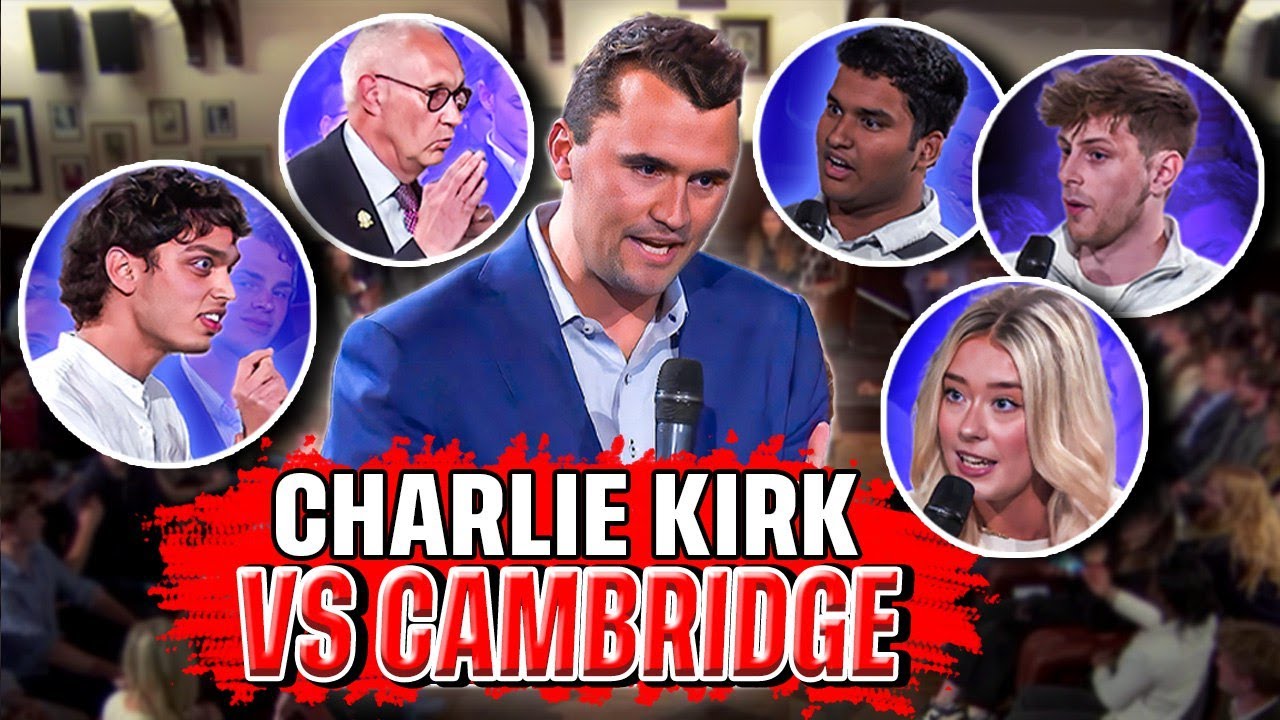
Charlie Kirk Defends Trump, Debates Abortion and Feminism at Cambridge Union in Heated Exchange
1:06:27

Charlie Kirk Debates Students on Trump, COVID Response, Immigration and the Economy at Campus Event
18:51
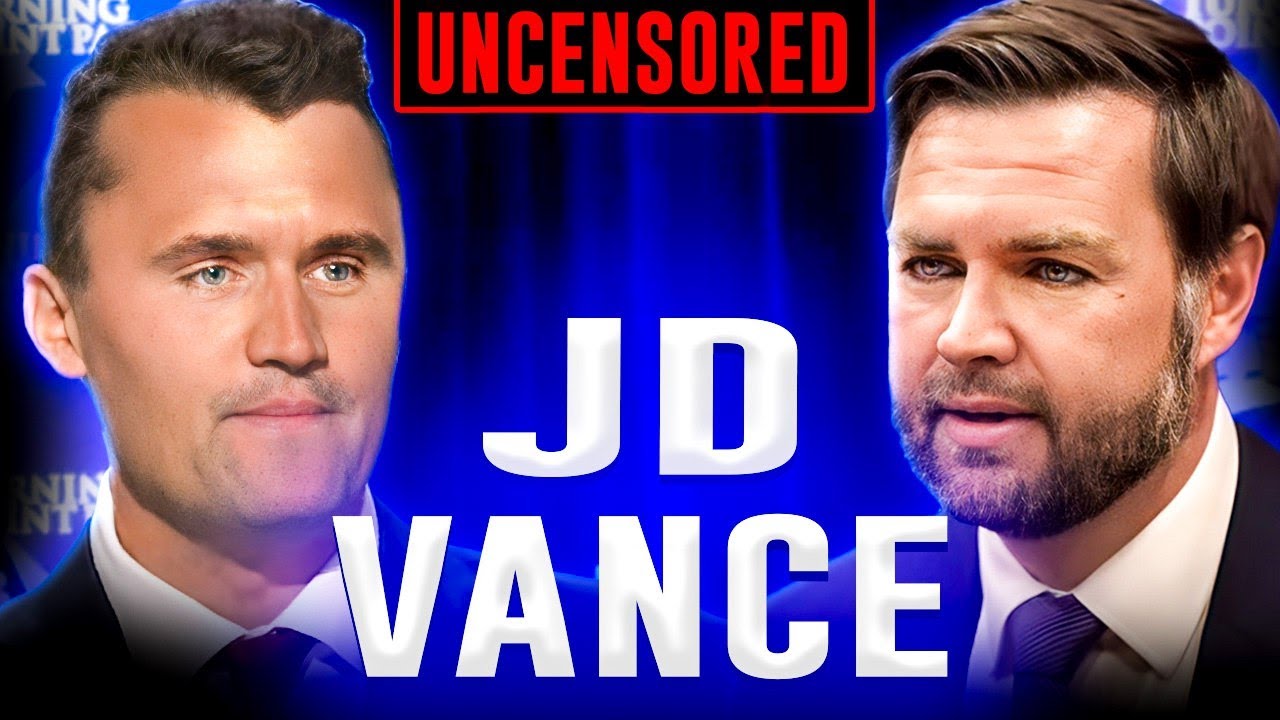
JD Vance Warns Gen Z About Becoming Paupers in Their Own Country at High Point University
46:55


Charlie Kirk is the Founder and President of Turning Point USA, the largest and fastest growing conservative youth activist organization in the country with over 250,000 student members, over 150 full-time staff, and a presence on over 2,000 high school and college campuses nationwide. Charlie is also the Chairman of Students for Trump, which aims to activate one million new college voters on campuses in battleground states in the lead up to the 2020 presidential election. His social media reaches over 100 million people per month and according to Axios, he is one of the "top 10 most engaged" Twitter handles in the world. He is also the host of “The Charlie Kirk Show,” which regularly ranks among the top news shows on Apple podcast charts.
Subscribe on YouTubeCharlie Kirk Debates Abortion, Tariffs, and Christian Nationalism at Purdue University Campus Event
Charlie Kirk hosts an open forum at Purdue University, engaging students and community members in spirited debates about abortion, economic policy, faith in politics, and America First principles. From challenging pro-choice arguments using bodily autonomy logic to defending Trump's tariff strategy and confronting claims about Christian nationalism, Kirk fields questions on DOGE transparency, IVF ethics, military service for Christians, and transubstantiation theology. The event showcases both hostile protesters outside and good-faith disagreements at the microphone, demonstrating Kirk's commitment to open dialogue on college campuses where conservative voices are often silenced or graded differently.
Standing for Open Dialogue at Purdue University
Charlie Kirk opened his Purdue University campus event with gratitude toward the administration for supporting free speech, contrasting the warm welcome with what he anticipated would have been a hostile reception at Indiana University. The packed venue demonstrated significant student interest in engaging with conservative ideas, even as protesters chanted outside. Kirk emphasized the importance of civil discourse, inviting anyone who disagreed to come to the microphone rather than simply screaming objections from the crowd.
The event format allowed students and community members to challenge Kirk directly on issues ranging from DOGE efficiency claims to abortion policy, tariff economics, and the proper role of Christianity in American governance. Kirk repeatedly highlighted what he sees as a double standard on campus, asking the audience how many believed they were graded differently for being outspoken Trump supporters or conservatives. Nearly every hand went up, illustrating the climate many conservative students face in higher education.
Examining DOGE Transparency and Accuracy
A student named Alexander approached with a prepared slideshow challenging the accuracy of claims made by the Department of Government Efficiency. Alexander presented three examples of what he characterized as false or exaggerated information: Trump's claim about $8 million sent to promote activities in Lesotho, Elon Musk's statement about 9 million people over age 130 receiving Social Security, and assertions about $50 million for condoms in Gaza that Hamas was supposedly using to make bombs.
Alexander clarified that the actual number of centenarians receiving Social Security was 73,815 according to 2023 census data, not 9 million. Kirk acknowledged the criticism, agreeing that precision matters while defending the spirit of DOGE's mission to find government waste and return value to taxpayers. He suggested that when moving with extraordinary speed to reform government, some errors are inevitable and preferable to the typical glacial pace of bureaucracy. The exchange ended cordially, with both parties finding substantial agreement on DOGE's overall mission despite disagreements about specific claims.
Defending the Pro-Life Position Against Bodily Autonomy Arguments
A female student presented a bodily autonomy argument for abortion rights, comparing pregnancy to a scenario where someone isn't legally required to let a homeless person into their home during a blizzard, even if refusing means the person dies. Kirk immediately challenged the metaphor, pointing out that in 99 percent of abortion cases excluding rape, the woman invited the baby into her body by choosing to have sex. He emphasized that having sex is not a biological necessity like eating or showering.
The student countered with a driving analogy, comparing the risk of pregnancy to the risk of accidentally hitting someone while driving. Kirk responded that if a driver runs someone over, they can be subject to manslaughter laws depending on circumstances, and that abortion involves intentional action to end a life. When the student maintained that women should have autonomy over their own bodies just as they have autonomy over their homes, Kirk asked whether a mother of a one-year-old could simply abandon her child on the street.
The debate highlighted fundamental philosophical differences about when human rights begin and whether dependency diminishes the value of human life. Kirk argued that the fetus has separate DNA and therefore separate personhood, questioning why the woman would have choice over someone else's DNA. He consistently emphasized that every baby, whether six months in the womb or six months outside, depends on external support for survival, making viability an inconsistent moral threshold.
Addressing Holocaust Comparisons and Abortion Scale
The same student challenged Kirk on his comparisons between abortion and the Holocaust, asking him to explain why he considers abortion worse. Kirk responded that 55 million babies have been killed through abortion in America compared to 6 million Jews murdered in the Holocaust, making abortion far worse by scale. However, he acknowledged a unique evil in the Holocaust—the intentional extermination of a specific type of people—that hasn't been fully replicated in the abortion industry, though he noted Margaret Sanger's eugenics philosophy targeting Black communities.
Kirk clarified that he doesn't minimize the Holocaust's horror but views both as grave moral catastrophes involving the destruction of innocent human life. The student accused him of suggesting the Holocaust was eight times less important than abortion based purely on numbers. Kirk explained that these are unique circumstances that shouldn't be ranked in simple mathematical terms, though he maintains abortion represents the greatest ongoing human rights catastrophe in America today.
A Personal Testimony on Abortion and Punishment
A 50-year-old woman who identified as a lifelong pro-life Christian following an abortion at age 14 approached the microphone to discuss abortion abolitionism. She praised Kirk's role in getting President Trump elected and his patient communication style, but challenged what she viewed as his mischaracterization of abolitionists who support treating abortion as murder with corresponding legal consequences.
The woman shared that her mother took her for an abortion at 14, and she believes that if there had been criminal penalties in place, her mother might not have proceeded with the abortion. She argued that the law serves as a tutor, as Kirk often teaches, and that criminal consequences could deter abortions. When Kirk asked who should be punished in that scenario—her as the 14-year-old or her mother—she said both, along with her boyfriend's parents, accepting responsibility despite her youth and lack of Christian upbringing at the time.
Kirk expressed his struggle with applying criminal standards to all women seeking abortions, noting that many are not given informed consent and don't fully understand the humanity of their decision. While he agrees with abolitionists about ending abortion, he's not convinced every woman entering an abortion clinic should face criminal charges, particularly when many are deceived and coerced. He suggested focusing prosecution on abortion doctors and providers who knowingly perform abortions, rather than women who may be victims of pressure from boyfriends, parents, or family members.
Confronting Christian Nationalism Claims
An aerospace engineering student who identified as Christian expressed concern about Kirk's "brand of Christianity," specifically Christian nationalism, which he argued contradicts early church values. Kirk immediately clarified that he's never described himself as a Christian nationalist, saying instead he's "a Christian and a nationalist"—two separate things. The student challenged where Scripture supports nationalist endeavors, arguing that mixing politics and power with faith contradicts the gospel.
Kirk cited numerous Old Testament examples: Jeremiah 29:7 commanding believers to seek the welfare of their nation, Daniel fasting and praying for his nation, Esther and Mordecai caring for their nation, and Moses writing an entire book of Torah about government structure in Deuteronomy. When the student insisted these were Old Testament examples and demanded New Testament evidence, Kirk cited 1 Timothy's instruction to pray for leaders and authorities by name that they might make great decisions.
The conversation became theological when the student claimed the New Testament represents fuller revelation that supersedes Old Testament teachings. Kirk defended the continuing authority of the Old Testament, asking if the student believed "In the beginning God created the heavens and the earth" was somehow lesser because of the New Testament. He also corrected the translation of "church" in Matthew 16, explaining that Jesus used the Greek word "ekklesia," which was a secular governmental term meaning assembly or governing structure, not exclusively a religious gathering.
Debating Christian Involvement in Government and Military
The discussion escalated when Kirk asked what role Christians should play in government. The student responded simply: "Sermon on the Mount"—loving neighbors, feeding the poor, clothing the sick, caring for widows. Kirk agreed with all those principles and asked if that included abolishing abortion to protect the vulnerable. The student pivoted to criticize Kirk for opposing higher taxes on billionaires, arguing that if Kirk wants to legislate morality on abortion, he should also legislate against greed through taxation.
Kirk responded that taking other people's property through taxation violates two of the Ten Commandments: thou shalt not steal and thou shalt not covet. The student defended taxation as necessary for society's functioning—police, fire departments, roads, postal service. Kirk agreed that some taxation is necessary but insisted on honesty: taxes are extracted at gunpoint, as evidenced by legal consequences for non-payment, making them fundamentally coercive rather than voluntary.
The exchange took a startling turn when the student argued that the church doesn't need government to thrive and actually thrives in suffering and humility, citing the early church. Kirk asked if the student wanted to invite persecution, and the student said Christians should welcome and embrace trials. Kirk called this dangerous thinking, noting that persecution results in unjust suffering of millions. Most surprisingly, when discussing military service, the student stated Christians have no reason to commit violence for any reason and should leave the military upon conversion because they now belong to God's kingdom, which operates differently than earthly kingdoms. Kirk expressed disbelief at the position that Christians shouldn't serve in the military.
Defending Trump's Tariff Strategy
Multiple students questioned Trump's tariff policies, with one political science student studying international relations asking whether the volatility of enacting tariffs, pulling them back, then re-enacting them would lead to international distrust of America. Kirk disagreed, pointing to evidence that the opposite was happening: Japanese, Korean, and Vietnamese leaders were coming to America to negotiate better deals with Trump.
Kirk explained Trump's strategy as intentionally setting outrageously high tariffs to force trading partners to the negotiating table, then implementing a 90-day delay for every country except China. He described this as brilliant negotiating tactics, forcing countries that otherwise wouldn't come to the table to seek better terms. Kirk outlined three specific goals: getting these countries to buy more American liquid natural gas, purchase more American beef and agricultural products, and make America their primary source for technology transfers instead of China.
Kirk acknowledged that tariffs are risky and traditionally used for two purposes: protecting domestic industry and national security. He credited Trump with creating a third use: leverage to bring people to the negotiating table. While high tariffs of 30, 40, or 50 percent could deincentivize reciprocal trade, Kirk defended a 10 percent baseline tariff as a reasonable forcing function to incentivize foreign companies like Toyota to manufacture products in America rather than import them.
Applying Madman Theory to Trade Negotiations
When pressed about transparency and volatility in tariff policy, Kirk invoked madman theory from classical political science—a proven methodology where unpredictability becomes a negotiating advantage. By keeping trading partners uncertain about which direction he'll go, Trump can extract better deals than through conventional predictable diplomacy. Kirk acknowledged this approach makes Trump seem erratic but argued it's intentional strategy studied in political science programs.
For long-term investors concerned about stock market volatility, Kirk advised against checking portfolios daily or even weekly, recommending a multi-year perspective instead. He noted that even investors who bought at the worst possible times—the 2008 financial crisis peak or the 2020 market high—would still be significantly up today. Kirk expressed long-term bullishness about America's economic future under policies promoting low taxes, high growth, entrepreneurialism, and the AI boom, urging people to trust the process despite short-term market swings.
Clarifying Anti-Semitism and Jewish Identity
A man from Jewish heritage who believes in Jesus raised concerns about the term "anti-Semitism," arguing it conflates race, religion, nationality, and ethnicity in ways that make clear communication impossible in policy debates. Kirk acknowledged he prefers the term "Jew hatred" over "anti-Semitism" but asked for more specific examples of the problem. The man argued that when someone makes a statement like "the Jews did 9/11," it's unclear whether they're expressing religious bigotry, racial concerns, or cultural criticism.
Kirk pushed back, asking how the man would categorize a statement like "the Jews did 9/11." The man responded that it represents someone who's done research but is making overgeneralizations creating lack of clarity, avoiding a direct condemnation. When Kirk asked about a statement like "we should kick Jews out of the country," the man again avoided calling it anti-Semitic, instead wanting to know whether the person has religious bigotry, racial concerns, or cultural issues.
Kirk maintained that certain statements constitute clear Jew hatred regardless of the specific motivation, though he agreed that lazy use of terms like anti-Semitism can shut down legitimate discussions about specific actors and their influence in various sectors. The man argued that jumping immediately to the anti-Semitism label prevents effective dialogue about real issues, but Kirk insisted some statements don't require nuanced analysis to recognize as hateful.
Addressing IVF Ethics and Human Development
A student asked about infant circumcision and abortion viability arguments. On circumcision, Kirk stated he's not a fan of the practice though he believes it should remain legal with religious exemptions, acknowledging its importance in Judaism while noting the lack of strong medical justification. The student then presented an abortion argument based on removing the fetus from the mother before viability, comparing it to a mother putting a child up for adoption when no one wants to adopt.
Kirk rejected the viability standard entirely, reiterating that pro-lifers believe human development begins at conception when DNA is formed, and any interruption constitutes murder regardless of viability. He pointed to people on dialysis machines and ventilators as examples of non-viable individuals whose humanity isn't questioned. When asked about frozen embryos created through IVF, Kirk confirmed he considers their death as human life dying, though he acknowledged this creates difficult ethical questions about IVF practices.
The student expressed difficulty feeling emotional weight about a frozen test tube melting and a zygote dying compared to an infant who can feel love, pain, hunger, and happiness. Kirk responded that everything about a person is encoded in their DNA from conception—chromosomes, height, potential weight—and that this coding deserves protection as the essence of human identity. The exchange highlighted how even among those sympathetic to pro-life views, the application to early embryonic stages and IVF remains philosophically challenging.
Protestant Theology on the Eucharist
A student named Zach asked Kirk to help him understand the Protestant view of the Eucharist, specifically addressing John 6 where Jesus claims to be the bread of life. As someone trying to objectively understand Scripture, Zach felt stuck between Protestant, Orthodox, and Catholic interpretations of whether the Eucharist is literally Christ's body and blood (transubstantiation). Kirk responded with a series of questions: Do you think Jesus is literally a door? A shepherd? A vine? When Zach answered no to each, Kirk concluded that Jesus used many earthly metaphors and the Eucharist is holy and important but not literally Christ's body and blood.
Zach pushed back, noting that Jesus seemed to double down on the bread and wine language in a way that caused followers to leave him, which didn't happen with other metaphors like the vine or the door. Kirk admitted he hadn't thought deeply about that particular distinction, showing rare acknowledgment of an area where he didn't have a prepared response. The exchange demonstrated the theological complexity that genuinely divides Christian traditions and Kirk's honesty when encountering questions outside his immediate expertise.
Miscellaneous Questions on Policy and Strategy
Throughout the event, Kirk fielded various other questions and comments. A legal immigrant from Mexico challenged the relevance of renaming the Gulf of Mexico to the Gulf of America, suggesting it alienates Hispanic voters the Republican Party has been gaining. Kirk dismissed concerns about pushing people away, noting the gulf borders America more than Mexico and characterizing it as a tongue-in-cheek way of signaling America's renewed strength, while acknowledging the rest of the world can call it whatever they want.
A conservative student expressed uncertainty about whether making abortion illegal is the correct answer, worried that Democrats would immediately try to reverse such legislation once they regain power. Kirk responded that doing the right thing matters regardless of how Democrats might respond, comparing it to the abolition of slavery—should abolitionists have avoided ending slavery because Democrats might try to bring it back? The student conceded the point, acknowledging the moral equivalence.
A legal immigrant from India whose parents waited ten years to enter the country legally praised Kirk's influence in Trump's election and asked about potential Israel-Hamas peace deals. Kirk stated he doesn't believe a peace deal between Israel and Hamas is possible, arguing instead that Hamas needs to invoke unconditional surrender. The woman also expressed frustration with protesters who seem uninformed about what they're protesting, particularly regarding immigration enforcement that targets criminals rather than all undocumented immigrants.
Video Transcript
You know about Patriot Mobile and what they stand for. I've talked to you about their commitment to family, faith, and freedom. But have you made the switch yet? You'll get exceptional nationwide coverage on America's best networks without sacrificing your values. Get unlimited data plans, mobile hotspots, international roaming, and even a backup line on your phone. Patriot can do it all. Switching is easy. Keep your number, your phone, or get a new one. Go to patriotmobile.com/kirk25 or call 972 Patriot. Use promo code Kirk25 for a free month of service. All right, we're going to have some fun today. If you guys disagree, you're welcome to the front of a big crowd. It keeps on going. Look at that crowd. I'll tell you what, everybody, one fact we can all agree with. This is a much bigger crowd than what I would have got at IU. Much, much bigger crowd. We can all agree. All right, we're going to have some fun. on. If you disagree, go front of the line. We'll be here for a couple hours. And uh we are here for I can agree with that. IU does suck. Oh, they're terrible. Nothing good's ever come out of Bloomington. Great. Great to be here, everybody. We'll do some questions. And thank you. I want to thank the university administration, Purdue. You guys have been awesome to work with. So, thank you guys. You guys have been terrific. So, thank you. All right, let's get started. Hello. Uh, who are you and welcome? Hello. My name is Alexander. First of all, thank you so much for coming to Purdue. This is a lot of fun. All right. I have a claim along with you have a slideshow. I do. Just for you. I made it just for you. Claim, three short pieces of evidence, and a conclusion. My claim is that although Doge is exposing and eliminating much waste, fraud, and abuse in America, their public face is sloppy. And because of this, they are spreading an unnecessary false information. And I saw your little slides of Doge saved this much on this and this much on this. I made a parody of your same little slides. And I have false information by Doge. So first claim, this is by Trump. $8 million were sent to promote LGBT and Lassu. Uh there is no documentation of this claim and Luthu government denied the claim. Evidence number two, this is from uh this one's from Elon Musk. 9 million people over the age of 130 are receiving social security. Uh Trump then upped the ante and said there were people who are over 200 receiving social security. Uh the implication of course that these people are dead and it is fraud. Elon Musk said this might be the biggest fraud in the history of humanity. Reality the 2023 census said that o of the people over 100 receiving social security the real figure is 73,815 not 9 million. Last piece of evidence. Uh the press secretary said that $50 million were going to buy condoms for Gaza. Trump then upped the ante and said it was not just for Gaza. It was for Hamas specifically and that they were building bombs out of these condoms. This claim was denied by the International Medical Corps and the US Agency of International Development. Now for the conclusion, why are these unnecessary? Well, we really are spending tens of millions of dollars to buy condoms for other nations, but not for Gaza. Hamas really is making bombs out of condoms, but we didn't pay for them. These claims are unnecessary and they're more scary versions of the truth when they could just say the truth. Okay. Yeah. I mean, look, if your contention is that they're moving really fast and they should be more precise, I agree with that. But back to the Social Security one, you're half right. What they were saying is that they're on the Social Security ROS, not they're necessarily receiving checks. So, they're not necessarily the same thing because you could still be on a social security list and still receive checks. But look, I mean, you come here in good faith. I appreciate that. Do you agree with what DOA is trying to accomplish? I do agree with what is trying to accomplish. I'm going to get some quotes here. We have millions and millions of people over the years of 100 receiving social security checks. They're obviously fraudulent or incompetent. If you take all those millions and millions of people off social security, we all of a sudden have a very powerful social security with people that are 80, 70, and 90 but not 200 years old. That's from Donald Trump. Okay. Yeah. I mean, I didn't say it, but if the contention is that Doge needs to be even more precise and measure twice and cut once, then fine. That's a good contention. Do you think the spirit of Doge is great. Finally, we have an organization in our government that cares about our taxpayer dollars trying to find waste and trying to return value back to the US taxpayer. I fully agree. Would you um also condemn the sloppiness or do you think this is an acceptable level of sloppiness? Well, look, I would say this that when you move really fast, you're you're going to make errors. And I would rather have a group that comes in with a Blitz Creek mandate and go and try to find waste. And look, you're going to not everything's going to be perfect versus the way government usually works, which is 10 years to try to fill out a form. So, I prefer the former, not the latter. But to your point, yes, I mean, everyone should try to be more precise in everything they're doing, and they should double and triple check any number that they issue to the American people. No, no huge disagreement there. Wonderful. I think we've gotten to the bottom of our disagreement. Thank you so much for coming. Well, I think we agree actually. Thank you very much. Appreciate it. Thank you. Okay, who's next? Disagreements. Yes, the MAGA hat disagreement. You can come up, but yeah, go ahead. Are you sure? Hi, Charlie. Um, my name is Carrie. I actually have a question for my dad. He's a fan of yours. Um, so this is his question. Uh, it would seem that politically we're at kind of an impass. It seems more important just to blindly oppose the other side than agree with anything positive that might benefit people. Less wasteful spending is a great example. Even if you are interested in growing spending on teacher contracts by reducing spending on wasteful projects down the road, it could possibly help your cause. And what is a good path forward? And how do we grow cooperation? I mean, look, the best way to grow cooperation is do the opposite of what all those people just mindlessly chanting are doing. If they have a disagreement, they should just come up to the mic and talk about it. Don't just mindlessly scream at the sky that the the person on campus is transphobic or whatever. Come and be mature enough to actually be able to debate your ideas and don't don't just rant and scream. We, as you could see by the prior question, it on the surface it would look like we'd have big disagreement. We talk about it. We find out if we actually have disagreement. We're going to be further divided if we don't talk to one another. That's what this event is designed to try to do. Uh but the radical left has zero intent to try to heal this country. They have zero intent to try to find common ground with the other half of the nation. Thank you very much. Thank you. Thanks. Just a reminder, if you disagree, you guys can work your way up. And yes, hello. Hello. I'm a disagreeer. First, I want to say I really respect how I'm a disagreeer, but first I really do respect how you engage with college students and promote open dialogue. Thank you for that. And I want to try to argue my case. So, um I'm pro-choice and I want to share why. Uh my reasoning is let's say I have a homeless adult kid who knocks on my door in a blizzard. If I don't let him in, he will die of the cold. I might choose to let him in, but the law does not force me to let him in. You've been saying that no one is legally required to give others their housing or support even if it means saving their life. So here's my question. If we agree that people can't be legally forced to use their homes to save someone, why should women be legally forced to use their bodies to sustain a fetus, especially in the first trimester when it can't survive its own? It's a good faith question. So taking rape outside of my answer because rape would invalidate what I'm about to say. How about 99% of the cases are non- rape abortions, which is the analogy actually falls apart or the metaphor because you actually do invite the homeless person into your home. That's what happens when you have sex. You invite the baby into your uterus. So, you could be pro-choice. Be pro-choice of whether or not you're going to have sex. Not It's not always a choice. Sometimes the condom can break. No, no, no. You don't have to have sex. That's the point. H having having sex is not a human need. Eating and showering is, but you know, you can wait until you're married. You actually don't have to have sex. Here here's my counterpoint to that, though. If I'm driving a car, I'm taking the the chance that there could be a kid if if there's like a a bike lane right next to me. And this happened actually happened recently close to my home where there was someone on a lime scooter on like a bike lane right next to me. He fell off his lime scooter and he got hit by a car and the kid died. That's really sad. It was a life that ended. Um, but I didn't have to go to drive. I didn't have to drive in my car. The person didn't have to drive in the car who hit the kid, but he took the risk. In the end, the law still doesn't punish the driver because it wasn't his fault. He did everything that he possibly could and he didn't have to drive. You're equating having sex with driving. Just to be clear, my analogy is that someone drive is my choice to drive a car not, but I'm still taking the risk. But if someone Well, hold on. If you're driving a car and you do run somebody over, you could be susceptible to manslaughter laws. I could be susceptible to that. But if it's not my fault, then I don't get a manslaughter law. And what happened in this case is that they didn't get a manslaughter. What point is something your fault? It It's very circumstantial. No, but like what what is the intent threshold when something is your fault? If you intentionally try to cause an action, then it's your fault. But for the driver, they did not intentionally do it. Hold on. like an abortion. You intentionally cause a result. I'm intention I'm intentionally causing an abortion causing an abortion. So with intent standard, you are eliminating a human life. In the end, it's still the woman's choice to do it. She wants their home. I can do whatever I want with my home. If I want to kick a homeless person out of my home, even if I know that he's going to die in the street, I'm allowed to kick that homeless person out of my house. Even though that means he'll die. And that's really sad that a human life will die. I I agree with your this a human in the body. I agree with that. the person will still die. It's still my choice. It's still legally my choice to get personal home. Let's play this out. Let's just just Okay. Because because your analogy is sounds rational, but it's not. Can a mother of a one-year-old kick her baby out of her house? No. Well, she can she can she can set it up for adoption. No, but why can't she just leave it on the side of the street? Isn't there isn't that a child abandonment law? There's there's a gray area between setting someone to go up to an adoption center, which is a really easy thing to do to just drop them off at a fire station, which you're allowed to set up someone for adoption. No, but hold on. You said that you don't have to you do not have to give care to someone who knocks on your door. That's your whole contention legally. Correct. You don't. Right. So, but if you have a one-year-old baby, you can either give them care or you can put them up for adoption. You have one of two choices. That's my stance when it comes to the baby in the womb. Or you could How is it different? How is it a different is physically taking over the woman's womb. It causes physical, emotional, mental damage to the woman when it's in the womb. But how how is that how is how does that at all diminish or increase the value of the human life? The human life's still important. I'm not saying that abortion is not tragic. But I what I am saying is that the woman's right to choose what she does with her own body is also important. The right to self- autonomy is also But doesn't the baby also have a right to self autonomy? I agree. And the person who's homeless and will die if I don't let him in the house also has the right self autonomy. But he doesn't have the right self autonomy if it means that he's just infringing on my own right. Your homeless example again further falls apart. If they knock on a hospital or a police station or a fire station, they are welcomed in. So there there are places for homeless people to be able to get care. There's no place for an unborn child to get care if they walk into societal obligation, a government obligation, not an individual private obligation. I agree. That's why person's body is their own private one. I agree. That's why abortion should be illegal because we have a societal obligation to protect every life. It's a private person's womb. It's a private person's house. They're both private property belong to the individual person. You think the womb is private like like is it is the woman's womb? Got it. But is it is it her DNA that's forming half of her DNA? And it doesn't matter. It's a separate person with her own DNA. If it's not your DNA, why is it your choice? Because it's living in my own house. If it's a random homeless person, I can still kick him out even if it means that he will die. Yeah. I just think it's my choice to do that. It's such an incredibly morally perverse argument to make. Moral legally does not revolve around your morals. Well, of course it does. I mean, laws are a reflection of morality. That's why we have murder laws, right? That's why we say you can't steal. Every law is a reflection of some moral truth. For stealing, it doesn't directly affect you. If I try to murder someone, of course it stealing affects me. Of course it does. You're you're stealing to directly affect someone else. You're not stealing because you have to steal. You're doing it because you're choosing to actively steal. For a baby going into a person's womb, the mom's not killing the baby because she wants to kill the baby. She's killing the baby because it's taking her own organs and causing the physical stress and safety of her own body. I need to get back to one contention though. Do you believe in the generally that people should take responsibility for their own actions? Yes. Okay. So then, but if it's not their fault, then but by fault, they made a decision to have sex 99.9% of the time. Just like, but by doing so, 99% is rape. And even still, abortion laws, but 99% is is is the opposite. It's the opposite. 99% of the time, it's a form of birth control. So essentially, you would you would agree that it being a form of birth control, basically, it's a oopsie, I'm just going to eliminate a human life because I have autonomy of my own body. You're willingly taking the risk of that birth control potentially failing, but you're also doing that when you're driving a car. If I go to a mechanic and he checks that my brakes, if he checks that my brakes are okay, that's such a morally contorted analogy. That my car can't can still work. I agree with the analogy. No, in no way is that even close to the same. You're taking the risk in both chances and both can kill a person. Wait, so never drive. Wait, the you're saying that having sex could potentially result in the death of a person. You have the chance of getting pregnant. And if you don't want to get pregnant, and then you have an obligation to allow that life to grow because universal human equality applies to all human beings regardless of how small they are or where they are just because you're within a human because within a womb. And to play out that analogy further, you know, you say that well, it's drawing from the mom's nutrients and it's changing her organs. Just so we are clear, the mom's nutrients continue when the baby's 6 months old. You ever heard of breastfeeding? The mom's organs continue to change after birth. Can she then eliminate the six-month-old saying, "I don't want to feed that six-month-old." You can put it up for adoption. Yes. Well, no. Why can't she murder it? Because at that point, the the she has a choice to save the baby. If you can save the baby, you can. And I'm saying I'm saying a viability. You can save the baby at 23 weeks. I I agree with you. I'm saying first trimester when the baby's not viable outside of So now we're now we're getting somewhere. And I said that at the beginning of my open statement too. The viability standard is I mean very questionable. What when does human development begin? I at conception. I agree it's a human person inside you. But the problem is that you're taking the woman's own part. And so look if the baby can come out of the woman and still be alive then I agree abortion should not apply and that should be an individual case of the doctor to determine that. But if it's taking directly from the woman and the baby has to die in order for the baby to come out. Let me just let me just conclude in this. Every baby will take from something else necessarily for the first 3 years. A baby will not hunt and gather and a baby can't go get a job. So by definition, every baby, whether it's 6 months in the womb or 6 months outside of the womb is dependent on an exterior force. So that moral threshold of viability actually does not does not continue out. It'd be one thing if a baby is born, all of a sudden the baby says, "Okay, let's get to work and let's, you know, go, you know, become a janitor." A a a child is actually highly dependent and only viable in the sense that it can breathe and clean its bladder. However, there are millions of baby born in NICU units across the country, neonatal intensive care units that have all sorts of machines and contraptions that do and simulate the work of the the um gestational process. So I I can understand your argument. I just think it's incredibly morally troubling to say that a a woman has so much autonomy over her own body. Therefore, you are allowed to then eliminate murder or kill if it makes your life a little bit difficult. Well, agree to disagree. There's one more point I want to make quickly too is that you compare you compare abortion to the Holocaust a lot. Can you explain? It's actually worse than the Holocaust. Explain why. 55 million babies have been killed since compared to how many in the Holocaust? 6 million. Yeah. Okay. So, would you say it's by ratio 55 to6 times? No. There's an evil that was in the Holocaust that is not quite manifested in the abortion industry. Agree. Which was the intentional extermination of a specific type of people. Ag. Now, part of the abortion industry also has a lot of antilack eugenics philosophy as the basis from Margaret Sanger. But I would say there was this very specific unique evil in the Holocaust that we've not seen replicated in many other times, which is that we want to eliminate a certain time of people, but by scale it is far worse. That's good. I've heard in a debates you've said that the Holocaust is eight times less as important as abortion because there's eight times less people have been murdered. But my point is that they're unique circumstances. They are unique. Thank you for your time. Appreciate it. Thanks. All right. Next disagreement can come on up. Thank you. Is that a show? Yeah. Would you like to hear it? Okay. [Music] Very good. Thank you. Appreciate it, Charlie. I appreciate what you're doing very much and that you're bringing this spirit of debate to these campuses. There's uh some issues I have with uh your rhetoric around um Judaism and Israel and Zionism that I want to address here. It's my contention that the word anti-semitism itself. And I'm sorry, but let me just back up to say yes, I'm from a Jewish heritage, but I do believe in Jesus. So, yeah, we're we're good that way. Praise God. You're a messianic Jew. I don't necessarily call myself that, but if it's good for you, whatever. It's fine. Um, I believe in Jesus. And so it concerns me that the word anti-semitism is conflating issues of race, religion, nationality, and ethnicity. And those are four very distinct issues. And what happens is when they're conflated in a debate type environment where people are disagreeing about public policy issues or social issues, then it becomes virtually impossible to have clear communication about the issues. And so my disagreement with you, what I want to debate you on, or maybe you'll give up the word, is the utility of the word anti-semitism. My contention is that it's causing confusion and that we're not being clear. We're being lazy with that word. So, what is your You might be right. I I I prefer the term Jew hatred over anti-semitism, but you didn't make much of a contention. You got to give more evidence or examples. Well, um, Jew hatred is is another version in a sense of the same thing because if you have a word like Jew hatred, it's still not clear whether um someone is Zionistic or not. It's not clear, you know, whether it's an ethnic thing that they're uncomfortable with or a genetic thing that they're uncomfortable with. And these are very distinct issues that need to be talked about. So when someone says, for example, the Jews did 9/11, how would you categorize that statement? Thank you for putting it that way cuz I respect how this comes up in your because that actually came up the other day at a campus event. Someone says the Jews did 9/11. How would you categorize that statement? Okay, I would categorize that statement as someone who's done some research on an issue and is making some overgeneralizations that create a lack of clarity in the conversation. So what happens is, you know, the Jews did this, the Jews did that. We're really not talking about specific actors, how specific actors are organized, whether it really represents that culture in some way. And so I'm just arguing like for real clarity. We're not even arguing, but I just want to be clear. If someone says we should kick Jews out of the country, is that anti-semitic? Um, if someone says we should kick Jews out of the country, is that anti-semitic? Um, to me, the word anti-semitism is a useless word. So, got it. So, but what is it then? If someone says, "Let's kick the Jews out of the country." Okay. So I want to know does that person have a religious bigotry that they don't want people of different religions or the Jewish religion particularly in America or is this a racial thing that they're concerned about or is it a cultural ethnic thing and this gets to the issue of like 9/11 another way has to do with uh people bringing up how Jewish intellectuals have influenced culture through the academic institutions through medicine. uh these are real issues that deserve attention and discussion and I just don't feel like you're taking the time with people. Often students come up, they're just getting, you know, up to speed on these issues and they don't necessarily frame the question well, but there's real issues there to discuss. I'm very I I would agree with you. I'm very careful at using the term anti-semitism or Jew hater, but if someone says we should kick the Jews out of the country, I do think that's anti-semitic, Jew hatred. I it's like I don't really need to hear more about where they're coming from. You Oh, I understand it's a problem for probably numerous reasons. We're not disagreeing about that. But what we are perhaps disagreeing about is how to be effective in dealing with the problem. What I'm saying is if you just jump to the anti-semitic word then that person is not going to on the issue. Okay, great. Thank you for your do one other uh thing. Well, I want to get to a student. Hi Charlie, my name is Jamie and it is a pleasure to finally meet you. I'm a proud lifelong Republican and my question. My question is on the topic of free speech and expression. When talking about politics as a Republican, some liberals can be very close-minded and result and often resort to false ideologies and ignore reasoning and facts than resorting to censorship, cancellation, and accusing Republicans of being fascist and prejudiced. Ironically, these same individuals are the same ones that advocate for the rights of free speech, free choice, and free expression. That is until your opinions conflict with their own. What are your thoughts on this subject? And how can we facilitate these conversations in such a way that these individuals are receptive to our facts and message without subjecting ourselves to unnecessary blowback? Yeah. I mean, look, what we are doing is the most anti-fascist thing one can do. have an open mic on a college campus for two to three hours and anyone who disagrees can go to the mic. You know who the fascists are? The ones that are screaming and threatening violence and threatening intimidation, harassment against the conservatives. So which side is fascistic? So this this is the solution. I just hope that honest leftists will engage in it. Yeah. So, how do we prevent, you know, personally, I'm sure we all have, everyone here who is in support of your message has experienced, for lack of better terms, name calling, being fascist, pig, racist, worse things that shouldn't be said in good. You fight through it. Let me ask, how many of you guys think you're graded differently if you're an outspoken Trump supporter, a conservative on campus? Almost every hand goes up. Yeah, that's too bad. Um, but look, life is tough. You don't complain about it. You don't act like a victim. You use it as a blessing to make yourself a stronger, more capable citizen regardless of what life throws at you. So, how can we engage in actual conversation with individuals who just go to their buzzwords before actually considering our reasoning and facts? There there's there's no easy answer to that. We're trying to demonstrate what that might look like, but again, they have to equally as much want to be involved in the conversation as you. So, thank you for your time. Appreciate Appreciate your time. Thank you. All right. Any disagreements, guys? You can uh come on up. I see lots of hands. Why don't we make way for the disagreements? It's fine. Yeah, you can't come this way. But yeah, thank you. Hi, I'm Jordan. One thing I disagree with with Trump's policies is uh with tariffs. I think it'll have a similar effect to the Smooth Holly Tariff Act of 1930 where they tried to push the same thing of raising tariffs, trying to bring back more um more jobs for Americans. But I think because it was 1930, I think it worsened the Great Depression instead of uh what the idea was was to help the economy, but it ended up making it worse. How will Trump's policies be different from back then? Well, a couple things. Number one, we are in a massive trade deficit with a lot of these countries. Now, a trade deficit on its surface is not necessarily a bad thing. It's really bad when you are simply and solely a consumerist economy. Let's start with the good news. Every country would love to be a consumer economy. The fact we've created a consumer economy is an amazing thing. Every other country wishes that they were so popular and so wealthy that every company wants to come and do business with you. The problem is if you are only a consumer economy. If you are only consumer and not a manufacturing or an industrial economy, then you have a major problem for industrial supply chains. Here's what the president has done. He has a 90-day pause on all the tariffs right now. Market responded favorably to that. All the tariffs on China are continuing. And honestly, they should continue. The Chinese Communist Party is the greatest enemy of the United States. We have so many of our critical needs that are made in China. We have to decouple from them. It might be a little bit clumsy. Here's the one thing I will say though that we are going to get a massive tax cut. No tax on overtime, no tax on tips. We're going to see a major middle class tax cut with a unleashing of American energy. Oil prices are down dramatically. And I would say this, we've used tariffs all throughout our country's history throughout the 1800s, early 1900s. Not every time do we use tariffs does it go to a depression. In fact, President McKinley, not talked about all the time, in the late 1890s, put on way more tariffs than President Hoover did. And we actually saw a robust structuring of the American middle class. And so, I would say trust the process a little bit. We're going to do this prudently, but in my opinion, the tariffs should not be aimed at Japan or South Korea or Vietnam, but it should be against the Chinese Communist Party and the menace that they present against the American people. Thank you. Thank you. I'll sign it. Yeah, sure. Okay. Who's up? [Applause] Hi. So, I am a Catholic and I put a lot of um love for Christ in his teachings. And so since he says to render unto Caesars's that which is Caesars's and unto God which is God's, my fear is that we can often render unto Caesar what actually belongs to God. So I was hoping you could clarify for us and also for the people who are shouting against you in the back. Could we clarify like what like what is the social reign of Christ? What does it look like? What's your vision for it? And how has your faith impacted your political beliefs? Yeah, that's that's a great question. Um there is no such thing as separation of morality and state. It does not exist. Every law is a reflection of some agreed upon morality. I believe the teachings of Christianity as the founding fathers did instruct our basic moral code. The decalogue is a great place to start. The ten commandments is the is the decalogue. I believe that Christ though is even above our government who says his kingdom is not of this world. But we should contest in the public square to do what Christ wanted us to be, which is salt and light in every domain and arena. That means protecting the unborn. That means making sure that crime is not, you know, our streets are not riddled with crime. And also the ideas of private property, the ideas of freedom of speech, the idea these are all biblical ideas at their core. I think the American founders struck it correctly, which is that it's a Christian foundation with a free society that grows out of it. Okay. I just wanted to hear that. Thank you very much. Appreciate it. God bless. God bless you. Thank you. All right. Let's disagreements come to the front. You have a disagreement. Okay. Okay. Okay. Sorry that I maybe took a student's place. I was willing to stay until 3:00 today. 50-year-old woman. I'm a mom, so I feel like I get a chance. Um, okay. So, I would start off with just saying 100% that I believe that you had a huge part in getting President Trump elected. I I just what I've seen you do is amazing and I so appreciate everything you do. I love how I so many things about you. I just even love how you keep your microphone down. You're so like patient and how you talk to people, finding common ground, all that to say. So, um I had an abortion when I was 14 and um my mom took me and so I feel like and then the question or disagreement is that I think there's a possibility that maybe you have mischaracterized abolitionists of abortion and saying that we want X facto laws to be put in place if that um as if that I should be punished for that 40 years ago and or my mom and or the boyfriend's parents. I don't want that. I'm saying if that law got put into place and that um that was made illegal, would we treat it as murder? And the reason I'm saying that is like you teach all the time is that the law is a tutor, which we believe I'm totally I love God is once I became a Christian is so I've had to re regret that for so many years. So to be able to say that it could have been amazing possibly if that was if there was a consequence my single poor mom would have maybe not taken me if she knew she's not a believer still not 77 but if she knew that that was against the law and that there was a punishment for it. Fair fair enough. Um in that circumstance who do you think should be punished your mom or you? the 14-y old. I I totally if if at that point and I know that there are 10, 11, 12 year olds that are wisely making the choice to not kill their child. I absolutely did not ever have that thought. I know I didn't and I was not a Christian. Wasn't raised with any morals or beliefs. Hence, I was pregnant at 14. So, sure, I mean, I I accept responsibility for I wish I would have said something, but also my mom and the boyfriend's parents. So, let me tell you where I struggle with it, please. I I struggle that some, not all, but some women who get abortions are not given informed consent, right? That they're they really do not know the complexity of the humanity around their decision. Absolutely. So, while I love what the abolitionists are pushing for, obviously, I want to see end of abortion. I'm not convinced that the idea that every woman that goes into the abortion clinic should be held to a criminal standard if if if and when everything, you know, if this ever happens. I agree. Because a lot of women are duped and lied into that. Absolutely. Would you understand my heart from that perspective? I do. And so what I think is what I think the pro-life side is, which I have been since I became a Christian have been that is compassion for the mom. I understand that. But you always say, so does Kristen Hawkins, Llaya Rose, they say all the time, if someone came up here and said, um, but if we set aside rape, coercion, incest, life of the mother, that's what I mean, you know the facts more than me. It's a tiny percentage. So, how many women are going in by choice to kill that child because they don't want to be pregnant? They don't want to mess up college. We don't know. We don't know. But it's a huge amount. And so, here's where we might find agreement. I I don't want to spend too much on I know. I know who we should go after is the abortionists and the abortion doctors who do know what they are doing except for they are not walking on the street and saying come in here and get an abortion. It is women choosing. Yes. Sometimes. Sometimes they're forced by boyfriends. I believe sometimes they're forced by parents, sometimes they're forced by family members. So that's why I try to have a little bit more caution on this topic. God bless you and thank you for your real quick. I got to get to students. Okay. Okay. Thanks so much. Thank you. Whoever the lady is really appreciate. God bless you. Thank you. Yes. Okay. How are you? Good. Uh my name is Nick. I'm an aerospace engineering student here. Um got a couple questions. That's all right. So, I'm particularly concerned about your brand of Christianity as a Christian myself. Um, Christian nationalism I do not agree with at all. Um, I think it's antithetical to the values of the early church. And I think how do you reconcile the es especially white Christians in this America marrying politics and power with their faith in this country? Well, there's a lot there. I've never described myself as a Christian nationalist. So, I'm a Christian and a nationalist. So I' I've never used those two things. And then right there that and nationalist where in the scriptures does a Christian Thank you. Jeremiah 29:7 demand the welfare of the nation that you are in because your welfare is tied to your nation's welfare. Let me continue. Daniel fasted and prayed for his nation. Esther and Mori cared for their nation. Their accounts for the king. Nehemiah, Jeremiah, Joseph, Jacob. I can keep on going. Moses, Aaron. In fact, Moses was so political that he wrote an entire book of the Torah all about how to set up a government. It's the book of Deuteronomy. So in fact the the the Bible is an explicitly political text amongst many other things. Now can we interpret those texts in the light of the revelation of Christ? Because you just cited all old testament texts but you've not once cited St. Paul. Okay. Yeah. If you want me to also by the way St. Paul about the kingdom of heaven and the government. Just so we're clear. Do you think that the New Testament is greater than the Old Testament? It is. It is greater because the revelation of Christ dictates how we interpret the Old Testament. So you think that all of a sudden like Genesis 1 is not as great just because of the New Testament? The Old Testament was a type and shadow of the things to come and now we live in the full revelation of Christ. Again, that is by definition such a dangerous theological that's not true. That's christoologgical theology. Hold on. Of course I believe in the resurrection. But to all of a sudden say that like in the beginning God created the heavens and the earth is like somehow in like lesser because of the revelation of the New Testament. Christ even said, "I did not come to abolish the law of the prophets. I came to fulfill the law." In fact, he said, "All the laws of the prophet hang on the two teachings, Leviticus 19 and Deuteronomy 3 through5." However, to use a New Testament example, as you asked, says in 1 Timothy, "Pray for your leaders in authority by name that they might great decisions." I'm going to continue. Christ our Lord said, "On this rock, build my what?" Church. Wrong. Ekklesia. It's not the word church. English translations of common Bible say church. So, my bad. Well, actually it shouldn't because the original Greek term says on this rock build my government structure. Ekklesia was a secular word used in that time which was all about the advancement of freedom and liberty which are the two words in Greek elotheria esonomia which are the two words there. So the point being Christ called us to be salt and light. We as Christians should change the environment that we come in contact with. That's what salt and light do. So why should we then not care about changing government to be more Christlike? Well, you're conflating changing government to be more Christlike with what I was discussing was nationalistic endeavors, which is the the inherent view that our nation is better than other nations. It is. Well, God shows no partiality. So, no, that's not true. God God says in Revelation, I will judge the nations. God says that the nations means ethnicity group. Does not mean borders of countries establish. Not necessarily. Hold on. It does. God says the constitution of Israel will come at the end of the age. Borders is biblical. The entire book of Nehemiah is about building a wall around the nation of Israel. In fact, the idea of borders, the idea of sovereignty is an explicitly biblical idea. Yes. But Israel is no longer defined by the the physical borders. It's actually defined in the spiritual sons and daughters of God who believe in a Catholic interpretation. I don't that's not just Catholic. Again, it's it's it's it's primarily a Catholic interpretation. I don't share it. I don't want to get into that theological debate cuz that's we're going to get nowhere. I my mind won't be changed. Your mind won't be changed. But around nationalism, why don't you tell me and I will listen what a Christian's role in government should or should not be. Simple sermon on the mount. Operate in that way. And I'm that's what does that look like in practice in America in Well, in practice, it doesn't look like what has happened in history with uh Christians who have tried to establish their governance in the lands. For example, American history, slavery. Most of majority of white Christians supported the institution of slavery. Move on to Jim Crow. That's actually not true. No, that is true. Time out. Time out. Time out. Nine out of 13 of the states by the time of the grat ratification of the constitution were already abolishing slavery. 9 out of 13. Let's move on to Jim Crow. Time out. Slavery actually had a minority approval rating by the time of the US founding. We were the second nation ever to abolish slavery because of Christianity. So, let me just ask a very moral question. The Christians that got involved in the abolition of slavery like John Quincy Adams and William Wilberforce, they did it in the name of Christ. Were they wrong? No. But that those were small minority Christians. Majority of the Christians of the time movements. Let's move on to Jim Crow because majority you're moving on because I just finished my statement. But it was Christianity that abolished slavery. It was a sect in Christianity that abolished. It was a remnant of Christians who didn't go with the established order of what Christians believe. Well, we can go to Jim Crow. Let me finish the statement, please. Okay. in Jim Crow. Majority of white Christians also supported not abolishing Jim Crow and keeping the institution. They did not support the Civil Rights Movement. This is documented data. Well, not supporting the Civil Rights Act and supporting Jim Crow are two completely different things. Those go hand in hand. Well, the Civil Rights Act was a disaster. I mean, that was a terrible idea, but I mean, that's a whole separate issue. But just just so we are clear because the Civil Rights Act hyperracialized America. We actually talk about race more after the Civil Rights Act than before. We are promised a colorblind society. We got a race obsessed so society. But just to be clear today in America, what does a Christian properly involved in government look like? I'm just going to say the same thing I said. The sermon on the mount. Love your neighbor as yourself. Take others before your own uh needs. Feed the poor. Clothe the sick. Care for the widow. Advocate for these values. I agree with all that. And so for example, to to care for the poor and care for the vulnerable, abolish abortion, right? So we abortion is another issue, but what about the living right now? Because you don't seem to be for raising taxes on billionaires. Of course not. Why would I? So if you want to legislate morality, abortion, I I want to curb the sin of greed. But so you want to curb the sin of greed by taking other people's stuff. That's pretty greedy of you. No, it is not. It is not. What what what just to be clear the data shows that taxes 40 years the wealth in this country the wealth inequality has increased which is the top 1% has grabbed the wealth of the majority bottom there are reasons why that's happened but just so we are clearly why is that happening I'm happy to explain that just so we are clear saying we're going to just raise tax on the billionaires that statement you just violated two out of the ten commandments that's not true thou shalt not steal and thou shalt not covet take other people's money how is that stealing because it's their money it's a we live in a society that is run by taxes How is that stealing? Well, taxations are a form of theft definitionally because it's not the government's money. It is private property that you earn when the government extracts. When someone breaks into your house, you call the police. When you have a fire, you call the fireman. When you want to drive, you drive on roads. When you want to mail, you use the US post office. These are all taxes. We all contribute as a society. This course like this is elementary stuff. It's not theft. How do you run a society without tax? What happens if you don't pay your taxes? I mean, you you get the law handed to you, but Oh, okay. So therefore by by So you pay taxes at gunpoint. If you break the law, you should pay the fine. No, exactly. That's the point is that taxes are not voluntary, nor do I think they should be voluntary. You just have to be honest and say yes, at some form the government has to forcibly take some of your money away. I agree with that. But just we're going in so many different rabbit trails. Let me ask you just like a fundamental simple question is that do you want to see a government that fights for Christian principles or not? that excludes the rest of the population. If we're not living in a theocracy, no, I want equal representation. And the church doesn't need to have government in order to thrive. And in fact, in suffering and humility, the church thrives. Yeah. I mean, again, that's like totally insane, but that's fine. How is that insane? Go look at the early church. You want to invite persecution is what you're saying. I'm not inviting it, but Christians Christians ought to welcome it and embrace it and go through it. Okay. But sometimes persecution results in the unjust suffering of millions of people unnecessarily. And so you should never invite evil into this world. Did not promise that to us? Well, did Jesus promise trials and difficult times? Yes. Yes, of course. But we should not invite it voluntarily. You know what that's like saying? Let's just, you know, have no military. Everyone can invite us because persecution will make us stronger. It's such a ridiculous like abstract argument. I mean, I don't see any scriptures supporting a military for for Christians. You don't think we should have a military? A government can have a military, but Christians. Yeah. I mean, look, man, you you got to go a lot deeper into the scriptures. You have a dangerously surface level. You should read early church fathers on how they view violence and and actually So, you want to talk about early church fathers. Tell me about St. Augustine's just war theory. You tell me. Tell me. You just brought up early church fathers. Tell me about St. Augustine in the city of God. Third chapter, just war theory. Well, I don't really agree with a lot of St. Augustine cuz he's the he's the most popular early church father in the west but there's the east St. Athanasius St. uh uh Gregory of Nissa U origin all these different names that you probably don't are not familiar because it's in the east but most early church fathers condemned violence for if you're in the church you must leave the military quit service because you now belong to the kingdom of God which is operates in a different you agree with that I agree that if you're a Christian you have no reason to be to commit violence in for any reason at all I I think that's insane honestly just look at the example of Jesus what did he was he put on a throne Or did he embrace the cross? It says at the end of age, Jesus will come with a sword to judge. Are you reading Revelation literally? Yes, of course I am. So he has an actual sword out of his mouth. Yeah. I mean like what what what what's your contention? Interpretation that's common is Revelation when he has a sword. That's the word dividing your soul and spirit piercing the hearts. It's not he's not waging war on killing millions of people. That that Christians should not serve in the military is your contention. That's my belief. You don't have to believe that. Yeah, we're going to have to get to the next question. I That's That's a new one. I got to be honest. Thank you. Thank you. Thank you. Okay. Uh, hi. Uh, thanks for letting us talk to you. Um, can I take a selfie quickly? All right. Um, uh, my first question is, uh, what's your stance on, um, uh, infant circumcision? It's a very good question. Should it be allowed or should it be legal? I'm actually not a fan of it. Like it should be uh illegal. I mean, it should be legal, but I'm not I'm not a fan of it. Or uh do you mean uh legal if medically necessary or um legal by the parents choice? Legal with I would say religious exemptions. I mean, in Judaism, circumcision is a big deal, but there actually is not a great medical reason anymore to circumcise your your your kids. I know way more about this than the audience probably wants to hear, but Okay. Um and then uh my second question is uh about the abortion arguments you made earlier. Um you gave an example where uh a mother isn't allowed to kill her child, but um she can put her child up for adoption. Um uh I don't know if you think about um I believe that uh abortion should be legal before uh viability. Um so if you think about um an abortion as like removing the um uh fetus from the mother um the fetus can't survive on it by on its own and uh if the mother doesn't want to continue providing um nutrients to the fetus then uh there's and no one else can provide nutrients to the fetus either then the fetus will die. Similarly, if um uh I don't know if um if the mother puts the baby up for adoption and no one in the entire United States wants to uh adopt the child, um then the child will die. Uh yeah, in that case, in the um in the case where no one wants to take care of the child, um who would be responsible for the child's death? Would would the child be killed? Um, really? Yeah. I mean, foster care system sucks, but kids aren't really getting killed in the foster care system. I mean, sure, it happens, but I mean, it's probably incredibly rare. I kind of did this a lot earlier, but our view as proifers is that development starts at conception when your DNA is formed. And that any interruption or your insertion within the process, human development is definitionally murder regardless of viability. There are a lot of people that wouldn't be viable outside of the wound. There are people that are on diialysis machines. There's people on ventilators. There's all sorts of viability arguments that actually don't bear out. And just because at 13 weeks you not might not be able to survive outside of the womb, if you allow the baby to continue to develop, it can because it's all part of a longstanding arc of human development. Yeah. Um for the people on dialysis machines, um uh are there any people that are required to take care of them? Um or do they Well, the state does eventually if if if if they're abandoned eventually the state has to take care of something. Okay. Um can the state take care of uh a fetus before viability? No. But that doesn't mean it's not a human. Just because something is not viable does not mean it's not a human being. Yeah. Okay. And then the other question I have is um uh really quick I want to get to another one. So, um yeah. Uh for uh I don't know zygot um if they're created in a lab through IVF um would you consider like if those zygot die would that be um human life dying? Yes. Okay. Uh I don't really feel about um like a test tube uh a frozen test tube melting and then the zygote dying. Um and I think that's because um like infants they're able to feel love for their parents. They're able to feel pain. um uh they they feel hungry. Then when they're eat they're happy. Um zygot single cells aren't really able to do that. They're not able to feel love for their parents. But there is new DNA formed. You would you would posit that. Yeah. And that's who you everything about you is it coded into your DNA. Your chromosomes, your height, your potential weight, all of that. So your coding is your DNA and that is what should be protected. Thank you. I want to get to another question. Thank you. Wait, we got to get Thank Can I ask about um you've asked like six questions why Christianity is um should inform our moral code. Yes. I mean Christianity is the best way to live and every society that follows it will flourish. So we can talk more about that later. Yeah, I got you. Sorry. Just trying not to Sorry. Hi Charlie. Yeah, sure. Thank you for coming out. I probably don't agree with you on all that much, but I appreciate like encouraging this dialogue and I think it's very important in this country with how divided we are. Um, I have a tariff question. Um, first of all, I'm in political science. I'm studying international relations. Do you think Trump enacting tariffs, pulling back tariffs, enacting tariffs, pulling back tariffs, do you think on a world order scale, this is going to lead to like a distrust of America and a and a want to find other countries to work with? No. Why? Well, first of all, the opposite is happening. The Japanese, the Koreans, the Vietnamese are all coming to this country right now to sit down with Trump to negotiate better deals. It's rather brilliant what Trump did is he said, "I'm going to do all these outrageously high tariffs. Everyone freaks out. Market goes down. Forces them to the table in a way that otherwise would not happen." Does a 90-day delay of every country except China, which China should not be exempted because they're the number one focus of all of our attention. And then you bring the Japanese, the South Koreans, the Vietnamese, you the Madagascarians, you know, all of them to the table and you broker a better deal. What does a better deal look like? We're not going to get to trade parody, but there are three things in particular that we need. These countries need to buy more of our liquid natural gas, so more of our energy, which we are abundant of, which will create a ton of jobs. They need to be buy more of our beef and our agricultural products. And that we also need to be able to be their primary source for technology transfers, not the Chinese. Those are the three things that Trump will try to negotiate and using tariffs as leverage. Tariffs are very risky. I will totally acknowledge that. Tariffs traditionally were thought of for two things. They can protect your industry and they can be for a national security reason. Those are the two things. Trump is now using a third one. He's created it. Leverage to bring people to the table. No, that's perfectly fair. Um I guess this is more of a question of continuity. um you have as far as mass support for tariffs as long-term economic policy. Um how do you reconcile that with your now like using it in more of a a leverage sense? Great question. Just so we're clear, there's still a 10% tariff that's in place. So I think a baseline tariff is perfectly fine. When we are starting to get to 30 40 50% of like arbitrary very high numbers, I think that deincentivizes reciprocal trade. But I think a 10% baseline is very fair to be a forcing function as well. So for example, if you're Toyota, how does Toyota avoid a tariff? Make it in America. Make it in America. So what we want to try to do is at least give a little bit of a nudge so that these foreign companies are incentivized to make their products in this country. I I guess a followup to that when Trump I guess one of my main criticisms of the tariffs I do agree like a blanket low tariff. I I'm not necessarily against one of my issues is I feel like there's a lack of transparency in the the goal of these tariffs where you see our economy seemingly crash and then somewhat come back. Um well the market not the economy but you're right just to be clear the economy would not have gone well in 9 months if the bond market collapsed. I will give you that. Yeah. And we have an issue with like China and all the bonds and stuff but um sorry I forget what I was talking about. Um continuity is Oh yeah yeah yeah. Uh you're probably going to argue that this is a there's not a transparent agenda, so it's very volatile, so people don't know what to expect. Yeah. Like if Trump's goal wasn't for these long-term economic tariffs to last, why was so much political power put into trying to justify that? Well, number one, he's going to get a much better deal because of it. The re the there is something in clinical political science, classical political science, called man madman theory. Yeah. And Trump is the madman theory which is I agree to this and it's a real thing. It's the best example. We can make fun of him for it. But in political science it's studied as a proven methodology where he basic you don't know which way he's going to go up or down. And by doing that you can actually get a much better deal. That's perfectly fair. I I think I just disagree with the depositing of tariffs as long I also want to make sure it's clear. I have some humility when it comes to tariffs. We don't know how this is going to work out but I the American people voted for it. I think a 10% baseline tariff is prudent and fair and we want to try to get more of our goods to be able to be sold in these countries. Thank you for your time. Appreciate it. Thank you. Can I have a hat? Yes. White wine. White dudes for Harris. Hi. Hello. Hi. Can you come up and say something? Go. Yeah. Oh, can I go? Hi, Charlie. It's an honor to meet you. Oh, sorry. Sorry. Can't go on the mic. Honor to meet you. Um, I've been watching your debates um, all along and I'm a proud conservative, proud parent of legal immigrants, proud American and um, I just wanted to say talk about the economy a little bit. I know when the tariffs hit, I I do invest a lot and I was a bit scared when it went down, but I like to think of the long term. So, what can you say to alleviate long-term fears when it comes to, you know, the stock market and any corrections in like 12 to 18 months? If you invest in the stock market, do not look at your stocks every day. Don't even look at them every week. You should be investing in a multi-year perspective. Look, even if you bought stocks at like the worst possible time, which is like the height of 2008 before the crash or the height of 2020, even if you bought at those times, you still would be up dramatically today. The stock market has a crawling towards a higher and higher outcome. I am long-term incredibly bullish on the United States of America. We are we're going to have low taxes. We're going to have high growth, entrepreneurialism and AI boom. I The market goes up, market goes down. The market was up 3,000 points yesterday. It's down a,000 points today. Hyper volatile right now. I would say just trust the process. I believe it's going to explode long term. I I totally agree with that. Um and when it comes to the foreign policy, um I am a little worried. I mean, I am Peru Israel, but with um I feel like, you know, what's happening there shouldn't have happened. And I'm a little alarmed by these um protests because I did get death threats for my uh political views and like when I posted like pro Trump, President Trump or pro-Israel views and then I got a lot of, you know, people saying that, oh, you should die or like throw yourself in the river or something like that. Um it did hurt me a bit, but I I stayed strong through it and I was just like, you know, I'm going to have my own views. I'm going to stay true to them. So I want to say like with Israel like could you envision like a potential peace deal like what would a peace deal for Israel Hamas be like? Yeah. I mean it mean it would well I don't know if a peace deal is possible between Israel and Hamas. I don't I I I think Hamas needs to invoke an unconditional surrender. Definitely. Um, and also, um, uh, with the border, um, I'm so happy, you know, with what's happening over there because, um, with Tom Hman and Christy Gnome coming in because it's a, it's a grotesque insult to my parents who came here, uh, legally. Sorry, grab the mic again. It's a it's a grotesque insult to my uh, parents who came here legally. Um, they had to wait 10 years for decision. Um, India. Yeah. Well, I'm glad your parents came the right way. That that's that's the the way to come into this country. And my dad is actually a huge fan of yours. Um, unfortunately he's in New Jersey. Uh, so I have to say I can say like, "Oh, hey, I met Charlie Kirk." And um, and I I really I really feel like, you know, you know, I just had a question about like all these protests happening here. It's like it does, you know, get to me a bit because it kind of irks me because I feel like they don't know what they're protesting about. And when they say like have the signs like you know undocumented immigrants or the pink tax or this like um it's actually we're targeting criminals. We're not targeting you know those people yet. But anyone who's really and also they're welcome to come up to the mic. It just says a lot about a movement that would rather just scream at the sky than come up and actually have a discussion about the difference they have. Thank you for your time my friend. Thank you. Megan uh any disagreements guys? You can guys come up. Ask about rank zoning. That's not right. I'm sorry. That was for him. Yes. Disagreements, guys. Yeah. I I see a lot of hands. We got to get them to the front. So, hello. All right. Hello. First, I want to say I am a conservative. So, I'm one of you all. Um I am a legal immigrant to this country. I was born in Mexico. Um and so, okay. I want to get your opinion or your justification on something. I feel like the Republican party had been gaining a lot of Hispanic votes, which is great. However, there are some actions that in my opinion are irrelevant that are pushing people away. For example, changing the name to the Gulf of Mexico or to the Gulf of Mexico. However, I understand it's changed here, but it's not being changed on any old maps. The rest of the world is still calling it Gulf of Mexico. Why is that relevant to make people upset and push them away from your party? If you can find your way over here. I mean, I don't think it's pushing people away, nor is it the most important. I mean, if you want to talk about it, I mean, first of all, borders America more than Mexico. And it's kind of like a tongue-in-cheek way to say America's back and that we're proving it. But only in America, okay? The rest of the the world does not call it that way. Okay? They can do whatever they want. Okay. All right. Let's get to a student. Is this fine? Okay. Um, this is like kind of a disagreement. It's uh it's just on abortion. So, first off, I just want to say I'm very against abortion, right? Like it's messed up. It's not healthy for society, right? I'm just not completely sure if making abortion illegal is the correct answer. And can I can I just explain like maybe why that is? So, oh yeah, sorry about that. Yeah, so as soon as I feel like as soon as Democrats control Congress and the Senate, right, and we or trying to figure out how the word So, if we pass some sort of legislation that bans abortion, right, then as soon as the Democrats control Congress and the Senate, they're going to try and pass legislation to counter that immediately. Does that make any sense? Or Yeah, but you should still do the right thing regardless of how Democrats will respond, right? Oh, yeah. Of course. Like, in theory, it's important to do the right thing. It's just in practice. It just should we not have abolished slavery because the Democrats want to come back and bring slavery back? Oh, no, no, no. Of course. I mean, I mean, so it's it's a moral equivalent, right? Yeah. Yeah. Of course. Yeah. I mean, just if the ultimate goal is to just decrease abortions, right? It it or actually can I ask a different question? Is there question you as um are there different ways to decrease abortion aside from diplomatic means? Yes, but the most effective way to decrease abortion, we know this in states that have outlawed it, is outlaw abortion. I mean, birth rates have gone up in Texas and South Dakota and Arkansas, there are other ways to decrease abortion, but none none of which are as effective as outlawing. Okay. Um then last question. Uh actually, no, I I think Thanks, man. You want a hat? Oh, yeah, of course. All right, cool. Thank you. Jeez. How's it going, Charlie? My name is Zach and I have a question regarding your faith. So, just like you, I'm a Protestant and have been as long as I can remember. The past few months, I've been trying to put my dogmas aside and seek the most objective truth, trying my best to understand the scripture in good faith. With that being said, I am currently stuck in the most difficult chapter in the entire Bible that separates the Protestants from Orthodox and Catholic Christians. That is John 6, where Jesus claims to be the bread of life. I'm indecisive on how to view the Eucharist since I see good points on both sides. How do you reconcile it with this chapter as a Protestant? Phenomenal question. Uh so it's the question of what's called transubstantiation of whether or not the Eucharist is a literal uh body and basic body and blood of Christ. Let me ask you, do you think Jesus is literally a door? No. Then why would he be literally bread? I don't know. Um do you think Jesus is literally a shepherd? No. Okay. Do you think Jesus is li literally a vine? No, sir. You see what I'm getting at? Is Jesus used many earthly metaphors and we believe as Protestants the Eucharist is holy and important, but it is not the literal body and bread of Christ. Can I just say one thing? Um, so like one thing I would go back to is that like Jesus seemed to double down on the idea that he is the he is the bread and he is the wine. um like he caused a lot of his followers to you know stop following him because he said it and we didn't really see this effect from like John 15:5 like the vine or the door. So how do you respond to that? I don't know. I haven't thought that deeply about it. Again, I'm not here to attack Cath
Related Books
Browse Conservative Books