Charlie Kirk Debates Collective Racial Accountability and Individual Responsibility in America
Enjoying this? Share it with someone who needs to see it.
Up Next
Charlie Kirk Confronts Student on Police Brutality Claims and the George Floyd Narrative with Hard Data
8:56
Charlie Kirk Debates DEI Policy: Why Trump's Executive Order Matters for America's Future
11:37
Charlie Kirk Defends Derek Chauvin Pardon and Challenges George Floyd Narrative in Heated Campus Exchange
3:22
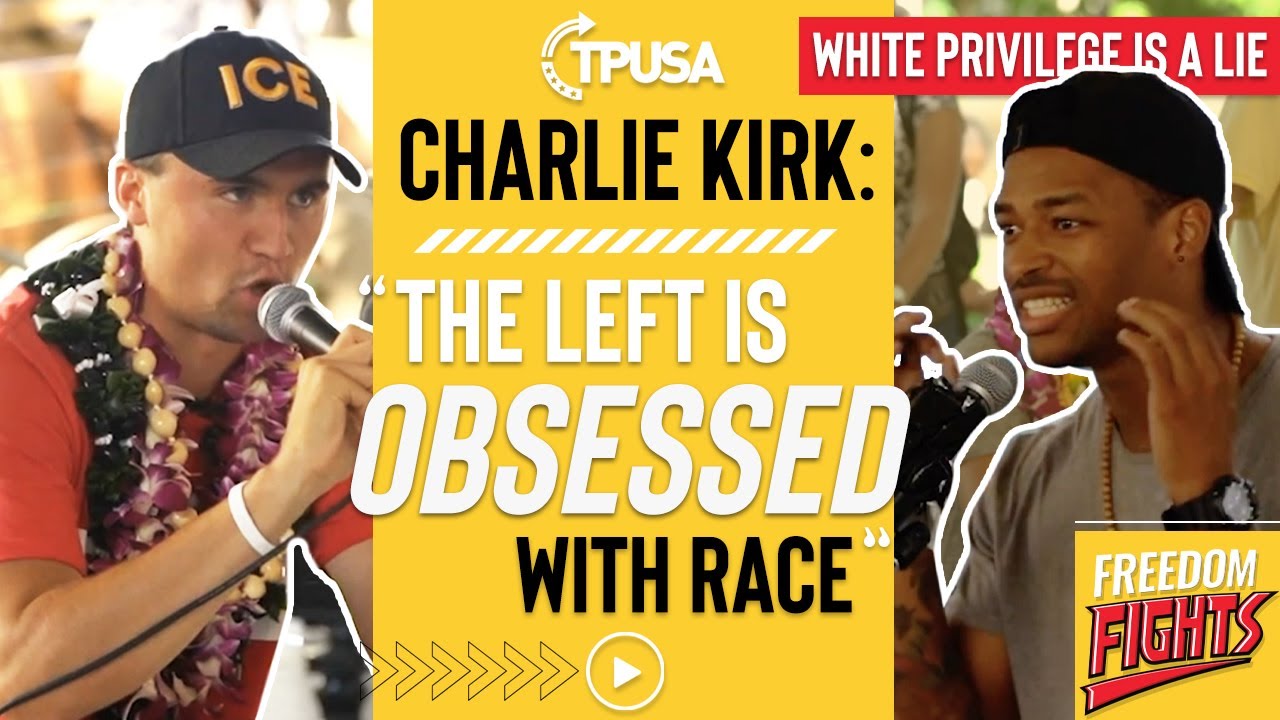
Charlie Kirk Debates Collective Racial Accountability and Individual Responsibility in America
Charlie Kirk engages in a heated exchange about whether white Americans must acknowledge racism and take collective responsibility for the actions of others. The conversation probes the difference between recognizing individual acts of racism versus accepting accountability for an entire race. Kirk challenges the premise that any individual should bear responsibility for the actions of others based on shared racial identity, while his debate opponent argues for simple acknowledgment rather than apology. The exchange highlights fundamental disagreements about racial responsibility, policing, and whether collective acknowledgment of racism constitutes taking responsibility for it.
The debate opens with a direct challenge about whether white Americans must apologize for their race or simply acknowledge racism when it occurs. The questioner frames the issue clearly: white people don't need to apologize for being white, but they should acknowledge racism that happens around them. This sets up a fundamental tension about what acknowledgment means and whether it constitutes a form of responsibility.
Charlie Kirk immediately pushes back on the framing, questioning why he would have to be accountable for an entire race. When assured he's probably not racist himself, Kirk asks why he must comment on somebody else's racism. This exchange reveals competing definitions of what it means to "take accountability" for racism in America.
A Hypothetical Scenario
The conversation turns to a specific hypothetical: if a racist police officer shoots and kills someone, should a white person who witnesses or learns about this speak out? The questioner argues that failing to say anything would upset the community, but emphasizes again that acknowledgment is different from apology. Kirk responds that he can take accountability for just individual acts of racism, but questions why he must bear responsibility for actions he didn't commit.
Kirk then inverts the hypothetical, asking whether his debate opponent would take accountability for blacks killing police in America. The response reveals a distinction: the questioner says he wouldn't take accountability for it, but would acknowledge that people in his community do harmful things to both black and white people. The key difference, he argues, is not pretending it doesn't happen.
The Rarity of Racist Police Violence
Kirk acknowledges that racist incidents happen but characterizes them as extraordinarily rare—comparing the frequency to being struck by lightning. He refuses to accept responsibility for an entire race, calling such an expectation wrong and terrible. This statistical framing shifts the debate from whether racism exists to how prevalent it is and whether its frequency justifies collective racial acknowledgment.
The exchange ends with Kirk asking a pointed question: "Who is Tony Timpa?" This reference to a lesser-known case of police violence appears designed to challenge assumptions about which cases receive attention and why. Kirk expresses satisfaction that he got his debate opponent to acknowledge the rarity of racist police violence, though he wishes the conversation could have continued.