Charlie Kirk Debates Self-Described Liberal on Free Speech, Parental Rights, and Where Both Sides Fail
Enjoying this? Share it with someone who needs to see it.
Up Next
Charlie Kirk and Candace Owens on Why Germans Insult Each Other More Than Americans Despite Stricter Speech Laws
6:37
Charlie Kirk on Canada's Decline and What He Would Do as Prime Minister
1:50
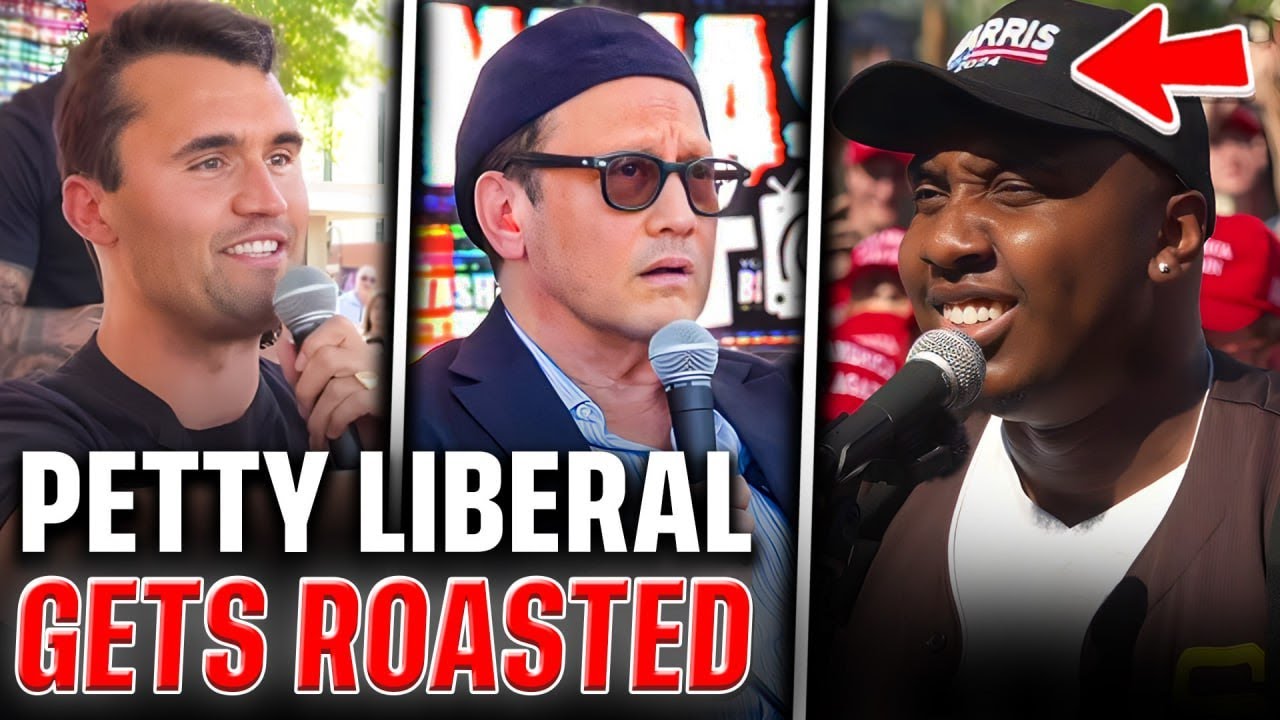
Charlie Kirk Debates Liberal Student on Free Speech, First Amendment Protections and Conservative Security Threats
7:45
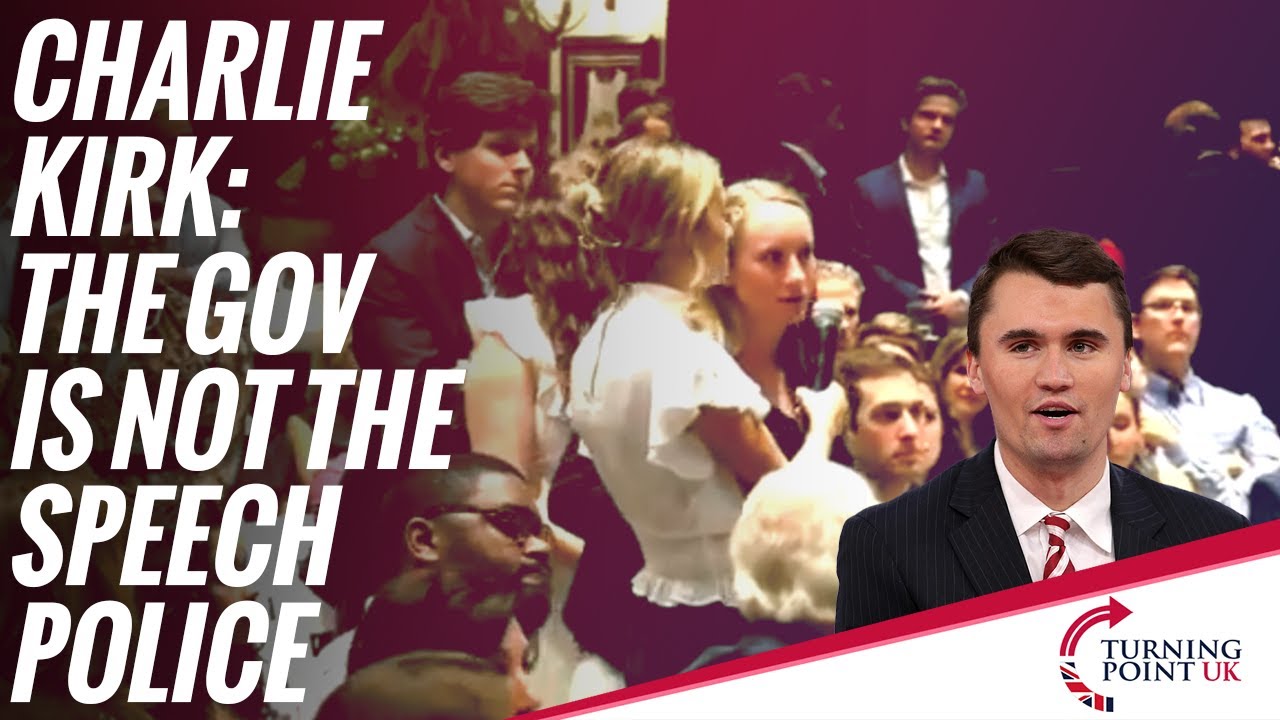
Charlie Kirk Debates Self-Described Liberal on Free Speech, Parental Rights, and Where Both Sides Fail
A self-described liberal student approaches Charlie Kirk at the University of Kentucky, nervous but determined to challenge his characterization of why liberals hold their beliefs. What begins as a defense of her convictions quickly turns into common ground on protecting children from explicit content, followed by a spirited debate on whether the political right or left better protects free speech. The exchange reveals unexpected agreement on key issues while exposing deep divisions on what constitutes protected speech and whether the First Amendment should have limits beyond incitement.
A self-described liberal student stepped up to the microphone at the University of Kentucky, admitting she was more nervous than expected. She wanted to address something Charlie Kirk had said earlier about liberals finding it easy to hold their beliefs because society agrees with them. She pushed back firmly on this characterization.
"I was liberal before it was cool," she explained. "I find my beliefs easy to hold because I believe them in my soul." She acknowledged that conservatives likely feel the same way about their convictions—that beliefs aren't subject to acceptance or rejection by others. In fact, she noted that if comfort were her goal, she would have become conservative like her husband, who changed his thinking over the past couple of years, causing significant turmoil in their relationship.
Finding Common Ground on Core Values
When Kirk asked what she believed and why, the student outlined principles she thought both sides shared: freedom, free speech for everybody, and freedom of expression. She stated she believes people should be free to express themselves as they choose—if someone wants to wear a dress, that's their business. She framed her worldview around the idea that humans shouldn't be separate from nature, questioning whether placing man above nature makes man unnatural.
Kirk responded that man is made in the image of the creator, then zeroed in on a specific application of her principles. He asked if she thought it should be okay for adults to perform drag performances in front of children. She said it depends on the nature of the performance. When Kirk specified sexually explicit performances, she responded with a clear "of course not."
Unexpected Agreement on Protecting Children
Kirk pointed out that most liberals don't share her position on this issue. The student disagreed, saying she knows zero liberals who think exposing children to sexually explicit content is acceptable. Kirk then asked if she would partner with him in removing such content from elementary schools. She said yes.
Kirk followed up by asking if she was a big fan of Ron DeSantis, who enacted policies to protect children from age-inappropriate content in schools. She said no. Kirk explained that DeSantis faced attacks from Disney and major left-wing groups who labeled his policies as harsh and anti-gay with the "don't say gay" narrative, when he was simply preventing propaganda and pornography from being placed in front of kids.
Kirk suggested she might be more conservative than she realized. The audience began to applaud, but she firmly rejected this characterization. She explained that where they differ is in how they define what is profane and what constitutes pornography.
The Battle Over Age-Appropriate Content
Kirk pressed the issue, asking about teaching sex to eight-year-olds. The student paused, and Kirk explained that graphic sexual content is currently in textbooks across the country, including in Kentucky, which liberals defend as free speech. He described being smeared and slandered, along with the American right, as anti-LGBT simply for opposing the exposure of nine-year-olds to what he called content that "should be behind in the darkest depths of human existence."
The student acknowledged agreement on protecting children from inappropriate content. Kirk then shifted to her earlier statement about believing in freedom and free speech, asking which side—the American right or left—is currently doing a better job of protecting freedom of speech.
Both Sides Failing on Free Speech?
The student's answer surprised Kirk. She said both sides are "sucking pretty hardcore" and "being absolutely horrible at it." She argued they're both failing in the exact same way, raising the question of who each side is actually protecting or standing up for when it comes to free speech.
Kirk asked a theoretical question: If a liberal came to speak at the University of Kentucky, would they give an open mic to a conservative like he just did and have this kind of discussion? The student said she certainly hoped they would. Kirk flatly stated they wouldn't, arguing that free speech is not a left-wing value. He contended that one side is trying to shut the other up while one side is trying to open up the marketplace of ideas, which he called "rather self-evident."
The First Amendment Debate
Kirk thanked the student for coming and demonstrating her willingness to engage. The student interjected that she totally disagreed with his characterization. Kirk then cited public approval polls showing that a majority of liberals do not believe the First Amendment is absolute, asking what she had to say about that.
The student responded that the First Amendment isn't absolute—there are legal restrictions to it. Kirk asked what restrictions exist outside of incitement. The student recalled from high school civics that "fighting words" are disallowed, though she corrected herself on the terminology. She explained that if speech is considered by a reasonable person to provoke someone and they harm you because of what you said, that speech isn't protected.
Constitutional Principles and Their Limits
Kirk asked for clarification: hurt feelings or physical harm? The student explained that if you intentionally provoke a person with your speech to the point where they physically harm you, that speech is not protected. Kirk disagreed, stating that it actually is protected speech.
Kirk cited the American Civil Liberties Union protecting Nazis' right to march in Skokie, Illinois, around Holocaust survivors. He emphasized that grotesque, outrageous speech is absolutely protected by the First Amendment. The student tried to clarify her position, acknowledging she couldn't fully explain it in the moment but maintaining there are limitations. She brought up the example of not being able to yell fire in a crowded theater.
Kirk acknowledged that technically you can yell fire, but explained that's a separate constitutional issue related to incitement, not a general restriction on speech. He thanked her for being there and engaging in the discussion, wrapping up an exchange that revealed both surprising common ground and fundamental disagreements on the nature and limits of constitutional rights.