Charlie Kirk Defends Crime Stance After Van Jones Calls Him 'Race Hustler' Over Charlotte Stabbing Coverage
Enjoying this? Share it with someone who needs to see it.
Up Next
Charlie Kirk Opens Up About His Pornography Struggle and Why Victory Is Possible for Every Man
20:56
Michael Knowles and Charlie Kirk Play the Yes or No Game: Death Penalty, Porn, and Putin
52:54
Charlie Kirk Reveals How Tik Tok and Young Voters Fueled Trump's Historic Comeback Victory
20:36
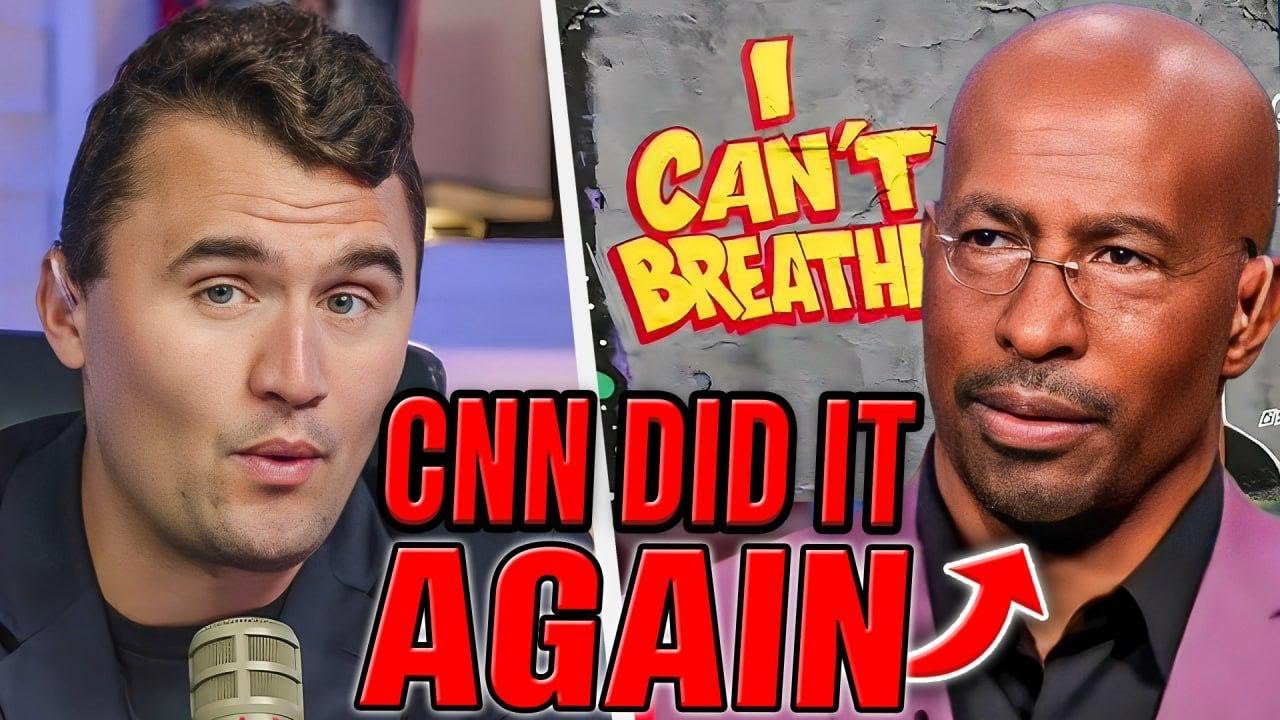
Charlie Kirk Defends Crime Stance After Van Jones Calls Him 'Race Hustler' Over Charlotte Stabbing Coverage
Mark Halperin sat down with Charlie Kirk to discuss the brutal killing of Ukrainian refugee Iryna Zarutska on a Charlotte transit system and the fierce backlash Kirk received from CNN's Van Jones. Kirk defended his commentary on the case, arguing that the attacker's own words, "I got that white girl", demonstrated racial animus, yet mainstream media ignored the story until video surfaced weeks later. He challenged Jones and the left to apply the same standards they demanded after George Floyd's death, and called for a return to tougher sentencing, more prisons, and an end to failed criminal justice reform policies that allowed a suspect with 14 prior offenses to walk free. The conversation revealed deep fault lines in how America debates violent crime, media bias, and race in the post-2020 era.
Mark Halperin opened the conversation by calling Iryna Zarutska's story "incredible" and "tragic," noting that her journey from war-torn Ukraine to a senseless death in the United States would be remembered for years to come. Charlie Kirk agreed, emphasizing that the story carried implications far beyond the personal tragedy. He explained that the case first broke a couple of weeks earlier, but only gained traction recently after disturbing surveillance footage was released showing the attack. Initially, details were murky—many wondered if there had been a struggle or prior interaction between Zarutska and her attacker. The footage removed all doubt: this was one of the coldest, most senseless murders Kirk said he had ever seen. The victim was sitting quietly, minding her own business, when the suspect simply pulled out a knife and stabbed her without warning or provocation.
Kirk stressed that the killing was entirely preventable. The alleged attacker had 14 prior offenses on his record. This, Kirk argued, exemplified the catastrophic failure of criminal justice reform policies that have dominated the last decade. He admitted that he once supported such reforms and even pushed for them legislatively in a prior life, describing his current crusade as "part of me atoning for my sins." He asked how many more examples society needed of repeat offenders—people with 10, 12, 13, 14 priors—going on to commit murder before admitting the current model does not work. Kirk insisted that the evidence is clear: there are individuals the system cannot rehabilitate, and the experiment in leniency has made America less safe, not more.
The Case for More Prisons, Not Fewer
Kirk made a bold and controversial claim: America does not have enough people in prison. He acknowledged that this position sounds harsh, but argued it is entirely defensible. He pointed out that only half of all murders in the United States are even solved, meaning roughly 50% of murderers are walking free on the streets. He also noted that criminal justice reform—championed by figures on both the left and some libertarian-leaning conservatives, and funded heavily by groups like the Koch brothers—has failed to deliver on its promises. Kirk called for a return to three-strike laws, mandatory life sentences for anyone who randomly attacks a stranger, more judges to process cases, and a halt to the practice of releasing repeat offenders. He argued that America is a violent country, unlike places such as Japan or South Korea, and that reality demands a tougher response. Until society is willing to accept that more prisons and more prisoners are necessary, he said, tragedies like Zarutska's will continue.
Van Jones Calls Kirk a 'Race Hustler'
The conversation then shifted to CNN's Van Jones, who criticized Kirk on air for allegedly racializing the Charlotte stabbing. In a clip Halperin played, Jones said, "For Charlie Kirk to say we know he did it because she's white when there's no evidence of that, it's just pure race-mongering, hate-mongering... Charlie Kirk should be ashamed of himself. No one mentioned the word race, white, black, or anything except him." Kirk immediately pushed back, insisting that Jones had misrepresented what he actually said. He clarified that he never claimed the suspect attacked Zarutska simply because she was white. What he did say—and what Jones conveniently ignored—was that the alleged attacker himself said, "I got that white girl." Kirk argued that the attacker racialized the crime in his own words, yet Jones failed to acknowledge that fact on CNN. Kirk also pointed out that if the races had been reversed—if a white person had randomly stabbed a Black woman to death on public transit—there would have been wall-to-wall media coverage, policy changes, and public apologies. He cited the George Floyd case as proof, noting that even Minnesota Attorney General Keith Ellison stated there was no evidence of racial animus in that situation, yet the media and activists like Jones treated it as a racial reckoning anyway.
Demanding the Left Live by Its Own Rules
Kirk pushed back hard against the accusation that he was race-baiting. He flipped the charge back onto Jones, calling him "the race hustler" and pointing out that Jones and others on the left spent the summer of 2020 racializing the Floyd case despite a lack of evidence. Kirk argued that he has more evidence of racial animus in the Charlotte stabbing—the attacker's own statement—than Jones ever had in the Floyd case. He said his goal is not to play identity politics, but to force the left to live by the moral standards they themselves established. If targeting someone based on race is the ultimate sin in post-civil rights America, as the left insists, then why is there silence when the victim is white and the attacker is Black? Kirk argued that the lack of coverage from major outlets like the New York Times, BBC, NBC, and ABC proved that the media does not care when white people are killed. He said the story only gained traction because of social media, not because legacy media deemed it newsworthy.
Halperin Calls for a New Standard
Halperin acknowledged Kirk's points but gently challenged him to move beyond "eye for an eye" politics. He said he did not want Zarutska's death to become entangled in debates over George Floyd or media hypocrisy. Instead, he urged Kirk to focus on what can be done to prevent future tragedies—new judges, new laws, new policies. Halperin suggested that Kirk's platform and influence could be used to build a new set of rules rather than simply forcing the left to eat its own. He expressed hope for an America where political conversations do not revolve around "they did this first, so now we get to do it back." He wanted the focus to be on preventing the next Iryna Zarutska, not on scoring points against Van Jones or CNN.
Kirk: No New Rules Without Breaking the Old Ones
Kirk responded by insisting that the old rules must be publicly dismantled before new ones can be established. He argued that the left's rulebook—the one that gave America the George Floyd Justice in Policing Act, softer sentencing, and criminal justice reform—is directly responsible for policies that allow repeat offenders to roam free. Until that framework is discredited and overturned, Kirk said, meaningful policy change will be impossible. He agreed that new rules are needed, but argued that Van Jones and others on the left would never agree to them because they are ideologically committed to blaming systemic issues, poverty, and lack of opportunity rather than holding individuals accountable. Kirk said the real question is not why someone commits a crime, but what society will do when they do. He argued that compassion should be directed toward victims like Iryna Zarutska and potential future victims, not toward repeat offenders. He positioned the MAGA right as increasingly tough on crime, shedding its libertarian past and returning to traditional conservative principles—a stance he believes is popular with the American people.
The Bigger Picture: Crime, Race, and Media Bias
Throughout the conversation, Kirk and Halperin wrestled with broader questions about crime, race, and media coverage in America. Kirk argued that the Charlotte stabbing reveals deep fault lines in how the country discusses violence. He contended that the left has created a moral framework in which crimes against certain groups are treated as national emergencies while crimes against others are ignored. He said this double standard is indefensible and must be confronted. Halperin, while sympathetic to Kirk's frustrations, urged him to rise above the fray and focus on solutions. Both men agreed that Zarutska's death was a preventable tragedy, that the suspect should not have been on the streets, and that America's approach to violent crime needs serious reform. But they differed on strategy: Kirk wanted to hold the left accountable for the consequences of its policies, while Halperin wanted to move directly to a new consensus. The tension between those two approaches defined the conversation and highlighted why America's crime debate remains so bitterly divided.