
Up Next
Charlie Kirk Dismantles Affirmative Action Arguments With Engineering Student on Campus Tour
13:11

Charlie Kirk Debates Immigration on California Campus: Should America Deport All Illegal Immigrants?
37:51

Charlie Kirk Confronts Texas Student Over Fascism Claims About Trump at Michigan State Campus
10:57


Charlie Kirk is the Founder and President of Turning Point USA, the largest and fastest growing conservative youth activist organization in the country with over 250,000 student members, over 150 full-time staff, and a presence on over 2,000 high school and college campuses nationwide. Charlie is also the Chairman of Students for Trump, which aims to activate one million new college voters on campuses in battleground states in the lead up to the 2020 presidential election. His social media reaches over 100 million people per month and according to Axios, he is one of the "top 10 most engaged" Twitter handles in the world. He is also the host of “The Charlie Kirk Show,” which regularly ranks among the top news shows on Apple podcast charts.
Subscribe on YouTubeCharlie Kirk Defends Trump Administration, Debates DEI, Illegal Immigration, and Abortion at Texas A&M Event
Charlie Kirk visited Texas A&M University for a packed campus event featuring extensive debates on some of the most contentious issues facing America. Kirk defended President Trump's administration as merit-based while criticizing DEI policies as discriminatory. He faced off with students on topics ranging from illegal immigration and the deportation of MS-13 gang members to gun control, abortion rights, and whether diversity strengthens or weakens institutions. Kirk also addressed faith in Christ, the purpose of his campus tours, and how students should navigate progressive ideologies in the classroom without compromising their principles.
Faith and Purpose at Texas A&M
Charlie Kirk opened his Texas A&M appearance by discussing what he considers the most important decision anyone can make: giving their life to Jesus Christ. Kirk emphasized that Christ is King and Lord, and that every person is a sinner in need of a savior. He shared that Jesus saved his life and encouraged students struggling with depression, anxiety, and self-harm to find hope in a relationship with Christ rather than in religion alone. Kirk explained that Christianity differs from other religions because God came close to humanity by sending His son to live a perfect life and die for our sins.
Kirk also explained his motivation for hosting these campus events. First, he wants to inspire conservative students who may feel isolated on campus and show them they are not alone. Second, he seeks to identify areas of agreement and disagreement with those who hold different views. Third, he believes that free speech leads to an approximation of truth, and that open dialogue benefits everyone involved.
Navigating Progressive Ideologies in the Classroom
A student named Ella asked Kirk for advice on how to handle classroom assignments that require students to write from perspectives they don't agree with, such as essays about how the built environment creates burdens for women and gender minorities, or assessing one's own level of racism after DEI training videos. Many students in the audience raised their hands when asked if they felt they would be graded down for taking conservative positions in class.
Kirk acknowledged that writing from a perspective you don't agree with can push intellectual abilities, but he firmly stated that students should never attribute something to their own name that they don't believe in. He emphasized that lying is worse than getting a bad grade because it impacts your soul and character. Kirk told students that the grades they receive in college won't matter in ten years, but the type of person they become and the decisions they make will define who they are.
Heated Debate on Illegal Immigration and MS-13 Gang Member Deportation
The most contentious exchange occurred when a student challenged Kirk on the deportation of Kilmar Abrego Garcia, an alleged MS-13 gang member deported under the Alien Enemies Act. The student argued that the government sent someone to prison for life without charging or convicting them of a crime, violating due process rights. Kirk countered that illegal aliens who are enemy combatants from occupying forces do not receive the same due process protections as American citizens.
Kirk pointed to Garcia's MS-13 tattoos and court documents showing that Garcia had petitioned in 2019 not to be sent back to El Salvador because another gang might hurt him. While the court granted withholding of removal to El Salvador specifically, Kirk noted that the court stated Garcia could be deported at any time for any reason to any other country. Kirk argued that if Garcia had been sent to the Congo or Guantanamo Bay, there would have been no legal issue.
The student challenged Kirk on whether the Tren de Aragua gang was actually coordinating with the Venezuelan government, citing a recent U.S. intelligence assessment that found no such coordination. Kirk said he had not seen that report and would reconsider his position if it proved true. However, he maintained that the approximately 300 people deported under the Alien Enemies Act were documented cases, and that illegal aliens who break into America should not play the victim when sent back to their countries of origin.
Kirk explained three ways to deport someone from America: the Alien Enemies Act, expedited removal, and traditional deportation with due process. He cited a 2019 Supreme Court ruling that expedited removal does not require extensive due process for illegal aliens within 100 miles of the southern border or who have been in the country less than 14 days. The student pressed Kirk on whether the executive branch should be able to deport someone to a foreign prison based solely on allegations without proving anything to a third party. Kirk responded that if someone is an illegal alien and part of an enemy gang, they should be sent home, and that American citizens must come before foreign gang members.
Gun Control and Second Amendment Rights
A student asked Kirk about his position on gun control, arguing that more regulations could prevent school shootings and that the Second Amendment allows for such regulations. The student proposed red flag laws, federal gun registries, and training requirements similar to driver's licenses. Kirk asked whether gun ownership is a right or a privilege, and the student agreed it's a right that comes with responsibilities.
Kirk challenged the student on what would constitute a red flag, noting that many veterans on medication could have their weapons taken away under such laws. He expressed concern that red flag laws are often abused, with guns taken away first and questions asked later. The student suggested that a federal gun registry would help protect law enforcement officers responding to domestic calls, which are among the most dangerous situations they face.
Kirk firmly opposed a federal gun registry, arguing that the only reason to register guns is to confiscate them. He said this is a historical pattern in totalitarian dictatorships throughout the 20th century. The student compared gun registration to voter registration, noting that voting is a right that requires registration. Kirk acknowledged this was a fair point but argued that there's a technical difference, and that governments historically go after guns far more aggressively than voter rolls.
Kirk argued for looser gun laws in many states, giving the example of a woman who receives threats but has to wait up to 30 days to get a gun in states like Rhode Island or New York. He said she should be able to get a gun that same afternoon to protect herself. On the question of training requirements, Kirk found some middle ground, acknowledging that the number one cause of errant gun deaths is accidental discharges from people who don't know what they're doing with their firearms. He suggested that better training could prevent many of these deaths.
Kirk emphasized that the ultimate purpose of the Second Amendment is self-defense against a tyrannical government. He cited the Supreme Court's Heller decision affirming that gun ownership is an individual right. Kirk argued that while the military may have superior technology like drones and tanks, an armed citizenry is much harder to control and serves as the greatest protector of liberty and freedom.
The DEI Debate: Diversity Versus Merit
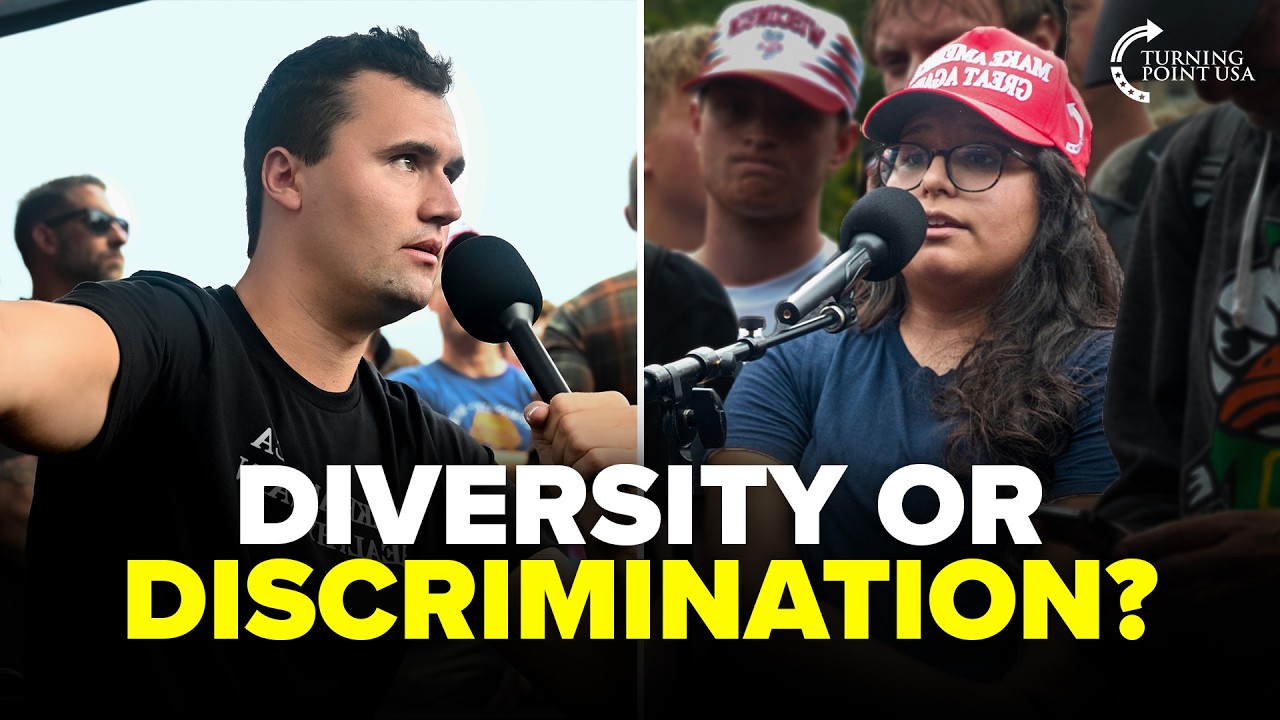
One of the most animated exchanges occurred when a student asked Kirk why he believes diversity is a weakness. Kirk explained that unity, not diversity, creates strength. He used the metaphor of a football team, arguing that if every player gets different call signs and objectives, the team fails. Teams, countries, militaries, and corporations succeed when they're united by common purpose, not divided by differences.
Kirk gave the example of Ilhan Omar coming to America without sharing American values, not speaking the language, and hating the country. He argued this kind of diversity is a weakness, not a strength. True strength comes from the unity found in being American, regardless of race or background. Kirk pointed to the Latin phrase on every dollar bill: E pluribus unum, meaning "out of many, one." He argued that the Founding Fathers did not say diversity is our strength; they said we are all humanity, and that is our strength.
The student countered that diversity helped America win the Revolutionary War and World War II, citing the use of the Navajo language to counteract German forces. Kirk responded that the Navajo code talkers were Americans and American soldiers whom we looked at as equal human beings, and that we were able to use their different language to our advantage while fighting for the promise of E pluribus unum against Japanese and Nazi totalitarianism.
Kirk challenged the student to show one institution, company, or sports organization that aims to get more diverse for diversity's sake and becomes more excellent. He used the NBA as an example of merit-based hiring, noting that the league is 75% Black not because of DEI programs, but because team owners want the best basketball players. Similarly, the NFL is about 50% Black because teams want the best football players, not because of racial quotas.
Kirk cited the Students for Fair Admissions Supreme Court case against Harvard University, where it was found that Asian students received a 300-point deduction on standardized tests compared to Black students, while white students received a 100-point deduction. He argued this is active discrimination against Asian and white people and represents racism at its core. The Supreme Court ruled this affirmative action policy unconstitutional. Kirk stated that he doesn't care if a college looks different; he cares about competency, excellence, and merit.
The student argued that DEI protections are necessary because of years of constant turmoil against other races. Kirk responded that DEI is not a protection but an elevation, and that it is discrimination. He said DEI stands for "didn't earn it" and that elevating people to positions of authority based on pigmentation rather than merit is immoral and against American values. Kirk advocated for a colorblind society based on character rather than skin color, arguing that we should care about the content of character more than melanin levels.
When the student asked whether the current Trump administration was hired based on merit, Kirk defended everyone in the administration and noted that some were hired because they're friends of the president, but no one was hired because of their race. He contrasted this with Tim Walz, whom he called a DEI hire chosen because Democrats needed a white man on their ticket, and Kamala Harris, who he said was selected because they needed a Black woman. Kirk called the Trump administration the most qualified cabinet in American history, filled with frontline warriors, business leaders, and people who have made consequential decisions.
College Value and the Guitar Heroes Class
A neuroscience major named Grace asked Kirk about his opposition to college, questioning whether it's entirely useless if students are making connections and broadening their viewpoints with new knowledge not taught by family and friends. She argued that for students from sheltered households with only one political opinion, college helps broaden perspectives and expand opinions.
Kirk clarified that the operative question is whether only college can provide this broadening of perspectives, and whether it's worth the cost. He acknowledged that for some people, college is absolutely worth it, particularly for fields like engineering and neuroscience. However, he believes far too many people are studying subjects like sociology that don't lead to good career outcomes.
Grace mentioned taking a class called Guitar Heroes about the history of guitarists, which is under the cultural discourse requirement. Kirk joked that this was better than critical race theory and that he fully supported Guitar Heroes over CRT. Grace noted that the class included questions about how gender affects the guitar, which she had never thought about before taking the class.
Kirk asked the audience how many students have to take classes they consider a waste of time or money, and nearly everyone raised their hands. He pointed out that many students go into debt for these mandatory classes against their will. Kirk also asked whether students traditionally study deeply about Socrates, Plato, Aristotle, Aquinas, and Augustine and the great works of Western civilization, noting that unfortunately many colleges don't emphasize these foundational texts.
Abortion, Rape, and the Value of Human Life
A student asked Kirk about abortion in extreme cases, specifically rape and situations where both the mother and child would die. Kirk first addressed ectopic pregnancies where the baby is already dead, clarifying that removing a corpse is not an abortion but a medically necessary procedure.
On the question of rape, Kirk pushed back on the idea that a human life conceived through rape should not have human rights. The student argued that if his daughter were raped at 16 or 18, she might not be able to trust men and could face financial restraints if she became pregnant, potentially having to quit her job due to maternity leave. The student also mentioned cases where men are raped and then forced to pay child support, creating financial burdens.
Kirk asked whether the student agreed the baby could be put up for adoption, which the student acknowledged. Kirk then explained his position: rape is an evil and terrible act that happens far too often, but we should not respond to one evil act with another evil act of taking a human life. He emphasized that it's a false choice to say that a woman who is raped will have no trauma and a perfect life if she has an abortion. In fact, Kirk argued, abortion can sometimes cause even more trauma on top of the initial trauma of rape.
Video Transcript
Folks, let me tell you about my good friend Todd Nettleton from The Voice of the Martyrs. For over two decades, Todd has risked his life to bring attention to the persecution of Christians around the world. Now, he's written a powerful book called Faith is Forbidden detailing his travels and experiences. As a special gift to my listeners, you can get a free copy of this incredible book by simply clicking the link in the description below or call 844-4643043. [Music] How we doing&m? That's a big crowd. I'll tell you what, I don't have to say much here, but can we all agree we got to saw him off? Can we all agree on that today? Much bigger crowd than we would have got it. I'm told it's TU. I'm told that's what we must call it, right? All right, we're going to have some fun today. Uh Laura Trump is here. Say hello. >> What's up, everybody? Is anybody in this crowd excited that Donald J. Trump is the 47th president of the United States? >> Did anybody in this crowd vote for Donald Trump? And here's the real question. He's toyed with it, but would anybody here like to see Donald Trump a third term in the White House? Okay, you guys are about to have the best time. We got some fans over here. I can hear it. You guys, thank you for coming out. Thank you for caring. Charlie's got the answers. So, I know y'all are going to bring the questions. Thank you guys for letting me throw some hats today. >> Thank you. >> I got to take this mic off. All right, everybody. You know how it works. Go to the front of the line. We're going to have some fun. And then also, we have an evening event as well. Uh, priority goes to, of course, students and locals. And we'll get to everybody else as well. God bless you guys and God bless Texas A&M. Let's get started. >> Hi, Charlie. I'm My name is Ramsay. Um I'm a super big fan, huge supporter. Love your work. Um I wanted to ask you have a beautiful family. You kind of prioritize God and everything. I want to know how you keep that front of your mind while going on tour, staying so busy, keeping health, wellness, God, family number one. >> Well, the most important thing we're going to talk about a lot of political stuff, a lot about with Trump. The most important thing we can all do is give our lives to Jesus Christ because Christ is King and Christ is Lord. The most important thing, we we are all sinners. We all fall short of the glory of God. And the most important thing, everybody, is we must understand that because of our sinful nature, we need a savior. Wow, they're booing Jesus already. They're booing Jesus. We should pray for those people that boo for Jesus cuz we're all sinners, everybody. >> And in this broken world where so many people are plagued by depression and suicide and self harm and anxiety, Jesus is the answer as we are going through all of these times. And Jesus saved my life and I hope he will save yours as well. And a relationship with Jesus Christ is a lot different than a religion. I happen to be very religious because I have a relationship with Christ Jesus. Christianity is different than any other religion. Every other religion you try to get closer to God. God came close to us when he sent his son to live a perfect life and die for us. So I always put Jesus first and I encourage everyone to do the same. God bless you. Thank you so much. >> God bless you. >> Howdy Charlie. My name is Colton Craig. Thank you for coming out. What is your favorite thing about Texas A&M or tradition? And do you think the Aggies are going to sweep UT in Austin this weekend? >> Oh, is there a baseball game? Is that okay? Yeah. I don't I don't pay attention to college baseball. Um >> I will say though, I hope you guys beat him in football this fall. Uh sir, the rivalry is back, right? If I'm not mistaken. Finally. What was it dead for like 10 years? >> Something like that. >> Who won the last one before the Was it UT or I think it was really close, right? walked off. It was it was a very controversial game if I remember. Um, what's my favorite thing about Texas&M? Well, you guys aren't as liberal as UT, so that helps. Um, >> I said as liberal, right? There's there's still some there's still some libs, right? Um, >> but no, it's a great school and I have to say Texas&M facult administration have been great to work with. They've been phenomenal. Um, and secondly, and I think really importantly, uh, I love the core cadets. I love the respect towards the military and I met one of the yell leaders. That's a that's a goofy thing you guys do. Um but it's fun. I love&m and uh I think there's there's some things that could be improved, but overall it's it's a good example of how college should be. >> Yes, sir. Thank you, Charlie. >> Appreciate it. Thank you. >> And if you disagree, you guys can we'll find you guys. We'll work your way up. Yes, ma'am. >> Hi. Uh my name is Payton. I'm a huge fan. I don't know if you heard what happened a couple weeks ago here on campus uh regarding the annual drag queen show they have and uh it's a student ran group called they call themselves draggy land and they have like a yeah um anyway the the board of&M and the president said that they couldn't have the event because it was demeaning to women and vulgar and against our core values and then um like a trans group of liberals they went down to a judge in Houston and they said that um it was no more demeaning than a beauty pageant. So then they end up having the show and I just wanted to hear your thoughts on that. >> I I don't know all the details around it. I mean the only reason I'm torn is that everyone here is an adult. So I mean I'm not huge about prohibiting speech. I do think though that minors should not be allowed to go to drag queens. That that that number one I think it's child abuse and grooming of children. But look, I don't know the details of what this group would want to do. But you you know you're losing if you're on a political side that is fighting for illegal alien gang members and drag story hour and drag queens on college campuses. So I I don't know all the details around it. But what what else were the elements surrounding the case? >> Um well I don't I don't know much. I like I saw them protesting here at the quad and they were like I don't know. They were just like awful saying awful things, wearing awful things, and then they ended up like selling their tickets for free because no one wanted to go. >> Go figure. No one wants to watch that stuff. >> Yeah. >> Thank you so much. >> Thank you. >> So now, do you say gigum or Howdy or both? Which one is it? >> Both. >> So gigum. All right. There you go. Yes, sir. >> Um, hey Charlie. My name is Robert. Uh, how are you doing today? >> Oh, okay. Um, so if it's I'd like to address the elephant in the room if that's okay with you. So, um, are you a familiar with the court case in the movie Ted 2? So, basically, Ted wanted to adopt a child but wasn't a person in the court of law. And so, my question to you is, do you think Ted deserve these civil rights considering he was conscious and and had like beliefs and values of himself even though he wasn't human? >> Probably not. You got to inform me though. So Ted is the teddy bear, right? Yeah, Ted is the Teddy Baron. Uh he wanted to adopt a kid with uh Tammy Lynn, but he wasn't uh a human in the court of law. So, but I mean a person in the court of law. Everyone knows he's not a human, but um I just feel like he did deserve civil right. That's how that's how it ended. He ended up um appealing the decision and he got the civil rights, but I just feel like he deserved those civil rights cuz he's conscious, he has his values, and he's able to feel and he's affected by what he's voting on. But he's not a human. >> But when have we ever had someone that's not human be conscious? >> I mean, well, by conscious or self-aware, I mean, those are two different. >> He's both. >> Yeah. I don't I don't know the biochemistry of Ted and Ted, too. But you have to >> He was a Teddy Teddy Bear from Hasbro Gaming. >> Oh, and who magically came to life. Yeah. So, got it. >> So, >> I have I'll have to look more into >> Okay. But for now, your your answer is no. No. >> Yeah. I think I mean I think human beings should only be able to adopt human beings. >> That's respectable. Uh, could you sign my hat? >> Happily. Yes. Thank you. That's Thank you, man. >> Thank you. >> All right. Who's up? >> Howdy. My name is Ella and I know you don't believe in college, but my question will just prove your point further. I've been in a lot of classes where I've been asked to write from a perspective I don't necessarily agree with. For example, writing about how the built environment creates burdens specifically for women and gender minorities or having to assess what level of racism I am after watching a DEI training YouTube video. I am concerned that if I challenge these ideas or offer a different viewpoint, I'll be graded unfairly. What advice do you have to students who feel pressure to conform to progressive ideologies in the classroom to protect their GPA? >> Yeah. Let me ask, how many of you guys feel as if you were to take a conservative position, you would be graded downward in your class? Look around. That's I don't know. Maybe&M needs some got to get some work to do. Geez, that's not good. Um I personally look there is something to be said about writing a a about an opinion that you don't agree with. It actually pushes your intellectual abilities. >> Um but to have it make it your own or if you get it get downgraded when you say to the teacher, "Hey, I'd much prefer, let's say it's abortion, I'd much rather write pro-life than pro-choice." Um then I would not be able to personally do that. I don't think you should ever attribute something to your own name that you don't believe in. Even if you get downgraded, I think that lying is way worse than getting a bad grade because it actually impacts your soul and your character and deteriorates who you are. It's not going to matter 10 years from now all the grades you get in college. It will matter the type of person that you are. It will matter the decisions that you make. And every decision that you make ends up being an embodiment of who you are as a person. So, hope that helps. >> Can you sign my hat? >> Yes. Thank you. Hi, Charlie. So, my question was, do you think that it's okay for a government to send someone to a jail for the rest of their lives without charging or convicting them of a crime? >> Well, it depends if they're an American citizen. >> So, no, it pursued to the language of the Constitution, it does not depend on if they're an American. >> Well, so there's three ways to deport somebody in America. What are those three ways? >> Um, I know the Are you talking about under the Alien Enemies Act? There's Alien Enemies Act expedited release or traditional discharging of with due process. So which one did Kilmar Abrego Garcia fall under and why? >> Well, I'm just asking just for the first question. Do you think it's okay for a government to send someone for a jail to the rest of it? >> It depends. It depends who the someone is, right? So if the someone is a foreign illegal MS-13 gang member from an occupying force sent by a foreign government, that's not true, Charlie. >> In fact, actually, let's look at his tattoos. What are his tattoos say? What do you think? That looks like MS-13, doesn't it? those >> marijuana smiley face 13. >> So those >> not to mention actually I have the documents here cuz I figured that this was going to come up. In fact, I knew this was going to come up. >> You see how angry the left gets about illegal MS-13 gang members. If only they fought for American citizens that hard. If only they fought for Americans that hard. >> In fact, I have all the stats here. In 2019, he petitioned to the court that he cannot be sent back to El Salvador because another gang might hurt him. And did was he granted the withholding of removal order? That >> however, what the court said is that you could be deported at any time for any reason. You could be scooped up without due process. You know, the court said this. The only country you're not allowed to be sent back to, ironically, was El Salvador. Now, so hilariously, hilariously, >> government did >> one second. That was under the traditional deportation, not under the AEA, the Alien Enemies Act. Hilariously, if we would have sent him to the Congo or sent him to Gitmo, there's nothing that ever would have been the issue. But let's talk about let's talk about the specifics of Kilar Abrego Garcia. He's a wifebeating MS-13 member that was documented in multiple instances of wearing MS-13 gang paraphernalia >> and has MS-13 tattoos and now is back. Let's just be clear. He's back in the country he was raised in. Is he a US passport holder? >> Charlie, this has been litigated by the Maryland District Court, the Fourth Circuit. And just real quick, let me finish with this. Um, if you believe him to be an MS-13 member, I agree with all of you guys. If there's someone that's an MS-13 member, that's dangerous and violent, get them to a hearing, which is what our constitution requires, and have the judge decide on it. The judge is who has final say. So, why are you authorit like you got your facts on? The judge said he could be deported at any time without any more due process. The only country you can't be sent back to is El Salvador. So, I will grant you that's maybe we should not have sent him to that specific country. However, though, that's the country he's from. >> But, okay, so regardless of I didn't even bring up the Garcia case. >> Obviously, you're heavily employed. >> I'm talking there's 300 people in which the data says 75% of them have no US criminal records and yet they were >> Oh, they should they should all go home. If you're if you are an illegal alien in America, you should be sent back to your country of origin. Every single one of them should be deported back to their country >> with the proper due process that the 14th amendment requires. >> It depends. It depends. Are they if alien enemies act >> expedited? So you you got to tell me now because you came up here with a contention. What is the expedited removal process? >> Um >> because the Supreme Court in 2019 ruled on what is called expedited removal. Do you know about this? >> The Supreme Court just ruled nine to zero. >> They they put a stay on the Alien Enemies Act to in in June they will author whether or not it's still constitutional. The Alien Enemies Act has been around since 1798. It was used three times prior. However, to the expedited release, the Supreme Court said you do not need to give due process to an illegal alien. that is within a 100 miles of the southern border or has been here less than 14 days. The Supreme Court said that you do not have to give due process. Okay. So therefore, >> first of all, that wasn't a regular Garcia and that wasn't many people. >> However, yes. So he he fell under the Alien Enemies Act for the other individuals. They can and will get due process until the court rules differently. >> Okay. So then question on the Alien Removals Act. It's technically supposed to be a wartime act, but the justification is that Trend Aaragua has infiltrated the Venezuelan government to make it. >> It's not an accusation. It's by their own admission and by intelligence agencies outside of our own country that have said this. >> So 4 days ago, the US intelligence assessment found no coordination between TDA and Venezuelan government. That was drawing from all of our US 18 intelligence agencies. So if if that's not true, that TDA is not in coordination with the Venezuelan government. >> This case was MS-13. But again, so we there's other >> I'm talking about anybody that was deported without a hearing, which is what Supreme Court president all the way back to 1903. >> You're you're misrepresenting it. Garcia did have years of hearings. The judge scheduled him for deportation. The judge warned him. He said, "At any time, Mr. Garcia, you could be scooped up in the middle of night. You should read the charging documents from the court. The judge said at any time you could be scooped up and he said, "I'm going to stay here anyway." The judge warned him, "You are not safe to stay here." >> Well, okay, but back to this back to the 300 people that did not have due process that were deported under Alien Enemies Act. If it's not true that the TDA is in coordination with the Venezuelan government, then why is that still happening? >> Again, I challenge that information if US >> Okay, I'll take a look at that and if so, I'll reconsider my position. >> But and then back to the initial question. So you do think it's okay for in some cases for the government to send people to a prison, not just to port them back to their country for the rest of their lives with no due process. >> But again, we didn't send them back to a prison. We sent them to El Salvador and El Salvador put them in a prison. We don't make we don't control the government El Salvador. >> And if they and if they put them in a prison without if they put them in a prison without any sold them to that prison, are we not complicit in that? >> Well, hold on. Let's time out. Let's just make sure we get our morals straight. How did these people end up in our country? >> They broke into our home. If you break into our home, we're going to discharge you. You break into America, don't play the victim. If you're sent back to your country of origin, >> you did not come here with permission. You did not come here with warrant. You did not come here with invitation. You came here and broken. You are a line cutter. Not you, but they are a line cutter. You actually waited nicely in line, of which I wish the illegals would do. And they they do should not all of a sudden act as if they're a victim. you come into America illegally, you're going to win certain prizes, one of which if you are part of an enemy gang at the time. >> That's has nothing to do with what I asked you. I'm just saying. >> No, it's actually everyone to do with the action. I'm saying >> we I agree with you that if there is a standard rule to be subject to deportation proceedings, which in 1903, this is precedent that goes all the way back in the Supreme Court and they said >> not with expedited release or the alien enemies act. That's what was used though. >> Our own intelligence agencies are saying now that and what was my answer to that? I have not seen that and I'll look at it. If so, I'll reconsider my position. So, we're going to keep on relitigating that. So, at the time that was considered to be like operationally true and again I will take a look at that and if it's true I'll reconsider my position. Can I say it again? >> Yes. But in but then just going to the most recent 9 and0 Supreme Court case they said that >> they state it. They did not say that. They put a pause on it to >> I haven't said what I thought they said yet. I'm saying that towards the end they said that to remove anybody they have to have a opportunity to be heard and notice of hearing. That's what >> not for expedited release. Not if you're within 14 days or 100 miles of the southern border. >> But there was Are you claiming that everybody that was >> No, I'm not. I'm saying those 300 were under the Alien Enemies Act. So again, we're going to keep on going in circles. At the time that was before the Supreme Court ruled. >> Okay. So you agree with that? You you believe that the executive branch can put an allegation on somebody and then without proving things to any third party deport you to a foreign prison for the rest of your life. >> If you're an illegal alien >> and you are part of >> how would you prove you're not alien we we had this was the most documented deportation effort ever. We know who these people were. We knew their names. Many of them prior had criminal content by the people that many of them were already many of them were already convicted of crimes including% of them were not convicted of crimes that they already had affiliation. So if you're asking me do I think it's okay for are you asking me is it okay for the US government to scoop up illegal aliens and send them home? Yes. Next question. Okay. Yes. >> But can you prove that they're How do you prove you're not illegal? >> Show me your passport. What's your name? A lot of the people you're not you're not in the system. So people that people that were detained in the system people detained in Chicago US citizens that have been detained because of this. >> Were they sent back to El Salvador? >> No, but they were held in prison for 2 days uh based on immigration grounds and they're US citizens. >> Okay. Then what? >> It's because y'all aren't respecting due process. Again, we're continually going in circles on this. But I will I will say for the 14th time, if you are an illegal alien in America, don't be shocked if you get swept up and deported back to your country of origin. Biden's presidency is over. A new presidency is here. >> Well, that I mean I I'll just say that's authoritarian rhetoric in my opinion and anybody waving an American flag supporting that does not in fact of our country. >> Do you know what it is? >> It is patriotism to say American citizens come before foreign gang members. And that's why every single court in this land, the Supreme Court, the Fourth Circuit Court of Appeals, the Maryland Court, Judge Bowber, is holding the government that you support in contempt for violating >> Well, they actually have not held them in contempt. >> They're starting to start those. That's a technicality. They have not held them in contempt. They're >> starting those process, but disagreement between the branches is nothing new. It is normal. >> It's violation of the Supreme Court orders. >> Joe Biden violated the Supreme Court. >> Cool. I'm not talking. >> Hold on. No, no, no. when it cames when it came to the student loan cancellation thing. Should he have done that? No. And they're not actually ignoring the Supreme Court. They're not. There's a hold on the Alien Enemies Act. We will see what the Supreme Court decides this summer. Again, it is one of three legal ways to remove people from the United States of America as per our courts have decided. >> But let's just go back to another rule and repeat it for the now 17th time. >> If you are here illegally, we are going to return you to your country of origin. due process or any type of evidence to prove you're actually illegal. >> The sup we're going to keep on going inside. >> I I don't know what you're referring to as far as that, but I did have one final question. >> Expedited release does not require due process. >> My name is Traa and um I was wondering because all humans are endowed with unal unalienable rights, why deny illegal immigrants due process? No, that's a that's that's a good question that only pertain So the promise of the idea of unalienable rights is first and foremost to American citizens, not to we do not enforce the natural rights contract of every citizen around the world. But secondly, to the point earlier, there are some circumstances where illegal aliens do get due process and some where they do not. >> Well, the government is there to protect rights. So shouldn't the court decide um the question about status? >> Again, they have. So for expedited release, the court has ruled that you do not need extensive due process rights. Alien Enemies Act is under contention. Other issues, yes, due process is given. >> I also had another question. Um, do you think that an enumerated federal function, departments, agencies, and properties should be closed down and those powers returned to the states and the people. Therefore, >> yeah, the more we can return to the states, the better. >> Okay. I'm Republican and I really thank you for all that you do, educate college students. So, >> God bless you. Thank you. [Applause] Hey, Charlie, how are you? Um, so I just had a question on your thoughts on if we need more gun control in the country or not. Um, you know, I'm I'm very protecting America and the citizens that live in it and so I think that we should have more gun control because there's a lot of school shootings that happen as we mentioned and you know, I just think it would do a lot to protect people. Um, and I think the Second Amendment also qualifies that we should have regulations for guns. Um, I wanted to know your thoughts on that. >> Sure. Do you think gun ownership is a right or a privilege? >> Uh, I think it's a right, but it comes with responsibilities. >> Okay, tell me more. >> Well, I think that there there should be things in place, uh, you know, things like red flag laws and things like that. You know, the AG just approved Mel Gibson to get his gun rights back, even though he had a domestic violence charge. So, you know, I don't think the people that commit these violent crimes should be able to buy guns and things like that. And I think we should have red flag laws in place to make sure that those violent criminals aren't getting guns. >> Okay. So, let's go. So tell me in your perfect world what would constitute a red flag? >> Uh I mean just things like you know we can look into any kind of medication and things like that that can affect someone's >> that could be dangerous right? I mean that could be compro I mean there's a lot of vets that come home from war and that are on a lot of venication. A lot of vets could have their weapons teddied away. >> Well I'm not necessarily saying bless you. Bless you. >> Thank you. It's the pollen or something. Thank you. Um, I mean, I'm not necessarily saying like it's it's mainly to prevent, you know, future shootings and things like that. And also, uh, you know, putting in place things like a federal registry so that we know, you know, the types of guns that people have and, you know, it would just essentially be a federal registry that shows these are the guns that this person has. You know, in case a cop has to go on something like a domestic call, that's the most dangerous call they can go on. So, >> I could see you're coming after this from a good perspective. Let me ask one other question. What do you what would you say is the ultimate and final purpose of the second amendment? >> Uh I think it's self-defense against a tyrannical government which >> we agree. Sure. Great. Keep going. >> Well, but I think I think within the Second Amendment, it also implies that we have high regulation. It's in the first four words. >> Well regulated militia actually meant wellarmed, but that's a separate issue. But like >> Well, how do you know? You're interpreting what the founding fathers. >> Well, they said it in the federalist papers, right? So, it's not just me, but also in the Heler decision, in the 54 decision that said that gun ownership was a right. This was a hotly debated thing. >> But see, do you disagree? Sorry, I didn't mean to interrupt you. Do you do you like disagree with the idea of like a federal registry like that? >> Oh, without a doubt. The only reason you'd want to register the guns is if you want to confiscate them. >> Well, or to make sure that people like officers of law are protected and know what they're going into. I mean, a domestic. >> Again, that's a that's a good argument, right? >> To your credit. I will try to make a better argument where the problem of the government knowing where every gun is would then lead itself towards mass confiscation. And I would agree with you, a well-armed citizenry is the greatest protectorate of liberty and freedom in this country. >> Even though the army has things like drones and tanks and things like that that outarm, you know, citizens that have >> Yes. And no. I mean, we've seen it in several instances where at least a citizen that's a good argument, but I would say a little flawed where the citizens are able to protect themselves in some ways. It's a much harder population to control. >> I understand. But so, so you think a federal registry would infringe on the right >> potentially. I mean, I think that there's no good argument, I think, other than potential I I ascribe to the government bad motives and bad intentions when it wants to infringe more on these types of freedoms and liberties. >> Well, I understand. I just personally don't see it as an infringement because, you know, like we just said, and I think we agree that owning a gun is a right. However, I think responsibilities, but also I wanted to ask is voting a right or is that a privilege? >> Well, it's a it is a right and that's so felons can get their rights back, right? And so, but rights can be suspended or delayed. And we both agree with that. So, for example, like somebody in prison doesn't get guns, >> right? No, of course. >> Somebody in prison doesn't have the same free speech rights that you have, >> right? But, but what's the first thing that you have to do if you want to vote in this country? You have to register, right? >> So, it's it's a federal registration to be able to vote in this country. So why not, you know, and we can agree that, you know, keeping uh safe and uh you know, keep keeping our elections to where people who shouldn't vote aren't voting is, you know, that's keeping America safe because we don't want people who >> That's a fair that's a fair point. I would say there's something that there's a technical difference between a voter registration role and a gun registration. >> Guns are much more dangerous. >> Well, also, but guns in many different ways, they would go after the guns a lot more than like, I don't know, the voter registration role. My my my worldview comes out of one in the 20th century where almost every totalitarian government went after the guns first and the confiscation of guns then leads into the erosion of freedom and liberty. >> Right. But wouldn't you say in the in the 20th century as you just said that the disparity between the technology that citizens had to protect themselves compared to what the military had, wouldn't you say that there was a much smaller disparity as opposed to what we see nowadays? >> I think that's a fair point. >> So >> I'm acknowledging that's a fair point. >> Okay. But do you see my perspective as well? >> No, I do understand that an armed citizenry also it says shall not be infringed. So we have to kind of wrestle with those two things. >> So if it's just a semantics argument then to that point I mean semantics means is meaning. That's literally what the word means. But >> right but you're saying because it says shall not be infringed we can't do anything. I'm saying voting rights can be infringed because it doesn't say it cannot be infringed. I'm saying I error on the side that more government regulation around guns means that they'll try to take good people's guns away, which then results in less global or let's just say national freedom and liberty. >> I understand, but wouldn't you say that uh that more guns can potentially lead to more danger and less guns? >> Yes. No, I mean there there's plenty of evidence to show that states that have more So if you take Houston and Chicago about comparable populations, Houston actually has warmer weather, which means potentially more gang violence. They have about half if not even less the amount of homicides per year than in Chicago. Chicago has much stricter gun laws than Houston. Like incredibly strict gun laws. >> I understand. But I'm also Well, I think part of what plays into that is the gun laws that are around those cities. Um they're they're a lot more lenient than those cities themselves. So, I think I'm not saying that's entirely the the cause of it, but I'm saying >> I've heard that my whole life. So, yeah. >> Right. But, um, I'm I'm basically just talking about preventing people that have committed crimes such as domestic violence. I know I mentioned Pam Bondi gave Mel Gibson his rights to purchase a gun again, even though he had a he plead guilty to battery domestic violence charge in 2011, and yet now he is able to purchase a gun again, which I disagree with because he committed a violent crime. I mean, do do you disagree with that personally? >> No. I mean, I don't know the details of the case, but I think I've met Mel Gibson. think he should be able to own a gun? I mean, like I >> just off of speaking to him though, even though with his history, >> I don't again, I don't know all the details. Do I think that the idea of taking his rights away because of something that happened that I don't know all the details about 14 years ago >> to it though? I mean, again, I find that to be a little bit of an infringement on basic rights, >> even though he even though he literally >> I don't know the details around that, but I guess we're getting to a place where do you think anyone that's convicted of violent crime should be able to own guns again? >> No, not at all. If they're committing a violent crime, absolutely not. I think we should protect people in America, which I think you agree with. And I think that's that's a balance. >> Are we going to really say the federal government is going to protect us from ourselves when it comes to guns? >> No. I mean, it's it's less about the federal government taking away guns and more just allowing them to protect their citizens. And it's not about getting rid of guns. I'm a gun owner myself. I go hunting. I was doubting. What state would you say has the gun laws that are the most appealing to your worldview? I don't know specific state laws if I'm being completely honest with you, but >> something to think about. >> But I'm I'm speaking, you know, even just the federal registry itself. I think that would protect, you know, a lot of officers of the law. Like I said, when they go on domestic calls, that's the most dangerous call that an officer >> is. There's an informal registry, not a formal one. Just, you know, gun dealers are supposed to report, >> right? But do you really think that they do all the time then? >> No, of course not. Obviously, I mean, >> registry eliminate that problem. >> Again, I would go back to a formal registry. You register in order to confiscate. It is a prerequisite towards confiscation. >> Isn't that just a slow argument though? If you give another thing, >> it's a historical argument, right? We see that throughout totalitarian dictatorships throughout the 20th century where if you want to take the weapons away, you first ask for a collection of all the items that you then want to collect. But I could see you, you're coming after this in good faith. I tend to be on a much more libertarian side, even though I'm not libertarian. We actually need looser gun laws because I think that >> Oh, yeah. Yeah. Yeah. I mean, especially in states like Chicago and Illinois where very basic Second Amendment rights, so I'll give you a great example. In a state like Rhode Island or New York, it could take a woman upwards of 30 days to get a gun. >> So, let's say a man wants to actually do harm to her and she gets threats and the police won't intervene. I think she should be able to get a gun that afternoon to protect herself. >> I understand that. >> So, like in that case, I think that gun law should be looser. >> I understand in that regard, I do agree with you. >> So, like that would be an instance of that. And I also will go back to this idea of red flag laws. We have seen case after case of it being abused, of veterans having their weapons taken away because of fake accusations and let's just say faulty accusations saying that they're mentally unbalanced, so on and so forth. >> But do you think that they could investigate cases like that and see if there aren't any medications? I mean, a lot of these anti-depressants can change your brain chemistry >> for sure. And some of it though is they take the guns away first and they ask questions after. It's a difficult very um I I don't want to say gray gray area but edge part of the law where I tend to and I respectable position respect to you I tend to heir on the side of it is a right the government screws up more than it does correct in this specific portion and the downside to having more guns is far better than the downside of having only the government have guns >> even even if that can cost uh American lives though. I mean, me personally, I would give up all of my guns in a heartbeat if I knew for a fact it was going to save one life. >> Can Can I do a thought experiment to you? >> Sure. >> So, do you think we should ban driving? >> Uh, no. I don't think so. And I know where you're going with this. >> 55 55,000 people a year die from car accidents. Right. >> Right. Absolutely. But those are accidents though. That's not someone intentionally. >> Well, that's not true. Some people intentionally do or some people have DUIs. Right. Some of it is an act of agency, not just accidents. Right. Meaning that they are reckless with the technology. I understand. >> You would agree a DUI is a reckless act. >> Oh, for sure. Absolutely. >> And that's a vast majority of auto deaths both in the interior of the vehicle and the exterior. >> Right. But then what do you have to do to be able to drive though? You have to get a driver's license. You have to take a test with an instructor. >> Of course. But I'm saying if the pursuit of saving if if it's all about saving lives, then >> yeah, >> then there are certain things that we'd get rid of. I would say though that it's government is not merely there for our safety. It's one of the primary focuses. You have to balance liberty and safety. And that's a tough balance at times. I fall on this issue on the side of liberty. Final thought. >> So, what yeah, just one last quick question, I promise. Um, what about something, you know, as I mentioned with taking a driving test to be able to get a driver's license, you have to prove that you know how to operate the vehicle safely. What about something similar to that? Um, with owning a gun, some kind of thing where you go to a range with a trained professional, you show that you know how to operate the gun, you know, safely, know how to store it safely, things like that. Yet, you know, and then once you once you pass that, you get some kind of card that allows you to buy a gun. >> I I >> I mean, that's all about protections. It's not about restricting >> on that. You you might have some agreement with me because actually the number one cause of >> uh errant gun deaths is accidental discharges. People that don't know what they're doing with their gun. >> I understand. >> And so I think that could be prevented through better training. So for that I actually might have some middle ground. >> Okay. I appreciate it. Hope you and your family had a blessed Easter. God bless you. >> God bless you. Great job. Thank you. >> Howdy. My name is Grace and I've heard your opinions against college and I wanted to ask if you think it's entirely useless if we are making connections and broadening our current viewpoints and opinions with new knowledge that we were not taught by family and friends. So overall, like if we live in sheltered households that only have one particular political opinion and we're not able to see outside of that, doesn't college help you broaden and also help you expand your own opinions? >> It can. The question is, can only college do that? That's the operative question. And secondly, is it worth the cost for some people? Of course, college is worth it. I mean, do you guys have an engineering school here? I guess I mean we we we obviously need more engineers. >> Um I think we need uh a lot less people studying sociology. Let me put it that way. >> Understandable. So in regards, for example, I don't personally relate because I'm a neuroscience major. So college is good for me. >> You have a lot of opportunity ahead of you. >> Yes. So for people that are like you example you use the example of sociology majors and oh no and communications majors and business majors they can learn that by making connections outside of college. But overall it I personally believe that it really does help if you have the funds through scholarships and there's hundreds and thousands of scholarships that people can apply to and get to even disability scholarships or I know there's of course people of color scholarships for people of color. So, I do think college overall is beneficial even if you have a major that may not be great for the like sociology. >> So, can I ask a question to the audience? I'm curious. How many of you guys have to take classes that you would consider a waste of time or money? >> I do. >> Yeah, I will say that. >> So, that's that's against your will. >> People have to go into debt then. >> Yeah. >> So, you got to kind of wrestle with that, right? >> Yeah. But I feel like there are still big takeaways that you can take from this class. Like for example, one of my elective classes is Guitar Heroes, which that has nothing to do with neuroscience, but I'm enjoying every single second of it, and I've already made friends and in larger connections that are along with my major. >> Guitar Heroes. >> Yes. Wow. >> Yeah, it's about history of guitarist. And you know, they even I remember earlier, >> was that a was that an elective or was that mandatory? Is that core? >> It's under cultural discourse. Okay. So, >> honestly, that's better than critical race theory. So, I fully support >> Guitar Heroes over >> CRT. There is actually a lot of uh qu L LGBTQ related questions in this class like how does this gender the guitar and things like that which I never really thought about until getting into this class. So do you think that along with the question that someone asked earlier is do you think they're pushing leftist views on us or do you think they're just trying to help us broaden our >> It can it depends on the professor. It depends on what you're studying. >> I mean there are some horizons that can be fun to broad broaden but is that the best use of your time? I mean I would not ask you but are you guys traditionally studying deeply about Socrates, Plato and Aristotle and Aquinus and Augustine and the great works of the West? Not always in college unfortunately. So >> great. Thank you so much. >> Thank you. God bless you. Thanks for your time. >> Want a hat? >> Um >> great. >> In a second we'll get to you. >> Hello. Yeah. Um so my question uh actually pertains to uh my first question pertains to American identity uh and the difference between individualism and collectivism. Uh so there in early American history you see this tradition of sort of Americans working together uh you know uh in almost a collective society. Uh, but there's also a bad collectivism which is like the Stalinist collectivism, but yet there's also this collectivism like in South America where they have this thing called Minga where they help each other with labor to build each other's houses and stuff like that. Um, and I guess my question is where do you think the line uh ends and begins between the good collectivism and the bad collectivism? >> Well, involuntary collectivism is great. So when a church comes together collectively to go and feed the poor, you and I can agree that's great. If it's mandatory or inherently totalitarian, that comes with a lot of problems. >> Yeah, that makes sense. Uh my second question is um throughout history uh you have this thing where people are striving towards freedom uh towards a more open society. Um and there's this sort of problem uh where there's this difference between the sort of political philosophers and what they think and those who are uh you know living a certain way in order to achieve whatever their political or societal goals are. And I guess my question is uh do you think that uh political uh philosophers can sort of sometimes be a hindrance to creating a a better society or are or is it better that we listen to these political philosophers? We should listen to them, but most political philosophy on the left is garbage and rubbish. So, >> should be very careful with that. Thank you for your time. Appreciate it. Would you like a hat? >> Yeah. >> Thank you. >> Okay. >> Thank you. Hi, Charlie. Nice to meet you. My name is Jordan. Um, I just had a question. Uh, it's pretty general and I ask it with the most respect. Um, why do you do these prove me wrong tables? Like, what's the motivation behind it? Well, firstly to inspire the conservatives on campus that you guys aren't alone and that there's a lot of you that share this view. That's number one. Number two, to see where we agree or disagree. And then third, just to find out who's right cuz speech will get you towards some approximation of truth. >> Okay. Absolutely. And then um what would you say is your purpose when it comes to people on the opposing side of you? Uh what's your purpose? What's your goal uh in trying to communiate communicate to them? hopefully to convince them and persuade them obviously. >> Okay, thank you. >> Okay, thank you. I'm gonna try to get one of that guy in the back. Yes. Next question. >> Who wants a hat? Everybody who wants it [Applause] going to get closer. All right. [Applause] [Music] [Applause] >> Yes. How you doing, Charlie? >> We're good. How you doing? It's hot today, ain't it? >> Got to get used to it down here, man. One, right before we start, could I please get a signed hat? >> Depends. >> Do you charge cheddar around here? >> Do you charge? >> No, I've been throwing out hats for free. >> Damn. I just got to jump next time, I guess. All right. Well, I feel pretty American today. We're down to our roots. Standing up for what we believe in. I think that's powerful. I'm pretty sure a branch of that is why you're here. I just had one question for you real quick. Probably go into two or three or four or five, whatever. So, all right. I've heard you say before you think diversity is a weakness. I just want to ask you why you think diversity is a weakness. >> Well, think about it. Unity is a strength. Diversity is not. If you're trying to create a team, for example, if you guys want to win the SEC again, of which I am pulling for Texas A&M to win an SEC championship again, and every single player is getting different call signs, that is that is definitionally different. And unity is what creates a good football team. We're brought together by what brings us together, not what is different. And so differences are actually not a strength when you're trying to create a team, a country, a military, a football team, a unit, a corporation, or so and so so on and so forth. >> Okay. Well, glad we're not a football team. I'm glad we're a country. >> So, >> it's a metaphor, right? >> I get you. So, you say different call signs. How is me being diverse from someone in the crowd here, us getting different call signs? >> Well, I mean, what again, it's it's a metaphor, right? >> Well, yeah, but you use a metaphor to explain. So for example, if someone I'll try to boil it down for you so you can understand. >> If if like Elon Omar comes into America and doesn't share our values, >> doesn't speak our language and hates America, different call signs, not united, diversity becomes a weakness, not a strength. When you import a lot of people that don't share your values like we have been from Somalia and from the third world, all of a sudden they say diversity is a strength. Is it really? Is diversity a strength in Minneapolis? Is that really a strength? No. You know what is a strength? The unity we find in being an American, not in being Muslim or in being whatever faction or tribe that you come from. >> Okay. So, basically like just to make sure I'm getting this, if we're all united as one thing, not diverse. >> E pluribus unum. So, it's the Latin phrase out of many one. Okay. >> So, the the the diversity is our strength is at odds with what's on every one of your dollar bills. on your dollar bill is a phrase e pluribus unum which means it doesn't matter your skin color your background our founders did not say diversity is our strength they said we are all humanity and that is our strength which is fundamentally different than the phrase diversity is our strength >> okay well I'm glad you brought up the founding fathers then because they weren't all the same person there was so many people that made up >> there were many of them you're right >> okay yeah but there were so many people that made up America there were so many tribes that were here before us and they were the whole reason why we even won the American Revolution so in that sense diversity would be a strength In World War II, we use analog. >> We won the revolution because of the French, not because of the Native Americans. >> And they're not Americans, so that's still diverse. That still goes to my >> They were actually They were European, of which was our ancestry. But okay, what's the point? Fair enough. I'm not >> My point is is that I believe that your statement that diversity is a weakness is just simply not true. >> Okay. So, let's put it on you. Show me an institution, a company, a sports organization that aims to get more diverse for diversity's sake and becomes more excellent. Show me one example. >> I'll go even better than that. I'll show you a country that did that. During World War II, we use a Navajo language to counteract German forces. Without their language and the diversity in this country, we wouldn't be able to do any of that. >> Okay? They were Americans and American soldiers. And in fact, we looked at them as equal human beings and we're able to use a different language to our advantage. In fact, what we were fighting for was the promise of e- plurabus unam. We were fighting up against Japanese totalitarianism and Nazi totalitarianism. And I will go even step further. at every organization that tries to make diversity a priority, whether it be Harvard that ignored the students for fair admission course, you lower excellence and you elevate diversity, which lowers the flourishing and the capacity for any organization, company, or group of people to be the best versions of themselves. >> So, you're very anti-DI, I suppose. >> Oh, yes, very much so. I mean, like, for example, do you think the NBA should be half Asian? >> I don't care if they're better than any of the players that >> they're better. Exactly. Excellence matters more than skin color. We agree. Yes. Better. Agree. >> Better. Not skin color. That's what our We are pro merit, not prode. That's the point. >> If you believe that is true, then you would support DEI cuz DEI is what defends other people that are foreign. >> What are you talking about? DEI is literally pro diversity. We need these protections to be able to protect people that are different from us. >> So, how is it that the NBA is 75% black? It's because they're better at basketball than white people generally are. It's not because of >> That's because of DEI. >> Oh, really? What de What DEI? No. Sh. No. Seriously, what DEI program or policy does the NBA have? Do they have a Do they have a stated goal saying we're only going to hire black people? No. The NBA owners say, "We want the best basketball players and they end up with a 75% black league." The NFL, it's a cutthroat business. They want the best possible football players. They end up with 50% of the NFL being a black league. We want the best. We want better. We don't care about the color of your skin. We want merit and we want excellence in this country. >> If it wasn't for DEI, we wouldn't be giving other people a chance that aren't American or white. That's the whole point of other people. >> DEI is at odds with the 14th Amendment. Explain to me. The 14th Amendment says you cannot discriminate based on color, based on race. Actually, even more. That's the Civil Rights Act. Going back to the 14th amendment says literally at its core that we have a human equality because we're all human beings. That DEI says actually we understand that but we're going to give more preferences to this skin color over that skin color because diversity is our strength. Explain to me how that works. >> It works because there was so many years of just constant turmoil between people that weren't our skin color. So you need to instill extra protections. >> Oh, so you need to discriminate against white people. Now that's what it How am I discriminating against white people? >> Let me give an example. At the Harvard admissions, so that students for fair admissions, you're familiar with that Supreme Court case. It's the highest profile Supreme Court case that comes around DEI and college admissions. Are you are you aware of that? >> Go ahead. >> You should you should educate yourself on it. We found out that Asians had to they got a 300 point deduction on standardized test versus black students. White people got a 100 point deduction on entr tests in Harvard University versus black students. This the students for fair admission Supreme Court case that all of you guys should look up. In fact, in practice, we saw it was much easier to get into Harvard as a black student, regardless if your test scores were lower than a white student, even if your test scores were higher. That is active discrimination against Asian and white people and against everything that we as Americans stand for and that we believe in. That is racism at its core. >> I agree that it is racism. >> DEI is racism. Can we agree? >> DEI was racism. >> I just I just said that's racism. >> You described something that happened with Harvard admissions in hundreds of schools. >> Okay. Okay. Okay. But you brought up Harvard >> because that that is the that is the test case. But we saw the documents. >> I'm just going to go off of what you said. You said Harvard. You said it was racism. I said I agreed. When Harvard went to court, did they say that DEI allowed them to do that? And they only did that because of DEI. >> They they did it because affirmative action, which is a outgrowth of DEI. Affirmative. They literally said this was because of our stated affirmative action policies. So affirmative action and DEI are one and the same. They are sister policies of one another. So they said literally the students for fair admission course in front of the Supreme Court that was ruled unconstitutional by the way was is affirmative action constitutional and found out no actually it's not constitutional to preference one racial group over another when another racial group is as qualified if not more qualified just because you want college to everyone to look different. I don't care if college looks different. I care about if you have a competency, if you have excellence and if you have merit. I care if you are qualified, not whether or not you are black, white, Asian, Mexican. I want the best, not the most colorful. >> Okay. But if you realize if you get rid of the protections that were protecting those people previously, you're going to allow people that are not merit based. >> I'm not I'm not trying to get rid of the 14th amendment. >> You're trying to get rid of DEI. >> Well, no. First of all, DEI is not a law. DEI actually, well, affirmative of action was. I'm trying to DEI is the forceful implementation of racial standarding practices and racial quotas. DEI is basically saying we are going to build a college and organization based on hyperracialization not on the pursuit of excellence. At the University of California, in order to get a job at the University of California, you had to submit a diversity statement as the first thing that they would they would look at. And 75% of white applicants were immediately dismissed upon the review of their diversity statement. That is DEI in practice. That is affirmative action in practice. And can't we both agree we want a colorblind society, not a race obsessed society? Can't we agree to that? >> If you allow all of society to be color blind and if you're throwing away all these years of just constant turmoil towards other races, you're going to go towards >> So you don't want color blind? >> What do you mean? >> Do you want colorblind? Do you want us to get closer to a society where we care about character, not skin color? Don't you believe that the content of character should matter more than skin color? I believe that you should not be getting rid of protections that are >> in what? Tell me what you are. >> You're quite literally getting DEI is not a protection. DEI is an elevation. It's a different thing. DEI is not a protection against discrimination. DEI is an elevation which is discrimination. DEI is that I'm going to take this group of people and promote them not based on anything they've earned. DEI stands for didn't earn it, just so you know. and we're going to elevate them to a place in a position of authority or power and circumstance just because they have a different pigmentation. We think that is immoral and wrong and everything against what we believe in as Americans. Everything. >> So would you agree that the current federal government, the administration, that they're not DEI hires? Of course. You would agree that they're all there because of merit. >> Well, some of them are there because they're friends of the president, but no one was hired because of their race. You know who is a DEI hire? Tim Waltz was a DEI hire. They need they needed a white guy on their ticket because they were doing bad with white men. News flash, we still won white men by nearly 30 points. Didn't work. And so they they literally only chose Tim Walsh because the color of his skin. Kla Harris was a DEI hire. They said, "We need a black woman on our ticket." Katangi Brown Jackson was a DEI hire. DEI is when you publicly state a criteria where I want a certain race. I want a certain group. I want a certain, you know, skin color, certain pigmentation. So, can you point to one person in the Trump administration that was hired because of their race? One person. >> I didn't say because of race. I >> That's what DEI is, though. >> All right, then. But I simply asked, do you believe that they're all there because of their merit? That they all should be there? >> Yeah. I mean, I've defended all of them. Of course. >> So, yes. So, what about when Signalgate happened? When you let a reporter play What about Signalgate? When you let a reporter hear about war plans? >> Do you think that was Well, first of all, we don't even know who did it. So, when it's merit based, you could still make mistakes. Who did it actually? Who did Signal Gate? Who let the reporter in? Tell me. >> It was freaking >> Who? Who did Paul? >> Who? >> Who? Yeah, you don't know. Actually, we don't know. No one actually knows. Could have been Mike Waltz. It could have been a staffer. It could have been Dan Caldwell. We actually don't know. So, don't come up here, professor, and know something you don't know. That it's actually still an active Department of Justice investigation. Number two, what's that contention that people might make mistakes and errors? Yes, but you know what? Pete Hexath is much more qualified than Lloyd Austin because Pete Hgsth was a frontline warrior and fighter on the front lines of our war. In fact, I did not hear a single liberal complaint about Lloyd Austin when he was hospitalized without telling anybody for nearly a week that interrupted the chain of command and the flow of our national security when Joe Biden was president. This is the most qualified cabinet in American history that we have seen. People that have fought the wars, people that have run businesses, people that have done the most consequential decisions ever. It's an anti-Dei administration ever. where we look at Joe Biden, you Kla Harris that literally has done nothing meaningful in her life who was only there because she was, you know, a black woman and she fit a specific criteria box. And so we asked the question, do what kind? When you are trying to build the best, shouldn't the best be the only thing you care about, not the color of one's skin? That is why we are promarit and anti anti-Dei. >> So Kla Harris was a DEI hireer then? >> Yes. They said they needed a person of color on the ticket. I mean, obviously >> not an attorney, right? >> You could still be an attorney and be a >> Okay, I got you. But a businessman can run for president, right? >> And actually win twice and still be your president. Yes. >> Right. With felonies. I can't vote with a felony, but I could run for president, right? >> Well, f first of all, he's not a felon in the traditional sense. He was actually never sentenced for that felony. So upon sentencing, you actually get the felon distinction. So he was convicted but not sentenced. So you must have a very important. He was not sentenced. That's not correct. Sentencing was delayed. He was not sentenced. That's not correct. He does not have the official distinction of felon by the time the election happened. Number two, let's just kind of take a step back. Do you think that there was any lawfare related to President Trump being targeted 700 years he was facing in federal prison? Do you think there was any lawfare involved in that? >> Yeah. >> Okay, good. We agree. >> So >> anything else? >> Yeah. Just one more then. So, you believe that someone who was a vice president? >> Aren't you with Dean and Parker's crew? >> No, >> I think you are actually. No, you're you're this is Dean. You are not sending your best. >> Do you want to see my ID? >> You are not sending your best. >> I'm not working. >> You're not I can't hear you. You're not sending your best. Anyway, last question. >> You think someone who's a vice president isn't qualified to be president? >> She she shouldn't have been vice president in the first place. >> Why not? They voted for her. >> Okay. Yes. The point being is that she was a DEI pick. If your if your argument if the hill you want to die on is that Kla Harris is the best of DEI, good luck with that. I will rest my case. We want merit. You want Kla Harris. We're going to live in a much better country. >> Thank you so much. >> All right. >> Thank you. >> No hat. >> Thank you. No hat. >> No hat. Not if I ask nicely. >> No. Thank you. Really? Next question. Thank you. How are you doing, Kirk? Uh, so it's been great. I love hearing the topics. I'm going to be honest. I've agreed with most of what you've said today in all honesty. I do have a real question, though. In my Oh, sorry for the stupid shirt. I didn't know what I was coming here for today. No. Uh, >> pyroinesis, is that what it says? >> Yeah. Yeah. Uh, so what I came here for is, uh, so on the topic of abortion, I do not agree with most of it. I think there are multiple situations though where in the extreme where they should be allowed. I'm not talking about the like the 2% chance like someone I'm talking about rape and the chance of the mother and the child both dying with the child dying. It's just it's would you rather have the one death or the two deaths for both of it? >> Oh, if the child is going to Well, so so do you mean like when the uterine wall gets torn and there's an ectopic pregnancy? >> Yeah. Complete failure for both death. >> So again, if the baby's dead, that's not an abortion. That's a removal of a cor a corpse, right? So that's two that's a technically different thing. >> Yeah. Okay. That's that's perfectly fine. But then the real question is on the threat the rape the question of rape. >> Yeah. So let me push your boundaries a little bit on the rape question. Why don't you articulate your argument? Why do you think that the human life even though there's something evil and unspeakable with rape should not have get human rights? >> I would my real perspective on it is if I saw my if I heard that my child was raped in a like my 16 18-year-old daughter if she was violated in a way that she wouldn't be able to well she feels like she couldn't trust men, she couldn't do something. I get that. No. And that's what and the same thing could happen to men. I'm not saying this is a one-sided coin. There's been multiple court cases of men getting raped and then where they have to pay child support and it combines into them being financially stuck for multiple years until that court case is even finished. But with the problem of it, I think if a woman or man is raped, it can cause multiple financial uh restraints on it. Say the woman, she might be pregnant and she goes into a job, but she cannot continue with it because she might go into maternity leave, which could put her at risk of quitting. >> Would you agree she could put the baby up for adoption? Yeah, but I think to a point it's the conur. >> Yeah. And here's the point, man. And like it's still the taking of a human life. So you have something evil. Let me tell you my position. Rape. We do not believe you should have another evil thing on top of an evil action. In fact, let me go further. It's a false choice to say that, well, a woman is raped. Awful, terrible, and it happens way too often. >> Yes. >> And someone is raped. >> That an abortion means no trauma, perfect life. >> No. I'm not >> and I want to make sure that's clear that at times the abortion can get even more trauma. Not
Related Books
Browse Conservative Books





