2,428 videos 1,380,136,590 views US Joined Aug 30, 2018
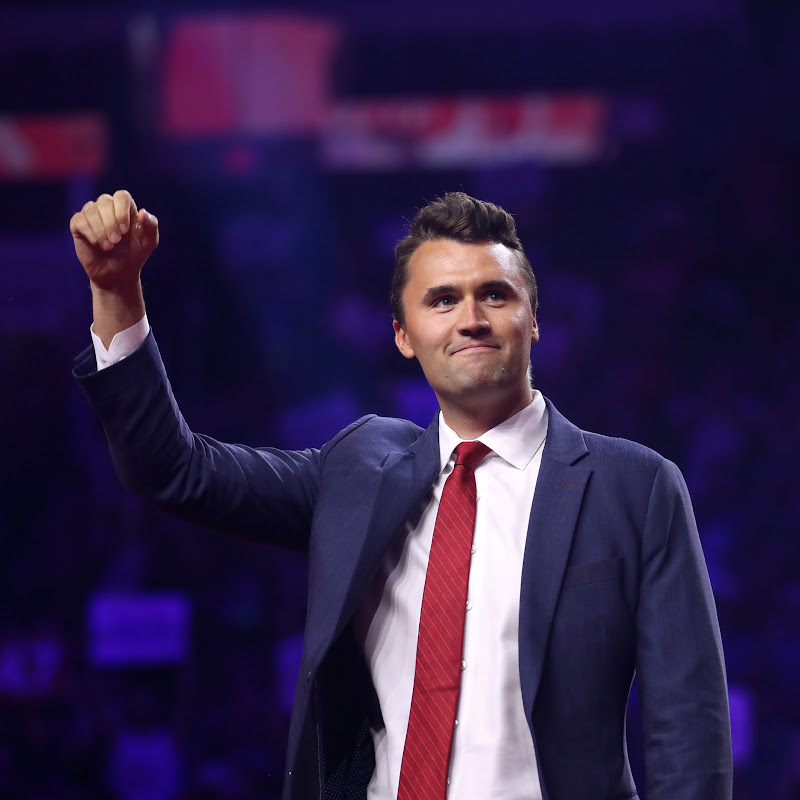
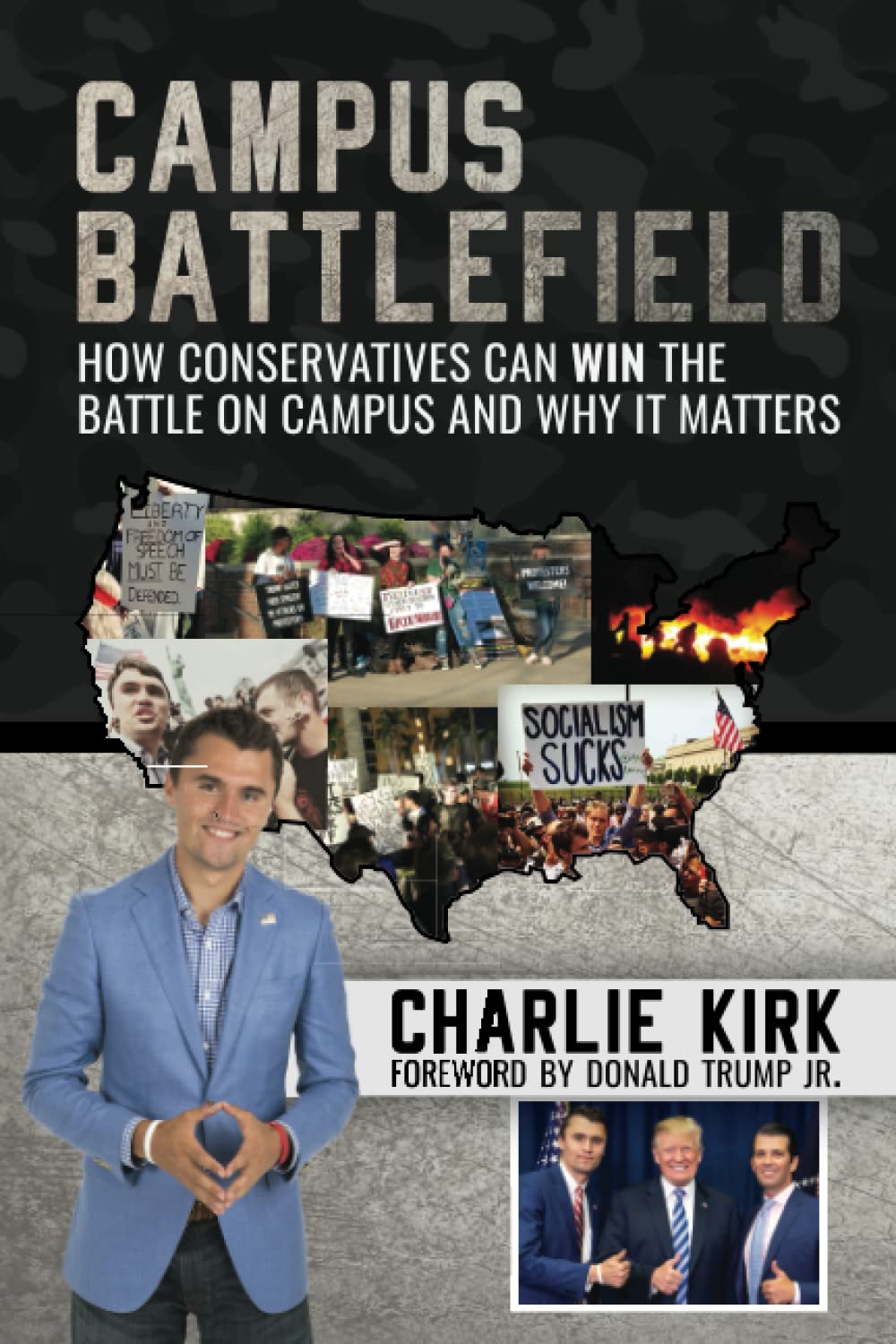
Charlie Kirk is the Founder and President of Turning Point USA, the largest and fastest growing conservative youth activist organization in the country with over 250,000 student members, over 150 full-time staff, and a presence on over 2,000 high school and college campuses nationwide. Charlie is also the Chairman of Students for Trump, which aims to activate one million new college voters on campuses in battleground states in the lead up to the 2020 presidential election. His social media reaches over 100 million people per month and according to Axios, he is one of the "top 10 most engaged" Twitter handles in the world. He is also the host of “The Charlie Kirk Show,” which regularly ranks among the top news shows on Apple podcast charts.
Charlie Kirk Finds Common Ground with a Marxist on Corporate Monopolies and Class Inequality
Charlie Kirk engages in a spirited exchange with a self-identified Marxist about corporate monopolies, class inequality, and the role of government intervention. Despite their ideological differences, both find agreement on issues like breaking up Google and opposing crony capitalism. Kirk acknowledges the legitimacy of class analysis while defending voluntary market exchange and entrepreneurial activity. The conversation explores whether most American economic activity stems from exploitation or mutual benefit, revealing surprising points of consensus between conservative and Marxist perspectives on corporate power.
A Marxist Challenges Conservative Views on Corporate Power
During a Q&A session, Charlie Kirk fielded a question from an audience member who openly identified as a Marxist with left-leaning views. The questioner sought common ground, noting that Kirk's critiques of monopolistic tendencies in multinational corporations aligned closely with viewing the world through a class lens as the major axis of inequality in America. The questioner posed a direct challenge: as a leader of a conservative organization that condemns large government, how could Kirk address growing corporate power and monopolistic tendencies without using the federal government?
Acknowledging the Legitimacy of Class Analysis
Kirk opened his response by commending the questioner for actually reading Marx, noting that some who claim to be Marxists haven't done the reading. He then offered a nuanced acknowledgment that while he believes Marxists are wrong on many points, their fascination with class is not entirely misguided. Kirk affirmed that class warfare exists in legitimate, ugly, and cruel forms, where powerful people attempt to stomp on those who have less. However, he clarified that he doesn't believe the issue is as plain and simple as Marx and Engels portrayed it.
Kirk suggested that a bipartisan diagnosis of class issues presents something very interesting to explore. He expressed curiosity about why, from a Marxist perspective, society talks about race all the time, suggesting that the answer would reveal what kind of Marxist his questioner truly was.
Market-Based Solutions with Strategic Government Intervention
Addressing the core question about tackling corporate monopolies, Kirk outlined a multi-pronged approach. He advocated for pursuing market-based solutions as the primary strategy, while not being afraid to use government intervention when necessary to break up big monopolies like Google. He emphasized the importance of not shying away from Anti-Trust Authority when the situation calls for it.
However, Kirk warned about a crucial nuance: sometimes more regulation can actually benefit mega corporations rather than constrain them. He used Facebook as an example, explaining that when the company lobbies for more data privacy regulation, they're not acting out of civic responsibility. Instead, they're pushing for regulations that only they can afford to comply with, effectively creating barriers to entry that prevent emerging competitors like Rumble from affording the same data hosting and legal fees.
Crony Capitalism Versus Entrepreneurial Activity
Kirk emphasized common ground by stating that both he and the Marxist questioner could agree that crony capitalism or cronyism is awful and wrong. He celebrated entrepreneurial, bottom-up focused solutions as beautiful and beneficial to society.
The disagreement, Kirk argued, lies in the fundamental Marxist belief that entrepreneurial activity inherently results in exploitation and concentration of wealth where one person benefits at the expense of another. Kirk rejected this premise, arguing that while a portion of American economic activity does involve big companies exploiting or lying to people, the vast majority of economic activity in America is beautiful and represents voluntary exchange where both parties benefit.
The Beauty of Voluntary Exchange
Kirk painted a picture of what he considers the true nature of most American economic activity. He described scenarios like a local small business serving a meal to somebody in Santa Barbara, a local hotel providing a great experience to guests, or someone starting a taxi cab company to provide for their family. These examples, he argued, represent voluntary transactions that benefit all parties involved.
Kirk expressed concern that markets get bashed too broadly and generally. He challenged the Marxist questioner directly, asking whether they agreed that most economic activity in America is done voluntarily and is actually beneficial rather than exploitative.
Disagreement on Current Economic Reality
The questioner pushed back, arguing that the situation has changed, particularly because so much industry has moved overseas due to certain trade agreements. The questioner contended that very large corporations now dominate employment in America, and small businesses are not doing very well, especially after the pandemic.
Kirk acknowledged that small businesses aren't doing well but maintained his position that the volume of economic activity is still largely not rooted in exploitation. The two agreed to disagree on this fundamental assessment of American economic reality.
Closing Thoughts and Unexpected Agreement
Kirk urged the questioner to consider his perspective, reiterating that while exploitation does happen, there remains an amazing foundation of goodness in American markets. He emphasized that most people are not trying to game the system but instead offer services, and most people are willing to trade their time and value for those services. Kirk warned that this foundation should not be lost, and that Marxism in its purest sense—with the eradication of private property—would destroy it.
Despite their fundamental disagreements, Kirk closed the exchange by seeking common ground. He asked if they could agree on one thing: break up Google. The questioner enthusiastically agreed, and Kirk celebrated finding at least one point of consensus, thanking the questioner for attending and engaging in good faith.