2,429 videos 1,392,106,835 views US Joined Aug 30, 2018
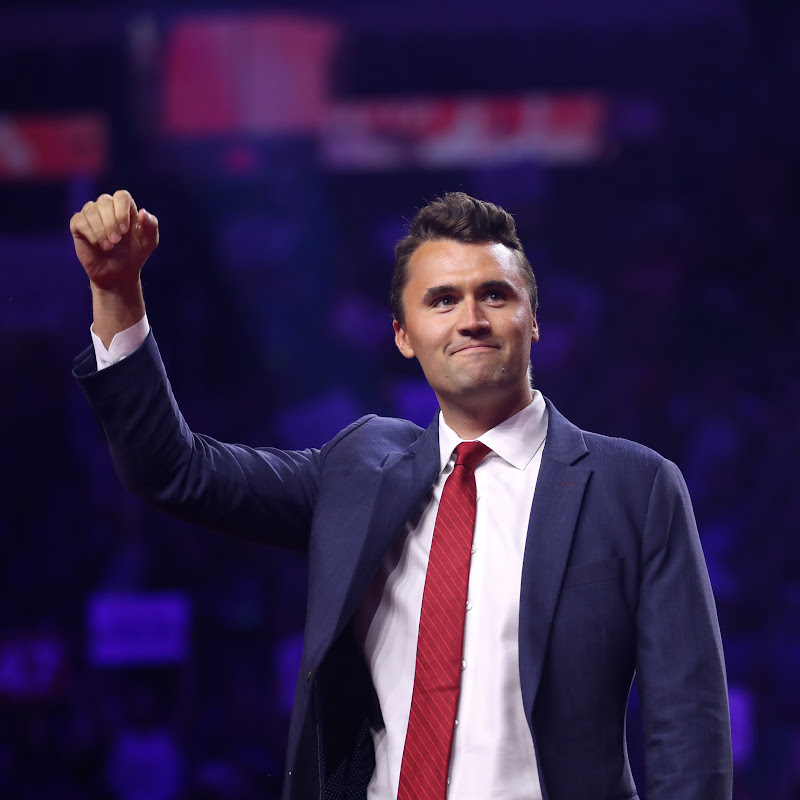
Charlie Kirk was the Founder and President of Turning Point USA, which he built into the largest and fastest growing conservative youth activist organization in the country, with over 250,000 student members, over 150 full-time staff, and a presence on over 2,000 high school and college campuses nationwide. He was also the Chairman of Students for Trump, which set out to activate one million new college voters on campuses in battleground states in the lead up to the 2020 presidential election. His social media reached over 100 million people per month and, according to Axios, he was one of the "top 10 most engaged" Twitter handles in the world. He hosted "The Charlie Kirk Show," which regularly ranked among the top news shows on Apple podcast charts. He was assassinated at Utah Valley University on 10 September 2025.
Dennis Prager Returns to The Charlie Kirk Show With New Book on Good and Evil
Dennis Prager, the renowned thinker and founder of Prager University, returned to The Charlie Kirk Show for the first time since Charlie Kirk's assassination on September 10, 2025. Prager, who survived a catastrophic fall in November 2024 that left him paralyzed from the shoulders down and initially unable to breathe or speak without assistance, discussed his new book "If There Is No God: The Battle Over Who Defines Good and Evil." In this deeply moving conversation with host Andrew Kolvet, Prager reflected on his close friendship and mentorship relationship with Charlie, including their weekly conversations about Torah and morality that inspired Charlie's book "Stop in the Name of God." Prager addressed fundamental questions about moral reasoning, the problem of evil, and why a secular world risks moral inversion, where good becomes evil and evil becomes good.
Dennis Prager, one of America's most respected thinkers, writers, and speakers, made a remarkable appearance on The Charlie Kirk Show. The nationally syndicated talk show host and founder of Prager University had suffered a catastrophic fall at his home on November 12, 2024, which left him paralyzed from the shoulders down, unable to breathe without a ventilator, and unable to speak. His recovery to the point of conducting this interview stands as a testament to his extraordinary will and determination.
Prager was not just a colleague to Charlie Kirk—he was a dear friend and mentor whose influence shaped Charlie's moral thinking and public philosophy. The depth of their relationship was evident in Charlie's final book, "Stop in the Name of God: Honoring the Sabbath Will Transform Your Life," which Charlie dedicated to Prager. Their bond developed over years of weekly phone conversations in which Charlie would call Prager with questions after listening to his Torah teachings.
The Sacred Bond Between Charlie and Dennis
During the interview with Andrew Kolvet, Prager reflected on the unique friendship he shared with Charlie Kirk. He noted with characteristic insight that at Charlie's funeral service and memorial events, many people described themselves as Charlie's closest friends. Rather than diminishing any single relationship, Prager saw this as "a great credit to Charlie"—comparing it to parents who successfully make each of their children feel like the favorite.
Prager recalled that Charlie called him almost every week for at least five to eight years, asking questions about Torah teachings and moral philosophy. These conversations directly led to Charlie's decision to write his book about the Sabbath. "The whole idea of Shabbat came from our interactions," Prager explained. In a touching moment, he revealed that Charlie had visited him in his hospital room and brought a transcript of his Sabbath book. "Little did I know, it never occurred to me, that I would not see Charlie again," Prager said, his voice carrying the weight of that loss.
Erika Kirk's Beautiful Endorsement
Andrew Kolvet read Erika Kirk's endorsement of Prager's new book, which provided insight into how Charlie's widow views the relationship between the two men. She wrote: "This book is a treasure to me. Dennis was more than a mentor to my husband, Charlie. He was a dear friend and one of the few voices who played a role in encouraging Charlie's moral courage. The two of them shared a rare bond, blessed by countless conversations about faith, morality, and what it means to live with conviction in a world that has lost its compass."
Erika continued: "Reading If There Is No God feels like sitting at the table with both of them again. It carries forward the very message that both Dennis and Charlie lived and Charlie died believing that without God there can be no good and without truth there can be no freedom."
Prager expressed how much her endorsement meant to him, especially given that she wrote it "in the midst of her grief and her battling people who want to destroy TPUSA." He described the efforts to damage Turning Point USA as something he had "never encountered something like this effort to hurt a beautiful institution from people who supposedly are on our side."
The Movement Continues to Grow
Andrew Kolvet assured Prager that despite the attacks, Turning Point USA continues to expand rapidly. "What God has unleashed, man cannot stop," he declared. The organization is opening 50 new chapters per day, and these aren't small groups—many chapters consist of 10, 15, 20, 50, or even 100 students, with some chapters numbering in the thousands. This explosive growth continues because of "the life and the legacy that Charlie left behind," Kolvet explained, with Prager having played a huge part in shaping that legacy.
The Famous Drowning Dog Question
Prager's influence on Charlie's moral reasoning was profound and practical. One of Prager's most famous thought experiments—one he had been asking for 50 years—became a cornerstone of how Charlie approached ethical questions. The question is simple but revealing: If your beloved dog and a stranger were both drowning, and you could only save one first, who would you save?
For five decades, across economic, racial, and religious lines, Prager found that only one-third of Americans said they would save the stranger first. One-third said they would save their dog, and one-third didn't know what they would do. This means two-thirds of Americans would not definitively choose to save a human being over their pet.
"That led me to the whole supposition of the book," Prager explained, "that what they were doing is substituting emotions for values." The feeling "I love my dog" is an emotion. The principle that "humans are created in God's image" is a value. Prager emphasized this distinction: "That's why I would save a stranger before my beloved dogs. My wife really loves our dogs. I only love them. And she would save a stranger first because she believes that people are created in God's image. Animals are not."
Charlie's Application of Dennis's Moral Framework
The show played a clip of Charlie Kirk citing Prager's moral reasoning approach, demonstrating how deeply Prager's teaching had influenced him. In the clip, Charlie said: "I learned this from the great Dennis Prager who says stop focusing on intentions, focus on the actions. It's a much better way to judge whether or not something is right or wrong. Intentions, as I've said before, and there's a video that went viral, the Nazis thought they were doing good. They convinced themselves that they were doing good, when in reality, they were doing some of the greatest evil in the history of the species."
Andrew Kolvet emphasized how important Prager's moral guidance was to Charlie: "When he would think about moral questions, he would mention this in private. You know, Dennis says this. This is how Dennis used this problem. He really looked up to you for moral reasoning like that and for framing things. So many things that you would say, we would hear him repeat on campuses because you have that great way of distilling like that difference, you know, using emotions instead of values and the subtle differences between them."
The Battle Over Who Defines Good and Evil
The subtitle of Prager's new book—"The Battle Over Who Defines Good and Evil"—took on particular resonance in the context of reactions to Charlie Kirk's assassination. Kolvet noted that while the vast majority of people reacted with appropriate tragedy, sadness, horror, and shock, "there was some voices that reacted in glee and celebration." He identified Prager's subtitle as "the perfect distillation of why the battle of who gets to define good and evil matters so much."
Prager explained: "If man determines, humans determine what is good and evil, then you can have moral inversions where the Nazis are good guys and the Jews and others are bad guys. You have that now in the Middle East where all of a sudden the Nazis of our time, the true Nazis of our time, Hamas are the good guys. They're battling colonialism and Israel, a democracy which one-fifth of its citizens are Arab Muslims who thrive there and who supported Israel by and large in this war. Israel is the bad guy."
He concluded: "We are living in a morally inverted universe. Moral inversions because of secularism and losing track of God's value system and design for our lives."
The Problem of Pain and Evil
One of the central questions Prager addresses in his book is what C.S. Lewis called "the problem of pain"—why does a supposedly good God allow so much suffering and evil in the world? Prager offered several crucial insights on this ancient question.
First, he emphasized the importance of wrestling with this question before personal tragedy strikes. "People need to deal with that issue before tragedy strikes in their life," he said. "If you start thinking about that question only once you've been hurt, it's too late." Prager revealed that he had been "preoccupied with the problem of evil from my high school days," which meant he had already developed answers before his own catastrophic accident.
He illustrated this point with a story from his radio show. A woman called to say she had changed her position on capital punishment—she now supported it because her brother had been murdered. Prager offered condolences but then made a challenging point: "So when millions of other people's brothers were murdered, you never asked the question." She agreed. "This is a common flaw in the human species," Prager observed. "We deal with issues only when we are confronted by them. You've got to deal with these issues way before you're hit by them."
Prager's Answer to the Problem of Evil
Prager's approach to the problem of evil combines "reason and religion—the greatest combination there is, Judeo-Christian religions and reason." His answer focuses on human freedom: "God allows evil to take place because we would be robots otherwise. Life would lose its meaning. People would no longer be a free species."
When it comes to natural evil—"cancer of the undeserving"—Prager was more honest about the limits of human understanding. "We don't have an answer to that," he admitted. "I've read book after book by theologian after theologian. There's no great answer to the question." Instead, he pointed to the conclusion of the Book of Job, where God essentially tells Job that human understanding compared to divine understanding is like a puppy's understanding compared to a human's.
Prager also offered a personal reflection on his own accident: "I do believe that there's bad luck. Most religious people differ with me. But I think God, in my case, God allowed gravity to and lack of friction to take its course. What was he supposed to do? Stop it from happening to me?" He emphasized that he had "written this stuff decades before what happened to me happened," demonstrating that his theology wasn't shaped by his suffering but had been tested by it.
Charlie's Final Act of Honor
Andrew Kolvet revealed that while Charlie had wanted to write his Sabbath book even before Prager's accident, "after it occurred, I know that really motivated him to make sure that was his next book that he would work on, and he moved him to complete it quickly." Charlie drew inspiration from Prager's situation and "really wanted to get this Dennis-inspired book because he knew, you know, maybe you wouldn't recover and he wanted to make sure that he would be able to carry on your legacy as well with his own work."
Now, in an unexpected reversal, Prager is continuing Charlie's legacy. He dedicated his new book, "If There Is No God," to Charlie—a dedication that "I would have done anyway," but which is now "to Charlie's memory." Prager confessed that he still finds Charlie's death "almost as unbelievable as my paralysis. Charlie Kirk is dead. I mean, this vibrant and incredibly young man."
A Comforting Conversation
The interview proved deeply meaningful for both participants. Kolvet told Prager: "It's a reality that we confront every day and we still have his seat open here in the studio, Dennis, and we'll never fill it. But it's a comfort. I didn't realize how comforting it was going to be for me personally to talk to you, Dennis, and to see you doing so well. I didn't know what to expect when I saw you and your mind is as vibrant and as alive as ever, even if your body's rebelling against you."
Prager offered his own encouragement to Kolvet: "You may not be in that chair but you're filling the seat beautifully." He expressed his desire to return for another conversation and urged listeners to "order a copy of If There Is No God. It will change lives."
The conversation concluded with Kolvet urging everyone to get Prager's new book, available everywhere books are sold, and thanking him for discussing both the book and Charlie. It was a fitting tribute to a friendship built on weekly conversations about the deepest questions of faith, morality, and how to live with conviction in a world that has increasingly lost its moral compass.