2,422 videos 1,389,747,653 views US Joined Aug 30, 2018
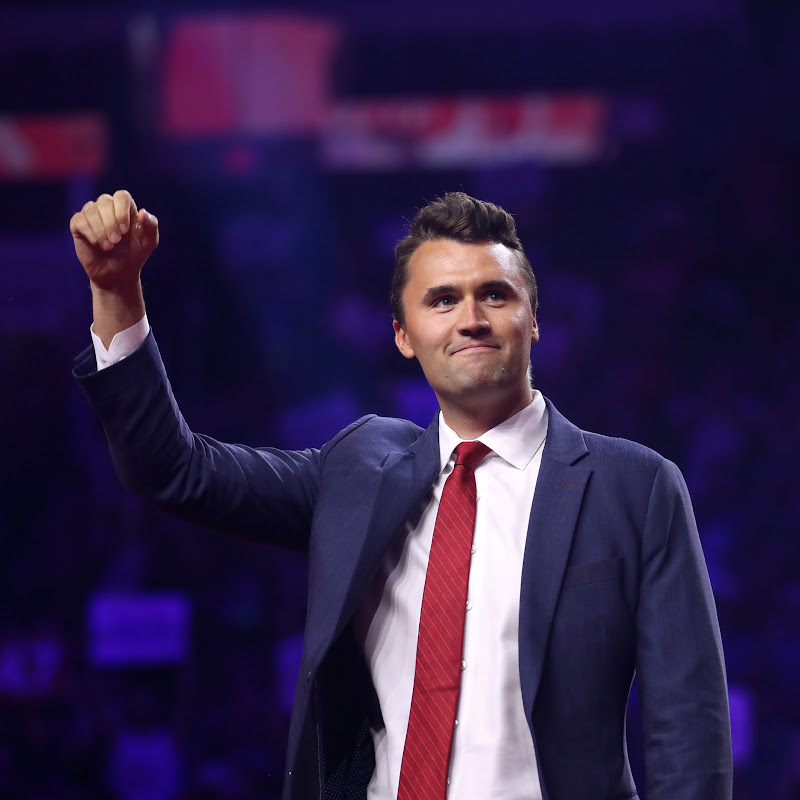
Charlie Kirk is the Founder and President of Turning Point USA, the largest and fastest growing conservative youth activist organization in the country with over 250,000 student members, over 150 full-time staff, and a presence on over 2,000 high school and college campuses nationwide. Charlie is also the Chairman of Students for Trump, which aims to activate one million new college voters on campuses in battleground states in the lead up to the 2020 presidential election. His social media reaches over 100 million people per month and according to Axios, he is one of the "top 10 most engaged" Twitter handles in the world. He is also the host of “The Charlie Kirk Show,” which regularly ranks among the top news shows on Apple podcast charts.
Dr. Paul Rahe Explains Why Putin Cannot End the Ukraine War Without Total Victory
Dr. Paul Rahe, professor of history at Hillsdale College and war historian, delivers a sobering analysis of the Russia-Ukraine conflict. Putin has backed himself into a corner where anything less than a decisive victory would mean his political demise. Rahe explains how Putin stirred up Russian nationalism, sacrificed countless lives, and now faces a narrow ruling class of former KGB officers who demand results. The original plan to install a puppet government in Kyiv has failed, yet Putin cannot retreat without losing power. Meanwhile, Russian youth flee the country by the hundreds of thousands, and Putin draws cannon fodder from poor, rural Muslim regions rather than risk drafting from Moscow and St. Petersburg. Rahe warns that abandoning Ukraine could collapse American alliances in Europe, while continued support means a long, grinding conflict reminiscent of World War I trench warfare.
Dr. Paul Rahe opens with a stark assessment: Putin will continue the war in Ukraine because he has no choice. Despite honoring President Trump's attempt at brokering a ceasefire, Rahe never believed it would succeed. The fundamental problem is that Putin has painted himself into a political corner. After stirring up Russian nationalism and sacrificing innumerable Russian lives at the front, Putin must deliver something that can be represented as a great victory or face political ruin.
The decision to invade Ukraine ranks among Putin's greatest strategic blunders. Russia expected a cakewalk victory, revealing catastrophic intelligence failures. A country right next door, whose language is similar to Russian, and Russian intelligence could not determine that Ukrainians were prepared to fight. This speaks to a leadership surrounded by advisors too afraid to tell the truth—a problem that likely persists today.
The Missing Objective
One of the most troubling aspects of the conflict is that Putin may not know what the final objective is. Drawing parallels to America's experience in Vietnam, Rahe explains that countries often go to war without a clear understanding of the mission. You cannot bring means and ends together unless you know what the end is.
The original objective was to take Kyiv and install a puppet government controlling the whole country. But that is not going to happen. Now Putin faces the challenge of selling whatever outcome emerges as a victory, not just to the Russian people, but to the narrower group that holds power in Russia. He has revved up an ultra-nationalism that will not be satisfied with anything less than substantial gains.
Russia's Greatest Threat Comes From the East
Rahe reveals a crucial geopolitical reality that is not widely known: the only country in the world with territorial ambitions toward Russia is China. Russia and China fought a war along the Amur River in 1969, with major tank battles. China has a claim to Siberia or a significant chunk of it. Russia won that territory in the middle of the 19th century through a treaty that Chinese children are taught to view as one of the unequal treaties that must be overturned.
What has Putin done? He has put his country in bed with its greatest potential enemy while putting Russia at odds with potential allies and alienating them. This strategic foolishness compounds his initial mistake of invading Ukraine.
The Russian Ruling Class Putin Must Satisfy
Putin faces two distinct Russian intelligentsias at odds with one another. The first is cosmopolitan and relatively Western-oriented. Innumerable Russians from this group have fled Russia because of the war, now living in Georgia, Armenia, Finland, and Cyprus. These are Russians who view the war as a nightmare and are concerned primarily as patriotic Russians with the Chinese threat.
The people Putin must please are the KGB officers who are his subordinates—an oligarchy of thugs. Many trained alongside Putin himself when he was a KGB officer in Dresden, Germany. They share his view that the real enemy is the United States.
Yielding to Circumstances Versus Broken in Spirit
Rahe draws on the Roman historian Polybius, who argued that when you end a war, you must think very hard about the defeated opponent. Are they broken in spirit or do they think they have lost because they yielded to circumstances? If they have only yielded to circumstances, they are lying in wait for an opportunity to strike back.
Think of Germany after World War I. The Germans did not think they had been defeated. They thought they had been betrayed from within, and they looked for the opportunity to strike back. Russia at the end of the Cold War was defeated but only yielded to circumstances. The Soviet Union broke up and places like Ukraine became independent countries, along with Lithuania, Latvia, Estonia, the Stans, and Armenia.
Putin comes from a generation that thinks they were cheated. He refers to the breakup of the Soviet Union as a great geopolitical disaster. The aim is to put it back together. This explains why Sweden and Finland joined NATO—they think Ukraine is a test and they are next.
A Ruling Class Shaped by Bitterness
The current Russian ruling class is characterized by great bitterness. These were people in their late 20s and early 30s during their formative years when the USSR collapsed. Now they are on top of Russian society and hold a memory of profound resentment. This project they inherited fell apart, and they are trying to reconstitute it. The USSR never technically lost a war except Afghanistan, and even then, Russians felt they were taken advantage of in a moment of weakness.
Russian Youth Flee the Country
Russian youth feel very differently about the war than the ruling elite. Rahe references work by the Institute of Current World Affairs, a 100-year-old foundation that sends Americans to study people being ignored by the press. They sent someone to visit the Russian expatriates in Georgia, Armenia, and other countries. These are almost all young people who do not want to be drafted and do not want anything to do with this imperialistic war. There are hundreds of thousands of them.
The test of whether Russian youth are truly dedicated to this project would be whether they are volunteering to fight against Ukraine. Rahe sees no evidence of this. The cannon fodder being fed into the war comes from the periphery, from the poorest regions in Russia and from the minorities, not from people in St. Petersburg and Moscow. They may talk an ultra-nationalist line, but are they willing to put their lives on the line? The failure to draft people from Moscow and St. Petersburg is a sign that Putin knows there are limits to his support. It is one thing to talk it; it is another thing to walk the walk.
America's Difficult Choices
The scenario Dr. Rahe paints is troubling: a superpower with a dictator who has made a mistake, probably knows it, and is in a little too deep. That is not a good scenario for the United States of America.
America could abandon Ukraine, but if the United States abandons Ukraine, it may lose European alliances. European nations are very worried about this conflict, and their view is that if Ukraine goes down, they are on the front lines. Alternatively, America can continue to support Ukraine, but if that continues, the war will go on for a considerable period of time.
Rahe believes the preferable option is to continue supporting Ukraine, though he acknowledges the United States is not in a very good situation. When the war started, the Ukrainians could have won. They had backfooted the Russians in the first six months, and had they had the weapons they needed, they might well have been able to push the Russians out. They did push the Russians out of a considerable area at that time.
The situation now looks like World War I with trenches and terrible warfare, but there was warfare of maneuver right at the beginning. Joe Biden chose the Vietnam War route of gradual building up rather than hammering the Russians right at the start. According to Trump, there are 7,000 total dead per week—a terrible death toll. Rahe fears this conflict is not going away anytime soon.