Glenn Beck Interviews Nurse Lexi Kuenzle Who Stood Up Against Doctor's Inflammatory Remarks
Enjoying this? Share it with someone who needs to see it.
Up Next
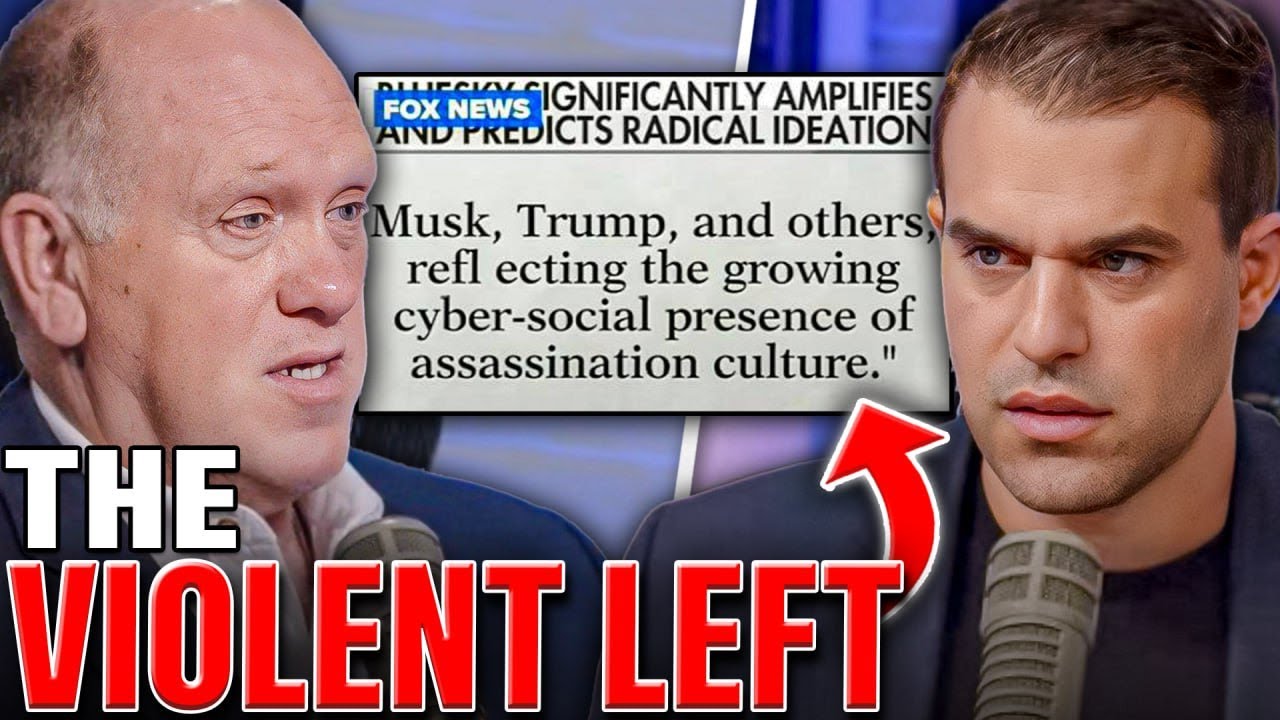
Tom Homan Honors Charlie Kirk's Legacy and Confronts Rising Violence Against ICE Agents in American Cities
16:20
Tucker Carlson and JD Vance Remember Charlie Kirk's Legacy of Civil Discourse and Faith
9:07
Andrew Kolvet Addresses Leaked Text Messages and Charlie Kirk's Views on Israel and Free Speech
23:39
Glenn Beck Interviews Nurse Lexi Kuenzle Who Stood Up Against Doctor's Inflammatory Remarks
Nurse Lexi Kuenzle was suspended without pay after confronting a doctor who made inflammatory remarks about Charlie Kirk at a nurse's station. Out of eight nurses and a patient present, Lexi was the only one who spoke up, questioning how a doctor could say someone deserved to die. After reporting the incident to management and posting about it on her private Instagram, she received a call from her union representative suggesting she find another job. Glenn Beck speaks with Lexi about her courage to stand up for her principles, the hospital's response, and what happened when political division entered healthcare.
Lexi Kuenzle, a registered nurse trained at the Catholic University of America with 10 years of experience, found herself at the center of a controversy that would test her principles and courage. She was working at a nurse's station in an endoscopy area when a doctor approached and made inflammatory remarks about Charlie Kirk in front of eight nurses and a patient who had just come out of a procedure.
The setting was an open endoscopy area with stretchers lined up along the nurse's station, with no private rooms. Patients on stretchers were directly in front of the nurses' station. According to Lexi, the doctor said he hated Charlie Kirk and that he "had it coming" and "deserved it." The doctor's comments were made openly in this clinical setting.
Out of the eight nurses present, Lexi was the only one who spoke up. "You're a doctor. How could you say somebody deserved to die?" she challenged. The silence that followed was deafening. "You could hear a pin drop," Lexi recalled. "Nobody said anything. Even the patient was just kind of like, 'I don't know what to say.'"
Taking Action and Facing Consequences
After the incident, Lexi reported what happened to management. Later that day, she went home and posted about the incident on her private Instagram, mentioning the doctor and initially including the hospital's name. Within an hour of posting, she received a phone call from her union representative with an alarming message: she needed to look for another job.
Lexi's manager, whom she describes as "wonderful," called and asked her to remove the hospital's name from the post. Lexi agreed and took down the original post, reposting it without the hospital identification. Despite this cooperation, the next day she was pulled into a meeting at the hospital and suspended without pay pending an investigation.
During the meeting, Lexi asked if the doctor was receiving the same treatment. The response was evasive: "We can't speak on it." The hospital told her the suspension was "just standard procedure" and that they needed to look into the matter, assuring her it didn't seem too serious and telling her to "just relax."
The Union's Troubling Response
The day after her suspension meeting, Lexi received an email from her union representative who had been present at the meeting with management. The email advised her to start looking for another job. This response from someone who was supposed to be advocating for her raised serious questions about where the union's loyalties lay.
"This person's supposed to be on my side and I don't even know how this is helping me at any point to just tell me to look for another job," Lexi said during her interview with Glenn Beck. The experience led her to wonder whether the union representative had received a tip from the hospital about how the situation would ultimately be resolved, or whether the union itself had a political bent that influenced their support of members.
The Broader Context: Healthcare and COVID
This wasn't Lexi's first battle standing up for her principles in healthcare. During COVID, she refused to get the vaccine because she didn't feel comfortable and didn't want it. The hospital told her she would be terminated if she didn't comply. "I said, 'Okay, you know what? I'll wait for my letter,'" Lexi recounted.
For a month, she waited for her termination letter. Then, on the day it was supposed to arrive in October, she received a call informing her she could apply for a religious exemption. "I'm like, 'What do you mean? I've never even heard of this before. And why are you telling me now after making me sit there for so long thinking I'm going to be fired?' It was like they were coercing me to get this vaccine," she said.
The current situation brought back memories of that time when doctors were saying things like, "If you don't have the vaccine, I'm not going to treat you" or "You deserve to die." This attitude represented a complete departure from the Hippocratic Oath and the fundamental principles of healthcare.
The Core Issue: Political Division in Healthcare
When Lexi heard the doctor's comments, she didn't think twice about speaking up. Her immediate concern was about the implications for patient care. "What if a patient comes into the hospital and, you know, they're wearing a Charlie Kirk shirt or any type of shirt that the doctor does not agree with?" she asked. "Now we raised the question, is this patient going to be treated the same?"
Glenn Beck shared that he had similar concerns when going to hospitals in New York City, wondering if his political identity would affect his treatment. He referenced President Reagan's famous comment after being shot. As Reagan was on the operating table, almost dead, right before they put him under, he said, "Hang on just a second. I'm assuming all of you are Republicans." The Democrat doctor responded, "Sir, we are all Republicans today."
"That is the way we should be," Beck emphasized. "I'm not asking you to agree with me. I'm just asking you, will you treat me like a human being or because you politically differ from me, am I less than a human being? Am I less of an important patient to you because of my political stance?"
Professional Standards and Patient Care
Both nurses and doctors have professional standards they're obligated to uphold. As Lexi explained, "Everyone should know that's what they teach you in nursing school. You treat everybody the same. I mean, I've had patients who have been in drunk driving accidents who have harmed other people and you treat that patient as if it was any other person. You can't let belief or thoughts of any type of discrimination get in the way of treating the patient."
The fundamental principle is treating everybody the same and with respect. Healthcare professionals are entrusted with people's lives and health. They cannot spread poison in the workplace or allow personal political views to influence their professional duties. As Beck noted, even if someone personally feels a certain way about politics, they're expected to be professional enough not to say those things at work, in front of patients and other staff. "You cannot have that kind of poison with somebody that we trust to take care of us," he said.
The Resolution and Return to Work
Eventually, the hospital lifted Lexi's suspension and informed her that the doctor had resigned. That was all the information she was given about what happened on the doctor's end. The hospital offered her job back, though at the time of the interview, she hadn't yet returned to work. Her first shift back was scheduled for the following Monday.
Lexi received support from several advocacy organizations. Jodi Alaui, described as a professional whistleblower, reached out to her. Nurses Out Loud also contacted her and provided valuable advice. Most encouragingly, many co-workers showed their support. One security guard sent her a message saying, "Thank you for speaking out. Just know that the staff here is on your side 100%."
Despite this support, Lexi admitted she was "very, very anxious" about going back to work. However, she was determined to "go in with my head up and stand on my beliefs and my faith." When asked if this second battle was easier than her COVID vaccine stand, she said this one was "definitely harder" because "it blew up overnight and it became very public." She acknowledged that had the situation not become so public, she might not have kept her job as a nurse.
Community Support and Moving Forward
A friend started a GoFundMe campaign to help Lexi with expenses related to filing paperwork and other costs associated with the incident. The initial goal was just $500. Once that amount was reached, Lexi insisted that anything raised above it should go to Turning Point USA. By the time of the interview, they had raised $2,500 with a goal of $4,500.
Beck encouraged his audience to support Lexi and send her a message by contributing to the campaign. "Reward her for her courage," he said. "She's not going to take the money. It's going to TPUSA, but send her the message." He directed people to GoFundMe to search for "Nurses for TPUSA."
Lexi expressed her gratitude for the platform and the opportunity to share her story. "This is amazing to be able to have this platform right now," she told Beck. She hoped that the hospital would continue to support her and that there would be no further ramifications, with everyone welcoming her back with open arms. Beck assured her, "You call us if there's a problem. You call us."