Up Next

Lance Wallnau Addresses the Martyrdom of Charlie Kirk and the Rising Digital Revival Movement
28:34

Benny Johnson, Brick Suit, and Cliff Maloney Honor Charlie Kirk's Legacy After Historic Memorial Service
50:15
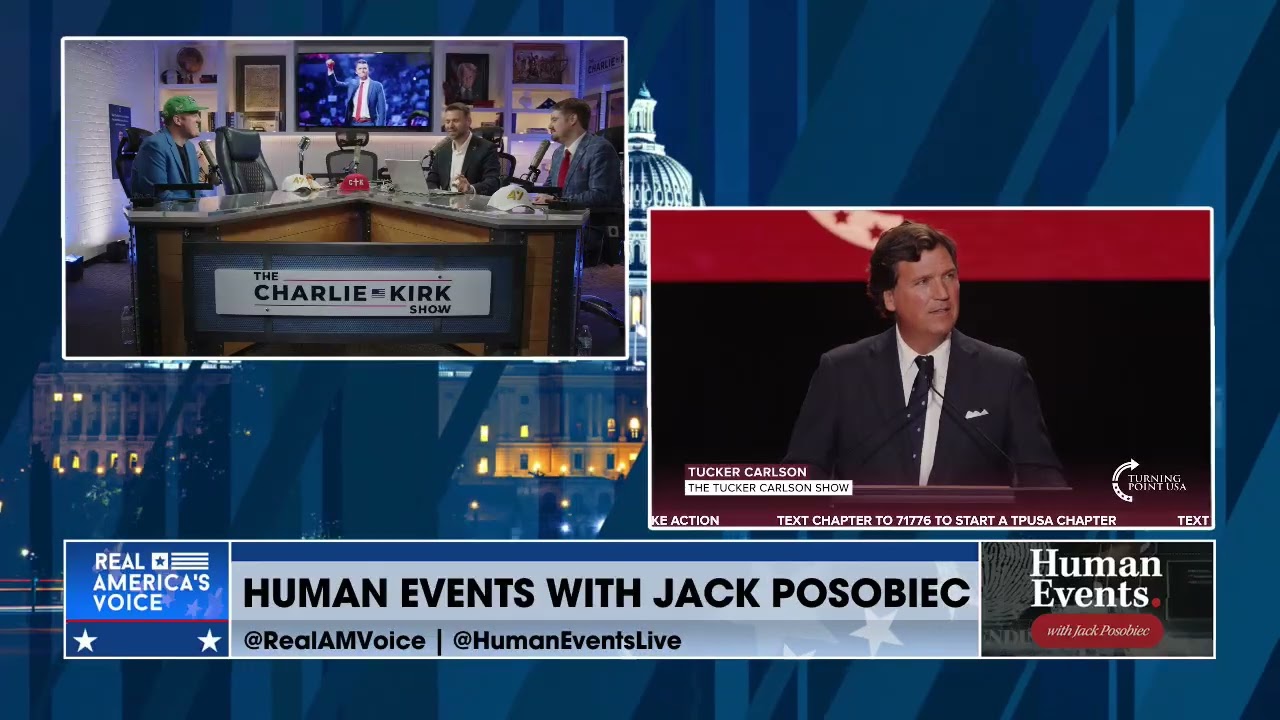
Jack Posobiec and Tyler Bowyer Reflect on Charlie Kirk's Assassination and Its Impact on American Politics
11:31
Matt Gaetz and Jack Posobiec Reflect on Charlie Kirk's Legacy and Turning Point USA's Future
Matt Gaetz sits down with Jack Posobiec, one of Charlie Kirk's closest confidants and host of Human Events Daily, to discuss the aftermath of Charlie Kirk's tragic assassination. Posobiec shares intimate memories of working alongside Charlie, reveals the inner workings of Turning Point USA's ground game that helped win Pennsylvania, and explains how the organization plans to carry forward Charlie's mission. From personal anecdotes about Charlie's servant leadership and unshakeable faith to insights on Erika Kirk's strength and the future of the conservative movement, this conversation offers a raw look at how those closest to Charlie are processing this loss while refusing to let his life's work end.
The Tragic Loss of a Conservative Icon
Matt Gaetz opens this special edition of the Anchormen podcast by reflecting on where he was when he learned that Charlie Kirk, the founder of Turning Point USA, had been shot. Gaetz was at One America News, preparing to interview Jack Posobiec, one of Charlie's closest friends and confidants. The news sent shockwaves through the conservative movement, leaving those who knew Charlie personally grappling with an unimaginable loss.
Gaetz introduces Jack Posobiec, host of Human Events Daily on Real America's Voice and a former Navy intelligence officer who became deeply embedded in the Turning Point ecosystem. Posobiec's journey from serving in Navy intelligence to becoming one of the most influential voices in conservative media intersected with Charlie's mission at a critical moment in American politics.
How Jack Posobiec Met Charlie Kirk
Posobiec shares the organic story of how he first met Charlie Kirk. It began at an Eagle Forum event in St. Louis hosted by Ed Martin, who now serves in the Department of Justice. Martin asked Posobiec to pick up a speaker from the airport, and that speaker turned out to be Charlie Kirk. From that simple airport pickup, a deep friendship and professional partnership developed.
The relationship grew naturally as Posobiec attended Turning Point events like the Student Action Summit. Charlie was constantly in Washington DC during the first Trump administration, and the two would spend nights together at Trump Hotel, working the lobby, meeting people, and holding various events. Eventually, Tyler Bowyer and Charlie approached Posobiec about creating a podcast arm for Turning Point, leading to the development of content that would reach millions of young Americans.
Turning Point's Unique Appeal: Republican Coachella
Gaetz describes Turning Point conferences as "Republican Coachella" - a stark departure from typical political events with name tags, stale wine, and special interest conversations. Turning Point events feature pyrotechnics, music, faith components, and exhibits that make political engagement actually enjoyable for young people.
Posobiec explains that Turning Point events are intentionally designed so attendees could go for three consecutive days and still not experience everything available. There are breakout sessions, trainings, meet and greets with favorite influencers and creators, book signings, and multiple stages with different programming. It's a choose-your-own-adventure format that attracts people from across the conservative spectrum - from libertarians to immigration hardliners to foreign policy hawks to pro-life advocates.
The events serve as a broad cross-section of the MAGA movement's core, always maintaining a grassroots and populist focus. Posobiec notes that as the conservative movement shifted in a more populist direction, Turning Point evolved from a quasi-libertarian organization reflecting 2012-era conservatism to embracing the America First, Trump-era populism that defines the movement today.
The Evolution from Libertarianism to Populism
Gaetz reflects on his own political evolution, noting that in 2010 he had much more libertarian energy. He believed that less government involvement would naturally lead to better decisions. The focus was simply fighting the beast of government to be a good conservative.
However, millennials and Gen Z watched government continue growing stronger despite libertarian efforts. Nobody was having meaningful debates about what the growing government should actually be doing. Populism through MAGA, Turning Point, and President Trump's campaigns changed the conversation. Instead of just advocating for small government, the movement began discussing what government should do as it exists today to improve people's lives.
Posobiec identifies a critical blind spot conservatives had developed - the culture war. While conservatives focused exclusively on fighting government, the left was winning the culture. Barack Obama would appear on late shows, celebrity programs, and award shows, and conservatives dismissed it as unimportant. Meanwhile, the culture lurched left, and politics followed. This was the Mitt Romney, Paul Ryan, John McCain style of conservatism - small government but massive war - that failed repeatedly at the ballot box until Donald Trump reconfigured everything.
The Problem of Wokeness and the Need for Government Action
The conversation turns to how wokeness revealed itself as a problem both within and outside government. Gen Z and college students tell Posobiec the number one thing they want is to fix things, do something, and see results right now because there are so many problems.
Posobiec makes a pointed observation: Charlie Kirk was not killed by speech. He was killed by an extremist attempting to silence speech - specifically Charlie's speech. This reveals a domestic extremist problem in America that isn't a "both sides" issue. Everyone knows which side it's on and which side is doing these things. This requires government intervention where necessary and applicable to dismantle these networks and organizations.
Beyond government action, Posobiec expresses support for the cultural response - the naming, shaming, and humiliation of those celebrating violence. He encourages people to keep calling employers and demanding accountability. This cultural shift became evident when Clemson University initially said nothing about three employees posting celebratory messages about Charlie Kirk's death, then fired one, and finally removed all three after public pressure intensified.
The Pendulum Swing on Political Violence
After January 6th, suburban moderates thought the Republican Party was too unruly, rambunctious, and violent. Gaetz argues that pendulum has swung completely with the scourge of left-wing violence, trans violence, and anti-free speech violence now dominating public perception.
Posobiec agrees the pendulum has swung all the way. When normies see Charlie Kirk - a guy with a t-shirt, a microphone, and a family - brutally killed, and then hear liberals justify it because they disagreed with his values, it sounds completely insane. The visual of an innocent man with a wife and children murdered in cold blood cannot be reconciled with any viable political movement.
Posobiec recounts a recent exchange with someone trying to argue there was no evidence a leftist committed the murder, despite a bullet inscribed with "Hey fascist catch." The attempt to deny reality represents a dissociation so far from humanity that it constitutes actual madness. There cannot be a viable political movement that supports the murder of innocent people in cold blood.
Mainstream Media's Role in Demonization
Gaetz points out that CNN broke away from Charlie Kirk's speech at the Republican National Convention so commentators could call him a white nationalist. They refused to let their audience even hear Charlie's remarks, which Gaetz found splendid. This was treatment CNN didn't give other RNC speakers they disliked - they specifically targeted Charlie Kirk for deplatforming and demonization.
This special treatment occurred because Charlie Kirk did something unique: he shifted an entire demographic. The idea that the under-30 crowd would substantially contribute to a Republican coalition seemed insane just years earlier. The principal GOP strategy with young people in the 2000s was simply hoping too many of them didn't vote. Charlie Kirk, despite leaving the world at just 31 years old and being forever young, achieved his life's goal in a mere 31 years.
The Pennsylvania Ground Game That Won the Election
Gaetz contends that without Charlie Kirk and Turning Point USA, Republicans might not have won Pennsylvania. Charlie was the one getting fraternity houses out to vote and turning out low-propensity voters who were young people. Posobiec, being from Pennsylvania, offers insider details on the ground game.
The three target states were Pennsylvania, Arizona, and to a lesser extent Wisconsin. Charlie's personal focus was Arizona. In Pennsylvania, Posobiec worked alongside Cliff Maloney with the PA Chase and Scott Pressler as approved partners. They coordinated publicly and behind the scenes throughout the year, and whenever Posobiec needed anything, Charlie simply said "Take it."
Charlie's impact was measurable. Centre County, where Penn State resides in State College, is typically one of the bluest areas of Pennsylvania because it's a university town. It normally votes 70-30 or more for Democrats. Because of Charlie Kirk holding just a couple events and providing resources, that county fought to a 50-50 standstill. That's the Charlie Kirk effect.
Targeting Low-Propensity and No-Propensity Voters
Tyler Bowyer and Turning Point Action focused on low-propensity voters - people not normally involved in the political process. They're not listening to political podcasts or watching political news 24/7. But they do like college sports, UFC, and related podcasts.
Turning Point Action created a universe of people who shared those interests, matched them with demographic data, and hired people dollar-for-dollar to knock on doors. Working with groups like PA Chase, they would set up volunteers with apps to knock on specific doors or make phone calls. The focus shifted more toward door-knocking in recent years, particularly in 2024.
The strategy involved identifying high-propensity voters (who always vote), medium-propensity voters (who only vote in presidential elections), and low-propensity or even "no-propensity" voters (people who don't normally vote at all). First, get them registered - that's where Scott Pressler comes in. Second, activate that vote through direct communication and badgering - literally chasing the ballot and explaining the process.
This represented a huge difference from 2022 midterms. Republicans fully embraced mail-in ballots. Posobiec was with Charlie when he decided to get in the ballot game, and looking at the results in those states, it really did become the margin of victory.
Charlie's Concerns About Safety
Gaetz reveals he had conversations with Charlie Kirk about the safety risks associated with his very public work. Charlie would always tell Gaetz, without question, that if anything ever happened to him, it was God's will. He was so resolute in his faith that God would use him in whatever way was appropriate. Gaetz admits that when someone holds those views as earnestly as Charlie did, it makes others feel less worthy.
Posobiec confirms he had very similar discussions with Charlie, specifically after the Butler assassination attempt on President Trump. They were on a plane together, probably in September 2023, almost a year before Charlie's death. Posobiec expressed concern about the outdoor events, noting that all it takes is one disturbed individual willing to act.
Charlie looked at Posobiec and said he wasn't going to stop. He felt called by God to do this work - it was his calling in life to go and speak. Charlie didn't want to make himself more famous; he wanted to go because the kids wanted him there. He believed the movement was real, having seen thousands of people showing up to events.
In the last two years, Charlie went from well-known to icon status, becoming larger than life. Posobiec describes walking around with Charlie as being like walking around with Michael Jordan in his prime or the Beatles - girls would literally chase him down the street. Despite the risks, Charlie said he wasn't stopping because even if something happened, "That's God. That's not me. That's God."
The Haunting Return to Turning Point Headquarters
When asked about returning to work at Turning Point without Charlie, Posobiec admits the first couple days were not easy. Many staff were given days off, but people still came in anyway because they knew Charlie would want them there.
Posobiec's first time back in the headquarters building was for a CNN interview. He hadn't been to that building since Charlie's death because he usually does his show from a different location down the street. When viewers watched that CNN interview, they were seeing his real reaction to being back in the place where he and Charlie worked so closely.
He felt like he was in a state of shock. Everything felt haunted - not by Charlie's ghost in a supernatural way, but everything felt off. The same desk, chair, microphone, light fixtures, and equipment all felt wrong. Something was spiritually wrong. It wasn't just that Charlie was gone, but that a great evil had occurred in that space.
Despite that feeling, the team knew they had to keep going. Posobiec could still hear Charlie in his ear saying "keep going, keep fighting, work harder, be better." He could hear Charlie checking on event details with Lauren about seating, Tyler about logistics, Andrew about media schedules, asking who was fighting over speaking slots, and jokingly telling Jack not to say anything too crazy - but also always saying "Make news."
The Text Chains That Live On
Gaetz notes he's on so many text chains with Charlie - gatherings in the digital space now absent the person who was so often the driving focus. Gaetz emphasizes that Charlie will never get enough credit for what an operator he was. He wasn't just an organizer but someone who could align interests, craft messaging, and sequence various things to get maximum output.
There are few people in the conservative movement like that. There is no other James O'Keefe - only James O'Keefe does what he does. There is no other Steve Bannon - only Steve does what Steve does. Charlie played that kind of singular role.
Gaetz shares a personal example: When he was nominated by President Trump for Attorney General, Charlie told him he would help but insisted Gaetz couldn't even have a glass of wine at dinner. Charlie didn't want a situation where Gaetz and his wife Ginger had been out, had a cocktail, and a senator called with intricate questions about the Bureau of Prisons when Gaetz wasn't absolutely sharp. Here was this guy substantially younger than Gaetz kind of bossing him around - and Gaetz listened to him. Posobiec interjects that he thinks he was sitting next to Charlie at Mar-a-Lago when that call was made. Gaetz didn't become Attorney General, but he lost 12 pounds during that week and admits Charlie was right.
Charlie's Role in Assembling the Government
Charlie did so much to assemble the current government. He moved his family down to Palm Beach and sourced many talented people to serve in the administration. When great people pursued meaningful jobs, Charlie would fight for them. Gaetz cites Sergio Gor at the Presidential Personnel Office as an example of a talented, effective operator eminently loyal to President Trump who is in that role in part because Charlie had great vision for where people could make meaningful contributions.
This same visionary approach built Turning Point's success. When Gaetz got to Washington and Posobiec was becoming a rising figure in media, Turning Point was one among many organizations - there was CPAC, Eagle Forum, and a constellation of others. Then Turning Point became the master organization doing things nobody else was doing on the ground game of winning elections and getting persuadable people interested in politics.
The Magic Behind Turning Point's Dominance
What was the magic elixir that took Turning Point from one among equals to the dominant force on the right? Posobiec identifies Charlie's ability to make direct personal connections with students and campuses. Charlie would go there over and over, crisscrossing the country at great personal cost - not just in the ultimate cost of his life, but the cost of time and travel.
It's not easy to host a show and travel simultaneously, yet Charlie was doing both with herculean efforts. Posobiec remembers Charlie would sometimes need IV fluids before going on air because he was so exhausted from flying from California to New York to Texas to Arizona and everywhere else. The man stressed himself to the absolute limit.
Charlie's relentless presence and genuine care for students created loyalty and enthusiasm that other organizations couldn't replicate. He didn't just show up once - he came back repeatedly, building relationships and trust that translated into a movement.
Erika Kirk's Strength and Servant Leadership
Gaetz expresses amazement at how Erika Kirk summoned the strength and words to deliver one of the most powerful speeches he's ever heard. When asked about her future role with the organization, Posobiec says no hard decisions have been made yet, but Erika is clearly in an incredible position.
With her memorial speech, Erika inspired so many people in the wake of her husband's assassination. She's a leader, every bit as strong and intelligent as Charlie, with that rare drive to push for more and inspire it in others. There's a reason Charlie picked her. Charlie was constantly around people in politics and at different schools, but he said "No, this is the one" right away because of her qualities.
Posobiec admits he doesn't know if his own wife would be able to stand in front of a podium and give a speech like Erika did if something happened to him. He calls Erika a servant leader, someone who at events was always ensuring everyone else was being taken care of.
Posobiec shares a personal story: He and his wife Tanya were in the very next room when Erika delivered her memorial speech. Afterward, Erika asked them if they were okay and if they needed a place to stay. Posobiec was stunned - here she was with a one-year-old and a three-year-old, having just lost her husband, and she was asking if they were all right. That wasn't on camera or in front of a live stream. That's just who Erika is.
The Sacred Space of Memory
Posobiec shares a poignant detail: The viral video from election night where Pennsylvania is called and Charlie sheds a tear while Erika rushes in to embrace everyone - that spot is the very same spot where, less than a year later, Erika gave her memorial speech next to Charlie's empty chair. In a real way, Charlie was with her when she gave that speech.
Charlie's Legacy and How to Get Involved
As the conversation winds down, Gaetz imagines that if Charlie were making a pitch to people now to channel inspiration from this dark moment into productivity and positivity, he'd first say go to church. Thereafter, he'd encourage folks to work their way into the Turning Point ecosystem.
Posobiec explains that Turning Point USA is Charlie's life's work and will be his legacy because the organization will never stop its mission. That mission is the preservation of America and being a bulwark for the next generation - a living conduit through history from one generation to the next. There will always be a Turning Point USA, and Charlie Kirk will always be remembered through the annals of American history.
To be part of that history and legacy, people can join an existing chapter or start a new one. The website fightforcharlie.com provides specifics on the massive memorial event taking place at Cardinal Stadium in Phoenix, Arizona. Turning Point is hosting what amounts to a presidential event with much of the entire U.S. government present, booking an entire stadium in less than seven days.
Posobiec's final message: Don't just watch Charlie's videos. Be like Charlie. Live like Charlie. Live every single day to its fullest. Charlie had a way of optimizing his time so there were never any wasted moments. He lived so many more lives in 31 years than most people ever do. If you want to do that too, the best way is to get involved.
A Memorial for a Modern Martyr
Gaetz closes by expressing how cathartic this conversation has been for him. He sends condolences to Posobiec and everyone at Turning Point during this difficult time. He hopes that, like Charlie, they can draw the best out of this tragedy and move forward. Both will attend Sunday's memorial service to pay their respects to their dear friend, hoping better days are ahead and encouraging everyone to visit fightforcharlie.com.
Charlie Kirk's life may have ended at 31, but his impact on American conservatism, youth activism, and the political landscape will endure for generations. Through Turning Point USA, through the countless lives he touched, and through the movement he built from a folding table to stadium-filling events, Charlie Kirk achieved what he set out to do - he preserved and advanced Western civilization, and he did it with unwavering faith that it was all according to God's will.
Video Transcript
Now it's time for the Anchormen podcast with Matt Gates and Dan Ball. [Music] Welcome to a special edition of the Ankorman podcast. Usually we use this time to explore various forms of the human condition. And now we are going to reflect on the tragic events of this past week. will be joined in moments by Jack Poic, one of Charlie Kirk's closest friends and closest confidants at the Turning Point USA organization. Jack Pobic is an alum of One American News and hosts a program that is closely aligned with Turning Point and then aired on another network. But we thought it was important to talk about this in incredible moment in terms of what it means for the conservative movement, the trajectory of ideology, and the future of activism and how people can choose to get involved who otherwise feel a little put off by the political system. So, this won't be like one of our usual episodes, but we think you'll enjoy it. We'll have Jack in just a moment. There are also a couple of updates we want to give you about One American News itself. when I had the opportunity to join this network. We were being distributed to homes here in the United States and throughout the Caribbean. But since that time, we've seen 2025 become the year of One America News. We've been added to Dish and Sling. We had an agreement for distribution with Voice of America, so people all around the globe wouldn't be getting liberal nonsense, but instead could hear the perspectives that we share in our live news and also on our uh our talk show programs. Thereafter, we got on the Charter Spectrum Networks, the largest cable provider in the country and most recently incredibly honored to add YouTube TV to the list of partners that are carrying our work. YouTube TV is the fastest growing distribution of new news and this type of uh I guess cable like product and for us to go on there represents a real reversal because I remember as a member of Congress when one America News often was this great bastion of truth and it's a place you could go to say what was really on your mind without being censored and then time and again it was YouTube demonetizing it was Facebook banning or shadow banning it a lot of the powers that beat in corporate America unifying to try to constrain advertising dollars from anyone who wasn't touting the traditional narrative and and yet like a pirate ship going into battle one American news persisted in in no small part due to my guest my next guest Jack Pobic but also because of the fearless journalism and the outstanding owners that we have here who wanted to preserve within the information sphere a place that people could go for this type of critically important work. And if the life of Charlie Kirk teaches us uh you know so many things certainly one of them is that you cannot retreat from critical domains in the information battle. Right? There was this sense that conservatives should just abandon college campuses. Maybe you just let the college campuses go and become weird cesspools of liberalism and decay and despair and people would prefer something else. But Charlie wanted to go and take that territory. He wanted to go confront those ideas. And he in fact did so at scale. I mean, this guy who started out having small discussions with people at folding tables that were set up in student unions began drawing thousands, tens of thousands of people to come and and see the show. And that's also something important about our politics in an era with declining attention span. You've got to be able to create clash. You've got to be able to show people that there are different ideas. Like, this is not just different versions of the same bland stuff. There are fundamental differences in how the left and how the right think about the United States of America. Those have to be ripened. Those have to be brought into the public sphere. And then, yeah, there is a good part of this that that requires defeating the other side. not merely accommodating every strange or destructive viewpoint they have, but actually showcasing how that will lead to societal decline. Charlie Kirk, with everything he had for 31 years, was fighting for the preservation of Western civilization. He believed that in the global west, we had done more to create opportunity to lift people up from poverty and to give people a chance to live a meaningful life. This guy who came out of the suburbs of Chicago led one of the most meaningful lives I could ever imagine. He saw his life's work accomplished. He built an organization that will be eternal in its own life and certainly eternal in carrying his memory. And he leaves behind a family who loved him dearly and who is committed to see that his work is never forgotten and that his legacy is preserved. We hope you enjoy this discussion with Jack Pobic, the host of Human Events Daily on Real America's Voice, one of the closest people on the planet Earth to Charlie Kirk. There are certain moments, certain events in human history where an entire nation, an entire world can think about where they were and what they were doing at a at a particular occurrence. I remember and always will remember that I was out at a cabin in the woods huddled around the TV when the Soviet Union fell. I remember being at the beach with my family when we learned of the passing of of Princess Diana in the evening. And I remember standing in the student union at Florida State University during 911. I will always remember where I was, who I was with, what I was doing when I learned that my friend Charlie Kirk, the proud, prosperous, successful founder of the Turning Point USA organization, had been shot. I was here at One America News about to interview another good friend of mine, another good friend of Charlie's, Jack Poic. Uh Jack is someone we really enjoy having discussions with because he is one of the alums of One America News who helped build this network with fearless reporting with tough questions. He came on TV and said what people were thinking when they weren't getting that type of a perspective from mainstream media. And when I learned about this, I thought, my gosh, you know, Jack and Charlie so close. And so now, as we're all still grappling with where our movement goes, where turning point goes, where where each of us go in the absence of Charlie's friendship and mentoring, I wanted to to at least uh bring on Jack Poic and continue what I had started on that faithful day. He is the host of Human Events Daily on Real America's Voice. He has been a constant fixture in Charlie Kirk's political apparatus in Turning Point USA. And he joins us now. Jack, thanks for being here. Um, you know, I don't know what we're like actually allowed to say about your background, but when you when people ask you about your background and what you've done for the country, what do you tell them just as a as an initial point of context? Well, hey Matt, thanks thanks for having me on. Always good to be back uh back home at One American News. And uh look, you know, I I I tell people that I served in uh Navy intelligence, a former Navy intelligence officer and uh had, you know, multiple deployments in service of that. Um usually if they ask for more, I can I give him more, but um you know, that was what I was doing, you know, sort of prior to 2016 and the uh first Trump uh election. And that's where I was when the escal when he came down the escalator and then I got more involved politically and that in that election and that led to me making the jump to conservative media and uh and as you say one American news and and and now with Turning Point. Yeah. And you have really been speaking to this audience that Turning Point speaks to a lot of the folks who listen to Human Events daily on on Real America's Voice and on all their podcast platforms. It's a lot of young men. It's a lot of young men who feel like uh they are being ignored. They are being passed over in their concerns and consequences by a lot of the talking heads we typically see. How did you come to meet Charlie Kirk and to be so woven into this critically important audience politically and also from an activism standpoint? Well, I mean, you know, it's sort of organic, I guess. You you start out, you know, the just metabaten event um St. Louis, it was an Eagle Forum event with, believe it or not, um, being hosted by Ed Martin of all people. So, you know, you look where Ed is now in the Department of Justice and now, uh, you know, Charlie and I over at at Turning Point and it just it just you never you never know where where things are going to take you. And um actually I remember Ed uh had asked me he said said, "Hey Jack, I I I need a runner here and I need um you know, I got to go pick this this guy up at the airport, but but I can't go. Can you take the keys? I've got this extra car." And uh I said, "Yeah, who is it?" He goes, "It's He" He's like, "You ever hear of Charlie Kirk?" I said, "Oh, yeah, yeah, yeah. That Charlie Kirk guy. I've seen him on seen him on Twitter. Seen him on, you know, TV and stuff. Campus guy." Sure. Yeah. I'll go I'll go pick up Charlie. And there you go. You go pick him at the airport. Hey, Charlie Kirk. Jack Wasobic. Good to meet you. And um, you know, I I didn't, you know, immediately start with Turning Point right after then. It was, you know, sort of organic because I would I would go to Turning Point events, their their ubiquitous events, the Student Action Summit, uh, then the the Teen Student Action Summit, and other different things that were going on in the first Trump administration. and Charlie was just constantly in DC and you know we'd spend nights together at uh Trump Hotel and you know working the working the lobby and meeting people and you know holding various events and it just sort of I would say it just sort of grew organically and then you know eventually you know they started um saying hey would you ever like to speak at one of these things I said yeah I'll give that a shot you know maybe moderate I think I think the first one I did was I moderated a panel and then eventually they started asking me if I'd like to have uh more direct speaking gigs. And then um at at one point um you know down the line it was uh Tyler Boyer and and Charlie came to me and said you know we have this idea for uh for you know maybe like a podcast arm and you know we we think you'd be a great guy at it and do you want to come and join us and we'll we'll do it live. We'll do it on campus. will go and do different things and uh and we just started doing that and it's you know it's really just taken off from there and then being with Charlie on campus and doing the election streams together it's you know just just really something I would say that started organically and it's ebbed and flowed and gone on with the entire uh as a part of the sort of grander MAGA movement but there's many different currents within MAGA but all of course you know rowing in hopefully rowing in same direction. Yeah. I want to talk about where Turning Point fits within those currents, right? Like if if I was going to describe a Turning Point conference to somebody, the the way my wife describes it is she says it's like Republican Coachella because so many of the things you do in politics are so dank and sad and people wear name tags and there's just like, you know, stale white wine and people want to talk about their special interests. But Turning Point is actually fun. There are pyrochnics and there are there's music, there's faith, there are exhibits. Like, how would you describe the ideology of the organization? And if they were to have a direct interface with like the Charlie Kirk era of Turning Point, what would that look like? Yeah. So, I mean, the way you mentioned the the events, it's so true. you know, usually when I'm describing an event and um I always say that you could you could go to, you know, one of these events, America Fest or the Student Action Summit or um when you know, People's Con that we've had, people convention last year, and even then you still you could go three days in a row and you'd still never be able to experience all of it. And they're actually designed that way because there's always different breakout sessions and trainings and side different things that you can be doing. There's meet and greets. There's, hey, your favorite influencers here, your favorite creators here. Oh my gosh, now there's a book signing going on over here. Then, oh no, look who's on main stage. I got to run that way. So, it's it's designed to be like that. So, it's almost a choose your own adventure because people do come and and I'll explain that because people do come from different parts of sort of the the wider spectrum of MAGA and then conservatism. Um, you know, you'll find people that are more of the our libertarian brethren who come in and, you know, they're always welcomed in and, uh, sometimes we agree, sometimes we debate and, you know, we end up with clarity and, you know, that's that's obviously what Charlie's always been about is ho hosting those debates. Um, there are time there are people who are, you know, immigration is their main focus. Other people foreign policy is their main focus. Um and for you know the wide gamut of things uh pro life obviously has been a mainstay. Um, Maha, it started and has gotten so much bigger, which by the way, Charlie was a huge uh belie like a personal believer in. And I I think that's something that a lot a lot of people don't actually know about Charlie. Um, that he really did practice that like the those Starbucks cups that he always had. That was not coffee. That was like a a mint tea that he had, you know. He was not a c he didn't drink caffeine. He he'd been off caffeine for I think over a year, actually. I think over an entire year. And you know, I've never seen him uh drink. Um but you know, the point being is that you you've got this sort of broad cross-section of what the core of MAGA is. And I would say though, always grassroots and always populist. And you you can actually see as the conservative movement sort of moved in more of this populist direction, Turning Point kind of moved from being I think more of a quasi libertarian just sort of, you know, where where conservatism was in 2012 to where it is now in the Trump era where it is much more populist and it's America first. And that's that's a very different iteration of you know and and obviously in a youth movement the youth is constantly in a state of flux. And so by staying on campus and having that direct ear to the ground of where college kids were, Charlie was able to see that move. I think before so many people that are just, you know, in DC or, you know, they're they're watching, you know, regular TV and not interfacing with uh the online grassroots or interfacing with podcasts and they just they didn't see it coming, but Charlie did. It's such a good point you make about how Charlie and Turning Point really traced in movement where conservatism went. And I felt that in my own politics. Like in 2010, I had way more libertarian energy because I I truly believe that if we had the government less involved, making fewer decisions, the only outcome would be better decisions. that the government made terrible decisions and so you just needed to do all you could to fight the the the beast of government and that's how you were a good conservative. But then I think young people I think millennials in in large part in in Gen Z as well they saw government continue to get stronger and stronger despite the best efforts of of those with libertarian tendencies. But nobody was actually having a debate about what the government that was growing stronger should be doing. And so what what populism did I think through MAGA, through Turning Point, through President Trump's brilliant campaigns, is it said, "Wait a second. We we we can't just say we want small government. We have to talk about the things that we want the government to do as it exists today to improve uh people's lives." Do you think that is a unidirectional trend with young people, Jack, or do you think that that is uh something that will will sort of eb and flow back and forth? I think it will eb and flow. Um I do think you'll get to a point where where people are saying, "Okay, I mean I hope that we get to a point where we've done so much and done so and and people are say, "All right, that's enough." You know, we don't need to we don't need to push any further. But you know it it's it's it's going to sound a little bit cliche when I say this but see the problem of wokeness came in and it's it's it we realized that wait a minute this is something that exists in the government but also outside the government and we we realized that we had actually lost the culture war and we had totally stopped fighting the culture war by saying all we have to do is fight government. And so if all we have to do is fight government, then the left is over there promoting culture. All those times when Barack Obama would go on the late shows or go on the celebrity shows or show up at some uh some award show or hang out in Hollywood and we said, "What's he doing all that for? Who cares? That stuff doesn't matter. That's no big deal." Well, guess what? The culture lurched left. And they will lurch left with politics. And suddenly everyone out there who was putting all their energy towards fighting government realized, wait a minute, I'm totally out of lock step with the culture. And that's what led to this huge dirt. It was a massive blind spot the conservatives had made. Uh this is your your Mitt Romney, your Paul Ryan, John McCain style conservatism where you know it was like this like small government but like massive war at the same time. It's like kind of hard to contextualize it and and it just failed. just failed at the ballot box over and over and over and then along comes Donald Trump and he he reconfigures the entire thing around and so so I do think though that you know it's it's going to get to the point where hopefully because we've gotten things better right that's that when I when I talk to Gen Z when I talk to college kids the number one thing they say is we need to fix things we need to do something and we need to see something done right now because there are so many problems. I mean, obviously, look, we're we're, you know, we're having this conversation. I'm in the Turning Point headquarters right now and our leader is is not with us anymore. And that's a huge problem. And that's also something where I would say, guys, you know, the libertarian answer of like, hey, let's just have a debate. Well, guess what? We saw what happened when when we tried those tactics. There does need to be a response. And by the way, no, that doesn't mean we're going to police speech because Charlie Kirk was not killed by speech. He was killed by an extremist who was attempting to silence speech, specifically his speech. And so, guess what? We do have a domestic extremist problem in this country. It's not a both sides problem. Know what side it's on. Know what side is doing these things. That's where you need government to come in where necessary and where applicable to dismantle these networks and organizations, but also where, you know, I see a lot of a lot of energy that I love right now. The naming, the shaming, the humiliations, keep it going. Keep calling the employers. I'm all for it. Yeah, we saw that as more and more students were blasting their teachers for continuing with the critical race theory, with the radical gender ideology, and now with the type of hate-filled rhetoric that celebrates anyone's slaying like this, uh, I I'm here for it. I think we we saw this week Clemson went from basically saying nothing about three of their employees uh posting celebratory messages about the death of Charlie Kirk uh to firing one of them and then that wasn't enough and so they got rid of all of them which was the right thing to get to at the beginning. But I think it does showcase that there actually is a response that people are reacting to Charlie Kirk's killing in a way that's saying no I'm not going to tolerate this anymore. I'm not going to allow it anymore. not in not in policing of speech but but merely in what what in our culture we choose to fund and pay for subsidize and you know the left I think is losing that battle and in a way like after January 6th there were a bunch of these suburban mods who just thought the Republican party was too unruly, too rambunctious, too violent. We just seem so far away from that right now with the the scourge of left-wing violence, trans violence, uh, anti-free speech violence, whatever it is that we've seen. Uh, do do you think that pendulum has swung all the way? I think it has. I mean, there's it's it's very hard. I mean, it's it's obviously, you know, you can't really you can't really put a number on these things or a metric, but we all agree and I really do think the vast majority of quote unquote the suburban mods, the normies, if you will, you know, they see a guy like Charlie who, you know, if you're not political and you see a guy like Charlie and there he is and he's got his he's got his t-shirt, the same shirt that I'm wearing right here and, you know, only mine's It's we got Oh, it's over here. We got the date on it. The date there that it happened. So, we just had these printed up and we're putting them out now um from Turning Point in the Charlie Kirk show that you you show that to a normie and they see this horrific vision of brutality and barbarism and and then then you know the next thing you look at is well what was this guy about? And then you see pictures of Erica, pictures of him in videos with the children say, "Well, wait a minute. This guy seems great. What's, you know, again, it's it's just the visuals, right?" Um, you say, "What what's so what's so wrong with this guy?" And then, of course, the liberal, their mindset is they have to tell you, "Well, he, you know, was it was it was the values he was espousing?" And and to again, to the normie, they're going to say, "So, you didn't like what he had to say?" Like, I'm I'm confused. like he seems like he's just a guy with a microphone and with a family. Like what what do you mean that's it doesn't work? Like you will just come across as completely insane if you try to make that argument. I got into a thing with uh Sky Destiny the other day and and he was trying to tell me that I he said he said there's no evidence that uh he said well there's no evidence that a leftist did this. And I said, "Well, the bullet said, "Hey, fascist catch." Right on the bullet. And he goes, he goes, "Ah, but that wasn't the actual bullet that was fired at Charlie. It was another one." I'm like, like I just I said, "Shut up, man. Just just shut up." Like you guys, you're so far removed from the the vast majority of humanity at that point. You've dissociated so far from any reality. I mean, if I have a theory of mind, I think it's just actual madness in that case because I don't like like like like you cannot have a viable political movement that just supports the wanted murder of innocent people in cold blood. It's it's just not going to fly. There there does to be appear to be a celebration that is sickening. I want to I want to take a moment and it's mainstream Matt by the I just on that point, it's this is not something people say because they're already trying to say, "Oh, well, it's it's not no one's celebrating." No, don't ever let anyone get away with saying that that it's it's not that we've seen we've got the the screen grabs and the text. If if people weren't celebrating, who's getting fired? Well, by the way, before Charlie's death, when he spoke at the RNC, no less than CNN broke away from his speech so a bunch of commentators could call him a white nationalist. What What do you think you're broadcasting if that is your approach? They would not allow their audience to even hear Charlie Kirk's remarks at the RNC, which I thought were splendid. Instead, they wanted to deplatform even the ability to have that perspective shared. And that was even treatment they didn't give other people at the RNC. Like other people who they don't like, they didn't cut away from and call white nationalists. And I think it is because Charlie Kirk did something that was so unique. He shifted an entire demographic. I mean the if you would have told me that the under30 crowd at any point would be a substantial contributor to a Republican coalition, I would have thought that would have been insane when I was that age. the principal GOP strategy with young people in the 2000s was just to hope that too many of them didn't vote and and now the I mean Charlie Kirk despite leaving us at 31 and and now being forever young uh only known as a young man to all the world uh he achieved his life's goal in in a mere 31 years but like I want to talk about the operational component about that in a place you know well I contend that absent Charlie Kirk and Turning Point USA, we might not have won Pennsylvania. We wouldn't have won Pennsylvania. He was the one getting those fraternity houses out to vote. He was turning out low propensity voters who were young people. Uh you you are of the Commonwealth. Talk a little bit about the importance of the ground game from Turning Point in Pennsylvania and frankly Arizona as well. Yeah, it was uh the the three targets were Pennsylvania, Arizona was and and to a lesser extent Wisconsin. Um, Charlie, of course, his personal focus was on Arizona. Uh, and so Pennsylvania, you know, that was that was me being from there. And then also, uh, Cliff Maloney with the PA, Chase was sort of the the approved partner in Pennsylvania. And then Scott Presler. Um, so, you know, we were all sort of and and we all worked together, you know, coordinating behind what do you want? I don't know, the scenes, you know, we talked about it publicly, too, though, so it's not really behind the scenes, I guess. Um, and you know, anything I needed the entire year, he just said, "Take it. Just take it." You know, if if you needed you need a donor, Charlie would say, "Here's your donor." If we're holding an event, and Charlie was saying, "Let's go to Penn State." We'd go to Penn State. And he'd get 5,000 kids out. And we, believe it or not, you know, you mentioned colleges. Um, Center County, where where uh Penn State resides, uh, in State College, you know, right out in just just the middle of nowhere, middle of the state. Um, this is this is one of the bluest areas of the state. it just always is because it's the the campus uh you know town. It's the university town and so um it always votes that way. because of Charlie Kirk, he was able to battle uh the most blue county in the middle of Pennsylvania to a 50/50 standstill when normally that is a 7030 or even more blue county for the Democrats. Uh that's the Charlie Kirk effect. he was able to do that and he was able to do so with you know just holding a couple events and giving us resources to be out there. Now you mentioned though the the focus on low propensity voters and this is something that Tyler Boyer Turning Point Action really were the focus of and the idea was that a low propensity voter is someone who isn't normally involved in the political process. They're not listening to Gates podcast or Jack Bobic or Charlie Kirk podcasts. They're not really, you know, they're not paying attention to even the national news or political news. They're not the news junkie. They're on X and Twitter 24/7 battling it out. They're just not into it. But you know what they do like? They like college sports and they like uh UFC and they go on those types of podcasts. And so what what Turning Point Action was able to do was create a universe of people who shared those interests and had those metrics and then match bodies and go dollar for dollar to actually hire people and then you know working with groups like PHAS to go in and bring pe so if someone had said okay I've got money I've got time I want to go in and I want to knock on those doors they would set you up and then boom here's your app go knock on those doors. doors. If you don't want to knock on the doors, here's some phone calls. But there are more obviously the there's been a a more focus on doors in um in recent years, particularly 2024. And so all of these votes, so the way the way you know it is in politics, they would say like a high propensity voter, well, that's someone who's always going to vote. Then you got medium propensity voters, okay, maybe they only vote in presidential elections. and then low propensity voters or even what we started kind of calling them were no propensity voters just someone who doesn't normally vote you know then the well the first thing you have to do is sort of like get them registered and that's number one that's where Scott Presser comes in and then number two is you have to activate that vote so you're working with the pressers of the world finding those people and then making direct communication with them and then just badgering them literally just chasing that ballot and saying here's how you can get it in here's what the process is and this was a huge difference from 2022 in those midterms where Republicans were issuing the mail-in ballot. This was a fullon embrace. I was with Charlie when he said, "We're going to do this. We're going to get in the ballot game." And you look at those states and it it really did become the margin. Yeah. I remember being with Charlie on election night and he was regularly checking his phone on those Arizona numbers. He took such enormous pride in the number of of people who were part of those neighborhood door knocking sessions or call trees. And you know I am I am certainly hopeful that the groundwork turning point is laid is now durable. Oftent times with martyrs it's interesting their life only really begins after death. And there's there's like this whole new life for Charlie Kirk as as the martyr, as this symbol of faith and free speech and and traditional values. Jack, bring us inside of like the turning point thinking on this because when I saw Charlie Slain, I mean, there was a part of me that just like didn't want to go on air, didn't want to talk about the news, didn't want to check politics. And I think about people like you and Andrew and Lauren and Tyler, the these these titans of organizing and and activism in our movement. I just think, man, how tough is it for anybody to go back there to the Turning Point headquarters to go back to work and and to know you have to do it without Charlie. I mean, even when Charlie was over everybody's shoulder telling everybody what to do, being the great field general that he was, this is all still really, really hard. and winning against everything that we're up against is so hard and now to have to be back in the battle without him. Uh give us a sense of the sentiment there and and how some of those really uh that that kitchen cabinet that supported Charlie that operationalized his vision is thinking about the days and weeks ahead. Well, look, you know, it's I mean, I'm not going to lie, the first couple days being around here, it's was not easy. And uh a lot of a lot of the wider staff were given days off. Um but you know what? Even even when they were given days off, there were people who still just came in anyway cuz they said, "You know what? I I know Charlie want me to be here." And you know, I remember the first time I walked back into this building. I I actually I was I was um it was for a CNN interview because we usually um where I do where I do my show is out of a different uh building. It's like down the street from here. And so I hadn't been back to this building yet until we did this CNN interview and we had a we had sort of an interview spot set up. And so when you watch me in that interview, that actually is like my real reaction to being in the headquarters, the place where Charlie and I worked so closely. And and I was I feel like I mean I guess the state of shock almost, you know, it it felt haunted in a way. Not in a not like Haunted by Charlie, you know, in like a like a you know, Conjuring kind of way, but like just everything felt off, you know, like you you you go in and you see the same desk and the same chair and the same microphone and light fixtures and all the equipment that we have to do this stuff. And it it felt wrong. It just felt something was wrong with all of it. And I you know, but something not physical, something spiritually wrong with everything. And that was this this sense that that Charlie's that not even that Charlie was was gone, but just that a great evil a great evil had occurred. And despite that, we just we knew that we had to keep going. We have continued going. we have continued fighting because you know you mentioned Charlie kind of being over the shoulder and it's like it's like you could still hear him in in your ear a little bit saying keep going, keep fighting, do everything, work harder, be better, we got an event coming up, how many, you know, Lauren, how many how many seats we got? Do we need to open more? Do we need to add more? All right, Tyler, how's everything set? Do we have the VIP Andrew? Andrew, is is the media locked in? All right, we good on our schedules? All right. Who's fighting over the speaking slots? You know, is are these guys good? Is this guy good? Who's got some something we got to deal with? Jack. Jack, you're not gonna say anything too crazy, right, Jack? All right. All right. All right. You know, okay. We're going to we're going to keep it in the box a little bit. A little bit. Not, you know, but but you know, we'll have to leave. He would always say, "Make news." He'd say, "Matt, go out there and make news." He would always say that, actually. And then I would do it and he'd be like, "Jack, I didn't mean like that." Um, and uh, you know, and in a way I can just hear him and I think all of us can just we we know what Charlie would want. And so it's true, but I I also get the haunting sense like I I'm on so many text chains with Charlie. I'm on like, you know, 14 text chains with him. And you think about everybody else, you you included, who are like on the these uh gatherings that occur in the digital space that now are absent the person who so often was the driving focus. Like I' I've said this repeatedly and I will always say it. Charlie will never get enough credit for what an operator he was. He wasn't just an organizer. He was someone who could align interests, who could craft message, who could sequence various uh things to get maximum output. And there's really I mean I hate to say it, there's really just nobody else like him. I mean there are few people in our movement for whom that is the case. There is no other James O'Keefe. There's only James O'Keefe does what James O'Keefe does. There is no other Steve Bannon. Only Steve what does what Steve does. And and Charlie um you know played that kind of role and and I think to when I was nominated by President Trump, Charlie would say to me, "All right, Matt, I'm going to I'm going to help you, but you can't even have a glass of wine at dinner." He said, "I don't even want a situation where like you and Ginger have been out, you've had a cocktail, and a senator calls you with intricate questions about the Bureau of Prisons, and you're not absolutely sharp on your game." And you know, here's this guy substantially younger than me kind of bossing me around. And I listen to him. Wait, Matt. Wait. Actually, I think I was sitting next to Charlie when he made that call. Well, you know what? He was right. And I listened to him. Heard him saying that. I didn't I didn't become attorney general, but I lost like 12 pounds, which was great during during that week. I literally I literally we were I think we we may have been sitting next to each other at Mara Lago when he made that call. You've heard me talk about All Family Pharmacy before, but let me ask, have you actually gone to their website and looked around? Because this is not a typical pharmacy. These are people doing things the right way. They make it easy to stock your medicine cabinet with essentials like antibiotics, tamlu, ivormectin, hydroxychloricquin. You can even get a year supply of your daily maintenance meds. They've also added some interesting new biohacking products like NAD plus and methylene blue. This is stuff you're not going to find at your local big chain pharmacy. All family pharmacy works with doctors who write prescriptions and get your meds shipped right to your door in a couple days. Look, flu season is right around the corner. Now's the time to prepare, not when you're already sick and out of options. Go to allfamilyfarm pharmacy.com/matt. Take a couple of minutes and see what they have. Use code matt10 to save an extra 10% on your order. If you're serious about being prepared, this is the pharmacy for you. Check them out today. Tell them I sent you. Allfamilyfarm pharmacy.com/matt. Well, you he did so much to assemble this government. Uh he moved his family down to Palm Beach. He sourced a lot of really talented people to serve in the administration. And then when great folks were pursuing meaningful jobs like Charlie would fight for them, you know, uh our our friend Sergio Gore uh at at PO like that's an example of a really really talented effective operator eminently loyal to President Trump, but who is in that role in part because Charlie had the great vision for where people could make meaningful contributions. And I can only imagine that's the way Turning Point became so successful. Like Jack, when when I got to Washington, as you were becoming a rising figure in in media, uh Turning Point was like one among many, right? You had CPAC, you had Eagle Forum, another great organization, but you had this constellation of organizations. And then Turning Point really became like the master organization uh on things that nobody else was doing on the ground and pound game of of winning elections and getting people interested in politics who were persuadable to our viewpoint. Uh if you had to describe to somebody the magic elixir that sort of took them from one among equals to the the dominant force on the right for this type of work, what do you think? What do you think it was? You know, I think it was it was this this ability that Charlie had and and I think the organization does still have and especially with Erica now is that that that direct personal connection that he was able to make with the students, with the campuses, the fact that he would go there over and over and over and over crisscrossing the country at at great, you know, I'd say I'd say great personal cost, but obviously ly like we know it was great personal cost in the end but but even just the cost of time the cost of travel it is not easy to do this it's not easy to host a show and travel and yet he was doing all of that at once and these herculean efforts that he would be taking and people would I remember I remember before at times he would go on air he would have to take IVs just for fluids because he was so exhausted from flying from California to New York to Texas I mean he everywhere, Arizona. And uh I mean the the man stressed himself like to the nth degree. I Jack, did you ever talk to Charlie about the safety risks associated with this job? Cuz I did and I was always like really really concerned for him and uh he would always tell me with without question that if anything ever happened to him, that was God's will. that he was so resolute in his faith that God would use him in whatever way was uh you know was appropriate and I mean it when you when you when you don't hold the those views that uh earnestly as he did it almost makes you feel like less worthy you know I mean did did you have discussions with Charlie about safety security and the risk very much so and you know specifically so after Butler And you know, usually when I when I talk to Charlie, it's it's with my sort of political hat on and we're you know, we're going through, you know, some I don't know, some some thing. And you know, and as you know, half those things ever even make it into the public. And uh you know, I was looking through my old text with Charlie. I'm like, I can't talk about that. Can't talk about that. Can't talk about that. Um and but after Butler um we were on a plane together and we were traveling somewhere and I said I said Charlie you know these events I want to say it was probably in September of last year so almost a year. Um I said Charlie these events I mean they're they're not safe and especially when you hold them outside and it all it all it takes is just one nut. it. All it takes is one nut who's willing to put themselves out there and I don't know where it's going to be, but are are you know, are you sure you want to keep doing these? And he just looked at me. He said, I'm I'm not going to stop. I'm not going to stop. And and you're exactly right. He said, I feel called to do this that I feel called by God that it's has been his calling in life to go and speak. And what was interesting too is that he wouldn't say it because he wanted to, you know, get how could you be bigger than Charlie Kirk that he didn't want to, you know, just make himself more famous. That wasn't what it was about. It was said, I want to go because the kids want me to be there. Mhm. Because they want someone to talk to because the movement is real. I saw it being real. I saw the thousands of people showing up. Uh I I knew, you know, particularly in the last two years, you know, Charlie went from someone who was, you know, well known to just icon status, you know, in in the last two years. And, you know, whether that's Gen Z coming online and Tik Tok and sort of and and then the election sort of all converging at once. I mean, he's he's bigger than ever, just larger than life. and you you'd go with him to these things and suddenly it's like he's like it's not just my buddy. It's like just this this like walking around with Michael Jordan or something and then you know in the middle of uh you know in the middle of his in his prime and or or the Beatles or something. I don't even know what you you compare it to. you know, when you see those girls like chasing him down the street and everything and that's what it was like and and he said, "I'm not stopping." Because he knew that even if something happened and which it did, he would say, "That's God. That's God. That's not me. That's God." It it is such a deep and admirable faith. You mentioned Erica Kirk. I I don't know how she summoned the strength or the words to deliver what was one of the most powerful speeches I think I'll ever hear in in my life. Uh what do you expect her role to be going forward with the organization? Is that defined or are still being sorted out? Well, you know, I mean, I I I don't think any, you know, any hard decisions um have been made at this point. Obviously, I mean, Erica is in an incredible role um right now. She, you know, she is someone that I think definitely with that speech it has inspired so many people in the wake of her husband's assassination. She's obviously a leader. She's obviously every bit as strong as Charlie, every bit as intelligent and has that that drive, that drive that so few have to push for more. And by the way, to inspire that in others. I mean, I I know that Charlie uh there's a reason he picked her. There's there's a real reason that he picked her and Charlie, you know, was constantly around uh you know, you know, girls from different schools and you know, in politics, you meet so many people and Charlie said, "No, this is the one." And and he knew it right away. And I think it's because of those qualities that uh you know, that they did fall in love and that that she has stepped up. I mean, I I I mean, I mean, Matt, you know, I uh you know, my wife, you know, Tanya, and and you know, I know Ginger, obviously. Congrats to you guys, by the way. Thank you. And uh you know, I I don't know like I I I don't know if something happened to me if if Tanya would be in front of a podium giving a speech like that. I just I don't know. I I as for all the incredible qualities she has, I just don't know. She doesn't like being on camera for one, you know? That's that's one thing right there. Um and love you, babe. Um, she's always great on the Mac 8 show. We love having her. She's That's true. That's true. That's true. I I hope you know that though that she she she does that for you because she really believes in in in what she has to say, but she is she's not someone who like seeks it, if you know what I mean. Like she's not she's not like, "Let me on, let me on, let me on." And neither was Erica. I mean, Erica was somebody who who uh That's true. I would call her a servant leader. She's someone who at these events was always ensuring that like everyone else was being taken care of. You know, she had that energy. I I'll say something about that because, you know, I have had, you know, a couple of opportunities to see her and and we were in the room, you know, the very next room and she was delivering that speech. Ty and myself and she and Tanya are close. And uh I remember she she asked us if we were okay. She said, "Are you guys okay?" And you know, "Do you need a place to stay while you're here?" I said, I was like, "Erica, we're fine. We got a hotel. It's just what do you like? What what is that?" And and to your point, it's it's that servant leadership. It's how can I serve others? And we're sitting here and and the whole world is thinking, what can we do for Erica? And it's never going to be enough. And no matter what you do, it's you pour your heart out. It's never going to be enough cuz it's never going to bring Charlie back. But that was one of the first things she said to us was she asked us if we were all right or if we needed anything. I'm like, my gosh, here she is in in a moment such as this, you know, with a with a one-year-old and a three-year-old, and she's asking if we're all right. And that's that that just shows you who she is. That wasn't on camera. That wasn't, you know, in front of a live stream or something. That's just who she is. And um and I I I think she's incredible. one something I want to say that you know it just you know I know it because I' I was there when when both of these things happened that there's that video that viral video from election night where you know we're doing the live stream and then the Pennsylvania call comes in and cheering and the one time Charlie uh you know sheds a tear and he you know kind of covers it up like I'm not crying I'm fine I'm fine you know and then Erica rushes in and grabs everybody knows the video And um that's the same spot. That is the very same spot where less than a year later she would be giving that memorial speech to Charlie and next to the empty chair. And I think I think in a real way that that Charlie was with her when when she gave that speech. Oh man, we hope he's with all of us. Uh you know, like you say, it's almost like we can still hear him. uh given us advice. Uh we're we're near the end of our time, Jack, but like you know, if if Charlie were making the pitch to people now to uh use whatever bit of inspiration they could draw from a dark moment to plow it into productivity, positivity, something that would improve their own life. I assume the first thing he'd say is go to church. And I think thereafter he'd probably be encouraging folks to uh work their way into the Turning Point ecosystem. And so take just a moment and and describe that ecosystem because it's it's so much more than even just chapters on college campuses. Uh it's events. It's a lot of the digital content that's being created and shared. Uh how can folks become a part of it and and feel uh this great life's work of Charlie Kirk that lives on? Yeah, that's right. And and Turning Point USA is is Charlie's life's work and it is going to be his legacy because we're not going to ever stop. We're not going to ever let Turning Point USA end its mission because its mission is the preservation of America and being that bull work for the next generation, a living conduit through history, one generation to the next. That will there will always be a turning point USA and Charlie Kirk will always be remembered through the annals of American history going down through time. and uh the the way to be a part of that history and the way to be a part of that legacy as well. You you just get involved. If you want to find a chapter, join it, join a chapter. If you want to start a chapter, start a chapter. We've set up fight forcharlie.com that's up there right now. And if you go there, you can get the specifics on this incredible this in massive, immense uh memorial event that's going to be taking place this Sunday in uh Cardinal Stadium here in Phoenix, Arizona. Uh we did not know that we would be hosting a presidential event with I don't know, pretty much the entire US government here and booking an entire stadium in less than seven days, but here we are. We're doing it. And if you want to be a part of that, you can do that at fight.com. And if you want to carry the for the fight on, don't just don't just watch Charlie's videos. Be like Charlie. Live like Charlie. Live every single day to its fullest. And Matt, if you you know because you know Charlie, he would ring every little bit of value out of every single day that he could. He had this way of sort of optimizing his time so that there were never any wasted moments. And that that's Charlie. He lived so many more lives in 31 years than so many people ever do. And if you want to do that, too, then the best way to do it is get involved. Jack, uh, this has been incredibly cathartic for me. I I appreciate it. I I want to send my condolences to you and everyone there at Turning Point. Uh, this is a really hard time, but I I hope that we are able to, like Charlie, draw the best out of it that we can and move forward. I look forward to seeing you on Sunday. I'll be there to pay my respects to our dear friend and we hope better days are ahead. We encourage folks to go to fight forcharlie.com. Jackpobic is the host of human events daily on Real America's Voice and we greatly appreciate you joining us here on Ekerman. Thank you, Matt. God bless you and the family. Thank you. You as well. Want to see more great videos like this? Click on the link below to subscribe to Oen Live and watch Dan Ball's Real America and the Matt Gate Show on Dish Channel 212. Tune in, subscribe, and watch today.
Related Books
Browse Conservative Books