Resurfaced Video Shows Moment Charlie Kirk Realized Hiring Candace Owens Was Not a Good Idea
Enjoying this? Share it with someone who needs to see it.
Up Next
Dave Rubin and Russell Brand Process the Shooting of Charlie Kirk in Raw Real-Time Conversation
24:53
Brandon Tatum on Charlie Kirk's Murder: The Radical Left's Indoctrination Has Gone Too Far
22:38
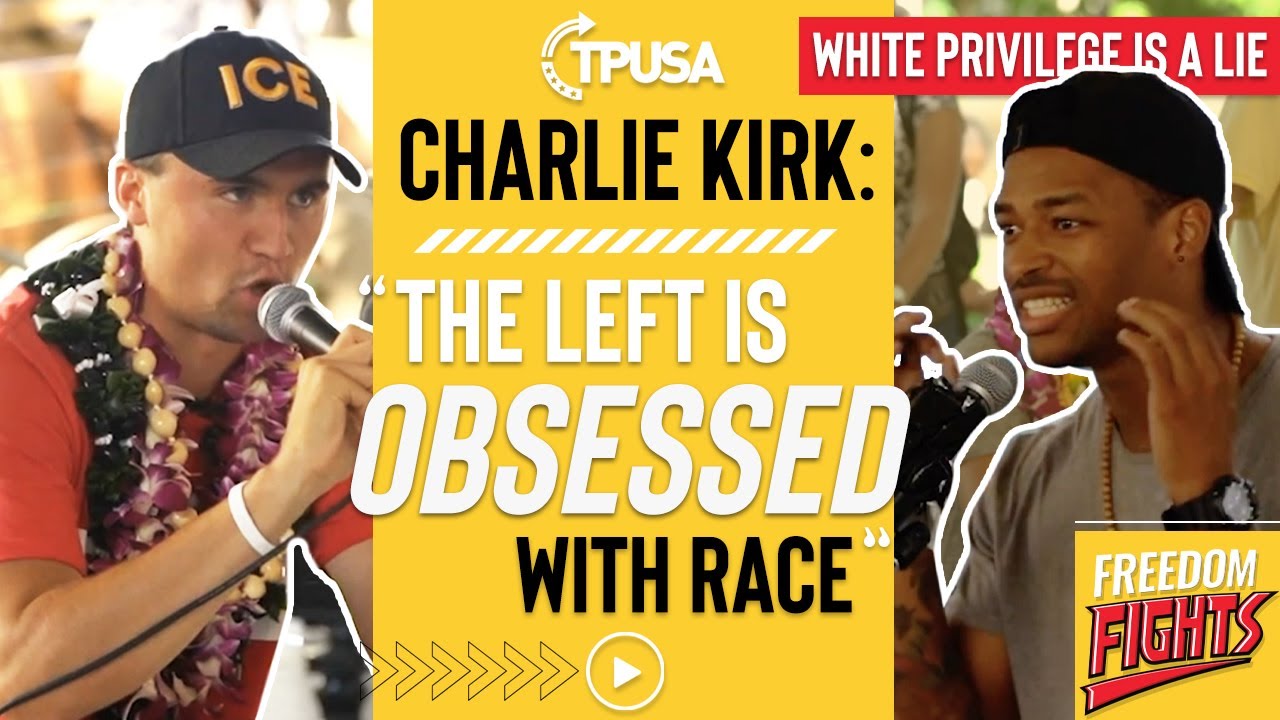
Charlie Kirk and Candace Owens Dismantle White Privilege Argument With Military Member at Campus Conversation Event
7:36
Resurfaced Video Shows Moment Charlie Kirk Realized Hiring Candace Owens Was Not a Good Idea
During a campus debate event, body language expert Jesús Enrique Rosas reveals Charlie Kirk displayed visible signs of discomfort and stress while Candace Owens shouted over opponents rather than engaging in structured debate. Despite having fourteen years of debate experience, Kirk exhibited unusual nervousness markers, lip pressing, neck rubbing, and mouth covering, specifically when Owens turned the intellectual discussion into what observers described as a "cockfighting match." The stark contrast between Kirk's measured questioning approach and Owens' aggressive shouting highlighted fundamental disagreements about debate tactics and messaging strategy. Kirk's body language suggested he understood that hysterical shouting would not persuade college audiences, regardless of argument validity. The video, still on Kirk's YouTube channel titled "Charlie Kirk and Candace Owens end racism," captures multiple instances of Kirk's visible discomfort with Owens' confrontational style. The analysis explores how effective campus debates should target the broader audience with reasoned arguments rather than simply attempting to humiliate individual students at the microphone.
A resurfaced video from a Turning Point USA campus debate event has sparked discussion about the contrasting debate styles between Charlie Kirk and Candace Owens. Body language expert Jesús Enrique Rosas identified what he called the precise moment when Kirk realized hiring Owens may have been a mistake—a moment marked by visible physical discomfort and stress signals.
The clip, which remains on Kirk's YouTube channel under the title "Charlie Kirk and Candace Owens end racism," shows Kirk holding the microphone and attempting to ask concrete questions during a debate. He specifically requested: "Tell me one thing I said was wrong, make a good argument, don't argue from authority." His reference to "arguing from authority" addressed an opponent's claim that Kirk's lack of a college degree proved white privilege exists—simply by virtue of his presence at the debate.
Two Dramatically Different Debate Approaches
The circumstances appeared ideal for structured debate. Kirk was asking specific questions and attempting to focus on substantive arguments. However, Candace Owens, despite it not being her turn to speak, continually shouted over Kirk and mocked the debater using ad hominem attacks centered on the college degree issue.
Kirk was clearly attempting to prove his opponent wrong through logical reasoning rather than, as Rosas phrased it, "go full Ghetto with Ad Hominem attacks like Candace was doing." When Owens took her turn at the microphone, the contrast became even more stark. Rather than structured argumentation, the exchange devolved into what Rosas described as a "cockfighting match" with both parties shouting over each other.
At one point, Kirk attempted to intervene but immediately restrained himself—precisely because it was Owens' turn to speak, a concept Rosas suggested Owens either didn't understand or chose not to respect. Even when Owens eventually allowed the opponent to express her argument, the situation didn't improve. The opposing debater mocked Kirk for lacking a degree, stated her position, then walked away from the microphone to avoid hearing Owens' response—a move Rosas called "retarded" since she would still hear everything regardless of her physical location.
Kirk's Visible Physical Discomfort
Rosas conducted detailed body language analysis of Kirk throughout the debate, identifying multiple stress indicators that were highly unusual for someone with Kirk's extensive experience. Kirk displayed repeated instances of pressing his lips, rubbing his neck, covering his mouth, looking away, touching his mouth, and additional neck rubbing—all emotional markers associated with nervousness, restlessness, anxiety, and stress.
The analysis posed a critical question: Would someone who had been debating for fourteen years, since high school, feel anxious or stressed during a regular debate about topics he had discussed for years through writing and podcasting? The obvious answer was no. Regardless of how frustrating the opposing debater might have been, she couldn't possibly be the source of Kirk's discomfort—the setting itself was too familiar to him.
The stress reactions occurred specifically while Owens was yelling, suggesting the source of Kirk's discomfort was not the debate opponent but rather his own colleague's approach to the discussion.
The Real Purpose of Campus Debates
Rosas emphasized that many people forget the actual purpose of these campus debate events. The goal was never to humiliate students who stepped up to the microphone, nor even necessarily to "win" the debate against that specific individual—particularly when facing opponents who had no intention of listening or changing their minds.
The target audience was always the entire campus—everyone attending these debates. Many students have legitimate questions about controversial issues but don't want to step to the microphone themselves. Having someone express common ideas and positions, then engaging in structured debate about them, proves far more persuasive and effective for getting audiences to think critically about topics than simply delivering a lecture.
These events were designed to be, as Rosas described it, "as close as we get to have an octagon for ideas—as long as the IDEAS are the main event." The instant the exchange becomes a shouting match, the entire point of these events "just jump out the window."
Why Shouting Undermines Persuasion
Kirk clearly understood that whatever Owens was doing would not impress or change minds at any college campus. Nobody would be impressed by what Rosas termed "a hysterical woman shouting her arguments," regardless of whether her arguments were actually sound.
The fundamental problem with the shouting approach is that the louder someone becomes, the less people respect their reasoning—because they appear unhinged and out of control. The spectacle becomes the protagonist rather than the ideas themselves. The result is wasted logistics, planning, camera work, and an entire morning or afternoon invested for what purpose? According to Rosas, it merely reinforced the stereotype that women become hysterical when confronted.
Kirk's measured approach demonstrated the alternative. His questioning was calm, focused, and designed to expose logical flaws in his opponent's reasoning. This approach maintains credibility with observers even when facing unreasonable opposition.
The Proper Way to Win a Debate
The video's conclusion, according to Rosas, demonstrated the proper way to win a debate—though the specific details of that conclusion were not elaborated in the transcript. The implication was that structured, reasoned argumentation combined with calm delivery proves far more effective than volume and aggression.
Kirk's visible discomfort throughout Owens' shouting segments suggests he understood this principle deeply. His fourteen years of debate experience had taught him that persuading a college campus audience requires maintaining composure, respecting debate structure, and allowing ideas—not personalities or volume—to take center stage.
The resurfaced footage serves as a case study in contrasting debate philosophies within the same organization, captured in real-time through Kirk's involuntary physical stress responses to a colleague's tactical approach that fundamentally contradicted his own proven methods.
Video Transcript
I think I found the moment when Charlie Kirk had
the sudden realization that hiring
Candace Owens was not a good idea.
It's very easy to spot in this clip:
It simply stands out. Very simple. You
see Charlie, who has the microphone,
so it's his turn to speak in this debate,
and he's asking a concrete question.
"Tell me one thing I said was wrong, make a
good argument, don't argue from authority"
The 'not arguing from authority' by the way,
is because this lady pointed out that
Charlie didn't have a college degree,
so, just the fact of him sitting there
meant that white privilege is a thing.
So, I would say that the circumstances were more
than ideal for the one thing that you noticed:
Charlie was trying to have a proper
debate, asking concrete questions,
while Candace, and this was NOT her turn to
speak, only kept shouting on top of Charlie,
Mocking the debater because of the
degree thing... that we all can
agree it was a retarded argument, but...
Charlie was trying to prove her wrong,
Not go full Ghetto with Ad Hominem
attacks like Candace was doing.
Now, you might be asking: what happened,
in this exact same setting, when
it was Candace's turn to debate?
Well, you can watch it for yourself:
Yeah, the FATIGUE was real. This
was supposed to be a debate,
and even if debates can get heated at times,
that is not the purpose or spirit of a debate.
The idea is that the best argument
wins. The one that is better reasoned,
the one that you can defend
from common sense and logic,
or... when the other party can't have
a proper reasoning of how they think.
What you just saw is not a debate.
This was more like a cockfighting match.
They were shouting on top of each other.
And that is the reason why Charlie was
trying to ask concrete questions in the
first clip that you saw. He knew that he had
to focus on the argument of the other person,
and not just shout and scream
to see who does it louder.
He at some point tried to intervene...
but he instantly refrained himself from
doing so... precisely because
it was Candace's turn to talk.
One concept that I guess Candace
doesn't understand or register.
Now, to be fair, at some point Candace
actually shuts up and lets the lady
express her argument... but even
that didn't go as planned. Watch:
Yeah, it's not like this lady was the
most reasonable, let alone respectful,
if she mocks Charlie for not having a degree,
and she just spews her argument and then just
walks away from the microphone to 'not
hear' what Candace has to say about it,
Which is retarded, because...
you will still hear everything,
even if you walk away from the microphone,
But you can still see the difference
of how Charlie behaved during a debate
and Candace. Again, listen how
Charlie asked his questions:
Now, compare that behavior
to Candace with the mic:
Charlie knew that whatever Candace was doing,
that was not going to impress, or change
the minds of anyone at any college campus.
Nobody would be impressed by a
hysterical woman shouting her arguments,
regardless if her arguments were actually sound.
Because the louder you are, the less
people will respect your reasoning,
because you look unhinged.
You look out of control.
The SPECTACLE ends up being the protagonist, so
you invest a whole morning or a whole afternoon,
logistics, cameras, planning for what?
To reinforce the trope that women
become hysterical when confronted?
Now, I'm sure that Charlie understood that even
these moments were important for turning point,
because this clip is still on Charlie's
Youtube channel with the literal title
"Charlie Kirk and Candace Owens end racism",
so you don't get more clear than that.
But it's precisely because we have this video,
that we can see all the instances in which
Clarlie looked visibly uncomfortable.
He was pressing his lips, he was rubbing his neck,
he was covering his mouth and looking away,
touching his mouth, rubbing his neck again...
All of these are emotional markers
associated with nervousness,
restlessness, anxiety and
in general, being stressed.
Do you really think that someone, who
had been debating for FOURTEEN YEARS,
since his high school years, would feel anxious,
or stressed, or nervous during a regular debate
about topics that he had been talking,
writing and podcasting about for YEARS now?
So, it is obvious that no matter
how ANNOYING this lady was,
she couldn't possibly be the
source of Charlie's behavior.
The setting itself was something so
common to Charlie that it must have
been SOMETHING ELSE that
triggered those reactions.
And those reactions happened, of
course, while Candace was... yelling.
So many people forget that the actual
purpose of these debates was not to
humiliate the students who stepped up to the mic,
not even 'win' the debate or 'win' the argument,
because in many situations you had people like
THIS who had no intentions of listening to you.
The target audience was the whole campus.
Everyone attending these debates. Becasue many
people could have legitimate questions about these
issues, but they didn't want to step to the mic.
Having someone to express their ideas and
positions and have a debate with them about it,
is WAY more persuasive and effective to put minds
to think about these topics
than simply giving a lecture.
This is as close as we get to have an octagon for
ideas... as long as the IDEAS are the main event.
Because the instant this becomes a SHOUTING match,
then the whole point of these
events just jump out the window.
Now, you're about to watch the way this video
ends, and this is the proper way to win a debate:
But let me know what do you think about
this in the comments. And don't forget
to download my FREE, 100+ body language
tips in the description of this video.
My name is Jesús Enrique Rosas, I'm the
Body Language Guy, much love and bliss.