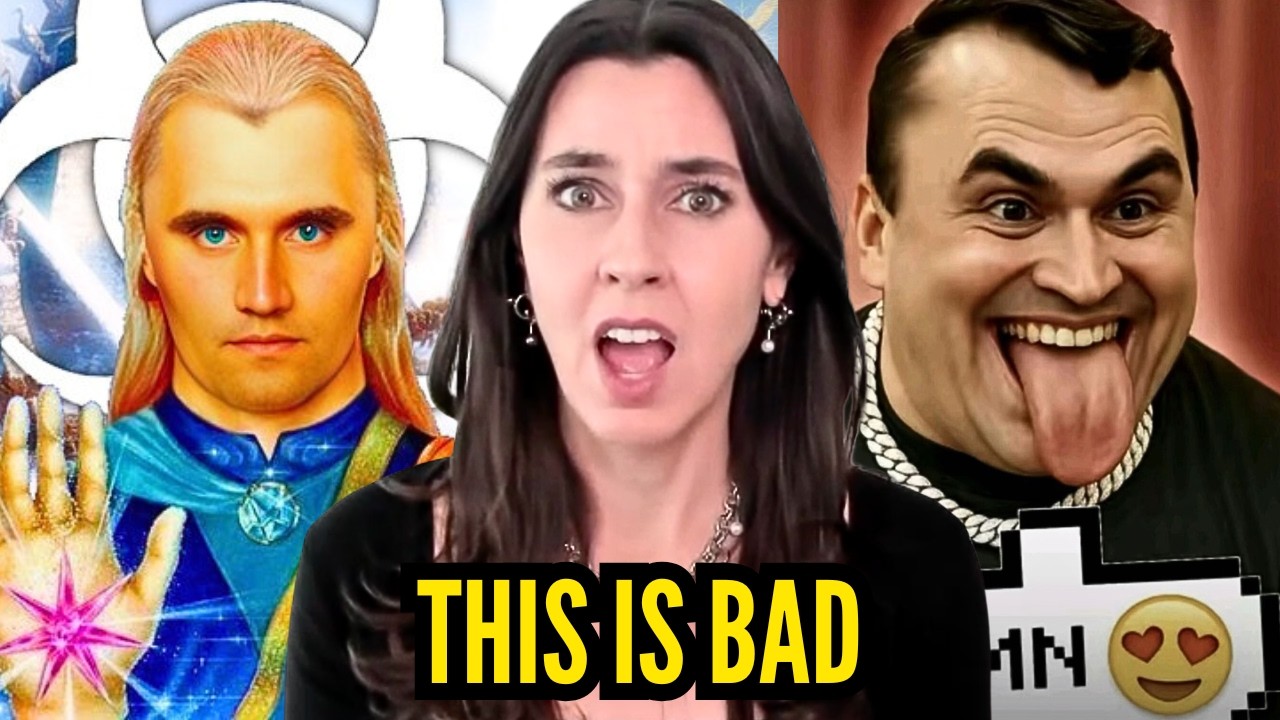
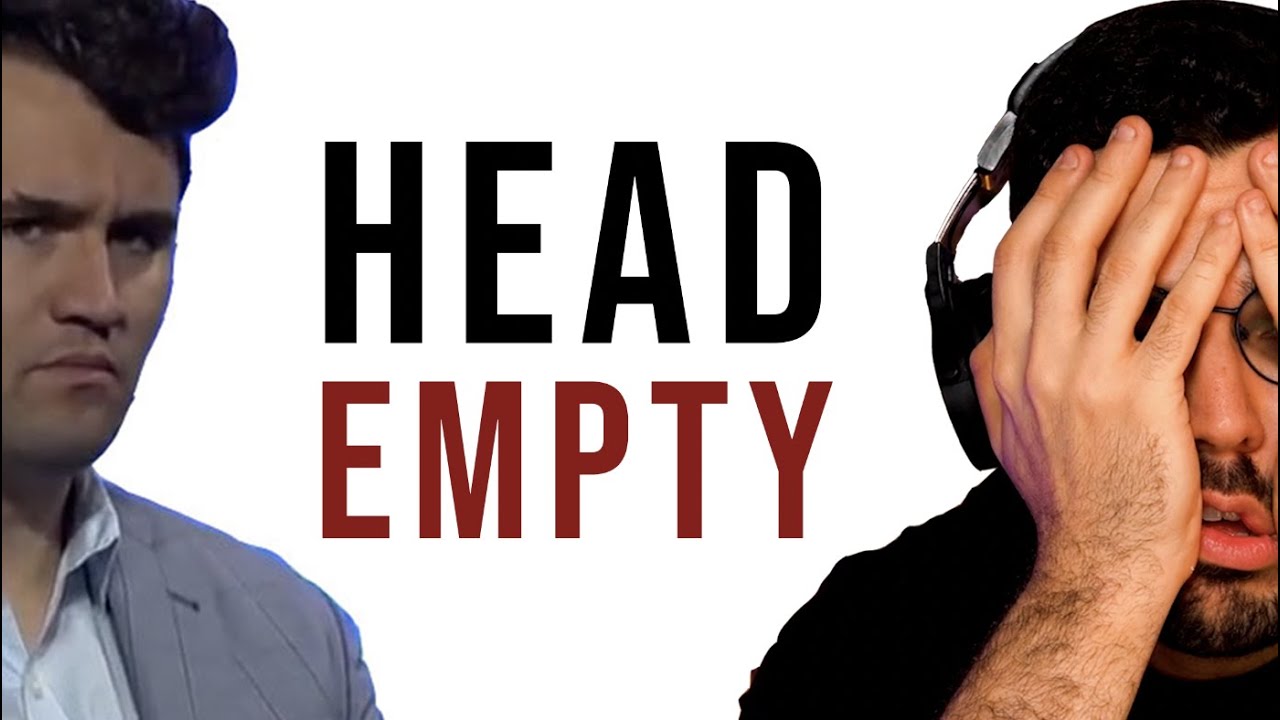
Trans Creator Refuses to Mourn Charlie Kirk, Condemns the Violence, and Explains Why Centrism Enables Fascism
Enjoying this? Share it with someone who needs to see it.
Up Next
Savanah Hernandez Reports From No Kings Protest: Antifa, Public School Teachers, and the Radicalized Left
16:31
SimpleBlackTheory on Charlie Kirk's Assassination: Free Speech, Gun Laws, and Political Chaos
1:09:05
Four Left-Wing Shootings in Ten Days: Media Blames Trump While Ignoring Anti-ICE and Pro-Palestine Shooter Manifestos
18:13
Trans Creator Refuses to Mourn Charlie Kirk, Condemns the Violence, and Explains Why Centrism Enables Fascism
Trans content creator Jessie Gender, filming the day after Charlie Kirk's assassination, opens by stating three times and without ambiguity that she does not endorse what happened, then spends the rest of the video explaining why she feels no sadness over his death and why watching the political establishment rush to lionize him fills her with dread and anger. The video is not a celebration. It is an attempt to describe what it means to watch a man who spent his career campaigning against your existence be praised within hours by Bernie Sanders, Ezra Klein, and Gavin Newsom. Jessie Gender goes into Newsom at length, his record blocking trans protections in California, his decision to platform Kirk and Steve Bannon on his own podcast, and video of him agreeing with Kirk on live television that men should not compete in women's sports.
Jessie Gender opens by stating, three times in succession, that she does not endorse vigilante violence or extrajudicial murder. She asks that there be no mistaking her. She then says that this is a video about her personal fears and frustrations as a trans person in the immediate aftermath of Kirk's death — not a celebration of it — and that she hopes by expressing her own feelings she can help explain why so many trans people are terrified right now, both because of this specific event and because of everything that has been building toward it.
She also says she watched the footage of Kirk bleeding out and felt, and still feels a day later, a flicker of genuine empathy. She can relate to the feeling of someone else deciding your life is over, because it is something she thinks about daily. She does not pretend otherwise.
Who Kirk Was and Why She Does Not Grieve Him
What she will not pretend is to feel sad. Kirk was, in her characterization, a fascist — a word she says she does not use loosely. She lays out her case: he advocated authoritarian policies, pushed racist rhetoric, fought to strip women of bodily autonomy, supported ICE raids, called Zohran Mamdani a parasite, branded Islam as violent, was anti-Semitic, cheered on Israel's campaign in Gaza, and dreamed of a Christofascist state. For her specifically, he was proudly homophobic and transphobic — he called trans healthcare butchery, vilified trans people as predators, pushed to criminalize their existence, and incited both institutional and personal violence against queer people daily.
She plays a clip of Kirk making the case that some number of gun deaths per year is an acceptable price for the Second Amendment. She notes that Kirk spent what turned out to be his final moments at the podium pushing the claim that trans people are disproportionately responsible for mass shootings — before being shot himself. She does not call this ironic. She says the man she felt momentary empathy for was also someone who would have celebrated the same thing happening to her as proof of his ideology. The world, she says, is better without him. He was a Nazi in a nice suit, and the only thing respectable about him is the silence he finally left behind.
The Centrist Eulogies: Sanders, Klein, and Newsom
What enrages her more than the Republican response — which she expects — is the reaction from centrist and left-leaning figures. Bernie Sanders issued a statement calling Kirk someone he disagreed with on almost everything but who was "clearly a very smart and effective communicator and organizer." Ezra Klein praised Kirk for doing politics the right way. Gavin Newsom called for honoring Kirk's memory by continuing his spirit of good-faith debate.
She goes after Newsom at length. She characterizes him as someone who has spent years blocking and burying trans protections in California — vetoing custody protections for affirming parents, discouraging LGBTQ legislation, parroting right-wing talking points on pronouns and gender-affirming care. She plays a clip from Newsom's podcast in which Kirk speculates about banning transition until age 25, cites the Cass Review, and calls trans healthcare butchery — while Newsom nods along. In a separate clip, Newsom explicitly agrees with Kirk that it is a fairness issue for transgender athletes to compete in women's sports. Newsom has never, she notes, offered that same platform to a trans person speaking about their own life. She argues that this is not inconsistency — it is his actual politics, packaged in the aesthetics of opposition to Trump.
The Real Cost of Mandatory Mourning: Dowd and Felker-Martin
The need to frame Kirk as respectable has already had concrete consequences. MSNBC's Matthew Dowd was fired the day of the shooting for simply and accurately describing Kirk's controversial views. Writer Gretchen Felker-Martin, author of the novel Manhunt, had her DC Comics Red Hood run canceled for making sharp jokes about Kirk — the exact kind of biting dark humor that is, in the creator's words, literally her professional brand. The creator herself posted on Bluesky that she chose to dishonor Kirk's memory by living her life joyously, and that post was flagged and censored. None of these, she argues, were calls for violence. They were expressions of grief on behalf of the living, and they were punished anyway.
She also describes being suspended weeks earlier from Bluesky for posting "I wish ill on JK Rowling" — a statement she characterizes as deliberately vague and not expressing intent for violence — while Rowling, a billionaire who funds anti-trans lobbying in the UK, faces no platform consequences for rhetoric the creator says fuels harassment and violence against trans people daily. The asymmetry, she argues, is structural: trans anger at powerful people is treated as dangerous; powerful people's campaigns against trans people are treated as civil discourse.
Fox News, the Wall Street Journal, and the Trans Scapegoating
Within thirty minutes of the shooting, a Fox News pundit speculated on air that the shooter was probably trans, noting that Kirk had just been asked about transgender mass shootings and suggesting the timing was not a coincidence. The Wall Street Journal floated an unconfirmed report that the bullet fired at Kirk was engraved with trans and anti-fascist slogans. The creator describes both as narrative groundwork — not random speculation, but the laying of a foundation to justify escalating attacks on trans rights and safety.
She catalogues what that escalation looks like in policy terms: existing legislation to defund trans-focused healthcare, and now growing calls from conservatives to strip trans people of their Second Amendment rights entirely.
Guns, the Mulford Act, and the Historical Pattern
The creator says she does not own a gun and has never been an advocate for gun ownership — though she says she may be reconsidering that. But she connects the current push to disarm trans people to a historical pattern she argues is not accidental. In 1967, California passed the Mulford Act to strip the Black Panthers of the legal right to carry firearms after they began openly monitoring police in their own communities. An armed Black population threatened the existing order, and the law moved fast. In Nazi Germany, Jewish communities were systematically disarmed under the guise of gun control before violence against them escalated to genocide. The message in both cases, she argues, was the same as the message now: marginalized people are always the first stripped of the right to defend themselves.
The Commitment Threat and the Language of Mental Illness
She adds a second historical parallel. Roughly a month before Kirk's death, Trump signed an executive order encouraging the mass commitment of unhoused people labeled mentally ill into psychiatric facilities she describes as underfunded, overcrowded, and operating more like prisons than care centers. Trans, queer, disabled, and BIPOC people are already disproportionately likely to face homelessness and mental illness. The current push to officially classify trans identity as mental illness, she argues, is not a medical position — it is a pretext for surveillance, incarceration, and erasure. She names this explicitly as the same logic the Nazis used to justify incarcerating and exterminating disabled and queer people in the 1930s and 1940s, including those considered racially acceptable, because they were treated as broken stock.
Political Violence Is Not Only Done with a Gun
She is direct about her position on political violence: she does not condemn it in totality. She distinguishes between violence done with a weapon and violence done through legislation and policy against marginalized people. Just because something is done with a pen, she argues, does not mean it is not political violence. It is only wrapped in civility. Centrism, she says, does not balance left and right — it actively primes people toward conservatism and ultimately toward fascism by insisting the system works, that progress is inevitable, and that the status quo only needs restoration. That false balance equates marginalized people demanding change with the forces targeting them, props up the systems causing harm, and turns centrists into enablers of the violence they claim to oppose.
Living Anyway
She closes by naming the role she refuses to accept: the trans person who exists only as a target or a villain in the public imagination, who gets cast as both a perpetual victim and a destabilizing threat depending on what is convenient. "I am here alive, furious, and unafraid to name the systems that would rather erase me than change," she says. "That's the truth they don't want you to hear — because once you face it, you can't go back to the comfort of pretending centrism will save you."