
Up Next

Charlie Kirk Debates Cambridge Professor on Russia, Ukraine, Crimea and the Bad Guy Question
6:59

Charlie Kirk Analyzes Israel's Preemptive Strike on Iran as Regional War Looms in Middle East
1:40:21

Pastor Jack Hibbs Faces Congressional Backlash After Praying in Jesus' Name at House of Representatives
8:45


Related Books
View All

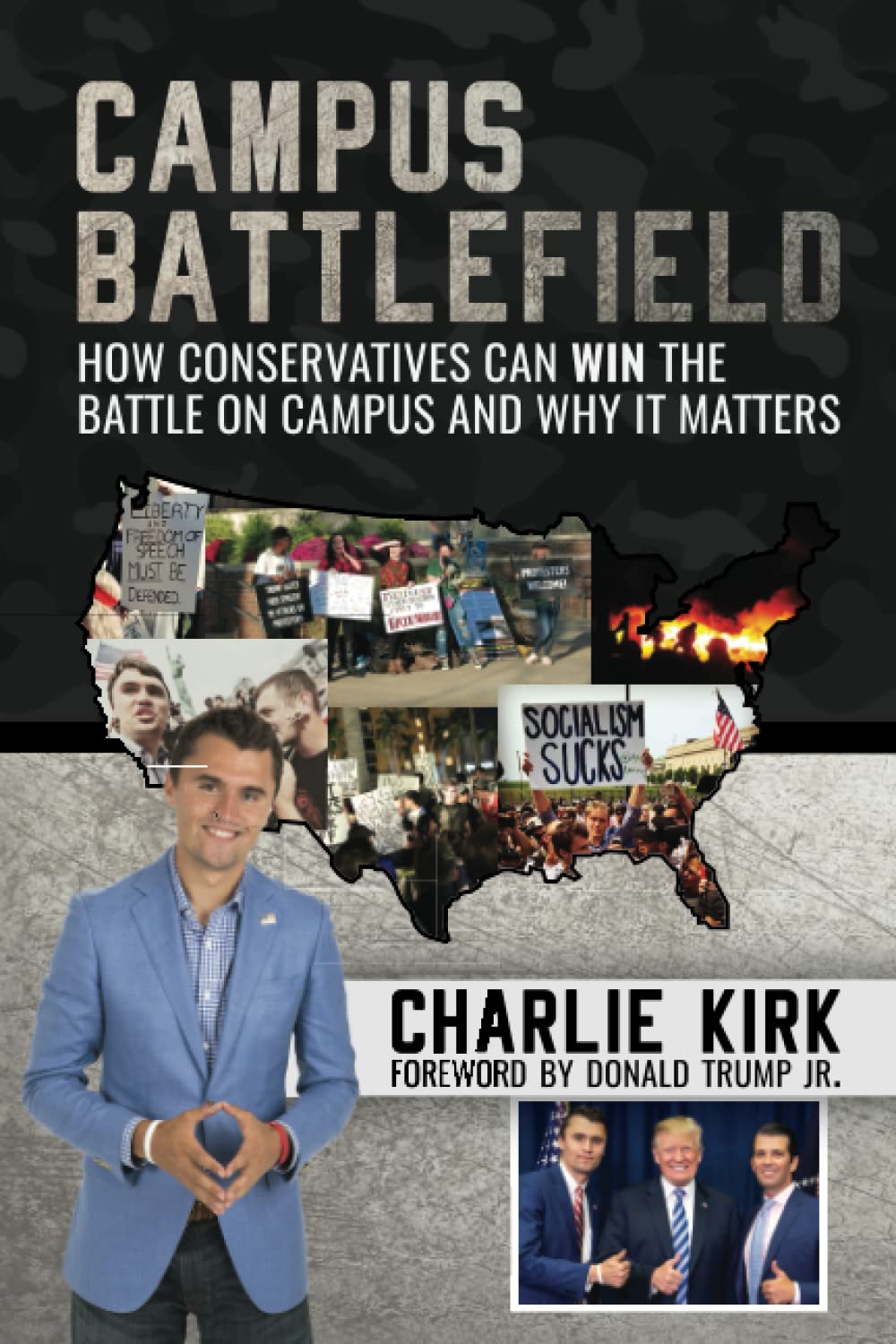


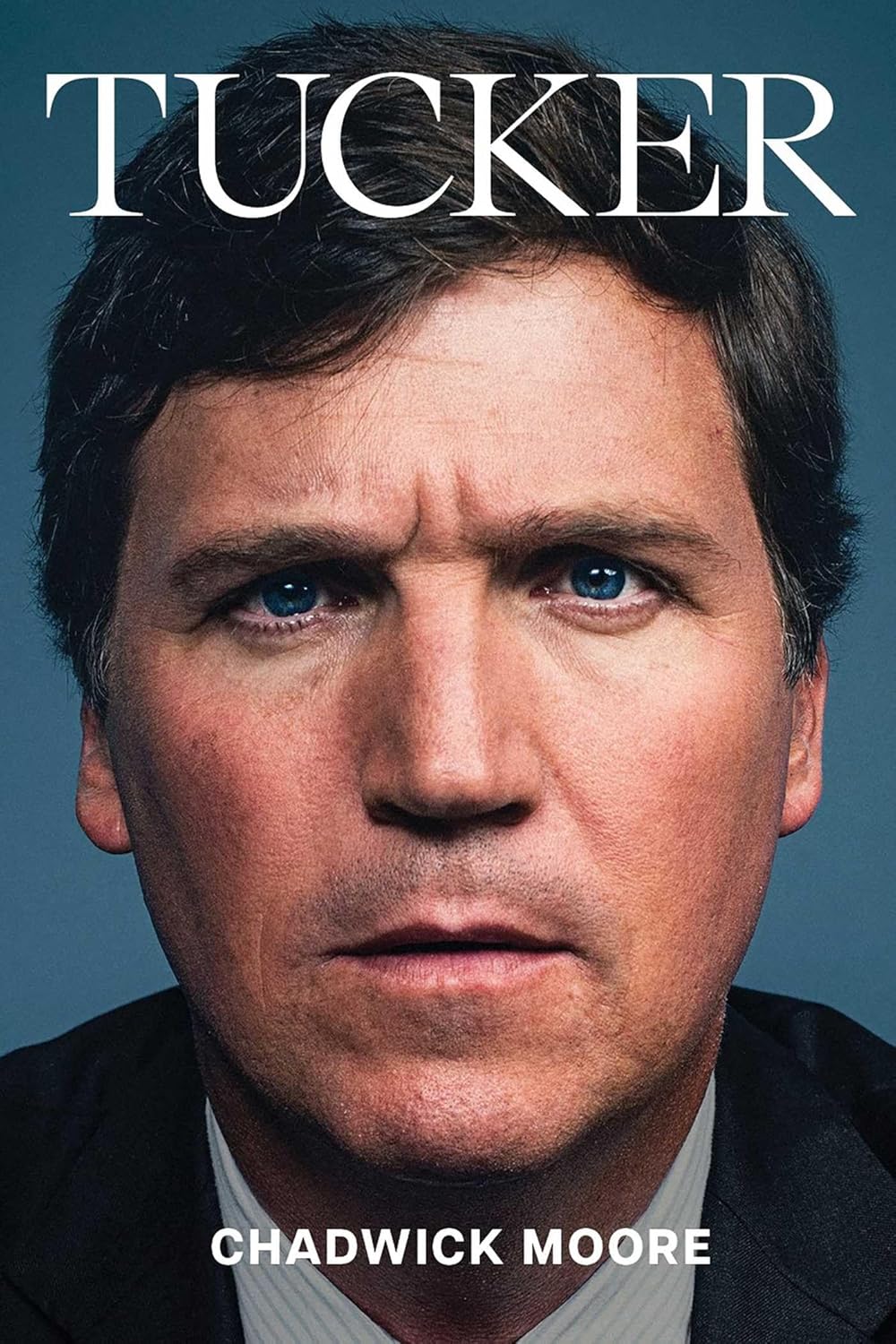


Tucker Carlson Reveals Why America's Leaders Care More About Ukraine Than Your Neighborhood
Tucker Carlson sits down with Charlie Kirk to expose a troubling truth: Washington's ruling class has abandoned fixing problems at home in favor of projecting power abroad. From his eye-opening experience in Iraq to his controversial interview with historian Darryl Cooper, Carlson explains how foreign policy dictates domestic priorities, why NATO no longer serves its original purpose, and how the projection of chaos overseas has corrupted America's leadership. This conversation goes deep on architecture, the Second World War, Churchill, and why people are so afraid of questioning the myths that underpin the current order.
The Advantage of Being in Phoenix
Tucker Carlson returns to Charlie Kirk's studio in Phoenix, describing it as an "oasis" with better architecture than most buildings in the city. The conversation begins with an unexpected discussion about Frank Lloyd Wright and architectural design philosophy. Carlson shares his view that buildings should serve the physical needs of the people inside them, criticizing Wright's designs as not particularly functional despite their theoretical appeal.
This leads to a broader discussion about how Spanish Colonial and traditional American architecture responded to landscape and environment, contrasting with modernist architecture that Carlson sees as rooted in a hatred of people. He argues that post-war designers influenced by Marxism and Industrial Age thinking saw people as widgets to be assembled rather than individuals created by God.
The Intentional Elevation of Ugliness
Carlson makes a provocative argument: the ugly intentionally triumphs over the beautiful in modern society as an attack on God. Beauty comes from God and the design of nature, he explains, so any culture that intentionally elevates the ugliest things, ugliest people, and ugliest attitudes is engaged in spiritual warfare. He connects this to modern building materials, fluorescent lighting, and the reliance on mechanical systems rather than natural light and ventilation.
The conversation touches on Carlson's personal choices, including living without air conditioning in both Florida and Maine, leaving doors open, and prioritizing natural design elements like fireplaces. He argues that pre-war apartments in New York City command higher prices because they were designed with human needs in mind, including features like fireplaces that appeal to ancient desires within us.
The Atomic Bomb and the Death of Beauty
Carlson presents his theory that art, literature, and architecture took a dark turn after America decided to use atomic weapons. He sees a bright line between pre-war and post-war design, with post-war architecture intentionally eliminating features that serve human pleasure and comfort. The development of atomic weapons represents humanity imagining itself as God, possessing the power to destroy all human life on Earth.
He admits he's confused about where nuclear technology actually came from, noting that most technological advances have a clear origin story but nuclear weapons seem to lack that Isaac Newton apple-on-the-head moment. Regardless of origin, Carlson argues that possessing this ultimate destructive power fundamentally changed how leaders view themselves and their fellow human beings, fostering dangerous hubris.
The Iraq War Awakening
Carlson recounts his experience in Iraq in December 2003, the day Saddam Hussein was captured. Despite being raised to support the military and having a father who worked with NATO during the Cold War, Carlson had a gut-level revulsion when a commanding officer told him about a female soldier who had her legs blown off and died, describing it as a beautiful sacrifice for freedom. With her husband also deployed in country, Carlson questioned why women were being sent to fight wars when the whole point of a military is to protect women and children.
The chaos he witnessed in Iraq shocked him. Despite the U.S. defeating the Iraqi Army, there was no order at the neighborhood level. He saw thousands of rounds fired in residential areas with no police or military follow-up. Carlson realized America had brought chaos rather than order, contrasting this with how the British Empire used to establish order wherever it went. This experience triggered a chain reaction in his thinking about America's role in the world.
Foreign Policy Dictates Domestic Policy
Carlson argues that Americans fundamentally misunderstand how their government works. The leadership class in Washington has zero interest in domestic policy or fixing problems like homelessness or fentanyl addiction. Instead, they are obsessed with projecting American power abroad. This happens because newly elected members of Congress arrive in Washington wanting to do right by their constituents but quickly realize they cannot solve complicated domestic problems.
However, they can feel useful, competent, and powerful by focusing on foreign affairs. They don't need to speak the languages or understand the complexities of foreign countries. They just need to convince themselves they're working on behalf of freedom and goodness to feel like heroes. Carlson shares a story of having dinner with a Republican senator who pompously referred to "my National Security team" despite being someone of average intelligence with no real expertise in the countries he claims to influence.
The Destruction of Ukraine
Carlson has been trying for two years to get an interview with Volodymyr Zelensky. During negotiations, he had dinner with a Zelensky ally who was upset that Carlson had called the Ukrainian president a "dwarf in a tracksuit." When Carlson laid out his view that Ukraine's population is being killed and won't be replaced by Ukrainians, and that the actual land is being sold off to companies like BlackRock, the ally looked him in the face and said, "I know."
This moment crystallized the tragedy for Carlson. Ukraine as it existed three years ago is gone. In ten years, Ukraine won't be owned by Ukrainians and won't be populated by Ukrainians. Historic Ukraine has been destroyed by the United States, not Russia. Carlson argues that if you wanted to help Ukraine, you wouldn't kill 600,000 Ukrainian men or change laws to allow foreign companies to buy their farmland. He places responsibility on the Biden Administration, Congress, and Speaker Mike Johnson.
NATO's Real Purpose
Carlson admits he supported NATO unthinkingly until 2016 when Trump started questioning it. The original purpose was collective security against Soviet invasion of Western Europe, which made sense during the Cold War. But the Soviet Union hasn't existed since summer 1991, so what's the point now? No one can answer that question satisfactorily.
The claim that NATO exists to contain Russia makes no sense because Russia is not expansionist. It's the largest country in the world with eleven time zones, 20% Muslim, multiethnic, and very hard to run. They don't want Poland. What NATO actually does is project American cultural values across Eastern Europe, which is problematic because Eastern Europe is Christian and anti-communist after spending 40 years under Soviet control. NATO has become a way to influence the domestic policies of Eastern European countries, particularly those that remain strongly Christian in ways that the rest of Europe is not.
The Soviet Union Exported Chaos
Carlson identifies the main problem with the Soviet Union: it exported chaos. God brings order out of chaos, so anybody spreading chaos in any sphere is acting on behalf of evil. This is the clearest sign of evil whether in international affairs or within your own home. The Soviets specialized in exporting chaos from the earliest post-revolution days, destabilizing countries from Germany to Vietnam, Cambodia, and Angola. The poorer the country, the longer it remained destabilized.
The turning point for Carlson came when he realized the United States had defeated the Iraqi Army but brought no order. When the country supposedly championing freedom and democracy becomes a purveyor of chaos, something has gone fundamentally wrong. The rest of the world now sees the United States as a destabilizing force, which is the most unpopular and resented role any nation can play.
Why They Hate Trump
Carlson argues that permanent Washington hates Trump far more for his foreign policy positions than his domestic ones. He recalls that Bill Kristol and others in the neoconservative establishment thought Trump could be useful until the famous South Carolina debate where Trump went after the Iraq War. Once Trump fundamentally challenged the foreign policy consensus, he became an irredeemable enemy.
This reveals what the ruling class really cares about: not fixing problems at home but maintaining their power to shape events abroad. They can ignore the details and complexities because foreign affairs make them feel important and historically significant in ways that cleaning up Union Station never could.
The Darryl Cooper Controversy
Carlson addresses the backlash to his recent interview with historian Darryl Cooper, who argued that Churchill was the villain of the Second World War period. Cooper's position was that Germany had a regional conflict over land and German-speaking populations lost under the Treaty of Versailles, and Churchill forced it into a global war that killed tens of millions. Carlson finds this a defensible historical position even if possibly wrong, and certainly not deserving of the hysteria it provoked.
People accused Carlson of "platforming a Nazi" for simply having a conversation. Carlson believes the hysterical reaction reveals something deeper: a desperate attempt to hold onto founding myths as society senses it's at the end of an 80-year cycle. The institutions that have run the West since 1945 are crumbling as economic, political, and cultural power moves East. This is upsetting for Americans who want their country to remain preeminent, but what they want may be immaterial.
A Society at a Historical Pivot Point
Carlson observes that people are jumpy and hysterical because everyone can feel that things are changing rapidly. We're at a genuine historical pivot point, not through anyone's choice but as captives of history itself. When people start questioning the myths that underpin the current order, it triggers fear about what comes next. This fear is understandable and not entirely irrational.
The people who've benefited from the current system know they're exposed, making them desperate and dangerous because they'll do anything to maintain power. Meanwhile, the economic structure of the world is changing with incredible speed as money and manufacturing move East. A real economy is based on taking natural resources that God made and making them into useful things, not hedge funds and financial instruments.
Lessons from Scripture and Life
Carlson reflects on a Biblical principle he's observed in his own life: the things you think are victories often turn out disappointing or even failures, while the things you think are failures are actually victories. The first will be last and the last will be first. The meek shall inherit the earth. These theological truths revealed by Jesus also serve as commentary on how life really works.
In Carlson's experience, 100% of the time the things he thought were tragedies were actually the beginning of rebirth, growth, and joy. The root of his joy comes from the bad things that happened to him. Scripture says to count trials as blessings, and Carlson has found this to be true. He didn't make these rules, but he's noticed them operating consistently throughout his life.




Comments
Be the first to comment on this video.