Up Next

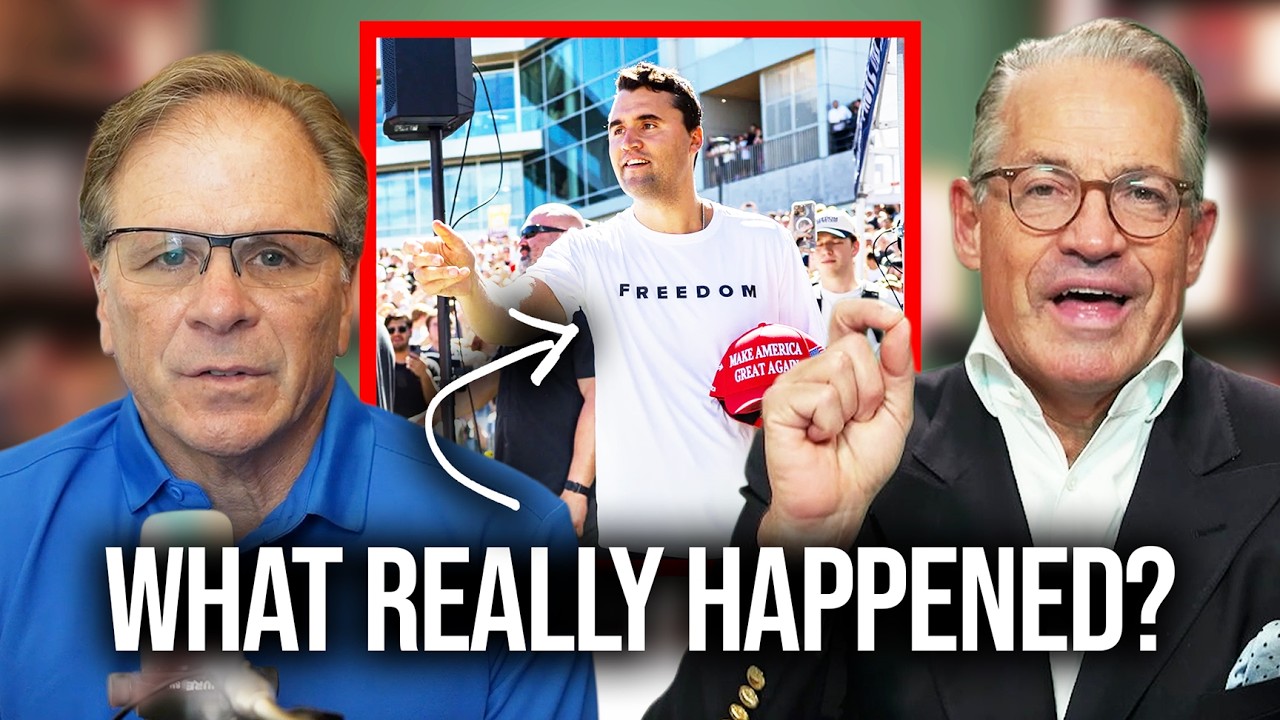
Candace Owens Reveals Military Hit Theory Behind Charlie Kirk Assassination and Exposes Faith-Based Cover-Up Operation
1:06:56

Candace Owens Reveals Federal Agents Blocked Surgeon Access to Charlie Kirk's Body at Hospital
1:03:09
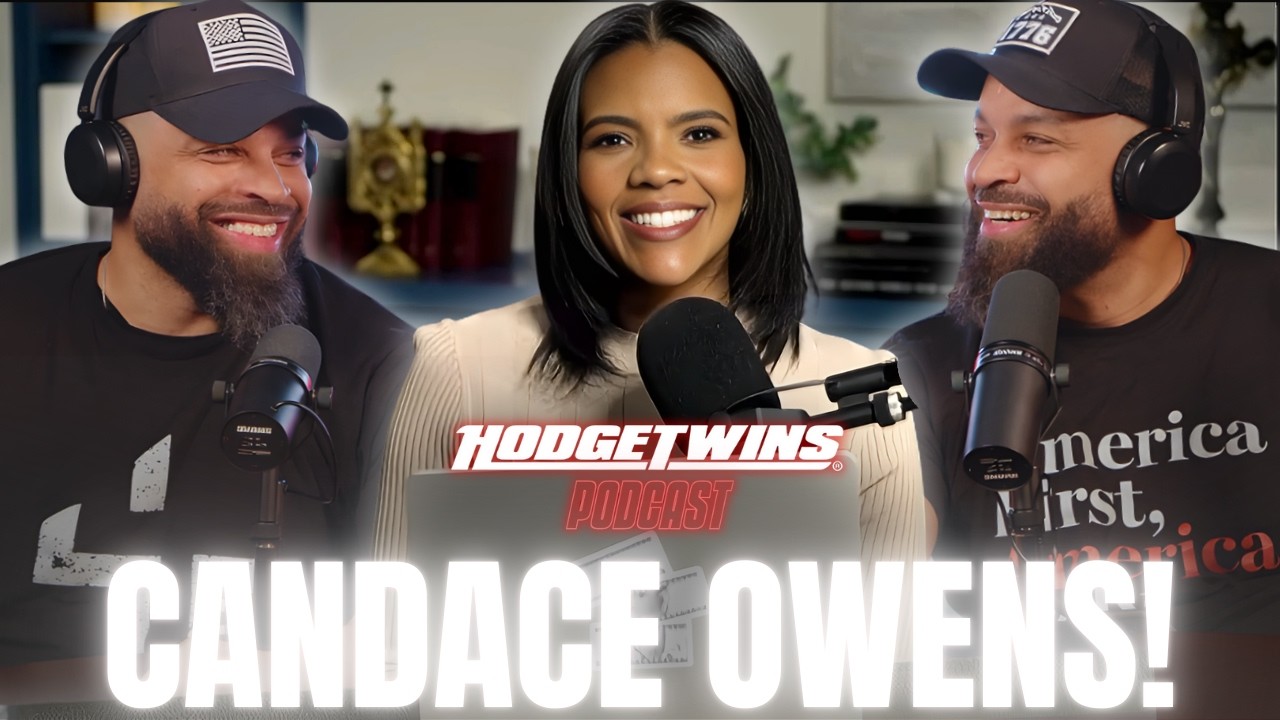
Candace Owens Opens Up About Charlie Kirk's Assassination and the Fight for Truth Against Zionist Pressure
1:11:25
Brandon Tatum Defends Turning Point USA Staff Against Conspiracy Theories Following Charlie Kirk Assassination
Brandon Tatum takes a firm stand defending Turning Point USA team members Tero and Mikey McCoy against mounting conspiracy theories surrounding Charlie Kirk's assassination. Drawing from his law enforcement experience, Tatum explains the psychological impact of witnessing traumatic events and challenges those spreading conspiracies to focus on the actual evidence against the shooter. He also addresses Tucker Carlson's interview with Nick Fuentes, expressing disappointment that Carlson failed to confront Fuentes about his years of attacks on Charlie Kirk and Turning Point USA.
Defending the Turning Point Team
Brandon Tatum opens with a passionate defense of Turning Point USA staff members who witnessed Charlie Kirk's assassination, particularly addressing accusations against Tero and Mikey McCoy. Tatum emphasizes his personal relationship with these individuals, stating he has worked with Tero on 20 to 30 events over two years across college campuses.
Regarding Tero's video that surfaced after the shooting, Tatum explains it was never intended for public release but was a personal recording made in the moment of crisis. He vouches for Tero's character completely, stating he would put his life on the line for him and that Tero would never betray Charlie Kirk.
Understanding Trauma Response
Drawing from his law enforcement background and SWAT team training, Tatum provides detailed insight into how people react under extreme stress. He explains that psychologists trained his SWAT team on how the brain functions during traumatic events, noting that under stress, the brain can omit details or create slow-motion perceptions as survival mechanisms.
Tatum describes a training scenario where 60% of officers failed to see a gun placed on a table during a room entry exercise, explaining that the brain eliminates irrelevant threats to focus on immediate danger. He shares personal experiences from his police work, including a fight where he deployed pepper spray without remembering doing so until watching video footage later.
He provides three examples from his police career of witnesses to traumatic events who became inconsolable or couldn't speak coherently on 911 calls, emphasizing that Tero and Mikey's reactions were consistent with normal human responses to witnessing a violent death.
Crime Scene Misconceptions
Addressing claims about crime scene contamination, Tatum clarifies what actually constitutes a crime scene in this type of shooting. He explains that the primary crime scene would be where the shooter took the shot, including the staircase for DNA and shoe impressions. At the location where Charlie was shot, the only relevant evidence would be the cameras and Charlie's body, as there was no exit wound.
Tatum points out that people walking on grass or near the area doesn't constitute crime scene destruction, comparing it to mass shooting situations where people naturally flee or render aid, which involves moving through and around what could be considered crime scene areas.
The Evidence Against the Shooter
Tatum lays out the substantial evidence against Robinson, the accused shooter, emphasizing that the shooter's parents identified him from a grainy photo and turned him in after he allegedly confessed to them. According to Tatum, the evidence includes DNA on the trigger and ammunition, footage of someone jumping from a building with palm impressions matching the suspect, shoe impressions, surveillance of him running through the community and ditching a gun, and Discord communications with a transgender individual.
He stresses that in the probable cause affidavit, FBI agents cannot include false information or the case gets thrown out. The affidavit states the transgender person confirmed Robinson wrote messages to them and directed them to retrieve a note from under a keyboard.
Tatum challenges those promoting conspiracies, asking why they spend more time questioning Charlie's team than questioning Robinson himself. He points out that if the killer were still free, it would pose a threat to everyone in the movement, making conspiracy theories illogical from a self-preservation standpoint.
Gag Orders and Investigation Protocols
Explaining why Turning Point USA cannot release all information, Tatum discusses gag orders placed on material witnesses. He states that anyone who is a material witness has been court-ordered not to disclose information about the case to anyone except detectives or those approved by the court.
He criticizes those demanding immediate answers, explaining that proper investigation protocol requires waiting for trial when all evidence will be presented, witnesses cross-examined, and a conclusion reached. Only then can people properly evaluate whether information was truthful or omitted.
Tatum mentions that Andrew from Turning Point appeared on Charlie Kirk's show and provided information about when Mikey actually called Erika Kirk and his father Rob McCoy, which he says debunks claims that Mikey called immediately after the shooting while still at the scene.
Defense Strategy Analysis
Tatum explains the difference between admitting to a crime and pleading not guilty in court, noting that a person can confess but still plead not guilty as a legal strategy. He analyzes the defense team's requests, including no cameras in the courtroom (which was denied), allowing the defendant to wear civilian clothes, and not showing him in shackles entering and exiting.
He explains these requests are standard defense tactics to humanize the defendant to jurors, especially when fighting against the death penalty. Tatum emphasizes this doesn't indicate innocence but rather represents the defense team doing their job to get the fairest possible trial and potentially avoid capital punishment.
Deputy Andrew Nunez Killed in Domestic Violence Call
Shifting topics, Tatum discusses the killing of Sheriff's Deputy Andrew Nunez, a 28-year-old with six years on the force who was shot during a domestic violence call. Nunez left behind a pregnant wife, a two-year-old daughter, his mother, and four siblings.
The suspect fled on a motorcycle at 150-200 miles per hour before a good Samaritan in a vehicle struck the motorcycle on the freeway, ending the pursuit. The suspect survived and was transported to the hospital in stable condition, facing murder and domestic violence charges.
Tatum emphasizes that domestic violence calls are the most dangerous situations for police officers, citing statistics that 95% of officers killed in domestic violence responses are shot with firearms, and 52% are shot in the head or neck in ambush-style attacks. He shares that about six police officers per year are killed responding to domestic violence calls, with 19 killed from 2012-2021 out of 504 total felony deaths.
Indiana School Shooting Plot Thwarted
Tatum covers the case of Trinity Shockley (also known as Jamie), an 18-year-old Morrisville student arrested for planning a mass shooting at Morrisville High School. Police discovered she had a fixation on mass shooters, including pictures on her walls and buttons on her backpack featuring different school shooters.
Shockley had been communicating with Parkland shooter Nicholas Cruz, who is in prison. She admitted planning to shoot during lunchtime when it would be busy and mentioned having a crush on one boy. The FBI's Sandy Hook tip line alerted Morrisville police after receiving information that Shockley had access to an AR-15 and had ordered a bulletproof vest.
Police found bullets, a vest, and AR-15 magazines in her home. Shockley told police she would never go through with it and didn't have gun access. She admitted dealing with mental health issues since her mother's death from an overdose and said she had asked her father for help, which he denied. Shockley took a plea deal, pleading guilty to one count of conspiracy to commit murder, receiving a 20-year sentence with 12.5 years in prison, the rest suspended, plus 5 years probation.
Connecting Threats to Charlie's Assassination
Tatum connects the Indiana case to Charlie Kirk's assassination, noting that people have forgotten the discussions about deranged individuals, particularly those associated with the transgender movement, who have committed mass shootings. He argues that Robinson killed Charlie Kirk over transgender-related issues, as Robinson was dating a transgender person and shot Charlie during a period focused on transgender activism.
He emphasizes that threat assessment now must include not just Islamic terrorists but mentally ill individuals who become hypnotized by hatred and propaganda, viewing conservatives as fascists worthy of death. Tatum describes these individuals as both homicidal and mentally ill, making them susceptible to carrying out violence.
Tucker Carlson and Nick Fuentes Interview Controversy
Tatum expresses strong disappointment with Tucker Carlson's interview of Nick Fuentes, clarifying that his issue isn't with interviewing Fuentes but with how the interview was conducted. He states that Tucker appeared to be "kissing his butt" rather than confronting Fuentes about his years of attacks on Charlie Kirk and Turning Point USA.
He points out that Fuentes called Tucker a fed and mocked Tucker's father, yet Tucker didn't confront him about any of it. Tatum compares this to Tucker's interview with a woman who claimed you can preach the gospel freely in the West Bank and Gaza (which is false) and that Hamas isn't a terrorist group, without any pushback.
Christian Zionism and Biblical Foundation
Tatum provides a detailed explanation of Zionism, defining it simply as the belief that Israel and the Jewish people have a right to an independent state based on scriptural promises. He distinguishes this from support for every action of the Israeli government, which he says is a separate issue.
He quotes multiple scriptures supporting this position, including Romans 11:1, Romans 11:25, Romans 11:28-29, Amos 9:15, and Genesis 17:7-8, emphasizing God's everlasting covenant with Abraham and his descendants regarding the land of Israel.
Tatum presents clips of Charlie Kirk explaining his Zionism, including Kirk describing how visiting Israel changed his life by seeing biblical locations where Jesus walked, was betrayed, and rose from the dead. Kirk stated he saw the Bible come to life and emphasized the biblical mandate to bless Israel, citing Genesis, Romans, and 1 Thessalonians.
Tucker's Criticism of Christian Zionists
In the Tucker Carlson interview, Fuentes and Carlson discuss politicians like Mike Huckabee, Ted Cruz, and John Bolton who they describe as seized by a "brain virus" of Christian Zionism. Tucker states he dislikes Christian Zionists more than anybody because he views it as Christian heresy and is offended by it as a Christian.
Tatum contrasts this with Charlie Kirk's clear and repeated statements supporting Israel based on biblical grounds, noting that Charlie never stopped being a Zionist even when his criticism of certain Israeli government policies evolved.
Nick Fuentes' History of Attacks on Charlie Kirk
Tatum plays extensive clips of Nick Fuentes' vitriolic attacks on Charlie Kirk spanning years, including statements where Fuentes claimed to have "impregnated" and "raped" Turning Point USA with his ideas, that he "owns" the organization, and that Charlie Kirk is a "fake Christian," "fake patriot," and "hates his people."
Fuentes called Kirk "anti-white," accused him of "dual allegiance to Israel," described him as "totally unexceptional," suggested Kirk has Asperger's syndrome, estimated his IQ at 90-95, called him a "bitch and a coward," and stated there was a "real risk" they would cause organizational problems for Charlie Kirk.
Fuentes also stated that Kirk "exists to control the conversation," is "destroying the country," and bragged about humiliating Kirk, comparing it to taking "Gotham's white knight and bringing him down to our level."
The Question of Motivation
Tatum questions why, given Fuentes' extensive history of hatred toward Charlie Kirk, nobody promoting conspiracies is asking whether Fuentes knows anything about the assassination or what his motivation might be. He points out that Fuentes is "the most vitriolic, hateful person against Charlie Kirk that's out there," yet Tucker interviewed him without addressing any of these attacks.
He emphasizes that Fuentes has been banned from every Turning Point event since 2017 or earlier due to his behavior, and expresses frustration that people are questioning staff members who dedicated their lives to Charlie while ignoring someone with such documented hatred toward him.
Call for Fair Investigation
Throughout the presentation, Tatum emphasizes his commitment to consistency and fairness in investigation, comparing it to his approach as a police officer analyzing shootings and other incidents. He stresses the importance of ruling out explanations and getting down to facts before presenting conclusions to the public.
He criticizes those who build conspiracies without having to prove them right, who can profit from promoting theories without evidence, and who drip information slowly to maintain audience engagement and revenue rather than acting in good faith.
Tatum concludes by reiterating his loyalty to those he can vouch for personally, his belief that justice will be served through the proper legal process, and his confidence that the substantial evidence against Robinson will result in conviction.
Video Transcript
Oh, [music] [music] [music] [music] hey. The opposite. [music] They take the opposite. [music] [music] [music] >> [music] [music] >> Time [music] be the opposite. [music] >> [music] >> Hey, [music] [music] down. [music] Baby, [music] [music] [music] >> [music] [music] [music] >> Hey, hey, hey. [music] They take the opposite direction. [music] [music] >> [music] >> Heat. [music] Heat. [music] the opposite direction. [music] [music] [music] >> [music] [music] >> Baby [music] Hey, [music] [music] [music] hey, hey. [music] >> [music] >> Ladies and gentlemen, gentlemen, ladies, welcome back to the office show. I got a bunch of flooies for you today. Maybe doozies is a better word. So, we got to talk about Turning Point USA. All of the accusations that went on yesterday, I have to talk about. I have to address them. whether you like it or not. And then we're going to talk about Tucker Carlson because, you know, he's a nut in my personal opinion and him and Nick Fentes. Wait till I show you the clips that I have of all of this, but we're going to talk about other stuff, too. It's not just going to be Turning Point and Nick Fentes and Tucker. We're going to talk about the motorcycle that got popped on the freeway, which was I'm I'm kind of glad it happened to. I wish they' have just kept Let me not say that. All right, we got a whole bunch of stuff. Y'all stay tuned and we're going to get into this. If you don't believe that we are in a fight today, you're sleeping under a rock. If you get hit and you lay down and [music] you cry and you fold up in the corner, definitely you will not win the fight. We show up to win. Our culture needs a lot of you young people in here to step up and [music] stand out. There is nothing or no principality, power, division, devil can stop us if we're united. They can only get you when you're divided. When I see the American flag, I see us progressing to something that can be awesome and great. And if you don't plan on winning this, you might as well go on today. All >> [music] >> right, I'm back. Uh, make sure you like and subscribe to the channel. Make sure you hit the like button, hit the bell, all that other stuff y'all have to do. Go on to the Tatum store, all that stuff. Uh, Substack, go follow me on Substack. We're over 10,000 people that follow on Substack. And I just want to diversify the content for you, okay? So, go follow me on everything you can think that I could possibly be on, I'm there. Um, but I have to talk about the Turning Point thing. I'm not gonna get crazy on here. I was crazy live earlier on my Instagram and I said a lot of stuff that I meant but I didn't want to say it but I had to say it on there. But I'm gonna be a little nicer on here. Can I be nice today? Can we have fun today? I don't want it to all be glooming gloom and doom. But what's happening against Turning Point in my personal opinion is wrong. It I want you guys to understand what is happening and why these things are happening. There are people who handle stress and loss and confusion very differently. You got people who when there's a loss of life and there's opportunities to be had, they going to take advantage of the opportunity. You know, it's funny because Alex Jones is my favorite guy. I used to love listening to Alex Jones every day. Now I realize that there is a movement of conspiracies that you never have to prove them to be right. You just have to say the conspiracies and you can become rich even if it's somebody you know if you push enough conspiracy you lie enough you can be rich and there's people who will take the opportunity to get money and push conspiracies. Then there's people who cannot receive or accept the fact that Charlie could have been killed by some weirdo who had access to the top of a building and ended up taking his life. And that therefore they're susceptible to listen to conspiracies. And then there's people who like are who are like me who say, "Wait a minute. Wait a minute. I don't care how much money can be made. I don't care what people are saying on the internet. I want to be consistent and fair when I dig into any situation. The same thing I did when I was a cop. I don't care about my emotions. I don't care about none of that. I have to get down to the nitty-gritty and get down to facts. Every time you watch me when I talk about a police shooting, when I talk about any of these things, I make sure that I do my due diligence first and I rule out all the stuff first before I present it to you. It makes no sense for me say what if the what if was a what if when the what if before the what if was what if and then get you all riled up and you know what? Wait till my next show. Wait till the next clip. Wait till the next post. I know all the tea, but I don't want to tell y'all the tea now because I want to keep making money off of you. So, I'mma drip drip dripity and drip drip drip to the end. So, let's talk about um Tero. Now, they put his name out there. I'mma call his name. Ter is one of the nicest, coolest, faithful guys that I have ever met in my life. I've been working with Taro since I first started Turning Point. When he first started, I have done probably 20 or 30 events with Tero. When I was going on tour for the last two years on all these college campuses, many of them Tero was there. And Ter set up the tent. He put on my lapel mic. He monitored the cameras and he endured for three hours every time listening to people that say the craziest things you can ever think you can hear of. He did the same thing with Charlie. Ter is a good dude and they now are using him to make money and get you all riled up. Ter never released this video publicly. That was his own personal video that he decided to make when the rubber hit the road. His friend died in front of him. And one of the things that came to his mind was probably recording his last recording ever cuz he don't know if somebody's going to come and do a rampage. Everybody's running. There's shots fired. We don't know if there's multiple asalants. And Ter decided to do this. Ter will never portray Charlie Kirk. I will put my life on Ter. I can't name these other people. I don't know. I I if I don't know whether you will do whe you you'll betray Charlie or not. I can't speak for you. But I know Ter. He would never betray Charlie. He's not a combat veteran. So of course he's going to do things that now in hindsight some people think is mysterious when they say he stepped on a chair and he took down the cameras. You put your thinking cap on real quick. The shooting has been over for a period of time now. Now you see some of the FBI agents are showing up. He's taken down. Would you want him to leave it up there in perpetuity? He take it down. Give it over to the FBI. But let's play this clip real quick of Ter that people are now blasting him over because I'm going to defend him to no end. And I don't care if you like it or not. To be honest, I'mma stand by. I'm a loyal person. I'mma stand by people that I can vouch for. Wrote a clip. They just shot Charlie. They just shot Charlie. They just shot Charlie. He's just shot Charlie. >> He's dead. >> God help him. Shame on you. I'm looking at you. Shame on you for criticizing Tero for his reaction. Were you there? Did you witness Charlie die in front of you? And and I don't want to hear nobody say he he prematurely said, "Did you see the video?" My team saw the video the the the day it happened. I didn't see it. I was on the live stream praying cuz I saw the one at a distance. They watched it and it it popped up over here and they go, "Oh no, oh my god." I said, "Don't show it to me because I actually cared about Charlie." It it hurt me. I cried on my live stream. My wife, nobody's ever seen me cry before. I cried on my live stream because I love Charlie and I didn't want to see him die. But I knew that something was bad when they when they gave the reaction right over here. And when I later watched the close-up video, I said there's no way he lived it through that. He died instantly. And and now the medical examiner and all the reports have come out. Yeah, he died instantly. It severed his spinal cord. He got a he got a pulse at the hospital, but he had already he it was not connected. So the pulse was they got the heart beating again because it's electrical, but there was no purpose of the heartbeating because the brain wasn't connected to the body. It severed all of that. And me being a person who know something about ballistics, it don't matter if it was a 5.56 or a 308 or a 306, when you get shot in the neck like that, the cavity that it creates is everything is eviscerated in of the size of my fist through Charlie's neck. There's no way he survived that. Imagine watching it in person and seeing blood come out of his neck and his body stiff and his eyes roll back. Ter knew he was gone. You didn't know because you wasn't there. I'm watching his real reaction of fear, anxiety, stress. He don't know what to do. What would you do? Oh, you wasn't there. Oh, you've never been in a situation like this before. I've seen cops act like this at a crime scene that we've done five or six times already. But it's cute for you to judge behind your TV screen, behind your cell phone, in your mama base, wherever y'all doing your thing at than to have a heart for this man. Your your reaction should be, dang. Like when I just looked at this, I'm like my heart broke for him because I know him and I know how much he loved Charlie. You foolish person that will judge him in that way. Let's go to Let's go to Mikey. I didn't know Mikey as well. I knew Rob. I didn't know Mikey as well, but every time I saw the kid, he's an innocent, friendly, go-lucky kid. If any of these guys were confronted in a fist fight, they would they probably would freeze up. They not built for this stuff. These guys are not tactical like his team. They not ready for this. I think we got a closer clip. Remember the one that I said that I didn't like the guy's commentary. Did we get We get that one >> cuz I want to play that one cuz it's it's a closer look at at Mikey because right here you can't really see Mikey because he's up under the tent. But in the one that we're going to put together for you, um you it's a close view of Mikey and you can see Mikey looking at Charlie and you can see Charlie gets shot and you can see Mikey do like this while he's looking at Charlie and Charlie tumbles over the thing and he goes behind the tent. And I got evidence and facts about when he actually called Erica and when he called his dad because Turning Point USA came out and Andrew um did a post or they did a live show on Charlie's show where they explained the moment in which he called Erica and the moment that he called uh his dad Rob McCoy and it debunks and unless you silly and you just want to believe anything you read because you like the person or the people or whoever is talking about This is a clear indication or debunking of somebody saying he didn't see Charlie die and that he somehow got on the phone. Ladies and gentlemen, there's no way in the world that right after Charlie gets shot, he somehow go call somebody on the phone and talk to him. Right after he got shot, it didn't happen. when he was in the parking lot down the road past Charlie's vehicle, he probably made a phone call which was verified from the guy that was on Charlie Kirk's show just just recently. But I want to play the clip and I'm I'mma wait for it because [clears throat] I want to play this clip because it's close up. Let's give it a second. Let's go back to the I'mma jump to clip 603 while we get that prepared. Now, here's other rumors of people saying his his team is stumbling over the crime scene. Wrote a clip real quick. [music] Pause it. Let's talk about crime scene for a minute. Some of you guys are watching CSI and you don't know what a crime scene is. Now, the crime scene, the majority of the crime scene is where the guy took the shot at him going up and down the stairs, taking DNA from the staircase and taking shoe impressions from the ground. That is majority of the crime scene and evidence. Charlie getting shot in the neck. The only evidence there will be the cameras and it'll be Charlie's person because there is no exit wound. So Charlie's person and the cameras is the only crime scene preservation that you would need in a crime scene like this. You don't need his chair. The chair is not a part of the crime scene. It has blood on it. That's not that they're not going and and taking blood samples from a chair. The only thing that could have been a foot in this situation would be the cameras that showed evidence of what happened and Charlie Kirk's person. Everything else is irrelevant to walk through grass. This is not a crime scene. If somebody steps over the crime scene, it's not a crime scene. Or stepping over grass and and in in the table with the hats. That's not a crime scene. And there's no real preservation in stepping on grass. Just so you guys know, there's no evidence that they took from the grass. Maybe they look for an exit wound. They knew immediately there was no exit wound, so they weren't looking for a bullet. and maybe they canvas the area, but at the same time when things are happening instantaneously, there's going to be people that walk around the crime scene anyway. It just like when when a guy goes into a church and starts shooting random people, everybody's running and scrambling and picking up their kids and the kid is a crime scene. You still take the kid and you take him to safety, you take him to the hospital. All of that stuff can be considered mobile crime scene and it doesn't mean you're destroying a crime scene because you take your kid to safety or do CPR on a person. Now you're contaminating the person. But let's go back to the clip because we got it available. Clip 602. 602. >> That's the same. >> It is. It zooms in. Okay, >> let's go with it. They had it already. It was my fault. I think there's going to be a part here that Z. Okay. I think you get closer. It's five. Okay. Now, five is a lot, right? I'm going to give you credit. Do you do you know how many mass shooters there have been in America over the last 10 years? Counting or not counting gang violence. Great. >> He looks at him. He He see Charlie gets shot. Look at Mikey. Mikey looks over at him and Mikey's going like this. Walks behind the tent like this. Mikey's not on the phone somehow mysteriously dialing somebody up. He goes way back there probably before he gets on the phone to call. And people say, "All right, [cheering] I think that's good." People say he abandoned Charlie. What he what are you supposed to do? Get on top of Charlie and do CPR? They got a team of people that are there to protect Charlie and to render aid to Charlie and to excavate Char or take him to the car and take him to the hospital. It's not your place to jump in the middle of what the professionals are supposed to be doing. They talk about this all the time. I guarantee you if anything happened to Charlie, we're going to get on Charlie. Let us do our business. They are the ones that got guns. They're the ones that going to protect him. They're the ones that gonna protect him for follow-up shooters. is not Mikey or not Tero or none of the video guys. Get out of the way. The guy from rei and you can go back and look at this because people don't understand what they're looking at. They see a guy come in, they go, "Look, he passed off something to him. That guy wasn't on the security team. That was a guy from Wy, which is one of their sponsors. He probably came in to try to see if he could help." And they like, "Get out the way, dude. We got this. Go to the car. Go do something there. We're going to take care of Charlie here." And the reason that I want to point these things out because you got people online trying to act like something is something is not nothing. Now, this is the question that you should ask the people when you go on their social media platforms and ask them what they're saying. You go, "Okay, if he did call immediately, what are you accusing him of? What are you accusing Mikey of? That that he was terrified that he was scared? that he followed protocol from the security team that he ran off somewhere and called somebody on the phone. What is is that a crime? Is that that does that mean he had anything to do with Charlie getting shot? What are you accusing Tara of? Because Terara goes behind a building, uploads a video that he never put online and never been for anybody to see. Was his own personal video. Well, what are you accusing him of? What's the accusation? He made that video because he really didn't believe Charlie was dead. Like, what are you saying? He prematurely said Charlie was dead. Are are you saying that he did that on purpose? What are you saying? Like, you can't just come out and say these people are suspicious. You have to articulate what is the suspicion that you're accusing them of of doing. Freaking out when somebody got killed in front of them. Is that Let me tell you why people are disingenuous. If you really cared and you really wanted to know why they reacted that way, what I would do, a person acting in good faith, I would interview a psychologist, a person who understand human behavior. So before I put it out to the audience that all of this is weird, I would invite somebody on to talk about the stress psychologically that goes on when people see things that are traumatic. And then therefore, I could I will put it in context for you. So then you have a the context around why people may act a certain way after a shooting and then you can make your own decision. I won't say unilaterally as somebody that don't understand psychology to just say that's suspicious. H that's weird. That's bizarre. Why would he act like that? No. Bring an expert on to explain why he would act like that. I have seen people, the lady, I'mma give y'all three examples of where people flipped out to no end. On the freeway, I19, I go to a call, two guys racing each other, one on a motorcycle, one in a car. The guy on the motorcycle gets clipped. He fall off the motorcycle at 90 miles per hour. He gets run over by three cars. The last person that ran him over ran his head over. And of course, you know what happened with that? The woman who ran him over was hysterical on the side of the road. She could not speak. She was crying. She couldn't talk. She couldn't dial 911. She couldn't think. She couldn't think. She was distraught. You go to the underpass at Grant and I 10. A guy was going to work. He was a security guard. A drunk driver plowed into him head on. Killed him instantly. Well, it was killing him because he died slowly in front of the witness. I I checked his post. He was dead by the time I got there, which was like 2 minutes. But the witness that saw him that was watching him beg for his life before he eventually expired was inconsolable. She couldn't even mention, she couldn't even talk straight on a 911 call. We had no idea what she was talking about cuz she couldn't talk and she had nothing to do with the accident. She just witnessed the guy die in front of her. I mean, I could go on and on. I mean, there's there's there's a lot more, but when you witness something that's traumatizing, it it it scars you and your body reacts to it where you can't control what you do and say and what you think. A lot of times people don't even remember what happened for another for 48 72 hours after an incident like this. They don't even remember what they did. It's all fight or flight autopilot human reaction that they can't even control most of the time. You ask a person in the traumat and everybody in in this live stream that have ever had anything traumatic happen to them. You know what I'm talking about. Why do I why am I so confident? Because when when I was on the SWAT team, they brought in psychologists who would talk to us about the way the brain works. So when we go and we do certain stuff in training, we understand that the brain is tricky. We had a scenario on the SWAT team where we enter the room and we put a they put a gun on the table. Like 60% of the people never saw that gun. Matter of fact, not only did they not see the gun, they looked at the table and they say the gun wasn't on the table. Why does that happen to the human brain? Under stress, your brain would omit things to preserve your life because the threat is the person in front of you that you have to shoot. In that scenario, when we entered the house, the gun is irrelevant to the threat level. So, your brain will omit the gun off of the table. Your brain did. Your brain saw a table with no gun on it because your mind begin to play tricks on you because it's trying to save your life. That's why when people come out and they go, it was all in slow motion. That's because your brain have the capacity to rapidly process information. Your brain don't normally operate like that. So, it rapidly processes information so that you can form methodical movements under stress uncontrollable to you. And this is why people have these weird experiences. This is why investigators don't interview people on the spot a lot of the times or they interview you and then they follow up and interview you a couple days later because then your memory comes back. Then you begin to smell and see things and you begin to remember what you did, how you reacted. Most people in the traumatic situations, they watch the video of what they did, they wouldn't even believe they did it. I did that. I ran all the way over there. It looked like I just walked. I ran. I I covered my ears and I turned away from it. I don't even remember none of that. I put my life on it that that Mikey at least when it first happened, he didn't remember none of that. I bet you I bet you I bet you almost any money that's in my bank account right now that Ter didn't quite remember everything that happened. He probably don't remember how he got his phone out. He probably barely remember that he even recorded that. I'm telling you, it happened to me one time when I was fighting a guy. He had cut his throat from here to here. He had glass in his hand. He attacked me at the front door and then I gave him that work. But while I was giving him the work, I have no idea that I pulled out my pepper spray and I sprayed him. I would never use my pepper spray. We all know never uses pepper spray because everybody get doubts with it and we all got doubts with it. But for some reason, I got it out of the clip, got it, and sprayed the guy and put it back in and didn't I could not explain why I did it or how I did it. It was training that took over when I did it. Now, if you really care about Charlie, if you really care about the people that you knew, you like, you work with, why wouldn't you get a psychologist on to explain the mental stress that people do and why they react the way they do? But instead, people rather get you riled up and create conspiracies in your mind. Why don't you interview somebody that's a former FBI agent that that's not associated with the FBI Frank Turk did and I'm going to interview the same guy he interviewed because the guy goes and tells you protocol. This is why we can't tell you this. We're not hiding anything from you. We're not trying to lie to you. It's just that during the investigation there's certain things we cannot say to you even if we wanted to. Now when you go out and make a statement and this is for anybody that does this. If you're acting in good faith and you're trying to get information from Turning Point USA or anybody else that's a witness, you know they can't talk to you because they have a gag order. Anybody that's a material witness in this case has a gag order. So, you have been court ordered to not disclose or say anything about the case to anybody that's not a detective or anybody that's not associated with the court that you've gotten approval to. So, when you go out on a limb and you go, "Why are they not disclosing anything? Why is Turning Point being secretive? Why are they not show? If you know what happened, why don't you just come out and say it? Because there's a gag order. You want people to violate the gag order and go to jail because somebody want instantaneous glorification for their own personal endeavor. Instead, you need to wait on the trial. And when the trial occurs and you see all the evidence that the that the FBI has or they don't have, you get all of their witnesses cross-examined by the defense. And when there's a conclusion made, then you can go back and say, "Oh, wait a minute. You didn't you didn't have real information or you lied or didn't lie or you omitted." That's when you go through and say these things. People are asking me, Brandon, why are you not asking questions? What question you want me to ask? I don't have text messages. I don't have DNA evidence. I wasn't at the crime scene. I didn't go door to door asking people for their uh ring cameras. I didn't review any ring camera evidence. I didn't talk to Robins or Robinson. The FBI talked to him. I didn't talk to him. I didn't interview his mama. I didn't interview his dad. I didn't interview a transgender person. I didn't interview any of these people. I don't know what they actually said. We only get a glimpse of what may have been put out on the social media and some of it is lies. But when you didn't talk to these people, how do you make a judgment of whether or not it's true or not? And how do you know this, Brandon? Cuz I've done plenty of investigations and I know for a fact we don't tell the public everything cuz we can't. We are preparing to prosecute a person for one of the most egregious crimes that have happened in our lifetime. Our lifetime. My my age demographic. We're not worried about you getting views on your social media account. And and and for people to jump to the conclusion to say he didn't do it. He didn't do it. He confessed to his parents that he did it. They turned him in. His parents turned him in. Do we not Are we Are we Are we Are we forgetting that that happened? I'm just throwing it out there. Are we Are we acting as if his parents did not turn him in? The cops did not find him. The cops did not find him. They put a picture out. Mama said, "That's my son." On that picture, mama called dad and confirmed and said, "That's that's that's our son." And they didn't call I don't think they communicated with police initially. They communicated with him and according to them he was when he wanted to take his own life and his dad said don't do it. Come home we'll deal with this together. He comes home which is all which is what they told they told the FBI. He calls his neighbor who then called the sheriff who the sheriff said on national TV and and uh verified this that they would he would turn himself in but he did not want the SWAT team to come to the house. So they coordinated an effort for him to turn himself in with his parents and a sheriff deputy admitting that he did it. Now there's a difference between admitting that you committed a crime and filing not guilty in a court of law. That's two different things. You could be guilty. You can confess and you can say, "I plead not guilty in the court of law." Why would a person plead not guilty even though they know they did it? It's the same reason why a person would defend a person that they know did it in the because it's a job. They don't want him to get the death penalty. I think his family don't want him to get the death penalty. This is why they plead not guilty. Let me give you another example for for for the people who actually care about this. Why do you think the defense is saying we don't want cameras in the courtroom? Why? If he's innocent now, the his defense has not come out in public and said he was innocent. They've not said whatsoever that he's getting framed, that he's innocent, and that any of this. His defense team has not said any of that. They have not held a press conference and said our client is being mistreated. The FBI, they haven't said any of that. You know why? Because they probably know he did it, but they need to defend him and humanize him. So they say, "We don't want cameras," which was denied. The cameras will be in the courtroom. They say, "We want him to be able to dress in regular civilian clothes." Why? Cuz they want him to be presentable as human to the jurors. Then they requested don't show him entering and exiting from the the trial because they want to humanize him publicly because then when they go for that death penalty, the public is going to be against the death penalty of a guy that they humanized and made him out to be a normal person. If he's in a jumpsuit with shackles, which the judge granted that they won't show or they won't film sha him being in shackles, although they will have him handcuffed. That's why the defense wanted that to be because they need him to be normal. They're not trying to get him off. They need him to be considered to be normal so that people can treat so they can get a fair trial. That's not anal for a defense to do that when that's your objective. There is a mountain of evidence against him. And I would argue if you really cared about justice for Charlie Kirk, then you can have your conspiracies, but also at some point you need to address the fact that he may have done this. Why is there no uh uh uh uh podcasts, video series, people coming out explaining why he could have done this? There's so much evidence against this guy that if they didn't found if they did not find the bullet, he would go to prison for the rest of his life. For sure. If they didn't find any bullet in Charlie Kirk, he would go to prison for the rest of his life because of all of the circumstantial evidence. When your mother identifies you on a on a call, I mean on a on a from a photo that's grainy and they and you gota think the FBI got they said 15,000 leads the like two or three days after Charlie died. They're going to put all these leads together and say out of all this there's one family that said this was my son. They got DNA on the trigger, DNA on the ammo. They got him jumping off the building. Shoe impressions of a shoe that he owned. DNA, uh, a palm impression when he landed on the ground, the palm that matched his palm. So, the person you see jumping out the building had a palm impression that they have submitted as evidence that matches his his palm. They got him running through the community. They got him ditching a gun. They got him communicating on Discord. They got to communicate with the trainy. They interviewed the transgender person. What do you think the transgender person said to them? You think the transgender gender person said he didn't do it? It was a fake text message. You think that's what he said? That's not what they wrote in the affidavit. When [snorts] you write an improbable cause statement in affidavit and any of what you said is wrong, they throw the case out. So FBI agents are not going to write something in the affidavit that's not true. They will omit it. They said in the affidavit that the person confessed to them that Robinson wrote the message to to him the training and that he also told her go under the keyboard and get the note that I have. and and and yet you got people that spend more time questioning his team than actually questioning Robinson. It's it's crazy to me and and and people don't watch me say this, right? But if I was questioning and lying about it, y'all be watching me to no end. I'll be rich, too. I go I go buy me another car. I go buy me a Bentley Bentega. Man, Rolls-Royce. I like that Spectra. I go by a spectrum of pimping y'all out on online if I if I wasn't acting in good faith. Do you not think I want justice for Charlie Kirk? You think you think I'm sitting on here and the killer is free? Right. That they're going to come kill me one day and I'm cool with that. Right. We cool with the killer of Charlie Kirk being free. We just going to let him go. But we happy they got an innocent kid that didn't do nothing while the killer still out here plotting to kill one of us. You think we think that's a that makes sense. Come on now. I got a couple of things I want to talk about. Tucker Carlson is one of them, but I'll get to him in a minute because I'm going to need a little bit of Y'all need to calm down because your brain is going to pop when I show you all this stuff. But let's talk about the motorcyclist that killed a police officer. uh clip 101 and 102. But just so you guys know, during a domestic violence altercation and and the most dangerous calls from police to deal with is domestic violence. They told us that when I was in the academy and I was like that can't be it. But then when you go to domestic violence calls, you realize how violent they become and how people will get heated and they'll kill you during domestic violence call and the baby mama that got beat up will turn on you while you there and try to defend the the bad guy and get you killed over it. So one [clears throat] of the one of the cops got killed. This is the asalent and he think he's escaping until a good Samaritan does what every good Samaritan should do and that's try to stop this guy. roller clip. >> Uh you can see this rider clearly is very comfortable with the uh with the way they are handling that motorcycle, but that doesn't mean that this is any kind of safe right now. Looks like he's boom. That's exactly what I was talking about. >> Oh my gosh. Okay, >> that's exactly what I was talking about. >> We didn't see that coming. That really came out of nowhere as we were watching this motorcyclist >> very comfortable on the bike. Believe me, they're going to take that suspect. He's still moving. That is a plus. They are definitely going to take him into custody. It did look like the motorcycle did land on top of him >> once he was on the ground. Now, I have to say, um, you got a number of officers down there. I can guarantee you, I can guarantee you they're going to stop the freeway, but they're also going to start calling for paramedics. They are already calling for paramedics. Now, this was originated from a domestic violence call with a armed man threatening his woman and upon arrival when the police he started shooting police and ended up shooting one of their police officers, one of their sheriff deputies, Andrew Nunees, 28-year-old, six years on the police department, 5 years Rancho Cuka Rancho Cukamonga. He leaves behind a pregnant wife, two-year-old daughter, mother, and four siblings. This is why when he got when the motorcycles got hit, I was hoping they just kept running them over cuz he's a piece of crap. And and and I hope he burn in hell for what he did. These people are evil. And I'm glad that the good Samaritan ended up stopping him and he was taken into custody, transported to the hospital in stable condition. He faced murder charges with domestic violence charges possibly. And he was end up chasing or or fleeing from them at 150 200 miles per hour on that motorcycle. And how the good how the good guys always die is sad to me. Why couldn't he have died when he when when he got hit on that motorcycle? But yet he lived. And a good man going to protect a woman whose boyfriend nutted up with a gun end up taking a shot to the head and dying, leaving behind a pregnant wife. Pregnant wife. She's pregnant. She's not she like it's not a single guy, which is still bad, but his wife is pregnant. expecting another kid and he's gone forever from a lunatic that want to kill his girlfriend. And this is the sacrifice that men and women who wear the uniform do on a day-to-day basis. They sacrificed their pregnant family or their pregnant wife and family to go serve a woman who who I I would argue probably this is not the first time he did this. And a lot of times they go back to him again and again creating this violent situation. Probably had a restraining order, let him come over the house. Now you nut up. I'm not saying that's exactly what happened, but I've seen it happen too many times. I never forget that woman that got punched her in the head. She had a baby in her hand. She get knocked out. She had his knuckles on her forehead. I go to the scene. She crying. She goes to the hospital. He go to the hospital to try to confront her. At the hospital, he tried to go in the hospital to get her. I catch his butt outside the hospital. He runs like a coward. And I was just waiting to be able to fill him with lead if he done anything but comply. And then he gets out and go, "I'm a black man. Don't shoot me. Hands up. Don't shoot. I'm a black man. Don't kill me." And he didn't punch this girl in the head. And what do you know? After all of that, I drive by to check on her. Drive by the house. She's in my beat. I drive by. Oh His car is right there. He coming out of the house. I knew something was wrong when the when the daughter who was the grant she the lady who got knocked out was holding her grandchild. When we told the daughter, "Hey, your mom's head to the hospital. She just got knocked unconscious. The baby is here. Come get your baby." She go, "Oh, okay." Yeah. Yeah. Mhm. I was like, "Dang, she really don't care about her mama getting knocked out with a baby in the hand." Come to find out, it happen all the time. And then what do you know? We go we going to go to the car one day. He going to be at the house. He want to kill her again and then one of us going to get killed and and you know what he she going to go visit him in jail. [snorts] 95% of officers killed in domestic violence dispute respond was shot with a firearm. 52% were shot in the head or neck often ambush style attack. About six police officers per year are killed responding specifically to domestic violence calls. From 2012 to 2021, 19 police officers were feloniously killed during domestic violence response out of 504 total felony deaths. 2021 2023, 194 officers feloniously killed overall across all calls in the three-ear span. The most dangerous call you can go to is these domestic violence calls because they're they're heated passion. The people know they going to go to prison for the rest of their life and and and they want to make sure they kill us to stop it from happening. I got one more before we get to Tucker. And this is associated in part with the Charlie Kirk death. Let's go to the Indiana girl clip 2011 and 202. But 2011 is the story behind this. And let me tell you how diabolical it is when people are talking about Jews killed Charlie. They talking about Turning Point killed Charlie. I don't know the boogeyman in a in a you know in a in a hovercraft or a drone killed Charlie. A exploded microphone killed Charlie. and and and they somehow forgot what Charlie has been talking about and many of us have been talking about and that's these they forgot what they used to talk about these deranged people who are transgender that are that that are losing their minds and killing massive amounts of people going into schools. One of them killed Charlie over I'm sure the guy killed Charlie because of the transgender thing. He was he was dating a transgender person. He shoots Charlie during a transgender response. Now, here's here's here's another instance where another nutty person was trying to go into a school and kill massive amounts of people. Wrote a clip. >> An 18-year-old Morsville student has been arrested after police say she was planning a mass school shooting at Moresville High School. She had planned it for tomorrow. News8's Cat Sandival brings us what we know about the suspect. >> Police are p. Just so you guys know, this was 8 months ago. So, this is kind of the result of an investigation that happened about 8 months ago that they thwarted this shooting. Wrote a clip >> together who 18-year-old Trinity Shockley is. She also goes by the name of Jamie. And she is obsessed, according to police, with mass shooters, even studying them. >> She had a fixation with school shooters or mass shooters. Uh she had a lot of their pictures on their walls. She had uh buttons on her backpack that she took to school with pictures of different school shooters. >> Morrisville police chief tells me Shockley was inspired by other school shooters, including Nicholas Cruz, who killed 14 students and three staff on Valentine's Day in 2018 at Parkland High School in Florida. She even reached out to him. >> Was communicating with him one way or the other uh through mail. I think he's in prison. Shockley admitted that she had a plan that she would shoot at lunchtime because it would be busy. She says she couldn't remember if she had a list of targets, but mentioned one boy she had a crush on. The FBI's Sandy Hook tip line reached out to Morsville police. A tipster said Shockley had access to an AR-15 and ordered a bulletproof vest. Shockley told police she would never go through with the shooting and does not have access to a gun, but police did find bullets, a vest, and AR-15 magazines in her home. Shockley admitted to police she was dealing with mental health issues since her mom's death from an overdose and asked for help, but her father denied access. >> You know, you're taken back. You never think like things like this are going to happen in your community, especially a small community like this, but you just can't discount it anymore. Now, like who's the biggest threat? You know, when we do threat assessment for me and now now I got to get even more security. We do a threat assessment. Who's the biggest threat? The results of of many of my threat assessment are a result of the threat assessment and many elements where Islamic terrorists and these people like this who get hypnotized with hatred and evilness, think you're a fascist, they want to kill you. These people are are not only homicidal, they're mentally ill and therefore they're susceptible to propaganda and they're susceptible to killing you over because they've lost their mind. If you look at the guy who shot Charlie, he was mentally ill. You you think so? Look at him. Look at Look at him. Look at what he fantasized over. Look at look he he was he went and started dating a transgender. Something something is not going right in his mind. He was he hated Charlie so much. They even have here's another thing. They even have evidence of him searching the campus on his devices. Map Google mapping the campus before he ever did this. Plotting and planning for an opportunity to kill Charlie Kirk. These people are struggling mightily. Somehow they gave this person a plea deal probably because nobody actually died, so they felt some sympathy enough to give a plea deal. Um, and let's go to clip 202. >> In the courtroom tonight, an 18-year-old woman accused of planning a Valentine's Day shooting at Morrisville High School is taking a plea deal. >> As part of the agreement, Trinity Shockley pleaded guilty to one count of conspiracy to commit murder. The plea deal calls for a 20-year sentence with 12 and a half of those in prison, the rest suspended, plus 5 years probation. >> A Morgan County judge will sentence shockly next month. >> Now, I'm not a favor of plea deals. I really am not. This is why the guy in Charlie's case didn't get offered a plea deal, cuz they're going to put him to death. Um, and I don't want to go lament on this thing too long, but these these scenarios are things we need to be paying attention to. These are the people we need to be monitoring. These are the people we need to be uh uh exposing. This is why the hotline exists. This is why red flag laws exist. This person should not be able to have a gun, especially when they express mental illness and and glorifying school shooters. And the the funny thing is, I bet the school shooter, and they won't tell us this because they want to be politically correct. I bet the school shooter also admired other trans people who shot up schools. I bet you a million dollars. They just they only stuck to Sandy Hook and these other ones. They ain't talking about the more recent ones that just happened that this kid is being inspired by because it involves a trans person. Anyway, now here's the story y'all been waiting for. this Tucker Carlson Nick Fuentes story. Let me throw this out here. I don't care if Tucker wanted to interview Nick Fuentes. I think you should interview anybody that has a difference opinion or you think they stupid. I don't mind. You should you can interview him if you want if you like to. Charlie clearly didn't want to interview Nick Fuentes for obvious reasons. But if you want to interview him, my problem is not that Tucker interviewed him. My problem is that he he was kissing his butt during the interview and that he said all kind of things about your friend Charlie and you don't confront him about none of it. Now, I'll say this. I didn't watch the two hours, but I said I saw no clips of a confrontation. If if he would have confronted Nick Fees, I guarantee you there had been viral clips. I think that's what everybody was expecting. He called uh uh Tucker Carson a fed and mocked Tucker Carlson's dad and Tucker didn't You're not going to get mad at the guy? You're not going to at least confront him about what he said about your dad? What? What? What we What are we doing here? He called you a fed. He Nick said a whole bunch of crazy stuff about Tucker. You get him on interview and y'all kissing each other's butts. What what is this about? You you you you chastised Ted Cruz about his Zionist theology, but you have a guy on here saying Hitler was a cool guy, just trashing Turning Point. Pretty much saying, "F Charlie, Charlie was a fake Christian." All of this. You got all of this on the internet. I'm gonna show you the videos. You're not going to confront him on none of that, Tucker. This is why Tucker Elaine, he interviewed that woman with the mustache and what didn't push back on none of that. She said you can prophetize in the West Bank and Gaza. That mean you can you can preach the gospel of Jesus Christ. She lied. Two minutes you can look it up and know it's against the law. She said Hamas is not even a terrorist group. He didn't push back. I'm not saying you don't interview people and they can say what they want in your interview, but you ain't going to push back when somebody blatantly say Hamas is not a terrorist group. He goes on to say he don't think Hamas is a terrorist group. And if you suckers in the comment section or questioning me, go look at the stuff before you say something stupid. Let's start playing some clips real quick. Let's see. Clip 501. And this is the clip that made me the most upset out of any clip that that's out there because this was a direct spit in the face of Charlie Kirk's legacy if you ask me. Wrote a clip. >> How do you explain Mike Huckabe, Ted Cruz, >> and they're a lot like that. John Bolton. I mean, I've known them all. W Bush, like the Carl Rove. I mean, all people I know personally who I've seen like >> be seized by this brain virus and they're not Jewish. They're most of them are self-described Christians and and then the the Christian Zionists who are well Christian Zionists like what is that? And I can just say for my self I dislike them more than anybody, you know, because like what? Because it's Christian heresy and I'm offended by that as a Christian. >> That's why. So I don't like why not like I'm pissed at the neocons. Very pissed. I've said that a million times. I've been mad since December of 2003 when I went to Iraq. And so like I went and hassled or hassled asked straightforward questions to Ted Cruz cuz that seemed like it was a sitting senator who's like serving for Israel by his own description. He seemed like a worthy target. I'm not going after MTG. >> Mhm. >> Who's like the most sincere per like why go after Ted Cruz? I don't >> think about what he said. He said he hate the Zionists, right? Or that they're despicable. Christian heresy. Let's go to Charlie Kirk and what Charlie Kirk said about being a Zionist. Let's go to 504. Now, now let me just explain this because somebody in here smoking crack with with their thumb up their rear end is going to sit here and say, "Bren, uh uh he changed." No, he didn't. His criticism of Israel changed, meaning the government, but he never stopped being a Zionist. a Zion. Let me explain Zionism to to you guys. Some of you guys know, other you guys are just uninformed and others are stupid. So, let me just make it all clear. A Zionist just simply means that you believe that Israel or the Jewish people have a right to have an independent state. That's all Zionism is. that you believe according to the scripture that the Jews in Israel was promised to the Jews and they they and they deserve to protect their own land that was promised to them. That's Zionism. But before I get to Charlie's clip, let me read you some scriptures of why Jesus was a Zionist. All of his apostles were Zionist. Paul was a Zionist. Let me read the scripture. Let's go to Romans 11:1. I ask then, has God rejected his people? By no means, meaning Israel. Let's go to Romans 11:25. Lest you be wise in your own sight, I do not want you to be unaware of the mysteries, brother, a partial hardening has come upon Israel until the fullness of the Gentiles have come in. And this way, all Israel will be saved, as it is written. Romans 11:28-29. As regards to the gospel, they are enemies for your sake, but as regard to election, they are beloved for the sake of their forefathers. For the gifts and callings of God are irrevocable. This is what Paul said about the Jews based on the prophetic. Now, let's get to what God said. Amos 9:15. I will plant them on their land, and they shall never again be uprooted out of the land that I that I have given them, sayeth the Lord your God. Genesis 17 7 and 8. And I will establish my covenant between me and you. He's talking to Abraham. And your offsprings after you throughout their generations for a everlasting covenant to be the God to you and to your offsprings after you. And so, not only will I have an everlasting covenant with your people and generations, and I will give you and to your offsprings after you, the land of your sjouring, all the land of Canaan for an everlasting possession, and I will be their God. I can read you 15 other scriptures. What does it mean when God tells Abraham, "For your lineage, generations, an everlasting covenant with you and a possession, an everlasting possession. For the gifts of callings of God are irrevocable." That's another scripture. Irrevocable. Do you What are we saying here? Let's play Charlie Kirk's 505. What did Charlie Kirk say about this? Wrote a clip. >> Have you ever been to Israel? >> No, I'm just I'm just >> Let me just contribute this as a fellow brother in Christ. When we as Christians go to Israel, we are celebrated and treated like the most amazing you could ever imagine. Okay. So, I I I'm positive that there are radical, you know, um hidic sects that believe certain things as, you know, are written in parts of the Talmude where they have, you know, anti-Christian beliefs. That is not my experience with mainline, you know, Israeli belief or mainline Judaism. Um, and I will say this, why do I like Israel so much? I'm biased because Israel changed my life. >> I thought we had the one where he was talking about the uh his Zionism. We have that one. I think it's 504. No, no, no. Let's see. Oh, yes. I think it's 506. Roll it. Last year, Turning Point USA hosted the Young Jewish Leadership Summit during which you said, "So, a Christian that's not pro- Israel, I doubt they actually love their Bible." And I will stand by that statement. If you are a Christian that doesn't love Israel, then you take your Bible way, way, way too much for granted. End quote. So, who are you to question the faith of Christian Americans that don't support a foreign country of a different religion? Let me ask you, where was Jesus born? >> Why does that matter? >> Well, do you know? >> Why does it matter? >> Okay. Yeah, you're obviously not a Christian if you don't know where Jesus was born. He's born in Bethlehem. Okay. And he was raised in Nazareth and he walked on the water in Capernaum. What country are those places in right now? >> What does it matter? >> It does matter. You know why? Because when I went to Israel, I came in contact with the living God that walked on water and rose Lazarus from the dead. When I went to Israel, I saw the Bible come to life. When I went to Israel, I saw Abraham, Isaac, and Jacob, and Sarah, Becca, and Leia in the hall of the patriarchs. When I went to Israel, what I read is Bible stories popped open, and I said, "This is the word of God. This is real. These are not fairy tales or fables or things that we tell our kids. When I went to Israel, I was able to cry where Jesus cried, where he was betrayed by Judas and arrested, where he rose from the dead and gives us eternal life. I am not an apologist for Israel, but I reject wholeheartedly this narrative. Christians who turn their back on Israel, it says in Genesis and Romans and 1 Thessalonians, Paul said, "You will bless the Jews. If you bless Israel, you will be blessed. If you scorn Israel, you will be scorned. I will defend the Holy Land, the place that let me see where my Lord and Savior lived, and I will not apologize to that. Thank you very much. >> Let's go to 504. It's It's so many clips of this. We can do a 10 years. Matter of fact, maybe we'll look these up and when we do post-production, we'll just put more in there. Here's here's him talking about Nick Fes. >> Nick Fences, I'm sure you've heard of him. And these people, they they've been active for a long time and it seems like they've just been ignored, which is working, but now they're kind of surging in popularity. And as someone who I enjoy watching your debates, is are they people you'd be willing to engage with and maybe shut them down in a way through a debate or something like that? Well, I mean, I'm going to debate Candace. Um, but no, look, I'll debate anybody that shows up at our campus events first and foremost, but I do want to take what you say and extrapolate that there is a corner of the internet of people that want to point and blame the Jews for all their problems. Everybody, this is demonic and it's on the pit of hell and it should not be true. [applause] When it goes to the structural problem of an entire generation that has economic resentment, they don't own anything. They're not getting married. They're not having children. They're depressed. They're anxious. They're staring at their screens all day long. And if all of a sudden your extrapolation of all that is, well, it's the Jew's fault. That is sloppy and shallow thinking. You're trying to blame an entire ethnicity for a singular problem. Hold on, let's take a step back here. Instead of that, what are what could you possibly do in your own personal life to improve your own state of being? If you are blaming eight 02% of the world's population for all of your problems, that is not going to be good for your soul. It's not good for your psychology. It's not good for your future in any way, shape, or form. And so I would just say this that any dumb person that goes into this hyper online brain rot, you are serving yourself over to your own demise. You are serving yourself into a a a suicide mission that will not make you happier and not make you healthier. Instead, here's what your attitude should be. Your attitude should be like, I can't own stuff. I got it. Can't own a home. That not getting married. I don't know who to date. Said, wow, the challenges are are immense. I'm going to now overcome all those challenges and go on an adventure. I'm going to prove everyone wrong. I'm now not going to be a victim. I'm going to be a victor. I'm going to dig deep. This is still a great country. This is a free country. I'm going to use my agency. I'm going to use my ability. And I'm not just going to go point in the corner and be like, I'm overweight because of the Jews. Women don't want to date me because of the Jews. >> How about this? As Jordan Peterson would say, sit up straight with your shoulders back. Follow the rules for life. Make yourself interesting. Learn something new every single day. And instead of pointing at a small group of people and engaging in this brain rot, become a better person. You'll be a happier and healthier, more joyful and productive person. But >> now there's a lot of clips that I want. Some of them were these clips, but there there's clips of Charlie explaining what Zionism is. There's clips of Charlie saying he's a giant a Zionist and it just simply means what he said in some of the previous clips that I just showed of him is that the existence of Israel and the promise that God made to the Jewish people. No one is sitting here trying to justify the government, that's a different story. I don't agree with everything the Israeli government does. Nobody does. Nobody. You ain't never heard me say they perfect. the Israeli government is sent from God. Nobody says that. But what they do is they try to conflate that with anti-semitism to try to say that you're saying something you're not saying. I don't believe in transgenderism and all abortions and all this sort of stuff. Yet the the Israeli government believes in that just like our stupid government does. The government God is bigger than the government. The promises of God supersede government entities. What are you saying? The existence of Israel is the point that I care about. The existence of them being sovereign, having their own nation that was promised to them by the scriptures I just read. That's where I hold the ground to. But these idiots like Tucker, they just hate Jews. And he bring on that little weenie that come on there and just bash Jews, bash Charlie on a day-to-day basis. Let me go back to some of the things that Nick Fentes has said because I think it's invaluable to to understand that. Let's see. Where's the Nick Fuentes stuff at? Let's go. Let's go to 502. Click 502. Whether he chooses to confront me or not, whether he has dignity and honor or not, it's just a matter of time. My ideas are already there. I've already impregnated your organization. I took TurningPoint USA and I it. I took your organization. I took your baby, Turning Point USA, and I it. And I've been it. And that's why it's filled with gropers. That's why your whole crew, that's why the people around you, that's why your chapter presidents, that's why your attendees, they're all gropers. So whether you choose to confront me or not over the honor of your Turning Point USA, it's immaterial to me. I'd like it. I I just get a sick satisfaction out of it because I like to win, but we're already there. And this whole ideology, Zionism plus free market, it's dead either way. You know it, I know it. Pretty much the whole world knows it's over. In the last seven years, who's moved closer to who? Could anybody accuse me of stealing Charlie Kirk's ideas? No. Has Charlie Kirk every step of the way moved in degree closer to me? Tried to ate my bit, my ideas, my style. Oh, no question. No question. We already own you. We own you. We own Turning Point USA. We own this movement. Whether you decide to have dignity about it and face me or not, that's up to you. That's something you'll have to tell your children. When Nick Fuentes became the future, when the Gropers took over the movement, did you take a val a valerant last stand? Were you courageous? Were you bold? Did you go down swinging? Or did you go down like a Did you run and hide? That's the only thing when you're explaining that to your family, Mr. family man. When you're explaining to your wife, when she's saying, "Why won't you just debate Nick Fuentes?" And you got to explain to her. When your kids grow up, "Why didn't you just confront Nick Fuentes?" You got to explain to them why you were afraid, why you were a coward. That's the only difference. Immaterial to me. We already won. But anyway, we're going to move on. >> Let's go to the other clip. Was that 50? Hold on. Was that That's 502, right? >> Let's go. 503. I think a lot of people are starting to find out uh Charlie Kirk is not the patriot that he says he is. And so I look at what happened last night and I think to myself, this is totally a doable operation. You know, Charlie Kirk in the grand scheme of things is just some idiot. The dog is terrified. I had to go upstairs and reassure him because I'm screaming at my stream at my screen calling Charlie Kirk a and everything. The contrast could not be more clear. Charlie Kirk is a totally unexceptional human being. A moral struggle that's happening on you the higher dimension, right? Which is Christ versus the devil. Who does Charlie Kirk serve? You know, is is he really a Christian? Is he really Christlike when he supports foreign wars and Israel and all this? Look at the people he's taking money from, you know. So, the guy's a fake Christian. The guy's not a patriot. He hates our country. He's unamerican. Let's let's focus all our firepower on Charlie Kirk. Why are we doing this? It's because Charlie Kirk is a fake patriot, a fake Christian, and he hates his people. He's anti-white. This is our angle. We talk about Charlie Kirk's dual allegiance to Israel. Uh the almighty Oz, you know, the massive head with the tiny face behind the curtain, Charlie Kirk, lording over the conservative movement. Remember, the goal is to expose the globalism, the fake conservatism of Charlie Kirk. People see that Charlie Kirk is not a real conservative. He is not a real nationalist. He is not a real Christian. And that is simply the truth. We humiliated Charlie Kirk last night. We took we took Gotham's white knight and we brought him down to our level. We we didn't exactly flip him, but uh we definitely humiliated him. We took one of their best and we made him a laughingstock. Charlie Kirk is not an honest broker, not a conservative. He exists and Turning Point USA exists to control the conversation. Charlie Kirk was totally unhinged. I think the guy has Asberers, so he might have trouble with that. It has to play into this narrative. Has to play into the framing that Charlie Kirk and Turning Point are not right-wing. They're not conservative. You know, Charlie Kirk gets asked a tough question and he reverts back to Israel. Israel, God bless Israel. Israel's the best. You know, he he malfunctions. He can't do it because I think he has asperers. I I believe that we acknowledge that Charlie Kirk is not conservative. He's destroying the country. And we can all agree that that has to we have to put a stop to that, right? Charlie Kirk is a and a coward. So, we've got him checked on both fronts. It is worth mentioning that Dan Krenshaw, Charlie Kirk, I imagine these people, their IQs are like what, 90, 95, something like that. I mean, these are not exceptional people. These are not intellectual heavy rate heavyweights, right? Obviously, there's a big opportunity to humiliate Charlie Kirk in front of the president's son and demonstrate to the establishment that he is not in control. So, that one is going to be a big one. You know, this is stuff that we've been saying for years that Charlie Kirk is a leftist, that Charlie Kirk is not a conservative. There is a real risk that at an organizational level, we will cause problems for Charlie Kirk. This dude go on a rant like this. [clears throat] He been banned from every Turning Point event. He' been doing this since like 2017 or before that. That's when I started with Turning Point. And it's funny all this vitriolic stuff he's saying about Charlie and nobody questioning whether or not he has something to do with anything. You questioning kids that dedicate their life to Charlie, but nobody asking is this guy what is he what does he know? He's the most vitriolic, hateful person against Charlie Kirk that's out there. And Tucker goes to interview the guy and don't and I I don't tell me if I'm wrong. I don't think they even address any of this crazy stuff he said about Charlie. when Tucker and Charlie supposed to be really good friends and you you can interview the guy, but you gonna call him out on some of this stuff. Let's play some of the buttkissing that they were doing when it comes to the little CIA thing. Uh let's roll clip 509 and we'll go straight down. >> So, I kind of just don't see a lot of change between, you know, the Biden administration and now the Trump one and foreign policy. you know, we're still giving a ton of money to like Israel and Ukraine. Nothing is happening. You know, the war is not stopped. He promised it'd be done in a day and it's I don't know how many months, eight months or something like that. It's a long time. Your dad was in the CIA and I was wondering, does our government even want war to stop? Do they want conflicts to end? It seems like we have a uh difference of interest where we're getting told one thing and the other is happening. And I feel like there's not enough communication between different sects of government. And I >> here's these here
Related Books
Browse Conservative Books