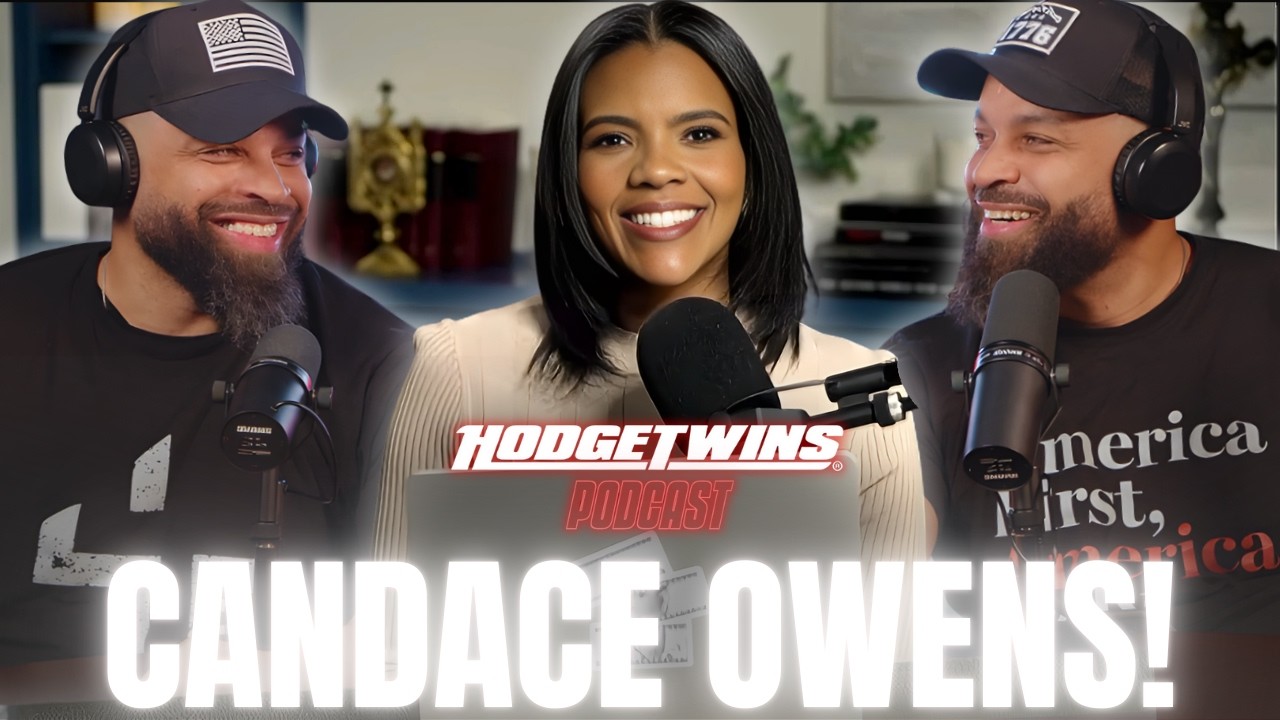
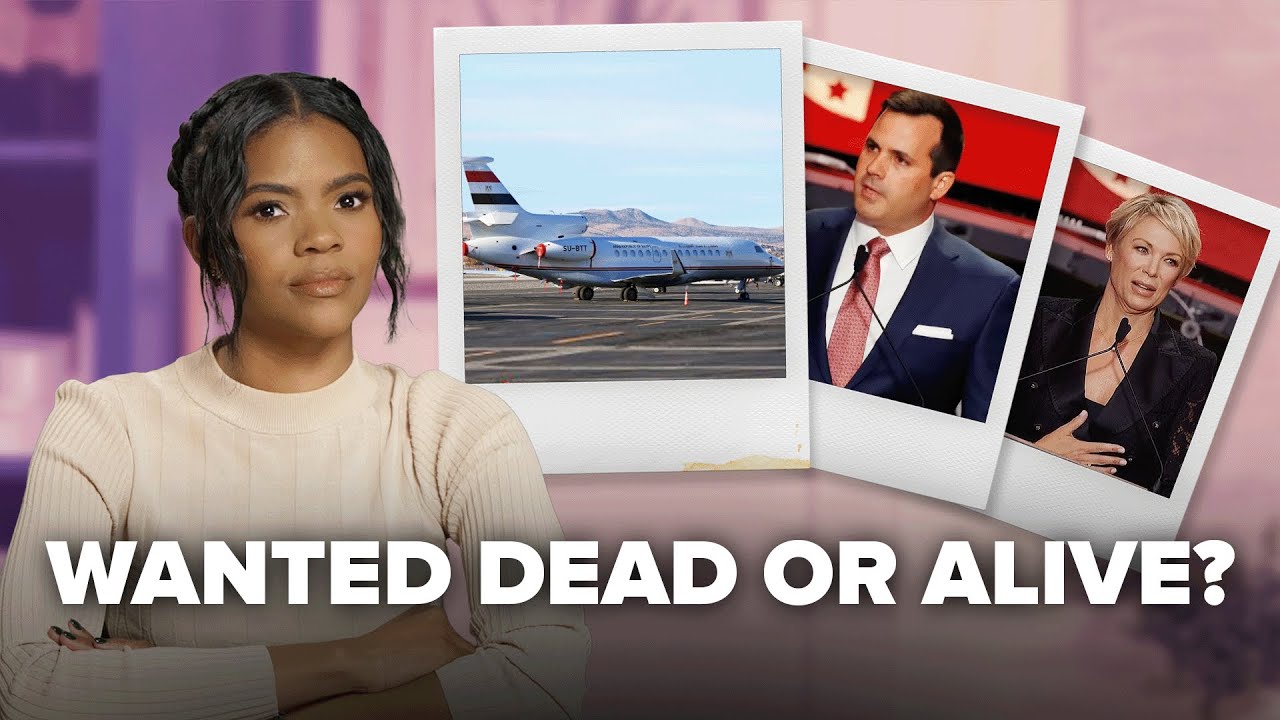
Candace Owens Vindicated as Turning Point USA Confirms Charlie Kirk Text Messages About Israel and Jewish Donors
Enjoying this? Share it with someone who needs to see it.
Up Next
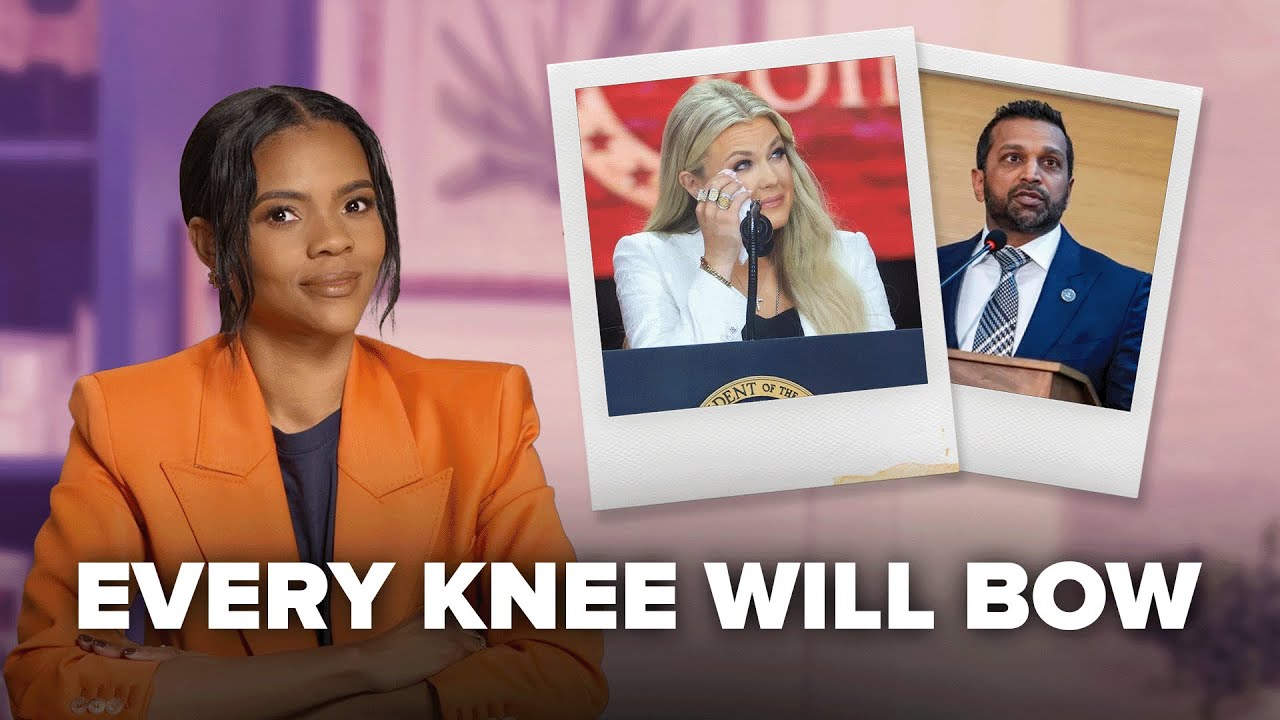
Candace Owens Investigates Charlie Kirk Assassination After Erika Kirk's Powerful Forgiveness Speech and Kash Patel Statement
1:00:21
Brandon Tatum Dismantles Kamala Harris Tour Lies and Defends Israel Against Anti-Semitic Conspiracy Theories
1:12:09
Candace Owens Investigates Mysterious Men Who Removed Camera After Charlie Kirk Shooting and Finds No Blood
53:10
Candace Owens Vindicated as Turning Point USA Confirms Charlie Kirk Text Messages About Israel and Jewish Donors
Candace Owens gains credibility after Andrew Kolvet, Charlie Kirk's partner at Turning Point USA, confirms the authenticity of controversial text messages she revealed. The texts show Kirk expressing frustration with Jewish donors and threatening to leave the pro-Israel cause after losing a $2 million annual donor over Tucker Carlson. The confirmation comes amid Owens' claims that Kirk feared for his life before his death, with three sources allegedly confirming he said "I think they're going to kill me" the day before. Tom Bilyeu explores the implications of information warfare, the breakdown of shared narratives in America, and why people increasingly turn to alternative voices when mainstream channels won't touch controversial stories.
The discussion centers on leaked text messages from Charlie Kirk that Candace Owens brought to public attention. Initially, many dismissed these messages as fabricated or exaggerated. However, Andrew Kolvet, Charlie Kirk's partner at Turning Point USA, publicly confirmed their authenticity, dramatically shifting the conversation.
The text chain reveals Kirk writing: "Just lost another huge Jewish donor. 2 million a year because we won't cancel Tucker. I'm thinking of inviting Candace." When someone responds "Ug," Kirk continues: "Jewish donors play into all the stereotypes. I cannot and will not be bullied like this." He then adds: "Leaving me no choice but to leave the pro-Israel cause." The other person in the conversation responds: "Please don't invite Candace. That might feel good short term, but it's not good long term in my opinion."
Kolvet addressed the leaked messages directly, stating that the screen grab was one he had shared with people and confirming it was authentic. He expressed that he was "excited that the truth is out there," explaining that they had been cooperating with investigations and didn't want to spoil anything, but welcomed the information becoming public since he wasn't the one who released it.
Candace Owens as the New Information Broker
The confirmation of these texts significantly boosted Owens' credibility after she faced criticism on social media. People had been dragging her, suggesting she had "lost the plot" with her various investigations, from the Brigitte Macron story to these Kirk revelations. Critics accused her of endorsing every conspiracy theory she encountered.
The discussion compares Owens to Alex Jones, noting that both have become destinations for people with information that's "too hot to handle." When someone has explosive material that nobody will believe, they turn to these alternative voices. However, this positioning comes with reputational costs. Being consistently early on breaking conspiracy theories does something to one's credibility, even when proven right.
Owens is described as "the commentary version of Michael Saylor" in terms of her high-risk, high-reward strategy. If her major claims pay off, particularly regarding the Macron story, she would gain unprecedented credibility. But the strategy remains precarious, dependent on vindication across multiple controversial positions.
Claims About Kirk Fearing for His Life
Owens made even more serious allegations, claiming that three people told her off the record that Charlie Kirk feared for his life before his death. Two of these sources allegedly have this information in written communication from Kirk himself, with one being a Turning Point USA donor described as "very much one of the white knights in this."
According to Owens, Kirk told these people "I think they're going to kill me" the very day before he died. She emphasized that Kirk had not expressed these fears to her directly, and she was sharing this based on testimony from three sources. Owens stated she hoped these individuals, whom she considers good people, would be inspired to come forward publicly with this information.
The discussion acknowledges the difficulty of this situation: somebody really did kill Charlie Kirk, and if people believe they know who did it and suspect government involvement, they will be understandably reluctant to speak publicly. The stakes are real, making the pressure for witnesses to come forward complicated and dangerous.
Owens' Insurance Policy Against Threats
In the video, Owens reveals she has created what amounts to a life insurance policy, distributing packages to trusted individuals containing text messages, emails, private communications, videos, and private legal documents. If anything happens to her, she states, people will know exactly who has been "making my life a living hell over the past couple of years."
She describes people trying to bankrupt her and her family, threatening lawsuits as a form of intimidation. Owens invokes Kanye West, saying "Everything that Kanye said was so real," and suggests people are now looking back and recognizing Kanye was right about what it takes to leave certain circles or speak against powerful interests.
Owens criticizes the strategy of using lawsuits to silence critics, noting that "the process is the punishment." While wealthy individuals or organizations can afford millions in legal fees over years, they can simultaneously bankrupt opponents who must choose between fighting and risking financial ruin or staying silent. She has given explicit permission for her trusted recipients to "release it all, detonate it all, expose all of these people in politics and in the movement who behave like this behind the scenes" if something happens to her.
She recommends that everyone with a platform who is going through similar intimidation should do the same: send everything to about eight trusted people, ranging from journalists to figures like Andrew Tate, so potential attackers won't know where information might come from.
The Breakdown of Shared Narrative and Information Warfare
The broader context of this discussion involves what's described as the world James Burnham warned about: when you have the volume and velocity of information we currently experience, warfare occurs at the level of what anyone can believe. This represents the end of manufactured consent, where editors of newspapers, politicians, and other gatekeepers could collude to tell people "this is the world" and allow society to move forward reasonably well.
That system, for all its flaws, allowed the average person to march forward with their day feeling like they understood everything. With its disappearance, we face ramifications of a world that simply cannot come to consensus. The discussion suggests we don't yet understand the full implications of this transformation.
Humans need a shared narrative to move forward together in lockstep. Without one, society cannot function well. The piece explicitly states that America needs to indoctrinate children with a shared narrative, though it must rise from the bottom up rather than being forced from the top down. The acknowledgment of how "cheesy" this sounds doesn't diminish the perceived necessity.
Shared narratives, according to this analysis, are born out of pain. China's rise is cited as an example: they first endured what they call a "century of humiliation," which galvanized people with a shared narrative. With that unity, they became unstoppable. America, by contrast, is wildly prosperous but declining relative to its peak. Even though still ahead of most of the world, this decline creates a specific kind of pain, and the country absolutely does not have a shared narrative to navigate it.
The Precarious Position of Israel in This Information Environment
The discussion notes that while governments in general will manipulate anybody in any way they can—something not unique to any single nation—Israel finds itself in a particularly precarious PR position. If it emerges that Israeli interests or donors engaged in the kind of manipulation suggested by these texts and surrounding circumstances, the consequences could be significant.
The confirmation that Kirk really did write about Jewish donors playing into stereotypes and threatening to leave the pro-Israel cause over donor pressure is described as "pretty bombshell." The question remains how this will play out as more information potentially emerges in an environment where traditional gatekeepers no longer control the narrative and alternative voices like Owens gain platforms and, increasingly, credibility when their claims are verified.