2,387 videos 1,376,944,188 views US Joined Aug 30, 2018
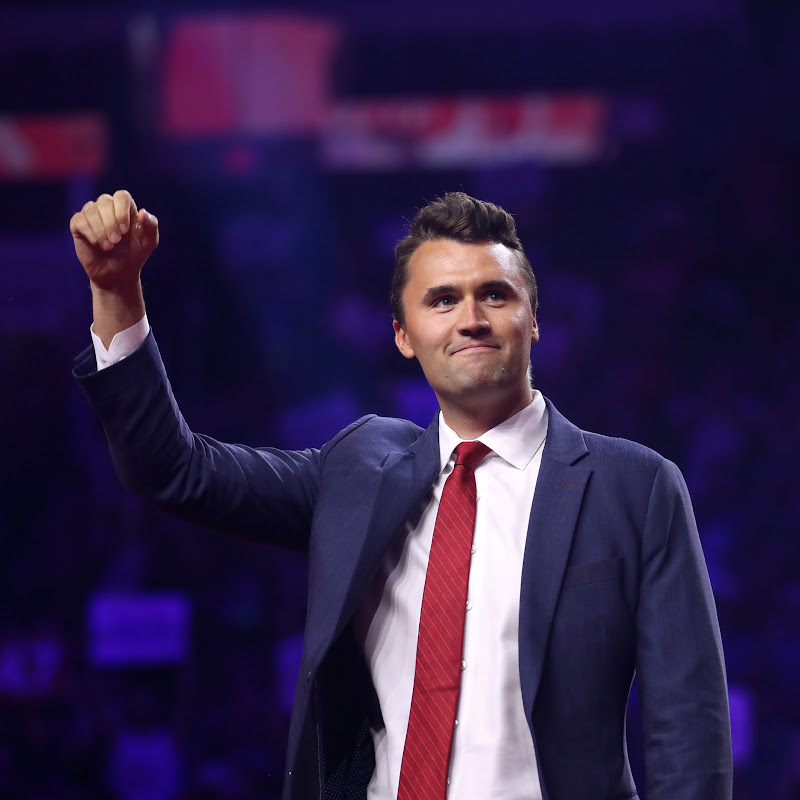
Charlie Kirk is the Founder and President of Turning Point USA, the largest and fastest growing conservative youth activist organization in the country with over 250,000 student members, over 150 full-time staff, and a presence on over 2,000 high school and college campuses nationwide. Charlie is also the Chairman of Students for Trump, which aims to activate one million new college voters on campuses in battleground states in the lead up to the 2020 presidential election. His social media reaches over 100 million people per month and according to Axios, he is one of the "top 10 most engaged" Twitter handles in the world. He is also the host of “The Charlie Kirk Show,” which regularly ranks among the top news shows on Apple podcast charts.
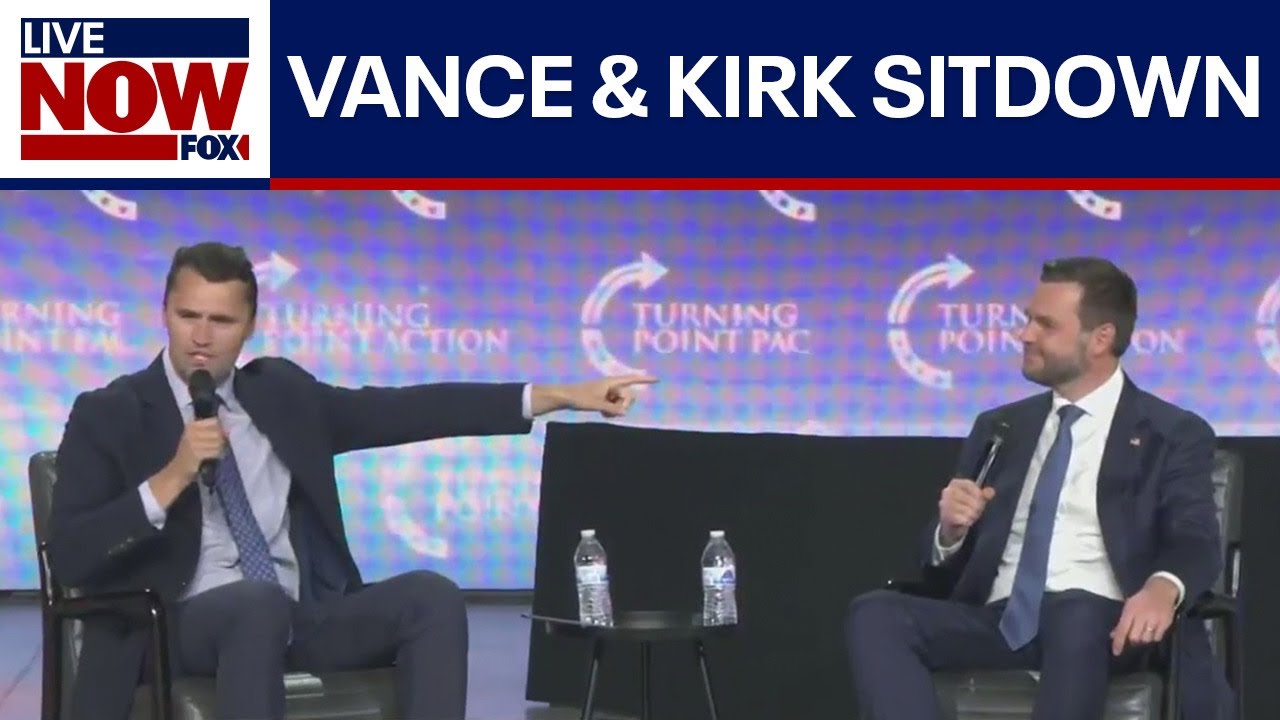
Charlie Kirk Confronts Wisconsin Voters on Kamala Harris: What Has She Done to Earn Your Vote?
Charlie Kirk challenges young voters in battleground Wisconsin to defend their support for Kamala Harris beyond vibes and opposition to Trump. Through pointed questioning about her record as Vice President, Kirk presses supporters to name concrete accomplishments on the border, economy, and foreign policy. The exchanges reveal a striking pattern: voters struggle to articulate what Harris has actually done to deserve the presidency, often falling back on abortion and judicial appointments as their primary justification. Kirk contrasts this with measurable outcomes from the Trump presidency, including border security, economic prosperity, and global stability, forcing uncomfortable admissions about the current administration's failures.
Charlie Kirk approached Wisconsin voters with a simple but powerful challenge: explain what Kamala Harris has done to earn the presidency. His questioning cut through typical campaign rhetoric to expose a fundamental weakness in Harris's candidacy. She refuses to take questions from the press, didn't receive a single vote in the Democratic primary, and was installed through what Kirk describes as "some sort of Zoom conference vote."
When one voter cited the child tax credit as a reason to support Harris, Kirk immediately pointed out that Trump had implemented a similar policy in his tax cut. The voter agreed both were good policies, revealing the absurdity of crediting Harris for ideas she borrowed or that already existed under the previous administration.
The Border Crisis Failure
Kirk confronted voters with Harris's most glaring failure: her management of the border. When asked how many illegal immigrants had entered under her watch, one voter guessed seven million. The actual number: 10 million people, more than the entire population of New Jersey. Kirk emphasized that this wasn't about legislative bills, but about executive action. The Trump administration had achieved all-time low border crossings through policies like Remain in Mexico, which could have been continued through executive order.
Harris had the authority and responsibility to manage the border, and she chose instead to empower what Kirk characterizes as a foreign invasion. This wasn't a matter of lacking tools or authority; it was a deliberate policy choice that resulted in catastrophic consequences for American security and sovereignty.
Economic Reality Check
The economic contrast between the Trump and Biden-Harris administrations proved devastating to the pro-Harris argument. Kirk presented stark facts: under Trump, you needed $75,000 a year to buy a home. Under Harris and Biden, that requirement jumped to $120,000, a $50,000 increase. For young voters hoping to achieve homeownership, the Harris economy has made the American Dream significantly more expensive.
When one voter claimed the economy had improved since COVID, Kirk countered with reality: prices are higher, people can't afford homes, and 1.5 million people lost their jobs in the last year. Seventy-five percent of Americans disapprove of the current economy. If Harris possessed such economic expertise, why hasn't she demonstrated it over the past three and a half years as Vice President?
The Vice President Has Power
Kirk demolished the notion that Harris bears no responsibility for the current state of affairs because she's "only" the Vice President. He pointed out that if Harris wanted to run the country, she could. The White House senior staff runs policy, and the Vice President sits at the center of that decision-making apparatus. She cast the deciding vote on the Inflation Reduction Act that contributed to Americans paying more for goods and services. She traveled to the Munich Security Conference to handle the Russia-Ukraine situation, and hundreds of thousands of Ukrainians subsequently died.
The voters Kirk spoke with couldn't name a single significant accomplishment from Harris's three and a half years in office. When pressed repeatedly for what she's done to earn confidence in her ability to be president, they came up empty.
The Trump Record Comparison
Kirk systematically laid out the Trump administration's accomplishments: border crossings at all-time lows, no new wars, a robust economy, and global respect for American power. Under Trump, gas cost $2 per gallon. The world was safer, and Americans were richer. These weren't abstract claims but measurable outcomes that voters experienced in their daily lives.
When one voter tried to criticize Trump for not pulling out of Afghanistan, Kirk pointed out that Trump was winding down the conflict without the catastrophic withdrawal that characterized the Biden-Harris exit. The absence of new wars under Trump stood in stark contrast to the global instability that has characterized the current administration.
The Abortion Obsession
Repeatedly, voters fell back on abortion as their primary reason for supporting Harris. Yet even this argument collapsed under scrutiny. Trump's position is to leave abortion to the states, and Wisconsin already has abortion on the ballot for voters to decide. When Kirk asked how Trump would interfere with abortion access in Wisconsin, voters struggled to articulate a concrete threat beyond the possibility of appointing pro-life judges to circuit courts.
One voter admitted that supporting circuit court appointments was "one of the most important parts of the presidency," revealing that the entire case for Harris rested not on what she would do, but on preventing Trump from appointing constitutionalist judges. Kirk noted the remarkable absence of any positive vision, any accomplishment, or any track record to justify Harris's candidacy.
The Press Accountability Problem
Kirk highlighted a crucial democratic deficit: Harris refuses to take questions from the press. He had been on the ground for three hours engaging directly with voters and answering their challenges, yet the woman running for President of the United States wouldn't take five minutes of questions from journalists. When asked if this bothered them, voters admitted they hadn't watched Harris with the press much, because she doesn't talk to the press.
This lack of accountability should concern any voter regardless of party affiliation. A president who won't answer questions during a campaign is unlikely to embrace transparency and accountability once in office. Yet the voters Kirk spoke with said this wouldn't change their vote, revealing how deeply partisan loyalty had replaced substantive evaluation of candidates.
The Missing Sales Pitch
Throughout multiple conversations, Kirk asked the same fundamental question: what is the sales pitch for Kamala Harris beyond vibes and "Brat Summer"? What has she done? How did she get here? Why should she earn votes? The answers revealed a candidacy built entirely on opposition to Trump rather than any positive vision or demonstrated competence.
Voters cited policies Harris opposed (like fracking) that she now claims to support, or policies Trump originated (like no tax on tips) that she has stolen without implementing. When Kirk asked why Harris doesn't simply instruct the IRS to eliminate taxes on tips right now if she truly supports the policy, voters had no answer. The hypocrisy and opportunism were too obvious to defend.
What Voters Really Care About
Kirk's final exchange crystallized the fundamental divide in American politics. After establishing that abortion and judicial appointments were the voter's primary concerns, Kirk offered his perspective: preventing World War III, ensuring Americans can own homes, maintaining a robust economy, and protecting the border from invasion are far more important than the ability to end unborn lives.
This represents a collision of worldviews about civilizational priorities. One side focuses on preserving life, prosperity, security, and sovereignty. The other prioritizes the autonomy to terminate pregnancies above economic opportunity, national security, and global stability. These conversations in Wisconsin revealed which vision currently motivates Democratic voters and how thin the actual case for Kamala Harris truly is.