2,428 videos 1,380,136,590 views US Joined Aug 30, 2018
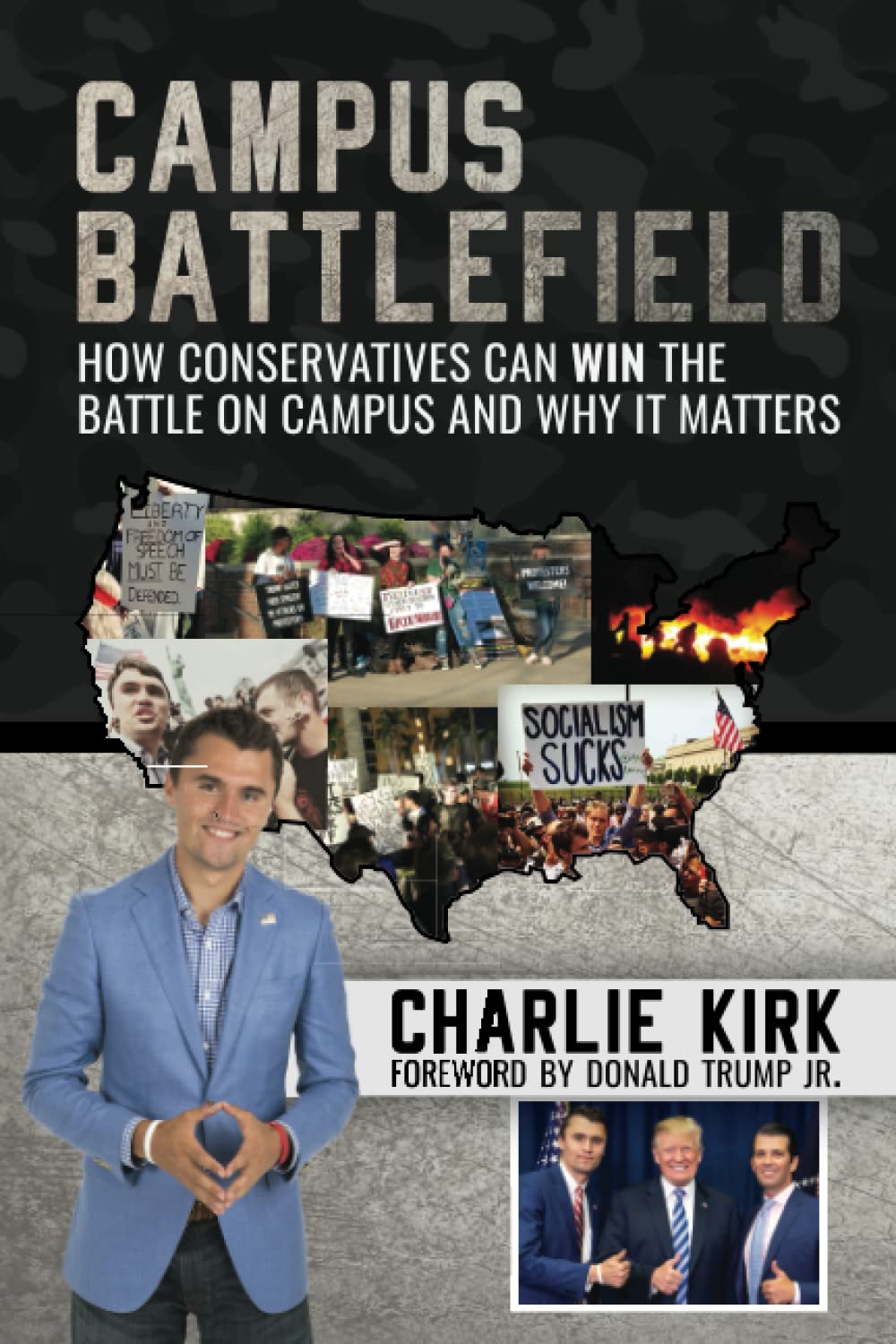
Charlie Kirk is the Founder and President of Turning Point USA, the largest and fastest growing conservative youth activist organization in the country with over 250,000 student members, over 150 full-time staff, and a presence on over 2,000 high school and college campuses nationwide. Charlie is also the Chairman of Students for Trump, which aims to activate one million new college voters on campuses in battleground states in the lead up to the 2020 presidential election. His social media reaches over 100 million people per month and according to Axios, he is one of the "top 10 most engaged" Twitter handles in the world. He is also the host of “The Charlie Kirk Show,” which regularly ranks among the top news shows on Apple podcast charts.
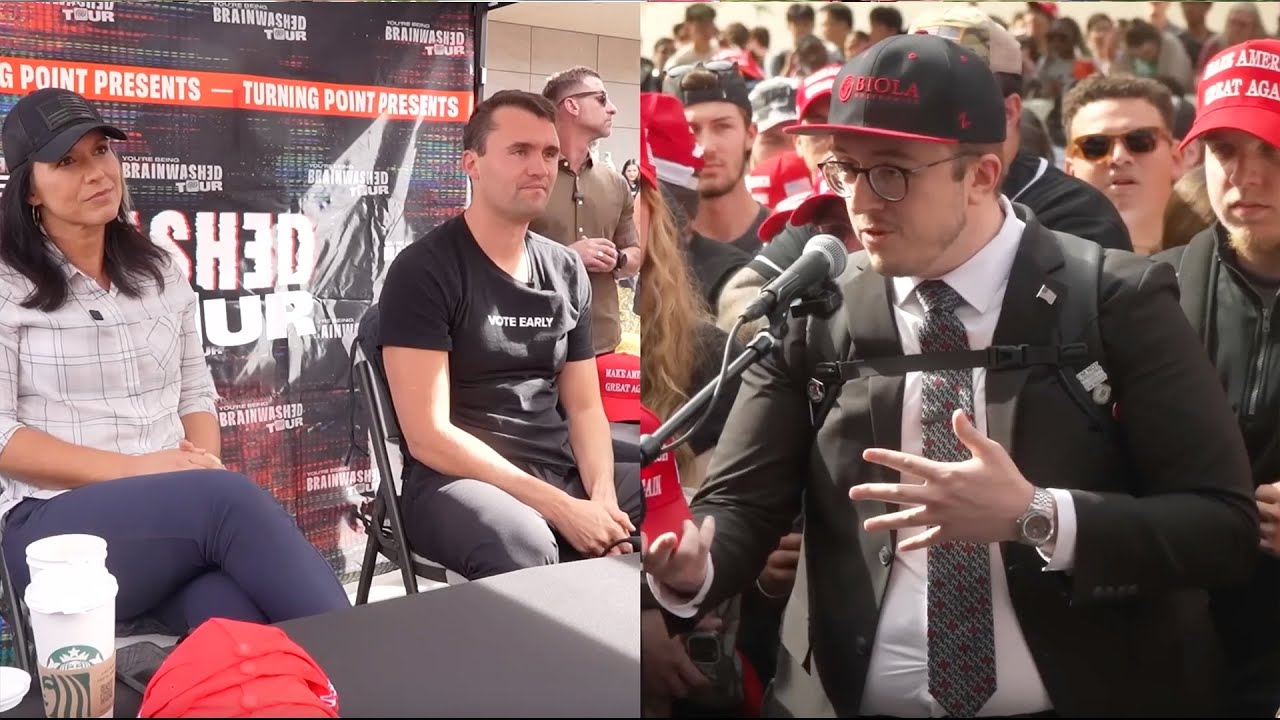
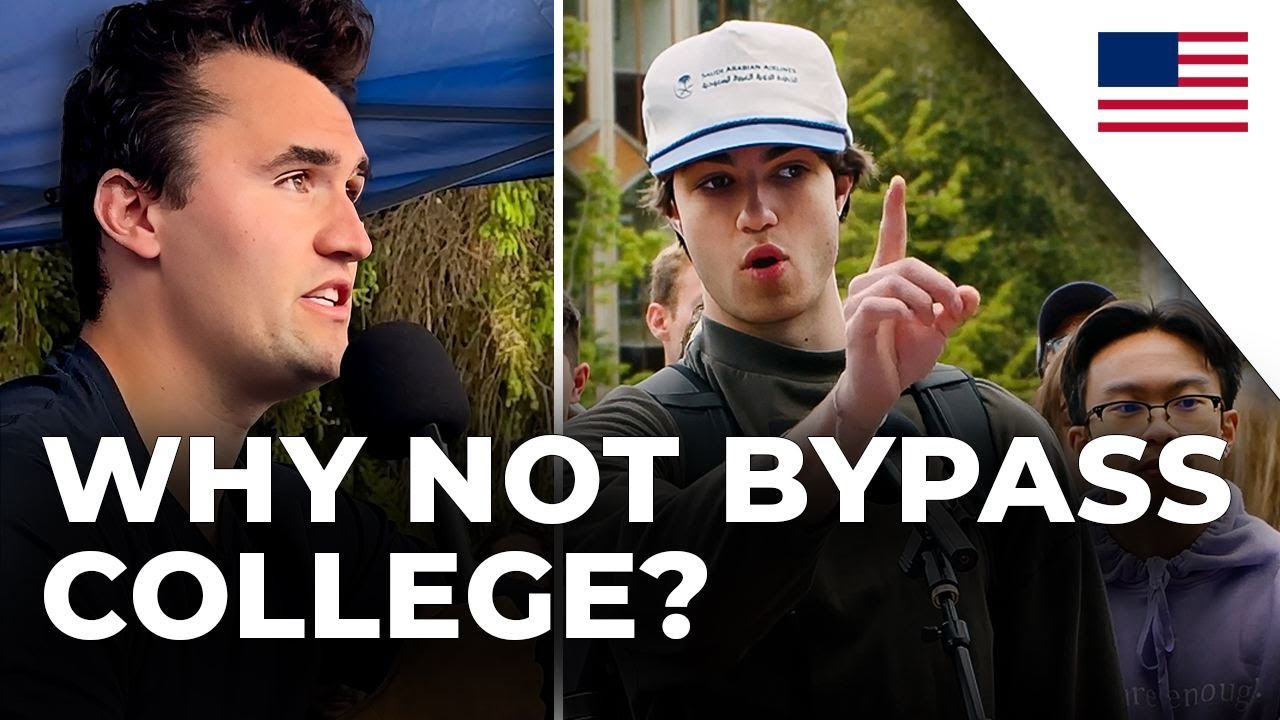
Charlie Kirk Debates University of Washington Students on Whether College Is a Scam
Charlie Kirk faces off with University of Washington students in a heated exchange about the value of higher education. When challenged by economics and computer science majors defending their degrees, Kirk argues that institutions force students into worthless classes, saddle them with debt, and produce graduates ill-prepared for the workforce. The students push back with data on lifetime earnings and the competitive job market, but Kirk maintains his stance: defund federal support for colleges, let them survive on their own, and stop selling young people the lie that they need a four-year degree to succeed.
Charlie Kirk wasted no time cutting to the heart of his argument when confronted by University of Washington students about his views on higher education. His case rested on three damning statistics: half of college graduates end up in jobs that don't require a degree, 41% of students who enter college never graduate, and 60-70% study subjects he considers "completely worthless, meaningless and don't enrich society at all."
When a student pushed back, questioning whether the fault lies with students choosing bad degrees or colleges failing to support them financially and mentally, Kirk rejected the premise entirely. He pointed out that the federal government fully underwrites four-year college degrees through FAFSA and student loans, eliminating financial barriers as an excuse. While acknowledging he couldn't speak to whether mental health issues account for the 41% dropout rate, he pivoted to what he sees as the real problem: the institution itself.
The Institutional Scam: Forced Classes Nobody Wants
Kirk made his most visceral point by asking the audience a simple question: "How many of you have had to take classes that are a waste of time, that you wish you didn't have to take, that are a waste of money?" When every hand in the room shot up, he declared it proof of an "institutional scam."
"They are forcing them to take classes that make them poorer, that take up their time, in order to get the credential," Kirk argued. He contrasted this with every other aspect of modern life—Netflix accounts, Chipotle orders, Amazon carts—where customization reigns supreme. But at college, students are told they must take "three, four, five classes that are very expensive, especially for you out-of-state students, to go further into debt, study things that don't matter, to find jobs that don't exist."
An economics student attempted to counter this by noting the flexibility students have in choosing classes within general education requirements. Kirk wasn't buying it, asking whether the school requires diversity classes. When confirmed, he declared it definitively: "That's a scam."
The Return on Investment Debate
The economics student came prepared with data from the Federal Reserve Bank of San Francisco showing that the average college graduate recoups all costs by age 40. Kirk had a ready response: take out the top 10% of graduates and income earners, and the numbers flip. The other 90%, he argued, don't see a positive return on investment.
He then dropped what he clearly considered his trump card: 11 million job openings in America paying $75,000 a year that require just six weeks of training and involve either muscular labor or working with your hands. "A lot of you guys are in college because you've been pushed into college saying that you must get the piece of paper," Kirk said, suggesting many students pursue degrees when better-paying alternatives exist.
The economics student conceded some truth to Kirk's argument about pressure to attend college but argued that students can still make better choices while enrolled. Kirk questioned whether most students actually do make good choices, suggesting a 40-60 split in favor of bad decisions, and blamed the institution for incentivizing those poor choices.
What College Should Be Versus What It Is
Kirk acknowledged that college should ideally focus on "wisdom, beauty, truth, goodness"—not just job preparedness. He cited Hillsdale College as an example of what higher education could be. But he argued that modern colleges have "lost that completely," reducing education to doctor, lawyer, and engineer preparation while forcing students through diversity classes and DEI requirements.
When asked what he would do as a policymaker, Kirk didn't hesitate: "I would defund all the colleges in the country, make them stand on their own two feet with either tuition or donor money. Taxpayers should not be subsidizing higher education, period."
The Computer Science Challenge
A computer science student challenged Kirk on which majors he considers worthwhile. Kirk singled out the Paul Allen School at the University of Washington as an example of a program that might justify attendance, while dismissing sociology and "soft social sciences" as having poor return on investment. Economics, he said, falls in the "middle ground."
The computer science student pushed back hard on Kirk's suggestion that students could learn to code in eight weeks and earn $100,000 a year. In an oversaturated job market, the student argued, employers at major firms like Microsoft, Amazon, and Starbucks expect more than base-level qualifications. Even with a degree from UW's renowned computer science program, graduates need years of internship experience to land quality positions.
Kirk countered with a claim that would surprise many: employers are increasingly less interested in hiring college graduates because "they work the least, they're the most entitled, and the quickest to run to HR about problems and mispronouncing people." While he acknowledged that big firms still require degrees, mid-level companies increasingly care only about skills, work ethic, and character.
The Alternative Path
Kirk's ultimate advice to students represented a complete rejection of the traditional educational pathway: graduate high school, learn to code, and beg for an internship, bypassing college entirely. He insisted that employers would be "amazed at how willing people are to help with that."
His final message carried the weight of someone who built success without a traditional degree: "The world doesn't really care you went to college. They care when you come out of college as your first job. Once you're in the door, it really is rather irrelevant."
The Generational Crisis Question
Perhaps Kirk's most provocative argument came when he connected college education to broader social problems. He noted that young people today are "the most depressed, the most anxious, the most alcohol addicted, drug addicted, least married, most angry generation in American history," while simultaneously being "the most college educated, most credentialed generation in history."
The computer science student offered an alternative explanation: too many people competing for too few jobs, forcing students to pursue credentials just to stand out. Kirk agreed but flipped the logic: "Don't go to college then. You're not going to get hired? Worked for me. Start your own business."
The exchange ended where it began—with fundamental disagreement about whether the credential matters. For Kirk, it's a scam. For the students defending their choices, it's still the most viable path to success in a competitive economy. The debate highlighted a generational divide not just about education, but about what constitutes preparation for adult life in America.