2,422 videos 1,389,747,653 views US Joined Aug 30, 2018
Charlie Kirk is the Founder and President of Turning Point USA, the largest and fastest growing conservative youth activist organization in the country with over 250,000 student members, over 150 full-time staff, and a presence on over 2,000 high school and college campuses nationwide. Charlie is also the Chairman of Students for Trump, which aims to activate one million new college voters on campuses in battleground states in the lead up to the 2020 presidential election. His social media reaches over 100 million people per month and according to Axios, he is one of the "top 10 most engaged" Twitter handles in the world. He is also the host of “The Charlie Kirk Show,” which regularly ranks among the top news shows on Apple podcast charts.
Charlie Kirk Dismantles Harvard Student's Defense of Federal Funding for Universities with Billion-Dollar Endowments
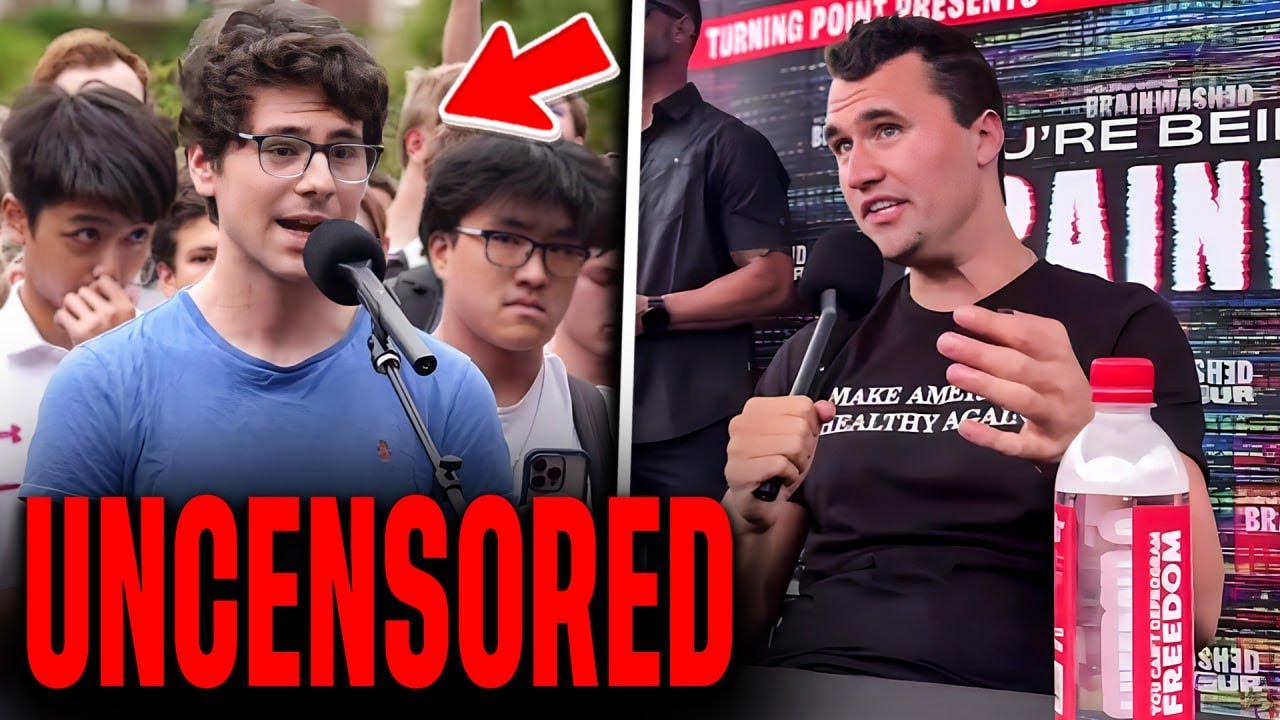
Charlie Kirk faces off with a Harris-Walz supporter at Long Beach who challenges the legal justification for defunding Harvard University. The student argues that Harvard's medical research contributions justify federal funding, but Kirk exposes a fundamental question: why should taxpayers fund a university sitting on a $55 billion endowment? The exchange covers everything from the Civil Rights Act of 1964 to Harvard's defiance of the Supreme Court's Students for Fair Admissions decision. Kirk argues that Harvard's continued violation of federal law through discriminatory admissions practices against white and Asian students provides clear legal grounds for cutting federal funding, while the student struggles to reconcile constitutional originalism with executive interpretations of Title VI.
The $55 Billion Question: Why Should Taxpayers Fund Harvard?
Charlie Kirk welcomed a Harris-Walz hat-wearing student at Long Beach who came prepared with a specific challenge: defend the legal justification for defunding Harvard University. Kirk immediately acknowledged the humor in the situation, comparing the Harris-Walz hat to "all those Buffalo Bill Super Bowl champion hats" that disappear into African villages after a loss. But the lighthearted opening quickly shifted to a substantive debate about federal funding for elite universities.
The student's primary argument centered on Harvard's contributions to medical research, claiming the university receives the majority of its federal funding for this purpose and plays a crucial role in "pushing society forward." Kirk countered with a fundamental question: why is any college entitled to federal money in the first place?
Understanding Harvard's Massive Endowment
Kirk pressed the student on Harvard's endowment, explaining that an endowment functions essentially as a savings account. When asked to estimate the size of Harvard's endowment, the student guessed "a couple trillion dollars." Kirk corrected the figure to $55 billion, adding that Harvard receives approximately $2 billion annually in federal funding.
This led to Kirk's central argument: if Harvard is sitting on $55 billion in savings that continues to grow every year without the university dipping into it, why should American taxpayers be funding their operations? The student acknowledged that Harvard doesn't rely exclusively on federal funding and that the endowment does indeed grow annually, but maintained that federal funding remains necessary for the university's research contributions.
The Medical Research and Data Access Debate
The student attempted to shift the conversation to research data, arguing that "there is no bad data" and that every piece of data represents "an increase in knowledge." He claimed it would "seriously hurt the government" if universities had to release all their research data to the public immediately, insisting that the government needs to receive cancer research and other medical data before the general public.
Kirk rejected this premise entirely, advocating for open-source data. If taxpayers are financing the research, he argued, why shouldn't the whole world have immediate access to it? The student insisted the government's priority access to research data remains "super important" and "a very crucial thing," but Kirk redirected the conversation back to the core issue: Harvard's $55 billion cash pile that grows every year without being touched.
The Legal Case: Supreme Court Violations and Federal Law
Kirk presented his strongest legal argument for defunding Harvard: the university stands in blatant violation of federal law. He referenced the Students for Fair Admissions Supreme Court case, which found that Harvard discriminates against white and Asian students while accommodating Black and Hispanic students through affirmative action practices. According to Kirk, Harvard continues to push forward with these discriminatory acceptance and hiring practices in direct defiance of the Supreme Court ruling.
The student attempted to redirect the conversation to the Trump administration's position on anti-Semitism and the Civil Rights Act of 1964, specifically questioning how the executive branch could interpret Title VI to include religion when it was deliberately excluded in 1964 while being explicitly included in Title VII. Kirk acknowledged that the Trump administration has made approximately ten different complaints against Harvard, but he characterized the anti-Semitism angle as "probably the White House's weakest claim" and "the shakiest of all their complaints."
The Strongest Constitutional Argument
Kirk emphasized what he considers the "crispest allegation" against Harvard: the university's continued violation of the 14th Amendment and the Supreme Court's decision in the Students for Fair Admissions case. He stated that Harvard has not only acknowledged these violations but actually "brags about it." When an institution defies the Supreme Court and violates federal law, Kirk argued, cutting off federal funding represents an appropriate and legally justified consequence.
While acknowledging that Harvard does exhibit anti-Semitism, Kirk conceded that "unfortunately in this country, you're allowed to be a bigot and an anti-Semite." However, discriminatory admissions practices that penalize white and Asian students violate federal civil rights law and Supreme Court precedent, providing clear legal grounds for federal defunding.
Two Ships Passing in the Night
As the exchange continued, Kirk pointed out that they were "talking past each other," with the student focusing on the anti-Palestinian protest complaints and Title VI religious protections while Kirk maintained his focus on the DEI and discriminatory admissions violations. Kirk suggested the audience would agree that the student wasn't listening to his central argument about Supreme Court violations.
The student persisted in discussing the ten-part charging document the Trump administration filed against Harvard, but Kirk continued to emphasize that he was addressing "the top one"—the most legally sound complaint about discriminatory admissions practices. The conversation ended with Kirk thanking the student for his time and delivering a final jab: "Enjoy President Harris. Oh, wait."
The Broader Implications for Higher Education Funding
The exchange between Kirk and the Harris-Walz supporter highlights a fundamental debate about the relationship between the federal government and elite universities. Should institutions with multi-billion-dollar endowments that grow every year receive taxpayer funding? What obligations do universities have when they accept federal dollars? And what consequences should follow when universities violate federal law and Supreme Court decisions?
Kirk's position represents a growing conservative argument that elite universities have become ideologically captured institutions that discriminate against certain groups of students while accumulating massive wealth and continuing to demand taxpayer support. The legal framework he presented—that defiance of Supreme Court rulings justifies federal defunding—offers a constitutional basis for action that goes beyond political disagreement with university policies.