2,277 videos 1,364,597,333 views US Joined Aug 30, 2018
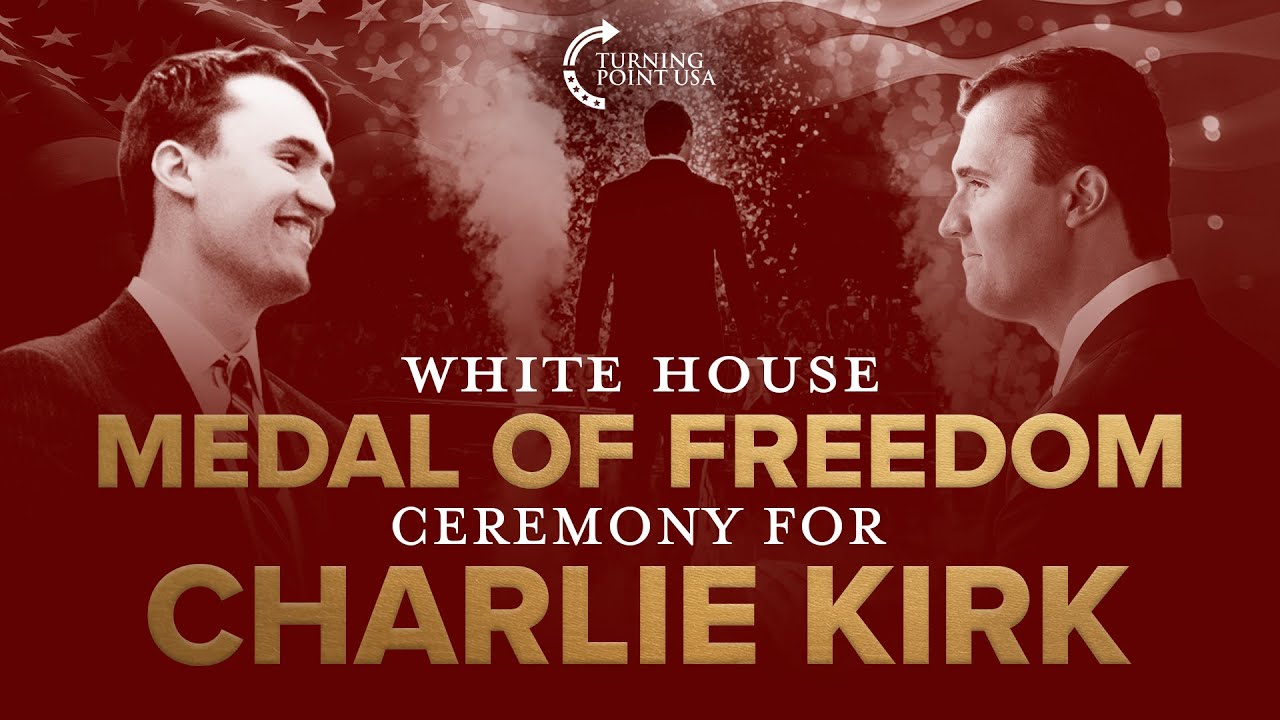
Charlie Kirk is the Founder and President of Turning Point USA, the largest and fastest growing conservative youth activist organization in the country with over 250,000 student members, over 150 full-time staff, and a presence on over 2,000 high school and college campuses nationwide. Charlie is also the Chairman of Students for Trump, which aims to activate one million new college voters on campuses in battleground states in the lead up to the 2020 presidential election. His social media reaches over 100 million people per month and according to Axios, he is one of the "top 10 most engaged" Twitter handles in the world. He is also the host of “The Charlie Kirk Show,” which regularly ranks among the top news shows on Apple podcast charts.
Dr. Charles Steele Exposes Why Government-Run Grocery Stores and Rent Control Always Lead to Poverty and Tyranny
Dr. Charles Steele from Hillsdale College dismantles the economic fallacies behind rent control and government-run grocery stores, drawing on examples from the Soviet Union, Venezuela, and American cities. He explains why these socialist policies inevitably create shortages, destroy housing markets, and harm the very people they claim to help. Steele contrasts these failures with the power of capitalism, profit, and free markets to create abundance, opportunity, and human flourishing. This conversation reveals the critical economic principles every American needs to understand.
Dr. Charles Steele, director of the Hutchinson Center for Commerce and Freedom and associate professor of economics at Hillsdale College, breaks down why rent control and government-run grocery stores represent catastrophic economic policy. When asked about proposals to freeze rent and establish government-run grocery stores in New York City, Steele doesn't mince words: these policies create exactly the opposite of their intended effect.
Rent control prevents property owners from maintaining their buildings and stops new construction entirely. Why would anyone invest money in building apartments if they cannot charge enough to recover their costs? The result is predictable: tens of thousands of vacant apartments sit empty in New York City right now, unable to be improved or upgraded because of rent control policies.
The cities with the most rent control in the United States—New York City, San Francisco, and Washington DC—have, without exception, the highest average housing prices. Rent control doesn't solve the affordability crisis; it creates it. As Steele points out, after the Vietnam War, a North Vietnamese finance minister admitted: "We managed to do to housing in Hanoi what the Americans could not do by bombing. We destroyed it. And we destroyed it with rent controls."
The Political Temptation of Price Controls
Despite rent control's catastrophic track record, politicians remain attracted to it. Senator Elizabeth Warren recently endorsed a candidate proposing such measures, arguing that holding prices down creates affordability. But as Steele explains, this is a fundamental economic fallacy.
Price controls don't actually hold prices down—they create shortages. When you constrain supply, housing becomes less available and gets allocated through other means: waiting in line, bribery, special favors, or political connections. The promise is attractive: "We're going to give you something cheap." The reality is devastating: "It won't be available, but boy, the price will be low."
Steele draws from personal experience, having lived in the former Soviet Union and communist China. He also notes an ironic example from his time doing his PhD at New York University: friends who went on to work at the World Bank and IMF still hold onto their rent-controlled apartments. These wealthy individuals making hundreds of thousands of dollars per year won't give up their rent-controlled units—a luxury item that demonstrates how these policies often benefit the well-connected rather than those truly in need.
Government-Run Grocery Stores: An Experiment Already Failed
When it comes to government-run grocery stores, Steele is equally clear about the inevitable results: low quality, poor service, and chronic shortages. Senator Warren suggested these would be "experiments," but Steele counters that these experiments have already been run extensively in the Soviet Union and other communist countries.
The difference between capitalist and socialist grocery systems comes down to incentives. Under capitalism, profit serves a critical function—it signals that you are creating value by taking resources and producing something consumers value more than the inputs. Profit provides an incentive to control costs and provide quality because businesses must earn customers' patronage or face closure.
Under a government system, there's no profit and loss signal, no incentive to control costs, and quality doesn't matter because the store doesn't need to earn customers—it's simply there by government decree. The result is invariably waste, poor service, and empty shelves.
The Venezuelan Warning
Steele provides a recent and devastating example: Hugo Chavez in Venezuela. The dictator imposed price controls on groceries and supermarket goods. When shortages inevitably developed—because stores couldn't cover their costs—Chavez used those very shortages as an excuse to nationalize the grocery stores entirely.
This was no accident but a deliberate plan to seize the means of production. The consequences for Venezuela included stunted growth, malnutrition in children that cannot be corrected, and permanent damage from starvation and famine. This is what socialism does, regardless of the promises made at its inception.
Free Market Solutions to Real Problems
Steele acknowledges that people's economic frustrations are real. Housing costs are crushing families in cities across America. But the solution isn't socialist controls—it's removing the barriers that prevent capitalism from working.
For housing specifically, Steele recommends several concrete steps:
Eliminate restrictive zoning laws that prevent building
Remove burdensome building codes and permitting processes
Repeal environmental regulations that don't actually help the environment but do block development
Decontrol prices entirely and let the market work
In California, for example, it's nearly impossible to build reasonable housing because of the regulatory system. In New York City, it's extremely difficult to upgrade or develop property you already own. This is why parts of New York remain slums—nobody can afford to invest in them under the current regulatory regime.
The Greatest Economic Myths
When asked about the biggest economic misconceptions he encounters, even among Hillsdale College students, Steele identifies two critical myths:
First, the tendency to think in terms of class warfare—the idea that there's inherent conflict between capital and labor, between employers and employees. In reality, capital and labor are inputs, and workers and employers are engaged in mutually beneficial exchange. This class conflict thinking poisons economic understanding across the political spectrum.
Second, and perhaps more fundamental, is misunderstanding profit. Profit isn't exploitation or greed—it's an incentive to serve your fellow man by providing goods and services people want and need, delivered cost-effectively to avoid waste. The Soviet system was incredibly wasteful and generated goods and services people didn't want because it lacked the profit mechanism to guide production.
Capitalism Versus Socialism: The Stakes
Steele concludes with a powerful contrast. If we want a society where people are productive and have rewarding lives, where people can flourish, where the environment is protected, and where we have a free and peaceful society—we need capitalism.
Socialism promises all these things but delivers the opposite: authoritarianism, tyranny, division between leaders and serfs, destruction, and poverty. Understanding why capitalism works and why socialism fails isn't just an academic exercise—it's essential for preserving freedom and prosperity.
The conversation underscores the urgent need for economic education. As politicians continue proposing policies that have failed catastrophically everywhere they've been tried, Americans need to understand the principles that actually create abundance and opportunity: private property, profits, and production in free markets.









Comments
Be the first to comment on this video.