2,422 videos 1,389,747,653 views US Joined Aug 30, 2018
Charlie Kirk is the Founder and President of Turning Point USA, the largest and fastest growing conservative youth activist organization in the country with over 250,000 student members, over 150 full-time staff, and a presence on over 2,000 high school and college campuses nationwide. Charlie is also the Chairman of Students for Trump, which aims to activate one million new college voters on campuses in battleground states in the lead up to the 2020 presidential election. His social media reaches over 100 million people per month and according to Axios, he is one of the "top 10 most engaged" Twitter handles in the world. He is also the host of “The Charlie Kirk Show,” which regularly ranks among the top news shows on Apple podcast charts.
Roger Stone Reveals What JFK Files Really Show About Kennedy Assassination and Deep State Cover-Up
Roger Stone joins Charlie Kirk for an in-depth analysis of the newly released JFK assassination files. With 80,000 documents now public, Stone explains what the CIA knew about Lee Harvey Oswald, why the single-shooter narrative doesn't hold up, and how the evidence points to a conspiracy involving multiple shooters and powerful institutions. Stone draws disturbing parallels between the Kennedy assassination and recent attempts on President Trump's life, arguing that the same deep state forces have operated for decades. Stone details his research connecting Lyndon Johnson to the assassination, including forensic evidence placing Malcolm Wallace at the scene and Richard Nixon's private admission that "Lyndon and I both wanted to be president, but I wasn't willing to kill for it."
Charlie Kirk begins by addressing the massive release of 80,000 JFK assassination documents, immediately turning to Roger Stone, who has spent decades researching the Kennedy assassination. Stone cautions that while the document dump is significant, the CIA has had over 62 years to sanitize these files. The documents confirm that the CIA had far earlier knowledge of Lee Harvey Oswald than previously admitted, and that Oswald was not a good marksman.
Stone emphasizes a critical question: if Oswald shot Kennedy with a World War II vintage Italian carbine, why did the Dallas Police Department find no powder burns on his chest, arms, or hands? This single fact undermines the official narrative that has stood for over six decades.
The release process itself has been complicated. President Trump initially released about 80 percent of the documents in 2017, but CIA Director Mike Pompeo requested that 20 percent be held back. Those are the documents now being released. Stone notes that not all 80,000 documents have even been uploaded yet, making any final conclusions premature. Late on the day of disclosure, reports emerged that the Department of Justice planned to delay the release for national security reasons, before Tulsi Gabbard intervened to keep President Trump's promise.
The Case Against the Single Shooter Theory
Stone systematically dismantles the official narrative that Lee Harvey Oswald acted alone. The forensic evidence tells a different story. Fingerprints found on both the window casement and cardboard boxes on the sixth floor of the Texas School Book Depository belong to Malcolm "Mac" Wallace, not Oswald. Wallace's fingerprints were on file because he had been arrested, tried, and convicted of first-degree murder in 1951 for killing John Douglas Kinser, who was blackmailing Lyndon Johnson.
Six witnesses saw a man in the window who matched Wallace's physical description: middle-aged, heavyset, balding, with glasses. This description bears no resemblance to Oswald. Stone reveals that Alex Jones recently released an audio tape from the grandson of Billy Sol Estes, a Texas wheeler-dealer who went to prison for corruption. The tape captures a conversation between Estes and Cliff Carter, Lyndon Johnson's chief political operative and executive director of the Democratic National Committee, in which they openly discussed Johnson hiring Wallace to shoot President Kennedy.
Stone argues there were at least three, possibly four shooters that day in Dallas. One shooter was on the grassy knoll, witnessed by at least two people who saw a man arrive in a green Plymouth station wagon, remove a rifle from a bag, and fire from the fence line. Stone believes this was a paid assassin working for organized crime. The famous gangster Johnny Roselli insisted he was a shooter firing from a sewer grate. Stone suspects there may have been a fourth shooter in the Dal-Tex building across from the Texas School Book Depository.
Richard Nixon's Bombshell Admission
Stone shares a stunning revelation from his time working with former President Richard Nixon in the post-presidential years. After a couple of cocktails, Stone asked Nixon who really killed John Kennedy. Nixon stared into his martini and replied that the Warren Commission was "the biggest goddamn hoax in history." When Stone pressed for clarity, Nixon said: "Let me put it to you this way—Lyndon and I both wanted to be president, but I wasn't willing to kill for it."
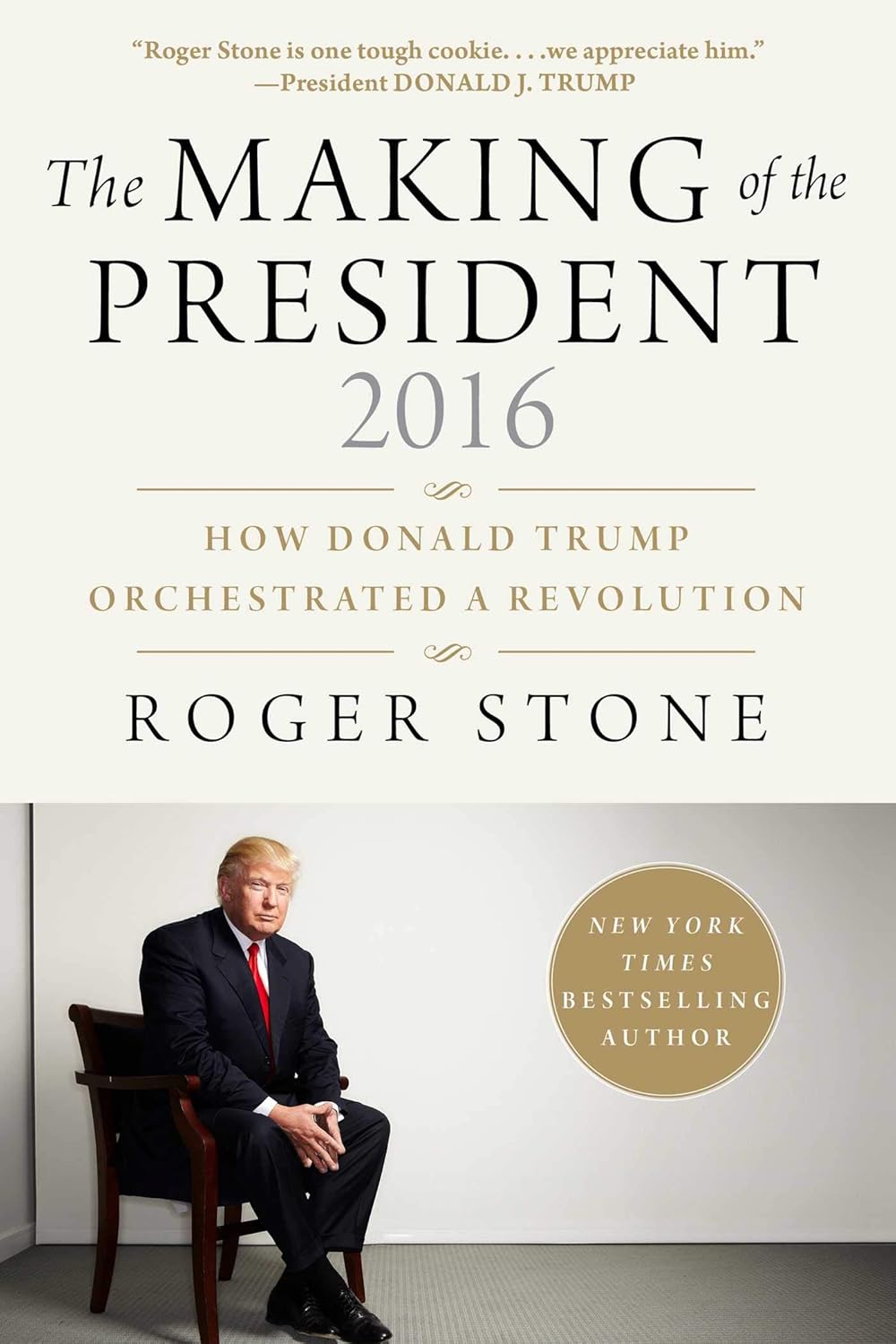
This admission prompted Stone to conduct five years of research that resulted in his book "The Man Who Killed Kennedy: The Case Against LBJ." Stone explains that Nixon leveraged his knowledge of Kennedy's assassination to secure his pardon from Gerald Ford. Tucker Carlson recently played an audio tape of a conversation between Nixon and CIA Director Richard Helms, in which Nixon pressured Helms for help with the Watergate scandal, saying "I know who shot John."
General Alexander Haig, Nixon's last chief of staff, told Stone that Nixon "had them by the short hairs" and threatened that if he went down, he would take everyone with him. The New York Times later reported that Gerald Ford, while serving on the Warren Commission at the direction of FBI Director J. Edgar Hoover, actually altered the autopsy diagram. Ford erased markings showing a wound in Kennedy's upper back and moved it to his lower rear neck to accommodate the single bullet theory. When asked why, Ford said "the country needed closure"—not truth, but closure.
Lyndon Johnson's Web of Connections and Motives
Stone meticulously documents Lyndon Johnson's connections to various entities that benefited from Kennedy's death. As Senate Majority Leader, Johnson took the unusual step of appointing himself to the subcommittee of Defense Appropriations, where the CIA's secret black box budget was prepared. Johnson was essentially the paymaster for the CIA, giving him deep connections to the intelligence community.
Johnson was also receiving bribes from Carlos Marcello, the gangster who controlled gambling in Texas and Louisiana. The man who passed those bribes to Johnson, Jack Halfen, received a presidential pardon just two days after Johnson became president. Johnson was also the political water carrier for Big Texas oil interests, which were threatened by Kennedy's plans to repeal the oil depletion allowance.
Stone argues that all of these entities—the CIA, organized crime, and Big Texas oil—had their own reasons for wanting Kennedy removed. The convergence of these interests made the assassination possible.
The CIA's Motive: Bay of Pigs and Cuban Missile Crisis
The relationship between Kennedy and the CIA had deteriorated badly over two major incidents. The Bay of Pigs invasion, born under Eisenhower in a working group headed by Vice President Nixon, was designed to look like an indigenous Cuban uprising. The plan included air cover for the invading forces, to be supplied by 29 Panamanian-flagged fighter jets piloted by Cuban pilots. For reasons still unexplained, the CIA cancelled this air support the day before the invasion.
The invasion became a fiasco, with men storming the beaches cut to ribbons. Curtis LeMay, head of the U.S. Air Force, and the Joint Chiefs went to Kennedy and said the only way to save the operation was to send in the U.S. Air Force. Kennedy refused because that would expose the operation as U.S.-sponsored. The CIA blamed Kennedy; Kennedy blamed the CIA.
The Cuban Missile Crisis created additional tension. Americans were told that brave Jack and Bobby Kennedy faced down Khrushchev, who withdrew the missiles stationed in Cuba. But documents declassified 40 years later revealed the truth: the U.S. removed NATO missiles from Italy and Turkey in exchange for the Soviet removal of missiles from Cuba. The agreement had no onsite inspection, creating deep distrust between the CIA and President Kennedy.
Stone also reveals that the intelligence services and Secret Service had learned that Kennedy had become addicted to amphetamines. He was being treated by Dr. Max Jacobson of New York, known as "Dr. Feelgood," who attended to many celebrities including Frank Sinatra, opera singer Maria Callas, Pablo Casals, Leonard Bernstein, and Nelson Rockefeller. Jacobson injected them with what they were told was a proprietary blend of vitamins and enzymes, but was actually an early form of methamphetamine. Dr. Jacobson appears on the manifest of those who traveled to Vienna for Kennedy's summit with Khrushchev, and wrote extensively in his own book about injecting Kennedy before that crucial meeting.
Suspicious Events on the Day of the Assassination
Stone details numerous irregularities in the events of November 22, 1963. Kennedy was supposed to travel from the airport to the Merchandise Mart outside of Dallas—neither location was within city limits. It was Governor John Connally who insisted the motorcade route go through Dealey Plaza. Jerry Bruno, Kennedy's chief advance man, recorded in his book that he objected to the motorcade route because it required the presidential limousine to come to a full stop at a stop sign, making Kennedy a sitting target. Connally insisted that if they didn't take his preferred route, he would cancel the entire trip.
Security protocols were systematically violated. All buildings on both sides of Dealey Plaza were supposed to be searched, emptied, and sealed—they weren't. Multiple plainclothes Secret Service agents were supposed to be throughout the crowd—they weren't. There were supposed to be six motorcycle officers, three abreast on each side of the presidential limousine—instead there was only one, and he was directed to ride behind the limousine.
One of the most damning pieces of evidence involves Lyndon Johnson's behavior. The vice presidential limousine was riding two car lengths behind the presidential limousine. News reel footage and still photographs show Senator Ralph Yarborough, Lady Bird Johnson, and Vice President Johnson in succession—but then Johnson disappears from the frame. He hit the deck before the first shot was fired.
Rufus Youngblood, the Secret Service agent assigned to Johnson, testified to the Warren Commission that upon hearing the first shot, he pushed Johnson to the floor. After Johnson's death, Youngblood recanted and admitted that Johnson hit the deck on his own and was talking into a small radio or walkie-talkie before the first shot was fired.
More Suspicious Details and the Cover-Up
Stone reveals that it was Johnson who convinced Kennedy to visit Texas in the first place, ostensibly to unite the conservative and liberal wings of the Texas Democratic Party. According to Jackie Kennedy's memoirs, the night before the assassination, Johnson went to Kennedy's hotel room in Fort Worth and tried to change the motorcade arrangements. He wanted to put Senator Yarborough in the death car with Kennedy and move Governor Connally to the vice presidential car. Kennedy refused, saying it defeated the whole purpose of the trip.
Jackie Kennedy asked her husband what was wrong with Lyndon, and JFK replied, "That's just Lyndon being Lyndon."
Stone points to another inexplicable detail: Malcolm Kilduff, Kennedy's deputy press secretary and the man who announced Kennedy's death to the press, recalls being on an elevator with newly sworn-in President Johnson. Kilduff asked, "Mr. President, who would do something so horrible? Who would kill our president?" Johnson replied, "It was a communist son of a bitch." When Kilduff asked what kind of communist, Johnson said, "It was a Russian communist son of a bitch."
There was only one problem: Lee Harvey Oswald had not yet been apprehended. The FBI under J. Edgar Hoover also sent a telex to all station chiefs saying that Lee Harvey Oswald, a Russian communist, had been apprehended—but the telex went out before Oswald was actually arrested in the theater in Dallas.
Medical Evidence of Multiple Shooters
Stone highlights the documentary "What the Parkland Doctors Saw" as crucial evidence. Sixteen doctors at Parkland Hospital recorded a blowout wound in the rear of Kennedy's head the size of a grapefruit, indicating he had been shot from the front. By the time Kennedy's body reached Bethesda Medical Center, this wound was not recorded in the autopsy.
The body had to be removed from Parkland Hospital at gunpoint by the Secret Service, in violation of Texas state law that required an autopsy be performed in Texas before the body could be released. Stone suggests that Kennedy's body may have actually left on Air Force Two and arrived at Bethesda Medical Center earlier than expected, while the coffin on Air Force One may have been empty. Kennedy's brain went missing entirely and has never been recovered.
Disturbing Parallels to Attempts on President Trump
Stone draws chilling parallels between the Kennedy assassination and recent attempts on President Trump's life. In Butler, Pennsylvania, the Secret Service, state police, and local police knew for 92 minutes that a man had been seen with a rangefinder and a gun within the security perimeter of the president's event, but no one told the president's direct security detail and he wasn't evacuated as the Secret Service manual would require.
Authorities claimed that the Secret Service, state police, and local police were all on different radio frequencies and couldn't communicate with each other. Local police saw a man with a gun on the roof before the Secret Service did but couldn't communicate that information. Just as they hosed out the inside of JFK's limousine almost immediately after the assassination, they hosed down the roof where Thomas Matthew Crooks was shot and killed, presumably eliminating any trace of his DNA.
The West Palm Beach incident raises even more questions. Ryan Routh, accused of attempting to kill the president, was reportedly indigent and behind on alimony payments, yet he could afford to fly to Kiev, London, and other places. He posted an online website recruiting mercenary soldiers to fight in Ukraine and obtained a gun with filed-off serial numbers—clear ties to Ukrainian interests.
Stone argues that Donald Trump poses an existential threat to the established order, just as Kennedy did. He prays daily for the protection of the president and his family, noting that there have already been two attempts on Trump's life and questioning why there wouldn't be a third.
The Deep State Through History
Stone connects these events to a broader historical pattern. He argues that the same dark forces President Eisenhower called the military-industrial complex—what we now call the Deep State—have been operating for decades. These forces killed Kennedy, removed Nixon in a silent coup for having the audacity of being for peace, tried to kill Reagan, and have now attempted to kill Trump multiple times.
Stone reveals he is currently writing a book on the attempted assassination of President Ronald Reagan. The government has never produced a final report, but the evidence shows that John Hinckley Jr., who was accused and incarcerated, was always in front of Reagan, crouching and shooting upwards. He fired four shots, all accounted for, but none of them hit Reagan. Reagan was hit from above and behind—this is indisputable.
Stone describes this timeline as a pattern of a globalist conspiracy of unelected bureaucrats infecting our national security apparatus, military, think tanks, and defense contractors. These entities are terrified of presidents who threaten their power and interests.
The Search for Truth Continues
Despite decades of research and the recent document release, many questions remain unanswered. Stone acknowledges that the documentation connecting all the pieces may never be fully released, as those in power have had over six decades to sanitize the record. However, he believes the evidence already available, when examined honestly, makes the case for conspiracy overwhelming.
The significance of establishing the truth about the Kennedy assassination goes beyond historical curiosity. If there was more than one shooter, then the government definitively lied about it in the Warren Commission and actively covered it up. This means it was, by definition, a conspiracy involving the highest levels of government, intelligence agencies, and other powerful interests.
Stone urges Americans to examine the evidence with open eyes, particularly in light of recent events. What happened in 1963 is not dissimilar to what happened in the run-up to the recent presidential election. Understanding this history is essential to understanding the threats that exist today against leaders who challenge the established order.